REVIEW · FLANDERS
e-Scavenger hunt Turnhout: Explore the city at your own pace
Book on Viator →Operated by Qula · Bookable on Viator
Turnhout turns into a game board. This self-guided e-Scavenger hunt gives you a phone-based trail through key sights like the UNESCO-listed beguinage and the square Begijnhof. I like that it’s set up for your pace, so you can pause when the views (or the shade) earn it.
What I love most is the mix of surprises and structure. You’ll get guided-question stops at St. Peter’s Church (a plain exterior, a show-stopping interior) and then the city’s card-and-printing story tied to Philip Jacobus Brepols and Turnhout’s industry. It’s not just walking around—it’s walking with purpose.
The main thing to consider is that this is phone-dependent. You’ll need your own smartphone and data to play, and if you’re picky about perfect language, there can be a bit of text wonkiness on screen.
In This Review
- Key highlights worth your attention
- Why this Turnhout e-Scavenger hunt works for groups
- Start at Stationstraat 38 and walk at your pace
- Beguinage at Begijnhof: UNESCO calm through a city game
- St. Peter’s Church: why the outside lies
- Brepols, playing cards, and the printing world map
- Taxandria Museum in the House Metten Thoren
- Historical Printing Company and digitised paper collections
- Penge, an old café, and the culture of stopping
- De Warande cultural center: theatre and concerts in the mix
- Price and value: $37.33 per group, up to 6
- What to bring and how to make the app experience smoother
- Who should book this Turnhout scavenger hunt?
- Should you book e-Scavenger hunt Turnhout?
- FAQ
- How much does the e-Scavenger hunt cost?
- How long should I plan for?
- Where does the hunt start and end?
- Is it offered in English?
- What do I need to play the game?
- What’s included in the experience?
- Is this a private activity?
- Is it accessible for hearing-impaired travelers?
Key highlights worth your attention

- UNESCO Begijnhof in a game format: learn the beguinage setting as you move from clue to clue.
- St. Peter’s Church contrast: austere outside, breathtaking inside—perfect for a “look closer” hunt.
- Turnhout’s Playing Card origin story: Brepols and how paper became a whole world industry.
- Museum stop in a historic building: the Taxandria Museum in the House Metten Thoren.
- Paper collection you can watch online: the printing company’s digitised collections tie the physical and digital together.
- Built for groups up to 6: private activity size makes it easy to keep everyone involved.
Why this Turnhout e-Scavenger hunt works for groups
This isn’t a big-group bus tour with a single schedule. It’s a private city trail designed for teams of up to 6 people, so families, friends, and small groups can actually talk to each other while walking.
The biggest practical win is that you set the rhythm. One review mentioned extremely hot weather and the value of built-in breathing room, and that’s exactly how I’d plan it: treat it like a sightseeing walk with tasks, not a sprint.
And yes, it’s educational without feeling like homework. The questions are tied to real places, from the churches to the museum to the old café culture of the Kempen’s “City of the Playing Card.”
You can also read our reviews of more city tours in Flanders

Start at Stationstraat 38 and walk at your pace
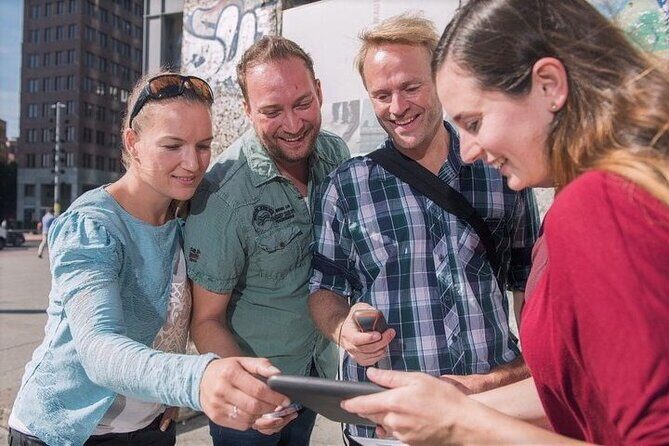
Your trail starts at Stationstraat 38, 2300 Turnhout, Belgium, and it ends back at the same meeting point. The activity runs every day, essentially all day long (the schedule shows open access from 12:00 AM to 11:59 PM), so you’re not trapped into one exact time slot.
Plan on about 2 to 4 hours, but be realistic. In one experience, the team wound up walking closer to 12 km over 6 hours because they took their time and had to re-find a few points. That’s not a reason to avoid it—it’s a reminder to bring water, comfy shoes, and patience if you’re using maps alongside the app.
Distance between assignments tends to be manageable. One review pointed to an average of roughly 350 meters between tasks, which usually means you’ll be walking enough to stay moving but not so much that you’ll hate every minute.
Beguinage at Begijnhof: UNESCO calm through a city game
Your first “wow” moment comes fast: the 14th-century beguinage and the square Begijnhof. Turnhout’s beguinage is recognized as a UNESCO World Heritage Site (since 1998), and the vibe matches that status—quiet, architectural, and unusually peaceful for a city stop.
In a normal sightseeing day, it’s easy to glance at a gate and move on. Here, you’re nudged to slow down because the questions make you notice details: how the place is laid out, what the setting feels like, and how the area works as a real historical corner of town.
Practical tip: treat this as a reset point. If your group is in a “we’ll hurry to the next photo” mood, this is where you can gently steer them toward “look first, answer second.” You’ll get more out of it—and the photos will look better too.
St. Peter’s Church: why the outside lies
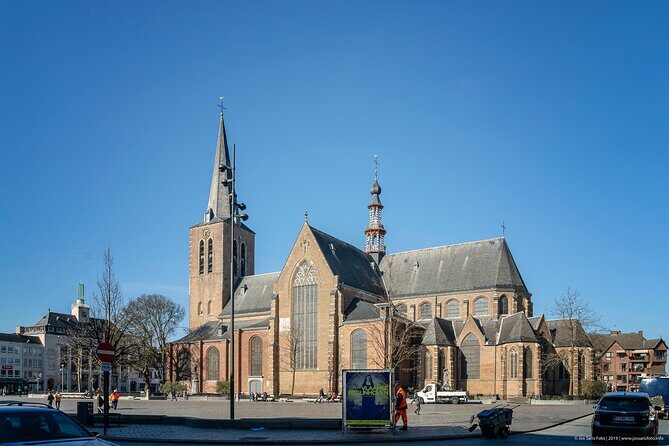
Next up is St. Peter’s Church, and it earns its place on a trail like this because it’s a contrast story.
The exterior is described as remarkably austere, which sets an expectation of something severe and simple. Then the interior flips the script—the interior is breathtaking. That kind of inside/outside change is perfect for a scavenger hunt because the questions push you to verify what you think you already know.
Here’s how I’d use this stop well: when you enter, give yourself 5 minutes just to look around without rushing to the clue. Then come back to the app and answer with what you actually see.
If your group includes kids or less-interested adults, this is a place where you can win them over quickly. The wow factor does the heavy lifting.
Brepols, playing cards, and the printing world map
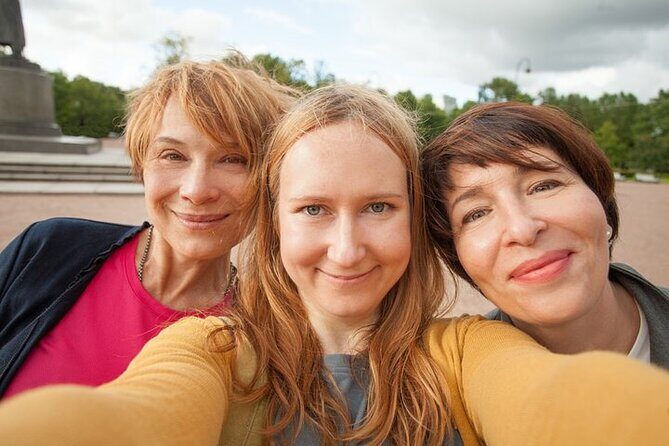
Then the trail turns into an industry history lesson—without being boring.
You’ll hit the stop about Philip Jacobus Brepols, who in 1826 helped put Turnhout on the world map by pressing the first playing cards. It’s one of those local stories that explains why a town’s identity can be tied to something as specific as paper products.
And that matters for your experience. When you connect a landmark to a reason it exists, you stop seeing buildings as random stops. You start seeing them as part of a bigger story arc: Turnhout became known for what it produced, and that production shaped its culture and economy.
This is also the best section for curious groups. If you like explanations, ask your team to read the question out loud and predict the answer before you check. The game format makes that easy.

Taxandria Museum in the House Metten Thoren
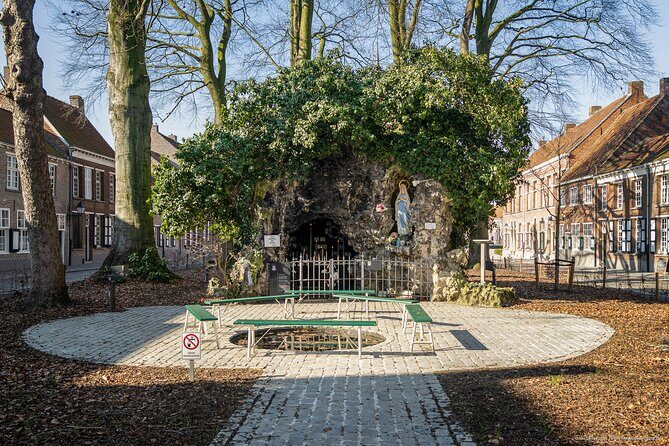
The Taxandria Museum is housed in a 16th-century museum building, the House Metten Thoren, and the focus is Turnhout’s past. You’re not wandering an abstract art space here. You’re in a place built for a local story, with the museum setting itself as part of the lesson.
A scavenger hunt is great for exterior landmarks. Museums can be trickier because people expect “just look and move.” This one ties the museum to the trail so you understand why it’s worth your time even if you normally skip museum rooms.
Practical note: museum stops can slow you down, depending on how long you choose to read and look. That’s good. For value, give yourself enough time to do more than the bare minimum. If you only skim, you miss why the building and the subject belong together.
Historical Printing Company and digitised paper collections
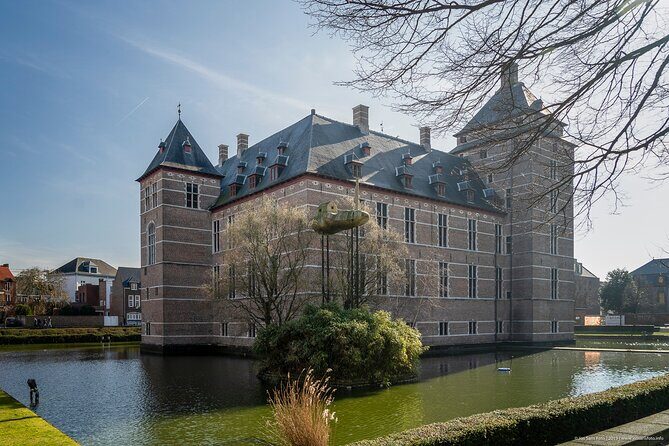
Another strong stop in the trail is the Historical Printing Company, where the emphasis is on an extensive paper collection. The materials have been digitised, and the collection can also be watched online.
This is a smart design choice for a phone-based experience. You’re not forced to choose between “see it in person” and “learn about it later.” The trail gives you a physical anchor, and the digitised layer adds context.
If your group is split—someone wants to look closely, someone wants to keep moving—this stop gives both types a win. The person who likes details can linger, while the other can use the online component when you regroup.
Penge, an old café, and the culture of stopping
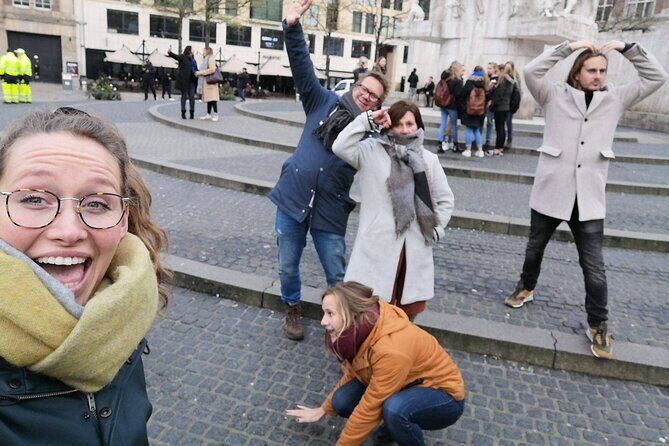
You’ll also meet Penge, described as the oldest café in Turnhout, at 129 years old. This matters because cafés turn a walking game into a real day out, not just a route.
If you’re planning your own route around town anyway, it’s useful to know where the “pause points” are. The trail’s inclusion of an older café helps you plan a break without guessing.
Even if you don’t stop for a full drink, you can treat this as a morale check. One review highlighted terraces and breaks during the walk, and this stop is exactly the kind of place that makes the hunt feel like a genuine outing.
De Warande cultural center: theatre and concerts in the mix
The final stop in your walk arc is De Warande, a provincial cultural center in Turnhout. It includes a theater and concert hall, and it was among the first cultural centers in Flanders.
This is a good “wrap up” location because it gives a modern civic identity to balance the older architecture and industry history. After beguinage stone and church interiors, it’s satisfying to land somewhere that signals living culture—performances, gatherings, events.
For the game side, cultural-center stops are great because they can be visually obvious and easy to scan. For your day, it’s a nice final anchor before you loop back to the starting point.
Price and value: $37.33 per group, up to 6
The price is listed as $37.33 per group for a maximum of 6 people. That’s the key value math: you’re paying once per team, not per person.
So the real question isn’t what the number looks like. It’s whether you can fill your group.
If you’re 2 people, your per-person cost is higher than if you’re 6. If you’re a family or a friend group that will actually stick together and participate, you’ll feel the value immediately—because the trail includes enough structure to keep everyone involved.
Also, the activity’s length (often 2–4 hours) is a sweet spot for city sightseeing. It’s long enough to make a dent in your day, but not so long that it turns into a logistics headache.
One thing not included: you’ll have to bring the tech. Since you provide the smartphone and data, factor that into your planning so you’re not stuck at the curb.
What to bring and how to make the app experience smoother
This is a mobile-ticket style experience, and the core gameplay uses an online app on your phone. You’ll need your device ready at the start at Stationstraat 38.
Bring:
- a smartphone (with enough battery)
- data access (since it’s not provided)
Then plan your pace like a city walker, not like a racer. One review explicitly noted that the trail has no time limit, which is a big deal. It means you can slow down for photos, duck into shade, or stop for a drink without worrying that you’re “behind.”
If your group tends to get lost, don’t panic. There was feedback about navigation friction (needing clearer signage for the sequence of points). I’d handle that by doing two things: keep the app open, and use your phone maps only as a secondary tool.
Finally, some questions can be easier and some seriously tough. If your team includes competitive thinkers, you’ll enjoy that. If you’re with little kids, you’ll want to make it a shared job—read it together, guess together, then check.
Who should book this Turnhout scavenger hunt?
I’d point this to you if you want:
- a budget-friendly way to see a lot in a few hours
- a city walk that works for families and friend groups
- a route that’s self-paced and not tied to a guide’s strict timing
- an easy “get oriented” option in Turnhout, especially if you haven’t been before
It’s also a great fit for a “we know this city already” mood. Even if you’re familiar with Turnhout, the trail’s structure tends to make you notice details you’d normally skip.
If you hate phone-based tasks or you don’t want to use data outdoors, then this one might feel like work instead of fun.
Should you book e-Scavenger hunt Turnhout?
If you’re traveling in a group (especially up to 6), I think this is a solid pick. You get a fun way to move through Turnhout’s key anchors—Begijnhof, St. Peter’s Church, the playing card/printing story, Taxandria Museum, Penge café, and De Warande—without paying for guided attention you don’t really need.
Book it if you’re the type who enjoys learning by doing. The questions and stop choices reward curiosity. Just make sure you bring a charged phone and a workable data connection, and give yourself permission to walk slower than your legs think you should.
If that sounds like your style, you’ll likely have a very enjoyable afternoon in Flanders—part sightseeing, part puzzle, and very much your own pace.
FAQ
How much does the e-Scavenger hunt cost?
The price is $37.33 per group, for up to 6 people.
How long should I plan for?
Expect about 2 to 4 hours, depending on how you pace the trail.
Where does the hunt start and end?
It starts at Stationstraat 38, 2300 Turnhout, Belgium, and ends back at the same meeting point.
Is it offered in English?
Yes, the experience is offered in English.
What do I need to play the game?
You’ll use the app on your phone, and you need to bring a smartphone and data. Those are not included.
What’s included in the experience?
Included are the online app to play on your phone and a city trail for a maximum of 6 people.
Is this a private activity?
Yes. It’s private, meaning only your group participates.
Is it accessible for hearing-impaired travelers?
The experience is listed as user-friendly for hearing impaired travelers.