REVIEW · ANTWERP
Antwerp: walking through history
Book on GetYourGuide →Operated by Antwerp Anytime · Bookable on GetYourGuide
Antwerp’s past walks right beside you. In two hours, you move from Grote Markt to the river Scheldt and the earliest fortifications, then on through guild power, the religious fights of the 1500s, and the Baroque look of a new era. I really like that the tour is led by passionate, well-trained guides and runs in English and Dutch.
This is a smart setup for anyone who hates waiting around. You get a private group format, and the walk is designed to work even with the practical realities of real life. Some churches and museums (and the stock exchange) can offer free entry when there’s no service or event scheduled, so the tour can turn into a lot more than just standing outside.
One thing to keep in mind: it’s still a walking tour, so cold wind or rain can test your comfort level. And for the indoor stops, access depends on what’s on that day—there’s always a chance you’ll have to admire from the outside.
In This Review
- Key things you’ll notice on this Antwerp history walk
- Starting at Grote Markt: where Antwerp’s story makes sense
- Down to the Scheldt: fortifications, expansion, and the city’s earliest spine
- Vleeshuis (butchers’ guild house): how everyday trade made big power
- When religion reshaped the streets in the 1500s
- Carolus Borromeus Church: the Baroque moment you’ll remember
- Antwerp Stock Exchange: the “mother of stock exchanges” stop
- The biggest Gothic cathedral in the Low Countries: a quick wow, not a time sink
- Plantin&Moretus museum garden: closing with ideas, not just buildings
- Guides make the difference: why Filip de Meester and Flip-style storytelling matters
- Who this Antwerp walk suits best
- Value: is $106 per private group up to 1 a good deal?
- Accessibility and comfort: built for wheelchairs and prams, with a weather reality check
- Should you book Antwerp: walking through history?
- FAQ
- What is the duration of the Antwerp walking tour?
- Where does the tour start?
- What languages are offered?
- Is this tour a private group?
- Is the walk wheelchair accessible?
- Are parents with prams able to join?
- What locations does the walk include?
- Are there any chances to enter churches, museums, or the stock exchange for free?
- Is pickup included?
- What is the cancellation policy?
Key things you’ll notice on this Antwerp history walk
- A tight 2-hour timeline that runs from Antwerp’s start to the Baroque period and printing-era influence.
- Grote Markt as your orientation point, so you quickly understand where you are and why it matters.
- Scheldt fortifications and early city walls, useful for seeing Antwerp’s physical growth, not just reading about it.
- Vleeshuis (butchers’ guild house) showing how trade and power shaped the city.
- Religious conflict to Baroque art, with Carolus Borromeus Church on the route.
- Plantin&Moretus museum garden as a thoughtful ending, tying Antwerp’s economy to ideas.
Starting at Grote Markt: where Antwerp’s story makes sense
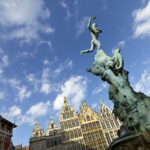
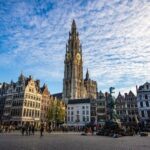
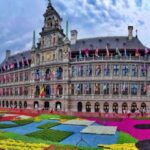
Most city tours start at a random corner. This one starts at Grote Markt. That matters. It’s the public square where Antwerp’s civic pride and wealthy institutions show up in one place, fast.
From there, the guide gives you a quick overview so you’re not just collecting buildings. You understand the “why” behind the route. You’ll hear how the city’s growth connects to the river Scheldt, fortifications, and the kind of power that could fund art, churches, and big civic projects later on.
This is also where the private format helps. If you have a question—about terminology, dates, or what you’re actually looking at—you can usually get a direct answer instead of waiting for the group to settle.
You can also read our reviews of more historical tours in Antwerp
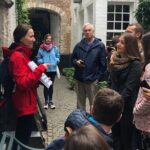
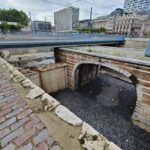

Down to the Scheldt: fortifications, expansion, and the city’s earliest spine
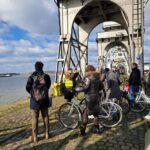
After Grote Markt, you head toward the river Scheldt, the lifeline that helped Antwerp grow. Then you shift from “pretty city center” to “why this town was built where it was.”
You follow the line of fortifications from the first town and track what happened when Antwerp expanded. Even if you’re not a history nerd, this leg gives you something practical: you begin to see the city as layers. First you learn where the early boundaries were. Then you learn how trade and prosperity pushed outward, leaving traces you can still recognize today.
If you like tours that make you look up from your phone, this is your section. The physical layout helps you connect the dots. And because the walk is only two hours long, you’re not stuck wandering without purpose.
Vleeshuis (butchers’ guild house): how everyday trade made big power
One of my favorite moments on this route is the stop at the oldest and largest guild house—known as the Vleeshuis, the butchers’ home. It’s a smart choice because it turns “history” into something more human.
Guilds were not vague medieval concepts. They were business networks with influence, money, and prestige. Seeing a building like this gives you an immediate sense of how Antwerp’s economy worked when trade ruled the city.
You’ll also see how this feeds into the next idea on the walk: Antwerp didn’t just become important by accident. Wealth concentrated in specific places, and that concentration shaped what came next—both politically and financially.
When religion reshaped the streets in the 1500s
Then the guide brings you through the timeline jump to religious strife in the 16th century, and what those conflicts meant for Antwerp afterward. This isn’t the kind of talk that gets stuck in slogans. The point is cause and effect: conflict changes who has power, how institutions function, and what kinds of art and architecture get favored.
In a two-hour walk, it would be easy to gloss over this. Instead, the tour uses it to set up the next dramatic change you’ll see in style.
The practical payoff for you: by the time you reach the Baroque church, you understand it as more than “pretty.” You understand it as a period shift—an era with different cultural energy and different messages people wanted their buildings to send.
Carolus Borromeus Church: the Baroque moment you’ll remember
After the religious tension part, the tour lands in a new style of art: the Baroque. The key stop here is the Carolus Borromeus Church.
Baroque can look like one thing from far away: ornate. Up close, it becomes a story about ambition and identity. You’ll get context for why Antwerp leaned into this look. The guide connects the dots between the upheaval of the 1500s and the next chapter in how the city expressed faith and power through design.
This stop is also where the guide’s skill shows. Good guides don’t just point at details. They explain what to look for and why those details mattered then. Based on what you’ll hear from guides such as Filip de Meester (often mentioned as Flip), the narration tends to be clear, engaging, and paced so you don’t get lost.
If you’re the type who likes a tour where the guide can keep you from zoning out, this church stop is one of the strongest reasons to do the walk.
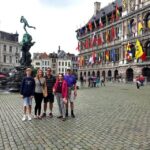
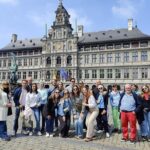

Antwerp Stock Exchange: the “mother of stock exchanges” stop
Next comes one of Antwerp’s big symbols: the mother of all stock exchanges. You’ll reach the Antwerp Stock Exchange area and get the historical context behind why it became such a big deal.
The important practical note: this tour is set up with the possibility of free entry when there’s no event scheduled. But you’re not guaranteed access to interiors every day. That means the experience still works even if doors are closed—you’ll still get the story and the architectural cues outside.
What I like about this approach is how realistic it is. You get the best shot at seeing more inside, but you aren’t promised something the guide can’t control. So if you’re doing this tour to understand Antwerp’s financial muscle, you still get your payoff.
The biggest Gothic cathedral in the Low Countries: a quick wow, not a time sink
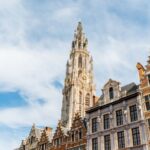
On the way to the end, you pass the biggest Gothic cathedral in the Low Countries. That’s a big visual moment, and it’s exactly the kind of “speed wow” that fits a two-hour route.
This isn’t presented as a long cathedral visit that eats your whole schedule. Instead, it’s timed as a bridge. The tour uses it to keep the story moving while you get a strong sense of scale.
If you want to do more later, you’ll have the right impression in your head so you can plan what to see next. And if you want a manageable walking experience, this gives you the flavor without turning the whole day into sightseeing fatigue.
Plantin&Moretus museum garden: closing with ideas, not just buildings
Your final destination is the garden of the Plantin&Moretus museum—linked to the 16th-century printing and publishing house, owned by the same family until the late 19th century.
This is a great ending because it shifts the story from “who had money” to “what ideas got spread.” Printing and publishing helped shape culture, education, and public life. Ending with a site connected to that long family legacy gives the walk a satisfying sense of continuity.
You’ll also appreciate the change in pace. A garden is a calmer closing scene after churches and civic buildings. It’s a moment to absorb what you just learned and mentally arrange the timeline you followed from the Scheldt onward.
Guides make the difference: why Filip de Meester and Flip-style storytelling matters
In a history walk, the guide isn’t extra. The guide is the product. When the tour works well, you feel like the city has a voice and you’re catching the plot.
From the feedback you can draw on, guides such as Filip de Meester (also referred to as Flip) are described as warm, funny, and good at clear explanations. People also mention that the guide takes time—like really takes time—so the information lands instead of just flying by.
That’s especially valuable for this route. You’re moving through different themes—guilds, religion, art styles, finance, and publishing. Without a guide who can connect the themes, it could become a checklist. With a guide who speaks in a clear, engaging way, it becomes a story.
Who this Antwerp walk suits best
This fits you if you want:
- A 2-hour overview that feels like a real timeline, not random stops.
- History explained in practical terms, so you can recognize what you’re seeing after the tour.
- A tour that works across languages—English or Dutch.
- An experience that’s compatible with wheelchair access and parents with prams.
It may be less ideal if you want a long, museum-style day where you sit for long periods. This is built for walking and interpretation. The upside is speed and clarity. The trade-off is you’ll be moving.
Value: is $106 per private group up to 1 a good deal?
At about $106 per group (listed for up to 1 person in a private format), you’re paying for a focused guide-led experience rather than a mass-tour format. For me, the value comes from three things that are hard to buy on your own:
- The route is curated as a timeline, so the stops have meaning in sequence.
- You get live interpretation in English or Dutch, so you’re not stuck with guesswork.
- Some key spots may offer free entry when there’s no event or service, which can add real value beyond a streets-only walk.
If you’re in a group of two or more, the cost-per-person could improve even more (depending on how the booking is structured for your party). If you’re traveling solo and want the guide’s full attention, the private setup is exactly what you’re paying for.
Accessibility and comfort: built for wheelchairs and prams, with a weather reality check
This tour is wheelchair accessible, and it also accounts for parents with prams. That’s a big deal for Antwerp, where some areas can be tricky for strollers or mobility aids.
Still, you should plan for the basic reality of outdoor walking. If it’s cold or rainy, comfort depends on what you wear. The good news is the route is designed for a manageable two-hour experience rather than an all-day marathon.
Should you book Antwerp: walking through history?
If you want a guided way to see Antwerp’s layers in a short time, I’d book it. The route hits the major eras and themes—Scheldt origins, fortifications, guild power, 16th-century religious conflict, Baroque style at Carolus Borromeus Church, the Antwerp Stock Exchange, and the Plantin&Moretus story tying printing to culture.
You should skip it only if you want deep time inside lots of buildings, because the tour is built as a walking timeline. Also, if you’re extremely sensitive to weather, keep an eye on conditions since you’ll be outside for the full two hours.
FAQ
What is the duration of the Antwerp walking tour?
The tour lasts 2 hours.
Where does the tour start?
It starts at Grote Markt in Antwerp, with pickup available from Antwerp.
What languages are offered?
The live guide offers the tour in Dutch and English.
Is this tour a private group?
Yes, it’s a private group.
Is the walk wheelchair accessible?
Yes, it is wheelchair accessible.
Are parents with prams able to join?
Yes, the walk is also accessible for parents with prams.
What locations does the walk include?
The walk covers stops such as Grote Markt, the river Scheldt area, fortifications and city walls, the Vleeshuis guild house, Carolus Borromeus Church, the Antwerp Stock Exchange area, and ends in the garden of the Plantin&Moretus museum.
Are there any chances to enter churches, museums, or the stock exchange for free?
Some churches and museums, as well as the stock exchange, allow free entry if there is no mass or event scheduled.
Is pickup included?
Yes. You’ll need to contact the guide to arrange the pickup.
What is the cancellation policy?
Free cancellation is available up to 24 hours in advance for a full refund.