REVIEW · ANTWERP
Antwerp: Private 3-Hour Historical Sightseeing Walking Tour
Book on GetYourGuide →Operated by Omnia Travel · Bookable on GetYourGuide
Antwerp makes sense when you walk it. I love how the guide turns Grote Markt into more than a pretty square, with the Brabo Fountain story leading to 16th- and 17th-century guild house details. I also love the ending: a guided look at Antwerp Central Station, so the tour doesn’t stop at the medieval streets. The one real catch is the walking route through older, uneven lanes, so it’s not a great fit if you have mobility limits.
This is a true private group experience (up to 20 people), with a human pace instead of a herd rhythm. You meet the guide at the Brabo Fountain at Grote Markt and then head into the old quarter on foot for about three hours, seeing the city’s big-name landmarks in a way that actually feels connected.
The best part is the guide style. Some guides here are known for being friendly and relaxed, like Rosemarie and Luc, and for starting with a quick plan that can shift based on what you want to prioritize.
In This Review
- Key Things You’ll Notice on This Walk
- Grote Markt and Brabo Fountain: The Best Place to Start
- Renaissance City Hall and Guild Houses: Reading Antwerp’s Facades
- Our Lady Cathedral: Art-Focused Stop That Doesn’t Waste Your Time
- Vlaeykensgang to Groenplaats: The Medieval Streets Feel Like a Maze
- Meir and the Rubens House: From Everyday Antwerp to Baroque Big Names
- Antwerp Central Station: A Guided Ending in a 19th-Century Masterpiece
- Price, Pace, and Practical Tips for a 3-Hour Private Walk
- Should You Book This Antwerp Historical Walking Tour?
- FAQ
- Where does the tour meet?
- How long is the Antwerp historical walking tour?
- Is this tour private?
- What languages are available for the live guide?
- Are entrance fees included?
- Are food and drinks included?
- Is the tour suitable for wheelchair users or limited mobility?
Key Things You’ll Notice on This Walk
- Brabo Fountain (inaugurated in 1887): You’ll learn what the landmark represents and why it sits at the center of the city.
- Renaissance City Hall: The guide points out what to look for and how the building fits Antwerp’s power story.
- 16th- and 17th-century guild houses: You’ll spend real time on the facades instead of speeding past them.
- Our Lady Cathedral and Flemish master art: You get context for the art collection housed inside.
- Vlaeykensgang’s crooked medieval lanes: Narrow streets and twists make it feel like you stepped back in time.
- Antwerp Central Station’s 19th-century grandeur: You end with a guided visit to one of the city’s most impressive buildings.
Grote Markt and Brabo Fountain: The Best Place to Start
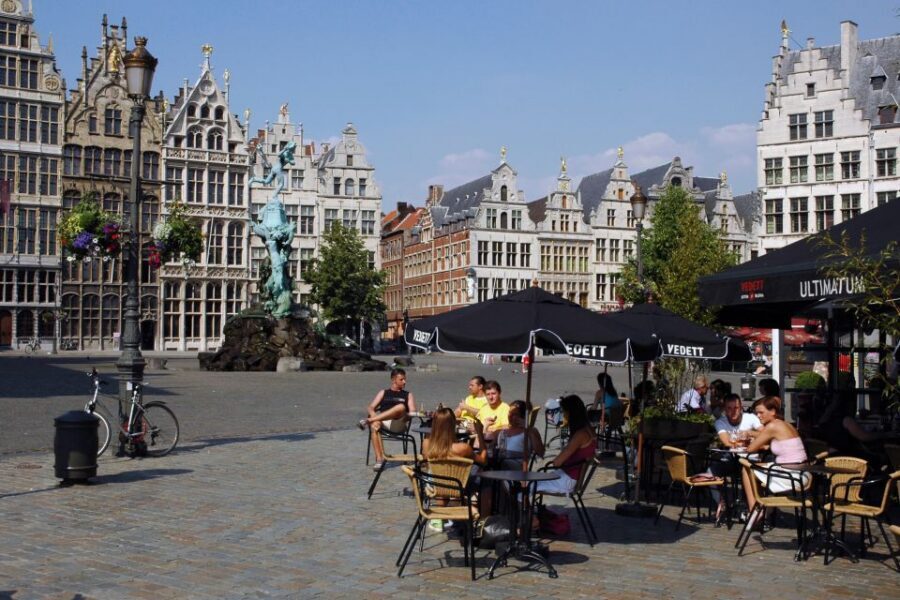
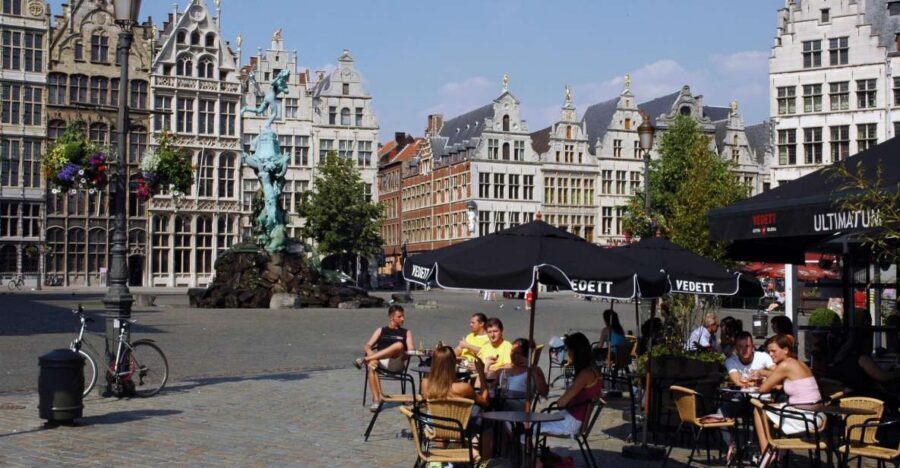
Meet at the Brabo Fountain at Grote Markt, which is smart. If you start elsewhere, Antwerp’s center can feel like a lot of impressive stone without a map. Starting here gives you a visual anchor fast: the fountain sits in the exact heart of the old quarter, so the guide can connect the surrounding architecture to the city’s identity right away.
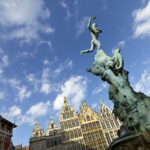
The Brabo Fountain matters because it’s not just a photo spot. It was inaugurated in 1887, and the guide uses that starting point to explain why it became such a recognizable Antwerp symbol. From there, you’re not wandering randomly. You’re walking with a purpose, and the route makes the “big picture” feel obvious.
Practical note: Grote Markt is an active meeting area. If you want clear instruction, stand close when the guide starts talking, because street noise can make details harder to catch at certain moments.
You can also read our reviews of more walking tours in Antwerp

Renaissance City Hall and Guild Houses: Reading Antwerp’s Facades
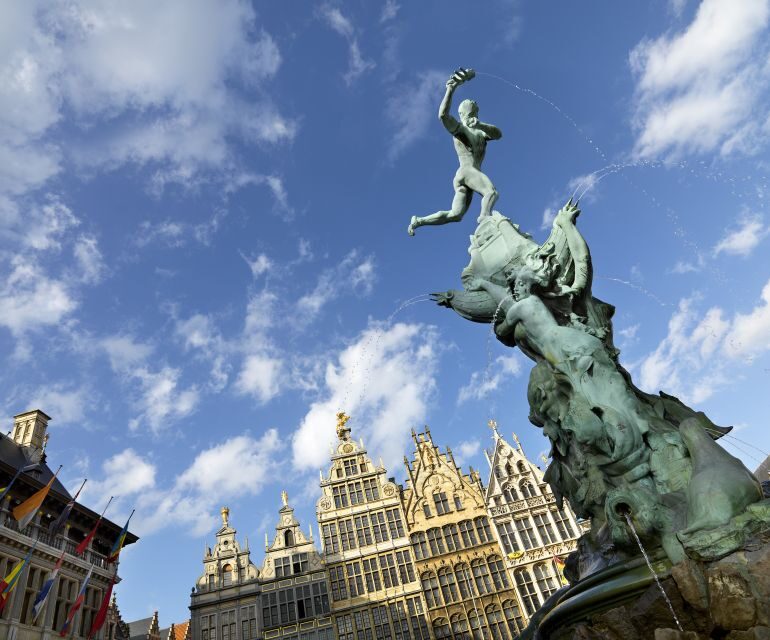
From Grote Markt, the tour moves to the Renaissance City Hall and the surrounding guild houses. This is where the guide earns their paycheck. Antwerp’s 16th- and 17th-century guild houses dominate the skyline in a way that’s hard to appreciate on your own. The buildings are detailed, and they’re also part of a bigger story about how the city organized itself and showed off success.
What I like about this stop is the pacing. Instead of a quick “look up, take a picture, move on,” you get time for the guide to point out architectural features and explain what they mean. Even if you’re not an architecture nerd, you’ll likely start recognizing patterns—how different facades communicate status, how civic buildings differ from trade-related ones, and why the area became such a visual statement.
One drawback: this part of the walk is mostly exterior viewing. If you’re hoping for a long indoor gallery-style visit at each stop, adjust expectations. Still, the guide’s explanations help you see these streets as a designed, intentional showcase—not just old buildings.
Our Lady Cathedral: Art-Focused Stop That Doesn’t Waste Your Time
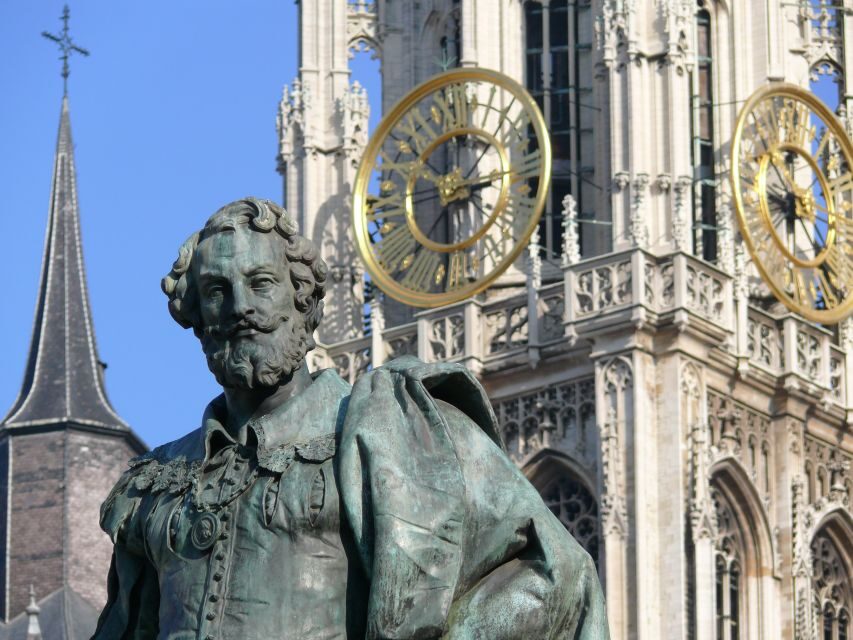
Next up is the Our Lady Cathedral. The key detail here is not just the building itself, but what’s inside: it houses a collection of art pieces by famous Flemish masters. That turns the stop into something useful even on a tight, three-hour schedule. You’re not only admiring stonework; you’re getting pointed toward the art connection that Antwerp is known for.
In a short tour format, that matters. Art museums can take hours. Here, you’re given a guided introduction tied to the cathedral setting, so you understand what you’re looking at without needing background reading.
What to consider: cathedral stops often involve getting into and out of spaces at walking speed. Bring comfortable shoes and be ready for short, focused viewing rather than lingering for long stretches.
Vlaeykensgang to Groenplaats: The Medieval Streets Feel Like a Maze
After the grand civic architecture, the tour shifts into the older medieval texture of Antwerp through Vlaeykensgang. This area is characterized by narrow streets and crooked alleyways, and that description is exactly what you’ll feel when you walk it. The turns are frequent enough that you stop thinking like a tourist and start thinking like a local moving through lanes.
This is one of the best “change of pace” moments in the route. You go from wide, statement buildings to tighter, more intimate street geometry. The guide’s commentary helps you understand that the city’s layout is part of its history—not just a backdrop for it.
Then you reach Groenplaats Square, which acts like a breath of open space after the maze. It’s a good place to reset your bearings and let your legs recover for the next stretch.
Tip: if you’re sensitive to walking on uneven surfaces, take shorter steps and watch where you place your feet. This is one of the practical realities of Antwerp’s older neighborhoods.
Meir and the Rubens House: From Everyday Antwerp to Baroque Big Names
From Groenplaats, the tour heads toward the Meir, the most popular shopping street of Antwerp. This section changes the atmosphere again. You’re no longer in the quiet, medieval-feeling lanes. Instead, you’re seeing a side of Antwerp where daily life and commerce take center stage.
And then you pass the Rubens House, the home and atelier of the baroque painter Pieter Paul Rubens. Even though you’re not spending a long time there as part of the tour, it’s a valuable connection point. The guide ties Rubens to the city’s cultural identity, so the earlier architecture and the cathedral art collection stop feeling like separate stops. You start seeing Antwerp as a place that produced wealth, displayed it in buildings, and also turned that energy toward art.
One consideration: because food and drinks aren’t included, this is a moment to think about when you’ll eat. Plan to grab something before the walk ends, or plan a longer break afterward.
You can also read our reviews of more private tours in Antwerp

Antwerp Central Station: A Guided Ending in a 19th-Century Masterpiece
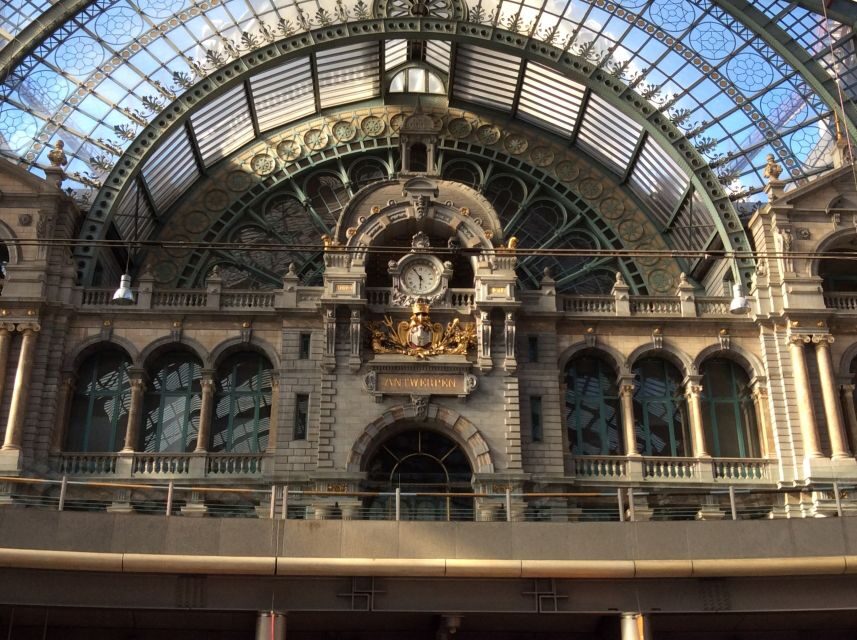
The tour finishes with a guided visit to Antwerp Central Station. The building was constructed at the end of the 19th century, and it shows. It’s an ending that feels smarter than a final street corner, because it gives you a contrast: medieval lanes and Renaissance-era civic power, followed by a modern-looking statement from the industrial age.
A guided visit is the difference here. On your own, you might walk through and admire it in fragments. With a guide, you understand what you’re seeing and why the station became such a focal point for how people move through the city.
What I’d watch for: sound and pacing. Stations can be lively, and it can be easy to lose a few sentences while you’re looking around. If you want the most from the guide’s explanations, pause when they point something out instead of drifting ahead.
Also, because it’s the final stop, it’s a good moment to ask one last question about what to prioritize on your remaining time in Antwerp.
Price, Pace, and Practical Tips for a 3-Hour Private Walk
The price is $341 per group, up to 20 people. Value depends on how many people you’re splitting with. If you book with a small group, it can feel pricey per person. If you’re traveling with friends or family and fill more of the group size, the cost becomes easier to justify—especially because you’re getting a guide for three focused hours, plus a guided station visit.
What you get is not just a list of sights. It’s an explanation-driven walk: Brabo Fountain context (1887), Renaissance City Hall and guild houses, cathedral art by Flemish masters, medieval lane atmosphere in Vlaeykensgang, and cultural links through Meir and the Rubens House, capped by Central Station.
Practical tips that will make your experience smoother:
- Wear comfortable shoes. The medieval streets and alleyways can be rough on the feet.
- Wear layers or bring a light outer layer. You’ll be outside a lot.
- Plan snacks. Food and drinks are not included.
- Entrance fees aren’t included either, so if you want to go inside any extra sites on your own, budget accordingly.
- If you struggle with hearing, don’t hesitate to ask the guide to repeat. Street sounds can sometimes make it harder to catch details.
If you’re thinking about languages, the guide can work in Dutch, English, French, or German. Choose the language you’ll enjoy most for the history-heavy parts.
Should You Book This Antwerp Historical Walking Tour?
Book it if you want a guided, architecture-and-art orientation to Antwerp in only three hours. It’s especially good for first-time visitors who like to see major landmarks but also want to understand what they’re looking at—Brabo Fountain through guild houses to cathedral art, then a strong ending at Central Station.
Skip it if mobility is a serious issue. This route isn’t recommended for people with limited mobility, and it’s not suitable for wheelchair users. It’s a walking tour through older streets.
If you do book: show up with good shoes and a “slow is smart” attitude. The best moments come when you pause for explanations, not when you rush to the next corner.
FAQ
Where does the tour meet?
The guide meets you at the Brabo Fountain at Grote Markt.
How long is the Antwerp historical walking tour?
It lasts about 3 hours.
Is this tour private?
Yes. It’s a private group experience.
What languages are available for the live guide?
The guide is available in Dutch, English, French, and German.
Are entrance fees included?
No. Entrance fees are not included.
Are food and drinks included?
No. Food and drinks are not included.
Is the tour suitable for wheelchair users or limited mobility?
No. It is not recommended for people with limited mobility, and it is not suitable for wheelchair users.