REVIEW · BRUSSELS
e-Scavenger hunt Brussels: Explore the city at your own pace
Book on Viator →Operated by Qula · Bookable on Viator
Brussels gets fun when it’s a game. This e-Scavenger hunt turns a casual city walk into a GPS-led map scavenger mission with smartphone riddles, taking you from big-name landmarks to quieter corners without crowd stress. I also love the no time limit setup and how you can start whenever you want, day or night.
If you’re expecting a guided history lesson, this may feel light. The format is built around answering prompts and completing tasks, so some questions can come off oddly specific (like listening to a short audio clip) and the navigation experience depends heavily on your phone and map accuracy.
In This Review
- Key Highlights at a Glance
- Brussels at Your Pace: The Self-Guided Trail Setup
- Price and Value: $37.29 for Up to 6 People
- What You Do on the Trail: GPS, Tasks, and a Competitive Edge
- Getting Oriented: Start at Putterie 1 and Avoid Guesswork
- The Route Walkthrough: 17 Stops from Warandepark to the Comic Art Museum
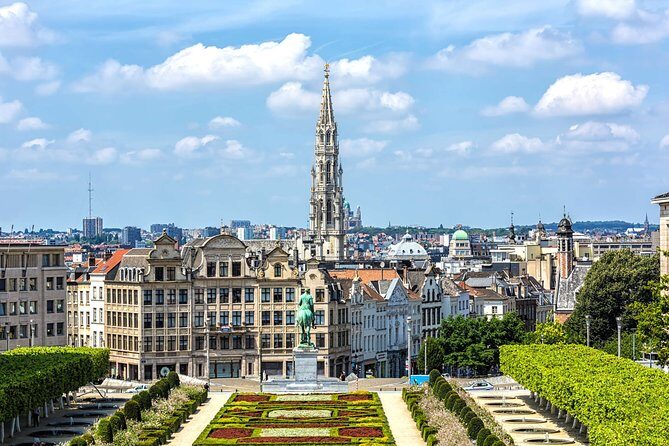
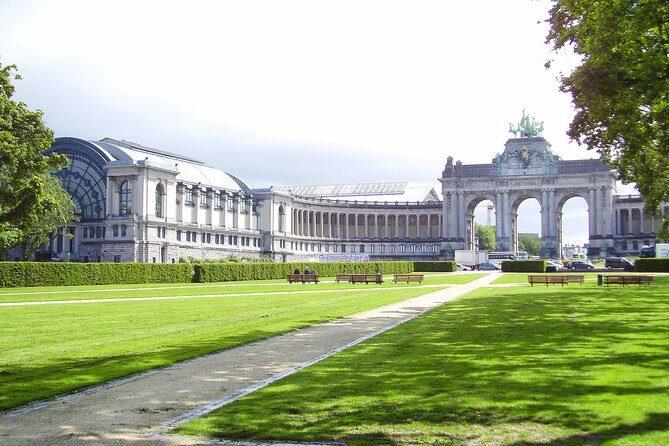
- 1) Parc de Bruxelles (Warandepark)
- 2) Brussels Central Station
- 3) Royal Palace (Palais Royal)
- 4) Hotel de Ville de Bruxelles
- 5) Manneken Pis
- 6) St. Michael and St. Gudula Cathedral (Cathedrale St-Michel et Ste-Gudule)
- 7) Brussels Vintage Market
- 8) Grand Place
- 9) Guild Houses
- 10) Koninklijke Serres Van Laken
- 11) Les Galeries Royales Saint-Hubert
- 12) Horta Museum (Musee Horta)
- 13) Notre Dame Des Victoires Au Sablon
- 14) La Mort Subite
- 15) Comic Art Museum – Brussels
- 16) Rue Neuve
- 17) Quartier de L’Ilot Sacre
- Languages and Accessibility: Multiple Options, Game-First Design
- Crowds, Families, and Groups: When This Works Best
- Practical Tips: What to Bring and How to Make It Smooth
- Should You Book This Brussels e-Scavenger Hunt?
- FAQ
- How long is the e-Scavenger hunt in Brussels?
- What is the price for this experience?
- Do I need to pick a specific start time?
- Is there a time limit while playing?
- How do I access the trail after booking?
- What do I need to bring?
- Where does the trail start?
- What languages are available?
- Is it suitable for groups?
Key Highlights at a Glance
- Self-guided, no fixed start times: pick your own day and hour
- GPS-led route: you don’t have to guess where to go next
- Phone-based riddles and assignments: it’s interactive, not a lecture
- 24/7 access with no time limit: pause, stop, and restart on your schedule
- 17 stops across central Brussels: from Warandepark to the Comic Art Museum area
Brussels at Your Pace: The Self-Guided Trail Setup
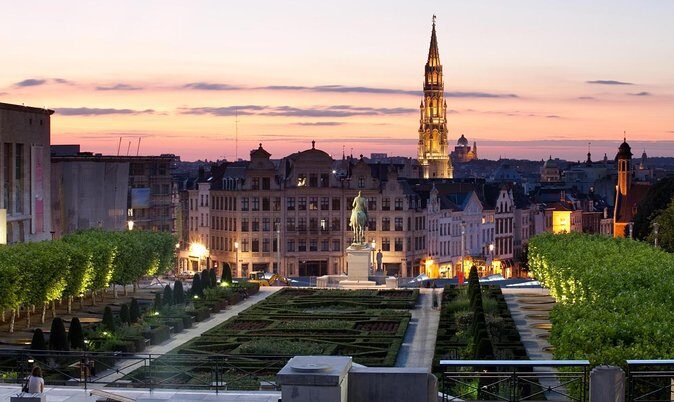
Think of this as a city game you play while walking. You buy a trail for your group (up to 6 people), then you use your smartphone to follow a route that loops through famous sights and a few more “walk-by and notice” places. There’s a simple upside to this style: you don’t need to coordinate with a group tour timeline, and you can spend more time where you actually care.
Two things make it especially doable for first-timers. First, the trail is available 24/7 with no time limit, so you can plan around weather, naps, or a slow breakfast. Second, the GPS-led map is meant to help you keep moving without getting lost.
The catch is that the trail is not designed to replace a real guide. It’s a game. That means the focus is on completing prompts, not delivering a steady stream of place-by-place facts. If what you want most is a clear explanation of Brussels history, you might feel a bit “underfed.”
You can also read our reviews of more city tours in Brussels


Price and Value: $37.29 for Up to 6 People

The price is listed as $37.29 per group for up to 6 people, for about 3 hours (approx.). That pricing is what makes this work for families and friend groups. Instead of paying per person, you’re paying once for the team experience, and the route is made for multiple walkers in the same mission.
Here’s how I’d frame the value: if you’re traveling in a small group and you’re open to “learning by doing” (spotting answers, solving riddles, reacting to prompts), it can be a cost-effective way to cover a lot of central Brussels. If you’re traveling solo, or if your ideal day is a conversational walk with deep context, you’ll likely get less satisfaction per dollar.
Also note what’s not included: you’ll need your smartphone (and data) to play. If you show up without reliable phone access, you can’t really use the trail as intended.
What You Do on the Trail: GPS, Tasks, and a Competitive Edge
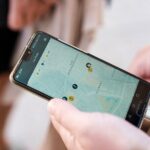
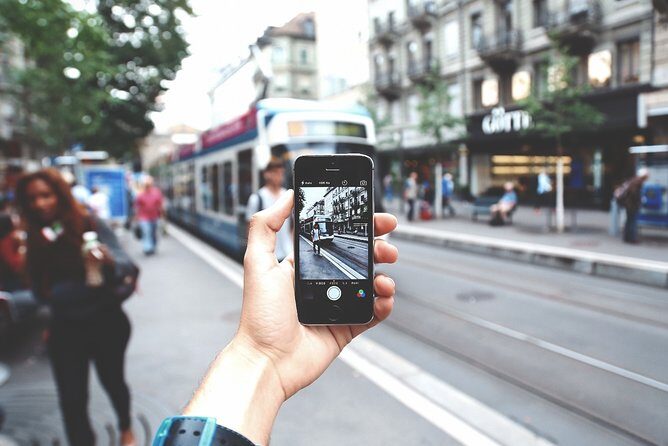
The mechanics are straightforward. After booking, you receive an email with instructions to play on your phone (Android or iPhone compatible). When you reach the starting point, you begin the hunt. From there, you follow the GPS-led map and complete the assignments as you reach each stop.
Expect a mix of challenge types. Some prompts are location-based (go to a spot, then answer something tied to it). Others can be media-based, like listening to a short audio clip. One example from the experience feedback: a task tied to the famous singer Jacques Brel. That’s a fun curveball if you like music; it’s less fun if you were hoping every question would directly explain the landmark you’re standing in front of.
You can also play for bragging rights. The trail encourages scoring, so it can turn the walk into friendly competition—handy for kids, teens, and anyone who gets restless on “just walking tours.”
One more practical point: the trail can be paused and stopped, and there’s no time limit. That flexibility helps a lot when your group includes slower walkers, people who want to stop for photos often, or anyone who needs a snack break.
Getting Oriented: Start at Putterie 1 and Avoid Guesswork
Your starting point is Putterie 1, 1000 Bruxelles, Belgium, and the activity ends back at the meeting point. There are no fixed starting times, so you’re not squeezed into a slot.
You’ll want to do two things before you head out:
- Make sure your phone battery is healthy.
- Have the email instructions handy so you can start the trail quickly when you arrive.
Also keep in mind that some of the navigation stress people describe tends to come from the mismatch between how place names show up in mapping apps and how the trail labels stops. If you like to rely on exact spellings when you search on Google Maps, you may want to pay close attention to the trail’s GPS guidance rather than only searching by name.
If you plan to use it without mobile data, don’t assume it’ll work that way—data is called out as not included, and a phone-based trail usually expects a working connection.
The Route Walkthrough: 17 Stops from Warandepark to the Comic Art Museum
This trail is built as a loop through central Brussels. Within about 2 hours, it guides you along the best-spots route while the game prompts unfold. Since there’s no time limit, you can also stretch it out toward a longer, more relaxed outing.
Below is what each stop generally means for your day: you’ll move to a named place, then the trail asks you for an answer tied to what you see or what you experience there. The exact prompt type changes by stop.


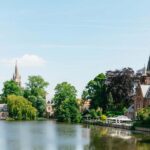

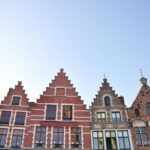

1) Parc de Bruxelles (Warandepark)
A park start helps you warm up without immediately dropping you into heavy pedestrian traffic. Expect your first task to get you used to how the trail wants you to look, check, and answer.
Good for: easing into the game and getting your bearings.
Watch for: if it’s busy, you’ll want to move with purpose so you don’t lose time re-reading the instructions.
2) Brussels Central Station
A big transit hub is a natural “checkpoint” because it’s hard to miss. This stop tends to work well for families because it gives a clear location landmark to aim for.
Good for: navigation clarity and quick photo moments.
Potential drawback: station areas can be loud and busy, which can make listening-type tasks harder.
3) Royal Palace (Palais Royal)
This is one of the classic “Brussels looks like a postcard” moments. The trail likely uses it as a recognizable visual anchor before continuing deeper into the center.
Good for: mixing iconic architecture into a scavenger format.
Watch for: crowds around well-known sights, especially during the middle of the day.
4) Hotel de Ville de Bruxelles
City hall energy is a great game stop: a monumental setting usually makes it easy to locate your exact spot. You’ll likely pause here longer than you expect just because it’s such an obvious focal point.
Good for: easy wayfinding and a strong sense of place.
Potential drawback: the assignment might feel more puzzle-like than informative.
5) Manneken Pis
Yes, it’s the famous little statue—perfect for a task that needs you to identify something specific in a familiar setting.
Good for: fun, quick humor, and a satisfying “found it” moment.
Watch for: it can draw crowds, so your group might need patience.
6) St. Michael and St. Gudula Cathedral (Cathedrale St-Michel et Ste-Gudule)
Religious landmarks often work well in a scavenger game because you can visually “read” the scene while the trail nudges you toward a task.
Good for: a calm break between busier streets.
Possible drawback: if you’re hoping for deep interpretive context, the game format may not cover enough.
7) Brussels Vintage Market
This stop hints at a more lifestyle side of Brussels than the strictly monument route. If the market is active when you play, it can add variety to the walk.
Good for: changing the pace and seeing a different side of the city.
Watch for: if you’re there when it’s quiet, you may want to treat it as a waypoint for the game rather than a guaranteed shopping stop.
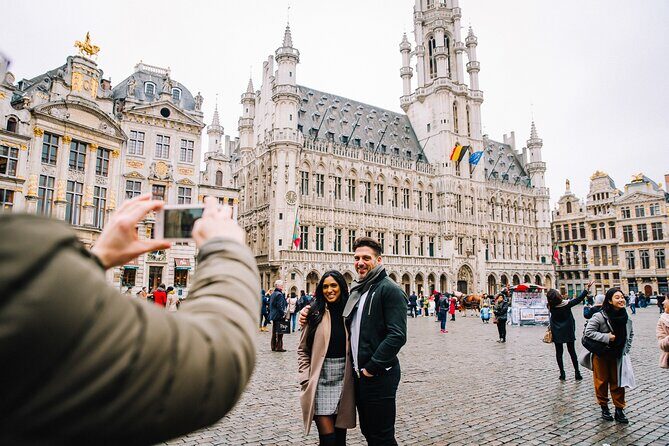
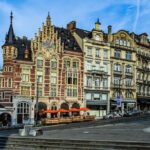
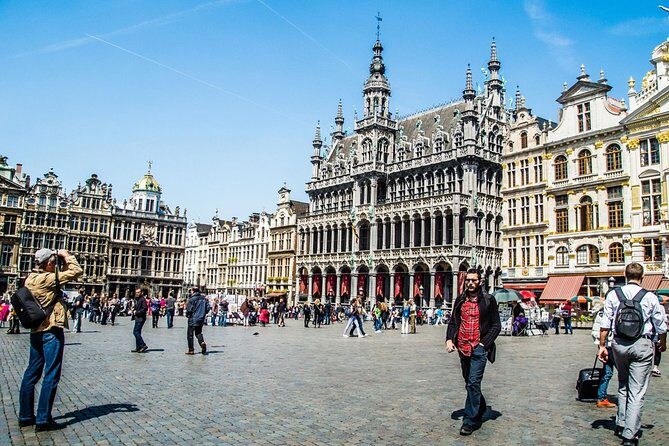
8) Grand Place
Grand Place is the “you made it” moment for many first-time visitors. In a trail, it’s also a natural place for a more involved prompt because it’s visually rich.
Good for: the big-payoff sight near the center of the route.
Watch for: crowds—your best strategy is to read the task quickly, then move.
9) Guild Houses
A cluster like this keeps you in the “look around” mode. It’s a chance to slow down and notice details while solving a question.
Good for: turning passive sightseeing into active looking.
Potential drawback: if your group wants stories more than puzzles, you may feel the game doesn’t explain enough.
10) Koninklijke Serres Van Laken
This stop adds a different setting to the route. Even if you’re not spending a long time here, the trail likely uses it as a landmark with its own identity.
Good for: variety beyond squares and stations.
Watch for: if you’re aiming for speed, this can feel like a long “reach” depending on how you pace.
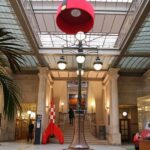
11) Les Galeries Royales Saint-Hubert
Arcades are made for wandering, and this stop fits the theme. In a scavenger game, the environment also helps you orient because it’s distinct from open streets.
Good for: a pleasant change from outdoor walking.
Possible drawback: indoor or covered areas can add extra small twists in navigation if you’re rushing.
12) Horta Museum (Musee Horta)
A museum stop gives your trail a more “cultural” marker in the middle of the route. Even if you don’t go deep into exhibits, the stop helps break up the day.
Good for: shifting from street sights to a museum-focused moment.
Watch for: this kind of stop can tempt you to slow down for longer than the trail expects.
13) Notre Dame Des Victoires Au Sablon
Another church landmark in the route. These stops are useful for the game because they create clear, named points of interest to visit.
Good for: calming scenery and recognizable wayfinding.
Potential drawback: the trail’s prompts may not match your expectation of what you want to learn.
14) La Mort Subite
This adds a more distinctive, local-feeling name to the trail. For a game, it’s a good example of how Brussels can surprise you with variety beyond the usual “top attractions” list.
Good for: adding texture to the route and keeping the hunt interesting.
Watch for: if you expect it to feel like a must-see, remember it’s still a waypoint inside a game.
15) Comic Art Museum – Brussels
A museum stop with an upbeat theme is a smart fit for a scavenger hunt. It’s also a good “kid-friendly” choice compared to purely historical sites.
Good for: playful energy in the second half of the route.
Possible drawback: if your group is primarily into architecture or history explanations, the game may feel like it moves too quickly.
16) Rue Neuve
Major shopping street energy. In a scavenger route, this kind of area helps you keep walking and gives you plenty of visual cues.
Good for: movement, people-watching, and an easy-to-follow street corridor.
Watch for: busy pedestrian zones can make it harder to focus on listening tasks.
17) Quartier de L’Ilot Sacre
The finish moves you into a distinctive neighborhood feel. By now, you’re probably in full game mode, so this acts like a final stretch with one more set of answers to earn.
Good for: closing the route in a part of town that feels different from the earliest stops.
Potential drawback: if you’re tired, the last stretch may feel like work—plan breaks earlier.
Languages and Accessibility: Multiple Options, Game-First Design
The trail supports multiple languages—English, German, French, Dutch, Spanish, Italian, and more. That matters because scavenger prompts can get frustrating fast if your language isn’t clear.
Accessibility is mentioned too: it’s user-friendly for hearing impaired travelers, and service animals are allowed. That’s a meaningful plus for groups planning ahead.
Here’s the balance point: some feedback includes complaints about translation quality and about questions that felt disconnected from the location. If language accuracy is a top priority for you, consider playing in the language you feel most comfortable with—even small wording issues can throw off a puzzle.
Crowds, Families, and Groups: When This Works Best
This is built for groups and families. A private setup means only your group participates, so you’re not tied to other strangers’ pace. And because it’s self-guided, you avoid that awkward part of group tours where someone falls behind and everyone waits.
This format is particularly strong if your group likes:
- gentle competition (trying for a top score)
- problem-solving on the move
- taking breaks without asking permission
It’s less ideal if everyone in your group wants the same thing from a tour: a consistent narration, a steady flow of history, and deep context at each stop.
Practical Tips: What to Bring and How to Make It Smooth
Bring what you need for a phone-first walk:
- smartphone + enough battery
- headphones only if you know you’ll need audio prompts (the trail includes at least some listening-type tasks)
Expect the route to take about 3 hours if you move at a normal pace and actually do the tasks at each stop. If you stop for photos, snacks, or extra browsing, it can stretch longer—but you’re not trapped by a fixed ending time.
If your group includes kids, the scoring element can turn a “walk” into an activity. If your group includes older adults, the pause-and-stop flexibility is a real advantage.
Should You Book This Brussels e-Scavenger Hunt?
Book it if you want a low-pressure, interactive way to see a lot of central Brussels, especially as a group of up to 6. You’ll likely enjoy it most if you can handle a game format—some prompts are location-related, some can be more media-or-puzzle based, and the city learning comes through discovery instead of narration.
Skip it if your top priority is a traditional, information-heavy guided tour. This trail is designed to be a mission, not a full city lecture, and a mismatch between your expectations and the game’s style can feel like wasted time.
If you’re on the fence, consider this: the price is per group, not per person. That makes it easier to take the risk—especially for families and friend groups looking for an affordable way to keep everyone engaged.
FAQ
How long is the e-Scavenger hunt in Brussels?
It takes about 3 hours on average.
What is the price for this experience?
It costs $37.29 per group, up to 6 people.
Do I need to pick a specific start time?
No. There are no fixed starting times. You choose your own day and time, and the trail is available 24/7.
Is there a time limit while playing?
No time limit. You can start, pause, and stop whenever you like.
How do I access the trail after booking?
You receive an email with instructions on how to play the trail on your smartphone. The trail is compatible with both Android and iPhone.
What do I need to bring?
A smartphone is required, and data is not included.
Where does the trail start?
It starts at Putterie 1, 1000 Bruxelles, Belgium, and ends back at the same meeting point.
What languages are available?
Multiple languages are available, including English, German, French, Dutch, Spanish, Italian, and more.
Is it suitable for groups?
Yes. It’s a private activity where only your group participates, and the team size is up to 6 people. Service animals are allowed.