REVIEW · BRUSSELS
From Brussels: Bruges & Ghent Day Tour – 2 Fairytale Cities
Book on GetYourGuide →Operated by BRUSSELS CITY TOURS · Bookable on GetYourGuide
Two medieval cities, one smooth plan. This day tour strings together the big-hits of Ghent and Bruges with a guide, headsets, and enough breathing room to feel like you’re strolling, not sprinting.
I especially like the radios and earphones setup. It makes the walking parts far more relaxed, since you can actually hear the guide without craning your neck in crowds. I also like the pacing: a guided tour in each city, plus meaningful free time where you can wander at your own speed.
One thing to consider: this is a long day, about 10.5 hours, and you’ll cover a lot of ground on cobblestones. It’s also not suitable for wheelchair users or people with mobility impairments.
In This Review
- Key highlights worth your attention
- Meeting in Brussels: Central Station, a Keolis coach, and a real start time
- Ghent: Saint Bavo’s Mystic Lamb and a medieval city you can actually walk
- Saint Bavo Cathedral and the painting moment
- Graslei and the port-side views
- Castle of the Counts and the “what it felt like” angle
- St. Nicholas’ Church and a strong medieval relic
- Great Butchers’ Hall and a city that wasn’t only royalty
- Ghent break time: use it for food and a slow lap
- Bruges: Begijnhof courtyards, Lake of Love, and canals that feel like film sets
- Lake of Love and the cobbled-street mood
- Begijnhof (1245) and the monastery-world you can still picture
- The former Red Light District and old hospital buildings
- Grote Markt and the Belfry tower
- Our Lady’s Church and Michelangelo’s Madonna
- Lunch, timing, and why this day tour works for first-timers
- Optional Bruges canal boat trip: the easy way to see the city differently
- Pace and footwear: the real secret is your shoes
- Who should book this tour?
- Should you book?
- FAQ
- How long is the Ghent and Bruges day tour from Brussels?
- Where is the meeting point in Brussels?
- What’s included in the price?
- Is lunch included?
- Are entry tickets included?
- What languages are the guides available in?
- Is the tour suitable for people with mobility impairments?
Key highlights worth your attention
- Saint Bavo Cathedral and the Adoration of the Mystic Lamb painting
- St. Nicholas’ Church as a real Middle Ages relic
- Graslei quay views plus the Castle of the Counts for “king for a day” vibes
- Lake of Love and the Begijnhof complex (built in 1245)
- Our Lady’s Church and Michelangelo’s Madonna
- Grote Markt with the Belfry tower, plus an optional Bruges canal boat trip
Meeting in Brussels: Central Station, a Keolis coach, and a real start time
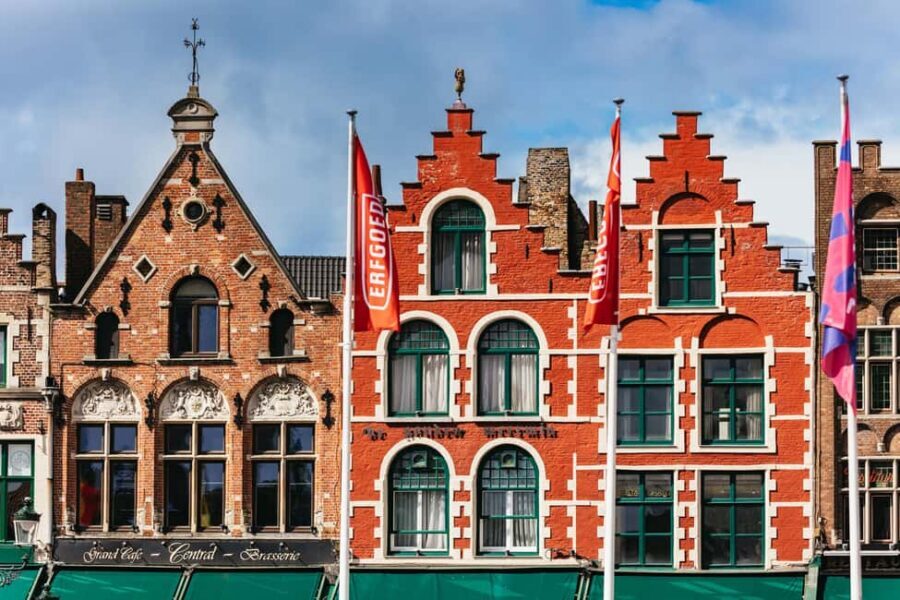
The tour starts outside the National Bank of Belgium, near Central Station. You’ll want to look for the staff and the Keolis coach, since that’s where the day gets organized fast—no wandering around trying to guess which bus is yours.
Once you’re aboard, the travel rhythm kicks in right away. The guide gives a quick overview of Belgium and what to look for later in the day, so Ghent and Bruges don’t feel like a random collection of pretty buildings. It’s also a practical win: you’re already oriented when you step off the coach.
The transportation itself is part of the appeal. You’re in an air-conditioned coach, and you’ll use radios/earphones during the walking segments, which keeps the group together without making you feel trapped.
You can also read our reviews of more tours and experiences in Brussels.


Ghent: Saint Bavo’s Mystic Lamb and a medieval city you can actually walk
Ghent is often the first stop, and that matters. You get the morning energy and a clear plan for what to see before the day gets long.
Saint Bavo Cathedral and the painting moment
The headline here is Saint Bavo Cathedral. Your guided stop focuses on the cathedral and its famous painting, the Adoration of the Mystic Lamb. Even if art isn’t your main thing, this is the kind of stop that gives you instant context for why medieval Flanders mattered—this wasn’t small-town Europe.
One reason I like this approach: the guide doesn’t treat the church like a quick photo stop. You’ll get enough explanation to understand what you’re seeing, then you can take your time looking around at your own pace.
Graslei and the port-side views
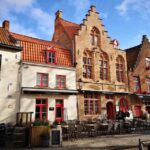
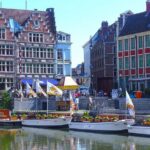
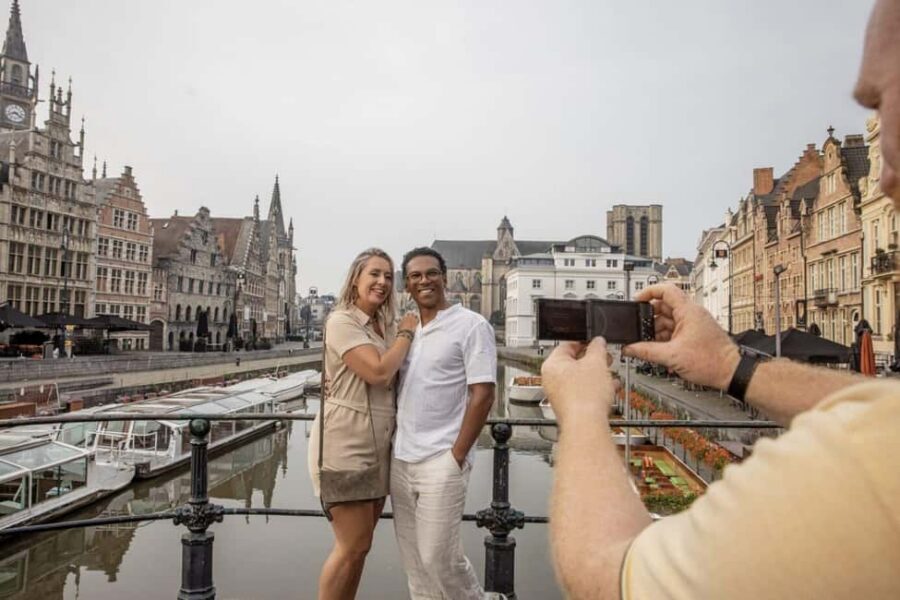
Next you’ll walk through the historic port area around Graslei. This is where Ghent starts to look like a postcard, but with details you can actually spot: stepped gables, canal-and-river angles, and the kind of architecture that makes you slow down without being told to.
If you like watching a city from its edges, Graslei is a good place for it. You can look across the water and get a feel for how the city’s wealth and trade shaped what you see today.
Castle of the Counts and the “what it felt like” angle
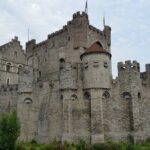
You’ll also see the Castle of the Counts area. The tour framing here leans into the imagination—imagine what it was like to live as a king. That’s more than a marketing line. It helps you read the buildings as power and control, not just stonework.
This is one of the stops where the guide’s storytelling style makes a difference. In past groups, guides such as Veronica, Johan, Nico, and Jan have been praised for pacing the walk and connecting facts to what you’re standing in front of.


St. Nicholas’ Church and a strong medieval relic
The tour highlights St. Nicholas’ Church as a relic from the Middle Ages. If you’re the type who likes “place-specific” landmarks, this adds variety beyond the major cathedral stop. It’s a reminder that Ghent’s religious architecture isn’t a single landmark—it’s a whole environment.
Great Butchers’ Hall and a city that wasn’t only royalty
Another stop you’ll hear about is the Great Butchers’ Hall. This kind of site matters because it shifts the story from rulers to everyday trades. You’re seeing where regular people would have lived, worked, and done business.
It’s also a useful walking break mentally. Not every moment is grand and royal. Then you get back into the magic of the streets.
Ghent break time: use it for food and a slow lap
After the guided portion, you get about 105 minutes of break time. This is your chance to step away from the group pace and do something simple: grab a snack, sit for a coffee, or wander without worrying about meeting points.
The best way to use this: pick one “wandering mission.” Example: walk toward a riverside view, or find a quieter street behind the main sights. You’ll be tired later in Bruges, and this break is your reset button.
Bruges: Begijnhof courtyards, Lake of Love, and canals that feel like film sets
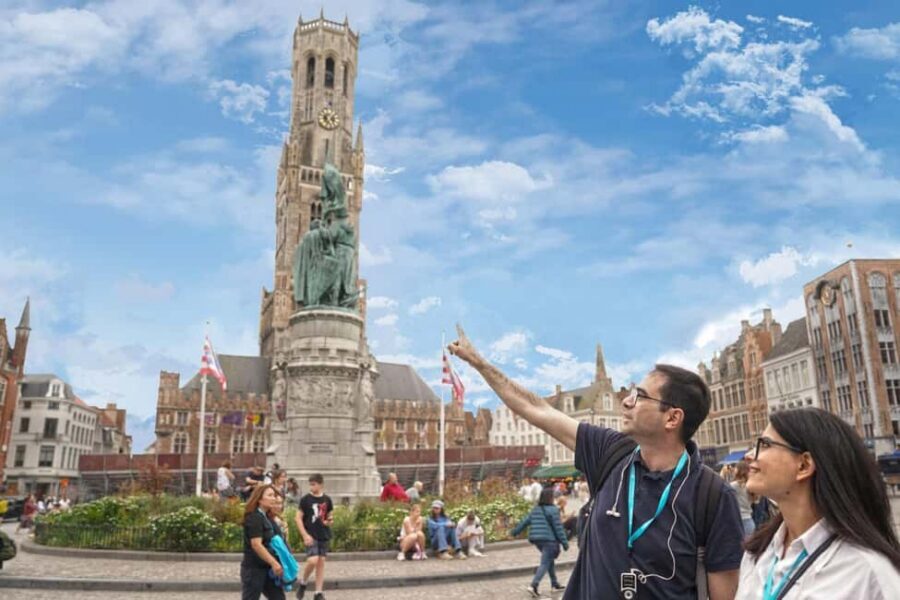
Then comes Bruges. This is where the day earns the fairytale label—but in a grounded way, because you’re guided and not just dropped in the middle of it.
Lake of Love and the cobbled-street mood
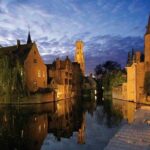
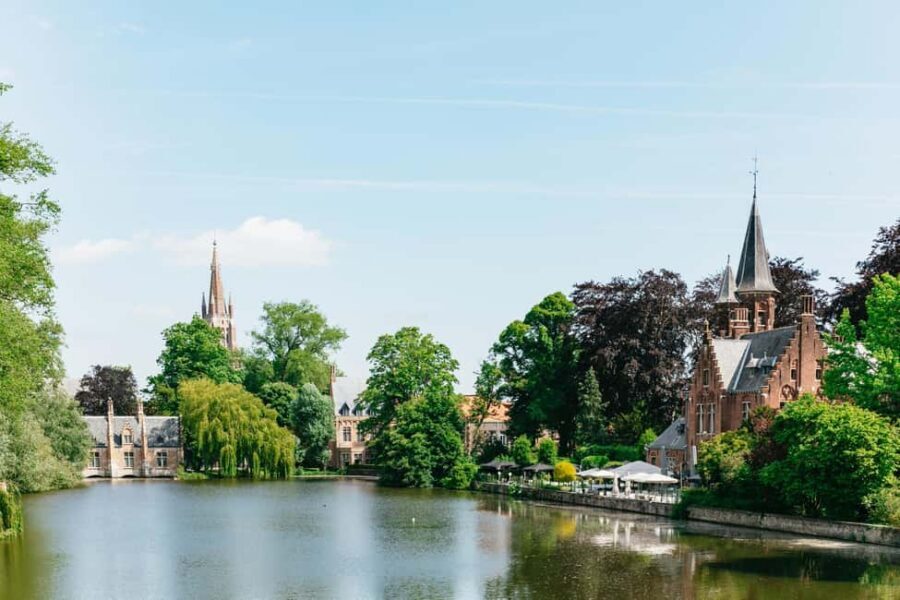
Your Bruges walk starts with the Lake of Love area. It’s a perfect visual pause: you can step off the busiest streets and let the calm take over for a moment.
Even if you’ve seen Bruges photos before, the charm works better in person because the city is scaled for walking. Small turns lead to new perspectives, and the canals make it feel like you’re moving through a living set.
Begijnhof (1245) and the monastery-world you can still picture
You’ll also visit the Begijnhof complex, built in 1245. This is a strong stop for anyone who wants Bruges beyond the tourist postcard. The Begijnhof gives you a sense of how religious community life operated—quiet, structured, and place-based.
I like that the tour includes this because it adds texture. Bruges isn’t only about big squares and towers. It’s also about the smaller enclosed spaces where daily life happened.
The former Red Light District and old hospital buildings
The guided portion also covers the former Red Light District and monuments like Old St. John’s Hospital, dating to the 11th century. This is history with edge. It helps you see the city as a real working place, not just a themed museum.
The hospital stop is especially useful. It gives you a reason to pause in the street—something you might otherwise pass by without realizing what it was.
Grote Markt and the Belfry tower
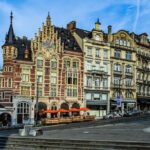
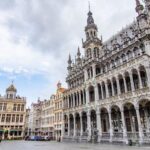
When you reach Grote Markt, you’re in the main square moment. The tour focuses on the Belfry tower, which is one of the key vertical landmarks that makes Bruges instantly recognizable.
This is also a good time to orient yourself for later free time. After you’ve seen the square, the rest of your walking becomes easier because you have a central reference point.
Our Lady’s Church and Michelangelo’s Madonna
Another highlight is Our Lady’s Church and Michelangelo’s Madonna. If you like a mix of architecture and a major art name, this is the kind of combination that makes the stop feel “worth the detour.”
Even if you don’t read every caption, you’ll get the point: this is why Bruges drew attention and why its churches weren’t just local landmarks.
Lunch, timing, and why this day tour works for first-timers
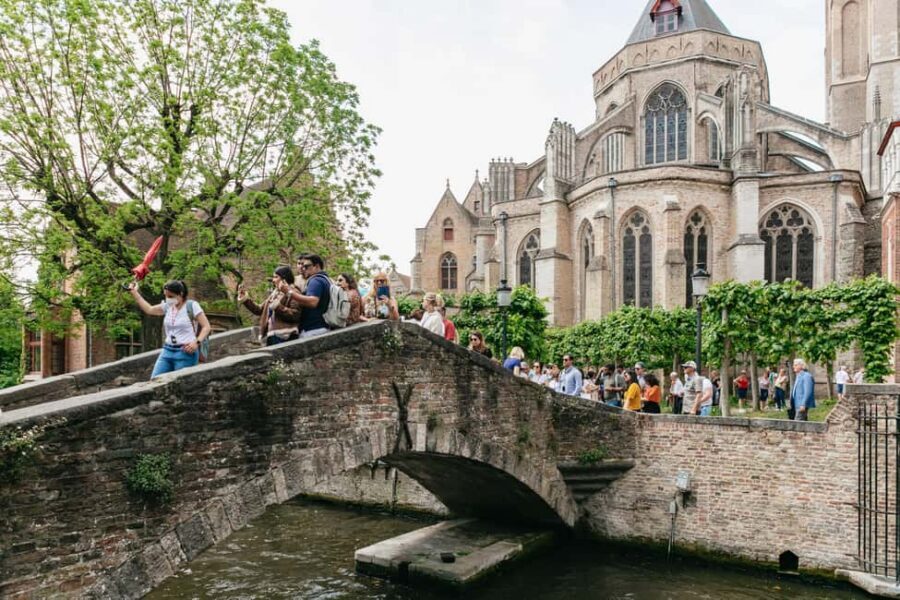
Lunch is included only in the sense that you’ll have time to eat—not that the meal is provided. Entry tickets aren’t included either, so if you want to go inside museums or pay for specific viewing areas, you should plan for that cost.
The lunch window is about one hour. That’s workable, but don’t expect a long sit-down meal. This is a “power lunch” setup, and the guide will usually share suggestions for where to grab something nearby.
What makes this tour good value at around $57 per person is how much you get bundled: coach transport, multilingual guide services, guided walking tours in both Ghent and Bruges, plus radios/earphones. You’re buying time and structure, not just motion.
Optional Bruges canal boat trip: the easy way to see the city differently
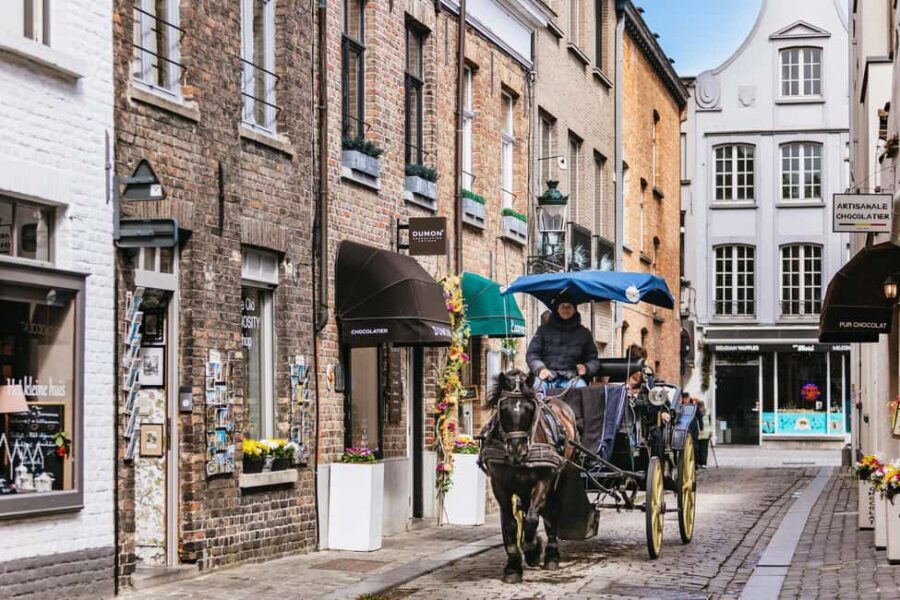
After lunch, you’ll have free time plus the chance for an optional boat cruise on Bruges canals. Your guide organizes it, which is a big deal in a city where navigation can feel chaotic if you’re doing it alone.
The boat ride is a smart closer because it changes your angle. Streets and squares are great, but canals show you how the city’s layout connects everything. It also turns the day from walking-heavy to viewpoint-heavy—less effort, more “ahh” moments.
If the weather is wet, this part still helps. Even gray skies can make canal light feel moody and dramatic without ruining your whole day.
Pace and footwear: the real secret is your shoes
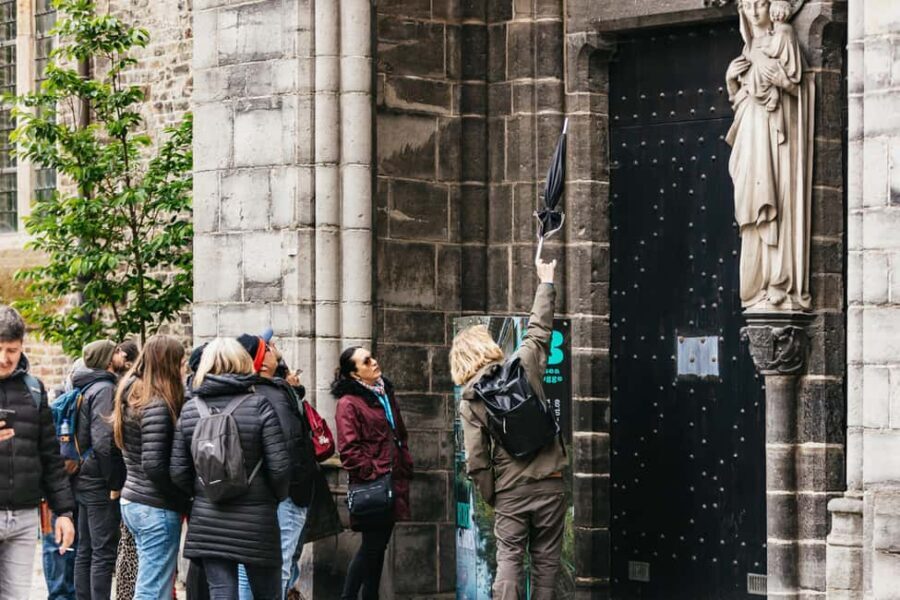
This tour is built around walking. You’ll want comfortable shoes that handle cobblestones without turning your feet into a complaint department.
A lot of people run high step counts on these Bruges-and-Ghent walks, and cobblestones make even short distances feel longer. Plan for that. Bring water if you’re prone to thirst, and don’t overpack your bag—your shoulders will thank you later.
If rain shows up (it can), the good news is that the itinerary still gives you enough indoor anchor points like churches. One review even noted the rain stopped by the time they reached Ghent, and the guide helped keep the day fun regardless of conditions.
Who should book this tour?
This is a great pick if you:
- Want to see both Ghent and Bruges without planning trains, transfers, and timing
- Prefer a mix of guided stops and independent wandering
- Like medieval architecture and don’t mind a long day on foot
- Value having a guide who can explain what you’re seeing as you walk
I’d think twice if:
- You need wheelchair access or have mobility limitations, since it isn’t suitable for that
- You hate cobblestones or you’re not comfortable with a 10.5-hour schedule
Should you book?
Yes—if you want a structured, high-value day that hits the big landmarks in Ghent and Bruges without wasting time figuring things out. The best argument for booking is the combination of guided walking + radios/earphones + real free time, then finishing with a canal-focused option in Bruges.
If you’re the type who needs lots of quiet downtime or you’re very sensitive to walking pace, consider whether your ideal trip is more “slow and local” than “see the classics efficiently.” For many first-timers, though, this tour lands in the sweet spot.
FAQ
How long is the Ghent and Bruges day tour from Brussels?
It runs about 630 minutes (around 10.5 hours), with return to Brussels at about 7:30 PM.
Where is the meeting point in Brussels?
Meet outside the National Bank of Belgium, looking for the staff and the Keolis coach.
What’s included in the price?
Included are air-conditioned transportation, a multilingual tour guide, guided walking tours in Ghent and Bruges, and radios/earphones.
Is lunch included?
Lunch is not included, but you do get a set lunch time during the day to grab something nearby.
Are entry tickets included?
No. Entry tickets are not included.
What languages are the guides available in?
The tour guide can operate in Spanish, English, and French.
Is the tour suitable for people with mobility impairments?
No. It’s not suitable for wheelchair users or people with mobility impairments.