REVIEW · BRUSSELS
Bruges and Ghent – Belgium’s Fairytale Cities – from Brussels
Book on Viator →Operated by Brussels City Tours - Keolis Travel · Bookable on Viator
Two UNESCO towns in one long day.
This trip strings together Ghent and Bruges with a real guide, a comfortable coach, and radios so you can hear the stories even when you’re wandering a few steps off the sidewalk. I also like how the day is built for flow: short landmark stops, then time to look around at your own pace.
Two highlights I especially appreciate are the focus on Ghent’s big Gothic landmarks (including St. Bavo’s Cathedral) and the Bruges highlights that most first-timers want fast: City Hall, the Market area, and the Basilica of the Holy Blood. The main thing to consider is that it’s a tight schedule with lots of walking, plus the tour can run multilingual, so language switching may be tiring if you’re sensitive to that.
In This Review
- Key points before you go
- Brussels-to-Flanders day trip: the ride, the pace, and what it feels like
- Ghent first: St. Bavo’s Cathedral and the Mystic Lamb (watch Sundays)
- Walking Ghent the smart way: Gravensteen, St. Nicholas, and the Leie
- The countryside drive: why that scenic bus time is actually useful
- Bruges arrives: Minnewater (Lake of Love) and a proper reset
- Bruges main sights: Holy Blood, Our Lady’s Church, City Hall, and Burg Square
- Princely Beguinage Ten Wijngaarde: a quieter Bruges moment
- The Bruges canal boat option: when it’s worth the extra cost
- Time for food and independence: how much freedom you really get
- What the group size and logistics change for you
- Who this tour is best for (and who should consider alternatives)
- Should you book this Bruges and Ghent day trip from Brussels?
- FAQ
- What time does the tour start?
- Where do we meet?
- Where does the tour end?
- How long is the trip?
- Is lunch included?
- What’s included in the ticket price?
- Can I book the canal boat tour in advance?
- Are there free time breaks during the day?
- Can I see the Mystic Lamb at St. Bavo’s Cathedral on Sundays?
- What’s the tour language?
Key points before you go
- Radios and earphones help you follow the guide without crowding their shoulder
- Ghent + Bruges in one day is efficient, especially if you only have a short stay in Brussels
- St. Bavo’s Cathedral sets the tone in Ghent, but access to the Mystic Lamb is not possible on Sundays
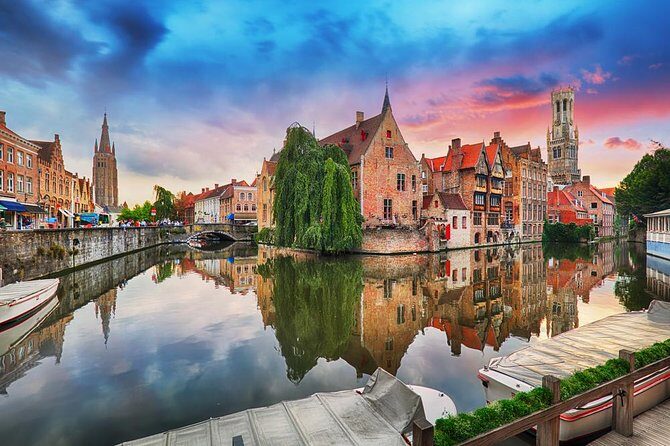
- Minnewater (Lake of Love) is a scenic, romantic reset before you hit Bruges’ main sights
- Canal boat in Bruges is optional and runs at extra cost, booked through the guide on the day
- Show up on time: the tour can’t accommodate latecomers at the meeting point
Brussels-to-Flanders day trip: the ride, the pace, and what it feels like
You start in Brussels in an air-conditioned coach, and right away you’re in “day trip mode.” The plan is a full day (about 10 hours 30 minutes), and you’ll spend a good chunk of that walking between viewpoints, churches, and squares. The upside is you get a guided overview in both cities; the downside is you won’t treat this like a slow stroll with endless coffee breaks.
I like that the coaches include radios and earphones (so you’re not stuck listening from two feet away). Reviews strongly reward this setup, and it makes a difference in narrow streets and busy areas—your photos don’t require you to pause mid-sentence.
You’ll also want moderate fitness. This is a walking tour style day, and there’s enough cobblestone that the “fast pace” part can surprise you—especially if you’re with small kids, using a stroller with small wheels, or moving a little slower.
You can also read our reviews of more tours and experiences in Brussels.
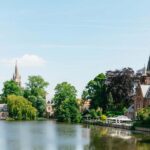
Ghent first: St. Bavo’s Cathedral and the Mystic Lamb (watch Sundays)
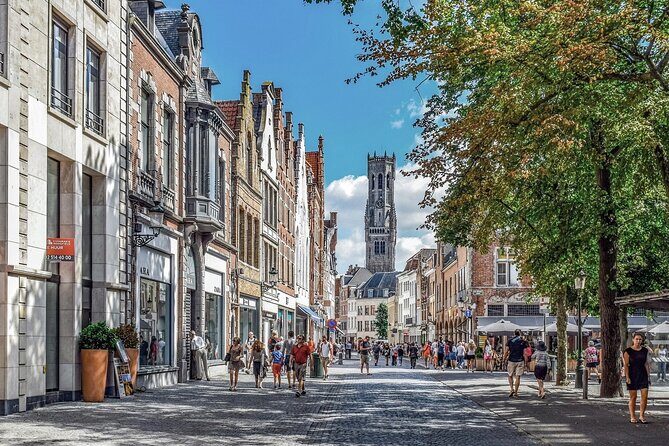
Ghent opens with the city’s spiritual and artistic anchor: St. Bavo’s Cathedral. This is where you get your first big “wow,” because it’s hard not to feel the scale of an 89-meter Gothic cathedral as you look up. The cathedral is home to the Ghent Altarpiece, including the famous Mystic Lamb painting.
Entrance is optional for the cathedral portion, but here’s the key practical note: access to the Mystic Lamb is not possible on Sundays. If your travel dates land on a Sunday, adjust your expectations. You’ll still get the guide’s context and the exterior/interior sense of the place, but you may not get the specific viewing experience you pictured.
What’s valuable here is the way this stop frames Ghent. Once you hear the story tied to the art and the cathedral’s role in the city, the rest of Ghent starts to “make sense” rather than feeling like a list of buildings.
Walking Ghent the smart way: Gravensteen, St. Nicholas, and the Leie
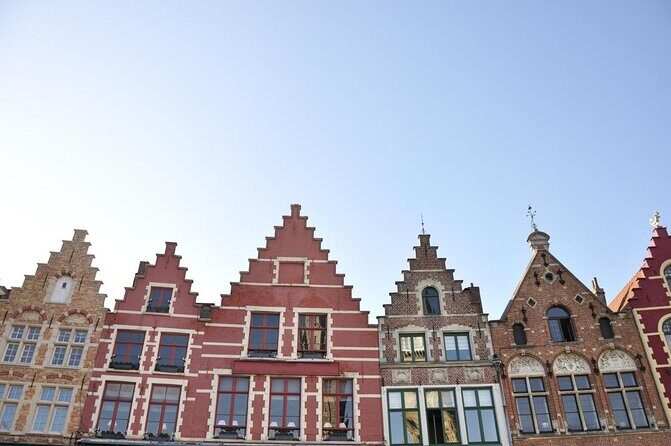
After the cathedral, you walk into Ghent’s older core. The guide leads you past the landmarks that make Ghent feel medieval without being overly staged. One of the best parts is how the route connects the religious sites to the civic and trading history, so you get a fuller picture than you would by bouncing between attractions on your own.
You’ll visit:
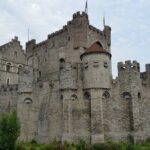
- Gravensteen (the Castle of the Counts of Flanders): the present castle dates to 1180, and it served different roles over time—residence, court, prison, mint, and even a cotton factory. That evolution helps you see it as a living piece of city power, not just a photo stop.
- St. Nicholas’ Church: one of Ghent’s most prominent landmarks, begun in the early 13th century as a replacement for an earlier Romanesque church.
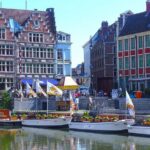
You’ll also get a sense of the city’s waterways history, with a stop along the Leie river area—think historic quay scenery and the old port atmosphere. Ghent is one of those places where the river and the stone buildings work together, and the guide’s stories make the geometry feel purposeful rather than random.
The countryside drive: why that scenic bus time is actually useful
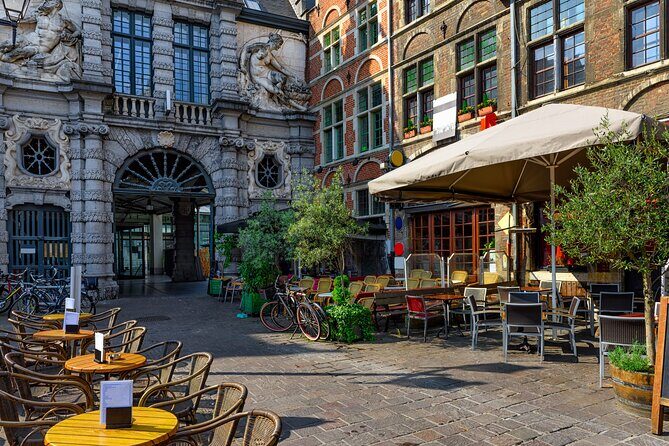
Between Ghent and Bruges, you travel through Belgian and Flemish countryside. On paper, it’s just transit. In reality, this is time that helps you avoid feeling like you’re teleporting.
You come out of Ghent with visual “anchors,” then the drive gives your brain a reset before Bruges throws its charm at you full force. If you’re the type who gets travel-weary fast, this built-in stretch is a small kindness—especially with the air-conditioned coach.
Bruges arrives: Minnewater (Lake of Love) and a proper reset
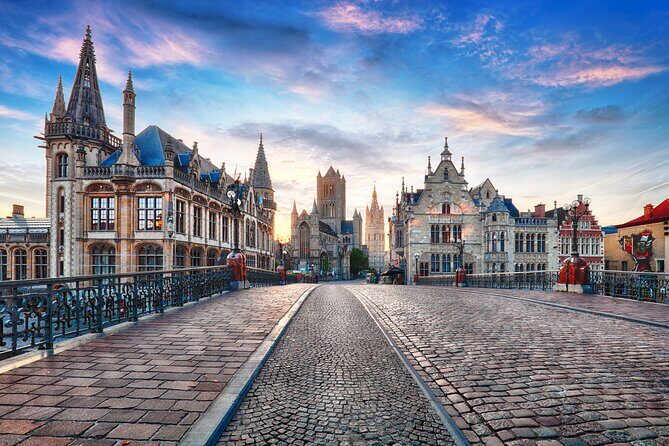
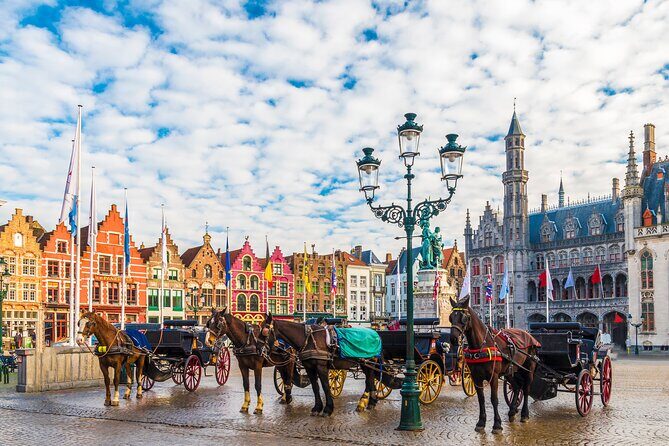
Bruges often hits like a movie set, but it’s also easy to rush. This tour slows you down right away with Minnewater (Lake of Love), plus the area around the Lovers bridge. It’s a good breather before the heavier sightseeing, and it’s one of the spots where your “fairytale city” imagination gets fed in a grounded way.
Lunch is on your own expense here, typically within the 12:00pm–2:00pm window (time can change). You may have a café overlooking the water, which is exactly the kind of pairing I like on a day trip: quick meal, memorable view, and minimal logistics.
Practical note: even if you’re tempted to stay seated longer, watch the clock. Bruges’ charm is real, but the itinerary is designed to keep you moving.


Bruges main sights: Holy Blood, Our Lady’s Church, City Hall, and Burg Square
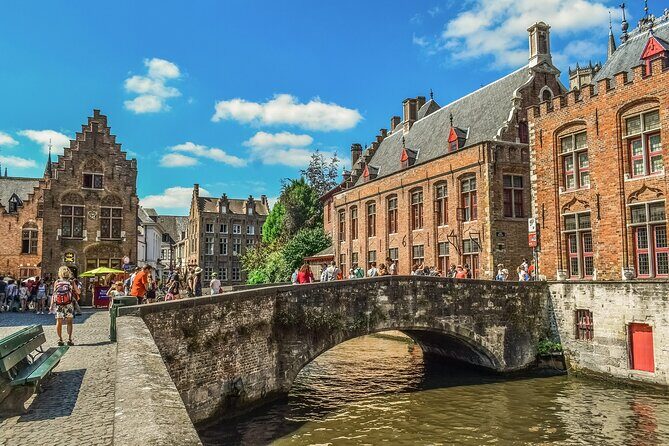
Once you’re refreshed, the guide brings you through Bruges’ best-known landmarks on foot. This is where the city’s layers show up fast.
You’ll include:
- Basilica of the Holy Blood: the church is associated with a venerated relic called the Holy Blood, traditionally linked to Joseph of Arimathea and brought from the Holy Land by Thierry of Alsace. Even if you’re not religious, this kind of story adds context to why the building has held attention for centuries.
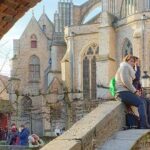
- Onze-Lieve-Vrouwekerk (Church of Our Lady): dates largely from the 13th, 14th, and 15th centuries, and its tower is 115.6 meters—still the tallest structure in the city and a standout brickwork tower on the wider world stage.
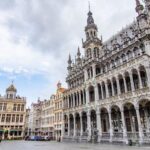
- Stadhuis (City Hall): in Burg Square, tied to the former fortified castle area and one of the older city halls in the Netherlands region.
- Burg Square itself: the political center of Bruges, with a strong mix of historic buildings that photographers love for a quick reason—there’s structure everywhere.
What I like about these stops is they’re not random. They form a triangle of power and belief: church authority, civic authority, and the market-square energy you’ll feel just a few minutes away.
Princely Beguinage Ten Wijngaarde: a quieter Bruges moment
Between the big squares and famous churches, you’ll also have time for Princely Beguinage Ten Wijngaarde. It’s described as the only preserved beguinage in Bruges, and it no longer has beguines living there. Since 1927, it has functioned as a convent for Benedictines.
This is a nice “tone adjustment” if you find medieval Bruges a bit intense after an hour. It gives you something calmer—courtyard-style city life—without fully breaking the flow of the day.
The Bruges canal boat option: when it’s worth the extra cost
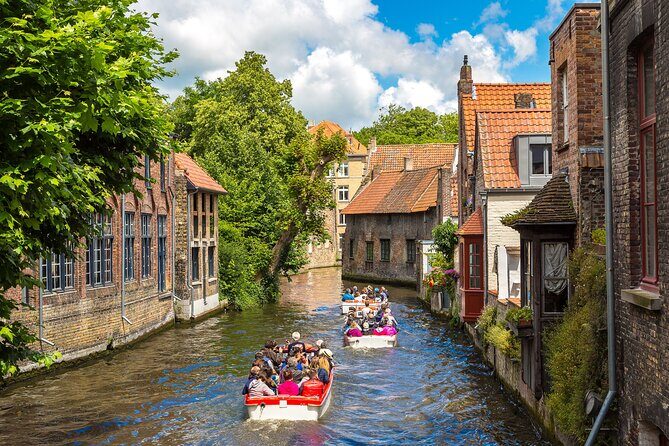
There’s an optional canal boat tour in Bruges. It’s organized with your guide, and you generally can’t book it in advance—you arrange it on the day. This matters because Bruges canals can be the most relaxing way to see the city while everyone’s legs are starting to complain.
Should you do it? If you like water views, want a different angle than the streets give you, or simply want a break from stepping on cobblestones, it’s usually the best add-on. It also gives you a visual “memory card” for Bruges, because the canals show the city’s layout like no walking route can.
Time for food and independence: how much freedom you really get
Here’s the honest tradeoff with a two-city day trip: you’ll get guided time and you’ll get some free time, but it won’t be endless. In practice, you’ll likely feel like the day is structured around your main stops, with pockets of independent exploration rather than long unplanned wandering.
You should also plan for lunch that isn’t included. That’s not a bad deal if you use it strategically—pick a place that’s convenient for your route (or has a nice view, like the area near Minnewater). But it does mean you’re responsible for budgeting the meal.
My tip: eat a sensible breakfast before you meet. A couple people mention running tight on time for lunch or not getting much wiggle room to pop into souvenir shops afterward. So don’t rely on finding a perfect sit-down meal with hours to browse.
And yes, bring comfortable walking shoes. The day is walk-heavy, and you’ll spend time on cobblestone streets. Even if you handle it fine, you’ll feel it.
What the group size and logistics change for you
The tour can have up to 200 travelers, which tells you something important: you’re not in a tiny, intimate group. You’ll rely on the guide route and the radios/earphones to stay oriented.
Air-conditioned coach, radios, and earphones make group-size manageable. The tradeoff is personal questions can be harder if the group is large, and multilingual commentary can affect how smoothly the narration lands for you.
One more practical thing: latecomers can’t be accommodated. If you’re using public transit, give yourself buffer time and know how to get to Bd de Berlaimont 18, 1000 Bruxelles. This is one of those “be early, relax later” moments.
Who this tour is best for (and who should consider alternatives)
This is a strong fit if:
- You want a first taste of both Ghent and Bruges without planning trains, buses, and timings
- You like guided walking tours but still want some moments to explore on your own
- You’ll appreciate hearing stories tied to specific monuments like St. Bavo’s Cathedral and the Holy Blood Basilica
You may want to skip or rethink if:
- You want a slow, unstructured day with lots of free time
- You’re very sensitive to multilingual switching in a group setting
- You have trouble with extended walking on cobblestones
If you’re traveling with family, the coach comfort helps, and the use of radios can let kids hang back while you still follow the guide. Just be prepared for the surface underfoot to be tougher than it looks.
Should you book this Bruges and Ghent day trip from Brussels?
If your goal is simple—see Ghent and Bruges fast, with a guide, and in one coordinated day—this is a solid choice. I especially like the combo of guided landmarks plus radios, because it lets you move at your own pace without losing the story.
Book it if you can handle a long day and you’re ready to plan your lunch and walking time. Skip it if you’d rather savor one city deeply, or if multilingual narration and a packed schedule would stress you out.
If you want my decision shortcut:
Go for it when you want efficiency with memorable stops. Choose another style of trip when you want slow travel and lots of unplanned time.
FAQ
What time does the tour start?
It starts at 9:00 am.
Where do we meet?
The meeting point is Bd de Berlaimont 18, 1000 Bruxelles, Belgium.
Where does the tour end?
The tour ends at Brussel-Centraal, Carré de l’Europe, 1000 Bruxelles, Belgium.
How long is the trip?
The duration is about 10 hours 30 minutes.
Is lunch included?
No. Food and drinks aren’t included, and lunch is typically around 12:00pm–2:00pm depending on timing. You’ll eat at your own expense.
What’s included in the ticket price?
Included: professional guide, air-conditioned vehicle, and radios/earphones. Boat tour coordination is available at extra cost.
Can I book the canal boat tour in advance?
No. The canal tour in Bruges can only be booked with your guide on the day of your trip.
Are there free time breaks during the day?
Yes. You’ll have free time in each excursion. How much varies by part of the itinerary, and your guide can confirm details on the day.
Can I see the Mystic Lamb at St. Bavo’s Cathedral on Sundays?
No. Access to the Mystic Lamb at St Bavo’s Cathedral is not possible on Sundays.
What’s the tour language?
The tour can be offered in English, French, and/or Spanish, depending on the language needs of the group.