REVIEW · BRUGES
Exclusive Bruges Churches Tour: Admire Michelangelo’s Masterpiece
Book on Viator →Operated by Crusade.be · Bookable on Viator
Bruges churches tell stories better than postcards. This private 3.5-hour walk strings together seven churches, so you move style by style through medieval Gothic and Baroque interiors, finishing at Sint-Salvatorskathedraal. With your guide Xavier, you do not just look at buildings, you understand why they mattered, including Michelangelo’s statue at Church of Our Lady.
I love the clear art focus at each stop. At Sint-Annakerk, you get the Baroque choir vibe, wooden sculpture details, and the biggest Bruges wallpainting by Henri Herregodts. I also like that most visits are admission ticket free, so your money goes toward a real guide, not a stack of entry fees, and you still reach the Basilica of the Holy Blood to see the relic in person.
One drawback to consider: Church of Our Lady requires an entrance ticket that is not included, listed at €10.00 per person, and a few stops are short (15 to 30 minutes). If you like to linger, you may want to plan one extra solo visit after the tour.
In This Review
- Key highlights you will actually notice
- Why this Bruges church circuit works
- Meet at Markt 5, Bruges: timing and walking reality
- Stop 1: Sint-Jakobskerk and the medieval elite feel
- Stop 2: Sint-Annakerk, Baroque choir, sculptures, and Henri Herregodts
- Stop 3: Adornes Estate & Jerusalem Chapel and an odd design
- Stop 4: St. Walburga’s Church, the only Baroque church in Bruges
- Stop 5: Basilica of the Holy Blood and seeing a relic in real life
- Stop 6: Church of Our Lady, Michelangelo’s statue and the Counts of Burgundy
- Stop 7: Sint-Salvatorskathedraal, bishop seat and medieval tombs
- Price and value: what $191.05 buys you
- What Xavier is like on this tour (and why it matters)
- Who should book this tour
- Should you book this Exclusive Bruges Churches Tour?
- FAQ
- How long is the Bruges churches tour?
- Where does the tour start and what time?
- Is the tour in English?
- Is this a private tour?
- Are church entrance tickets included?
- Which stop includes Michelangelo’s statue?
- Can I cancel and get a refund?
Key highlights you will actually notice
- Private guide Xavier keeps the pacing tight and answers questions as you go
- Gothic to Baroque contrasts you can spot fast, without museum ticket chaos
- Henri Herregodts wallpainting at Sint-Annakerk, plus Baroque choir and wooden sculptures
- Holy Blood relic visit at the Basilica of the Holy Blood
- Church of Our Lady’s Michelangelo statue alongside the tombs of the Counts of Burgundy
- Most churches are free to enter, with only Church of Our Lady adding €10
Why this Bruges church circuit works
If you only see Bruges from canals and squares, you miss a big part of the city. Churches here act like time machines. One stop can show you the medieval world, the next can change the mood into Baroque art and drama.
What makes this tour work is its structure. You are not wandering randomly. Each church gets its own theme: a Gothic interior at Sint-Jakobskerk, a Baroque choir and wall art at Sint-Annakerk, an odd little family chapel layout at Adornes Estate & Jerusalem Chapel, and so on. You end up building a mental map of Bruges through art styles and civic power, not just pretty façades.
You can also read our reviews of more tours and experiences in Bruges.
Meet at Markt 5, Bruges: timing and walking reality
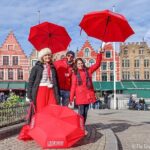
The tour starts at 1:30 pm in front of Markt 5 (8000 Brugge) and finishes at Sint-Salvatorskathedraal on Steenstraat (8000 Brugge). It is listed at about 3 hours 30 minutes, and it feels like a compact walking-and-looking schedule.
That timing matters. Churches are not indoor shopping malls. You are entering, viewing, hearing key points, then moving on. Wear comfortable shoes and expect to do short bursts of looking. The upside: you get a lot of variety without spending your whole afternoon inside one building.
Also, this is a private tour. Only your group goes with the guide. That tends to make the conversation better and the pace more flexible, especially if someone in your group has questions or wants slower explanations.
Stop 1: Sint-Jakobskerk and the medieval elite feel
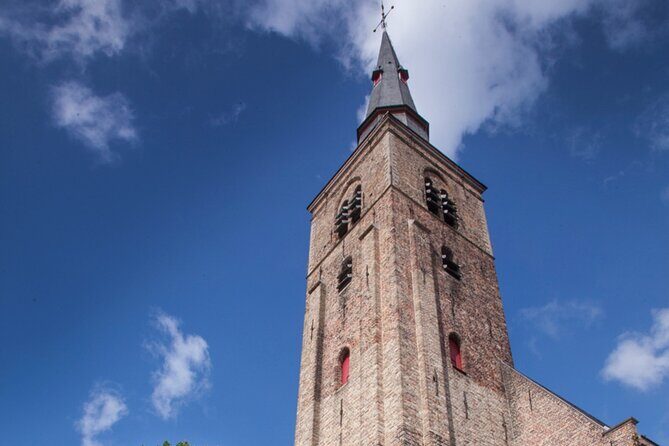
Your first visit is Sint-Jakobskerk, with about 30 minutes on-site. This is a church tied to the medieval elite of Bruges, and the tour frames it as an important starting point for understanding the city’s earlier power and taste.
What you will likely appreciate here is the Gothic interior focus. The experience is not about hunting for trivia. It is about learning how to read a Gothic church when you are standing inside it. You get information about the interior layout and why that style shows up the way it does.
Possible drawback: because the stop is relatively short, you will want to look efficiently. If you try to photograph everything at once, you might miss the guide’s main points. Let the guide’s theme lead your eyes.
Stop 2: Sint-Annakerk, Baroque choir, sculptures, and Henri Herregodts
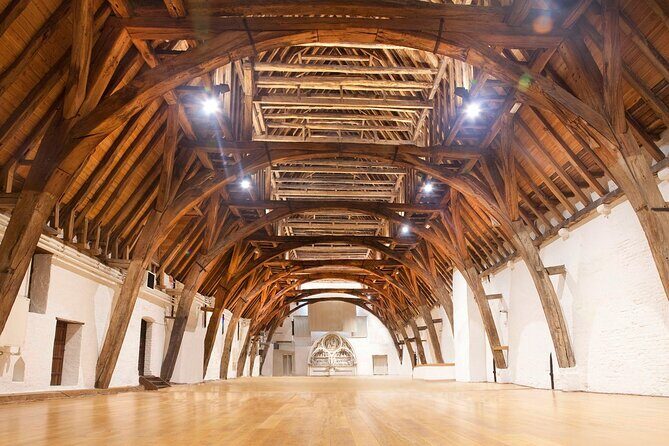
Next comes Sint-Annakerk for about 30 minutes. This stop is set up for art lovers. You are guided through the Baroque choir, with attention to wooden sculptures and the specific Baroque history behind what you are seeing.
Then there is the wallpainting angle. Bruges has lots of art, but this tour highlights the biggest wallpainting of Bruges by Henri Herregodts. That is the kind of detail that turns a church visit into a story: not just a pretty interior, but a specific work you can point to and say, I understand what I am looking at now.
Why it feels valuable: Baroque art can look like decoration if you do not know the goal. Here, you get the cultural reason for the drama—how the church used art and space to communicate.
Stop 3: Adornes Estate & Jerusalem Chapel and an odd design
You then move to Adornes Estate & Jerusalem Chapel for about 15 minutes. Short stop. Big payoff, if you like unusual architecture.
This is described as one of the oddest designs in Bruges, tied to the history of this family church. Even with the brief time, the goal is to help you notice the design choices—what makes it feel strange compared to more straightforward church layouts.
Practical note: because it is only 15 minutes, treat this as the quick sketch of a place. If you fall in love with it, you will be able to circle back later on your own. The tour’s job is to point you to it, not exhaust it.

Stop 4: St. Walburga’s Church, the only Baroque church in Bruges
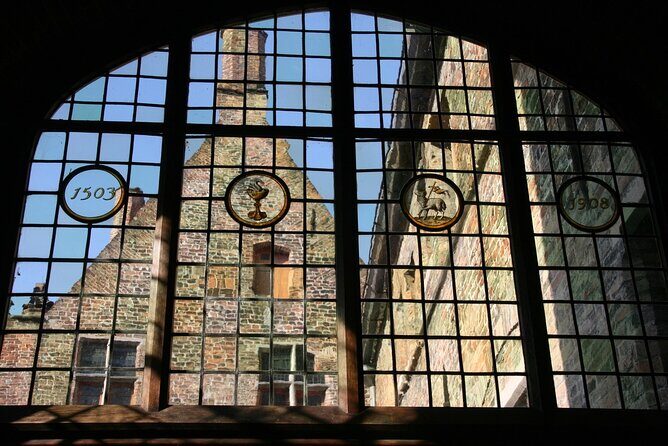
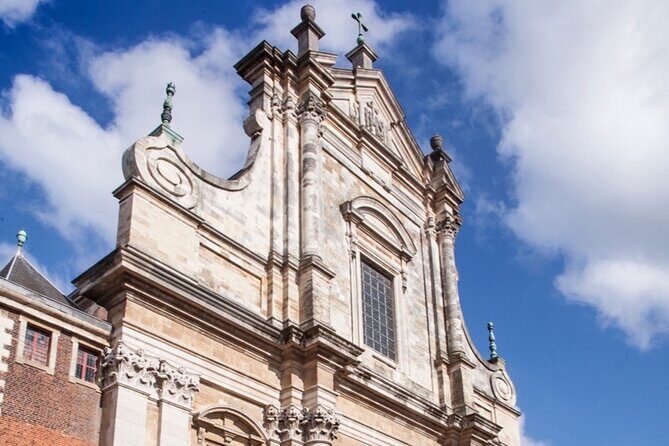
After that, you visit St. Walburga’s Church (Sint-Walburgakerk) for about 20 minutes. This one is highlighted as the only Baroque church in Bruges.
You will get an overview of the exterior and the interior, with special attention to what makes its Baroque identity feel distinctive in this city’s context. It is a useful stop because it makes the Baroque contrast obvious: you get to compare it mentally with the Gothic start and the Baroque interior you already saw at Sint-Annakerk.
If you are not into architecture, this can still be fun because the tour keeps the explanation simple and visual. If you do love details, you will probably spend a little more time scanning the interior once the guide points your eyes in the right direction.
Stop 5: Basilica of the Holy Blood and seeing a relic in real life
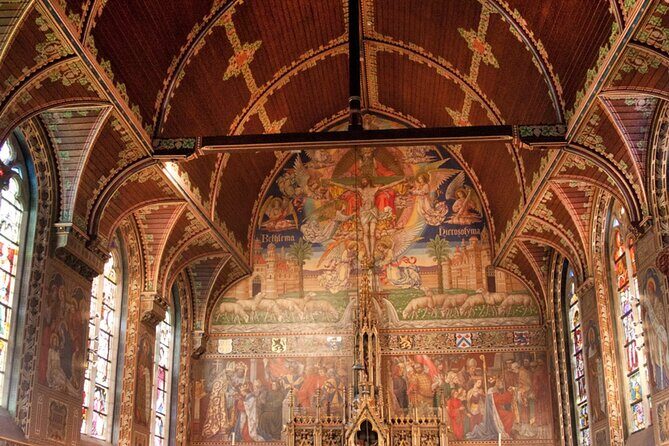
Next is the Basilica of the Holy Blood for about 30 minutes. This stop is different from the others. Instead of focusing mainly on an art collection or an architectural style, it centers on a relic you can see: the relic of the Holy Blood.
That shift in focus is why this tour feels well balanced. You get your art and style training, and then you get a religious-history anchor that changes the tone of the whole afternoon.
Drawback to consider: the schedule still keeps it to about 30 minutes, so do not assume you will have long, quiet time. If you want a calmer visit, use this tour as your orientation and then return later when you have time to linger.
Stop 6: Church of Our Lady, Michelangelo’s statue and the Counts of Burgundy
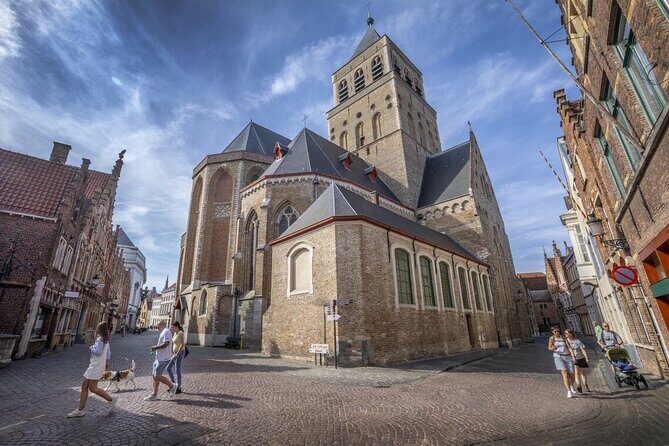
This is the big one for the tour title. You will spend about 45 minutes at the Church of Our Lady. Entrance here is not included, and the stated ticket cost is €10.00 per person.
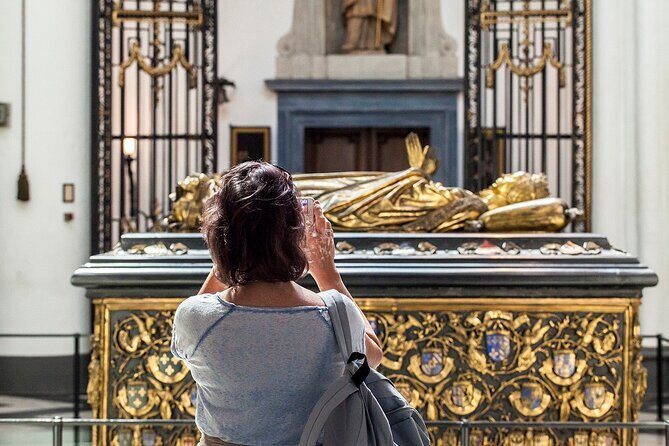
Inside, you are guided through why this church is considered the most important in Bruges in terms of history. The tour also points out a valuable art collection, the tombs of the Counts of Burgundy, and the statue of Michelangelo.
Why I think this stop is worth building the entire tour around: you get named anchors. Michelangelo is not just a vague art mention. You also get the political and historical weight of the Burgundy tombs. Together, they show how art, power, and faith used the same stage.
A practical tip: if your group has people who care most about the Michelangelo statue, agree on a viewing moment early. Otherwise, everyone tries to do the best photo and the best explanation at the same time.
Stop 7: Sint-Salvatorskathedraal, bishop seat and medieval tombs
Finally, you reach Catedral de Sant Salvador (the Sint-Salvatorskathedraal) for about 30 minutes. This is where the tour wraps with historical gravity.
Here you focus on medieval tombs, the seat of the bishop, and the cathedral’s importance in Bruges’ broader story. If you have been paying attention to the earlier stops, this one helps tie it together: the earlier churches show different flavors of church life and art. This one emphasizes the institutional and historical role of the church leadership.
The ending location also makes sense for practical city flow. You finish in the historic center, so after the tour you can keep exploring without needing a transport plan immediately.
Price and value: what $191.05 buys you
At $191.05 per person, this is not a bargain tour. But it is also not priced like a museum. You are paying for a private guide and a structured run through multiple major churches—most of them marked admission ticket free.
The only extra entrance explicitly noted is the €10.00 Church of Our Lady ticket. So your realistic spend is mostly about the experience and the guide’s time, not a stack of multiple paid entrances.
Also, it is offered in English, includes a mobile ticket, and is sold as a private group experience. Those details matter if you want a guided art walk instead of self-guided wandering with your phone doing the talking.
One more value point: the tour’s pacing is designed for learning, not rushing. Based on how Xavier works, the tour tends to include time for questions and for people to react to what they see.
What Xavier is like on this tour (and why it matters)
The guide listed in the experience name you are likely to meet is Xavier. The most consistent theme in the feedback style around him is not just that he knows a lot. It is that he adjusts to the group and talks in a way that makes the art clearer.
I love when a guide treats questions as part of the visit, not an interruption. Here, the guide takes time, answers thoughtfully, and keeps a good rhythm between stops. If your group includes teens, or you just want an efficient way to see a lot without feeling lost, this kind of pacing helps.
There is also an accessibility-minded approach highlighted in one account: if someone cannot see visuals the usual way, the guide described the paintings and interior layouts in a clear, descriptive manner. That tells you the tour is built for communication, not just pointing.
And yes, the day can end on a human note. One guide style mentioned is chatting between churches and finishing with a casual social beer at a local bar, if the group wants that kind of close.
Who should book this tour
This tour is a strong fit if you:
- Want to connect Bruges art and architecture to the city’s story, stop by stop
- Care about specific works and names, like Henri Herregodts and Michelangelo
- Prefer a private guided route rather than trying to plan church interiors on your own
- Like a pace that covers several churches without turning into a half-day blur
It might be less ideal if you:
- Want to sit in one church for a long, quiet stretch every time
- Are only looking for exterior views and canal-photo stops
Should you book this Exclusive Bruges Churches Tour?
I would book it if you want a structured afternoon that hits the right targets: Gothic interior understanding, Baroque art details, a relic you can see, and the Michelangelo moment in Church of Our Lady. The private guide format is a big part of the value, especially when the pacing keeps you moving but not feeling rushed.
If you are budget-sensitive, do the math for the Church of Our Lady entrance ticket in your plan. And if you are the type who hates moving on after 20 minutes, you might prefer a slower independent plan and add one guided hour for the big-name stops.
In short: this is a practical way to see Bruges churches with your eyes open and your questions answered.
FAQ
How long is the Bruges churches tour?
It runs for about 3 hours 30 minutes (approx.).
Where does the tour start and what time?
It starts at Markt 5, 8000 Brugge, Belgium at 1:30 pm and ends at Sint-Salvatorskathedraal, Steenstraat, 8000 Brugge.
Is the tour in English?
Yes, it is offered in English.
Is this a private tour?
Yes. It is listed as private, meaning only your group participates.
Are church entrance tickets included?
Most visits are listed as admission ticket free. Church of Our Lady requires an entrance ticket that is not included (listed at €10.00 per person).
Which stop includes Michelangelo’s statue?
The statue of Michelangelo is at the Church of Our Lady.
Can I cancel and get a refund?
Yes. You can cancel for a full refund up to 24 hours before the experience’s start time.