REVIEW · BRUGES
Historical Walking Tour: Legends of Bruges
Book on Viator →Operated by Legends of Bruges Free & Private Tours · Bookable on Viator
Bruges becomes clear fast on foot. This Legends of Bruges walk strings the city’s biggest landmarks together with sharp medieval stories. I especially love how it starts at the Markt and then keeps building toward the city’s power, trade, and politics, and I like the guide-led pacing that turns history into something you can actually picture. A possible drawback: if you’re craving lots of everyday social-and-cultural detail (life, habits, regular routines), you may feel the tour leans more political and economic than personal.
The value here is striking for the money: it’s listed at $3.62 per person, with all fees and taxes handled and stops that are marked as admission ticket free. You’ll be walking through key sights over about 2 hours 15 minutes, usually with a smaller group (up to 24), which makes it easier to ask questions.
In This Review
- Key highlights at a glance
- Entering Bruges at the Markt: trade power and royal trouble
- The Belfort halls: why the bell tower mattered
- Gruuthusemuseum: a palace, and a beer monopoly
- Sint-Janshospitaal: medieval care still standing
- Ten Wijngaarde beguinage: a community life for 800+ years
- De Halve Maan Brewery: the nickname story and the beer pipeline
- Minnewater Lake: swans, canal stories, and Maximilian conflict
- Onze-Lieve-Vrouwekerk: Michelangelo and the Burgundy tombs
- Groeningemuseum garden: a quick art moment without the time sink
- Huidenvettersplein: tanners’ square and the cost of leather
- Finishing at Burg Square: politics and the birthplace feeling
- Group size, guides, and why people rate it so high
- Price, value, and what you should plan for
- How to prepare so the tour feels easy
- Should you book Legends of Bruges?
- FAQ
- How long is the Legends of Bruges walking tour?
- Where does the tour start and end?
- Is the tour in English, and do I get a ticket on my phone?
- What does the price include?
- How large is the group?
- What happens if weather is bad or I need to cancel?
Key highlights at a glance
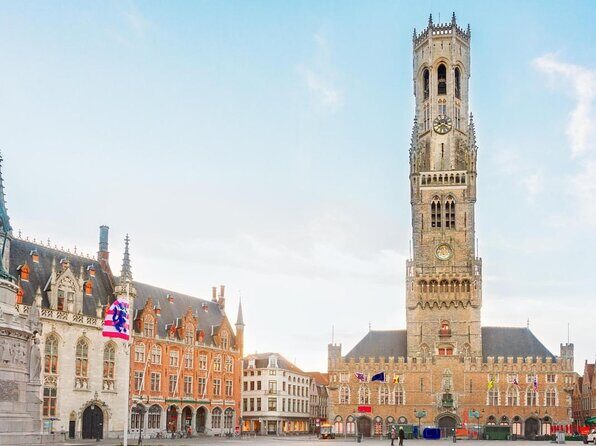
- 2 hours 15 minutes of Bruges’ main sights on a practical walking route
- Ticket-free stops are built into the itinerary, so you’re not racing between paid entries
- Belfort, the beguinage, and the famous church all appear in one continuous overview
- Beer and industry stories show up twice, including beer trade power and a beer pipeline beneath the city
- Guides with strong English storytelling are a big reason people rate this tour highly (you may hear from guides like Louis, Victoria, Thomas, Erik, Celine, or Martin)
- Weather-dependent experience, so plan for Bruges weather to matter on the day
Entering Bruges at the Markt: trade power and royal trouble
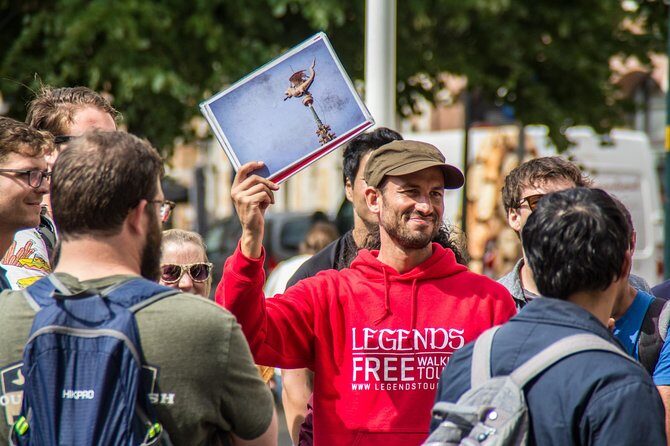
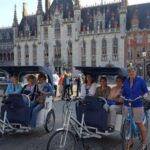
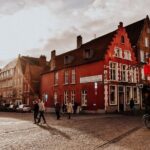
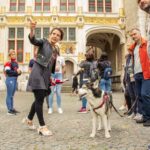
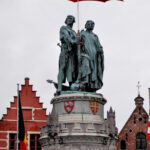
You start at Pieter de Coninck en Jan BreydelMarkt, then settle into Bruges’ central stage: the Markt. This is where the tour sets the tone. You get an intro to how Bruges functioned as a major trading hub in medieval times, not just a pretty canal town.
What I like about this opening is that it gives you a frame for everything you’ll see later. When your guide connects the city’s wealth to the larger medieval world, later stops (like the church tombs and the political heart at the end) don’t feel random. You also hear about the troublesome relationship between Bruges and the French king, which matters because it explains why the city’s leaders cared so much about control and status.
What to watch for: this first stop is only about 15 minutes, so come ready with questions if you’re a history nerd. If you’re more of a picture-first traveler, just let the story do its job.
You can also read our reviews of more walking tours in Bruges
The Belfort halls: why the bell tower mattered
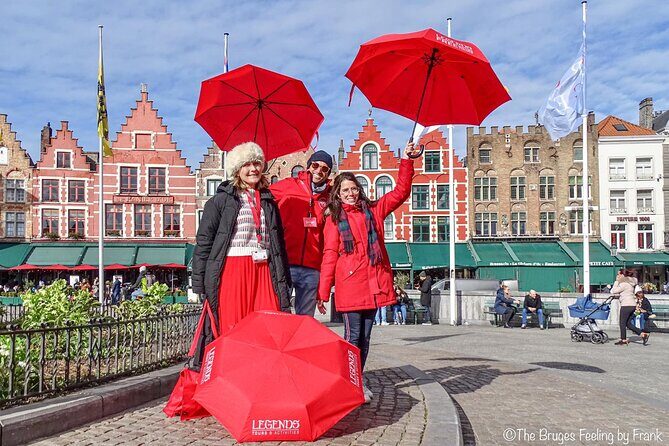
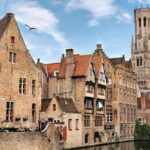
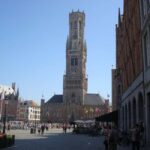
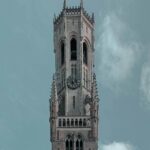
Next comes Belfort. You don’t just pass by the famous bell tower; you also visit the halls behind it and learn what role the tower played during the Middle Ages.
This is one of those stops that helps you read the city’s skyline. Bruges built symbols for authority, and the Belfort is one of the clearest. It’s easy to appreciate even if you’re not planning to climb anything. And if you are interested in climbing or going higher, one review note suggests you may want to plan for tower ticketing in the morning.
Good to know: the visit here is brief (about 10 minutes). Treat it as a “why it matters” primer, not a long deep dive.
Gruuthusemuseum: a palace, and a beer monopoly
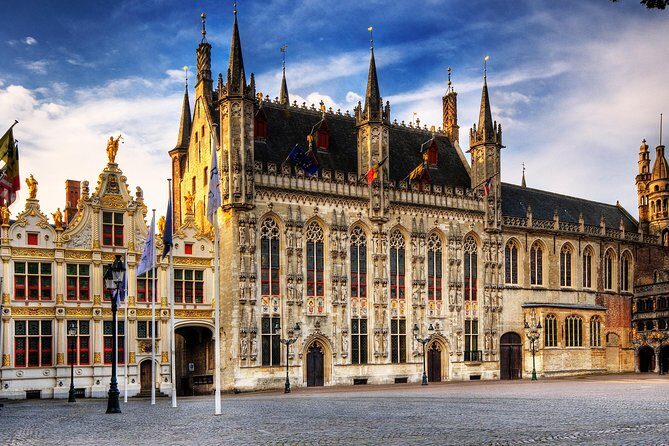
At the Gruuthusemuseum stop, you get a taste of how wealth worked in Bruges. The palace belonged to a wealthy family, and the guide connects their power to a monopoly on a specific part of the beer trade.
This is one reason this tour feels more alive than a simple postcard walk. Beer in Bruges wasn’t just a drink. It was money, influence, and control—exactly the kind of detail that helps explain why certain buildings and families show up again and again.
Potential drawback: if you were hoping for a lot of museum-time (long interior viewing), this is more of an exterior/intro moment than a full museum visit. You’re there long enough to understand the story, then you move on.
Sint-Janshospitaal: medieval care still standing
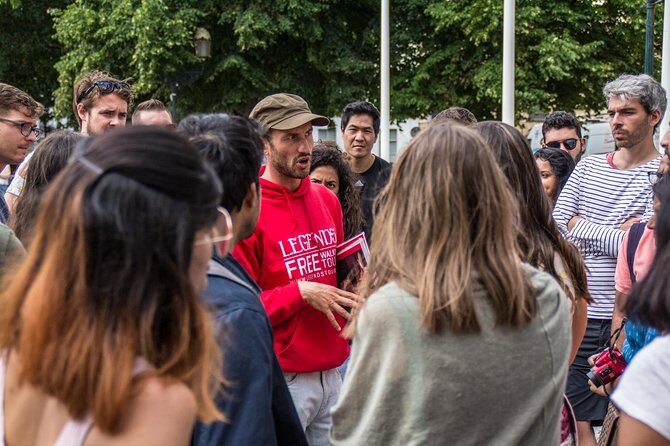
Then you step into Sint-Janshospitaal, the hospital of St John. The guide points out that it’s one of the oldest still existing hospitals in the world and a cornerstone of medieval society.
It’s a powerful stop because it reframes what “history” can mean. Instead of only kings, dukes, and trade routes, you get a reminder that cities also built systems for care. Standing in the setting you’ll learn why these institutions were part of daily structure, not just religious charity.
Tip for your own pace: take a minute here even if you normally don’t. This stop is only about 10 minutes, but the visual weight of the building can make it feel longer in a good way.
Ten Wijngaarde beguinage: a community life for 800+ years

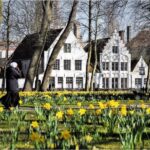
Next is The Princely Beguinage Ten Wijngaarde. You walk into the beguinage, described as the biggest of its kind in the world. The guide shares that a community of ladies lived together there for over 800 years.
This is the stop where the tour can surprise you. It’s not only a beautiful place to see. It’s also a human story about how a community could last through changing times. You get a real sense of why a city might preserve something like this, even while other powers shift around it.
What to expect: roughly 10 minutes in the beguinage area, so it’s enough time to get oriented and understand the basics of the setting and the idea behind beguinages.
You can also read our reviews of more historical tours in Bruges
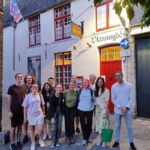
De Halve Maan Brewery: the nickname story and the beer pipeline
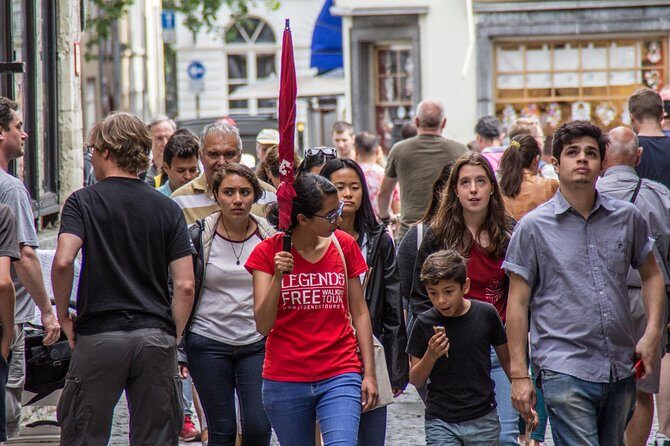
De Halve Maan Brewery appears as a front-facing stop, with a story about why Bruges got the nickname Fools of Bruges. Even better, the guide shows a piece of the beer pipeline that flows beneath the city.
This is one of those details that makes you look at the ground differently. Bruges isn’t just medieval architecture above; it had systems moving behind the scenes too. Hearing about a literal pipeline gives you a physical way to understand how brewing, business, and city planning connected.
Some guides also layer in extra food-and-drink moments. One review specifically mentions chocolate touches, including a free truffle stop at a chocolate shop. If that’s offered on your date, it pairs nicely with the brewery theme.
Minnewater Lake: swans, canal stories, and Maximilian conflict
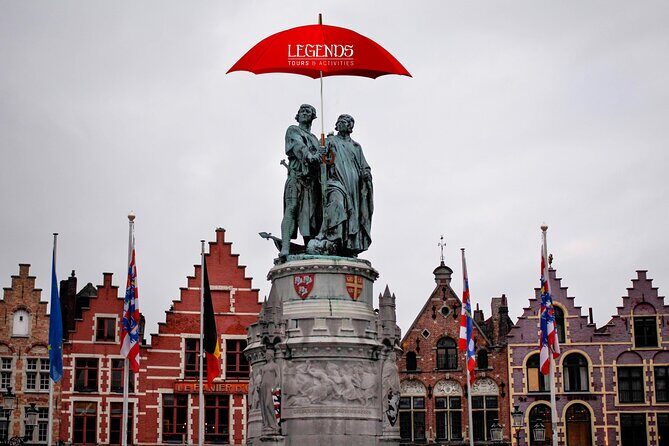
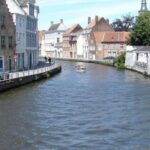
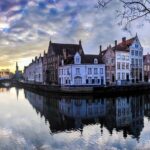
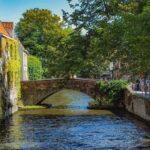
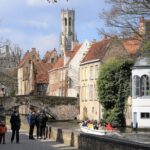
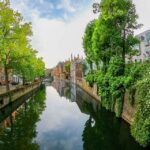
At Minnewater Lake, also known as the Lake of Love, you’ll hear why there are swans on Bruges canals and why the city ended up in conflict with Emperor Maximilian of Austria.
This stop works well if you like your history to include legends and politics side by side. Swan symbolism sounds “touristy” until the guide links it to the reasons a city would adopt or protect certain cultural images. Then the Maximilian conflict pulls it back into real power struggles.
Timing reality: this is a longer stop at about 15 minutes, giving you space to look around without feeling rushed.
Onze-Lieve-Vrouwekerk: Michelangelo and the Burgundy tombs
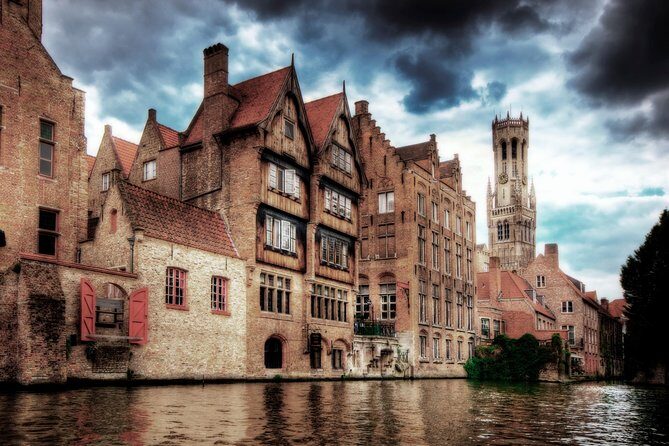
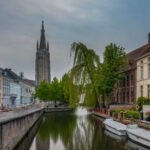
Then comes one of Bruges’ most important church stops: Onze-Lieve-Vrouwekerk. The guide tells you the story of this iconic church, including the fact that it has the 2nd tallest brick tower in the world. You also hear about a statue by Michelangelo and the tombs of the last Dukes of Burgundy.
This is the stop where the tour’s “where power shows” story really comes into focus. Church art and noble tombs aren’t just decoration. They’re a public announcement about who mattered—and how they wanted to be remembered.
What I’d do as a traveler: let your eyes scan for the details your guide mentioned. Since the stop is about 10 minutes, you’ll get the most out of it by matching what you hear to what you see.
Groeningemuseum garden: a quick art moment without the time sink
Next you step into the garden of the Groeninge Museum. You get a short view, about 5 minutes, where some of the works of big Flemish masters are on display.
If you’re short on time, I like how this tour doesn’t pretend you’ll see everything. It gives you an art flavor and keeps the pace moving. If you want more art later, this stop helps you decide what direction to go next.
Huidenvettersplein: tanners’ square and the cost of leather
At Huidenvettersplein, you reach the old Tanner’s square, where the guide explains the smelly business of greasing skins and turning them into leather.
It’s a memorable stop because it adds the messy part of medieval industry. Bruges has a reputation for being very pretty, but this tells you the city also ran on trades that weren’t always pleasant.
Practical note: this kind of stop is best treated as storytelling and context, not something you need to linger in for long. You move on fairly quickly (about 10 minutes).
Finishing at Burg Square: politics and the birthplace feeling
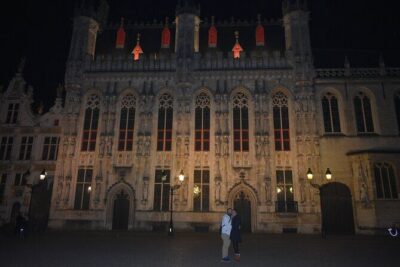
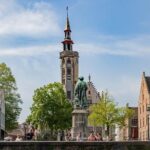
The tour ends at Burg Square after passing the old Fishmarket. The guide explains that Burg is the political heart and the birthplace of the city of Bruges.
This ending ties back to the earlier Markt introduction, so you close the loop: trade built wealth, politics used that wealth, and the city shaped itself into something that could be seen in towers, churches, and civic spaces. It’s also a great place to transition into your own plan for dinner or a slower wander.
Group size, guides, and why people rate it so high
This is capped at 24 travelers, which matters in a city like Bruges. Smaller groups mean you spend more time actually hearing the guide and less time trying to see over heads.
The other big factor is the guides’ style. Names that show up in the experience include Louis, Wilium, Victoria, Thomas, Erik, Erik, Nicholas, Sander, Thomas again, Emiel, Celine, Martin, and Wouter. The common thread across these mentions is storytelling that makes the city feel personal—sometimes with humor. One review also notes the use of visual aids, which is a real help when you’re learning things like pipelines, family monopolies, or why towers mattered.
Still, one caution: the experience can feel more guide-led than free-form. If you prefer lots of back-and-forth cultural conversation, you might want to ask for it directly at the start.
Price, value, and what you should plan for
Let’s talk value honestly. At $3.62 per person, this tour is priced like a budget-friendly intro, and the structure supports that. You’re told that all fees and taxes are included, and stops are marked with admission ticket free.
You still want to think about a couple of extras:
- The walking itself: it’s a walking tour, so you’ll want comfortable shoes. Bruges streets can be uneven, and you’ll be on your feet for about 2h15.
- Tower choices: if you decide you want to climb or go higher than the halls, you may need separate ticketing. One review explicitly flags tower tickets planning in the morning.
- Tipping: tips are recommended. If your guide adds humor, answers your questions, or makes the stories click, I’d tip like it matters, because it does.
How to prepare so the tour feels easy
A few simple moves help your day stay smooth:
- Arrive a bit early at Pieter de Coninck en Jan BreydelMarkt so you’re not scrambling.
- Bring a rain layer. The experience is described as requiring good weather, and Bruges can turn quickly.
- If you’re traveling with a service animal, the tour allows service animals.
- Since it’s in English with a mobile ticket, have your phone accessible at check-in.
And one small mindset shift: treat this as a city “map made of stories.” You’ll remember more if you connect each stop to the bigger themes your guide uses—trade, power, institutions, and the people behind them.
Should you book Legends of Bruges?
Book it if:
- You’re seeing Bruges for the first time and want a fast overview of the core sights.
- You like your history explained in short, story-shaped chunks rather than long museum sessions.
- You want a low-cost way to get oriented before you choose where to spend extra time.
Skip it (or pair it) if:
- You mainly want deep social-and-cultural life stories, not political/economic context. This tour does a lot of the latter.
- You’re looking for long interior access at museums. Most stops are brief by design.
My take: this is one of the best ways to get your bearings fast and learn why Bruges looks the way it does. If you do it early in your trip, you’ll have a much easier time deciding what to revisit afterward.
FAQ
How long is the Legends of Bruges walking tour?
It runs for about 2 hours 15 minutes.
Where does the tour start and end?
It starts at Pieter de Coninck en Jan BreydelMarkt, 8000 Brugge, Belgium and ends at De Burg, Burg 15, 8000 Brugge, Belgium.
Is the tour in English, and do I get a ticket on my phone?
Yes. It’s offered in English, and you receive a mobile ticket. Confirmation is received at booking time.
What does the price include?
All fees and taxes are included, and the itinerary stops are marked as admission ticket free.
How large is the group?
The maximum group size is 24 travelers.
What happens if weather is bad or I need to cancel?
The experience requires good weather. If it’s canceled due to poor weather, you’ll be offered another date or a full refund. You can cancel for free up to 24 hours in advance for a full refund, but less than 24 hours before start time is not refunded.