REVIEW · BRUSSELS
From Brussels: Day Trip to Ghent with Atomium
Book on GetYourGuide →Operated by BUENDIA TOURS · Bookable on GetYourGuide
A giant metal planet leads into medieval Ghent. This day trip pairs a quick Atomium stop with a Spanish-guided walk through Ghent’s top landmarks, including St. Bavo’s Cathedral and the Van Eyck Mystic Lamb. I also love the balance: you get a guided push for context, then 4 hours of free time to lunch and wander at your own pace. The main drawback is simple: this is mostly walking and it’s not suitable for people with mobility impairments.
From Brussels, the setup is straightforward. You meet in front of the Hilton Grand Place Hotel at Brussels Central Station, and the guide wears Buendia Tours ID. For $49 per person, you’re paying for bus transfer plus a guided tour in Spanish, with your food and drinks left for you to handle.
The payoff is how much you can see without feeling rushed. You’ll hit the “Jewel of Flanders” highlights, learn the stories behind the big sights, then use your free time to follow your nose in neighborhoods like Patershol. Bring comfortable shoes, because this is a full 9-hour day.
In This Review
- Key things to love on this Brussels to Ghent day trip
- The Atomium Stop: your Belgium warm-up before medieval Ghent
- Getting to Ghent from Brussels with a Spanish-speaking guide
- Two hours of Ghent highlights you can actually remember
- St. Bavo’s Cathedral and the Van Eyck Mystic Lamb
- Castle of Gerald the Devil and St. Bavo’s: learning Ghent through drama
- Belfry and Town Hall: civic power and the noose-bearers story
- St. Nicholas Church, Masons’ Guild Hall, and the Graslei quays
- Gravensteen Castle: medieval stone you can feel
- Patershol neighborhood: where your free time can shine
- Markets and trading history: Great Butchers’ Hall, Fish Market, Friday Market
- 4 hours of free time: lunch, beer, and going at your pace
- Price and value: what $49 covers and what it doesn’t
- What to bring (and who should skip it)
- Should you book this Brussels to Ghent day trip with Atomium stop?
- FAQ
- How long is the Brussels to Ghent day trip?
- Is there a guided tour of Ghent?
- Does the tour include food or drinks?
- Where do I meet the group in Brussels?
- Will there be an Atomium stop?
- Is the tour suitable for mobility impairments?
- Do kids need anything special on the bus?
Key things to love on this Brussels to Ghent day trip
- Atomium photo stop with the nine-province sphere design before you head to Ghent
- Spanish guided tour focused on major landmarks you can name after the fact
- St. Bavo’s Cathedral + Van Eyck Mystic Lamb for one of Belgium’s most famous artworks
- Belfry, Town Hall, and the noose-bearers story that explains local civic pride
- Gravensteen Castle and Patershol for medieval atmosphere and small-street charm
- Markets and quays like Graslei, the Old Fish Market, and Friday Market for a trading-city feel
The Atomium Stop: your Belgium warm-up before medieval Ghent
The day starts with a classic sight break: a stop at the Atomium. It’s a monument more than 100 meters high, made of large spheres about 18 meters wide, representing the nine Belgian provinces. Even if you’ve seen photos, seeing it up close changes the scale fast.
I like this moment because it resets you before the walking begins. You’re in motion from Brussels, then you get a quick, iconic view to anchor the trip. Think of it as your visual “okay, I’m in Belgium” kickoff.
Timing wise, the Atomium is not a long detour. It’s built into the route so you don’t feel like you lost half a day to the roadside. Plan to take your photos, look around, and then keep moving.
A few more Brussels tours and experiences worth a look

Getting to Ghent from Brussels with a Spanish-speaking guide
You’ll board the bus at the scheduled time after meeting at Brussels Central Station, with Buendia Tours ID for the guide. The coach ride is about 1.5 hours each way, so the day has a natural rhythm: transportation, guided walking, free time, and back again.
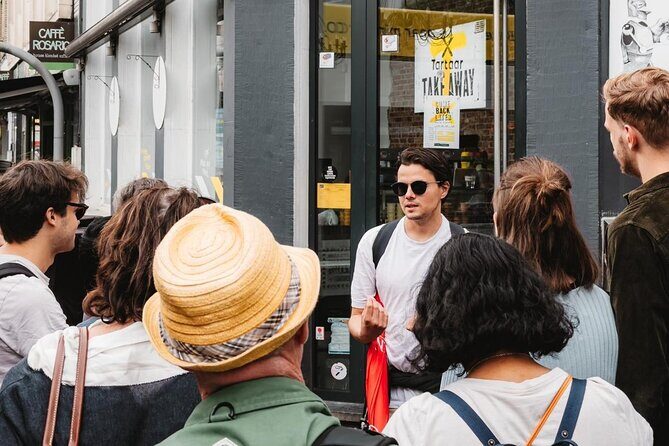
The tour language is Spanish. That’s a big deal if you want more than “this is a church” narration. You’ll hear the history and the meanings behind the landmarks as you walk between them. For me, a guided day like this works best when the guide gives you a few stories you can carry home.
Also note what’s not included: food and drinks. You’re going to need to plan for lunch and whatever you want to drink on your own during the free-time window.
Two hours of Ghent highlights you can actually remember
Once in Ghent, your guided portion lasts about 2 hours. That’s enough time to get the lay of the land without turning the day into a marathon of facts.
You’ll start learning the city through standout landmarks. Expect stops connected to Ghent’s medieval power, religion, and trade. The pacing is the point: you’ll get a guided path that connects the major sites into one story.
One nice touch is the variety. You’re not stuck only in churches or only in castles. The tour moves across civic buildings, religious sites, and riverfront areas, so your brain doesn’t get stuck in one theme for the whole walk.
St. Bavo’s Cathedral and the Van Eyck Mystic Lamb
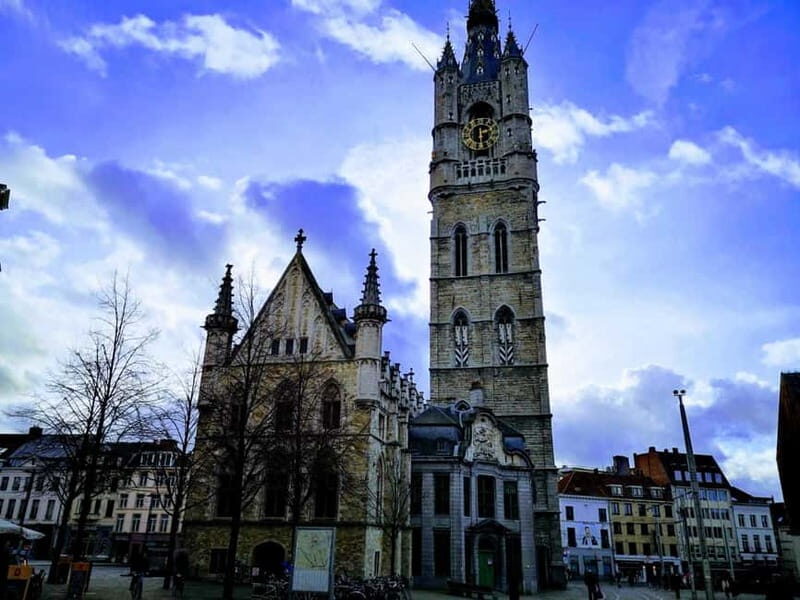
St. Bavo’s Cathedral is a centerpiece for many people visiting Ghent, and this tour targets it for a reason. You’ll visit the cathedral and get to see The Adoration of the Mystic Lamb by the Van Eyck brothers.
This is the kind of stop that makes a guided tour feel worth it. You’re not just passing a famous building; you’re seeing one of the artworks Ghent is known for. If you care about art, it gives you a clear “why Ghent matters” moment.
If art museums are your thing, you’ll probably want to linger longer than the tour schedule allows. If you’re not an art person, treat this as a landmark stop and let the rest of the walking do the storytelling.
Castle of Gerald the Devil and St. Bavo’s: learning Ghent through drama
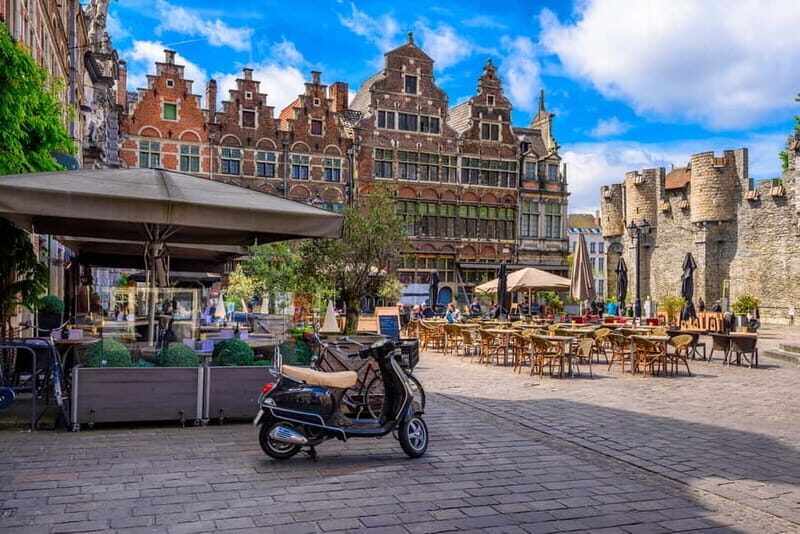
You’ll also learn about the 13th-century Castle of Gerald the Devil. The name alone grabs attention, and that’s useful. It hints that Ghent’s medieval past had bigger-than-life characters and local legends.
Right after that, you connect to St. Bavo’s Cathedral. This pairing matters because it shows two sides of the city’s identity: castle power and religious influence. You get a sense that medieval Ghent wasn’t just pretty buildings. It was organized around control, faith, and status.
The guide’s job here is to help the sites click together. If you listen for the story threads, the whole city starts making sense faster when you’re on your own during free time.




Belfry and Town Hall: civic power and the noose-bearers story
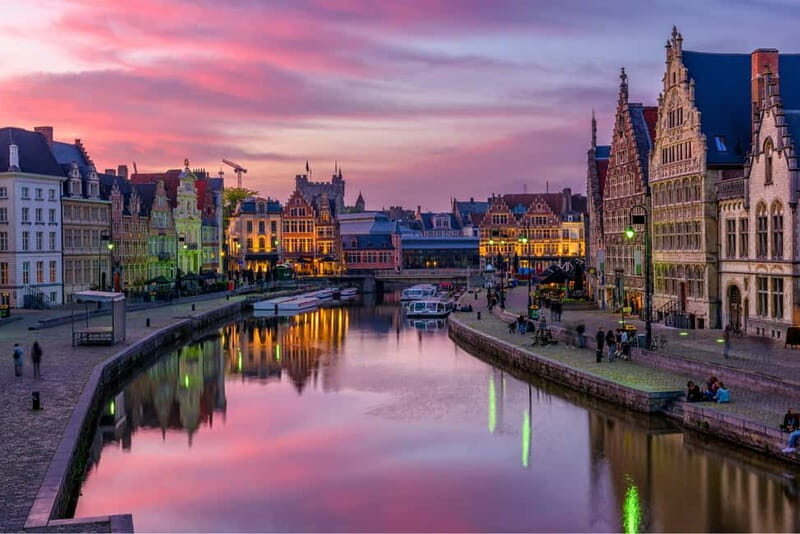
Next up are civic landmarks like the Belfry of Ghent and the Town Hall. These aren’t random stops. They’re the kind of buildings that signal who ran the city and how authority was displayed.
During this part of the walk, you’ll hear why Ghent inhabitants are known as noose-bearers. The tour doesn’t just drop a nickname. It places it in the context of civic life, which makes the detail feel less random.
I like that the guide includes these oddball bits. A nickname you can’t explain is just trivia. A nickname you understand in context becomes a memory hook. That’s what makes a guided tour work for me.
St. Nicholas Church, Masons’ Guild Hall, and the Graslei quays
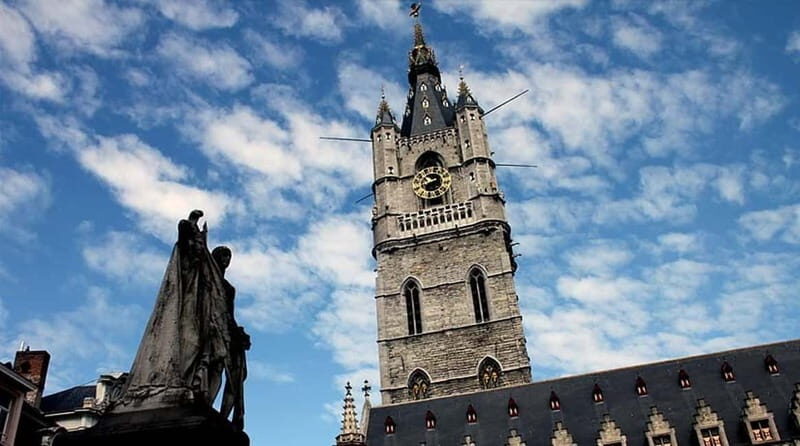
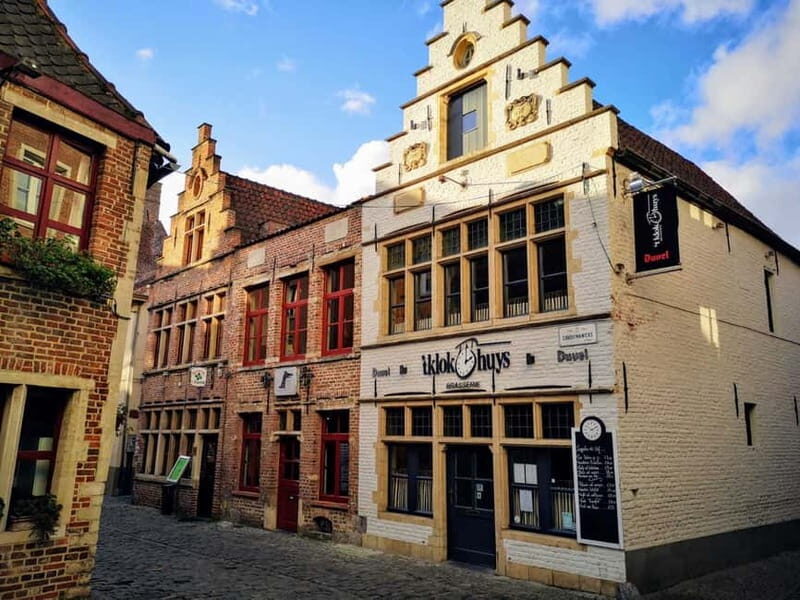
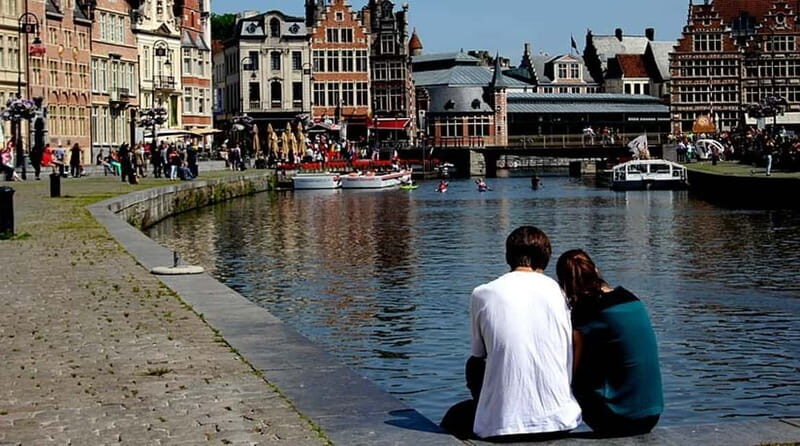
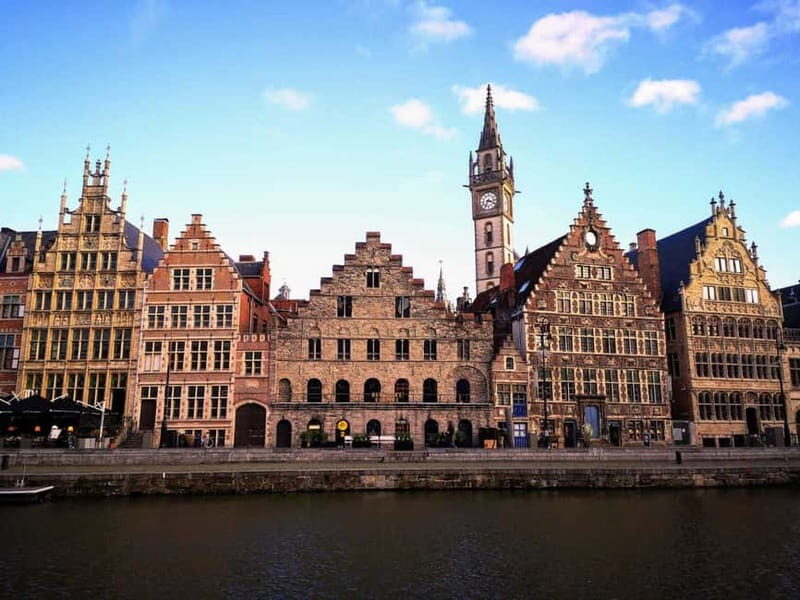
From there, the route keeps moving through the city’s architectural textures. You’ll visit St. Nicholas’ Church and the Masons’ Guild Hall, then walk by the quay-side buildings of the Graslei.
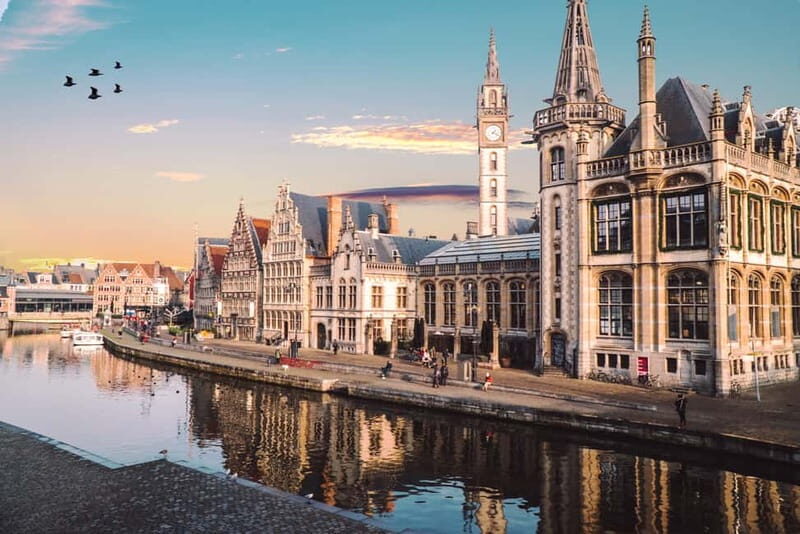
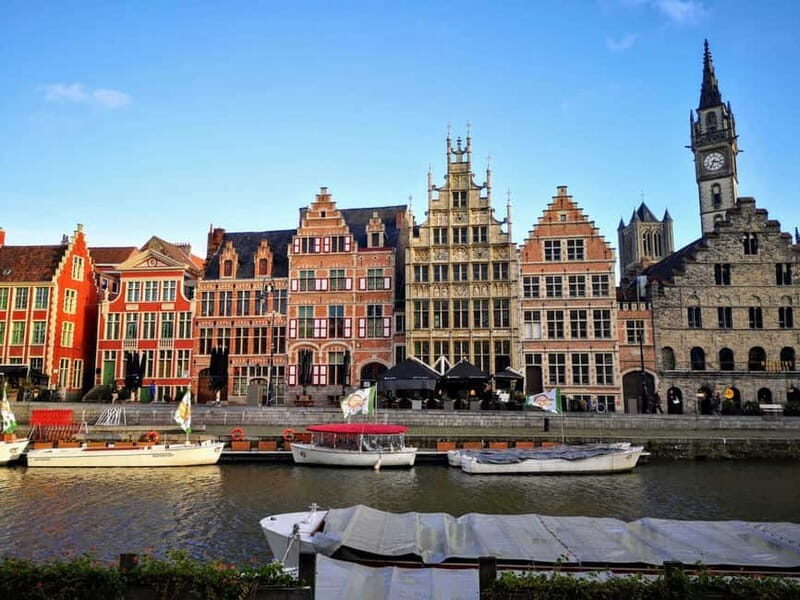
This is where Ghent starts to feel like a real place, not a list of attractions. The quay area helps you “see the city’s job.” Ghent grew through trade, and the water edges show that connection between commerce and everyday life.
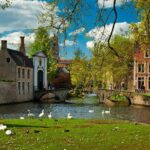
If you like riverfront strolling, this is a good part of the day. Even with a guide moving you along, you’ll get chances to pause and look across the water and down the lined façades.
Gravensteen Castle: medieval stone you can feel
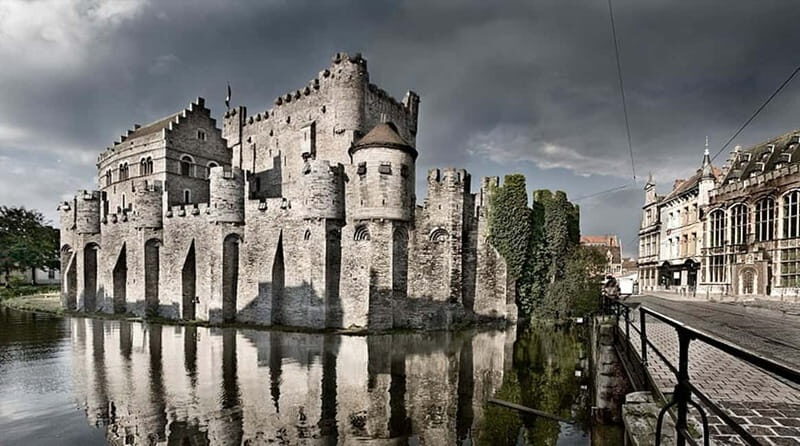
A major highlight in this day is Gravensteen Castle. It’s medieval, it’s fortress-like, and it’s part of what gives Ghent its well-preserved character.
You’ll have the chance to enter Gravensteen Castle as part of the tour. That matters because outside views can be impressive, but interior spaces help you understand the scale and purpose of the structure.
This is also a stop where your shoes matter. Castle grounds and access points tend to be uneven and you’ll likely spend more time standing. Wear comfortable footwear and take your time on the steps.
Patershol neighborhood: where your free time can shine
After the main guided stops, Patershol shows up as a standout neighborhood to explore. Even if the guided portion gives you a taste, Patershol is one of those places that rewards wandering.
Think narrow lanes, a cozy old-town feel, and plenty of corners where you can slow down. During free time later, you’ll be able to come back to the vibe you liked most.
If you enjoy taking photos, this is a smart target area. If you’re more of a food person, it’s a good setting to hunt for lunch and simple local meals without needing a detailed plan.
Markets and trading history: Great Butchers’ Hall, Fish Market, Friday Market
Ghent isn’t just castles and cathedrals. The tour also tackles the city’s trading past through stops like the Great Butchers’ Hall, the Old Fish Market, and the Friday Market.
These places help you understand how the city operated day to day. Instead of only looking at power buildings, you see where food and trade moved. That context makes Ghent feel more grounded.
The Old Fish Market and Friday Market are especially useful if you like the atmosphere of public spaces. Even if you’re not shopping, these are the kind of stops where you get a sense of what “life” looked like in a trading city.
4 hours of free time: lunch, beer, and going at your pace
The free time window is about 4 hours. That’s a gift. It lets you decide how you want the day to end: sit down for lunch, do extra sightseeing, or just roam.
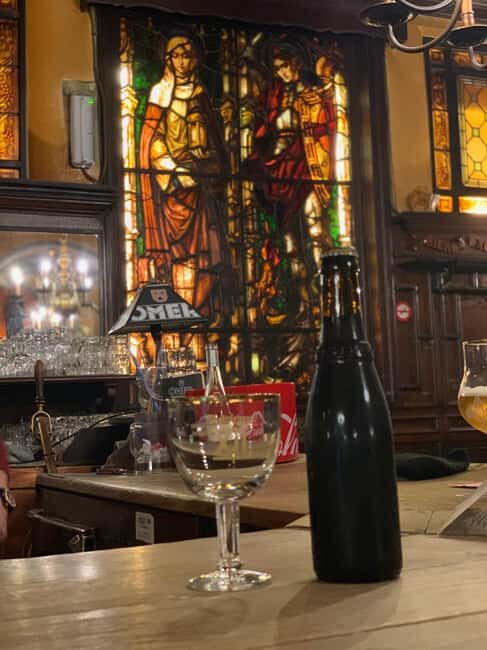
You’ll have options suggested in the tour format. For a classic Flemish meal, you can taste typical Flemish food at lunch. If you’d rather keep it simple and local, you can also enjoy a beer at Dulle Griet.
I like that you’re not forced into one dining plan. Some day trips try to control every hour. This one leaves you room to follow what you’re drawn to.
Practical tip: use the guided portion to learn the main sights, then use free time to return to whatever location you enjoyed most. If you found yourself fascinated by the river quays, spend more time there. If the medieval castle hit the right note, loop back toward that area for relaxed wandering.
Price and value: what $49 covers and what it doesn’t
At $49 per person, you’re paying for the bus transfer from Brussels and the guided tour in Ghent. You’re also getting a full day structure: transit, guided highlights in Spanish, and a long free-time block.
What’s not included is food and drinks. That’s common for this kind of group tour, but it matters for planning. If you want to control costs, pick one meal and keep drinks simple. If you’re the type who plans a proper Flemish lunch, build that into your budget.
Also note the group moves at a walking pace. This is not a sit-and-watch day. The value comes from organization plus your time to explore afterward.
What to bring (and who should skip it)
Bring comfortable shoes. You’ll spend time walking between major sites, and you’ll likely be on your feet for much of the day.
This tour is not suitable for people with mobility impairments. If you need step-free access and lots of sitting, it’s better to look for a different format.
Who it suits best:
- You want a Spanish-speaking guide and a clear highlight route
- You like medieval cities and want to see both religious and civic landmarks
- You’re okay doing a full day and want a chunk of free time to decompress
- You want an easy day trip from Brussels without planning every step yourself
Should you book this Brussels to Ghent day trip with Atomium stop?
If you want structure without suffocating your schedule, I think this is a smart booking. The blend of an Atomium introduction, a focused Spanish guided tour of key sites, and 4 hours of free time is a strong formula for first-timers.
Book it if you’ll use the free time well—plan lunch, pick one area to linger, and don’t try to cram every street into the day. Skip it if you need mostly flat walking or you want food and drinks handled for you.
The satisfaction score is high, and that usually means the day plan lands well: you get meaningful sights, a language you can follow, and enough breathing room to make it feel like your trip too.
FAQ
How long is the Brussels to Ghent day trip?
The total duration is about 9 hours.
Is there a guided tour of Ghent?
Yes. You get a guided tour of Ghent in Spanish (about 2 hours) plus around 4 hours of free time.
Does the tour include food or drinks?
No. Food and drinks are not included.
Where do I meet the group in Brussels?
Meet in front of the Hilton Grand Place Hotel at Brussels Central Station. The guide will wear ID of Buendia Tours.
Will there be an Atomium stop?
Yes. Before heading to Ghent, the bus makes a stop to admire the Atomium.
Is the tour suitable for mobility impairments?
No, it is not suitable for people with mobility impairments.
Do kids need anything special on the bus?
Children under 2 years old must travel in a car seat on the bus. Bring the appropriate seat.