REVIEW · BRUSSELS
Visite guidée : Bruxelles, 1000 Ans de Luttes
Book on Viator →Operated by Brussels By Foot · Bookable on Viator
Brussels drama starts in the Marolles. You get story-first history and surprise stops that feel local, from a 12th-century church with Polish Sunday mass to a short ride up for views. One thing to plan for: this is a real walking tour through tight streets, so wear comfortable shoes and expect some uneven footing.
I also like how English guidance keeps the meaning clear, even when the topics turn political and personal. The group stays small (max 25), which makes it easier to ask questions and follow the threads without feeling rushed.
You’ll pass from religious life to civic controversy to everyday neighborhood grit, and you’ll see why Brussels isn’t only Manneken Pis and grand facades. The route climaxes around Palais de Justice themes and ends at Place du Jeu de Balle, right where you can grab a drink after the walk.
In This Review
- Key things you’ll notice on this 2-hour tour
- Why this Brussels walk is about struggle, not souvenirs
- Notre-Dame de la Chapelle: a church that keeps changing roles
- The Palais de Justice controversy you can’t un-know
- Ascenseur des Marolles: the view that makes the walk click
- Marolles: why small streets carry big meaning
- Place du Jeu de Balle: flea market energy with a conservation mindset
- Price and what you really get for it
- Timing, meeting point, and how to make the start smooth
- Guide style: why names like Francois, Simon, and Thomas keep showing up
- Who should book this tour (and who may want a different style)
- Should you book this tour?
- FAQ
- How long is the Brussels 1000 years of struggles tour?
- What language is the tour offered in?
- Where does the tour start?
- Where does the tour end?
- How much does it cost?
- What’s included in the price?
- What is not included?
- Is there a mobile ticket?
- Is there any limit on group size?
- What’s the cancellation policy?
Key things you’ll notice on this 2-hour tour
- Notre-Dame de la Chapelle’s 12th-century roots plus painting exhibitions and Polish Sunday mass
- Palais de Justice as a long-running public works saga, including decades of renovation talk
- Ascenseur des Marolles viewpoint for a quick hit of “wait, that’s Brussels?” perspective
- Marolles side streets and blind alleys, framed as a place shaped by hardship and stubborn independence
- Place du Jeu de Balle and the daily flea market—and what it takes to keep the area going
Why this Brussels walk is about struggle, not souvenirs
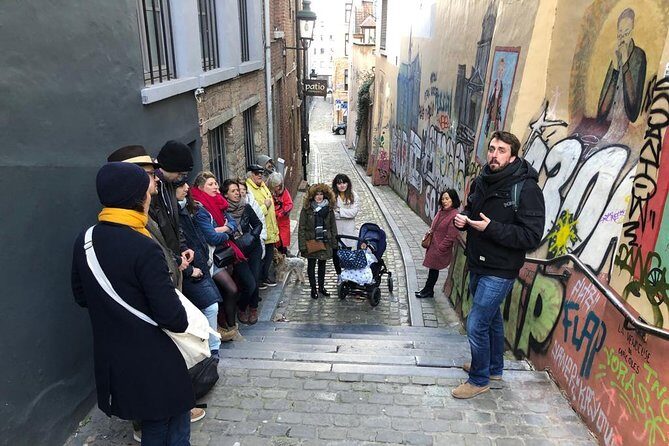
If you’ve seen the big-ticket sites in Brussels, this tour is the antidote. It shifts your focus to daily life—how people lived, adapted, and pushed back—especially in the Marolles area.
The big idea is simple: “1000 years of struggles” isn’t just a slogan. It’s a way to look at buildings, neighborhoods, and even government projects as part of the same human story: effort, tension, and long memory.
And you’ll feel that in the pacing. You don’t just stand and look. You walk street by street, letting each stop explain the next one.
You can also read our reviews of more tours and experiences in Brussels.


Notre-Dame de la Chapelle: a church that keeps changing roles
The tour starts at Rue de la Chapelle 21, with the first stop at Église Notre-Dame de la Chapelle. This is a 12th-century church, so the stone is the kind that makes you slow down without being asked.
What makes it more than a photo stop is that the church has layers of present-day use. You can catch painting exhibitions at times, and on Sundays it offers mass in Polish, which brings a living community tone to a very old setting.
You’ll likely come away with an easy lesson: in Brussels, history isn’t locked behind glass. It keeps showing up as events, worship, and art in real time.
Practical note: the admission ticket is listed as free for this stop, which is great value if you’re watching costs. Still, be respectful—church spaces can have rules about sound and where you stand.
The Palais de Justice controversy you can’t un-know
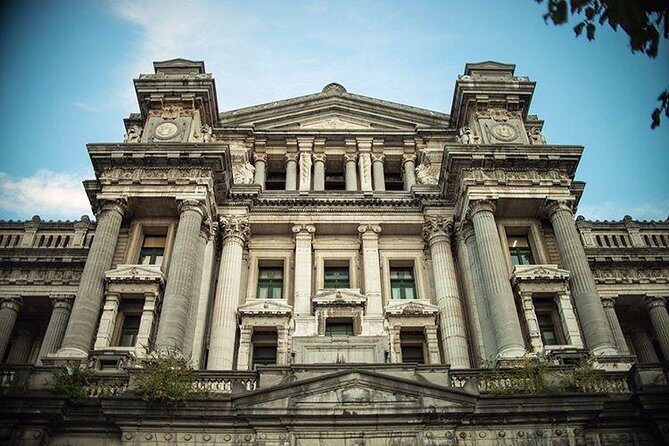
Next you’ll head to Palais de Justice, the giant that dominates the skyline and curiosity. The tour frames the building’s story as an ongoing scandal about renovation works that started decades ago and never truly finished.
That’s a lot to process in a quick 15 minutes, but it’s also exactly why this stop works. It turns the monument from “cool architecture” into something more useful: a case study in how public money, planning, and political will can stall for years.
If you like architecture but also want the human side, you’ll enjoy how the tour keeps the building connected to the people around it—rather than making it feel like a distant landmark.
Keep in mind: the topic can feel blunt. If you want purely uplifting history, you might find the “waste of public money” angle a bit heavy. If you do like nuance and real-world mess, it hits the right note.
Ascenseur des Marolles: the view that makes the walk click
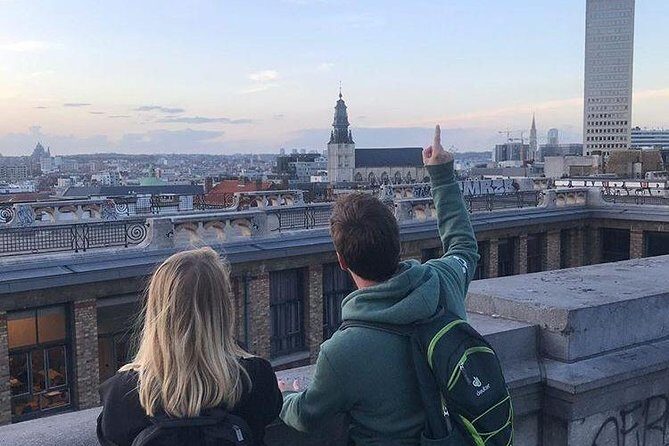
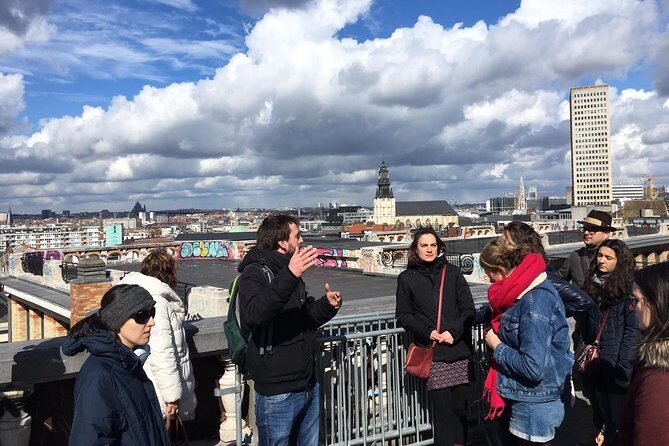
Then comes a very smart little break: the Ascenseur des Marolles. You get about 5 minutes at this stop, which is exactly the right length for a quick reset without turning the tour into a long detour.
The pitch is straightforward: you go up in the elevator to see the neighborhood from a different angle. That viewpoint matters because Marolles can feel confusing at street level—small passages, turns you didn’t expect, and buildings that block your line of sight.
From above, the tour’s themes click. You stop seeing only “tiny streets and blind alleys,” and start seeing a layout shaped by how people adapted to tight space and limited options.
Value check: this stop is also listed as free, so it’s a high payoff moment for little extra cost. Just go in with the mindset of a viewpoint, not a museum.
Marolles: why small streets carry big meaning
The heart of the tour is the Quartier Marolles itself, where you spend around 20 minutes walking and absorbing the area’s personality. This neighborhood can be described in a few phrases that actually add up: poor but quiet, in the middle of Brussels, with tiny streets and blind alleys that feel both tucked away and stubbornly real.
That’s what you’re meant to notice here: the physical city matches the social story. Tight lanes and hidden corners aren’t just atmosphere. They reflect how people organized daily life when resources were limited.
The tour guides the narrative toward something practical and human: Marolles is portrayed as a place shaped by unexpected history and an independence that didn’t wait for permission. You’ll likely find yourself looking at street walls and street turns as evidence of adaptation rather than as random design quirks.
If you’re a first-time visitor, this helps you balance the postcard view of Brussels with what’s underneath it. If you live in Brussels already, it’s a reminder that even familiar streets can have new explanations when someone frames them well.
One consideration: this is a “walk through the neighborhood” segment. You’re not staying in one big open plaza, so expect less seating and more time with your feet. Plan accordingly, especially if you’re sensitive to uneven ground.


Place du Jeu de Balle: flea market energy with a conservation mindset
The final named stop is Place du Jeu de Balle, where you’ll spend about 10 minutes. This is where the Marolles story becomes immediate: a daily flea market that shows how people survive, trade, and reuse.
You’ll also hear about the constant pressure of keeping the place conserved. That means the tour doesn’t treat the market like a permanent stage prop. It treats it like a living tradition that needs attention and protection to keep functioning.
Once the official walk ends, the area naturally flows into food and drinks. You’ll finish at Pl. du Jeu de Balle 64, 1000 Bruxelles, and it’s set up perfectly for a casual continuation—grab a beer, share fries, and keep talking about what you just learned while the neighborhood is still happening around you.
If you’re wondering why flea markets matter historically, here’s the honest answer: they’re a record of what people value and what they can afford, day after day. That’s why this stop feels more like social history than shopping.
Price and what you really get for it
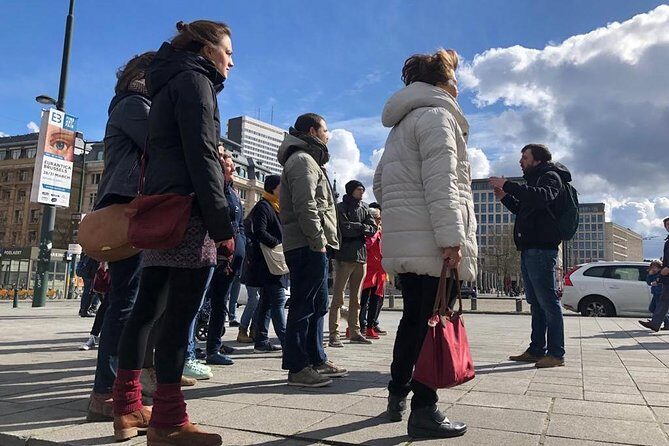
The listed price is $3.62 per person, for an experience that runs about 2 hours and caps at 25 travelers. That’s low enough that it forces you to ask a fair question: why is it priced that way?
The short answer is the tour includes entrance fees/registration, and multiple stops are described with free admission. That means you’re paying mostly for the guidance and the walking narrative, not for a lineup of paid museum tickets.
There’s also a practical note on gratuities: €10.00 per person is not included. In other words, if you like your guide (and you probably will), you should budget for tips.
My take on value: for a guided 2-hour storyline through churches, civic drama, viewpoints, and a neighborhood market, it can be one of the smartest “knowledge per minute” deals you’ll find in Brussels—especially if you care about seeing the city as people experience it, not just as it looks on a brochure.
Timing, meeting point, and how to make the start smooth
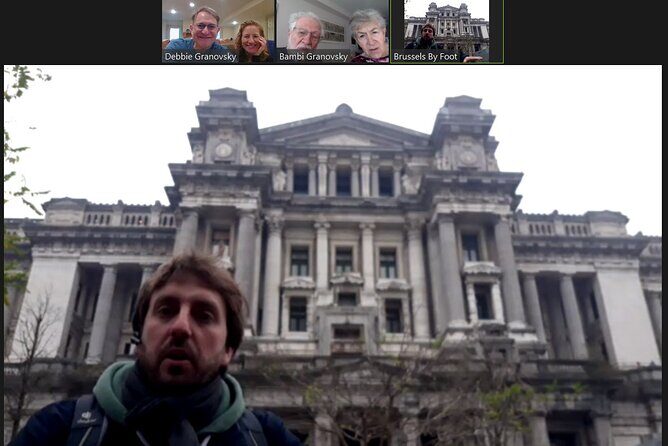
You start at Rue de la Chapelle 21, 1000 Bruxelles. This matters because the tour begins close to the first stop, so you don’t waste time commuting across town.
You finish at the flea market square at Pl. du Jeu de Balle 64, “in the middle of the square.” That’s a good ending because it puts you back in real public space instead of dropping you at some far-off landmark where your only option is public transport.
Duration is about 2 hours, so you’re not committing your whole morning or afternoon. It’s a strong fit if you want culture plus context without sacrificing the rest of your day.
You’ll get a mobile ticket, and the tour is offered in English. Confirmation happens at booking time, which helps you plan without too much guessing.
And yes: the tour is near public transportation, which makes it easier to stack with other Brussels plans.
Guide style: why names like Francois, Simon, and Thomas keep showing up
The tour’s success often comes down to how the guide tells the story. In the guide feedback you’ll see repeated praise for strong storytelling and clear explanations, with names such as Francois, Simon, and Thomas connected to memorable experiences.
The common thread: the guides don’t just list dates. They connect living conditions, politics, and neighborhood identity to the places you’re standing in. That’s what turns a church stop or a civic building stop into something you can actually remember.
So if you enjoy explanations that feel like a local friend with a good memory and strong opinions, this is the right format.
Who should book this tour (and who may want a different style)
Book it if you want Brussels beyond monuments. This tour is especially good if you like social history, neighborhoods with character, and the kind of “why did this place end up like this” thinking that makes cities feel real.
It also works for couples, solo travelers, and small groups because the pacing supports questions and the group size is capped at 25.
You might want to choose something else if you want a mostly sightseeing-only route with minimal walking. This one includes neighborhood streets, tiny lanes and blind alleys, and you’ll feel it in your legs.
Also, if you’re traveling with family, the tour is described as most travelers can participate, and you’ll be within a manageable 2-hour window. Still, I’d pack sensible shoes, because cobbled or uneven surfaces happen in older parts of town.
Should you book this tour?
Yes—if you want a Brussels experience that feels personal, street-level, and meaning-driven. The combination of a 12th-century church, a civic controversy stop at Palais de Justice, a fast Ascenseur des Marolles viewpoint, and the neighborhood finish at Place du Jeu de Balle gives you a complete sense of how Marolles fits into the wider city.
Here’s how to decide in one minute: if you’re the kind of traveler who asks what a neighborhood’s history says about people, book this. If you only want the quickest photo parade, you’ll probably feel underwhelmed.
FAQ
How long is the Brussels 1000 years of struggles tour?
It runs for about 2 hours.
What language is the tour offered in?
The tour is offered in English.
Where does the tour start?
The meeting point is Rue de la Chapelle 21, 1000 Bruxelles, Belgium.
Where does the tour end?
The tour ends at Pl. du Jeu de Balle 64, 1000 Bruxelles, Belgium, in the middle of the square.
How much does it cost?
The price is $3.62 per person.
What’s included in the price?
Entrance fees/registration are included.
What is not included?
Gratuities are not included, and €10.00 per person is listed.
Is there a mobile ticket?
Yes, the tour uses a mobile ticket.
Is there any limit on group size?
Yes, the tour has a maximum of 25 travelers.
What’s the cancellation policy?
You can cancel for a full refund if you cancel at least 24 hours before the experience starts. If you cancel less than 24 hours before, the amount paid isn’t refunded.