REVIEW · BRUGES
💛 Tell Me About Bruges 🏰 1000 Years of Stories by Locals ⭐
Book on GetYourGuide →Operated by Ambassadors Tours & Activities · Bookable on GetYourGuide
Bruges history gets loud on the streets. This top-rated free walking tour uses local storytellers to turn the Middle Ages into something you can picture, not memorize. I like that it’s funny and fast-moving, with guides such as Pascal, Gosha, Steve, Ray, Nikki, and Arthur bringing characters to life instead of reciting dates.
I also like that you cover real, visual anchors of Bruges in two hours—think Markt Square, the Belfry area, Rosary Quay viewpoints, Church of Our Lady, and the canal bridges—so you leave with a mental map. The one drawback to plan for: it’s not a museum-ticket tour, so if you want inside access to major collections, you’ll still need to pay museum admissions separately.
In This Review
- Key Things You’ll Notice Right Away
- Start at the Belfry: The Yellow Umbrella Plan
- Why This Free Walking Tour Feels Different Than “Just History”
- Golden-Age Themes You’ll Hear as You Walk
- Markt Square to Burg Square: Power Centers of Old Bruges
- Belfry Break and a Beer-Focused Pause
- Side Streets and Market Corners That Make Medieval Life Feel Real
- Rosary Quay Photo Stop: The View That Matches the Story
- Bonifacius Bridge: Love, Water, and a Second Photo Moment
- Gruuthuse Museum Area and Church of Our Lady: Monuments With Meaning
- Oud Sint-Jan Site and Walplein Square: Community Life Beyond the Postcards
- Halve Maan Photo Stop and Finishing at Huisbrouwerij De Halve Maan
- Price and Tip Expectations: How “Free” Really Works
- Who Should Book This Bruges Stories Tour (and Who Might Want Another Option)
- Should You Book This Bruges 1000 Years of Stories Tour?
- FAQ
- Where is the meeting point for the tour?
- How long does the walking tour last?
- Is the tour really free?
- What language is the tour in?
- What sights will we see?
- Are museum tickets included?
- Is the tour wheelchair accessible?
- How large are the groups?
- Where does the tour end?
Key Things You’ll Notice Right Away
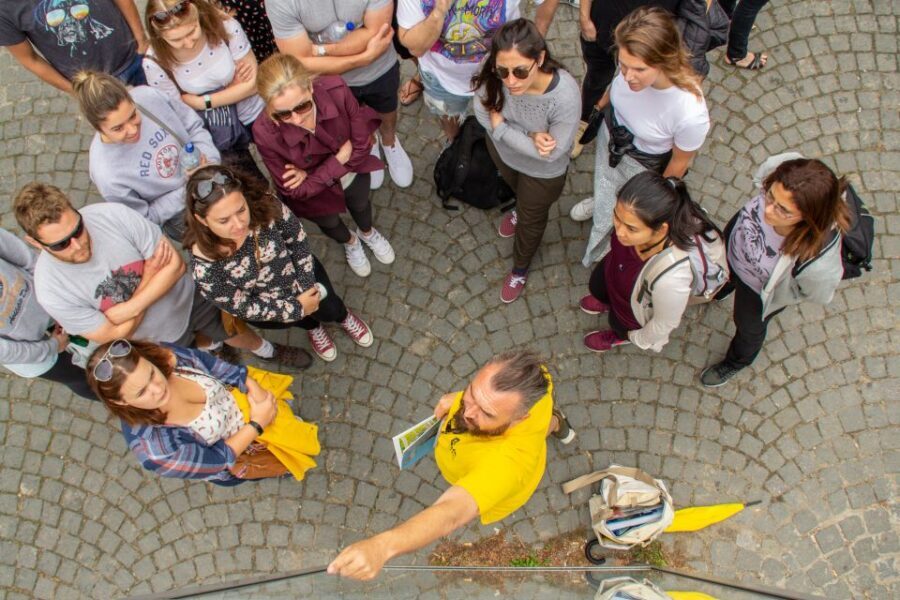
- Meet by the Belfry with a yellow Ambassadors umbrella so you can find your guide quickly at the start.
- Two hours, not a lecture: expect performance-style storytelling, jokes, and audience engagement.
- Golden Age to fall to comeback: the story arc goes beyond medieval glory into why Bruges changed.
- You’ll see the postcard spots on purpose including Rosary Quay and Bonifacius Bridge photo moments.
- Beer and chocolate show up in the story even when you’re just walking through the city.
- Small group feel: the tour limits bookings to keep the mix balanced (and bigger groups need a private arrangement).
Start at the Belfry: The Yellow Umbrella Plan
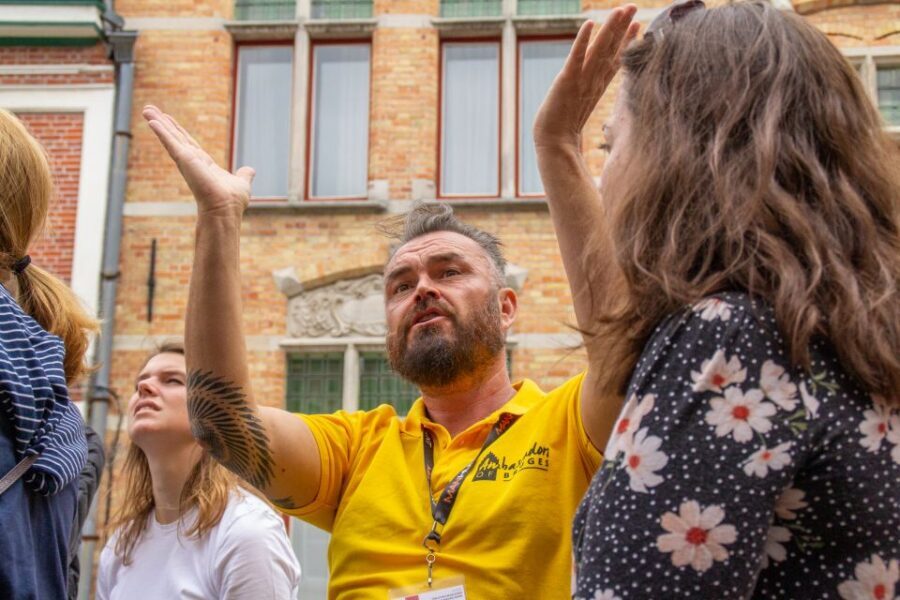
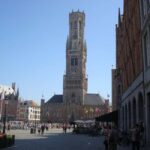
The tour begins at the Market Square, in front of the Belfry Tower. Look for a guide holding the yellow umbrella with Ambassadors on it—that’s your easiest “this is the right group” signal, especially if multiple tours are running.
Duration is about two hours, which is perfect for Bruges. The city center is walkable, but it’s also easy to wander in circles. This kind of guided route helps you get oriented fast, then you can spend the rest of your day choosing what you want to linger on.
The tour is in English and is wheelchair accessible. If you’re bringing a stroller or need to move at a slower pace, it’s still worth going—just know it’s a story-walk, so you’ll be on foot through multiple streets and squares.
You can also read our reviews of more tours and experiences in Bruges.
Why This Free Walking Tour Feels Different Than “Just History”
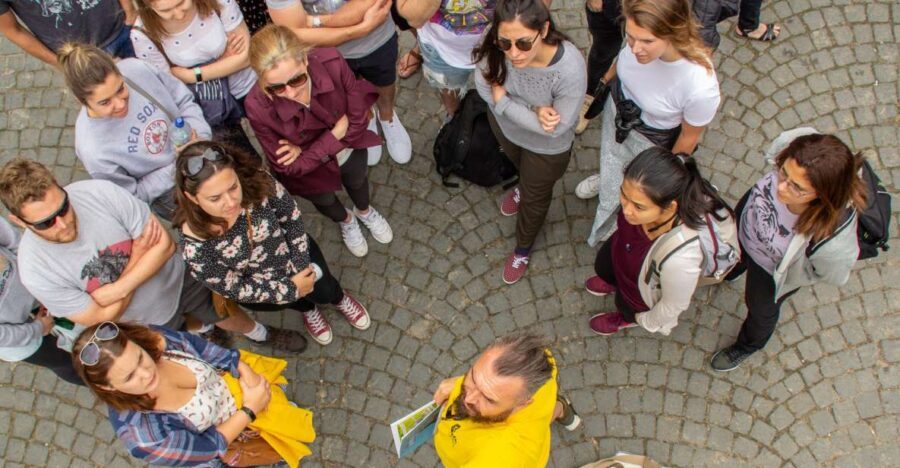
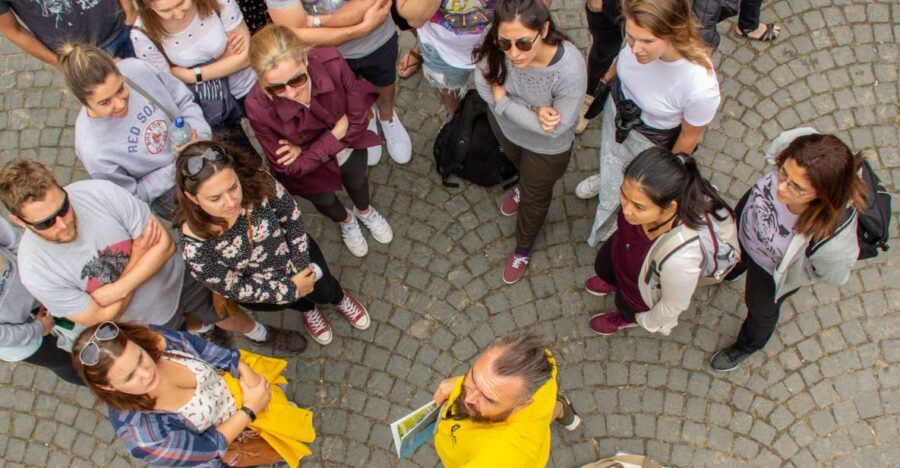
This isn’t a sit-and-suffer tour. The core idea is simple: a local storyteller guides you through medieval Bruges using stories about power, money, faith, conflict, and everyday life. You’ll hear about the “Golden Ages” when Bruges was the richest city in the world, then why it became one of Belgium’s poorest cities later—and why the city is flourishing again.
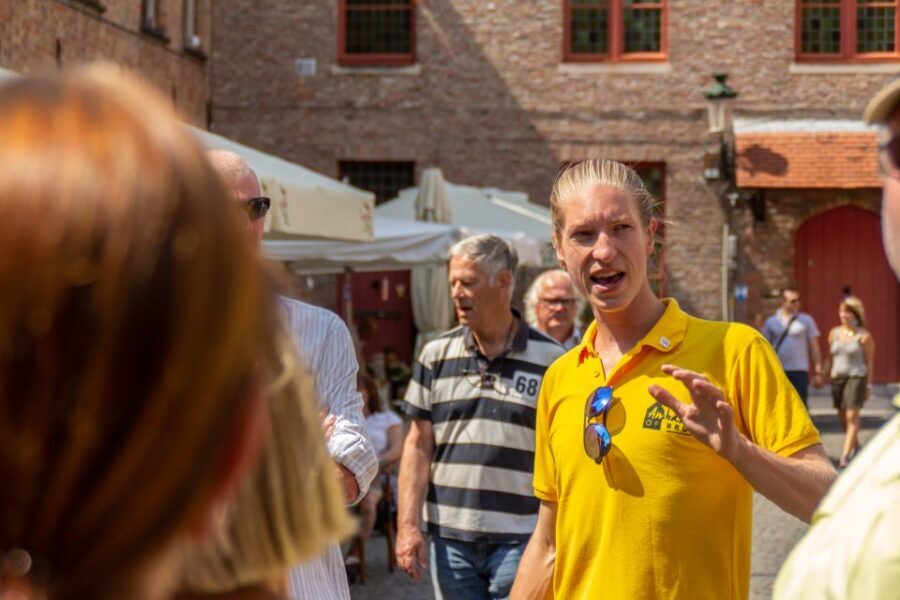
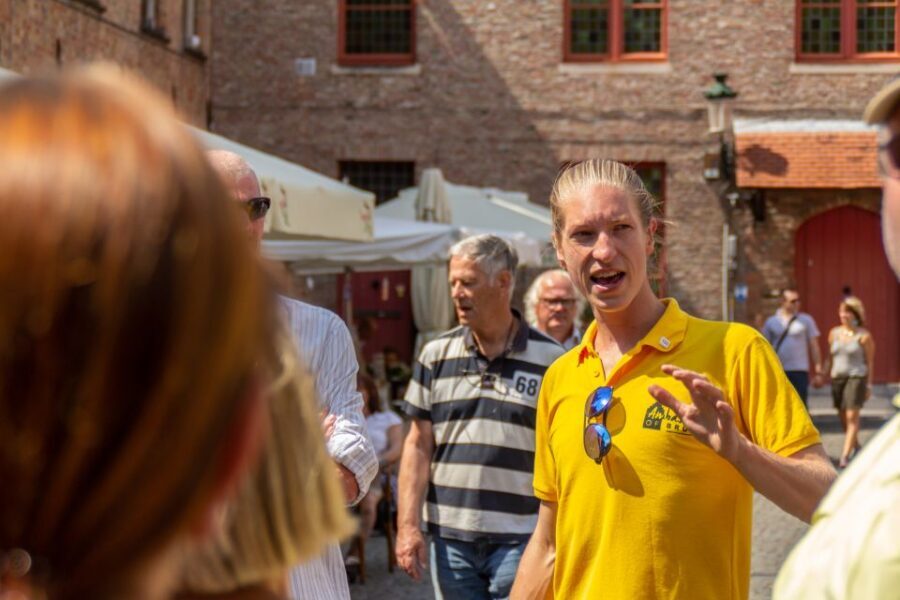
What makes it work is how the guides present the material. From the way guides like Pascal, Gosha, and Nikki are described, you can expect theatrical energy—characters enacted, humor used as a teaching tool, and a pace that keeps teenagers and adults paying attention.
You should also know the tone: it’s not only about architecture. You’ll get stories tied to love and conflict, plus surprising angles like feminism and finance. That mix makes the medieval world feel less like a museum theme and more like a society with real people making choices.
Golden-Age Themes You’ll Hear as You Walk
Bruges rose through trade, civic pride, and wealth—and the tour leans into all three. You’ll follow a route through civic squares, a major church, canal viewpoints, and areas tied to historic community life. Along the way, your guide connects buildings to decisions: who had money, who had influence, and how daily life looked when the city was at its peak.
A recurring theme is that Bruges isn’t blandly “French” or “Dutch.” The tour includes stories about why locals like neither side—another reminder that identity in this region has always been complicated. You’ll also hear how love stories, conflicts, and public structures were intertwined in medieval life, not separated into different chapters.
And yes, you’ll get beer and chocolate mentioned in a way that ties into local culture. Even if you’re not doing tastings on the walk, those references help you understand why Bruges feels so food-focused once you’re done.
Markt Square to Burg Square: Power Centers of Old Bruges
Your first real stop is Markt (Market Square). This is where the city’s medieval identity shows up fast. Your guide uses this area to set the big picture: why Bruges mattered, how wealth shaped the city, and how the “richest city” story isn’t just a brag—it’s tied to real civic structures and life around the squares.
From there you’ll move through short stops and streets near landmarks that feed into the story of governance and wealth. You’ll also hit the Belfry zone early, which is a smart move. The tour uses it as a reference point so later stops feel connected, not random.
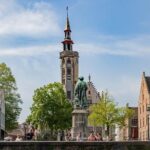
Then the route shifts toward Burg Square, which is another key civic space in the center. If Markt feels like the commercial face of the city, Burg Square connects to the government and the public institutions that helped control how money and authority moved through Bruges.
You’ll also pass the Bruges City Hall area. Even from outside, it’s an important reminder that medieval “history” wasn’t only wars and kings. It was rules, administration, and decisions made in buildings like this.
Possible drawback here: you’ll spend a bit of time standing and looking up at facades and details. If you prefer minimal stops, bring patience for a slow-and-visual start. The tradeoff is you get the best orientation for the rest of the walk.
Belfry Break and a Beer-Focused Pause
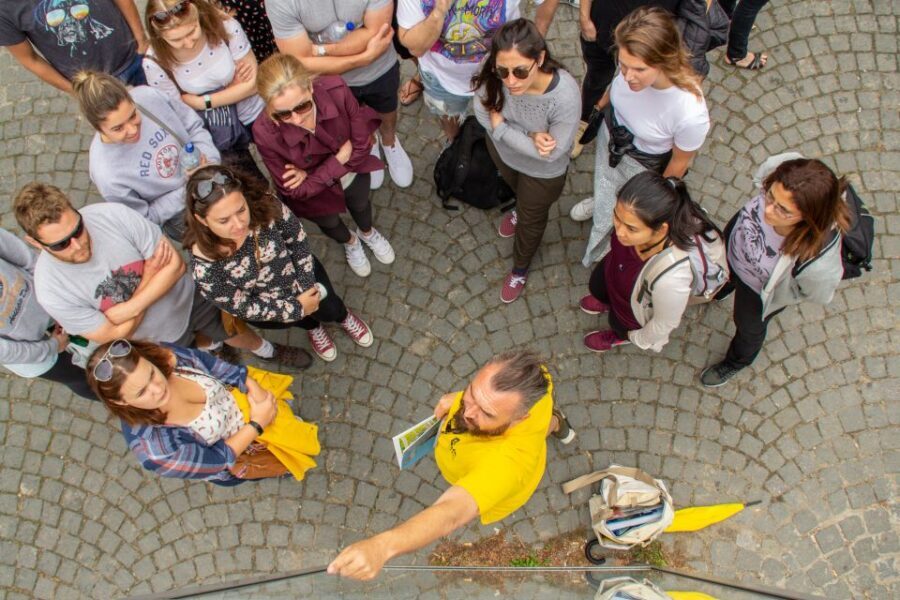
Next you spend time at the Belfry of Bruges area. This is one of those places where a guide’s storytelling matters. Instead of just “here’s a tower,” your guide frames it as a symbol of what people valued—status, power, and the civic pride that came with wealth.
You’ll also make a short walk past the Bruges Beer Experience area. It’s not a museum-style stop where you’re paying to enter, but it does signal a theme the tour keeps returning to: Bruges culture includes beer as part of the city’s identity, not just as a modern tourist snack.
If your day in Bruges includes a brewery visit later, this part of the tour helps you understand what you’re looking for and why beer matters in the story of the city.



Side Streets and Market Corners That Make Medieval Life Feel Real
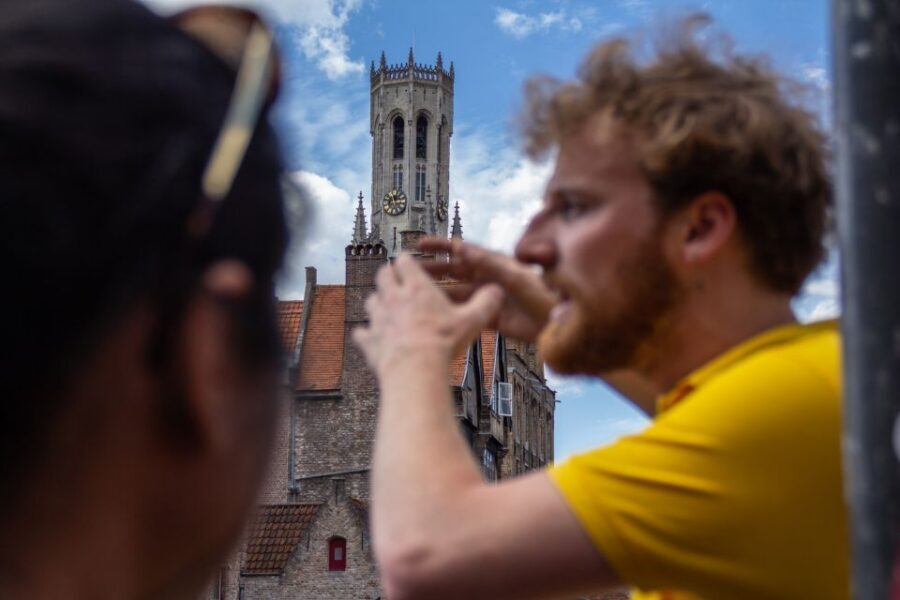
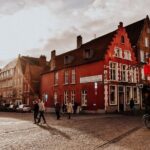
After the civic squares, the tour shifts into the streets and spaces where people lived, worked, and traded. You’ll walk past Blinde-Ezelstraat and reach the fish-market area at Vismarkt. That change matters. Bruges isn’t only grand buildings; it’s also the web of lanes and markets where the city’s everyday rhythm happened.
You’ll also stop at Huidenvettersplein. This is the kind of square where the guide can connect social life to architecture and street layout. Even if you’re not learning museum-level facts, you’re learning how the city functions as a system: trade routes, public gathering points, and how people moved around.
Then you head toward the canal viewpoints. That transition is one of the best parts of the route because Bruges looks different when you’re near the water. Your guide uses these stops to tell stories that fit the setting—wealth traveling through canals, and the city’s layout shaping how people experienced day-to-day life.
Rosary Quay Photo Stop: The View That Matches the Story
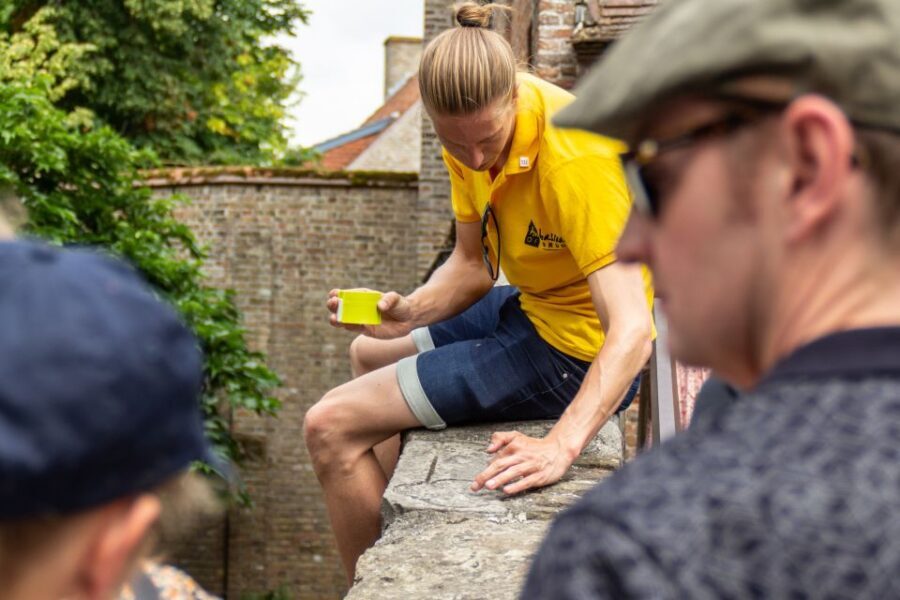
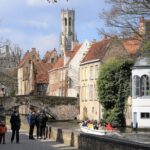
One of the most photographed spots in Bruges is Rosary Quay. The tour builds in a photo stop here, because it’s visually dramatic and it anchors the canal chapters of the tour.
What I like about doing this at the right moment is that the guide has already explained why Bruges was rich and how water mattered. So when you see the view, you’re not just collecting a picture—you’re connecting the waterway to the city’s economic story.
From Rosary Quay, you’ll continue walking alongside the canals toward Dijver. This segment is where the tour starts to feel more “you are in Bruges” and less “you are being lectured.” It also gives you a chance to slow down and just watch how the city opens up.
Bonifacius Bridge: Love, Water, and a Second Photo Moment
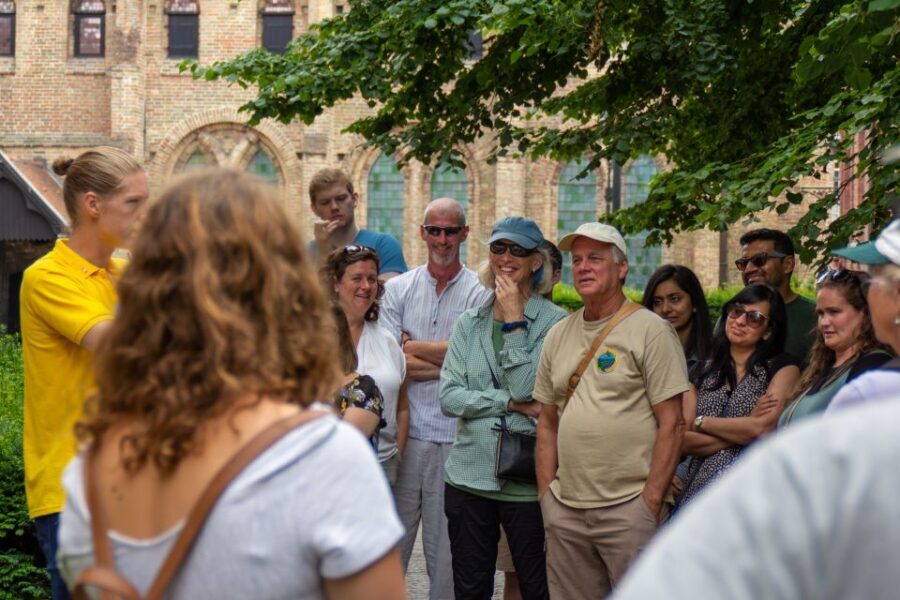
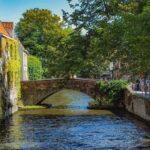
You’ll reach Bonifacius Bridge (also called the Bridge of Love). This is another photo stop, and it’s a classic Bruges moment. The guide uses it to tie the city’s architecture and canal life to human stories—especially themes of love and conflict that run through the tour.
If you’re traveling as a couple, this is the stop you’ll probably want to linger on. If you’re traveling solo, it’s still useful, because bridges and waterways are how you start to “read” Bruges visually.
Tip from the way guides are described: this is the kind of moment where a more theatrical guide may act out a character bit or use humor to make the story stick. It can feel silly in the best way, and it keeps the walk from turning into a checklist.
Gruuthuse Museum Area and Church of Our Lady: Monuments With Meaning
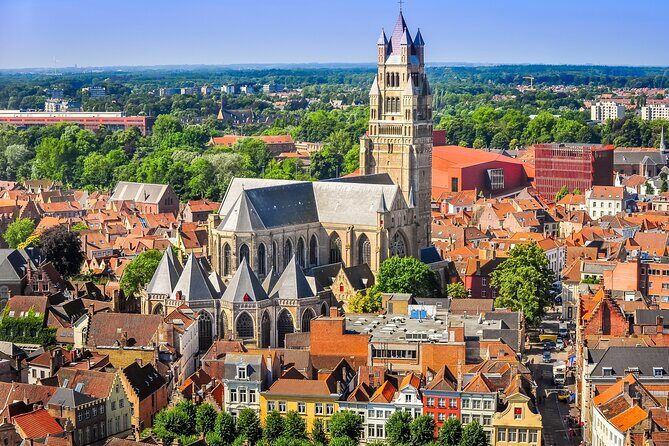
The route continues toward the Gruuthusemuseum area, which gives you a sense of the cultural layers of the city. You’ll also see the Church of Our Lady and spend time there with the guide.
This is where the tour shifts back to big landmark energy. Even without museum entry, the church stop helps you understand why medieval cities invested so much in religious and civic symbolism. Your guide frames the church as part of the story of wealth, power, and community values.
A standout with guides like Pascal and Arthur (as they’re described) is how they can connect architectural landmarks to personalities—so the church doesn’t become just a pretty building. You get why people cared, not only what it looks like.
Oud Sint-Jan Site and Walplein Square: Community Life Beyond the Postcards
After Church of Our Lady, you’ll move toward the Site Oud Sint-Jan. The tour includes this as part of the larger picture of community life. Historically, this type of site helps explain how cities supported people, not just how they displayed wealth.
You’ll also pass through Walplein Square. This section tends to work like a breathing point. You’re still walking, but the tour’s stories can widen from grand monuments to the way neighborhoods functioned.
The balance here matters. If you only chase views, Bruges becomes a set of photos. This stretch helps you remember it was a real city where ordinary life happened alongside the monuments.
Halve Maan Photo Stop and Finishing at Huisbrouwerij De Halve Maan
The final stretch is about closing the loop with beer culture. You’ll make a photo stop at Halve Maan brewery and then finish at Huisbrouwerij De Halve Maan. This is a satisfying end point because the tour has already teased beer and chocolate through the stories, and now you end in the place where beer culture lives.
If you want to keep the day going, this finish works well for planning. You’ll have the right neighborhood in mind, and the guide’s recommendations can help you decide what’s worth your time next.
One small practical note: by the end, you’ll probably want a rest stop. Bruges is gorgeous, but cobblestones add up. Build in time to sit and recharge after the tour.
Price and Tip Expectations: How “Free” Really Works
The tour shows a low listed price (about $3.41 per person), but it follows the free walking tour model. That means your payment is essentially a placeholder, while your real cost is the tip you give your storyteller at the end.
I like this setup because it keeps the experience accessible. If you do the tour and feel it earned your money, tipping is straightforward. And since the guides in this program are consistently described as funny, animated, and genuinely engaging, you’re more likely to feel good about tipping well.
Just be honest with yourself about style. If you dislike humor, character acting, and interactive pacing, a storytelling walk may not be your favorite format. If you like lively guides, this tour is built for you.
Who Should Book This Bruges Stories Tour (and Who Might Want Another Option)
You’ll likely love it if you:
- Want Bruges orientation in a short window.
- Prefer stories over timelines and dry facts.
- Like guides who use performance bits, humor, and quick explanations.
- Care about understanding how wealth and power shaped the city.
You might not love it if:
- You want museums as the main event (admissions aren’t included).
- You dislike walking stops and standing to look at sights.
- You need a very quiet, no-actor-tour experience.
Should You Book This Bruges 1000 Years of Stories Tour?
If your goal is to feel grounded in Bruges fast, I’d book it. The format is built around strong guiding, and the best part is that it pairs major sights (squares, Belfry area, church, canal viewpoints) with human themes like love, conflict, feminism, and finance. That mix makes the city easier to navigate and easier to enjoy later.
If you come with comfortable shoes, a little curiosity, and an open mind about humor and character moments, this is one of the best ways to start a Bruges visit.
FAQ
Where is the meeting point for the tour?
Meet your guide in front of the Belfry Tower on the Market Square of Bruges. Look for the guide holding a yellow umbrella with Ambassadors on it.
How long does the walking tour last?
The tour lasts about 2 hours.
Is the tour really free?
It uses a free walking tour concept, which means you’re expected to tip the local storyteller at the end. The activity may show a small per-person price when booking.
What language is the tour in?
The tour is in English.
What sights will we see?
You’ll pass or stop at highlights such as Markt Square, the Belfry of Bruges area, Burg Square and City Hall, Rosary Quay, Bonifacius Bridge, St. John’s Hospital area (Site Oud Sint-Jan), the Church of Our Lady, and you’ll finish at Huisbrouwerij De Halve Maan.
Are museum tickets included?
No. Admission to museums is not included.
Is the tour wheelchair accessible?
Yes, the tour is wheelchair accessible.
How large are the groups?
A maximum of 6 people per group are allowed for bookings to keep a balanced mix of guests. Larger groups must contact the provider to arrange a private tour.
Where does the tour end?
The tour ends back at the meeting point area after finishing at Huisbrouwerij De Halve Maan.