REVIEW · BRUGES
2-Hour Medieval Walk and Chocolate Tasting in Bruges
Book on Viator →Operated by BelgoTours · Bookable on Viator
Bruges feels like a storybook until you get to the details. This 2-hour walk guides you through the city’s medieval core, from Belfort and its famous bells to the Beginario area founded in 1245, then finishes at Minnewater, the lake of love. The icing on top is a included craft chocolate tasting, timed into a route that stays easy to follow.
I especially like how the stops are spaced so you get quick orientation fast—Grote Markt first, then major landmarks one after another. I also like the way the tour pairs big-photo sights with smaller street moments, like the Gruuthuse area along the way, so Bruges doesn’t feel like a checklist.
One drawback to plan for: this tour is in Spanish, and the meeting cues can be easy to miss if you’re relying only on general directions. If you want smooth logistics, confirm your exact start time and be ready to spot the guide at the Market Square.
In This Review
- Key points worth knowing before you go
- A 2-hour medieval stroll that actually fits real schedules
- Price and value: $3 plus a voluntary contribution
- Where the tour starts (and why that matters in Bruges)
- Grote Markt to Belfort: seeing Bruges through the city’s pulse
- Burg Square, Sacred Heart, and the bridge crossing
- Gruuthusestraat and De Halve Maan: medieval streets, real neighborhoods
- The Begijnhof (Beginario) founded in 1245: why this stop feels special
- Minnewater (lake of love): the calm finish after the main sights
- Chocolate tasting: a small included treat that makes the walk stick
- Group size, language, and timing: the practical bits that can make or break it
- Who should book this tour (and who should skip it)
- Should you book this 2-hour Medieval Walk and Chocolate Tasting in Bruges?
- FAQ
- Where does the tour start and end?
- How long is the tour?
- What’s included in the experience?
- Does the tour include chocolate tasting?
- Is there an extra payment at the end?
- What language is the tour in?
- How many people are in the group?
Key points worth knowing before you go
- A tight 2-hour route that hits core medieval landmarks without eating your whole day
- Craft chocolate tasting included (small, but a fun Bruges payoff)
- Small group size (max 20) so it feels more like a guided stroll than a parade
- Major medieval sights clustered close together for efficient sightseeing on foot
- Belfort’s bell lore adds meaning to what you’re seeing, not just photos
- Spanish-only guide, so language comfort matters
A 2-hour medieval stroll that actually fits real schedules
If you’ve only got a slice of time in Bruges, this tour is the kind that helps you land on your feet quickly. You start in the heart of town and stay on foot through the medieval core, with enough stops to understand the layout without feeling rushed all the way through.
What I like most is the mix of “wow” and “okay, I get it.” Grote Markt sets the scene immediately. Then you roll into Belfort, Burg Square, bridges, churches, and finally the calmer Minnewater finish. It’s built to give you a sense of how Bruges works as a city, not just a string of pretty buildings.
And yes, you’ll get that sweet moment too. The tour includes a craft chocolate tasting, which turns a sightseeing walk into something more memorable than another walking tour photo shoot.
You can also read our reviews of more food & drink experiences in Bruges
Price and value: $3 plus a voluntary contribution
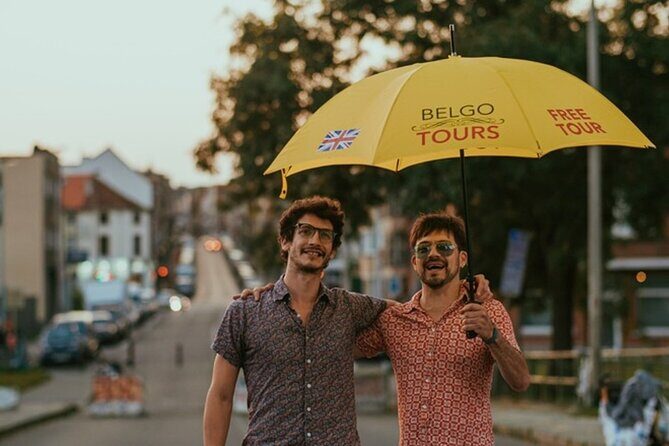
The headline price is $3 for a 2-hour guided walk that includes a craft chocolate tasting. For Bruges, that’s very budget-friendly, especially because you’re paying for both a local guide and an included food moment.
At the end, there’s also a voluntary contribution to the guide. That’s important to factor in when you’re budgeting. Think of the $3 as the ticket, and the contribution as how you show appreciation for the guide’s time.
There’s also a useful signal in the ratings: the experience sits at 4.9 with 48 reviews and is recommended 98%. That doesn’t mean every start will feel perfect, but it does suggest the format works for most people.
Where the tour starts (and why that matters in Bruges)
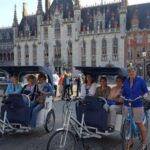
You meet at Market Square (Markt), 8000 Brugge, Belgium. The tour ends back at the same meeting point, so you’re not stuck figuring out your way out when your legs are ready to file a complaint.
The walk runs daily, with the stated operating window 10:45 AM to 2:00 PM (Mon–Sun), across the given date range. You’ll want to pay attention to the exact start time shown in your confirmation, since the schedule can be tight.
Since this is a mobile ticket experience, keep that confirmation handy on your phone. If you rely on memory or general meeting-point instructions, you may waste time hovering around the wrong spot.
Practical tip: arrive a few minutes early, not because you’re trying to be early-bird fancy, but because Bruges squares can be visually similar at first glance.
Grote Markt to Belfort: seeing Bruges through the city’s pulse
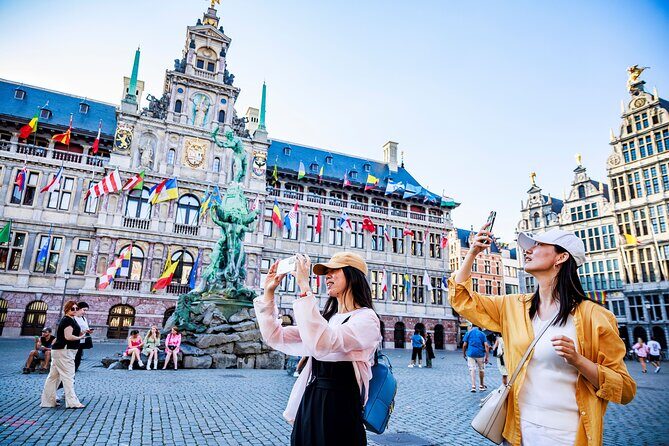
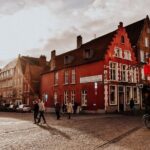
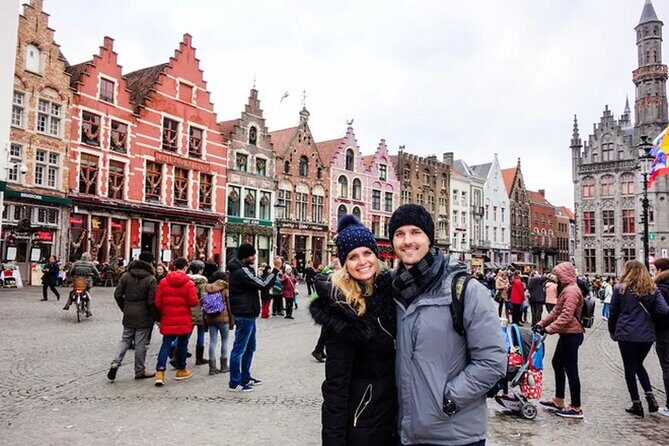
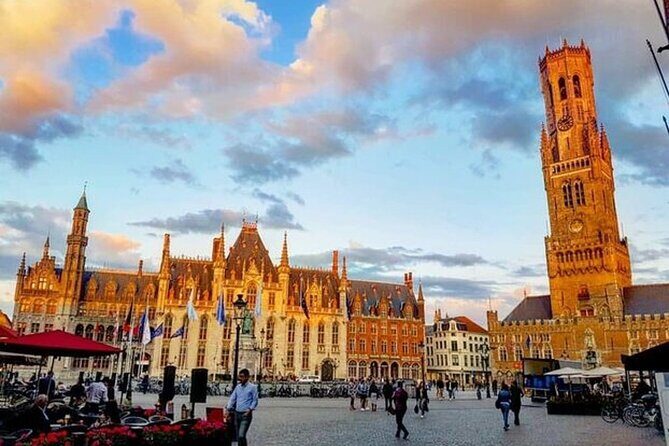
The tour begins at Grote Markt, where you get a short, solid grounding in the town’s most central medieval space. This is where it makes sense to take your first wide look—buildings, square geometry, and the general vibe all come into focus fast.
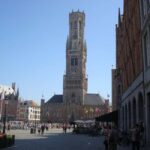
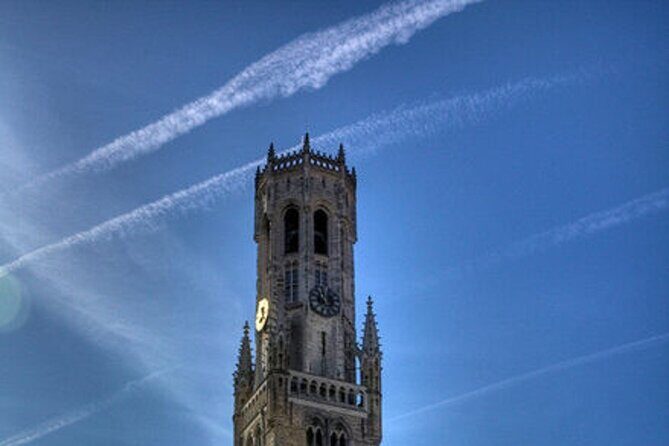
Next you’ll head toward Belfort, the bell tower tied to the city’s rhythm. You’ll spend a bit of time there, and the key detail is that Belfort has 47 bells. When you hear that fact and then look up, it changes the way you see the tower. It becomes a real piece of “daily life” rather than just a landmark.
Even if you only see Belfort from street level during the stroll, the concept matters. You’re learning how Bruges measured time and announced important moments. That gives you a better sense of why the tower is such a focal point in the medieval layout.
Burg Square, Sacred Heart, and the bridge crossing
From there, you move toward Burg Square, another major medieval center with a mix of architectural styles. This area is also where the Basilica of the Sacred Heart is highlighted, along with other notable civic buildings like the Provincial Palace and a 14th-century town hall.
Why this stop works: it helps you separate “one pretty square” from “the power-and-faith layout” of old Bruges. In cities like this, the main squares often show who ruled, who worshipped, and how civic life organized itself.
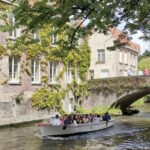
Then the route takes you across Saint Boniface Bridge. Bridges can feel like a minor waypoint on foot, but here it’s part of the story of moving between sections of the town. You’ll also make your way around the church of Notre Dame de Bruges, which is a classic Bruges visual anchor as you continue.
A few more Bruges tours and experiences worth a look




Gruuthusestraat and De Halve Maan: medieval streets, real neighborhoods
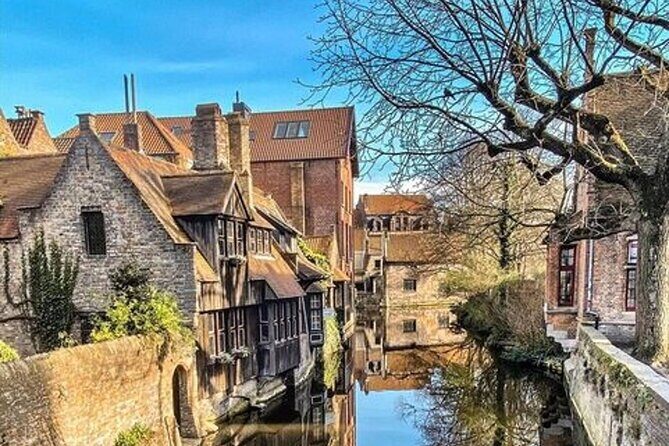
You’ll pass through Gruuthusestraat with a stop around Gruuthuse. This is one of those moments where the tour slows down just enough to let you notice the street character. You’re not only looking at the biggest-ticket sights. You’re also picking up the feel of the older residential and historic sections that make Bruges feel lived-in, not staged.
After that, the walk includes a stop to see De Halve Maan Brewery. Even if you’re not doing a full brewery visit, watching a working historic site from the outside connects Bruges medieval charm to something practical and ongoing.
This part of the route is a good breather. It keeps the walk from turning into one “monument” stop after another.
The Begijnhof (Beginario) founded in 1245: why this stop feels special
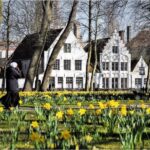
The tour continues back in time to the Begijnhof, also referred to here as the Beginario, founded in 1245. This is where you get a quieter, more reflective moment in the medieval story.
Why I think this works for most people: the route gradually shifts from loud central squares to a more enclosed, human-scale area. That contrast makes the history feel tangible rather than abstract.
If you like slow-look sightseeing—pausing to read details on buildings and take in the mood—this is the stop where your brain will finally stop “collecting photos” and start “understanding place.”
Minnewater (lake of love): the calm finish after the main sights
The walk ends at Minnewater, the lake of love. After the bells, squares, churches, and bridge crossing, this is a strong closing note because it’s softer and slower.
Even if you don’t linger too long, the payoff is that you leave the big monuments behind and finish on something atmospheric. It’s also a fitting end point because the route has shown you the city’s major power-and-religion landmarks first, then wraps into a gentler, symbolic area.
Since the tour ends back at the meeting point, you’ll also want to plan whether you’ll cut straight out or stay nearby after the tour concludes.
Chocolate tasting: a small included treat that makes the walk stick
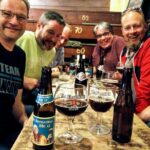
The experience includes a craft chocolate tasting. In a tour packed with buildings and viewpoints, a taste gives your memory a hook.
I like these kinds of inclusions because they’re not just a snack. They’re part of why Bruges is memorable. Even if the tasting is brief, it creates a “why I remember this tour” moment beyond architecture.
You’ll also be walking past De Halve Maan Brewery on the way, so the tour ties into a broader Bruges tradition of food and craft—even if the tasting itself is the main sweet moment.
Group size, language, and timing: the practical bits that can make or break it
This is a small-group experience with a maximum of 20 travelers. That matters. Smaller groups often mean the guide can keep the pacing manageable and point things out more clearly.
But language is the biggest practical consideration. The tour is in Spanish, so if you don’t understand Spanish well, you’ll likely miss some explanations. You can still enjoy the sights, but you may feel less connected to the story.
Timing-wise, plan for a gentle walking pace over about two hours. The stops aren’t described as rushed, but Bruges squares and streets can still add up quickly. Comfortable shoes are a simple win.
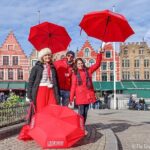
Also, rely less on vague signage and more on your confirmation. One issue that comes up for similar walking tours is unclear meeting instructions. When you arrive, keep an eye out for the guide’s distinctive presence rather than assuming people will be lined up in perfect order.
Who should book this tour (and who should skip it)
This is a great fit if you:
- want a short, high-value Bruges introduction
- like medieval landmarks connected by an easy walking route
- enjoy a guided storyline more than solo wandering
- want a sweet included moment without planning extra stops
You might skip it if you:
- need an English-language guide for the explanations
- prefer fully self-paced sightseeing with no scheduled chocolate moment
- hate meeting-point uncertainty and want very precise, no-effort logistics
Should you book this 2-hour Medieval Walk and Chocolate Tasting in Bruges?
Yes, if your priority is a smart first pass through the medieval center plus an included chocolate tasting, this is an easy recommendation. The time is right, the pricing is friendly, and the core stops cover Bruges essentials like Grote Markt, Belfort, Burg Square, bridges, churches, the Begijnhof founded in 1245, and the peaceful finish at Minnewater.
Just be honest with yourself about language. If Spanish isn’t workable for you, you may still enjoy the walking sights, but you won’t get the full narration. Also, arrive early and check your confirmation details so you don’t lose time playing meet-the-guide.
FAQ
Where does the tour start and end?
It starts at Market Square (Markt), 8000 Brugge, Belgium, and ends back at the same meeting point.
How long is the tour?
The duration is about 2 hours.
What’s included in the experience?
You get a tour guide and a craft chocolate tasting.
Does the tour include chocolate tasting?
Yes, craft chocolate tasting is included as part of the tour.
Is there an extra payment at the end?
Yes. At the end of the tour, you must give a voluntary contribution to the guide.
What language is the tour in?
The tour is only in Spanish.
How many people are in the group?
The tour has a maximum of 20 travelers, and service animals are allowed.