REVIEW · ANTWERP
Antwerp: Walking Tour from Steen to Central Station
Book on GetYourGuide →Operated by Guide-A-Ride · Bookable on GetYourGuide
Rubens in one walk beats museum marathons. This Antwerp walking tour links the city’s big baroque art moments with the streets where you can actually picture the story. You’ll get a close look at Peter Paul Rubens work in the Cathedral of Our Lady, including The Elevation of the Cross and The Descent from the Cross.
I also love how this route mixes Antwerp’s old center with the diamond Jewish district around Central Station. You’ll pass Antwerp’s most famous classic squares and church stops, then swing toward the harbor and the areas shaped by the city’s trading life. One consideration: it packs a lot into 150 minutes, and entrance fees aren’t included, so plan for any paid site time you add on your own.
In This Review
- Key highlights at a glance
- A Smart 150-Minute Route From Steen to Central Station
- Grote Markt and Town Hall: Antwerp’s Golden Age on Foot
- Cathedral of Our Lady: Rubens Paintings You’ll Remember
- Saint-Paul’s Church and the Rubens House During Lunch Break
- The Diamond Jewish District by Central Station
- Antwerp’s Modern Side: Palace of Justice, Museum aan de Stroom, Port House
- European Harbor Scale: Antwerp’s Second Biggest Harbor
- The Finish: Belgian Beer and Smart Recommendations
- Price and Value: What $388 for Up to 20 Means
- Should You Book the Antwerp Steen-to-Central Tour?
- FAQ
- How long is the Antwerp walking tour from Steen to Central Station?
- How much does the tour cost, and how big is the group?
- Where do we meet, and is hotel pickup included?
- What languages are available for the live guide?
- What’s included in the price?
- What isn’t included?
- Is free cancellation available?
Key highlights at a glance
- Rubens in the Cathedral of Our Lady: See The Elevation of the Cross and The Descent from the Cross.
- Grote Markt + Golden Age guild houses: Town Hall and ornate façades you’ll recognize even from photos.
- Diamond Jewish district near Central Station: A meaningful neighborhood stop as you head east.
- Grote harbor views: You’ll get a sense of Antwerp’s working scale, not just postcard angles.
- Modern Antwerp architecture: Richard Rogers, Neutelings & Riedijk, and Zaha Hadid all show up on the route.
- Friendly, efficient guiding: Ria and Willy are specifically praised for being competent, lively, and not information-overloaded.
A Smart 150-Minute Route From Steen to Central Station
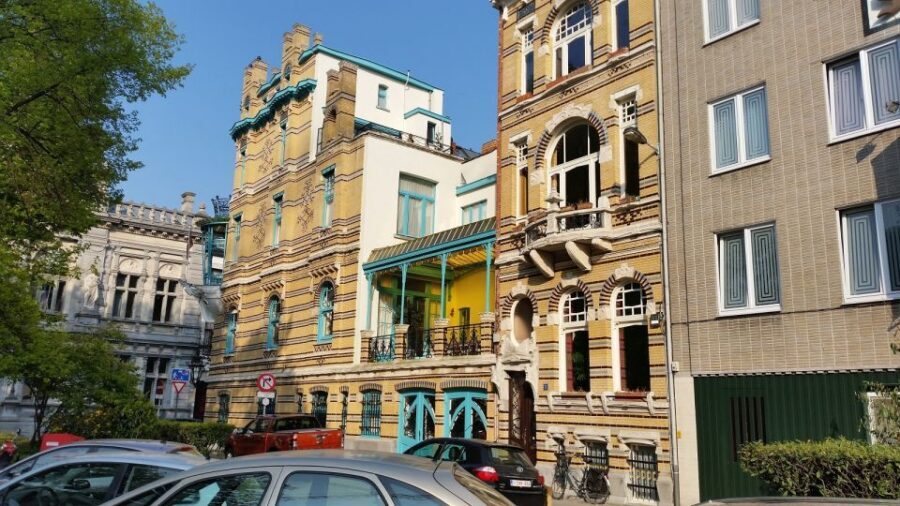
Antwerp works fast when you pick the right walk. This one is built as a straight line from Steen toward Central Station, so you spend less time backtracking and more time seeing what you came for. At 150 minutes, it’s long enough to feel like you learned something, but short enough that you’re not forced into a full-day plan.
The tour is a walking tour, and pickup is included if you’re staying in the city center. You can start at your hotel, which matters here because the first few minutes help you get your bearings fast. If you’re flexible, choose a starting point that keeps you near the center—this makes the whole route feel smoother.
You’ll also like the way the guide keeps the pace. I’m looking for two things in a tour: clarity and momentum. Guides like Ria and Willy have been praised for staying friendly and spontaneous while still keeping the talk lively and readable, not stuffed with nonstop facts.
One practical note: because it’s a compact walk, comfortable shoes are a must. You’re moving through squares, churches, and waterfront areas that can involve a mix of cobbles and flat walking.
You can also read our reviews of more walking tours in Antwerp
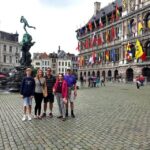

Grote Markt and Town Hall: Antwerp’s Golden Age on Foot
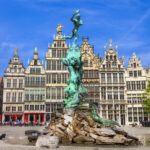
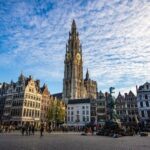
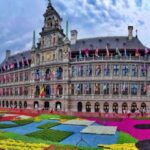
The tour starts by putting you right on the city’s stage: the Market Square (Grote Markt) with the Town Hall and the famous Golden Age Guild Houses. This is where Antwerp’s wealth in the 16th and 17th centuries becomes visible without a screen between you and the buildings.
Here’s why I think this stop is valuable. Antwerp is often sold as fashion and nightlife, but the Grote Markt reminds you the city was once a serious business engine. When you see the guild houses clustered around the square, you understand how merchants, craftsmen, and civic power all worked together to shape the look of the center.
You’ll also get a better sense of scale. From street level, you can see details that feel “small” on a postcard—sculptural ornament, façades that look different depending on the angle, and the way the square funnels foot traffic. Even if you’ve seen photos, it’s the kind of place where being there helps you notice what mattered to the people who built it.
A drawback is simple: squares get busy, and you’ll want to stand in spots that let you see both the buildings and the group’s flow. Bring patience, and let the guide manage the timing.
Cathedral of Our Lady: Rubens Paintings You’ll Remember
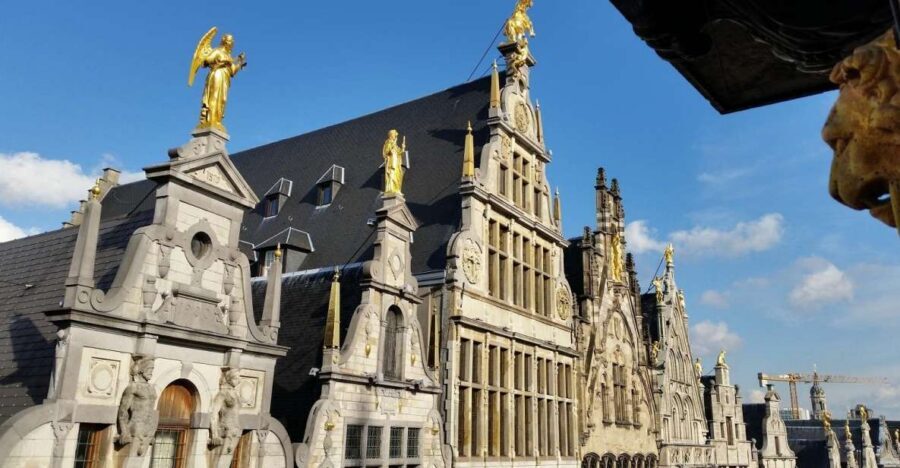
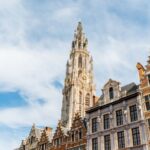
If Antwerp has one art stop that can anchor your whole trip, it’s the Cathedral of Our Lady. This is where you’ll see Rubens’ major works, specifically The Elevation of the Cross and The Descent from the Cross.
These paintings aren’t just impressive because they’re famous. In person, you start to notice how the scenes are built for drama—how the figures pull your eye around the composition, and how the religious subject becomes something you can feel emotionally. A good guide helps you understand what to look for without turning the cathedral into a lecture hall.
This part of the tour is also a great reality check. Many cities have “art museums,” but Antwerp’s connection to Rubens feels more grounded when the paintings are placed where the city’s people would have encountered them. That’s a big reason this stop fits neatly into a walking itinerary: you get art with location context, not art floating in a vacuum.
Keep an eye out for how your guide frames the story. The strongest guiding feedback from previous guests centers on competence and clear pacing, and this Rubens segment is exactly where that matters. If someone talked too long or overloaded you with technical wording, it would ruin the effect. Here, the approach is meant to stay engaging.
Saint-Paul’s Church and the Rubens House During Lunch Break
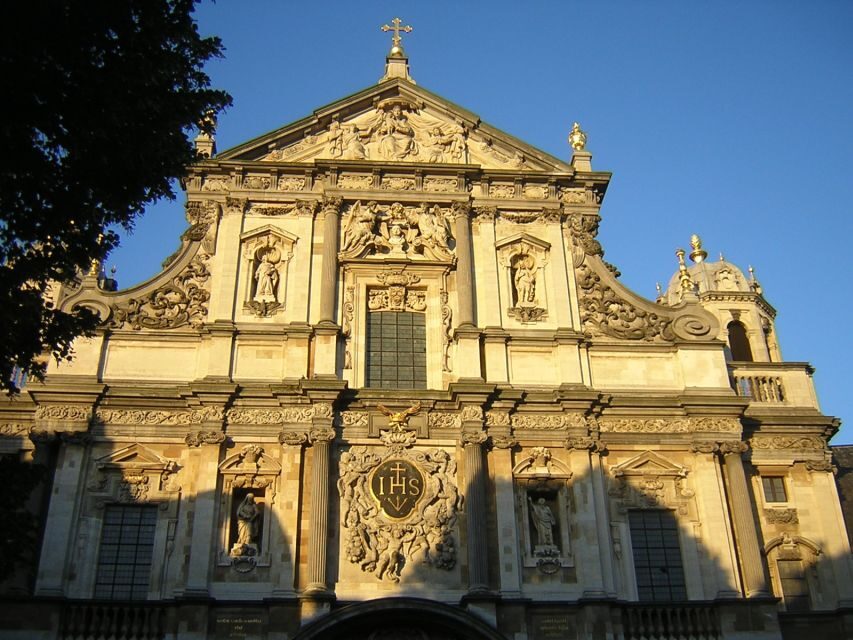
After the cathedral, the walk continues through Saint-Paul’s Church, adding another layer of Antwerp’s religious art and architecture. This isn’t the kind of stop you rush. You’ll want a few minutes to look at the building and then let the guide connect it to what you just saw in the cathedral area.
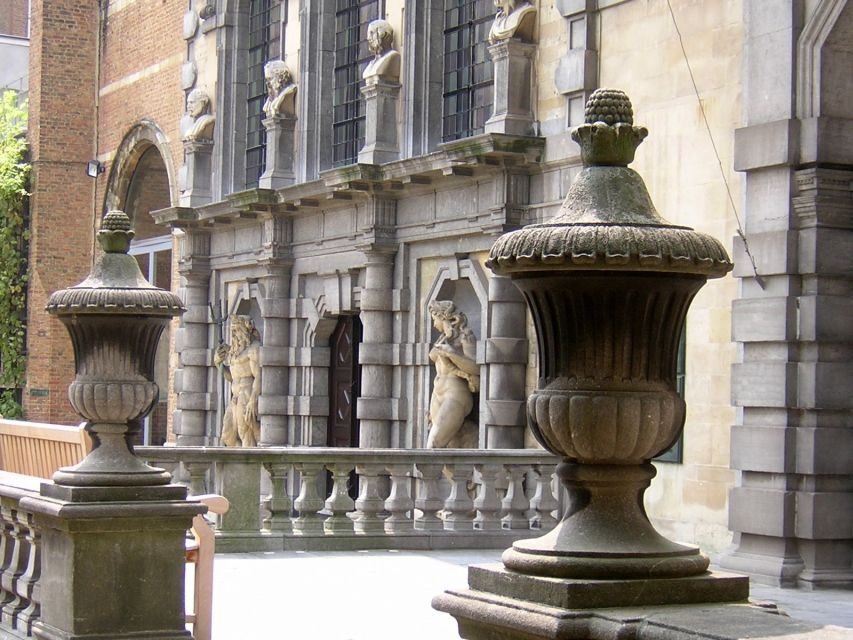
Then comes a high-value break: you can visit Rubens’ former house during the lunch break. In the master’s home and studio, you’re meant to get a time-travel feeling—back into the world of a Baroque artist and the working environment that shaped his production.
This is where the tour becomes more than a highlight reel. Seeing the paintings is one thing. Understanding how an artist lived and worked helps you connect the baroque style to real routines: space, tools, light, and the flow of ideas.
Because entrance fees are not included, double-check what you plan to enter and whether you’ll want to spend extra time inside Rubens’ former house. If you’re aiming to go through slowly, it’s worth budgeting a bit so you don’t feel rushed.
The Diamond Jewish District by Central Station
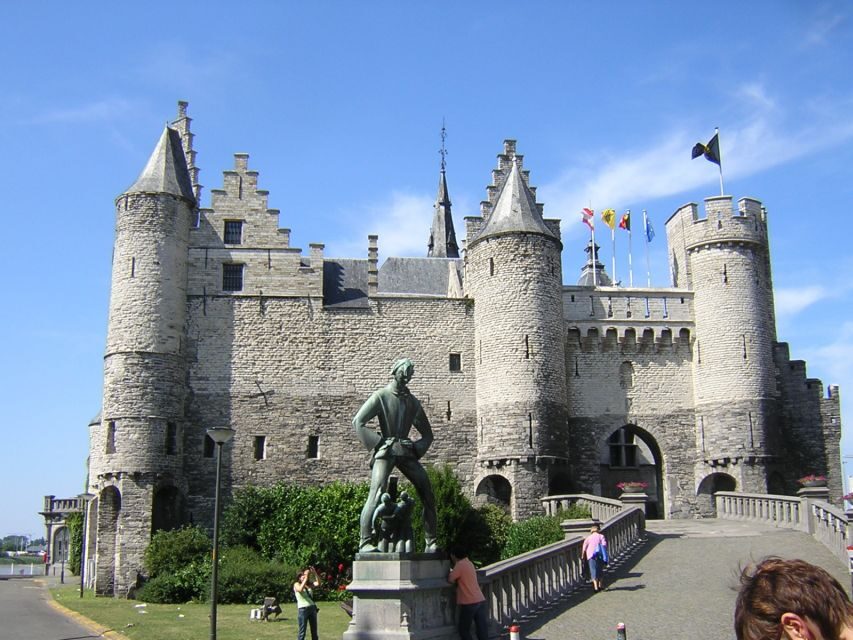
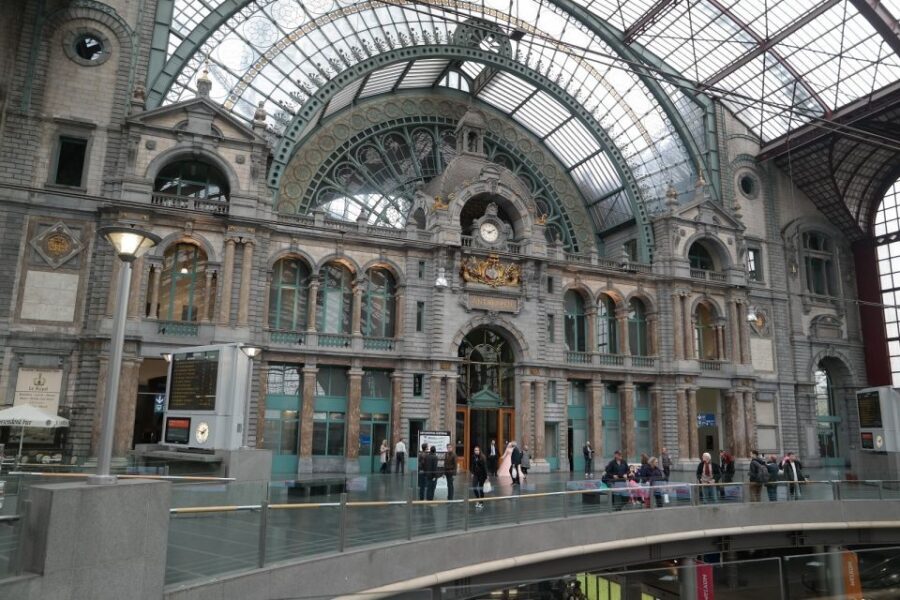
Heading east, the tour shifts from art and churches to commerce and community. You’ll visit the Diamond Jewish district in the area of Antwerp Central Station.
This stop matters because it shows Antwerp as a working city, not only a decorative one. Diamonds and trading aren’t abstract here. The neighborhood setting helps you connect the idea of Antwerp as a hub to the lived reality of the people who built careers and networks around those trades.
Also, Central Station’s area is visually different from the center squares. You’ll start noticing a sharper rhythm: larger spaces, more modern infrastructure, and street energy that feels distinct from the historic lanes near Grote Markt. That contrast is useful for your travel brain. It helps you remember Antwerp isn’t frozen in time.
If you like tours that explain meaning rather than just pointing at buildings, this is a strong segment. You’ll come away with a fuller picture of why Antwerp’s economy shaped its neighborhoods.


Antwerp’s Modern Side: Palace of Justice, Museum aan de Stroom, Port House
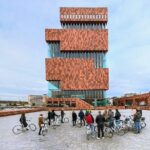
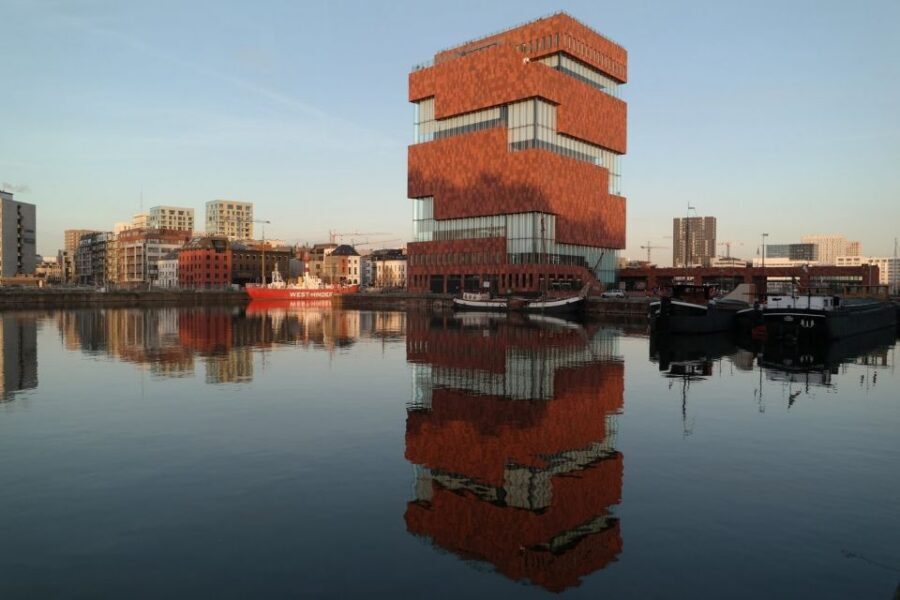
One reason I like this itinerary is that it refuses to treat Antwerp as only old. You’ll see major modern architecture, including the Palace of Justice by Richard Rogers, the Museum aan de Stroom by Neutelings & Riedijk, and the Port House by Zaha Hadid.
Why this works on a walking tour: modern buildings can feel intimidating when you only look from far away. On this route, you’re moving with context. You’re seeing the old center, then switching gears to contemporary design, so the contrast feels intentional instead of random.
The Palace of Justice stop is especially interesting for first-time visitors because it tells you Antwerp invests in heavy civic and cultural projects. Museum aan de Stroom helps you connect the city to the river-and-port world. And Port House by Zaha Hadid adds a sense of motion—architecture that looks like it’s already moving even when you’re standing still.
If you’re the type who enjoys architecture but hates long museum sessions, this portion is a win. It’s “architecture time” without needing a ticket plan.
European Harbor Scale: Antwerp’s Second Biggest Harbor
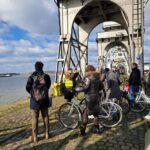
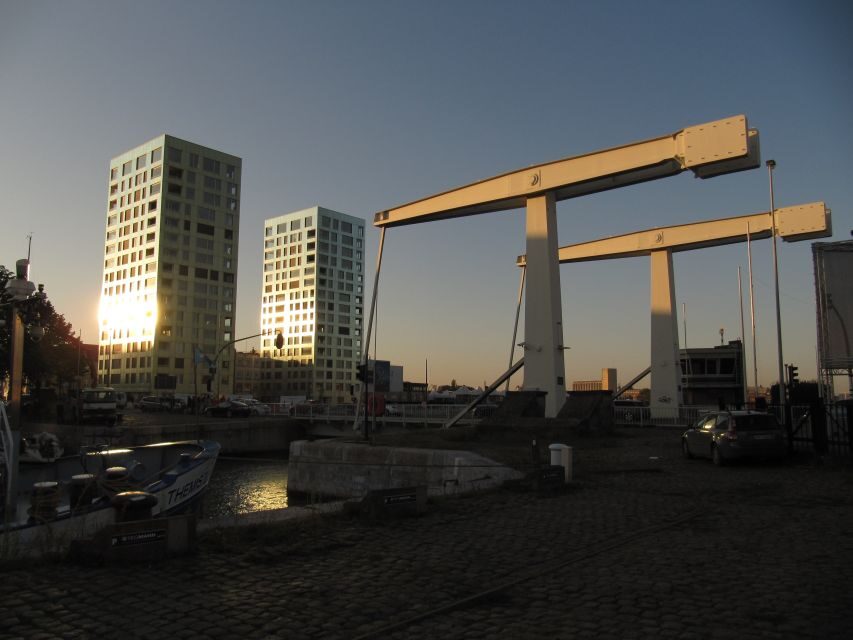
Then you get the move that changes the mood: the harbor. Antwerp’s harbor is a huge part of the city’s identity, and this tour includes it so you don’t leave with only cathedral images and shopping streets in your head.
Even if you’re not into ports, this stop teaches you something practical. Antwerp is shaped by movement—goods, workers, and logistics. When you see the scale, you understand why the city grew the way it did and why so many neighborhoods and industries formed around the waterfront.
Expect a shift in visuals too. The center’s ornament gives way to industrial geometry and working infrastructure. It’s not “pretty” in the classic postcard way, but it is compelling because it feels real.
The Finish: Belgian Beer and Smart Recommendations
At the end of the walk, you’ll have time to reflect on what you’ve seen—and then enjoy a nice Belgian beer downtown. That’s not just a perk. It’s how you lock in the experience. After 150 minutes of art, architecture, and neighborhood history, a short reset helps you digest it all.
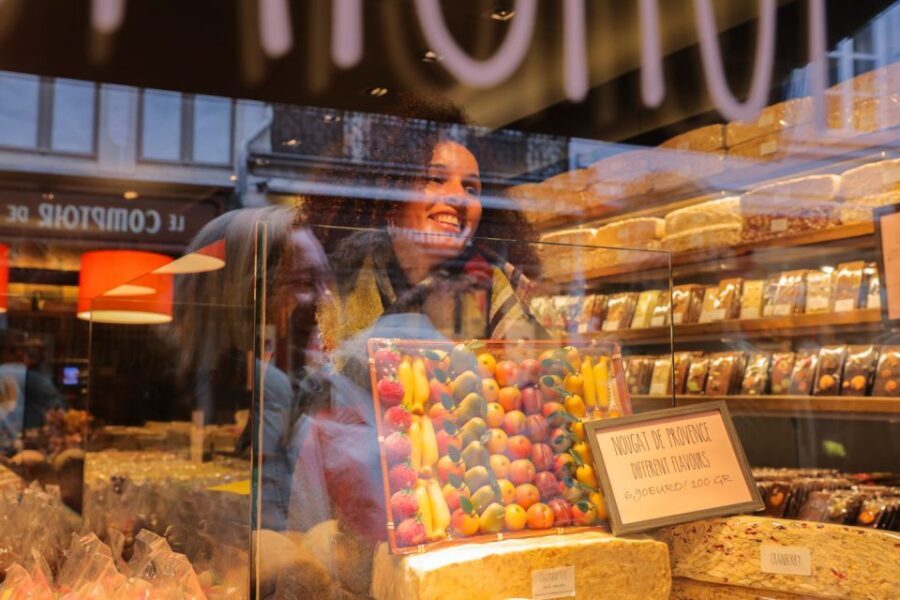
You’ll also receive lots of practical recommendations during the tour, including places for chocolate, waffles, beer, restaurants, bars, and museums. This is the part I value most on a city walk: it saves you from aimless wandering right after a highlight itinerary.
I’d use the recommendations like a menu, not a script. Pick one “food” idea and one “next stop” idea, then leave space for spontaneity.
Price and Value: What $388 for Up to 20 Means
The price is $388 per group (up to 20) for a 150-minute guided walking tour. On a per-person basis, that can be a strong deal if you’re traveling with a small group or family unit. It’s also the kind of arrangement that can make sense for a group of friends who want a shared guide rather than splitting into separate tours.
Here’s where value depends on you. Entrance fees aren’t included, and tastings and lunch aren’t included. So if you plan to pay to enter Rubens’ former house longer than the scheduled visit, you’ll want to budget extra on top. If you’re okay with seeing what’s offered within the walk and using your own time for extra spending, the price feels more comfortable.
The other value factor is the guide quality. The highest praise points are consistent: guides who are competent, friendly, and able to show corners you might miss on your own. That’s exactly what you’re buying here—guidance that makes the city make sense quickly.
Should You Book the Antwerp Steen-to-Central Tour?
Book it if you want a concentrated way to see Antwerp’s main art anchor (Rubens), its most iconic square (Grote Markt), a meaningful neighborhood stop (diamond Jewish district), and a modern architecture sweep—all in about two and a half hours. It’s also a good fit if you like walking itineraries with a guide who keeps things engaging and not overloaded, the style praised by Ria and Willy.
Skip it or adjust expectations if you’re the type who needs lots of museum time or you want a very slow pace with extra paid entrances. This tour is designed for momentum, not for hours of ticketed wandering.
FAQ
How long is the Antwerp walking tour from Steen to Central Station?
It lasts 150 minutes.
How much does the tour cost, and how big is the group?
The price is $388 per group up to 20. It’s listed as a private group.
Where do we meet, and is hotel pickup included?
Pickup is included, since it’s a walking tour. You can start the tour at your hotel in the city centre, and you can choose where you wish to start.
What languages are available for the live guide?
The guide offers Dutch, English, French, and German.
What’s included in the price?
You get a city walking tour plus lots of recommendations for chocolate, waffles, beer, restaurants, bars, and museums.
What isn’t included?
Entrance fees, tastings, and lunch aren’t included.
Is free cancellation available?
Yes. You can cancel up to 24 hours in advance for a full refund.