REVIEW · YPRES
From IEPER Private 4-hour Tour of the Ypres Battlefield
Book on Viator →Operated by A Foreign Field WW1 Tours · Bookable on Viator
One tour, five sites, and a lot of context. This private Ypres Battlefield experience is built to help you understand the Battle of Ypres fast, without racing past the places that still carry weight.
I especially like the private format for up to four people, because the guide can tailor the route to what your group cares about. I also like how the stops cover key moments in a clear sequence, from the mines of Hill 60 to the gas attack at Saint Julien, then on to the cemeteries that show the human cost. One possible drawback: with only four hours, you’ll get a focused snapshot rather than a slow, full-day walk of the entire front line.
In This Review
- Key Highlights at a Glance
- Why This Private 4-Hour Battle of Ypres Tour Works
- Price and Value: $399.25 for Up to Four People
- How Pickup From Ypres Makes or Breaks a Day
- Hill 60: The Mines of June 1917
- Sanctuary Wood Museum: Original Trenches and the Tunnel Feel
- Tyne Cot Cemetery: Scale, Names, and What You Notice
- Saint Julien Memorial: The First German Gas Attack and the Canadian Line
- Essex Farm Cemetery: Where John McCrae Wrote In Flanders Fields
- Guides, Storytelling, and the Personal Touch
- Morning vs Afternoon: Picking the Right Time Window
- What This Tour Feels Like: Educational and Emotion-Heavy
- Who Should Book This 4-Hour Ypres Battlefield Tour
- Should You Book It?
- FAQ
- How long is the Ypres Battlefield private tour?
- What is the group size for this private tour?
- Where will pickup happen in Ypres?
- Is the tour guided in English?
- Do I need to buy tickets for the stops?
- Will I receive a mobile ticket?
- When will I get confirmation after booking?
- Can I bring a service animal?
- Is the tour near public transportation?
- Is free cancellation available?
Key Highlights at a Glance
- Private group of up to 4: your pace, your questions, your priorities
- Sanctuary Wood trenches included: a hands-on WWI setting, not just plaques
- Major sites in a tight route: Hill 60, Tyne Cot, Saint Julien, Essex Farm in one run
- English guided narration: maps and photos help you connect the dots quickly
- Pickup options in Ypres: meet at Ieper station or directly at your accommodation
Why This Private 4-Hour Battle of Ypres Tour Works

Ypres can feel like a museum maze at first. Streets, memorials, cemeteries, and small bits of interpretation all scattered around a town that was rebuilt again and again. This tour helps you get your bearings fast by choosing the stops that explain the story instead of just displaying it.
The best part is the private pacing. You’re not stuck with strangers who want to sprint ahead or stop for long photo breaks. And because it’s a small group, you’ll usually find it easier to ask questions and get direct answers, whether you’re curious about tactics, Canadian actions, or what a specific spot meant on the ground.
Another strength: the itinerary hits both the “event” locations and the “memory” locations. Hill 60 and Saint Julien are about specific attacks and battlefield moments. Tyne Cot and Essex Farm are about what those battles left behind. That mix is why four hours can feel meaningful instead of rushed.
You can also read our reviews of more private tours in Ypres


Price and Value: $399.25 for Up to Four People
The price is $399.25 per group (up to 4) for about four hours, with English-speaking guidance. When you split it, it becomes a lot more reasonable. If you travel as a family of four, you’re effectively paying around $100 per person for a private guide plus a structured route through several major WWI sites.
It’s also value-heavy because you’re not doing the planning legwork yourself. You get pickup around Ypres, a logical stop order, and the kind of interpretation that helps you understand why these exact locations matter. Even the admission value is part of the deal: Sanctuary Wood Museum is included, while the other listed stops are admission-free.
If you’re traveling solo, it’s less of a bargain compared with a shared group tour. But if you want a serious, respectful explanation and the freedom to ask questions without feeling “one of many,” this private format can be the better match.
How Pickup From Ypres Makes or Breaks a Day
The tour offers pickup in Ypres, either at Ieper train station (if you arrive by train) or at your hotel or B&B. That matters because the front-line sites are outside the town center and public transportation won’t always be convenient for a tight four-hour window.
In practice, you should expect an easy handoff with a clear meeting plan. Several guests describe the ride as comfortable, with pickup arriving on time and transport handled smoothly (including the use of a hybrid SUV). You’ll also like the practical touches: guides often help you think ahead about where you’ll want to eat after the tour.
You’ll also get a mobile ticket, so you’re not juggling paper vouchers at the start.
Hill 60: The Mines of June 1917
The tour starts with Hill 60, a key point in the wider Battle of Ypres. Here, you’ll hear the story of the massive mines blown on 7 June 1917—a dramatic example of how WWI fighting often involved digging, tunneling, and underground warfare as much as gunfire and trench lines.
What I like about this first stop is that it sets the tone. Before you visit museums and cemeteries, you get a battlefield mechanism: why the ground mattered, why preparation took months, and how turning a position could cost an enormous price.
Practical notes for your visit:
- Admission is free for this stop.
- You’ll typically have about 40 minutes, so it’s long enough to absorb the story but short enough to keep the tour flowing.
- If you want to understand the rest of the day, pay attention here. Hill 60 helps you frame why the later sites aren’t isolated—they’re connected phases of the fighting.
Sanctuary Wood Museum: Original Trenches and the Tunnel Feel
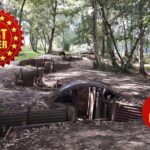
Next comes Sanctuary Wood Museum, with about 45 minutes on site. This is the stop that many visitors remember because it’s not just reading history. You get to see original WWI trenches and spend time in a small museum setting that helps the trench experience make sense.
The real value here is the way it makes the war physical. Trenches weren’t theoretical. They were damp, cramped, and frightening—yet they were also built, modified, and defended with real engineering and strategy. Walking the area and seeing the trench structures helps you picture what soldiers faced day after day.
Also worth noting: Sanctuary Wood admission is included, which reduces one more thing you’d have to manage on your own.
If you’re the type who likes to ask questions, this is a great stop to do it. The guide can tie the trench layout back to what you just heard at Hill 60, and then connect that to what comes next at the larger memorial sites.



Tyne Cot Cemetery: Scale, Names, and What You Notice
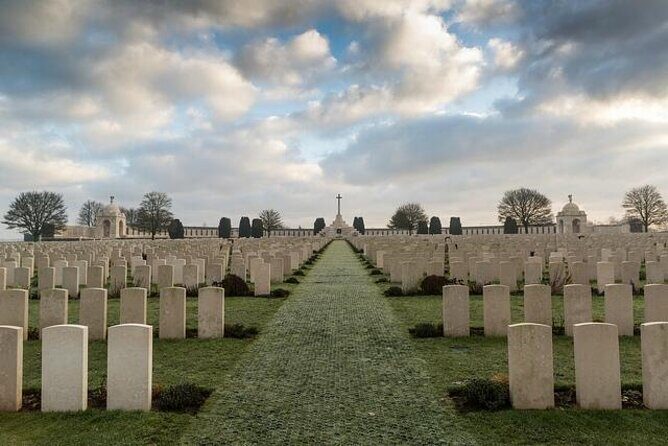
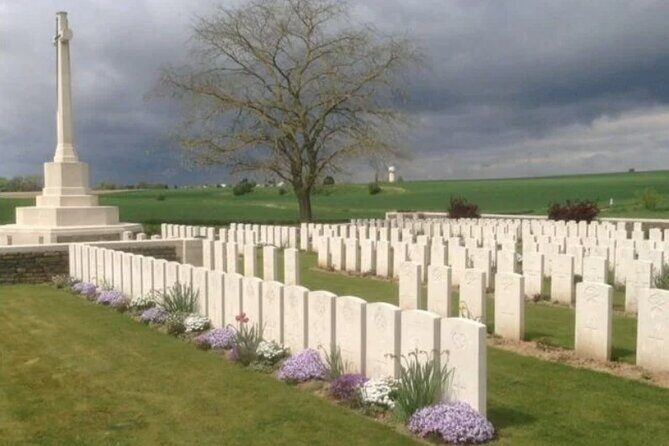
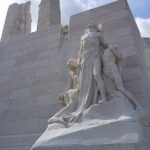
Then you’ll head to Tyne Cot Cemetery, with about 45 minutes there. It’s one of the most important places in the entire Ypres area, and the numbers tell part of the story immediately: 12,000 soldiers are buried here, but only around 3,000 have names.
That detail changes how you look at the cemetery. If you focus only on the gravestones, you miss the larger message. If you focus on the named individuals, you feel the tragedy more sharply. Either way, Tyne Cot is the kind of place where the guide’s narration can help you process what you’re seeing without speeding you through it.
Tyne Cot is also where you’ll hear about distinguished military honors connected to the site, including VC recipients (two Australians and one Canadian are buried here).
Admission is free, and you’ll have time to walk the grounds at a pace that doesn’t feel like a checklist.
Saint Julien Memorial: The First German Gas Attack and the Canadian Line
The itinerary continues to Saint Julien Memorial, with about 15 minutes at this stop. Short on time, but not light on impact.
Here, you’ll learn about the first German gas attack of WWI on 22 April 1915, aimed at French soldiers, and how the Canadians held the line in the face of the chlorine gas cloud. That story hits harder because gas warfare wasn’t just a tactic. It was terror delivered in a form soldiers couldn’t outrun in the normal ways.
Because this stop is only 15 minutes, you should come prepared to absorb the key points. Don’t expect a long independent wander unless you ask for extra time. If Canadian history matters to you, this is one of the most direct links in the route.
Admission is free here too, which makes it easier to keep the day’s budget steady.
Essex Farm Cemetery: Where John McCrae Wrote In Flanders Fields
The final major stop is Essex Farm Cemetery, about 30 minutes. This is where WWI history connects to the poems and symbols that traveled far beyond the battlefield.
You’ll visit the hospital site where Lt Col John McCrae composed the iconic poem In Flanders Fields. You’ll also hear how the poppy became one of the strongest WWI-era visual symbols—an image people still see today because it continued carrying meaning after the war ended.
This is a good stop to slow down slightly, even with the time limit. The combination of a cemetery setting and a literary origin story can make the emotion land differently than at Tyne Cot.
Admission is free, and the timing is usually enough to take in the setting, read what you can, and reflect before heading back.
Guides, Storytelling, and the Personal Touch
The biggest difference between a standard tour and a truly useful one is how the guide handles questions and context. The guides on this experience are repeatedly praised for being energetic, respectful, and willing to build understanding with maps and photos.
You might meet different guides depending on the day, including Søren, Sabina, and Saline (among others mentioned). While their styles vary, the common thread is that they tend to use clear visuals—maps, images, and explanation that connects the battlefield terrain to the events.
One standout theme from past guests: some guides go beyond the scripted story to connect the tour to your family history. For example, you may share a relative’s details and the guide can try to help identify the most relevant nearby sites. That doesn’t mean you should expect guaranteed research, but it does mean you’ll usually get a helpful, human response if you bring information.
Another practical note: guides often adjust for your group’s needs. People have described accommodations for walking restrictions after surgery, plus patience with families traveling with children. That flexibility is part of why a private tour can feel calmer than a busy group.
And yes, you may also receive small real-world tips that make the rest of your trip easier—like recommendations for food you can grab quickly afterward.
Morning vs Afternoon: Picking the Right Time Window
The tour offers a choice between morning or afternoon start times. That sounds simple, but it can matter in Belgium.
If you’re traveling by train, an afternoon slot might be easier to align with the rest of your day. If you’re the type who likes to get the heavy part finished early, a morning start can feel like a relief. Either way, you’re looking at about four hours, so plan your remaining time around the emotional weight of what you’re seeing, not just the clock.
If you want photos, daylight is a factor. Morning light can be gentler for walking cemeteries. Afternoon can be warmer but sometimes harsher depending on cloud cover. Bring layers either way, since weather around the Ypres area can shift.
What This Tour Feels Like: Educational and Emotion-Heavy
The content is WWI, and the subject matter isn’t comfortable. Still, the best guides manage a careful balance: they explain events and tactics clearly without turning the sites into something casual.
Expect a tone that can be respectful and serious, while still human. Some guests describe humor used carefully in a way that doesn’t break the seriousness. That matters because it keeps you present and listening, rather than numb or overwhelmed.
Also, the story here spans from specific events (mines at Hill 60, gas attack at Saint Julien) to remembrance (Tyne Cot, Essex Farm). That structure helps you avoid one of the common problems with battlefield travel: seeing “too many things” but not understanding the logic connecting them.
Who Should Book This 4-Hour Ypres Battlefield Tour
This is a strong choice if you want:
- a private guide rather than a bus-group format
- major WWI sites in a single, easy route from Ypres
- help connecting battlefield events to what you see at memorials and cemeteries
- an experience built for questions, including family-history connections
It’s especially suitable for couples, families up to four, and anyone who wants a guided explanation more than self-driving. If you’re visiting the Ypres area for the first time and don’t want to figure out which sites matter most, this tour does that sorting for you.
If you already know the full WWI timeline and want deep specialization for days at a time, you might find four hours too short. But if you want a clear and moving introduction, this is the kind of route that earns its time.
Should You Book It?
Yes, I’d book it if your goal is a focused, meaningful WWI orientation around Ypres. The structure is smart: it mixes event sites and remembrance sites, includes one key admission stop, and keeps the whole experience tight enough to finish without fatigue.
I’d skip it only if you’re looking for a wide-ranging, self-paced exploration where you can spend long hours in each location without moving along. This tour is designed to teach quickly and connect the story. For many visitors, that’s exactly what you need.
If you do book, bring what you can about any family connection you want to understand, and come ready with questions. The guides’ willingness to personalize the experience is part of why people rate this so highly.
FAQ
How long is the Ypres Battlefield private tour?
It runs for about 4 hours.
What is the group size for this private tour?
It’s private for your group, up to 4 people.
Where will pickup happen in Ypres?
Pickup is available at Ieper train station, or from Ieper hotels and B&Bs. If your accommodation is not listed, you can message the provider with your stay details.
Is the tour guided in English?
Yes, it is offered in English.
Do I need to buy tickets for the stops?
Sanctuary Wood Museum admission is included. The other listed stops have free admission.
Will I receive a mobile ticket?
Yes, the tour provides a mobile ticket.
When will I get confirmation after booking?
Confirmation is received within 48 hours of booking, subject to availability.
Can I bring a service animal?
Yes, service animals are allowed.
Is the tour near public transportation?
Yes, it is near public transportation.
Is free cancellation available?
Yes. You can cancel up to 24 hours in advance for a full refund. If you cancel less than 24 hours before the start time, the amount paid is not refunded.