REVIEW · BRUSSELS
Bruges bus tour from Brussels
Book on Viator →Operated by Buendía · Bookable on Viator
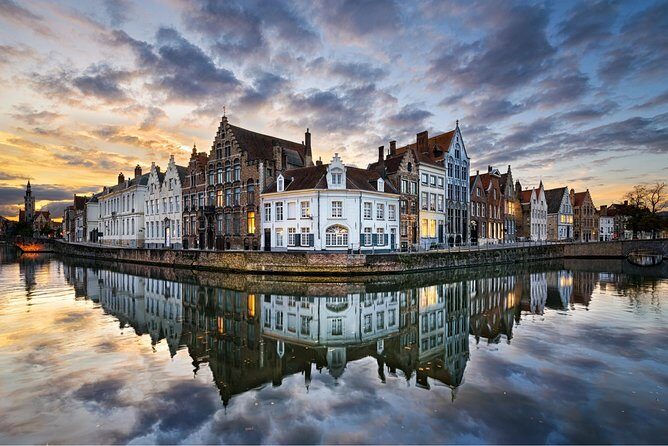
Bruges looks postcard-made, even on a schedule. This full-day bus tour shows you UNESCO Bruges by canal and medieval lanes, with a Spanish-speaking guide tying the sights together into a story you can actually follow.
I especially like the built-in 4 hours free time, which means you’re not forced to hurry through every alley. You also get multiple quick photo stops that help you catch Bruges’ famous corners without turning the day into a sprint.
The main drawback is that it’s a long day with plenty of walking between viewpoints and the coach, and rain (or just wet cobblestones) can make it less pleasant. Also, Bruges sometimes requires radio headsets, so plan to use provided options or your own 3.5mm jack.
In This Review
- Key things to know before you go
- Brussels to Bruges: how the day is paced
- The first stops: Lake of Love, Beguinario, and quick photo angles
- Market Square and Burg Square: where the city’s power shows
- Church of Our Lady and Michelangelo’s name
- Medieval streets you can recognize: beer, houses, and tanners
- Canal viewpoints: St Bonifacius Bridge and Rozenhoedkaai
- Chocolates and the best use of your free time
- Price and value: what you’re really paying for
- Comfort, language, and the reality of a rainy Belgium day
- Who this Bruges from Brussels tour is best for
- Should you book this Bruges bus tour from Brussels?
- FAQ
- What time does the tour start, and how long is it?
- Do I need headphones?
- Is the guide Spanish-speaking?
- How much free time do I get in Bruges?
- Where does the bus pick up and drop off?
- Is food included in the price?
- What happens if the tour is canceled due to poor weather?
Key things to know before you go
- Air-conditioned coach from Brussels makes this a comfortable way to reach Bruges without handling trains or transfers.
- Spanish-speaking guiding keeps the tour focused, but you’ll want basic confidence with Spanish or rely on the radio guide setup.
- Many short stops mean you get snapshots of the city’s layout, not just a couple of big-name sights.
- About 2.5 hours guided + 4 hours free time is a smart mix for first-timers and repeat visitors alike.
- Radio guide rules in Bruges are sometimes in play, so bring a 3.5mm wired headphone if you have them.
- Small-group cap (45 travelers) usually keeps things moving, even with the busy city streets.
Brussels to Bruges: how the day is paced
This is a classic day trip setup: you start in Brussels at 8:30am at Carrefour de l’Europe and ride an air-conditioned coach into Bruges. The total time is listed at around 9 hours, and the tour runs as a mix of guided sightseeing and independent wandering.
The group size is capped at 45 travelers, which matters more than you might think. With bigger buses, you can feel like you’re shepherding yourself between stops. Here, the pacing is built around short drop-offs and clear return times, so you can stay focused on enjoying the city rather than constantly guessing what happens next.
You’ll also want to treat this as a “get oriented fast” trip. The guided portion is designed to show you where key places are and what to look for. Once you’re set, the free time block is where you slow down and do things at your own speed.
One practical note: the tour uses a mobile ticket, so bring your phone battery or plan a charger-friendly day. And since the average booking time is about 27 days in advance, it’s smart to reserve early if you’re traveling during a busy season.
You can also read our reviews of more tours and experiences in Brussels.
The first stops: Lake of Love, Beguinario, and quick photo angles
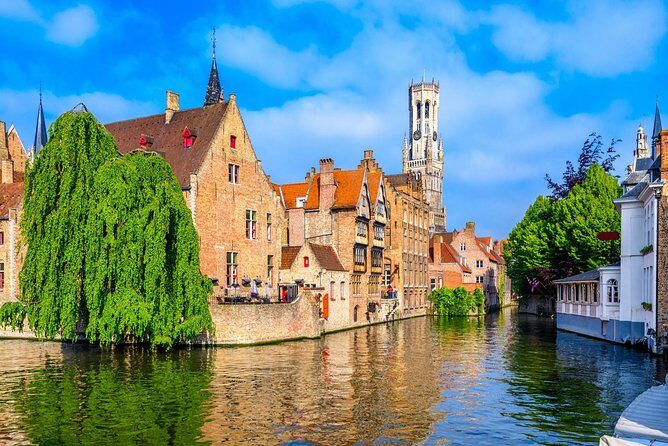
When the bus drops you at Bargeplein (Katelijnparking), you get a brief 10-minute bathroom break. The guide also explains when to return, which is helpful because Bruges streets can be maze-like when you first arrive. That small planning detail saves you stress later.
From there, the tour moves into an easy rhythm of stops that are short but meaningful:
At Minnewater Lake (the Lake of Love), you’ll stand with the water as your backdrop and get the story behind why this spot is so tied to Bruges’ romantic image. The stop is brief, about 5 minutes, but it’s the kind of scene you’ll remember later when you’re deciding where to wander during free time.
Next is the Beguinario (Begijnhof), founded in 1245. This stop feels different from the church-and-square routine because you’re stepping into a lived-in historic world shaped by a community of women. You get around 10 minutes, which is enough time to slow your thoughts and notice the quiet details before moving on.
Then you’ll get a photo moment from a small bridge. This is one of those “don’t overthink it” parts of Bruges: you’re not there to read a plaque for ten minutes. You’re there to get the angle, capture the water lanes, and keep the day’s momentum going.
Market Square and Burg Square: where the city’s power shows
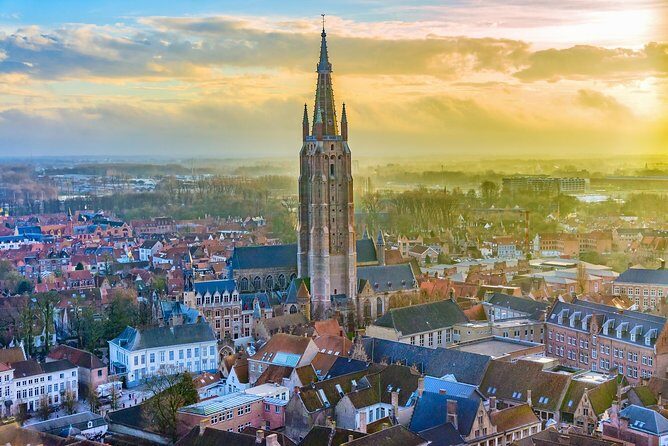
The tour centers Bruges’ sense of drama in two big areas: Grote Markt (Market Square) and Burg Square.
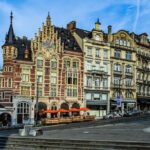
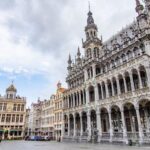
Grote Markt is your guided finale of the tour’s structured portion. You’ll get about 20 minutes here, and the guide points out the buildings around the square, plus practical tips for eating and shopping for traditional chocolate. This is one of the best places to start planning your free time, because once you’re looking at the square, you can map what you want to prioritize next.
Just before (and in parallel through the stop list), you’ll also spend time at Burg Square, where you’ll find the Gothic town hall, the old courthouse, and the Basilica of the Holy Blood. Even if you only pass by, the setting tells you Bruges wasn’t just pretty. It was powerful, organized, and proud.
If you care about architecture with a sense of civic identity, these squares are where you feel that. If you’re more of a “street-level wanderer,” they still help because they give you landmarks that make it easier to navigate later.
Church of Our Lady and Michelangelo’s name
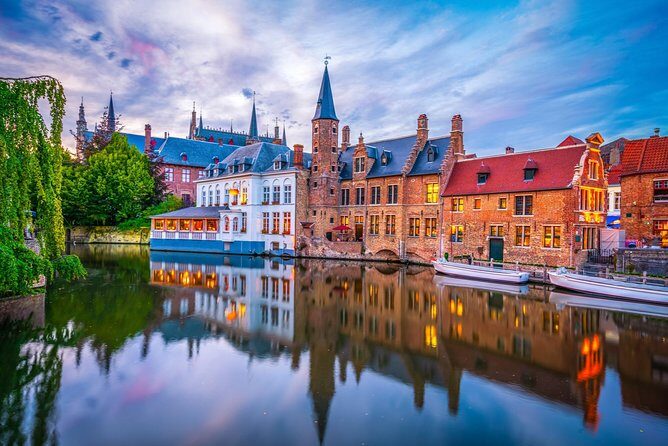
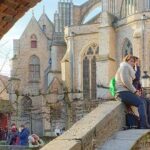
One of the most talked-about attractions in this day plan is the Onze-Lieve-Vrouwekerk (Church of Our Lady). On this tour, you’re positioned in front of the church, and the guide shares a key detail: the church is known for a white marble sculpture of the Virgin and Child by Michelangelo, which is found inside.
Even though the tour description doesn’t spell out an inside visit as guaranteed time, this kind of “what you’re about to see” briefing is still valuable. It changes how you look at the exterior and helps you decide later whether you want to return on your own.
This is also a good place to slow down for a minute. Bridges, corners, and canal views are great, but standing in front of major churches gives your eyes a different kind of anchor. Bruges can feel like a photo montage. Churches interrupt that and make it feel like a real city.
Medieval streets you can recognize: beer, houses, and tanners
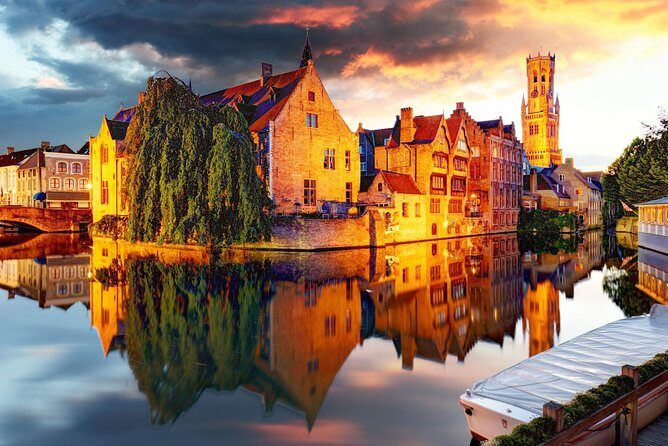
A big part of what makes Bruges feel special is how “readable” it becomes when someone explains what you’re looking at. This tour tries to do that with several short, focused stops.
At Walplein, you’ll hear the history of Bruges beer. The stop is only around 5 minutes, but it’s a fun one if you plan to pick up a drink during free time. Even if you don’t become a beer expert overnight, the context helps you order with more confidence.
Then comes Stoofstraat, where the guide explains how to identify original medieval houses. This is more than trivia. When you learn what makes a building feel medieval, you’ll start noticing those features everywhere during free time. In other words, you’re not just looking at Bruges now. You’re training yourself to see it.
Next is Huidenvettersplein (Tanners Square), focused on how tanners worked in medieval Bruges. Again, the stop is short, but it turns the city from scenery into a place shaped by work, trade, and daily life.
And if you want a strong “people and systems” story, you’ll also pass Saint John’s Hospital (Old St. John Hospital). The guide explains how the medieval health system worked, which adds a grounded human layer. Bruges can be very aesthetic. This helps balance that with how people actually lived.

Canal viewpoints: St Bonifacius Bridge and Rozenhoedkaai
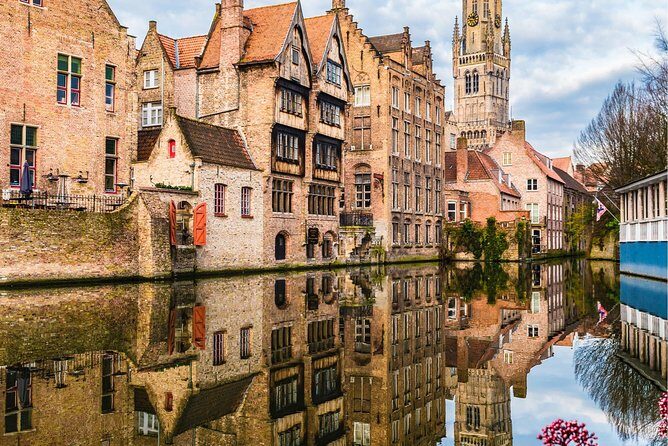
Bruges is famous for water views, and this tour gives you several quick chances to catch them.
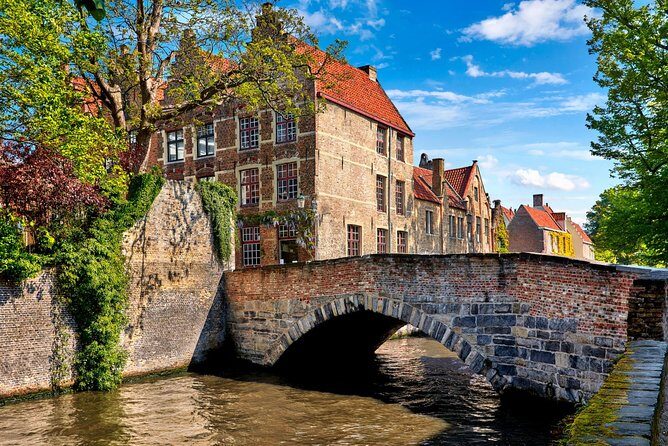
At St Bonifacius Bridge, you’ll hear an interesting legend tied to the bridge and get time for photos. The stop is brief, about 5 minutes, but it’s the kind of spot where photos look good no matter what your phone skills are.
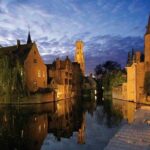
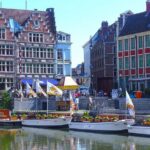
Then you move to Rozenhoedkaai, one of the most photographed places in Bruges. The guide explains the history around the rose quay, and you’re given another short photo window. Even if you’ve seen pictures online, seeing it in person helps because you notice how the water and buildings frame each other. It’s not just a view. It’s a composition.
The overall tour concept also includes scenic canal ways, including the Dijver Canal, and you’ll see the Lake of Love early on. So even if your free time gets cut short by weather or your own chocolate detours, you still leave with the big visual hits.
Chocolates and the best use of your free time
Before you get your long independent block, there’s a stop that can easily become the highlight for many people: Chocolalino. You’ll meet at one of the certified artisan chocolate shops and get the chance to taste artisan chocolates. The guide also shares tips for distinguishing handmade chocolate from industrial versions.
This is one of those moments where having a guide matters. Chocolate tasting on your own can be fun, but it’s easy to miss what to compare. With the guide’s coaching, you’ll start noticing differences in texture and flavor rather than buying purely on packaging.
After that, you get roughly 4 hours free time. This part is the reason many people rate this tour highly: it’s enough time to make real decisions.
Here’s how I’d use it if I were you:
- Start with a simple loop from Market Square (Grote Markt) so you always know where you are.
- If you want one “ticketed” add-on, plan a 30-minute canal cruise. A short cruise is an easy win because it turns the city’s canals into movement and not just photos.
- Eat when you’re hungry, not when you feel guilty. Bruges is good at feeding you between photo stops.
- Keep an eye on return timing. The guide reminds you when and where to catch the bus back, and you should treat that reminder as non-negotiable. Bruges doesn’t care about your perfect sunset.
Also, keep in mind the free time can be slightly affected by traffic and the group’s pace. So don’t schedule a sit-down meal at the exact moment you think you’ll leave.
Price and value: what you’re really paying for
The price is listed at $49.73 per person, with round-trip coach transport included. That number matters less than what’s packaged inside it.
You’re paying for:
- Transportation you don’t have to plan or drive
- A Spanish-speaking guide who provides context at each stop
- A structured guided walk through key Bruges landmarks
- Enough free time to personalize the rest
If you tried to DIY this with public transport and self-guided walking, the time planning alone could eat up the day. Here, the coach handles the big logistics so you can spend your energy on enjoying Bruges.
One more value piece: the guided portion is designed to help you recognize patterns. Once you understand what makes a house medieval or what a tanners’ square meant, the city becomes more than a collection of postcards.
The only added cost that might crop up is if you need a radio headset. Bruges regulations sometimes require radio guides, and the tour notes that you can use your own wired 3.5mm jack headphones, or purchase disposables for €1 if you don’t have them.
Comfort, language, and the reality of a rainy Belgium day
This tour is mostly outdoors, and Bruges streets are cobbled. So even on a nice day, wear shoes that won’t punish you after the third photo stop. On a rainy day, the experience can slow down, and it may feel like you’re watching umbrellas more than architecture.
Language is another consideration. The guide is Spanish-speaking. If you don’t read Spanish, you’ll still get plenty of visuals and guided context, but it won’t feel as smooth as it would with a guide who speaks your language.
The good news is that the tour sometimes uses radios to meet local requirements. That’s meant to improve clarity in busy areas. If you bring wired headphones, you’re more prepared than most.
Finally, timing matters because you’re doing a day trip. There can be some waiting at the bus points, and you should expect some walking between where the bus drops you and where the group regroups. It’s part of the deal for visiting a historic city that wasn’t built for coaches.
Who this Bruges from Brussels tour is best for
This works best if you’re:
- Visiting Bruges for the first time and want an organized orientation
- Short on time but not short on desire to take photos
- Confident enough to explore on your own for about 4 hours
- Comfortable with a Spanish-speaking guide or willing to use radio/headphone support
It might be less ideal if you:
- Need a guide in your specific language
- Want a fully relaxed pace with minimal walking
- Are traveling during heavier rain periods when outdoor mobility becomes harder
On the plus side, the tour is capped at 45 travelers, so the day feels less like a conveyor belt than some larger coach options.
Should you book this Bruges bus tour from Brussels?
If you want Bruges with less stress and more structure, I think this is a solid pick. The mix of guided highlights (Market Square, Burg Square, the Holy Blood area, Church of Our Lady outside views, canal photo stops) plus about 4 hours to roam gives you both context and freedom.
I’d book it if you like having the city explained just enough to make your free time smarter. And if you’re a photo person, this schedule hits several classic viewpoints without locking you into one long indoor day.
But if you’re chasing a slow, minimal-walking day, or if language barriers would frustrate you, consider whether you’d rather go at your own pace instead. Bruges is very walkable, and you can always choose a DIY plan if you want full control.
FAQ
What time does the tour start, and how long is it?
It starts at 8:30am from Carrefour de l’Europe in Brussels, and the duration is listed as about 9 hours.
Do I need headphones?
Sometimes Bruges regulations require the use of radio guides. You can use your own wired 3.5mm jack headphones, or you can buy disposables for €1.
Is the guide Spanish-speaking?
Yes. The tour includes a professional guide in Spanish.
How much free time do I get in Bruges?
You get approximately 4 hours of free time, depending on traffic and the group’s rhythm.
Where does the bus pick up and drop off?
The meeting point is Carrefour de l’Europe, 1000 Bruxelles, and the activity ends back at the meeting point in Brussels.
Is food included in the price?
No. Food and drink are not included, but the guide can point you to good options.
What happens if the tour is canceled due to poor weather?
The experience requires good weather. If it’s canceled due to poor weather, you’ll be offered a different date or a full refund.