Bruges can feel like a postcard maze. This walking tour helps you get the best highlights in a smart route, with humor and context from an English-speaking guide. I like that you get real guidance on what to eat, drink, and visit, plus chocolate shop discounts. One thing to plan for: on busy streets (or in rain), it can be harder to hear your guide unless you can use the audio option.
The route is built around the city’s most photographed corners and the stories behind them, from Minnewater Lake (the Lake of Love) to the Gothic center at Burg and Grote Markt. You’ll make short stops where the guide points out what you’d otherwise miss, including how to spot original medieval houses and what Bruges beer lore is really about. Expect a lot of moving on foot, and your day will feel most enjoyable if you’re okay with short walks between stops.
One more practical note: the meeting point is near Bruges station, not in the middle of the tourist core. If you hate extra wandering on Day 1, you may want to factor in that first approach walk before the guided portion properly starts.
In This Review
- Key points worth knowing before you go
- Entering Bruges with a route that makes sense
- Price and value: what $26.43 buys you in real terms
- Meeting point near Brugge station: small logistics that matter
- Minnewater Lake and Begijnhof: the love story and the women’s courtyard
- Chocolalino: artisan chocolate tasting and how to spot the real thing
- Bruges beer, medieval houses, and the photo bridge moment
- Saint John’s Hospital and the Church of Our Lady: health care and marble details
- Gruuthuse and the bridge legends: power and storytelling in motion
- Rozenhoedkaai and tanners’ square: postcard views and everyday work
- Burg Square and Grote Markt: wrap-up sights plus shopping and food tips
- Hearing the guide on real Bruges streets: tips from experience patterns
- Should you book this Bruges Walking Tour?
- FAQ
- How long is the Bruges Walking Tour?
- What language is the tour offered in?
- How much does it cost?
- What is included in the price?
- Are admission tickets included for the stops?
- Is food or drink included?
- Is there a chocolate tasting?
- Do I need headphones to hear the guide?
- Where does the tour start and end?
- What happens if weather is bad?
Key points worth knowing before you go
- English guides, often with big energy: stories come with humor, so the walk doesn’t feel like a lecture
- Chocolate tasting plus member discounts: you’re not just buying a bar at random
- Iconic Bruges in a logical route: you hit major sights without constantly backtracking through crowds
- Short, focused stops: most locations are timed well for photos and a few key facts
- Bring ear comfort: audio is sometimes shared by radio, and headphones may be available for a small fee
Entering Bruges with a route that makes sense
This is the kind of Bruges tour that helps you get your bearings fast. You start by moving through several of the city’s most recognizable spots, but the guide doesn’t just point and name. The value is in the quick context: why a building matters, how everyday life worked, and which details to watch for when you wander afterward on your own.
I also like the rhythm. You’re not stuck at one museum for ages. Instead, you get a sequence of outdoor views and small “look closer” lessons that keep the walk interesting. If you’ve only got a day (or a half day) in Bruges, this format gives you a solid overview without turning your schedule into a checklist.
The tour is also designed for conversation and questions. In the past, guides like Maria, Diego, Julian, and Louis have been mentioned for warmth and humor, and that kind of hosting makes a difference when you’re walking through crowds.
You can also read our reviews of more walking tours in Bruges
Price and value: what $26.43 buys you in real terms
At $26.43 per person, this tour lands in the practical “worth it” zone for a first visit. You’re paying for four things: an English-speaking guide, a structured walking route, guidance on where to eat and shop later, and at least one chocolate shop stop with tastings and discounts.
The other value piece is that the stops are fast and purposeful, so you get multiple major city moments in about the length of a long coffee break plus a walk. The listed duration is about two hours, and in practice it can run closer to two and a half depending on the group and guide.
Also keep in mind: food and drinks aren’t included. Your money here is for the guided experience and the story-driven itinerary, not a meal. If you treat the tasting and the chocolate discounts as a perk, it can feel like a good deal.
Meeting point near Brugge station: small logistics that matter
You meet at Carrefour Express Brugge Station (Hendrik Brugmansstraat 6/0002, 8000 Brugge). That’s convenient if you’re already in the area or arriving by train, and it’s near public transportation.
But multiple guests have flagged that the start is a bit removed from the immediate center of the tourist action. So arrive early, and don’t assume you’ll be standing among the main postcard buildings at the exact start time. Once you’re on the move with your guide, the route does a good job of bringing you into the core sights.
If you’re choosing what to wear, think practical: comfortable shoes matter here. You’re doing a full walking route with several short photo stops, so your feet will lead the experience more than your plans on paper.
Minnewater Lake and Begijnhof: the love story and the women’s courtyard
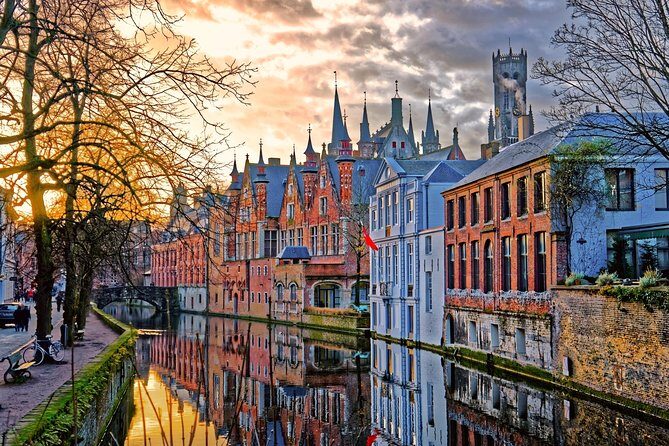
The tour opens at Minnewater Lake, also known as the Lake of Love. This is a great first stop because you get a calm, scenic moment right away. While you’re looking at the water and the surrounding views, the guide ties it back to Bruges history and a local love story tied to the lake.
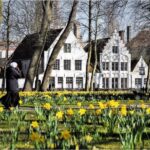
Next is the Begijnhof. Founded in 1245, it’s a quiet pocket associated with a remarkable group of women. This stop works well because it changes the mood. You go from a view that feels dreamy into a space that feels deliberate and historical, and the guide explains how this community fit into medieval Bruges.
Why this pair is smart: it gives you both the romantic legend side and the social-history side. After that, you’re ready to appreciate the city’s mix of beauty and practical living.
Chocolalino: artisan chocolate tasting and how to spot the real thing
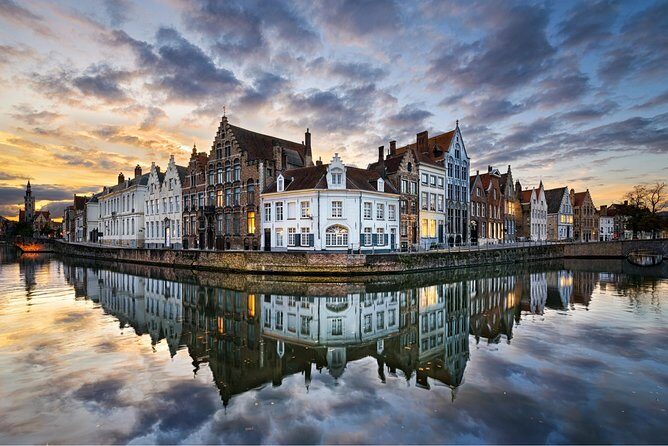
Then comes the sweetest part at Chocolalino, an artisan chocolate shop. You get a chance to taste artisan chocolates, and your guide explains what makes Bruges chocolate famous.
This stop is more than free samples. You’ll get tips for distinguishing handmade chocolate from industrial versions. Even if you’re not a hardcore chocolate person, it’s a useful skill for the rest of your trip, because Bruges has lots of chocolate shops and you’ll see the difference if you know what to look for.
One more plus: there are exclusive discounts for tour members at chocolate shops around Bruges. That means the tour can pay back if you planned to bring chocolate home anyway. If you’re only browsing, it’s still fun, but it’s best value if you’re ready to buy something afterward.

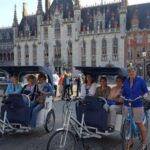
Bruges beer, medieval houses, and the photo bridge moment
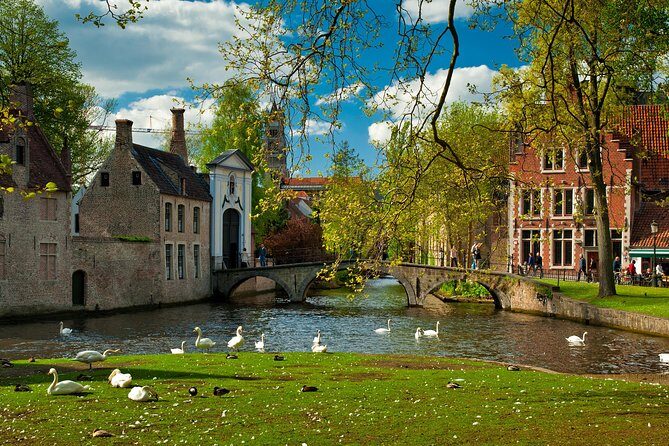
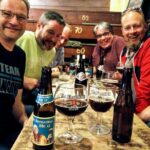
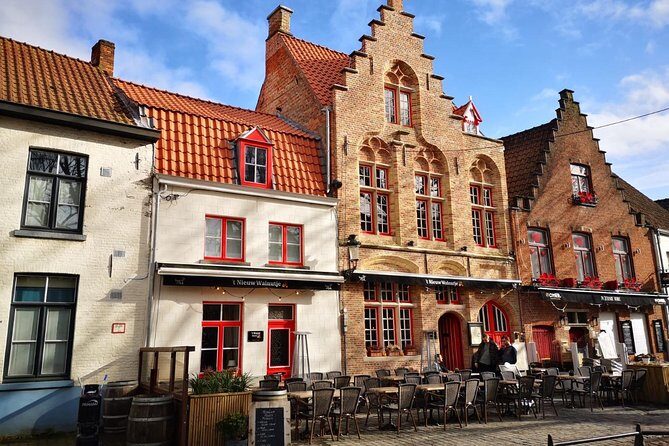
At Walplein, the guide explains the history of Bruges beer. This kind of stop is easy to overlook on your own, because beer culture can sound like trivia until someone connects it to how the city actually functioned. You come away with a clearer sense of why this place brewed drinks that mattered.
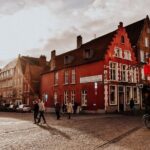
Then you’ll head to Rue de l’Étuve, where the guide teaches you how to identify original medieval houses. This is one of those “once you know, you can’t unsee it” lessons. Afterward, you’ll start spotting details that make façades feel less like wallpaper and more like readable architecture.
There’s also a short stop for photos from a little bridge. That’s a smart move in a walking tour, because it gives you a chance to capture the postcard view without sprinting across the city trying to find the best angle.
Saint John’s Hospital and the Church of Our Lady: health care and marble details
Saint John’s Hospital is next. The guide explains how the health system worked in medieval Bruges. This stop adds a grounded, human layer to the day. Bruges isn’t only monuments and chocolate. It also held systems for care, and your guide makes it easier to understand what that meant in the past.
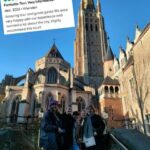
After that, you’ll be in front of Onze-Lieve-Vrouwekerk (Church of Our Lady). From the outside, the guide points out curiosities related to the white marble sculpture of the Madonna and Child by Michelangelo, which is inside the church.
Even if you don’t go inside during the tour, this works. You learn what to look for and why the artwork matters. When you visit later on your own time, you’ll feel like you’re returning to something you already understand.
Gruuthuse and the bridge legends: power and storytelling in motion
You’ll also stop by the Gruuthuse area and get introduced to the most famous and powerful Bruges family between the 17th and 18th centuries. This isn’t just a name-drop. The guide uses it to explain the kind of influence that shaped the city and why the family’s presence still shows up in the built environment.
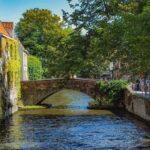
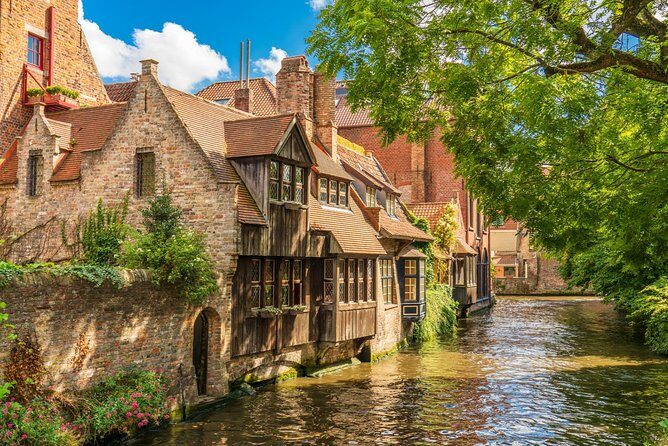
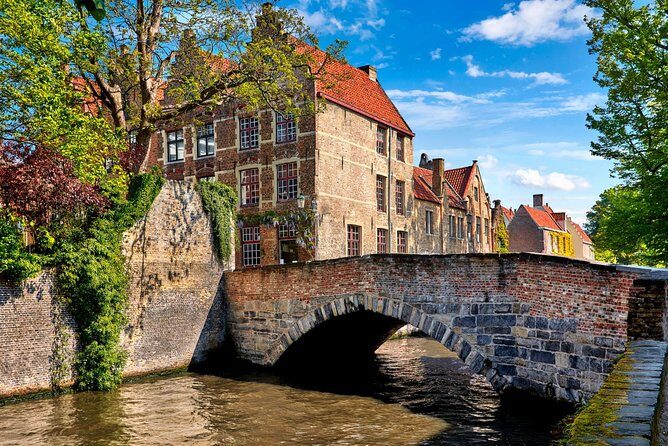
Then the tour heads to Boniface Bridge, one of Bruges’ charming spots. The guide shares an interesting legend tied to the bridge, and you get time for photos. This is where the day’s storytelling really clicks: you understand how people turned places into myths, and why the city looks the way it does.
Rozenhoedkaai and tanners’ square: postcard views and everyday work
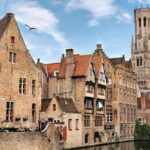
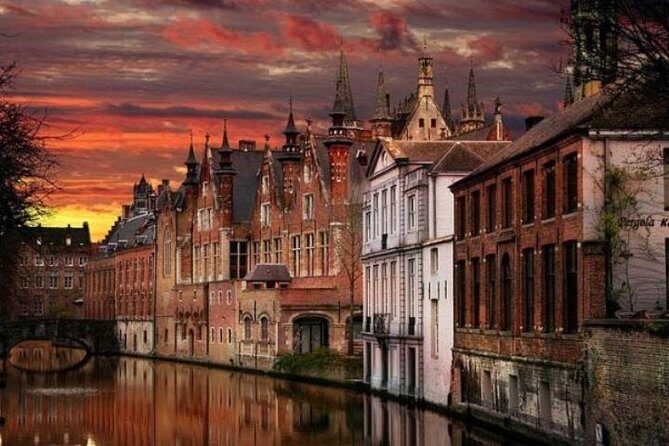
At Quai du Rosaire / Rozenhoedkaai, you’re at one of the most photographed places in Bruges. The guide talks about the history surrounding the Pier of the roses, and again you get room to take pictures.
Then you shift to the practical side at Huidenvettersplein, the tanners’ square. You’ll learn how tanners worked in medieval Bruges. It’s a strong contrast to the rose pier view. One shows image and romance; the other shows labor and craft. You get a fuller picture of how the city functioned.
If you love walking tours that connect the pretty scenes to real work, this portion is a standout.
Burg Square and Grote Markt: wrap-up sights plus shopping and food tips
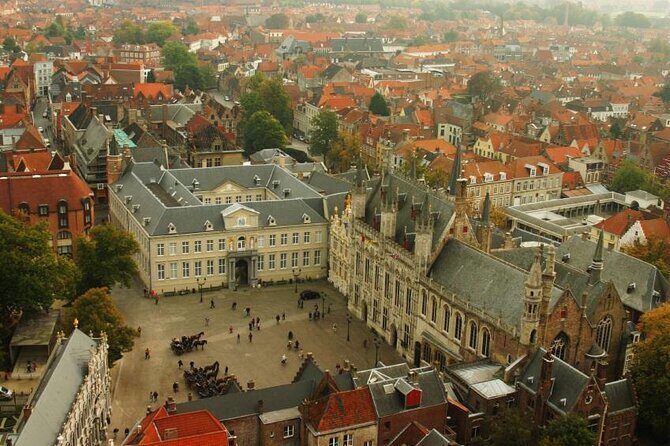
The tour finishes in the heart of the action. At Burg Square, you’ll see the Gothic Town Hall, the Old Court House, and the Basilica of the Holy Blood. The guide explains what’s around you so you don’t just stand in front of buildings without context.
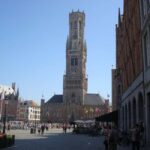
Finally, you end at The Market Square, also called Grote Markt. This stop is timed well because you’re ready to keep exploring after the tour. The guide points out the buildings around the square and gives tips on where to eat and which are the best shops to buy traditional chocolate.
This ending is useful because it tells you where to go next while you still have your guide’s perspective in mind. You’re not just dropped off. You’re given a short map of what to do next.
Hearing the guide on real Bruges streets: tips from experience patterns
A few practical things can affect your enjoyment here. Bruges streets can get crowded, and if you’re far from your guide, it may be tough to hear in the noise.
Also, the tour can use audio equipment due to tourist regulation. Headphones aren’t included, but you can use your own if you have them. If not, the tour offers headphones for only €1. If you want the safest odds, bring your own simple headphones or be ready to purchase the rental.
Rain is another factor. The experience requires good weather, but if you hit a wet day, sounds can carry differently and sight lines get harder. If you’re sensitive to cold or slippery pavement, pack accordingly.
Should you book this Bruges Walking Tour?
Book it if you want:
- A quick overview of Bruges’ biggest sights in a single route
- A guided explanation of places like Minnewater, Begijnhof, Saint John’s Hospital, and the Holy Blood area
- A practical stop at an artisan chocolate shop, with guidance on what you’re buying
Skip it (or consider a different format) if:
- You strongly prefer tours that start right in the thick of the central tourist core
- You dislike lots of walking and short stops where you’re moving every few minutes
- You know you’ll struggle to hear in crowded streets unless you can control the audio setup
If your goal is to leave Bruges with context and a short list of what to do next, this tour is a solid bet for the money.
FAQ
How long is the Bruges Walking Tour?
It lasts about 2 hours, and the full visit can vary by group and guide decisions, sometimes running closer to 2.5 hours.
What language is the tour offered in?
The tour is offered in English.
How much does it cost?
The price is $26.43 per person.
What is included in the price?
You get a professional English-speaking guide, city tips, and the guided walking tour in Bruges.
Are admission tickets included for the stops?
The stops listed include free admission tickets during the tour.
Is food or drink included?
No. Food and drinks are not included, but your guide will point you toward good options.
Is there a chocolate tasting?
Yes. The tour includes a stop at Chocolalino where you can taste artisan chocolates.
Do I need headphones to hear the guide?
Headphones are not included. The tour may use radios and headphones due to tourist regulations, but you can use your own. If you don’t have headphones, the tour offers them for €1.
Where does the tour start and end?
It starts at Carrefour Express Brugge Station (Hendrik Brugmansstraat 6/0002, 8000 Brugge) and ends at Market Square, Markt, 8000 Brugge.
What happens if weather is bad?
The experience requires good weather. If it’s canceled due to poor weather, you’ll be offered a different date or a full refund.