REVIEW · BRUSSELS
Brussels: Entry Ticket to Mini-Europe
Book on GetYourGuide →Operated by Mini-Europe · Bookable on GetYourGuide
Mini-Europe feels like Europe shrunk, then made fun. I love the scale-jolt of Big Ben (about 4 meters tall in miniature) and the way interactive animations let you push buttons and watch mini-history happen. You’ll spend a good chunk of the day walking paths that are mostly outdoors, so plan for sun and a fair amount of shoe time.
Here’s the only real catch: there’s limited shade, and the park can take about 1.5 hours if you want to linger (or more if you stop for photos and animations). If your schedule is tight, you can end up rushing the last section before closing-time rules kick in.
In This Review
- Key things to know before you go
- Mini-Europe at Bruparck: what you’re really paying for
- How the entrance works and where to begin
- The outdoor “walk of Europe”: 350 mini monuments and real craftsmanship
- Interactive mini-history: Vesuvius, rockets, Vikings, and the Berlin Wall scene
- Learning as you walk: the catalog, the timelines, and the EU angle
- Grand Place gold leaf and the Brussels details that reward close looking
- Spirit of Europe: the indoor EU quiz zone at the end of the park
- How long it takes: timing, walking pace, and photo breaks
- Who should book Mini-Europe entry tickets?
- Should you book Mini-Europe in Brussels?
- FAQ
- Where do I meet for Mini-Europe in Brussels?
- What is included with the entry ticket?
- Is a guide included with the experience?
- Does this ticket skip the ticket line?
- What do I need to bring?
- How long is the ticket valid?
- Do children need a ticket?
- Are pets, skateboards, or skates allowed?
- When is the last time I can enter?
Key things to know before you go
- Skip-the-line entry plus a multi-language guidebook means you can start fast at the Bruparck ticket control.
- Big Ben, Eiffel Tower, and Grand-Place details are big photo magnets, even though everything is scaled down.
- 350 monuments spread through landscaped paths with bonsai trees, flowery groves, and dwarf trees.
- Live-action miniature shows cover everything from Vesuvius to rockets, plus Viking and Berlin Wall scenes.
- Spirit of Europe at the end turns the history lesson inward with models, games, and EU-and-beyond quizzes.
Mini-Europe at Bruparck: what you’re really paying for
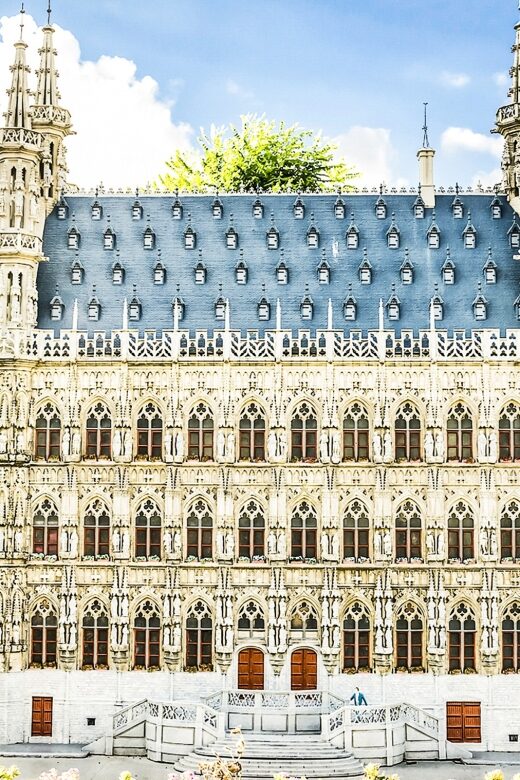
If you’re looking for a one-stop view of Europe’s most famous landmarks without the cost and logistics of visiting each city, Mini-Europe is a clever shortcut. For about $23 per person, you’re buying a full-entry pass to a park that packs 350 mini monuments into a single walking route. That price is easier to justify when you compare it to the time, transit, and tickets you’d rack up trying to see the highlights of, say, Brussels, London, Athens, Paris, Berlin, and more in one day.
What you get is simple and practical: admission, and a guidebook available in multiple languages. You don’t get a live guide, so your “tour” is mostly you exploring at your pace—using the guidebook for context and the park’s own information panels as you go. I like that setup. You can slow down for the details that catch your eye, then move on before the next interactive display starts.
Also, it’s built for mixed travel styles. It’s wheelchair accessible, and it’s an easy day out even if your group includes kids (or adults who just want something fun without a museum-staffed lecture). If you like flexibility, the ticket is marketed with the usual travel levers (like being able to cancel up to 24 hours in advance and the option to reserve and pay later).
A few more Brussels tours and experiences worth a look

How the entrance works and where to begin
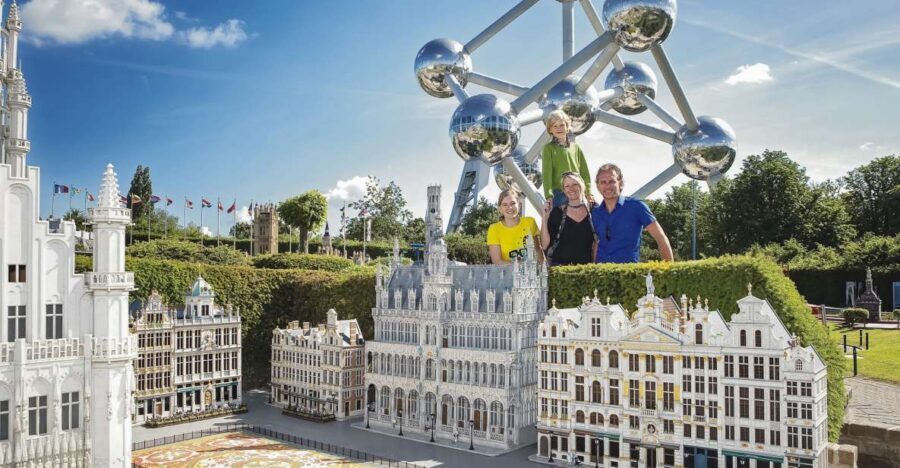
You’ll start at the ticket control at Bruparck. That matters because Mini-Europe is part of the larger Bruparck area, so you don’t want to wander around guessing which gate is right. Once you’re in, the park is designed so you can follow the main walk and get to the highlights without needing a complicated plan.
Bring your passport or ID card. That’s explicitly required, and it’s the kind of detail that can ruin a day if you forget. Also note the rules: pets aren’t allowed, and skateboards and skates aren’t allowed either. If you’re traveling with small kids, also remember the ticketing rule: children smaller than 115 cm do not require a ticket.
Timing can matter more than you think. The last entrance is one hour before closing, so if you’re hoping to linger at animations and not rush the end, start early rather than playing chicken with closing time.
The outdoor “walk of Europe”: 350 mini monuments and real craftsmanship
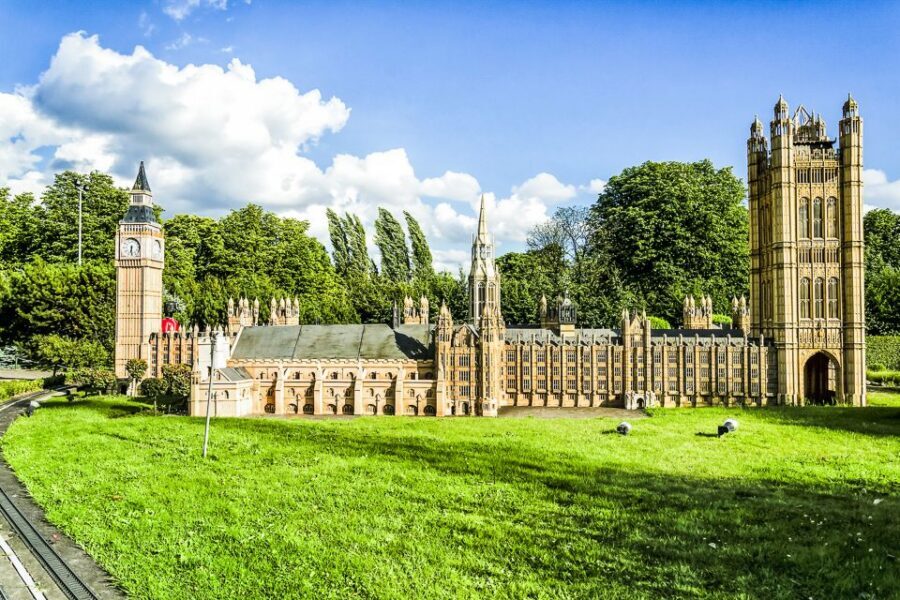
The main event is the outdoors route—an intentionally dense highlight reel of Europe’s architecture and icons. As you walk, you’ll see those monuments not as flat replicas, but as detailed models tucked into landscaped scenes with bonsai trees, flowery groves, and dwarf trees. It makes the park feel cared for rather than like a random lineup.
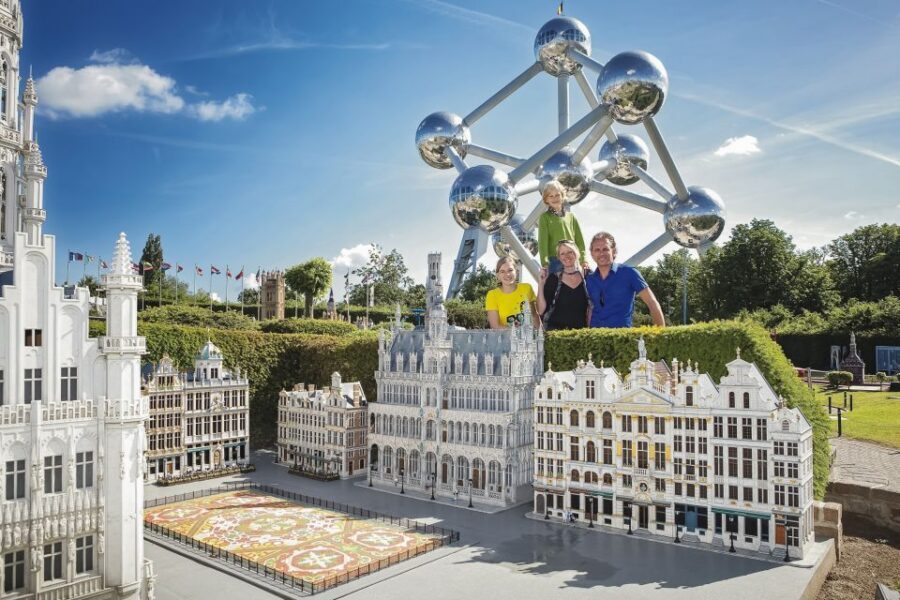
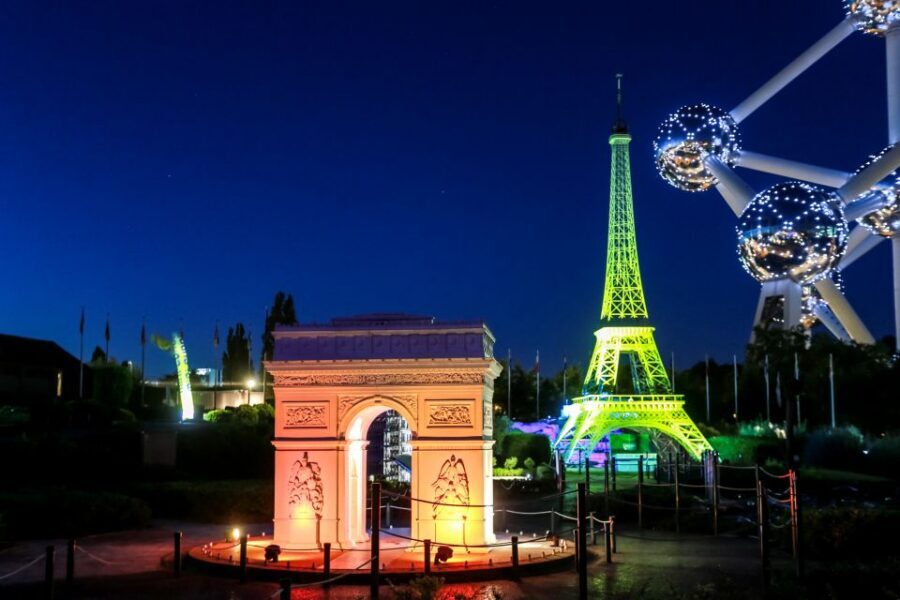
The big-ticket photo moments are hard to miss. I love how Big Ben is presented at about 4 meters high in miniature, because it changes your frame of reference fast—you instantly understand size, even at a reduced scale. The Eiffel Tower is another standout at 13 meters, and it’s taller than a typical three-story building. That might sound like trivia, but it actually helps you mentally size it up when you’re planning where to stand for photos.
A few other details make the models feel “alive.” Grand-Place in Brussels isn’t just copied—it’s represented with the idea of real gold leaf on statues. You get the visual punch of gilding without the heavy lifting of seeing the real thing in person.
One of my favorite parts of this kind of attraction is when the place makes you want to look closer. Mini-Europe has that. People end up pausing for the little elements—especially once they notice how much effort goes into making the mini versions recognizable, not generic.
Interactive mini-history: Vesuvius, rockets, Vikings, and the Berlin Wall scene
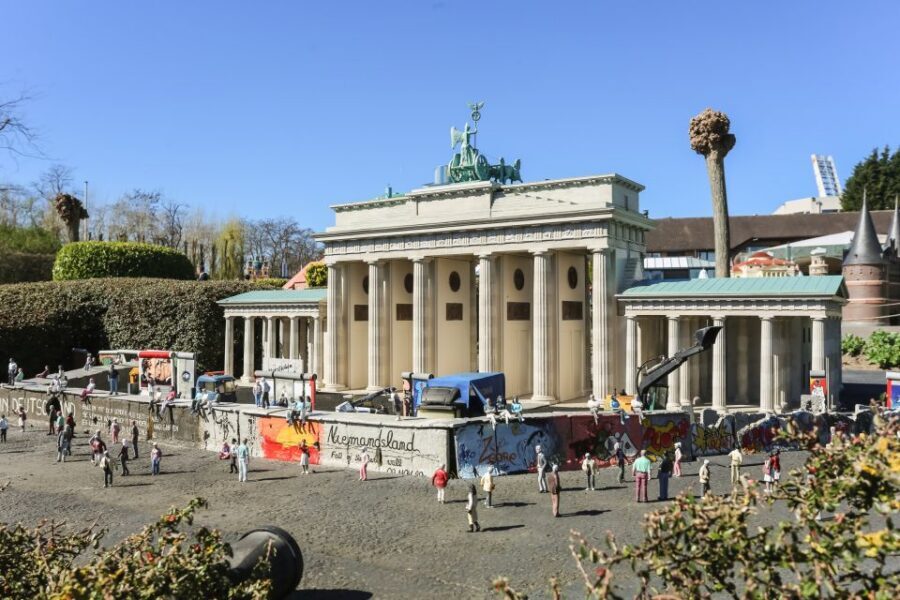
Mini-Europe doesn’t rely only on static models. It also includes interactive, live-action animations—little theater moments where you can operate elements and watch dramatic scenes play out. This is where the park shifts from “photo stop” to “thing to do.”
Some of the mini-action highlights include:
- The eruption of Vesuvius
- The take-off of the Ariane rocket
- A scene where you can destroy a section of the Berlin Wall
- Legionnaires in action
- A mini setup where you can scare the Vikings
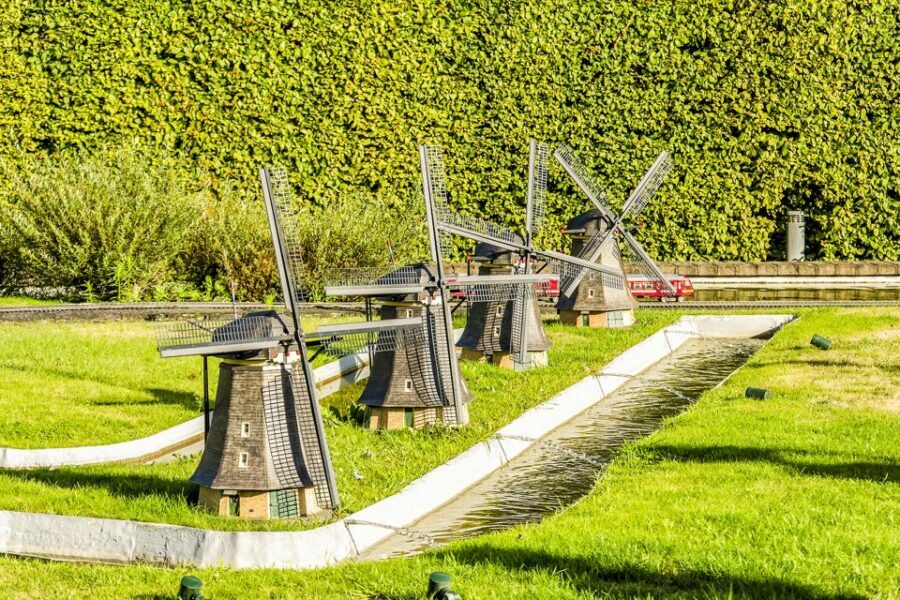
And the interactive theme continues with other historical or cultural displays tied to specific locations. For example, you can operate animations like the Bells of Stockholm and the Windmills at Kinderdijk.
Why this matters for your day: interactive displays break up the walking rhythm. Instead of trudging from one landmark to the next, you get small bursts of “wait, that’s cool” energy. They also help kids stay engaged without you turning the visit into a constant explanation session.
There’s also a mention of anthems you can hear, and musical elements (including musical lights on Level 4). Even if you don’t catch every sound cue, those extras make the place feel less like a strict diorama museum and more like an attraction with atmosphere.
Learning as you walk: the catalog, the timelines, and the EU angle
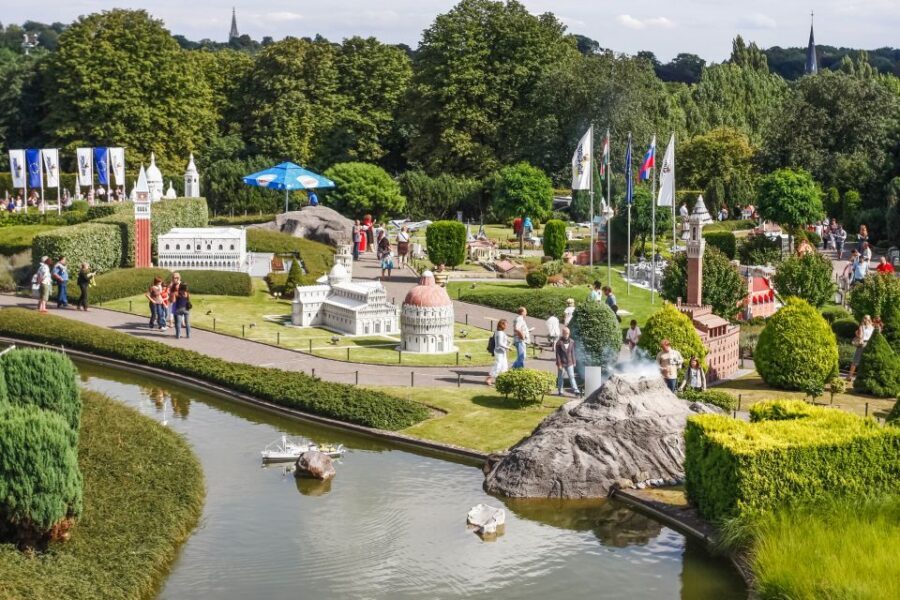
Mini-Europe earns its “education” points by layering explanation onto the route. Throughout the park, there’s a catalog with commentary that runs through eras and themes. You’re not just looking at pretty mini buildings—you’re picking up a sense of how European identity developed across time.
Here’s the kind of history thread you’ll run into as you walk:
- Origins tied to democracy
- Heritage linked to Greek, Roman, and Viking influences
- How Europe’s political story evolves through the 21st century
This approach works well because it’s lightweight. You can read what interests you, ignore what doesn’t, and keep moving. It’s not a textbook, and that’s good. You’re there to see landmarks, and the explanations are built to fit the pace of a park walk.
And yes, the park has an explicit European Union focus. Mini-Europe is often described as mini EU, and it leans into that in two ways: through the catalog-style commentary and then through the indoor finale at Spirit of Europe.






Grand Place gold leaf and the Brussels details that reward close looking
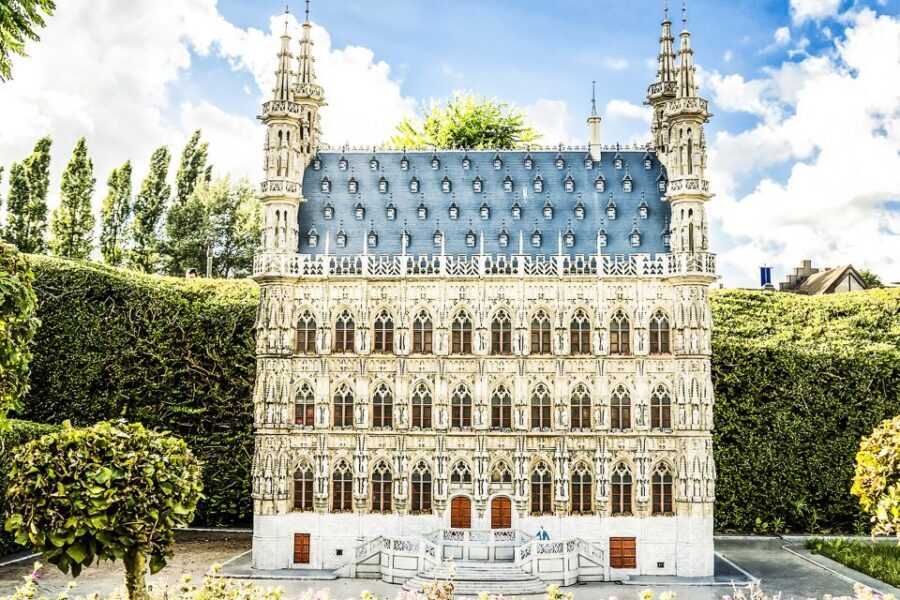
If Brussels is your base (or your first stop), pay attention to what’s specifically local. The Grand-Place area is represented with statues painted with real gold leaves, and it’s one of those details that looks even better in person than in photos because it catches light in a way you can’t fully capture on a screen.
Also, this is a good moment to slow down if you like architecture. Mini-Europe gives you recognizable faces of Europe, but it’s the careful representation of local craftsmanship—like those gilded elements—that makes it feel like more than a toy.
If you’re a detail-first traveler, treat this like an informal “Brussels architecture warm-up” before you go hunting for the real Grand-Place later.
Spirit of Europe: the indoor EU quiz zone at the end of the park
At the end of the outdoor walk, you enter Spirit of Europe—a large indoor space. This is where Mini-Europe stops being only visual and starts testing what you’ve been noticing.
Inside, you’ll find:
- Live-action models
- Games and quizzes
- A chance to test and reinforce knowledge about the 27 member states of the European Union, plus the United Kingdom and Ukraine
I like this portion because it doesn’t feel like a lecture hall. It turns learning into a short, self-guided activity. If you’re traveling with kids, this indoor break can be a lifesaver—especially if you hit a weather shift. If you’re an adult who mainly came for the architecture, it still gives you a structured way to connect the mini monuments you saw outside to the modern political context behind them.
How long it takes: timing, walking pace, and photo breaks
In the real world, Mini-Europe is not a “10-minute quick stop.” One common time estimate is about 1.5 hours to walk through without rushing, and you’ll do more if you’re interested in the animations and want to read the commentary. You can also go faster—a crash-course approach exists—but then you risk skipping the interactive moments and the indoor Spirit of Europe section.
You’ll also want to factor in walking. The park has enough distance that comfortable shoes are not optional. Add in the photo stops (and there are lots of them), and your time moves quicker than you expect.
Two practical notes I’d take from the on-site experience style:
- There’s no shade, so bring a hat or plan for sun protection.
- The park has free toilets, which is a small detail you’ll appreciate once you’re in the swing of things.
If you’re also doing a bigger Bruparck day, you’ll likely enjoy the connection to nearby attractions. There are great views of the Atomium from the area, and one nice bonus is that you can pair your Mini-Europe visit with time around Atomium without losing the thread of your day.
Who should book Mini-Europe entry tickets?
I’d book Mini-Europe if:
- You want a fast primer on European landmarks and EU context
- You’re traveling with kids and want an attraction that mixes models with hands-on moments
- You like photography, but also appreciate when a place makes you slow down for details
- You’re short on time and want a one-day “greatest hits” feel
It’s also a good pick if you’re a Brussels-based traveler doing a second-day activity. Instead of another walking grind in the city center, this gives you variety: more compact, more interactive, and visually concentrated.
If you hate crowds, fast moving days, and outdoor walking in sun, you might want a morning or early afternoon slot so you’re not battling heat while searching for that “perfect shot” angle.
Should you book Mini-Europe in Brussels?
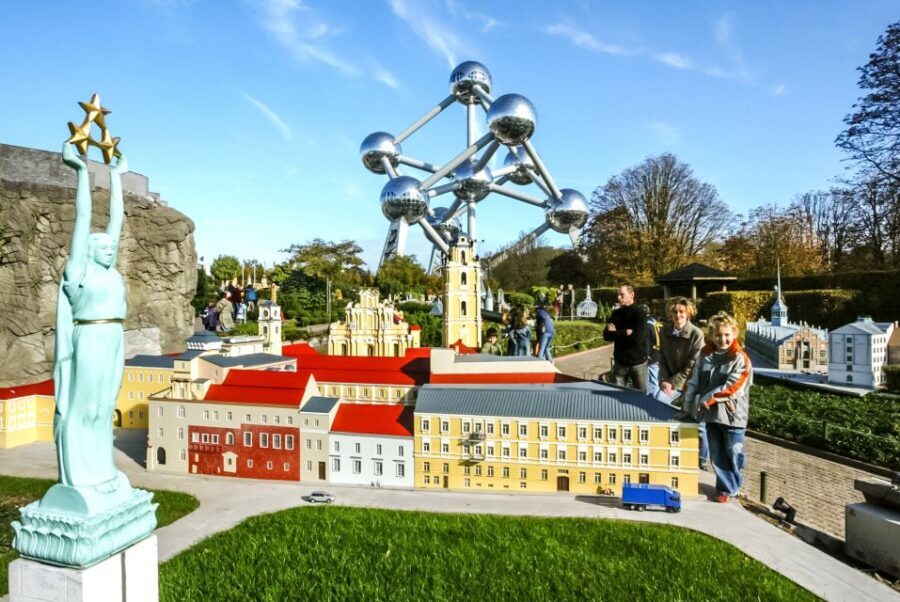
Yes, if you want a day that’s part sightseeing and part interactive mini-theater, with the bonus of Spirit of Europe giving your day a clear educational arc. For $23, the value comes from volume (350 monuments) plus the fact that it’s designed to keep attention with interactive animations instead of only static displays.
I’d skip booking if you’re expecting a deep, guided, classroom-style experience. This is more “walk, press buttons, and read as you go” than “tour guide explains everything.” Also, if you can’t handle outdoor sun and steady walking, plan carefully or go at a cooler time of day.
FAQ
Where do I meet for Mini-Europe in Brussels?
Go to the ticket control of Mini-Europe at Bruparck.
What is included with the entry ticket?
Your ticket includes admission and a guidebook available in multiple languages.
Is a guide included with the experience?
No. A guide is not included.
Does this ticket skip the ticket line?
Yes, this entry ticket includes skip the ticket line.
What do I need to bring?
Bring your passport or ID card.
How long is the ticket valid?
The ticket is valid for 1 day. You’ll need to check availability to see starting times.
Do children need a ticket?
Children smaller than 115 cm do not require a ticket.
Are pets, skateboards, or skates allowed?
No—pets are not allowed, and skateboards and skates are not allowed.
When is the last time I can enter?
The last entrance is one hour before closing.