REVIEW · BRUSSELS
Brussels Tootbus Discovery Hop On Hop Off Bus and walking tours
Book on Viator →Operated by Tootbus · Bookable on Viator
Brussels feels huge until you ride it. With a hop-on hop-off bus pass and audio commentary via the Tootbus app, the city clicks into place fast. You can hop off for photos and museums, then roll back on when you’re ready—no strict group pace.
I really like the setup for freedom: 24, 48, or 72-hour tickets let you spread sightseeing over a day or two, and the bus route hits the classic anchors (Grand-Place area, Manneken Pis, Luxembourg, Cinquantenaire, Place Royale, and out to the Atomium area). I also like the eco angle: the buses are 100% electric, and you get onboard free Wi‑Fi plus a kids audio guide.
My main caution is timing and tech. Several reviews point to long waits, and the app’s live tracking can be spotty in practice, so I’d build in extra buffer if you have a museum ticket tied to a specific time.
In This Review
- Key things I’d plan around
- Why a hop-on hop-off loop works well for Brussels
- Electric bus comfort, Wi‑Fi, and the real onboard vibe
- Using the Tootbus app without getting stuck waiting
- The route anchors: Central Station to Grand-Place and Manneken Pis
- Poelaert, Courthouse views, and the uphill-feeling city center
- Luxembourg Square and the Parliament-area feel
- Cinquantenaire and Place Royale: where Brussels turns scenic
- Rogier, De Brouckère, and getting ready for the long-haul sights
- Atomium and Mini Europe: plan for weather and crowds
- Tootwalk walking tours in the app: where the value really grows
- Audio commentary: what’s included and where it can trip you up
- Price and ticket length: which pass fits your style
- Who should book Tootbus and who should skip it
- Should you book Tootbus Discovery Hop On Hop Off and Tootwalk?
- FAQ
- What ticket lengths are available?
- Is audio commentary included?
- Does the app include bus tracking?
- Do buses have Wi‑Fi onboard?
- Are restrooms available on the bus?
- How long is the tour?
- Can I cancel for a full refund?
Key things I’d plan around

- Real-time tracking in the app is included, but live arrival info may be off at times—give yourself slack.
- Hop-on hop-off flexibility works best when you treat the bus as a connector between photo stops and neighborhoods.
- Find the stops early: signage can be inconsistent, so arriving a little ahead helps.
- Audio quality varies by device and seating: headphone jacks can fail, and some people felt the commentary had more music than history.
- Open-top exposure can be cold on the upper deck, while lower-deck comfort depends on ventilation.
- Tootwalk adds the missing detail after the bus gives you the big overview.
Why a hop-on hop-off loop works well for Brussels
Brussels can be a day-ruiner if you’re constantly trying to stitch together transit. The Tootbus concept fixes that by turning the city into a practical route: you use the bus to cover big distances, then switch to walking when a place is best explored on foot.
The big win is that you control the pace. You’ll see a lot in one circuit, but you’re not forced to rush through it. That’s especially helpful in Brussels, where the “nice part” often happens right on the street: small squares, shop fronts, and viewpoints that reward wandering.
There’s also a smart rhythm to doing this in two steps. The bus gives you the map in your head; then the Tootwalk walking tours can help you slow down where it matters most.
You can also read our reviews of more tours and experiences in Brussels.



Electric bus comfort, Wi‑Fi, and the real onboard vibe

Tootbus runs on 100% electric buses, which is a good match for a city day where you’ll be breathing roadside air and sitting under changing traffic conditions. Expect a typical sightseeing-bus setup: audio happens through your device, and the bus is meant to be a moving viewpoint.
On comfort, you need to plan for variation. One review mentioned the lower deck being freezing in November with no heating, and another mentioned air conditioning not working on a hot day. Also, some people prefer upstairs for views, but the upper deck being open can mean you’ll feel the weather more.
Wi‑Fi is listed as included and free onboard, but a couple of reviews say Wi‑Fi didn’t work when they needed it. My practical take: assume you might need mobile data, even if Wi‑Fi is offered, and don’t depend on the connection to solve last-minute navigation.
Using the Tootbus app without getting stuck waiting
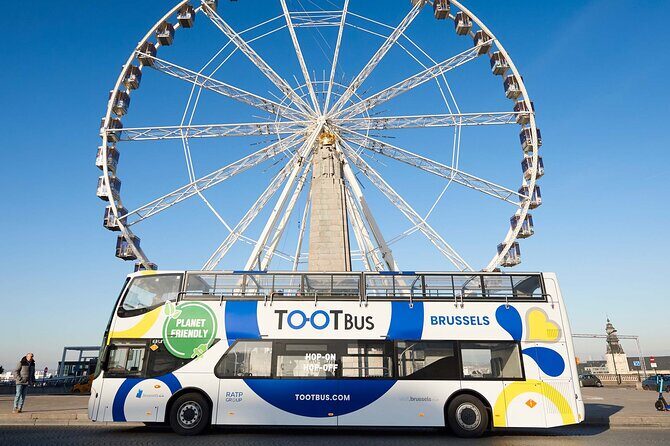
The Tootbus app is at the center of the experience. It’s where you can keep your mobile ticket in an e-ticket wallet, get bus tracking, and access audio commentary and Tootwalk.
Here’s how to use it smartly:
- When you arrive at a stop, open the app and check the listing for that stop right away.
- Then, keep checking while you wait—but don’t treat the next-bus time as guaranteed. Reviews mention cases where buses arrived much later than the app suggested.
- Use the app to help you confirm you’re at the right place, especially because a few reviews say stops weren’t obvious until they noticed signage on the stop pole.
If you have timed tickets (a museum entry, a reservation, a tight transfer), I’d build your schedule with a “Plan B.” The bus is convenient when it runs on time, but you don’t want your whole day trapped behind one arrival estimate.
The route anchors: Central Station to Grand-Place and Manneken Pis
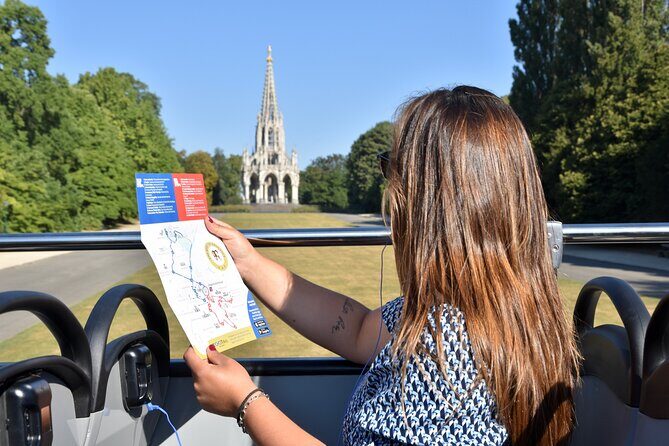
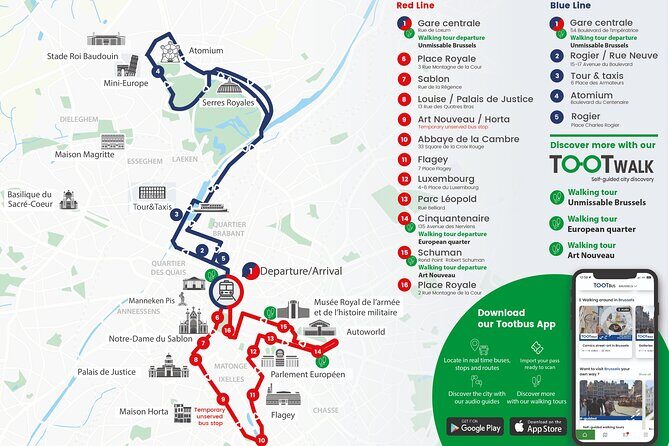
Most of the sightseeing magic starts near transport hubs, and Brussels’ hub energy makes sense. One of the stops is Central Station (Rue du Cardinal Mercier 33 area), which is a clean starting point if you’re arriving by train or need an easy return.
From there, you’ll connect toward the heart of the historic core:
- Grand-Place / Manneken Pis (Rue du Lombard 68 area). This is your classic “first day” zone. You get the famous square energy fast, and Manneken Pis is the quick photo stop that still draws a crowd for a reason.
- The bus is useful here even if you don’t hop off immediately, because it lets you spot where you want to walk next.
The practical drawback: if you’re new to the city, finding the exact bus stop can take a moment. I’d recommend arriving at stops with a little extra time, and then use the app and stop signage together.
Poelaert, Courthouse views, and the uphill-feeling city center
Next you’ll swing toward the Poelaert area:
- Poelaert / Louise / Courthouse (Rue des Quatre Bras). This zone is great for understanding Brussels’ “layers”—different streets and different building moods close together.
Why this stop matters: it’s where the city starts to feel like it’s built up and outward rather than just flat streets around a single square. If you want to walk and look up, you’re in a better position from this part of the route.
A detail to watch for is audio matching. Some reviews say the commentary didn’t always line up with what they were seeing at that moment, and others felt there was more music filler than history. If you’re the type who loves precise narration, keep your expectations flexible and pair the audio with quick looks out the window and a follow-up walk.



Luxembourg Square and the Parliament-area feel

The Luxembourg stop (Pl. du Luxembourg 2) is one of those “you’ll want to get off” locations. It’s not just a viewpoint moment; it’s also a pleasant walking pocket where you can stretch your legs and regroup.
This stop works well in a half-day plan because it breaks your day into chunks:
- Morning circuit: photo anchors and your big overview.
- Midday circuit: decompress around squares and parks.
- Afternoon circuit: museum or architecture focus.
Also, it’s a good checkpoint if you’re thinking about tackling the European institutions. One review mentioned seeing the European Parliament, and since the bus travels widely through the central corridors, you may catch views or nearby segments depending on timing and exact routing.
Cinquantenaire and Place Royale: where Brussels turns scenic

Two more highlights that make the route feel worth it are the cultural landmarks and walkable grandeur zones:
- Cinquantenaire (Av. des Nerviens 131). This is the place to ride out to when you want that grand, open-stretch feeling.
- Place Royale (Rue de la Régence 2). This is a classic Brussels “pretty and photogenic” stop where walking feels natural.
What I love about these stops is they give you variety without forcing you to plan routes between far-apart neighborhoods. The bus becomes your transport layer, and the walk becomes your experience layer.
On a practical note, you may still run into long waits depending on the time of day. Reviews mention waiting 40+ minutes at times. So if your goal is photos at these landmarks, don’t schedule them like you’re catching a train. Treat it as a day you can adjust.
Rogier, De Brouckère, and getting ready for the long-haul sights

Once you swing toward the north/center corridor, you’ll hit stops like:
- Rogier (Av. du Boulevard 21)
- De Brouckère – Centre (Rue de l’Évêque 7)
These stops are valuable because they help you reposition. Brussels isn’t just one compact bowl, and these anchors can be the difference between feeling stuck and feeling fluid. If you’re based near one of these zones, the bus becomes a shortcut back to your base after you’ve wandered.
One caution from the reviews: some people said drivers drove fast enough that it was hard to keep up. If that affects you, try to board with a little buffer, or choose the times when you’re not in a rush to sprint to the exact curb.
Atomium and Mini Europe: plan for weather and crowds
The far-reaching highlight is the Atomium & Mini Europe stop (Boulevard du Centenaire). This is the big “outer Brussels” payoff, and it’s the part many people want most when planning a first visit.
Here’s what to keep realistic:
- The Atomium area can involve waiting, and at least one review mentioned long lines at the Atomium.
- The bus ride may take longer than you expect because traffic and spacing between stops can add time. Reviews include experiences where traffic ate up an hour on the outer-to-center portion.
Weather matters here. One review noted the upper deck being completely open, making the bus cold, and another described freezing on the lower deck with no heating. If you’re going in colder months, layer up. If it’s warm, still expect that ventilation can vary and A/C may not always cooperate.
If you want the Atomium photo moment, I’d treat the bus stop as the start of your buffer, not the end. Give yourself time to get there, get what you need, and still comfortably board the next bus.
Tootwalk walking tours in the app: where the value really grows
The bus is your overview. Tootwalk is where the day gains shape.
Tootwalk is accessed through the app, and it’s designed as guided walking exploration to complement the hop-on hop-off loop. One review specifically praised a 4-hour walking tour led by Patrick, calling him friendly and detail-focused.
That matters because Brussels’ best stories often live at walking speed: street-level design choices, historical transitions, and local culture you’ll miss if you only ride past. A bus can show you where something is. A walking tour helps you understand why it’s there and what to notice while you’re standing in front of it.
My suggestion: do the bus first to learn the geography. Then pick a walking tour near the places you liked most. That way the narration connects to your real viewpoints, instead of feeling generic.
Audio commentary: what’s included and where it can trip you up
Audio is a core part of this product. You get audio commentary via the bus and the app, in multiple languages, plus a kids audio guide. Free Wi‑Fi can also help you keep the app running smoothly.
But audio can be inconsistent:
- Some reviews report more music than commentary.
- Others mention the recording not matching what you see outside the window at that moment.
- A few people had headphone jack issues, and some had seat plugs not working.
So here’s the balanced way to plan:
- If you care about hearing details clearly, bring your own headphones so you’re not stuck with failing onboard audio jacks.
- If you notice the audio feels off-topic, switch into visual mode for a while: look out the window, then use the app later if you want to catch up on the story.
One review also mentioned radio sets given to hear the guide from wherever you were, which is a helpful reminder that the experience may feel stronger when the audio system works well.
Price and ticket length: which pass fits your style
You’re choosing between 24, 48, or 72-hour access. Even without specific prices here, the logic is straightforward: pay for the amount of time you’ll actually use to hop on and off.
- If you’re visiting Brussels for a single day and you want a fast overview, a 24-hour window can be plenty, especially if you already know which neighborhoods you want to walk.
- If you want a second pass to revisit spots for photos, do a museum, or add one more Tootwalk-style walk, 48 hours is where you start getting more value.
- If you’re staying longer and plan to return to multiple anchors (and handle a couple of weather changes), a 72-hour pass can reduce stress.
One review mentioned that the voucher made a short-term experience feel worth it, and another review said the pass felt not worth it due to stop-finding and waiting times. That’s the key: the ticket is a great value when you can hop often and move smoothly, but it feels expensive when you lose hours to missed timings.
Who should book Tootbus and who should skip it
This is a good fit if you:
- Want a low-effort way to cover lots of sights without stitching transit routes all day.
- Like planning “clusters” of stops and then walking around the clusters.
- Enjoy guided audio but can tolerate that it might not be perfectly synchronized every minute.
It’s a weaker fit if you:
- Have very tight schedules that depend on exact arrival times.
- Are extremely sensitive to cold or heat conditions on the bus.
- Expect the audio to be constant deep history rather than a mix of commentary and other audio elements.
The staff is often described as friendly, which helps when the experience hits friction.
Should you book Tootbus Discovery Hop On Hop Off and Tootwalk?
I think you should book if you want an easy first pass at Brussels and you’ll use the hop-off power to walk. The combination of electric hop-on hop-off transport plus app-based walking tours is the main reason this can work well, especially on a first visit.
I’d book with a few smart expectations:
- Build time buffers for waiting and stop-finding.
- Bring headphones and plan your day so you’re not trapped by one bus.
- Use the bus for geography, then switch to walking tours when you want meaning.
If that sounds like your travel style, this is a practical way to see the big landmarks and still end up with streets you actually remember.
FAQ
What ticket lengths are available?
Tootbus offers 24, 48, or 72-hour sightseeing access, depending on the ticket you choose.
Is audio commentary included?
Yes. Audio commentary is included and available on the bus and through the Tootbus app, with a kids audio guide as well.
Does the app include bus tracking?
Yes. The included app provides access to bus tracking and the audio commentary, along with the e-ticket wallet.
Do buses have Wi‑Fi onboard?
Yes. Free Wi‑Fi is included onboard, though some people report it not working reliably at the time they tried.
Are restrooms available on the bus?
No. Restrooms are not included on board.
How long is the tour?
The experience is listed as about 1 hour, though people report longer total riding times depending on the day and route conditions.
Can I cancel for a full refund?
Yes. Free cancellation is offered, with a full refund if you cancel at least 24 hours in advance. If you cancel within 24 hours, the amount paid is not refunded.