REVIEW · LIEGE
e-Scavenger hunt Liège: Explore the city at your own pace
Book on Viator →Operated by Qula · Bookable on Viator
Liège turns into a game in your hands. This e-scavenger hunt mixes real sights with an app and GPS, so you can explore Liège Cathedral area landmarks while answering prompts at each stop. You control the start, stop, and pacing instead of being tied to a fixed walking schedule.
Two things I really like: first, the format blends classic sightseeing with hands-on tasks, so you remember what you’re looking at. Second, it’s designed for small groups and families, with a friendly, quiz-and-search style that keeps everyone involved.
One drawback to think about: you’re responsible for your own smartphone setup. The tour uses a mobile ticket and relies on GPS, and you’ll need your own phone and data (so plan for battery and reception).
In This Review
- Key Highlights You’ll Feel During the Walk
- Place Saint-Paul to a City Loop You Control
- How the App Turns GPS Into a Real Sightseeing Plan
- Price and Value for a Group of Up to 6
- The 3-Hour Route: What Each Stop Adds to the Game
- Stop 1: Place Saint-Lambert
- Stop 2: Liege City Hall
- Stop 3: St. Paul’s Cathedral
- Stop 4: Opera Royal de Wallonie-Liege
- Stop 5: Eglise Saint-Antoine et Sainte-Catherine
- Stop 6: Musee Curtius (Curtius Museum)
- Stop 7: Coteaux de la Citadelle
- Stop 8: Eglise St-Jacques
- Stop 9: Montagne De Bueren
- Stop 10: Eglise St-Barthelemy
- Stop 11: Gare de Liege-Guillemins
- Stop 12: Brasserie C
- Stop 13: Marche de la Batte
- Stop 14: La Boverie
- Stop 15: Parc de la Boverie
- Stop 16: Palacio de Los Principes-Obispos
- Stop 17: Pont de Fragnee
- Stop 18: La Place du Marche
- Stop 19: Statue de Georges Simenon
- Stop 20: Le Carre
- Stop 21: Eglise Notre-Dame-de-l’Immaculee-Conception
- Stop 22: St. Paul’s Cathedral
- Stop 23: Le Pot au Lait
- Timing Tricks: Make the Game Fit Your Day
- Who Should Book This e-Scavenger Hunt
- Final Call: Should You Book the Liège City Game?
- FAQ
- Where does the e-Scavenger hunt start?
- How long does the activity take?
- How much does it cost?
- Do I need to bring a smartphone?
- Do I need data on my phone?
- Can I start at any time during the day?
- Is this tour private?
- Can I cancel for a full refund?
Key Highlights You’ll Feel During the Walk
- Smartphone city trail with GPS that points you to streets, squares, and monuments
- Question-and-search assignments that turn landmarks into something you actively notice
- A flexible 3-hour window where you can pause or resume whenever you want
- A well-planned route through big-name sights like St. Paul’s Cathedral
- Great for groups up to 6, since it’s private to your party
Place Saint-Paul to a City Loop You Control
This is a different kind of Liège tour. Instead of following a guide’s script, you follow your phone. You get a city game app, then you walk the route at your own tempo while the game asks you to answer questions and complete search tasks at each location.
The start point is Place Saint-Paul (Pl. Saint-Paul, 4000 Liège). The experience loops back so you end at the same place. The whole thing is set up for about 3 hours, but your pacing is the real variable. If you want to move faster, you can. If you want extra time for a square, a façade, or a quick break, you can.
What makes this feel good in practice is that it’s not a race. It’s more like a structured walk with a reason to look up, read details, and pay attention. And if you’re traveling with kids, the task-based format usually beats passive “look at this building” tourism.
You can also read our reviews of more city tours in Liege



How the App Turns GPS Into a Real Sightseeing Plan
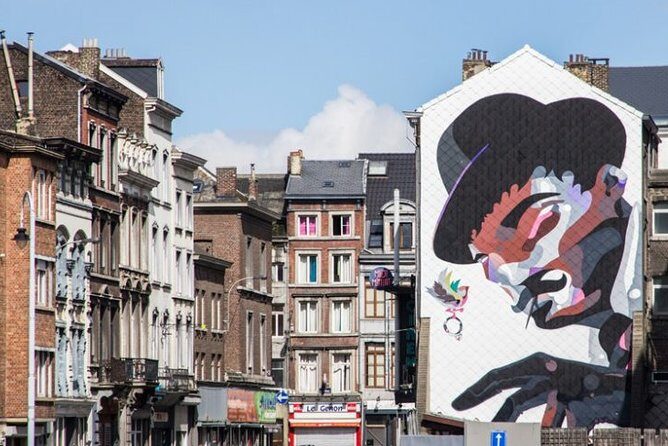
You’ll use a mobile ticket plus the game app on your smartphone. The tour is built around GPS, which means you’re not guessing where to go next. You’re guided to each checkpoint across Liège’s key areas.
Here’s what that means for your day:
- You’re not stuck waiting for others to catch up.
- You can pause the tour and come back when you’re ready.
- You can start anytime you choose within the daily operating window.
The experience runs Monday through Sunday from 12:00 AM to 11:59 PM, which is about as flexible as it gets for a guided-style outing. In real life, that matters because you can match it to your energy level, the weather, and your other plans in Liège.
One practical note: your phone and data are not included. If your battery is low or your signal is weak, you’ll feel it. Bring a charging plan and keep your screen brightness reasonable so you don’t burn down your battery mid-quest.
Price and Value for a Group of Up to 6
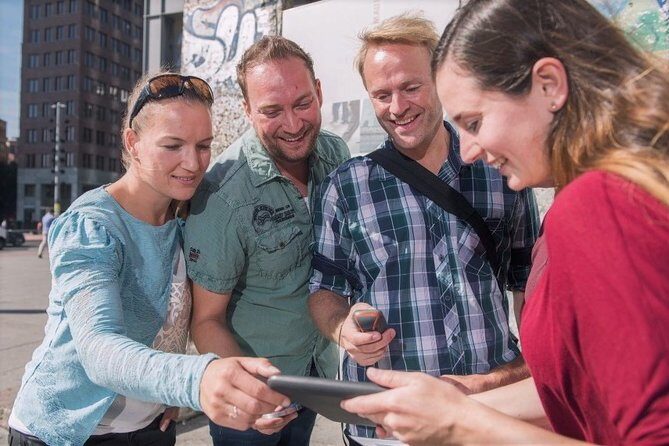
The price is $36.93 per group, valid for up to 6 people. Do the quick math and you’re looking at roughly $6.15 per person at full capacity.
That changes how you should judge value. You’re not paying per person for a traditional guided tour that expects one fixed group size. You’re paying for an app-based experience where one ticket covers everyone in your party. If you have a family, a small group of friends, or a couple plus a teen, the math gets even better.
Also, you’re buying time in a city you want to see anyway. Three hours in central Liège is a useful chunk, especially when the app gives you a reason to walk between areas you might otherwise skip or rush through.
The 3-Hour Route: What Each Stop Adds to the Game
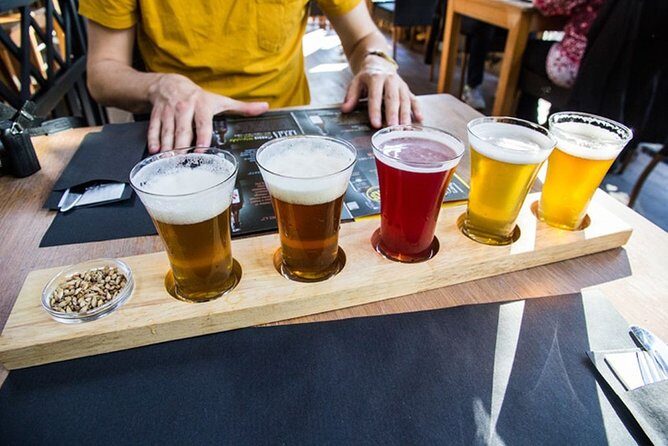
Think of the itinerary as a loop through Liège’s major civic, religious, cultural, and everyday spots. The game nudges you from place to place, but you decide how long you linger at each checkpoint.
Below is the stop order you’ll follow, and what each one is likely doing for the story of the walk.
Stop 1: Place Saint-Lambert
You start the experience’s momentum in a major open square setting. This is a strong place to begin because squares are good “orientation zones.” The game will get you moving fast, and you’ll likely get early questions that set the theme for the rest of the trail.




Stop 2: Liege City Hall
From civic life in the square to a more official landmark next. This kind of stop matters because it shifts you from “pretty street” sightseeing into “why this place matters” landmark spotting—something the app promises by including history and landmark facts.
Stop 3: St. Paul’s Cathedral
This is one of the headline sights on the route. You’ll get prompted to look closely and answer questions tied to the cathedral setting. It’s also a useful mental anchor for the walk: once you’ve seen St. Paul’s once, you’ll better understand why later checkpoints fit together.
Stop 4: Opera Royal de Wallonie-Liege
Now you’re in culture territory. Opera buildings tend to be visually striking, and this stop likely balances the more formal church/civic feel with a different kind of landmark presence.
Stop 5: Eglise Saint-Antoine et Sainte-Catherine
Another church checkpoint. With multiple churches on the list, the app is encouraging you to compare styles and details instead of treating every façade like background scenery.
Stop 6: Musee Curtius (Curtius Museum)
Museums can be tricky on self-guided trails because they often have their own rules and rhythms. In this game format, you’re still working through the city points, so the stop works as a landmark moment even if your time is focused more on the area than on a full museum visit.
Stop 7: Coteaux de la Citadelle
This is your shift toward a hillside area tied to the Citadel. Expect a change in feel: more slope, more long views potential, and a different perspective on the city compared to the flat core.
Stop 8: Eglise St-Jacques
Back into religious landmarks. This helps the game create variety so you don’t feel like you’re only walking between big-ticket buildings.
Stop 9: Montagne De Bueren
Another hill-related checkpoint. If your group likes physical walking goals, this is the moment. Even if you’re not chasing a workout, it’s a useful way to break up the route so the city doesn’t start to feel repetitive.
Stop 10: Eglise St-Barthelemy
A continuation of the church sequence. The benefit here is momentum: churches keep you moving through different streets and corners while the app gives you reasons to slow down at each point.
Stop 11: Gare de Liege-Guillemins
Now you hit a different energy. Train stations bring motion and modern architecture into the mix, which is handy for a self-guided game because you’re not always circling the same types of streets. It also gives you a clear landmark to orient around.
Stop 12: Brasserie C
This is where the route gets more human. A brasserie stop is a nice signal that a break is part of the design. You can use it to reset: grab a drink, check the next clues, or just enjoy the city without pushing nonstop.
Stop 13: Marche de la Batte
A market checkpoint adds the “real daily life” layer. Market areas tend to be lively, and the game’s task style is a good match here because you can look around, find details, and keep the walk fun even if the crowd noise is high.
Stop 14: La Boverie
This area adds another mood shift. Instead of only civic/religious stops, you get a different named landmark segment that keeps the route from feeling like one long list.
Stop 15: Parc de la Boverie
A park stop is gold on a game-based tour because it gives your feet a chance to breathe. It’s also a natural place to pause the game if you want a slower pace or a quick snack.
Stop 16: Palacio de Los Principes-Obispos
A palace checkpoint brings you back to the “power and institutions” side of Liège. The name hints at leadership and authority, and the game’s history-focused prompts should help you connect that feel to what you’re seeing around you.
Stop 17: Pont de Fragnee
Bridges are great for self-guided routes. They’re visually clear. They also force a perspective change. Expect this stop to be about looking at the crossing, the surrounding architecture, and what the game asks you to notice.
Stop 18: La Place du Marche
Another square/market-style stop. With both market and plaza stops in the mix, you get variety: open space for questions, then street-level browsing energy.
Stop 19: Statue de Georges Simenon
A statue makes the game personal in a different way. You’re moving from buildings to identity: the city is represented by a name, and the app likely uses that to give you context for why that figure is part of Liège’s public memory.
Stop 20: Le Carre
Le Carre is a checkpoint that should feel more like a neighborhood stop than a cathedral-only route. That keeps the game grounded and helps you see Liège as a living city, not a museum of landmarks.
Stop 21: Eglise Notre-Dame-de-l’Immaculee-Conception
More church architecture, yes, but with a different dedication. This is the kind of stop that works well in a game because you’re encouraged to look for differences, not just repeat the same sightseeing pattern.
Stop 22: St. Paul’s Cathedral
St. Paul’s shows up again. That’s a helpful design choice: it gives you a second chance to notice details you missed earlier and to finish up any lingering tasks. It also makes your route feel like a loop that naturally comes back toward the center.
Stop 23: Le Pot au Lait
The final checkpoint name suggests a practical “wrap-up” moment where you can slow down at the end. By the time you reach the last stop, you should feel like you’ve walked a full story of the city rather than a scattered list of photos.
Timing Tricks: Make the Game Fit Your Day

You can do this tour at your own chosen time within the daily operating hours. That’s the big advantage: you’re not stuck with a single departure slot.
A few timing habits that help:
- Start when your group is alert. The game is more fun when you can focus.
- Plan a short pause for the park and market parts. Those stops can be where you either linger naturally or speed through depending on your mood.
- Expect the route to feel like more than 3 hours if you keep adding side-stops. The app gives a structure, but it can’t stop you from wanting to look at one more street.
If your group wants a true “city walk day,” this works well. If you’re trying to cram in a museum, a meal, and shopping, you’ll want to leave buffer time after the game ends back at Place Saint-Paul.
Who Should Book This e-Scavenger Hunt
This is a strong fit for:
- Families who want something active and game-like instead of passive sightseeing
- Small groups up to 6 who want a private experience
- People who enjoy solving questions while they walk
- Anyone who prefers to control pacing instead of following a guide’s schedule
It’s especially handy when your group has mixed interests. Some people love the landmark visuals. Others enjoy the puzzle part. This format gives both something to do.
Based on the overall rating and comments, the biggest success factor is your willingness to play along and manage your own phone setup. One unhappy experience mentioned that the hunt felt complicated and that changing the plan required organizer help without a fast response. So if you think you’ll need last-minute schedule changes, build in extra flexibility and be ready to troubleshoot quickly yourself.
Final Call: Should You Book the Liège City Game?
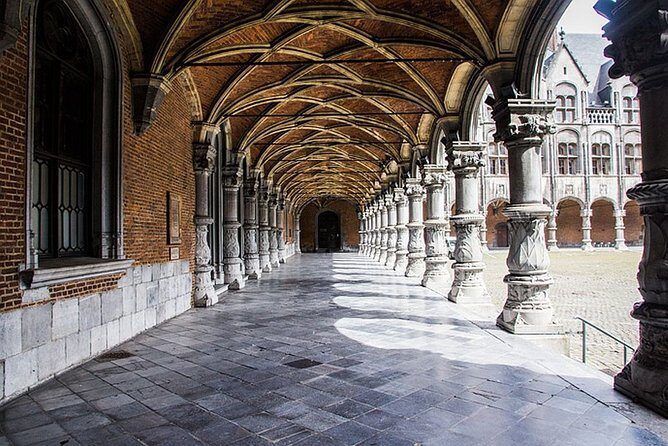
If you want a self-guided, app-driven way to see a compact set of Liège highlights, this is a solid value. The pricing is group-friendly, the GPS structure helps you avoid aimless wandering, and the route covers big-name landmarks like St. Paul’s Cathedral plus market and civic areas that feel more like real city life.
Skip it only if you hate smartphone-based navigation or you dislike question games. Also, if you expect you’ll need to reshuffle timing after booking, treat that as a potential risk and plan with extra slack.
FAQ

Where does the e-Scavenger hunt start?
It starts at Place Saint-Paul in Liège, Belgium, and it ends back at the same meeting point.
How long does the activity take?
It lasts about 3 hours.
How much does it cost?
It costs $36.93 per group, up to 6 people.
Do I need to bring a smartphone?
Yes. The smartphone is not included, and the tour uses a smartphone and GPS on the app.
Do I need data on my phone?
Yes. Data is not included.
Can I start at any time during the day?
Yes. The activity is available every day from 12:00 AM to 11:59 PM, and you can choose when to start.
Is this tour private?
Yes. It’s a private tour/activity, so only your group participates.
Can I cancel for a full refund?
Yes. You can cancel up to 24 hours in advance for a full refund. Canceling within 24 hours does not get refunded.