REVIEW · LIEGE
e-Scavenger hunt Namur: Explore the city at your own pace
Book on Viator →Operated by Qula · Bookable on Viator
Namur turns into a detective mystery. This e-scavenger hunt lets you explore at your own pace with a smartphone app, and I love how it pairs Citadel views with quick questions about Place d’Armes. One thing to watch: a few answers can be tricky to locate, especially if construction or closures make some spots harder to reach, and the price may feel high if you’re going solo.
I also like that it’s truly your schedule. You choose when to start, stop, and pause, and the whole game is designed so a family can play without feeling rushed.
Just remember the practical stuff: you’re using a mobile ticket and your phone, so you’ll need smartphone + data (they’re not included). It’s near public transport, service animals are allowed, and it’s user-friendly for hearing-impaired travelers.
In This Review
- Key takeaways before you go
- How the Namur e-Scavenger Hunt works (and why it feels easy)
- Starting at Pl. de la Station 1: get your bearings fast
- Citadel of Namur: start strong with the best view payoff
- Place d’Armes: landmark concentration, lots of café-window thinking
- Saint-Loup Church: Baroque details you’ll actually notice
- Musée Félicien Rops: art and facts without the museum slog
- Grand Casino de Namur: a famous finale in plain sight
- Price and value: $36.01 per group is either cheap or steep
- Private, small-group pacing: the underrated benefit
- Practical tips for tricky clues and real street conditions
- Who this Namur game is best for
- Should you book the Namur e-Scavenger Hunt?
- FAQ
- Where does the e-Scavenger hunt in Namur start and end?
- How long does the activity take?
- Is this tour self-guided?
- What do I need to bring?
- What’s included in the price?
- Is it a private activity?
- Can I cancel for free?
Key takeaways before you go
- Self-paced city game: start, stop, and pause whenever you want
- Top Namur sights on one route: Citadel, Place d’Armes, Saint-Loup Church, Rops museum, casino
- Smartphone app answers: you’re walking, scanning, and solving questions as you go
- Family-friendly structure: it’s built to feel fun, not like homework
- Expect the occasional hard clue: some questions may be difficult to find in the real streetscape
- Best value for small groups: it’s priced per group (up to 6)
How the Namur e-Scavenger Hunt works (and why it feels easy)
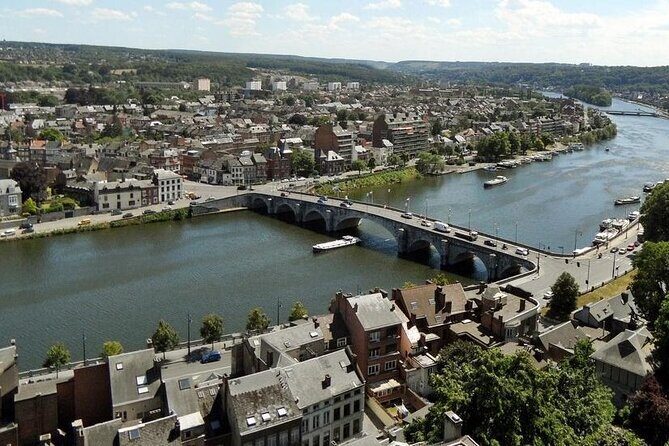
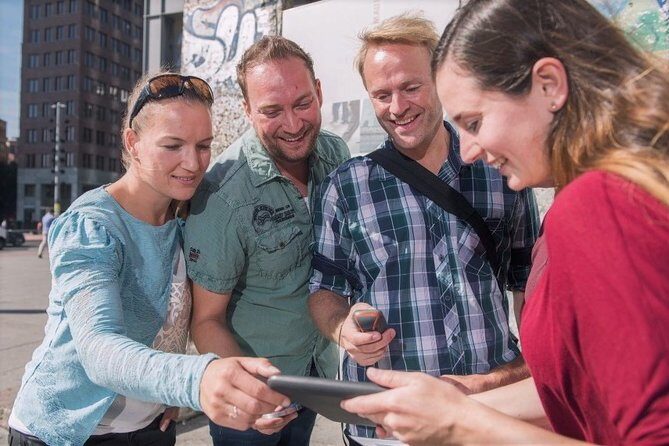
This is a self-guided city trail played through a smartphone app. Instead of following a rigid group tour, you move through Namur at your own speed, reading clues, walking to landmarks, and answering questions on your phone.
That sounds simple because it is. The big win is control. If you want more time for photos on a viewpoint, you pause. If a café line is long, you keep walking. And if you’ve already seen a spot before, you can focus on the parts that match the game prompts.
It’s also set up for groups of up to 6 people and runs as a private activity. That matters because you can split up briefly to look for puzzle details, then regroup—without worrying about slowing down a large tour group.
You can also read our reviews of more city tours in Liege



Starting at Pl. de la Station 1: get your bearings fast

Your start point is Pl. de la Station 1, 5000 Namur. The activity also ends back at the same place, which is a big help for navigation. You won’t need to figure out a complicated end-of-tour meetup.
Plan your day around a smooth walking loop. The route you’ll follow naturally connects major central areas and then climbs toward the Citadel zone. It’s manageable, but you’ll feel it if you’re moving slowly while solving puzzles.
Also note the timing flexibility. The listed hours are 12:00 AM to 11:59 PM, so you’re not locked into a single departure. Realistically, you’ll want daylight or at least good street visibility for clue hunting—especially if you’re with kids.
Citadel of Namur: start strong with the best view payoff
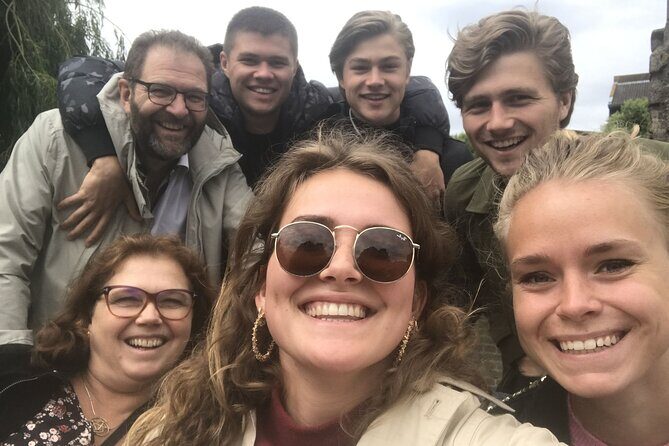
The Citadel of Namur is your first major landmark stop, and it’s easy to understand why it’s included. Even without deep background knowledge, the Citadel delivers: you get a commanding view from up top.
In a normal sightseeing day, you’d probably treat the Citadel as a standalone attraction. Here, it becomes a puzzle anchor. That changes how you look at the area. You’ll be more likely to notice specific vantage points and landmark cues rather than just taking a quick photo and moving on.
One practical consideration: the Citadel can involve stairs and incline. If you’re traveling with anyone who has limited mobility, keep that in mind before you commit your energy to clue-solving there. The game is designed to be doable for most people, but steep uphills always add friction.
Place d’Armes: landmark concentration, lots of café-window thinking
Next up is Place d’Armes, one of Namur’s central showpieces. This is where the game-style format really shines because the square is packed with what you’d normally want to see anyway.
You’ll learn about the area through the puzzle prompts, and it’s a great location for a slower scan. The key references include:
- the Belfry
- the old stock exchange
- and the surrounding café scene
If you like “architecture by wandering,” this stop fits your style. You can sit for a moment, compare what you see to what the questions ask, and then stand back up and keep moving.
A real-world tip: some clue locations can be hard to interpret when streets are busy or if you’re not sure exactly where the app expects you to look. If a question seems impossible at first, don’t freeze—step back, check your surroundings, and try again from a slightly different angle. In this kind of city game, tiny changes in position can matter.
Saint-Loup Church: Baroque details you’ll actually notice
The next stop is Saint-Loup Church, located in Namur’s historic core. It’s described as a Catholic church and a gem of Baroque style from the Former Low Countries.
Here’s the value of the game approach: it gives you a reason to pay attention to details. Otherwise, churches can become a quick “nice exterior” stop. With the puzzle prompts, you’re nudged to look closer and take in the style cues that make Baroque architecture distinctive.
That said, expect that church access can vary based on day-to-day conditions. The game is designed for broad participation, but if a particular entrance area isn’t accessible at the moment you arrive, you’ll likely need to adapt. Try to keep moving with the route plan and let the app guide you rather than forcing one location to work.




Musée Félicien Rops: art and facts without the museum slog
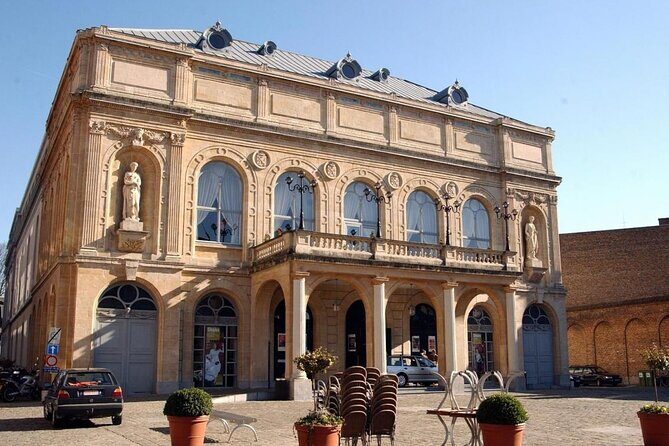
After the church, you’ll reach the Musée Félicien Rops, a provincial museum dedicated to the artistic work of Félicien Rops. The permanent exhibition is described as providing an overview of the artist’s very diverse work.
Museums can be hit-or-miss on a short trip. The good part about this format is that it turns the visit into a task you can complete in a set time window. Instead of feeling like you need to see everything, you focus on what the game is pushing you to notice.
If you’re traveling with mixed-interest companions—someone who loves museums and someone who just wants the next viewpoint—this approach tends to be more “fair.” Everyone has a role: one person reads questions, another scouts the room cues, and you can move together through the museum at game pace.
One caution: as with many museum experiences, your comfort level depends on how much time you’re willing to spend inside. This trail overall runs about 2 to 4 hours, so you’ll want to keep the museum portion efficient. If you love Rops, you may naturally want extra time beyond what the game needs.
Grand Casino de Namur: a famous finale in plain sight
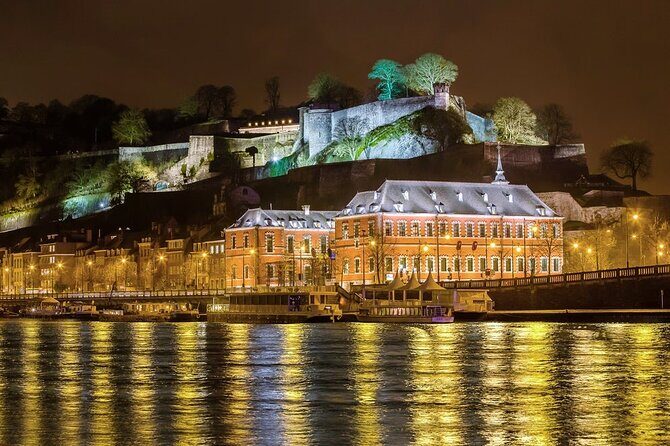
For the closing landmark, the route includes Grand Casino de Namur, described as one of Belgium’s most famous casinos.
Even if you don’t gamble (and you probably shouldn’t plan your day around that), the casino is still a memorable “big name” stop. It gives the city trail an end point that feels like a real destination, not just another street corner.
Use it as a moment to reset. By the time you reach the casino area, you’ve already done viewpoint time, central-square time, and at least some cultural time. So instead of treating it like a sprint, treat it like the conclusion of a walk: catch your breath, confirm you’re on the right track in the app, and then finish back toward the start point.
Price and value: $36.01 per group is either cheap or steep
The price is $36.01 per group (up to 6). That’s not “cheap” if you’re traveling solo, but it’s often fair if you split it. At full group capacity, you’re effectively paying a small amount per person—plus you get a structured walking route that connects several top Namur landmarks.
Also, you’re getting more than a map. You’re getting an app-driven game that:
- pushes you to visit specific landmarks
- adds short educational context
- keeps the pacing active so you don’t spend the whole day deciding what to do next
Two things can reduce the value if you’re picky:
1) Some questions may be hard to find in the real world, especially if construction changes how a location looks or whether you can approach it as expected.
2) If you’re paying per group but traveling as a pair, the per-person cost rises.
My practical rule: if you have 3 to 6 people (family, friends, or a small multigenerational group), this tends to feel like good value. If it’s just you or two people, weigh the price against whether you’ll genuinely enjoy solving clues.
Private, small-group pacing: the underrated benefit
Because it’s a private activity for your group only, you don’t have the usual tour-problem of waiting for everyone else. You can:
- move quickly between puzzle points when you feel energetic
- slow down for cafés and photos when you don’t
- keep kids engaged without someone lecturing you about time
It also helps that the trail is family-friendly. That’s a real advantage in a city game because the best success comes from calm teamwork, not speed.
If you’re planning for a mixed group, assign simple roles: one person reads the question, one person watches the phone prompts, and another person acts as the “lookout” scanning for the landmark cues in the answer options.
Practical tips for tricky clues and real street conditions
This type of city trail depends on finding the exact place the puzzle is pointing to. And cities change—construction, temporary closures, and occasional access issues happen.
So here’s what I recommend when a clue feels impossible:
- Slow down, don’t panic: re-check your location in the app.
- Try a different approach point: sometimes you can’t see what you need from one angle, but you can from the next block.
- Keep moving: if the app isn’t rewarding effort, use your detective instincts and revisit later rather than burning the whole trip stuck on one answer.
- Ask politely if needed: if you run into a truly confusing prompt, it’s usually better to ask a nearby person than to give up completely.
One more smart move: build in buffer time. The trail is listed as 2 to 4 hours, but that range exists because clue hunts don’t move at a single speed. If you’re watching a tight train schedule, you’ll feel that pressure.
Who this Namur game is best for
This e-scavenger hunt is a strong match if you want:
- a walk that feels like play, not a checklist
- to see major Namur highlights in one connected loop
- a format that works for families and mixed ages
- an easy way to learn facts about landmarks like the Citadel and Place d’Armes without doing heavy reading
It may be less satisfying if you hate puzzle-solving, or if you strongly prefer guided commentary from a person. Also, if you’re expecting every question to be easy to locate with zero friction, be aware that some prompts can be difficult to answer, depending on access and conditions in the city.
Should you book the Namur e-Scavenger Hunt?
Book it if you’re traveling with a small group and you like the idea of learning while walking. The route strings together the Citadel, Place d’Armes, Saint-Loup Church, Musée Félicien Rops, and Grand Casino de Namur in a way that keeps you moving and engaged.
Skip it or think twice if you’re going solo or only have a couple of hours with no flexibility. The overall concept is fun, but when a few clues are hard to find, you’ll notice the time cost—and the per-person price will feel more noticeable.
If you do book, come with the right mindset: be curious, take breaks, and treat it like a friendly scavenger mission in Namur rather than a perfectly mapped treasure hunt.
FAQ
Where does the e-Scavenger hunt in Namur start and end?
It starts at Pl. de la Station 1, 5000 Namur, Belgium, and it ends back at the same meeting point.
How long does the activity take?
The duration is approximately 2 to 4 hours.
Is this tour self-guided?
Yes. It’s a self-guided city game you play with a smartphone app. You choose when to start, stop, and pause.
What do I need to bring?
You’ll need your own smartphone and data. Those are not included.
What’s included in the price?
You get the online app to play the game on your phone, plus the city trail for your team (up to 6 people).
Is it a private activity?
Yes. It’s private, so only your group participates (max team size is 6).
Can I cancel for free?
Yes. You can cancel for a full refund up to 24 hours before the experience’s start time.