REVIEW · BRUSSELS
Wine and Painting Workshop Experience in Brussels
Book on Viator →Operated by Maricela Del Rio · Bookable on Viator
Rainy Brussels is suddenly creative. This wine and painting workshop turns a gray afternoon into a hands-on, step-by-step session with guidance that helps you see light and shadow.
Two things I really like: you get real critique (not just generic instructions), and you paint from a photo reference, so your result looks more like what you aimed for. One thing to consider: you might not finish the whole canvas in 3 hours, since the pace is focused on quality and learning.
In This Review
- Key Highlights You’ll Care About
- Wine-and-Painting in Brussels: Why It Feels So Straightforward
- Meeting at Rue de Flandre: Easy Access, Clear Start
- The Studio Method: You Paint a Photo, Not a Vibe
- Acrylics, Canvas, and Materials You Can Actually Take Home
- How Maricela’s Critique Helps You Fix What’s Actually Off
- A Realistic 3-Hour Flow: What Happens When
- Wine, Snacks, Coffee/Tea: The Social Part That’s Actually Useful
- Price in Context: What $95.31 Really Buys You
- Who This Workshop Is Best For (and Who Should Rethink It)
- Should You Book This Wine and Painting Workshop in Brussels?
- FAQ
- How long is the Brussels wine and painting workshop?
- What language is the workshop taught in?
- What supplies are included?
- Is there wine and food included?
- Do I paint from my own imagination?
- Where do I meet?
- Can I participate if I’ve never painted before?
Key Highlights You’ll Care About
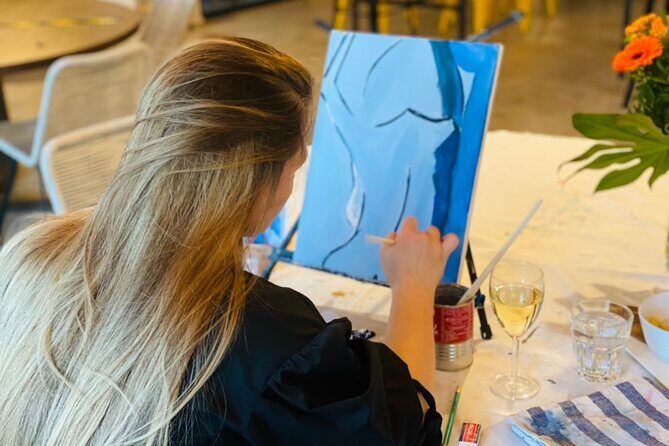
- Small group size (max 16) keeps the feedback personal.
- Guided critique focuses on drawing corrections, value, and color mixing.
- Photo reference approach means you’re not painting purely from imagination.
- Take-home materials included: a 25x34cm rolled Belgian cotton canvas plus acrylics and brushes.
- Wine, snacks, and unlimited coffee/tea make it feel like a relaxed studio hang.
Wine-and-Painting in Brussels: Why It Feels So Straightforward
Brussels can be perfect for art days, especially when the weather is unpredictable. This workshop works because it’s structured like a mini art lesson, not a free-for-all. You’re given a clear target (a photo reference), then walked through how to translate it onto a small canvas with paint mixing, value checks, and drawing corrections.
The tone is friendly, and the host, Maricela Del Rio, runs the session in a way that fits people at different skill levels. She’s the type who notices what you’re trying to do, then adjusts your plan so you can get results faster. Since the experience is normally in English, you can follow along comfortably even if your French is rusty.
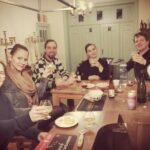
And yes, there’s wine. Not as a gimmick. It’s part of the studio rhythm: small breaks, snacks, water, and then back to painting.
You can also read our reviews of more tours and experiences in Brussels.
Meeting at Rue de Flandre: Easy Access, Clear Start
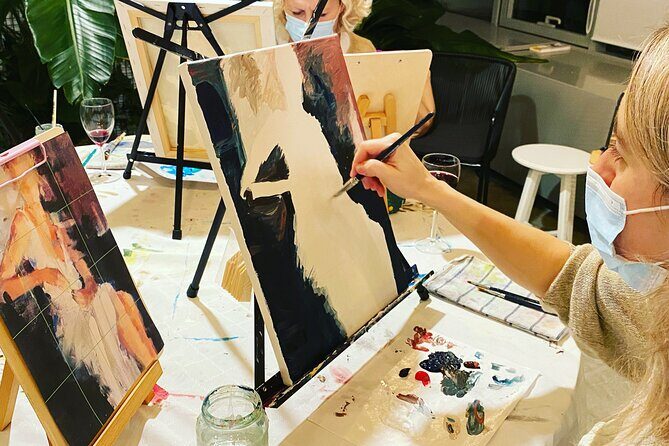
You’ll meet at Rue de Flandre 94, 1000 Bruxelles. The exact start and end match the activity flow: you begin there and return there when it’s over. It’s also noted as being near public transportation, which matters in Brussels where transit is usually your best bet.
Timing is flexible. After you book, you can contact Maricela to discuss what time works for you. That flexibility is useful if you’re juggling a museum day, dinner plans, or just trying to fit this into a rainy-day window.
You’ll receive a mobile ticket, so you can keep everything simple on your phone. And the group size stays limited (up to 16), which helps keep the class from feeling like you’re waiting your turn forever.
The Studio Method: You Paint a Photo, Not a Vibe
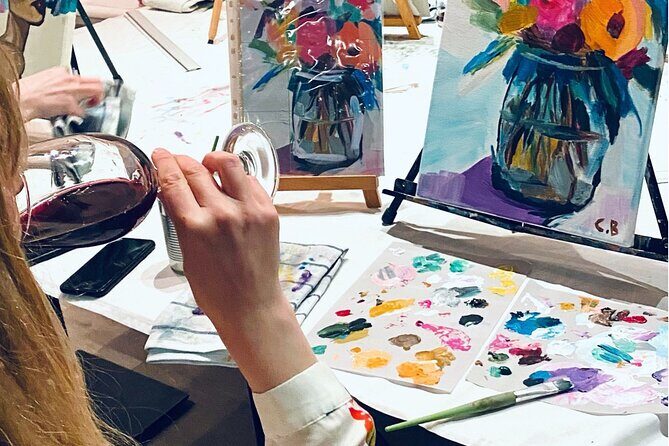
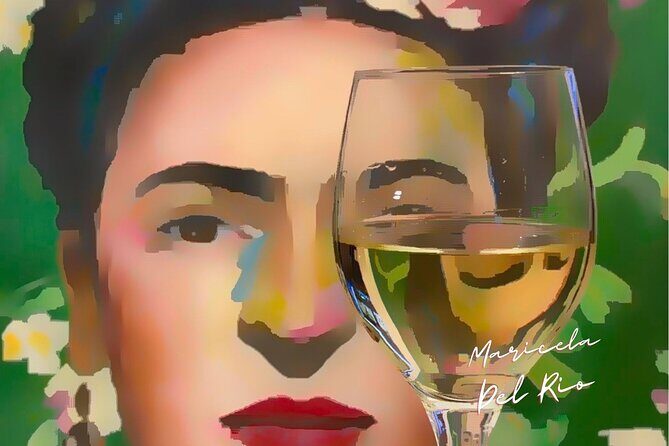
Here’s the biggest reason this workshop works for many people: you don’t paint out of your imagination. Instead, you follow a photo reference. That one rule changes everything.
If you’ve ever tried to paint something from memory, you probably know how quickly it turns into guesswork. With a photo reference, you’re building from real shapes, real contrast, and real light. The result is that even if you’re a beginner, your painting has a roadmap.
After booking, you’re asked to contact Maricela about the photo reference. Plan on having that conversation so you know what you’ll be painting. It also helps you get into the right mindset: you’re not “hoping it turns out.” You’re learning how to reproduce what you see.
Acrylics, Canvas, and Materials You Can Actually Take Home
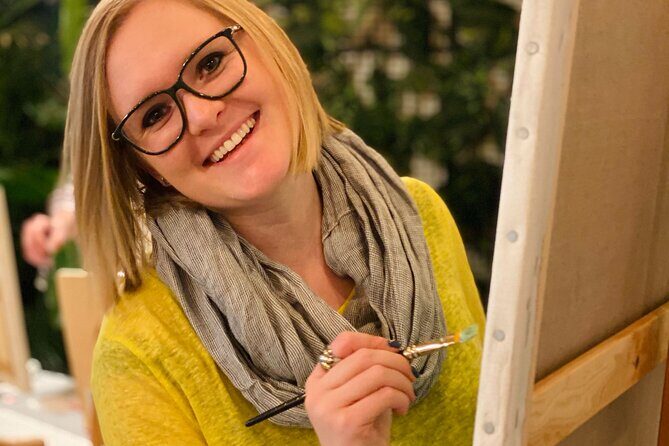
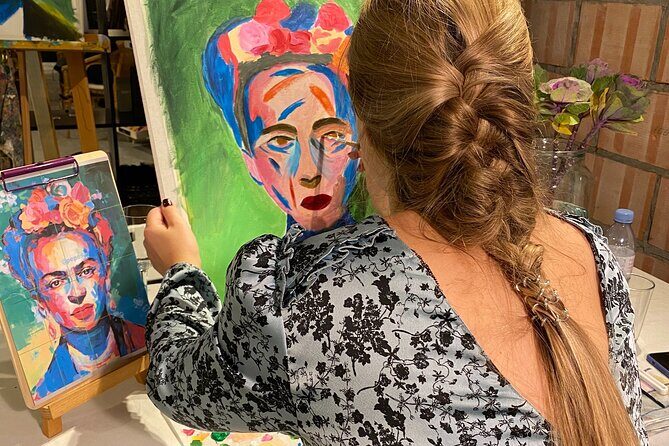
The supplies are a big part of the value here. You get a canvas that’s already ready for you: 25x34cm, rolled, made from 100% cotton from Belgium. You also get everything you need to paint, including paint, brushes, and the necessary materials.
The acrylics are described as medium acrylics, studio and artist quality. That matters because low-quality paint can feel chalky, uneven, or hard to blend. With better materials, your brushstrokes behave more predictably, and color mixing is easier to control.
At the end, you take your painting home. The canvas is rolled, and once it’s dry, you can roll it back up easily for transport. For a 3-hour class, that’s a practical win: you don’t need to deal with fragile canvases strapped under your arm all day.
How Maricela’s Critique Helps You Fix What’s Actually Off
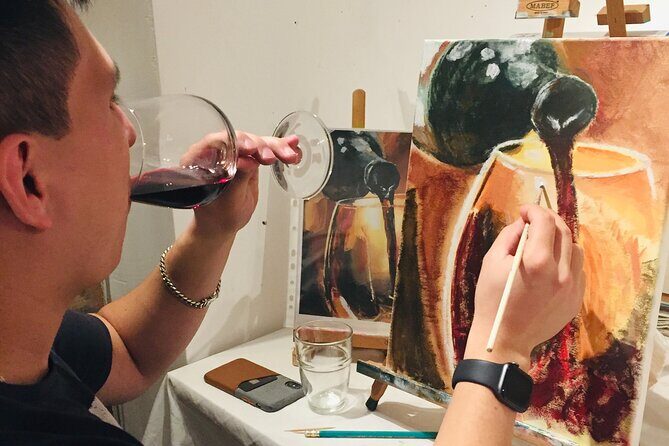
This is where the workshop earns its high score. The guidance isn’t just encouragement. Maricela provides corrections in your drawing and gives suggestions on which colors to use and how to mix them.
She also focuses on the part beginners often struggle with: values. Values are basically how light or dark something is, and they’re what make a painting look believable. The workshop includes showing you the values on the photo reference and then helping you paint the light and shadows more accurately.
Think of it like this:
- If your drawing is slightly off, the scene won’t look right even if your colors are beautiful.
- If your values are off, the painting can look flat or muddy.
- If your colors don’t match the mixing plan, it won’t resemble the reference.
The class is structured so you get feedback right when you can use it. That’s why people leave with a painting they feel good about, even if they started with zero experience.
A few more Brussels tours and experiences worth a look



A Realistic 3-Hour Flow: What Happens When
The experience runs about 3 hours. The flow isn’t mapped as formal stops with different locations, but it does have a clear sequence in the studio:
- Start and setup
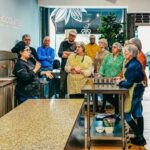
You’ll settle in at the atelier and get your canvas and materials. Because the session is limited to a small group, you won’t spend the whole time waiting.
- Briefing and photo reference alignment
You’ll follow the assigned photo reference rather than freehanding. You can expect instruction on what you’re painting and how to begin.
- Drawing and early corrections
This is the foundation stage. Maricela checks your drawing and corrects what needs fixing so you don’t paint details onto a shaky base.
- Color mixing and value work
Next comes paint decisions. You’ll learn what colors to use, how to mix them, and you’ll get guidance on light and shadows. This is where the workshop feels most like an art class and least like a casual craft.
- Wine and snacks break without derailing progress
You won’t lose the momentum. The breaks are built in so you can reset, sip, and snack, then return to painting with renewed focus.
- Wrap-up and take-home canvas
You leave with your own canvas. The pace is educational, and you may not finish everything, but you’ll have a solid piece and a clearer sense of how to keep going.
One practical point: the workshop notes that you may not finish your painting. That’s not a failure state. It’s a heads-up so your expectations match the format. You’re there to learn and produce meaningful progress, not to crank out a perfect finished work in one sitting.
Wine, Snacks, Coffee/Tea: The Social Part That’s Actually Useful
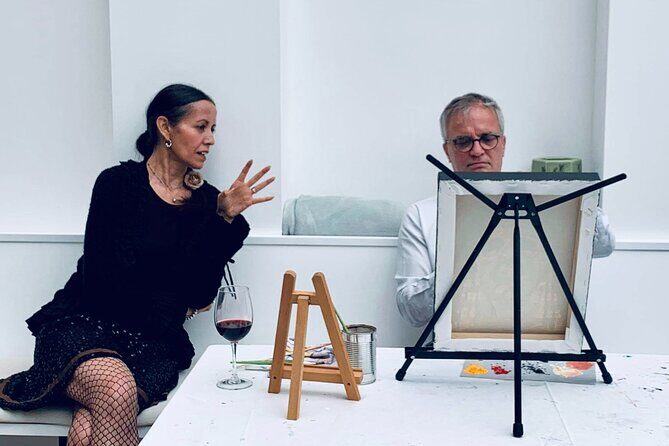
This experience includes 2 to 3 glasses of red or white wine, plus water and snacks. Coffee and/or tea are also included and described as unlimited.
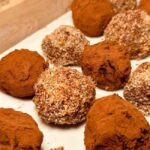
The snack list is simple and practical: chips, spread cheese, and chocolates are mentioned. It’s the kind of lineup that keeps you fueled without killing your appetite for the rest of Brussels.
I like the way the food and drinks are integrated. It’s not a separate event. You get small pauses that help you stay relaxed while you paint. For many people, that’s the difference between a stiff class and one that feels enjoyable from minute one.
Price in Context: What $95.31 Really Buys You
At $95.31 per person for about 3 hours, the value comes from the combination of:
- guided instruction with real critique,
- wine (2–3 glasses),
- snacks,
- unlimited coffee/tea,
- and the full set of take-home art materials (including a canvas you can keep).
This isn’t just paying for wine with a side of paint. You’re paying for guided technique: drawing corrections, color-mixing suggestions, and value checks. Those are the parts that help you improve during the session rather than leaving with a vague sense of what you did wrong.
Also, you’re not buying supplies separately. Many art activities start with “bring your own,” but here you’re provided the canvas, acrylics, and tools. That makes budgeting easier and keeps the experience lightweight to join even if you only packed a day bag.
Private transportation isn’t included, so you’ll want to plan your own ride or transit. The good news is the meeting area is described as near public transport, so you shouldn’t need a car.
Who This Workshop Is Best For (and Who Should Rethink It)
This class fits best if you want structure. If you’re the type who gets frustrated when instructions are vague, you’ll like how direct the critique is. It also works if you have different skill levels in the same group, because the teaching focuses on what you personally need to correct.
It’s also ideal if you:
- want something creative to do during a rainy afternoon,
- like the idea of taking home a finished-looking canvas,
- enjoy a glass of wine while you work,
- or want step-by-step help with values, light, and shadows.
Consider a different option if you’re expecting a strict gallery-style lecture or if you must finish a fully polished painting in exactly 3 hours. The workshop can move at a pace that prioritizes learning and correction, and it’s explicitly possible you won’t finish everything.
Should You Book This Wine and Painting Workshop in Brussels?
If you want a guided, beginner-friendly art session with a real focus on technique, I’d book it. The high points are practical: small group size, photo reference-based painting, and corrections that make your canvas improve while you’re still holding the brush.
You should especially consider it if you’re visiting Brussels and you want an activity that doesn’t require planning complicated day logistics. You show up at Rue de Flandre, you get materials, you paint, you sip and snack, and you leave with your own canvas.
If you’re deciding between “relaxed” and “instructed,” this leans toward instructed—but in a warm studio way. The wine and snacks keep it human; the critique keeps it productive.
FAQ
How long is the Brussels wine and painting workshop?
It runs for about 3 hours.
What language is the workshop taught in?
The experience is normally offered in English.
What supplies are included?
You get a 25x34cm rolled 100% cotton canvas made in Belgium, plus the necessary painting materials such as paints and brushes.
Is there wine and food included?
Yes. You receive 2 to 3 glasses of red or white wine, water, and snacks. Coffee and/or tea are also included and unlimited.
Do I paint from my own imagination?
No. You follow a photo reference. After booking, you’ll be asked to contact the host about the photo reference.
Where do I meet?
The meeting point is Rue de Flandre 94, 1000 Bruxelles, Belgium, and the activity ends back at the meeting point.
Can I participate if I’ve never painted before?
Yes. Most people can participate, and the host provides guidance and critique during the session.