REVIEW · BRUGES
Australian Battlefields Private Tour in Flanders from Bruges
Book on Viator →Operated by Ploegsteert Sector Battlefield Experience · Bookable on Viator
Australian WWI sites, in one long day. This private day from Bruges follows Australian troops from Fromelles through Ypres, with Claude explaining what you are seeing as you drive. I love the personal service in a small group and how lunch plus the main museum entry tickets are taken care of for you.
The day runs about 12 hours, so plan for a long ride and a steady stream of emotional places, including cemeteries and memorials.
In This Review
- Key things that make this tour hit harder (in a good way)
- Why Australian Flanders battlefields feel different from a museum visit
- Price and value: what $545.94 buys you (and what it doesn’t)
- Your 12-hour rhythm from Bruges: how the pace works
- Fromelles Museum sets the tone: why the first stop matters
- Pheasant Wood and the Australian Memorial Park: standing where the story becomes physical
- VC Corner and Rue Pettilon: quiet cemeteries with big emotional pull
- The road stops: Armentières pub, Ploegsteert Memorial, and Hill 63
- Messines Ridge and Hill 60: mines, tunnels, and why Australians mattered underground
- Polygon Wood to Passchendaele Museum: ANZAC Day tradition meets a serious collection
- Tyne Cot and Ypres: scale, then a real town break
- Menin Gate Last Post: how to land the day on the right note
- Who this tour is perfect for (and who might not love it)
- Should you book this Australian Battlefields private tour from Bruges?
- FAQ
- How long is the Australian Battlefields Private Tour in Flanders from Bruges?
- What time does the tour start?
- Is pickup from my hotel included?
- Is this tour private or shared?
- What’s included in the price?
- Are entrance fees included?
- What does lunch include?
- What is the main ceremony at the end of the tour?
- Is alcohol included with lunch?
- Is there a minimum number of people needed to book?
- Can I cancel for a full refund?
Key things that make this tour hit harder (in a good way)
- Claude’s battlefield walkthrough: you don’t just look at markers; you get the shape of the fighting and why specific spots matter
- Fromelles to Menin Gate in one route: it’s efficient, so you can see multiple “must-do” sites without juggling transport
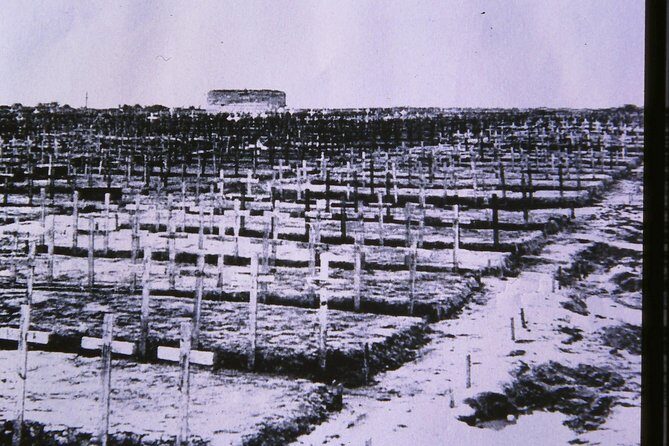
- Cemeteries with scale: you stand at places tied to known numbers of soldiers—like the 250 from Fromelles
- Mine-crater stops: Hill 60 and the 1st Australian Tunnelling Company story make the underground war feel real
- ANZAC Day connection: Polygon Wood is tied to the dawn service tradition
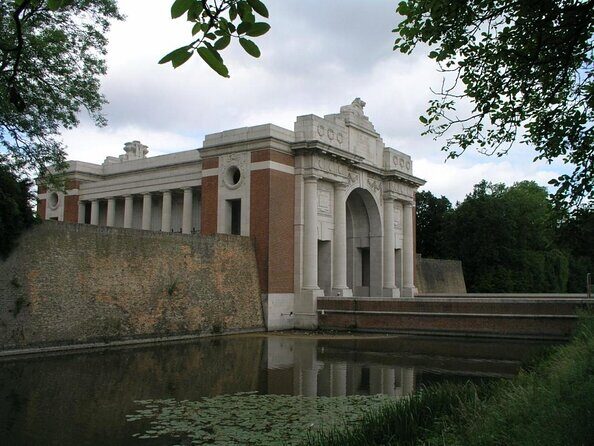
- Last Post at Menin Gate: the ceremony gives the whole day a focused, moving finish
Why Australian Flanders battlefields feel different from a museum visit
A good WWI tour does two things at once: it tells you what happened, and it gives you a sense of where it happened. This one is built for that. You move from Australian-linked sites to major memorial points in a logical circuit across the Flanders region, so the day turns from “facts on a wall” into a route you can follow with your eyes and your questions.
I also like that the tour keeps the story grounded in specific places tied to Australian forces. You’ll visit the Museum of the Battle of Fromelles, then step out to cemeteries and memorials connected to those men, including the nearby resting grounds linked to the 250 soldiers. When you’re standing where people were laid to rest, the history has weight.
And because it’s a smaller, private setup with a guide who knows the terrain, you get more than a checklist. Claude’s explanations are part of the value, especially when you’re looking at memorial lines, cemetery rows, and battlefield features that can be hard to “read” on your own.
You can also read our reviews of more private tours in Bruges

Price and value: what $545.94 buys you (and what it doesn’t)

At $545.94 per person, this isn’t the cheapest option. But it’s also not trying to be. You’re paying for a long, dedicated day with private transport, hotel pickup and drop-off, bottled water, a driver/guide, and lunch. You also get entrance coverage for the stops that require tickets, like the Fromelles museum and the Passchendaele Museum.
Here’s the practical value I’d underline: doing this circuit independently means stacking multiple problems—driving across rural Belgium and France, finding parking, booking time slots for museums, and figuring out how much you should pay attention to each cemetery and memorial. This tour removes the logistics and lets your day stay connected.
Alcohol isn’t included, so if you want drinks with lunch, you’ll buy them on site. Everything else that normally becomes a small annoyance—fees for key museums and the transport—has already been built into the day.
Your 12-hour rhythm from Bruges: how the pace works
This is listed as an approximately 12-hour day, starting at 9:00 am. Expect a full day of driving and stops, not a leisurely stroll. The stops themselves are usually timed in tight chunks: think around 30 to 45 minutes at most cemetery or memorial viewpoints, an hour for Passchendaele Museum, and about an hour of town time in Ypres.
That pacing is a feature if you want to see a lot of key sites without rushing off mid-thought. It can feel intense if you prefer long sits with each location, or if you want extra time in cafés and shops. Also, this day includes a ceremony at Menin Gate, so you’ll want to arrive without stress and stay alert for the schedule shift that ceremonies can bring.
Good news: you’ll have a guide driving and guiding, and you’ll finish with hotel drop-off after the Last Post, so you don’t need to plan how you get back into Bruges.
Fromelles Museum sets the tone: why the first stop matters
Start at the Museum of the Battle of Fromelles. You’ll get about 45 minutes there, with the admission ticket included. This stop matters because it frames what you’ll see afterward: the battle at Fromelles and the later recovery and reburial of soldiers tied to that action.
From there, the tour moves quickly into places of remembrance. That rhythm works because you’re not leaving the story behind. The museum doesn’t just sit at the beginning as a preface—it prepares you to understand why the cemetery stops are so specific.
If you’re the type who likes context before going outside to look at the terrain, this first move is a smart setup. If you tend to want your time outside more than inside, you’ll still have plenty of outdoor memorial moments after this museum stop.
Pheasant Wood and the Australian Memorial Park: standing where the story becomes physical
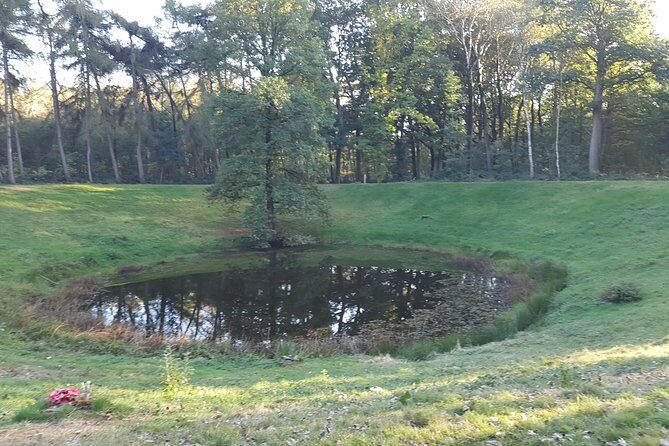
Next up is Pheasant Wood Military Cemetery, with a 30-minute visit time and no ticket charge. This is where the 250 soldiers now rest, tying back directly to the Fromelles story you just heard. If you’ve ever felt how numbers on a page don’t “land” until you see a place connected to them, this is that moment.
After that comes the Australian Memorial Park. You’ll spend about 30 minutes here, and it’s also free. The view concept is important: you stand on the German lines and look toward what was no-man’s-land, linked to the Australian attack on 19 July 1916. It’s one of those stops that turns a date into a direction, which makes the history easier to hold in your head.
Tip for how to experience this part: slow down your own pace, even if the tour schedule doesn’t. Look at the line of sight, then let the guide’s explanation connect it to the attack details. That’s when it clicks.


VC Corner and Rue Pettilon: quiet cemeteries with big emotional pull
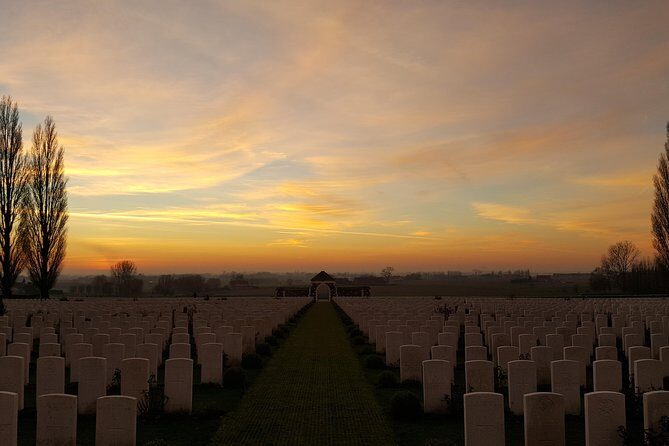
From the Memorial Park you head to VC Corner Australian Cemetery for about 30 minutes. It’s marked as free, and it’s described as the only exclusive Australian cemetery in France. Even if you’re not focused on the wording, the idea matters: this isn’t just any burial ground. It’s specifically identified and maintained as an Australian memorial place.
Then you continue to Rue Pettilon Military Cemetery, again around 30 minutes and free. You’ll see another cemetery where Australian soldier names are part of the record of those who didn’t come home.
This section can be the most emotionally intense part of the day, because cemeteries don’t allow you to “speed through” meaning. You don’t need to read every name to feel the weight. But if you are hoping to find a specific relative or name, give yourself a bit of time and energy here—later stops are impressive too, but they tend to be more viewpoint-and-memorial focused.
The road stops: Armentières pub, Ploegsteert Memorial, and Hill 63
You’ll drive through Armentières, with a stop tied to the location of the pub in which Mlle from Armentières was. It’s a quick, oddly human moment inside a very heavy day, and that contrast can be a relief.
After that you’ll pass near the Ploegsteert Memorial and Hill 63. This isn’t a long museum-style stop, but the approach matters. Driving past these reminders keeps the day feeling like one connected region, not separate “downloaded highlights.”
If you’re the kind of traveler who likes to ask why certain names show up again and again on memorials, this in-between stretch is helpful. The guide can tie the area’s geography to the way different actions unfolded across the same wider front.
Messines Ridge and Hill 60: mines, tunnels, and why Australians mattered underground
The tour then shifts to Messines Ridge, with about 30 minutes at the site. You’ll stand where Australians attacked in June 1917. This stop helps you see that the war wasn’t only fought at the surface. It also depended on timing, planning, and engineering.
Then comes Hill 60. You’ll get roughly 45 minutes here, and the key feature is the Caterpillar Mine Crater, plus a memorial dedicated to the 1st Australian Cie. The mine-crater element is a big deal. It’s one of the few ways to make the underground war feel tangible from a visitor’s point of view.
Even if engineering history isn’t your first interest, I think this is the moment where a lot of people get hooked—because it explains why Australians were tied to tunnelling efforts, not just infantry attacks.
Polygon Wood to Passchendaele Museum: ANZAC Day tradition meets a serious collection
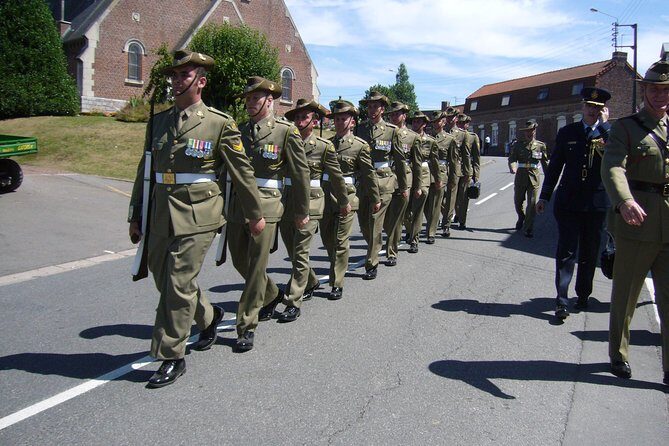
At Polygon Wood, you’ll spend about 30 minutes, and the site includes memorials for the 5th Australian Division and the NZ Memorial. Importantly, Polygon Wood is also linked to where the Dawn service happens on ANZAC Day. That gives the site a living tradition, not just a “past tense” feel.
Right after that, you’ll visit the Passchendaele Museum for about 1 hour, with admission included. It’s described as the most interesting WWI museum in Belgium, and the time allotment reflects that it’s more than a small room of photos. This is where you can slow down, re-focus, and catch details you might have missed during viewpoint stops.
If you’re thinking of a museum as your “breather” stop, this is a good one. It’s also the kind of museum that rewards curiosity. If you want to come away with names, locations, and context that stick, give it your full attention rather than treating it like a quick photo-op.
Tyne Cot and Ypres: scale, then a real town break
Tyne Cot is next, and it’s a heavyweight. You’ll visit for about 30 minutes, free of charge. It’s described as the largest CWGC cemetery, and the memorial includes the names of 35,000 soldiers who have no known grave. That’s the kind of number that feels abstract until you’re standing inside the scale of the place.
Then you head to Ypres Cloth Hall in the main square for about an hour of free time. You’ll see the Cloth Hall and the Cathedral area, plus other buildings nearby. This town pause is a practical gift in a day like this—your body needs a reset, and your mind needs a switch from cemetery-and-frontline focus to street level Belgium.
If you’re hungry, plan to eat during this Ypres time. The tour lunch is included, but having a chance to browse and grab something simple keeps the day from feeling like a long string of serious stops with no normal moments.
Menin Gate Last Post: how to land the day on the right note
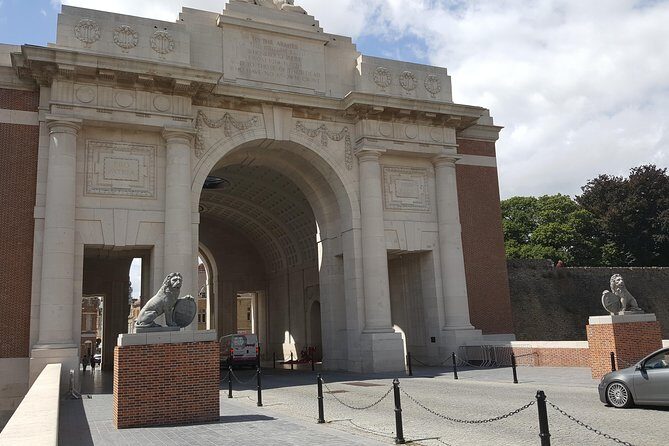
Finally, you arrive for the Last Post ceremony at Menin Gate. You’ll spend about 1 hour here, and it’s free. The Menin Gate ceremony is the emotional hinge of the whole route—especially after seeing cemeteries, memorials, and battlefield features all day.
I recommend treating this as the time to be present, not distracted. Bring your attention fully into the moment. Earlier in the day you learn names, dates, and distances; at Menin Gate you feel the meaning of why those details matter.
After the ceremony, the guide brings you back to your hotel. That’s a practical finish: you don’t have to figure out transport right after a ceremony that already takes focus.
Who this tour is perfect for (and who might not love it)
This tour is ideal if you want an Australian-focused WWI route with real context and guided interpretation. It’s especially suited to history buffs, people visiting family connections to the Australian military, and anyone who likes the blend of battlefield viewpoints and cemeteries without needing to manage logistics.
It’s also a good choice if you’re short on time in Belgium. Starting from Bruges and covering Fromelles, mine-crater sites, Polygon Wood, Tyne Cot, and Ypres in a single day is hard to replicate smoothly on your own.
The main reason someone might hesitate is simple: it’s a long day and it’s intense. If you dislike long drives, if you want lots of free time to wander independently, or if cemeteries feel too heavy, you may find the schedule demanding.
Should you book this Australian Battlefields private tour from Bruges?
If you’re choosing between a DIY plan and a guided circuit, I think this one makes sense when you want the day handled from start to finish. The combination of hotel pickup, bottled water, lunch, museum admissions, and a guide like Claude who can explain the terrain and the battles gives you a strong value package for a once-only day trip.
Book it if you want a structured route through major Australian-linked WWI sites, with the Last Post at Menin Gate as the emotional payoff. Skip it only if your ideal day is mostly light and flexible, because this one is built around remembrance and battlefields—lots of them.
FAQ
How long is the Australian Battlefields Private Tour in Flanders from Bruges?
It runs for approximately 12 hours.
What time does the tour start?
The start time is 9:00 am.
Is pickup from my hotel included?
Yes. Hotel pickup and drop-off are included.
Is this tour private or shared?
It’s a private tour/activity, so only your group participates.
What’s included in the price?
Included features are local taxes, lunch, driver/guide, hotel pickup and drop-off, private tour, air-conditioned minivan transport, bottled water, and private transportation.
Are entrance fees included?
Admission tickets are included for some stops, such as the Museum of the Battle of Fromelles and the Passchendaele Museum. Other cemetery and memorial stops listed are free.
What does lunch include?
Lunch is included, and in one review it was noted as lunch at Brothers in Arms restaurant.
What is the main ceremony at the end of the tour?
You attend the Last Post ceremony at Menin Gate in Ypres.
Is alcohol included with lunch?
Alcoholic drinks are not included, though they are available to purchase.
Is there a minimum number of people needed to book?
Yes. A minimum of 2 people per booking is required.
Can I cancel for a full refund?
You can cancel for a full refund up to 24 hours in advance of the experience’s start time.