REVIEW · GHENT
Discover Ghent while playing! Escape game – The Walter case
Book on Viator →Operated by Coddy · Bookable on Viator
Ghent turns into a detective film set when you play The Walter Case. It’s a smartphone-guided escape game where the story pushes you through central streets under a serious time pressure. You’re not just sightseeing. You’re figuring things out, step by step, with choices that shape how your investigation unfolds.
I especially like the story hook: blackmail, a billionaire CEO, and then—tick tock—a bomb hidden in the city with a two-hour countdown. I also like the team-friendly format: up to 6 people, and you use your own smartphone to follow clues and solve puzzles.
One possible drawback: the game is built for problem-solving, not for deep cultural touring. If you want a traditional guide explaining Ghent’s monuments, this may feel like the city is a backdrop rather than a lecture.
In This Review
- Key Things That Make This Escape Game Worth Your Time
- Walter Case: A 2-Hour Countdown Across Central Ghent
- Meeting at Jakobijnenstraat: Setting Up Without a Hitch
- How the App-and-Streets Format Actually Feels
- Story Choices: Your Route Changes the Investigation
- Walking the Sights Without Turning It Into a Museum Tour
- Puzzle Difficulty: Great for Families, But Not for Everyone
- Time on Your Side: 2 Hours 30 Minutes of Street Play
- Price and Value: $23.16 Per Group (Up to 6)
- Who Should Book This Escape Game in Ghent?
- Quick Practical Considerations Before You Go
- Should You Book The Walter Case in Ghent?
- FAQ
- Where does The Walter Case escape game start?
- How long does the game last?
- What is the price for The Walter Case in Ghent?
- Do I need anything besides my smartphone?
- How many people can join a group?
- Is it a private experience?
- What are the opening hours?
- Is the game suitable for most travelers?
- Are service animals allowed?
- Where is it located relative to public transportation?
Key Things That Make This Escape Game Worth Your Time

- A clear mission with urgency: bomb threat and a two-hour ticking clock.
- App-guided street play: you solve puzzles through the phone plus real-world clues.
- Choice-driven investigation: your route and suspect questions influence how it plays out.
- Works well for mixed ages: puzzle difficulty aims for families, not just escape-room pros.
- Route tends to hit major sights: you’re walking through the parts of town people actually want to see.
- Small group vibe: your group only; it’s not a giant crowd shuffle.
Walter Case: A 2-Hour Countdown Across Central Ghent

This is an urban escape game in Ghent, Belgium. The premise is pure thriller: you’re investigating blackmail involving a billionaire CEO. Then you realize something far more dangerous is in play. A bomb is hidden somewhere in the city, and it’s set to go off in two hours.
You play as a private detective. That matters because the game doesn’t just toss you puzzles. It frames your actions like real investigation steps. You’ll be looking, questioning, and assembling leads. The countdown tone keeps the pace brisk, which is great if you’ve tired of slow “stand and stare” sightseeing.
The gameplay is also choice-driven. You decide which route to take, which suspects to question, and where to search. That gives the experience a personal feel. Two teams might walk different paths or focus on different leads, even if they started at the same place.
You can also read our reviews of more tours and experiences in Ghent.



Meeting at Jakobijnenstraat: Setting Up Without a Hitch
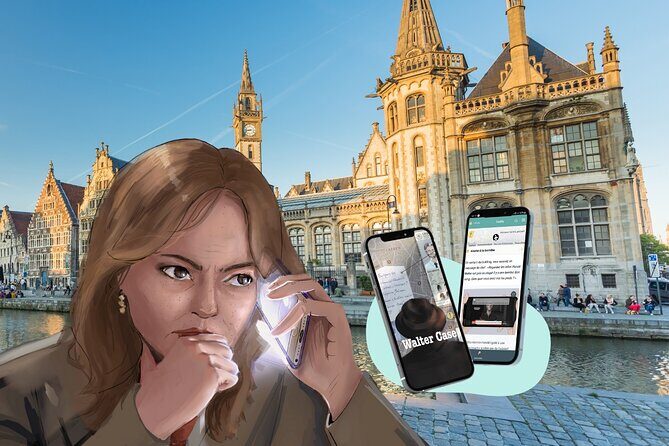
You start at Jakobijnenstraat, 9000 Gent, Belgium. The good news is that the activity ends back at the same meeting point. That simple loop helps a lot in cities where “meeting points drift” can turn a fun outing into a late-night scavenger hunt.
You’ll also want to plan around the timing. The game runs any day with opening hours listed as 11/15/2021 through 06/18/2026, and daily operation from 12:00 AM to 11:30 PM. In plain terms: you can usually fit this into a day of exploring without begging for a specific hour.
It’s also labeled as private, meaning only your group plays. For a family or friends outing, that’s a big advantage. You’re not waiting on strangers to catch up, and you can keep your team rhythm.
How the App-and-Streets Format Actually Feels
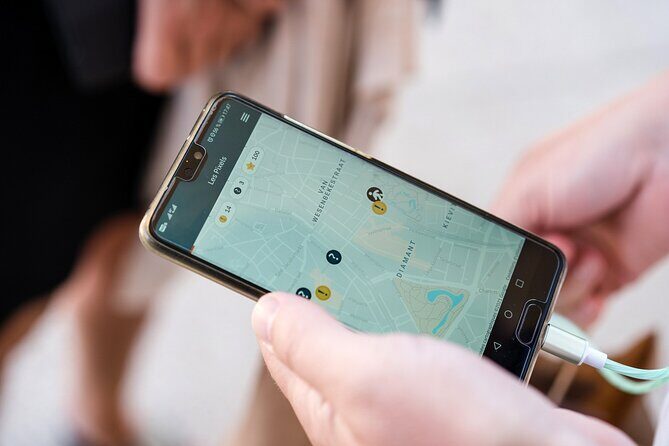
Urban escape games live or die by the balance between screens and sidewalks. In The Walter Case, you use a mobile application to guide you to different points of interest. At each stop, you solve puzzles and/or complete missions based on clues tied to the environment.
The phone does the heavy lifting for navigation and story updates. But you’re still doing the detective work in the street world. That means you’re looking at things you might otherwise walk past, like details in your surroundings that become relevant once the app tells you what to look for.
From the way the experience has been described, the puzzle style aims for a middle lane: not so hard you feel stuck forever, not so easy that it becomes a button-press. That’s especially useful if you’re mixing adults and kids, or if your group isn’t made up of puzzle die-hards.
One practical thought: bring a fully charged phone. You’re using it the whole time, and you’ll be walking. If your battery is already at 20%, you’ll likely start resenting the last third of the game.
Story Choices: Your Route Changes the Investigation
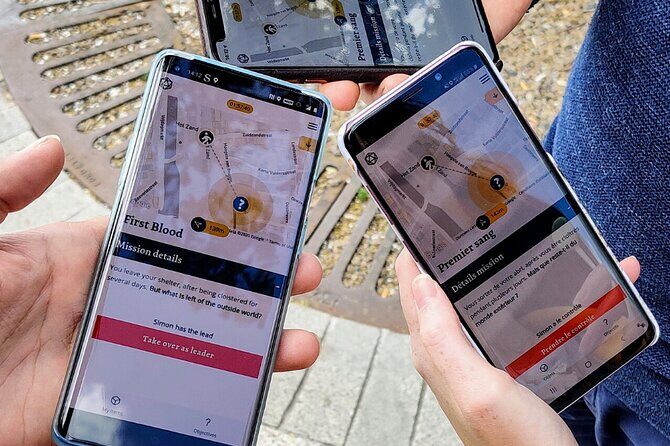
What makes this escape game stand out is how much it treats your team like investigators. The story is not fixed like a movie you just watch. It evolves based on your choices.
You decide:
- which route to take
- which suspects to question
- where to search
This does two things for your day in Ghent. First, it gives you momentum because each decision feels like it matters. Second, it adds replay value for groups that know the city well and want to compare approaches.
It also means strategy matters. If your team splits up to search faster, you’ll need to sync quickly. If you keep everyone together, you’ll probably solve more smoothly—but you might move slower through the streets. Either way, plan to communicate. The “detective” part is half teamwork and half attention.
Walking the Sights Without Turning It Into a Museum Tour

A common reason people like city escape games: they turn walking into a purpose. In Ghent, that’s the vibe here. The route is designed to pass by well-known sights in the city center, so you get that classic “Oh, I’m actually seeing the stuff” effect while you play.
Still, here’s the honest balance. This isn’t a guided history lesson. It’s an investigation game. One review note that the city culture and monuments aren’t really integrated into the storyline, which is a fair way to describe the trade-off. You may pass famous places, but the game isn’t aiming to teach you why they matter.
So if your top goal is a deep understanding of Ghent’s architecture and history, you might want to pair this with something more explanatory—like a proper walking tour or a museum visit. Use the escape game for energy and discovery. Use a guide for context.






Puzzle Difficulty: Great for Families, But Not for Everyone
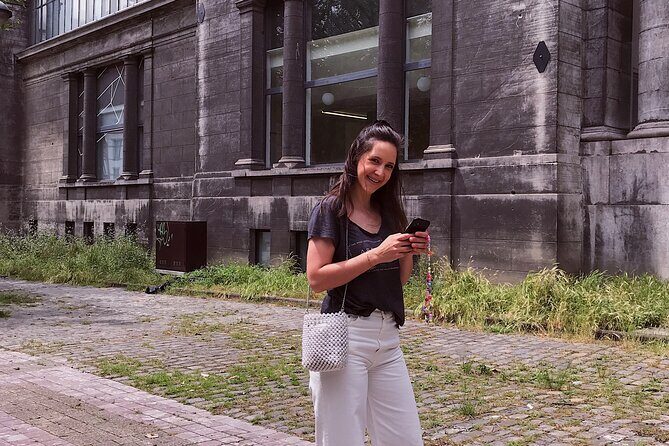
The game tends to land in a family-friendly sweet spot. The missions and puzzles are described as neither too difficult nor too easy, and that balance makes it a strong choice if you have young children in your group. You’re still doing real tasks, but the game doesn’t feel like it’s punishing you for not being an escape-room specialist.
That said, there’s one caution worth taking seriously. One disappointed experience mentioned that the puzzle logic felt difficult and that clues weren’t obvious enough, which meant the team didn’t finish. That suggests the game can feel frustrating if:
- your group expects obvious environmental clues everywhere
- you don’t want to reason through things that aren’t immediately visible
- you get stuck early and the later steps don’t click
If you’re worried about that, don’t treat it like a solo mission. Ask questions early within your team. If you’re stalling, slow down and re-check what the app is telling you to pay attention to. Many puzzle games feel hard only because you missed one interpretation step.
Time on Your Side: 2 Hours 30 Minutes of Street Play

The listed duration is about 2 hours 30 minutes. That’s a good length because it’s long enough to feel like you did something substantial, but short enough to still have energy afterward for dinner, a stroll, or a Belgian waffle run.
The emotional rhythm is important. The story centers on a bomb countdown in two hours, so you’ll feel a sense of urgency. That urgency can be fun, like you’re in a thriller. But it can also pressure groups that normally like to take their time.
Here’s how to make the time work for you:
- start with a clear plan for who checks the phone and who checks the surroundings
- set mini-goals like solve the current clue before moving on
- don’t spend 20 minutes stuck on one puzzle unless your team is confident it’s the right step
If your group is traveling with kids, keep an eye on attention span. Kids often do best when tasks rotate—everyone gets a role, and you don’t leave one person doing all the reading while others wander.
Price and Value: $23.16 Per Group (Up to 6)

The price is $23.16 per group, for up to 6 people. That’s actually where this type of experience can become excellent value. You’re paying for a shared activity that works like a self-guided adventure. For families and friend groups, the cost per person can drop quickly once everyone is in.
To judge value, look at what you’re replacing. Without this, you might pay for:
- a traditional guided tour
- a movie ticket
- a standalone activity that’s either purely indoor or purely walking
Here you get both walking and gameplay. You also get a story that keeps you engaged. For people who like puzzles and don’t mind exploring on foot, that’s a strong deal.
Where the value can dip is if your group ends up frustrated and doesn’t make it through the game. With puzzles, satisfaction depends on how well the logic clicks for your team. If you know your group hates uncertainty or dislikes puzzles, you might not get your money’s worth.
Who Should Book This Escape Game in Ghent?
This is a smart pick if you want a fun city activity that doesn’t require a separate guide. It’s also ideal if you’re traveling with:
- family groups who want something interactive
- friends who like problem-solving
- travelers who want an excuse to walk through central Ghent and see major sights
It’s also a nice option for mixed skill levels. The puzzle design is described as appropriate for young kids, and that usually means adults won’t be bored either—because you’ll still be solving missions, not just watching.
If your group’s goal is maximum cultural learning, you might feel slightly shortchanged. In that case, treat it as an add-on: play the game, then spend your next time slot on an actual history-focused tour.
Quick Practical Considerations Before You Go
A few small things can make the difference between a smooth investigation and a cranky end.
First: communication. You’re solving as a team of up to 6. If people split into factions and don’t share findings, you’ll lose time.
Second: phone readiness. You only need your smartphone, but you do need it. Keep your brightness up, and don’t run out of battery halfway.
Third: comfort shoes. You’re walking between points of interest around the city center for about 2.5 hours. That’s not a sit-down activity.
Finally: mindset. Go in expecting a puzzle experience, not a narration-heavy sightseeing tour. When you accept that the city is your board, you’ll enjoy it more.
Should You Book The Walter Case in Ghent?
Book it if you want a low-effort, high-engagement way to see Ghent on foot. The two-hour bomb story, the choice-driven detective feel, and the app-guided street puzzles make it a strong fit for families and groups that enjoy thinking together. The route passing notable areas is a bonus, especially if you’re short on time.
Skip it (or pair it with something else) if your main goal is a traditional cultural tour with monument explanations. This is mostly about the game and the missions, not about in-depth history lessons. Also consider your group’s puzzle tolerance—if your team expects very straightforward clue trails, you might prefer a different format.
If you fall into the first camp—puzzles, teamwork, and a city you explore while the story runs—then The Walter Case is exactly the kind of evening that makes travel feel active.
FAQ
Where does The Walter Case escape game start?
It starts at Jakobijnenstraat, 9000 Gent, Belgium, and it ends back at the same meeting point.
How long does the game last?
The duration is about 2 hours 30 minutes.
What is the price for The Walter Case in Ghent?
The price is $23.16 per group, up to 6 people.
Do I need anything besides my smartphone?
You’ll use a mobile application guided by the game, and you’ll generally only need your smartphone to play.
How many people can join a group?
Your team can be up to 6 people.
Is it a private experience?
Yes. It’s private, so only your group participates.
What are the opening hours?
The listing shows operation Monday through Sunday from 12:00 AM to 11:30 PM for the overall season dates.
Is the game suitable for most travelers?
It’s marked as most travelers can participate.
Are service animals allowed?
Yes. Service animals are allowed.
Where is it located relative to public transportation?
It’s noted as being near public transportation.