REVIEW · BRUGES
Bruges: Musea Sculpta | Monumental Sculptures Entry ticket
Book on GetYourGuide →Operated by MUSEA SCULPTA NV · Bookable on GetYourGuide
A strange museum, in the best way. Musea Sculpta transforms famous Flemish paintings into monumental gypsum sculptures, and the included audio guide helps you notice details you’d otherwise miss. You get to see major works such as The Garden of Earthly Delights by Jheronimus Bosch, The Last Judgement by Hans Memling, and the Adoration of the Mystic Lamb by the van Eyck brothers in a whole new form.
Two things I’d prioritize before you go: the way the gallery scale makes art feel physical, and the audio guide that points out those tiny visual cues that drive the story. One possible drawback is that the experience is more about art and iconography through relief and narration than about lots of heavy reading panels, so if you want wall text for every single theme, you might find it a bit sparse.
In This Review
- Key things to know before you buy
- De Pelikaan townhouse: where the museum hides in plain sight
- The 265-metre gallery: Flemish primitives as monumental relief
- Bosch, Memling, and the van Eycks in 3D you can read
- Jheronimus Bosch: The Garden of Earthly Delights in relief
- Hans Memling: The Last Judgement in a “closer” way
- The van Eyck brothers: Adoration of the Mystic Lamb in detail
- The audio guide: your cheat code for hidden details
- The sculpture concept: why gypsum relief feels different than art copies
- Courtyard garden reset: a quiet pause with a good view
- Price and value: is $11 worth your time?
- Who should book Musea Sculpta (and who may want to adjust expectations)
- Should you book Musea Sculpta?
- FAQ
- What does the ticket include?
- Where is the museum located, and how do I find it?
- How long should I plan to spend there?
- What languages are available for the audio guide?
- Is the museum wheelchair accessible?
- Are pets allowed?
- Which major artworks can I see?
- Is Wi‑Fi available?
- What time should I arrive?
- Can I cancel, and do I need to pay immediately?
Key things to know before you buy
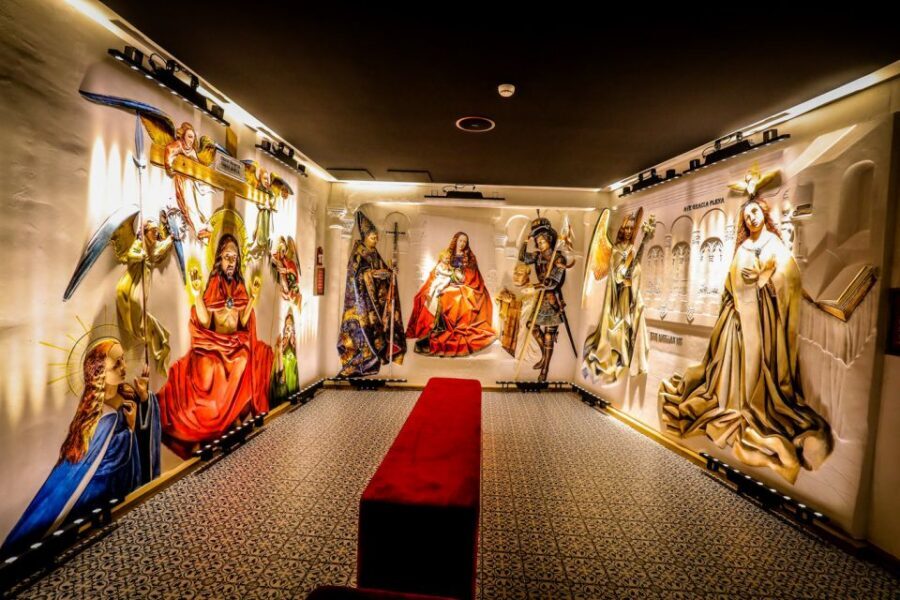
- A 265-metre-long sculpture gallery built to guide you at an unhurried pace
- 700 m² of monumental gypsum reliefs created by international artists
- 22 tons of gypsum used for the museum’s large-scale wall sculpture project
- Sculpture-first storytelling, with major Flemish works shown in three-dimensional detail
- An on-site courtyard garden where you can sit, reset, and enjoy the view
- Audio guide included in multiple languages, so you can move room to room comfortably
De Pelikaan townhouse: where the museum hides in plain sight
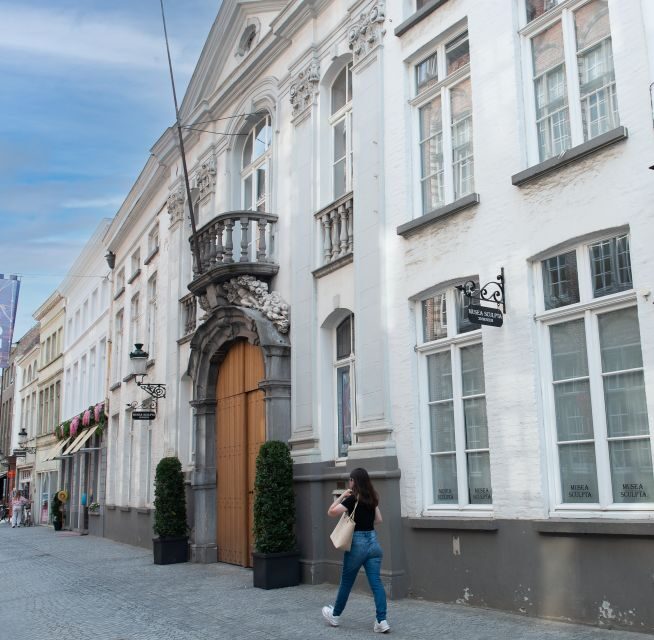
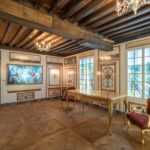
Musea Sculpta is in Bruges, inside a historic townhouse called De Pelikaan. The building is a good landmark: look for a large white facade, a brown gate, and a pelican statue on the roof. Go through the impressive gatehouse entrance dating to 1703, and you’ll immediately feel like you’re stepping into something protected and slightly off the beaten path.
This location matters because Bruges is easy to rush through. Having a compact museum in a recognizable historic setting makes it feel like a pause, not just another stop on a crowded itinerary.
A few more Bruges tours and experiences worth a look


The 265-metre gallery: Flemish primitives as monumental relief
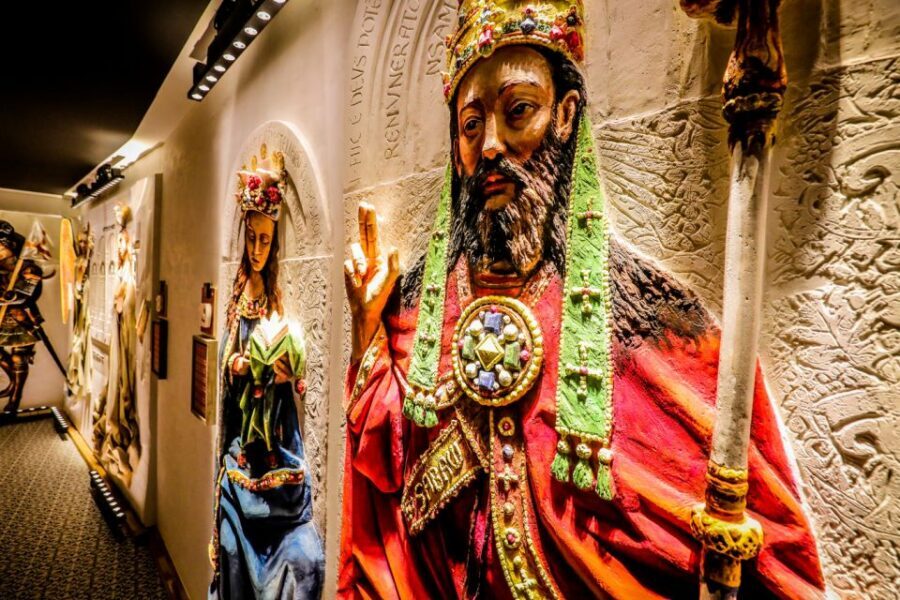
The core of Musea Sculpta is a long, dedicated gallery of statues. Plan for a steady walk along the route, because the layout is designed like a guided journey: you see scenes, you listen, you look again. The museum describes a 265-metre-long gallery, so even if you don’t read every label, your eyes will keep getting pulled along the walls.
Here’s the smart part: you’re not looking at paintings behind glass. You’re looking at sculpted versions of painting details, turned into wall relief. That means tiny elements that are usually hard to spot in a flat image suddenly become shapes and textures. It’s a different kind of viewing skill, more like reading with your eyes than just looking.
Also, the museum is built for comfort. There are sofas in every room, and there’s Wi‑Fi if you want to quickly search a detail or compare names while you’re there. It’s the sort of setup that keeps you from feeling “locked in” to a strict walking rhythm.
Bosch, Memling, and the van Eycks in 3D you can read
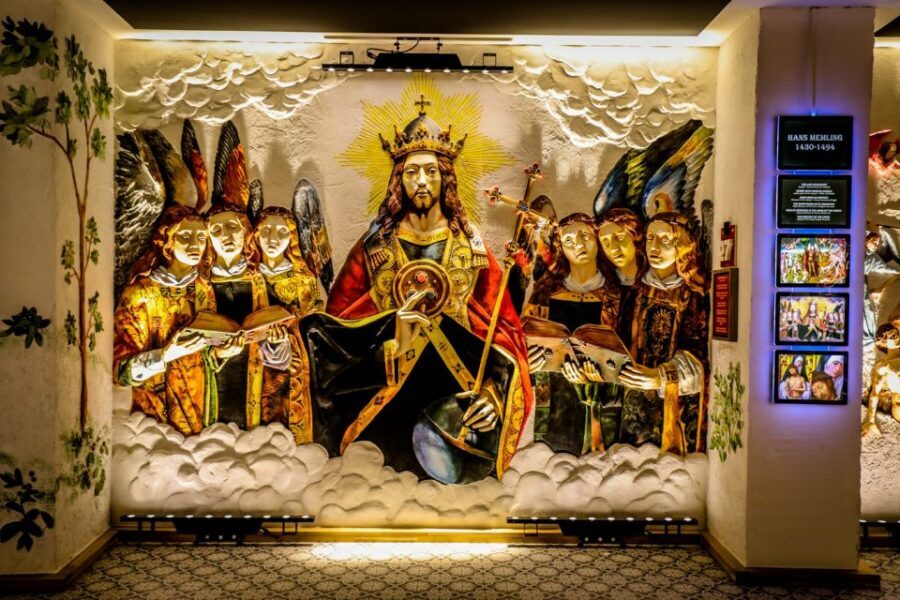
One of the most exciting things about the museum is how it reframes famous works you may already know from flat reproductions. The museum experience highlights several headline pieces, and each one lands differently in relief form.
Jheronimus Bosch: The Garden of Earthly Delights in relief
With Jheronimus Bosch, you get the benefit of scale. Bosch’s scenes are often packed with visual jokes and weird creatures, and in a relief you can see how the figures interact with each other. This is where the audio guide becomes especially useful. The narration doesn’t just say what you’re seeing; it helps you notice recurring themes and the overall logic of the scene.
A fun extra from people who’ve done the visit is that you may spot a unicorn somewhere in the artwork. If you have any curiosity about symbolic animals, keep your eyes open. Relief makes it easier.
Hans Memling: The Last Judgement in a “closer” way
Hans Memling’s The Last Judgement works well as sculpture because judgment scenes depend on arrangement. In a painting, your brain tracks faces and gestures at a distance. In relief, you can more easily follow lines of movement—who looks where, which figures are grouped, and how the composition stages the drama.
If you like story structure in art (who’s being judged, who’s watching, what’s implied), you’ll probably enjoy how the museum encourages you to slow down for the layout.



The van Eyck brothers: Adoration of the Mystic Lamb in detail
The Adoration of the Mystic Lamb by the van Eyck brothers is another headline work, and the museum’s style fits it nicely. Adoration scenes can feel dense when you’re looking at a flat image. In relief form, you get more physical separation between elements, so the symbolism can feel clearer as you move along.
If you’re the type who likes to connect religious art with everyday visual symbols, this museum is a strong match because the audio guide focuses on beliefs and context (not just art history trivia).
The audio guide: your cheat code for hidden details
The museum includes an audio guide, available in English, Dutch, French, Spanish, and German. This is the heart of the experience for most people, because the “story” lives partly in what you notice: minute changes in a figure’s expression, the way symbols are grouped, the small visual cues that build the larger meaning.
The biggest value here is pacing. You can take it room by room without needing to stop reading every few steps. Put simply: the audio guide helps you see instead of just pass through.
When you’re listening, try this strategy:
- Pause briefly whenever the narration points to a detail.
- Look for the small thing first, then step back to see how it affects the whole scene.
That loop turns relief from a novelty into actual understanding.
The sculpture concept: why gypsum relief feels different than art copies
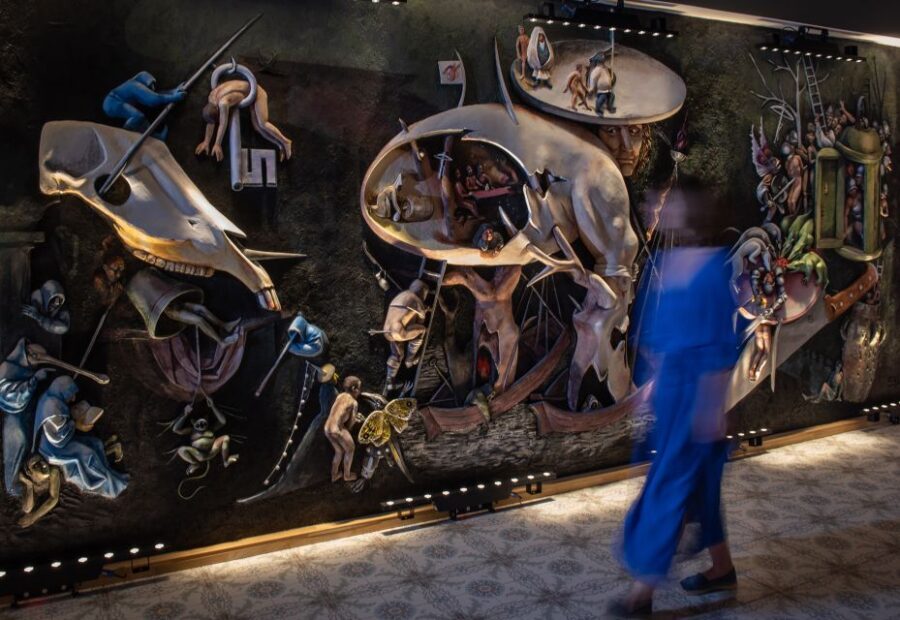
Musea Sculpta isn’t just making replicas. It’s creating original wall sculpture works in gypsum by international artists. The museum states that artists from America, Belgium, Germany, Italy, Ukraine, Poland, Russia, and Spain created these pieces, and that the project used 22 tons of gypsum.
For you, that adds up to something practical: you’re seeing large-scale forms built to be viewed at human height and in a walk-through setting. The scale changes everything. Details that might be tiny in a painting become legible shapes. This is especially helpful if you’re not the kind of museum visitor who loves reading long panels.
If you’re a purist about seeing brushwork, you’ll be aware this is sculpture, not paint. But if you’re curious about how artists build meaning through composition and symbols, the relief format is a clever and unusual way to learn.
Courtyard garden reset: a quiet pause with a good view
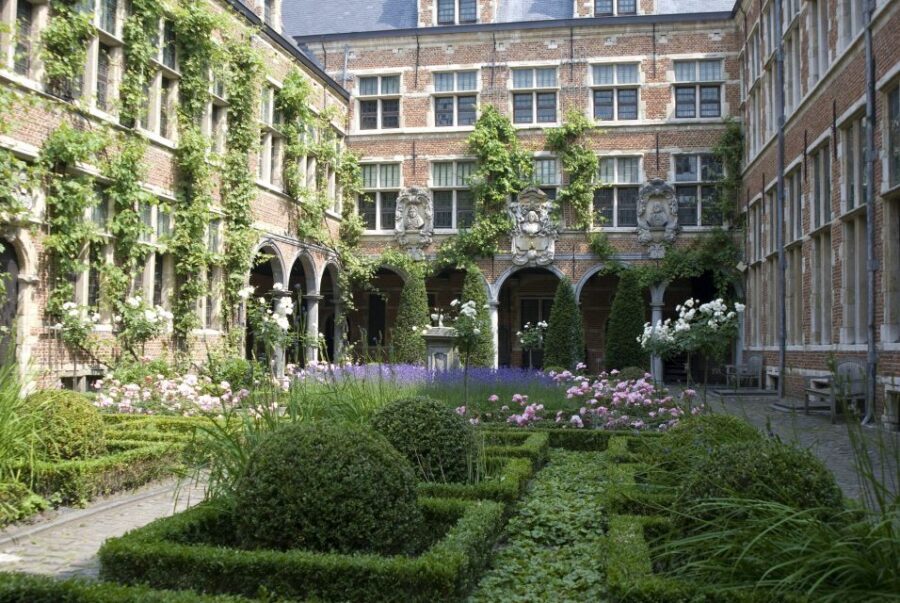
Between rooms, you can take breaks in a courtyard garden. The museum calls it a relaxing spot, with a nice view and a place to sit with a drink. This matters more than it sounds. Bruges can be walking-heavy, and most art museums don’t always give you a comfortable moment to exhale.
This courtyard also helps you avoid the classic museum problem: fatigue. You’re moving through a long sculptural experience, so having a reset option keeps the rest of your visit enjoyable.
Price and value: is $11 worth your time?
At about $11 per person, Musea Sculpta can feel like a “small budget” choice with a big payoff—mainly because you’re not just paying for access. You’re paying for an experience designed around three-dimensional learning, plus an audio guide included in the price.
Value comes from two places:
- Scale and uniqueness. The museum highlights that its approach is unique in the world, with monumental gypsum sculpture recreations and a long gallery you walk through.
- Comfort and pacing. With sofas in every room and audio in several languages, you can tailor your pace without constantly stopping.
If you love iconic Flemish paintings but often find museums too flat or too text-heavy, this is likely good value. If you want a strictly traditional museum format with lots of reading and didactic panels, you might want to treat it as a visual-and-audio experience first.
Who should book Musea Sculpta (and who may want to adjust expectations)
You’ll probably enjoy Musea Sculpta if you:
- Like Flemish primitives and want a new way to understand them
- Enjoy symbolism and notice-taking
- Want an experience that isn’t exhausting because you can sit often
- Prefer an audio guide that helps you keep up with what you’re seeing
You might want to calibrate your expectations if:
- You’re expecting lots of wall text and reading boards. The museum experience leans heavily on sculpture and audio rather than heavy interpretive reading.
- You specifically want only one narrow religious angle. The works shown include major religious subjects, but the focus is broader: art details, beliefs, and composition.
A small practical note: the museum asks you to arrive before 5pm, so treat this as an afternoon-and-evening-friendly option rather than a late-night plan.
Should you book Musea Sculpta?
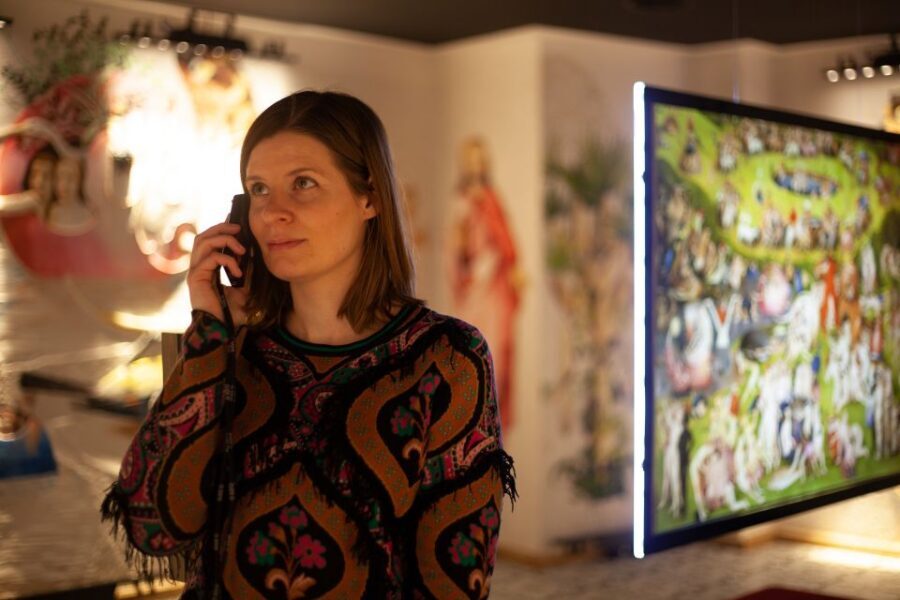
Yes, if you want something different from the usual Bruges routine. Musea Sculpta is a strong pick for couples, solo visitors, and anyone who likes art but doesn’t want a stiff, quiet gallery where you rush through just to finish.
Book it if you love the idea of turning flat masterpieces into large-scale gypsum relief and letting an included audio guide do the heavy lifting. Skip or adjust expectations if you need lots of reading panels to feel “fully informed” or you’re only interested in one narrow religious theme.
If your goal is a memorable, walkable Bruges art stop with built-in comfort and a genuinely unusual format, this one earns a place.
FAQ
What does the ticket include?
The entry ticket includes the Musea Sculpta entrance fee and an audio guide, plus access to the relaxing courtyard garden. The museum also offers sofas in every room and Wi‑Fi.
Where is the museum located, and how do I find it?
Musea Sculpta is in the historic townhouse De Pelikaan in Bruges. Look for a large white building with a brown gate and a pelican statue on the roof, then enter through the gatehouse from 1703.
How long should I plan to spend there?
The experience is listed as lasting 1 day. The museum also describes a 265-metre-long gallery, so plan time to walk slowly and use the audio guide.
What languages are available for the audio guide?
The audio guide is available in English, Dutch, French, Spanish, and German.
Is the museum wheelchair accessible?
Yes. Musea Sculpta is wheelchair accessible.
Are pets allowed?
No, pets are not allowed.
Which major artworks can I see?
You can see works including The Garden of Earthly Delights by Jheronimus Bosch, The Last Judgement by Hans Memling, and Adoration of the Mystic Lamb by the van Eyck brothers.
Is Wi‑Fi available?
Yes, Wi‑Fi is available.
What time should I arrive?
You should arrive before 5pm.
Can I cancel, and do I need to pay immediately?
Free cancellation is available up to 24 hours in advance for a full refund. You can also reserve now and pay later.
If you tell me your travel month and whether you prefer audio-guided sightseeing or lots of reading labels, I can suggest the best time of day to go and how to pace it inside.