REVIEW · BRUSSELS
Brussels 2-Hours Walking Tour: Must-See Highlights in the Center
Book on Viator →Operated by My Super Tour · Bookable on Viator
Brussels in two hours? Yes, and it’s worth it. This 2-hour small-group walking tour packs the classic sights into one easy loop, starting at the Royal area and ending at the Grand Place. You also get a guide who can put the city in context fast, so the places stop feeling like random postcards.
I love the way it’s built around free-to-enter highlights, including major stops like the Grand Place and several museum-quarter sights. I also like how you come away with real Brussels instincts, from chocolate and pralines to fries, waffles, and beer tips shared by guides like Paulina and Polina.
One possible drawback: in busy areas, background noise can make it harder to hear every detail clearly. If you’re sensitive to that, plan to pause when the group stops and keep an eye on where the guide is pointing.
In This Review
- Key takeaways before you go
- The value of a 2-hour Brussels center walk (and why it works)
- Where you start and end: placing your feet on the map
- Stop by stop: how the route tells the story of Brussels
- Palais Royal de Bruxelles: work, museum, and a café break
- Manneken Pis: the mascot you’ll keep seeing after today
- Sablon’s Gothic church: Nostra Senyora del Sablon and its Holy Mary legend
- Warandepark (Parc de Bruxelles): the Royal Park reset
- The Museum’s Quarter: art variety without the decision fatigue
- Grand Place and Mont des Arts: the two biggest payoff moments
- Grand Place: city hall drama in one square
- Mont des Arts: story plus a view that makes the walk feel worth it
- Egmont and Hornes Fountain + Rue des Petits Carmes: gardens and international Brussels
- Egmont and Hornes Fountain: 48 columns and guild statues
- Rue des Petits Carmes: embassies and international representations
- Zavel / Sablon antique market: weekend browsing and chocolate priorities
- Group size, guide style, and what it feels like on a rainy day
- What to do after: turn the tour into a full Brussels day
- Should you book this Brussels center walking tour?
- FAQ
- What’s the duration of the Brussels 2-Hours Walking Tour?
- How much does the tour cost?
- Is the tour offered in English?
- Where do I meet the guide, and where does the tour end?
- Are admission tickets included for the stops?
- What group size should I expect?
- Can I cancel for a full refund?
Key takeaways before you go
- A tight 2-hour loop that’s easy to pair with a food tour or another afternoon plan
- Small group (max 15) for better attention and calmer pacing
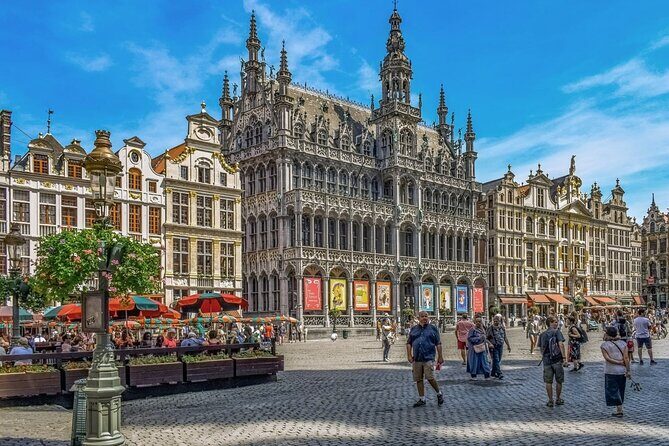
- Grand Place + Mont des Arts for that instant “okay, I get Brussels” feeling
- Sablon and its antiques market for atmosphere and serious chocolate and pralines options
- Royal Park (Warandepark) as a breathing space right in the center
- Practical photo help at Mont des Arts, plus smart local recommendations along the way
The value of a 2-hour Brussels center walk (and why it works)
If you only have a short window in Brussels, a walking tour like this is one of the fastest ways to get oriented. In two hours, you hit the kind of landmarks you’d normally spread across a half day of wandering. You’re not trying to “see everything.” You’re getting the right sequence so the city clicks.
The big value here is how the stops are selected for meaning, not just fame. You start with royal power (Palais Royal de Bruxelles), slide into playful Belgian iconography (Manneken Pis), and then move through Gothic art and classic city squares. Along the way you get context that helps you notice details on your own later.
Price-wise, $42.14 per person can feel “not cheap” until you factor in what you’re getting: a guide, a structured route that covers central sights, a small group, and multiple stops listed as free admission tickets. That combination matters if you hate wasting time deciding where to go next.
I also like the flexibility. The tour duration is short enough to fit before or after a meal without wrecking your schedule. And since it’s offered in English with a mobile ticket, you can keep things simple.
You can also read our reviews of more walking tours in Brussels

Where you start and end: placing your feet on the map
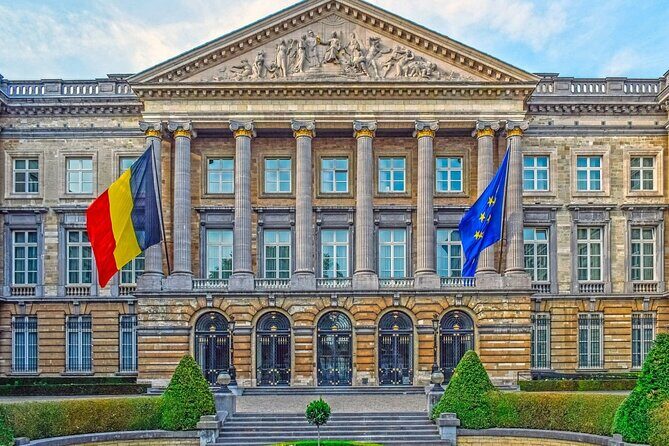
You’ll meet at Monument Léopold II, Pl. du Trône 9/1, and your tour finishes at the Grand Place, in front of the City Hall. That end point is a gift. Grand Place is the kind of place where you naturally slow down, take photos, and then decide what you want to eat or explore next.
Starting near Place du Trône also helps you avoid the common first-day problem in Brussels: you arrive, look around, and then spend the rest of the day playing catch-up with geography. This route aims to solve that by bringing you from the Royal area toward the old-town core.
You don’t need a car for this. The tour is near public transportation, which is useful if you’re using trains or trams around the city. The group stays small—up to 15 travelers—so you’re less likely to feel swallowed by crowds or forced to walk at a pace that doesn’t match yours.
One more practical point: the walking is listed for travelers with moderate physical fitness. That’s not “hard,” but it does mean you should be comfortable with a continuous urban walk and a few short stops where the whole group gathers.
Stop by stop: how the route tells the story of Brussels
Palais Royal de Bruxelles: work, museum, and a café break
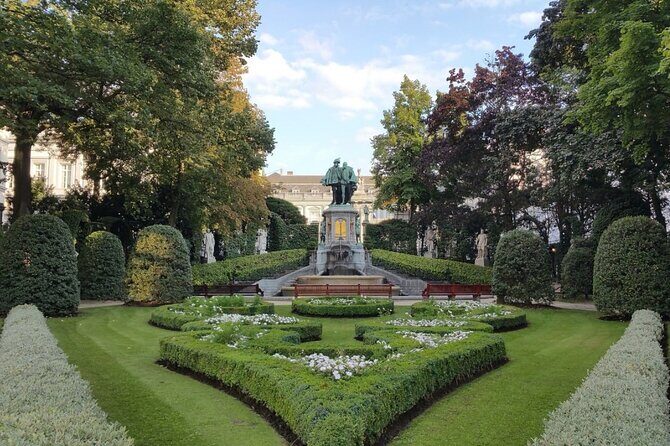
Your first major landmark is Palais Royal de Bruxelles, the palace where the Belgian king has his working place. It’s also home to a museum and, conveniently, a cozy café inside the complex.
Why this matters: Brussels can feel like a city of layers—royal influence, art, and civic life all rubbing elbows. Starting here gives you the “power map” early. You’re not just looking at a pretty building; you’re seeing where official Belgium connects to everyday tourism.
What to watch for: even if you don’t go deep into the museum itself, stand back and take in the scale and setting. A palace complex sets a tone. It also makes the later shifts—Gothic churches, city squares, gardens—feel more purposeful.
A bonus for your schedule: this stop is listed with free admission tickets, so you’re not juggling extra costs before you even warm up.
Manneken Pis: the mascot you’ll keep seeing after today
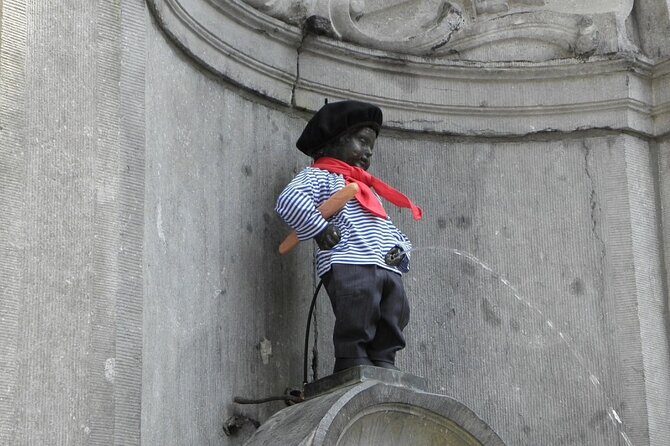
Next comes Manneken Pis, the famous Brussels mascot and its legendary history. It’s short—about 10 minutes—so think of this as a quick “you can’t miss this” moment.
Here’s the practical angle: once you understand that Manneken Pis is a symbol with stories behind it, you’ll notice how frequently it pops up in souvenirs, local jokes, and local branding. Even if you’re not obsessed with street-level icons, this is the kind of stop that makes the rest of your day feel more connected to Brussels culture.
Also, the tour keeps it moving, which is important. Brussels has plenty of “everyone stops here” points. This one gets you your fix without eating your time.


Sablon’s Gothic church: Nostra Senyora del Sablon and its Holy Mary legend
At Esglesia de Nostra Senyora del Sablon, you’ll get Gothic art plus a legend tied to Holy Mary. This stop is about 15 minutes.
What I like about placing this after Manneken Pis: it shifts the vibe. You go from playful street mascot energy to something more architectural and story-driven. If you’re trying to avoid “same-y” sightseeing, this contrast helps.
Because the tour description emphasizes both art and legend, expect your guide to point out what to notice beyond just the façade. Even if you’re not a church expert, you’ll leave knowing what kind of meaning locals attach to the Sablon area.
Warandepark (Parc de Bruxelles): the Royal Park reset
Then you step into Parc de Bruxelles (Warandepark), described as the largest urban park in the center of Brussels. It’s also called the Royal Park because of its position in front of the Royal Palace.
This is your reset moment. Right after a church stop, you’ll appreciate the open space. It’s a good time to slow down, breathe, and let your eyes recalibrate from buildings to greenery and perspective.
The park stop lasts about 10 minutes, so it’s not trying to turn the tour into a long nature break. It’s meant to refresh you so you can still enjoy the bigger “crowd magnets” later.
The Museum’s Quarter: art variety without the decision fatigue
The next stop is the Royal Museums of Fine Arts of Belgium—a key part of the Museum’s Quarter. The tour highlights that beyond the Museum of Fine Arts, you’ll also find the Museum of Magritte, the Museum of Modern Art, the Museum of Musical Instruments, and more.
This is one of those areas where people get stuck: they want art, but they don’t know what to pick. This tour helps by pointing out the whole cluster so you can make an easy decision later.
Even though the tour stop itself is short (about 10 minutes), it gives you a “choose your own adventure” map. If you return later, you’ll already know what’s nearby and what kind of museum it is.
Value angle: by introducing the quarter, you can avoid wasting time walking into the wrong building for your mood. One day you may want a specific artist. Another day you may want modern formats. The Museum’s Quarter gives you options in a small geographic zone.
Grand Place and Mont des Arts: the two biggest payoff moments
Grand Place: city hall drama in one square
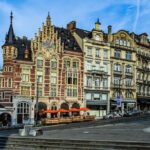
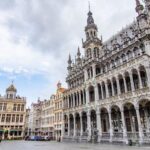
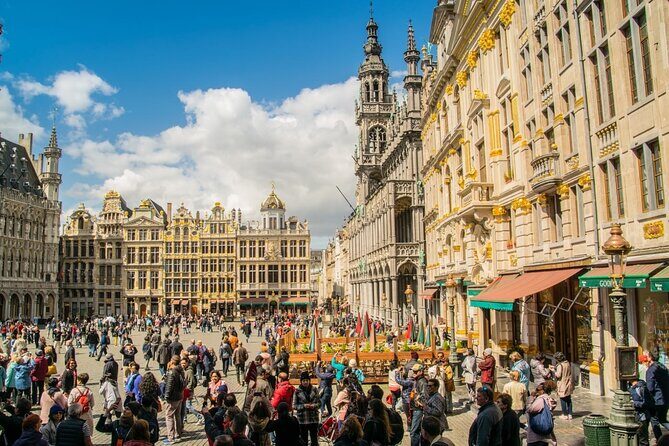
At Grand Place (Grote Markt), you’ll discover the magnificent city hall. This stop is about 15 minutes.
Grand Place is the classic Brussels “main character” moment. If you’ve seen photos, the real square hits differently. The scale, the façades, and the way the space pulls people in makes it feel like the heart of the city rather than a background set.
This is where you’ll also understand why the tour ends here. It sets you up to keep exploring long after the official walk ends. If you want snacks, drinks, or just more wandering, you’re already in the right place.
Mont des Arts: story plus a view that makes the walk feel worth it
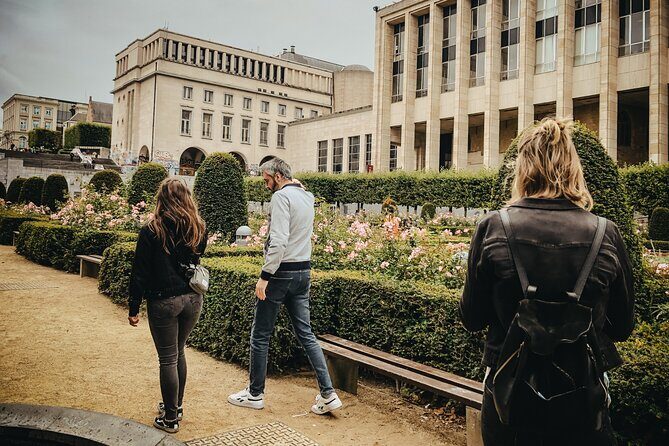
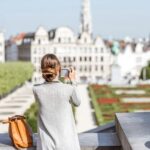
Next up is Mont des Arts, where you’ll learn the story of the place and enjoy a breathtaking view. The guide also helps with memorable pictures.
This stop is about 10 minutes, but it’s timed well. You’ve built up through royal areas and squares, so the viewpoint becomes the “now I see it” payoff.
Practical photo tip: if you want pictures that don’t look like tourist mush, stand still, watch the light, and let the group move a bit. The guide’s photo help is useful here, especially if you’re traveling without a second person.
Egmont and Hornes Fountain + Rue des Petits Carmes: gardens and international Brussels
Egmont and Hornes Fountain: 48 columns and guild statues
At Egmont and Hornes Fountain, you’ll see what’s described as the prettiest public garden in the city. The garden is divided by 48 columns, each topped with a little statue representing one of the 16th-century guilds of Brussels.
This is a stop that rewards attention. It’s not just “nice to look at.” It’s structured art, built around the idea that Brussels was shaped by trades and civic life. Even in a short visit, you can start noticing patterns—and that makes your later self-guided exploring better.
A quick drawback for pacing: if you like to read every plaque and statue, 10 minutes may feel fast. But you’re getting the overview so you’ll recognize the place later.
Rue des Petits Carmes: embassies and international representations
Then you head to Rue des Petits Carmes, known as a quarter of embassies and international representations.
This stop (about 10 minutes) helps explain a Brussels reality: it isn’t only old-town charm and royal buildings. It’s also a place where international institutions shape the city’s tone. So even if your focus is sightseeing, you get a sense of Brussels as a working international hub.
Zavel / Sablon antique market: weekend browsing and chocolate priorities
The final stop is Antiekmarkt Zavel/Marche des Antiquites et du Livre du Sablon, the Sablon Antique Market. It was created in 1960 and still works each weekend. This is also where the tour notes you’ll find some of the best chocolate and pralines producers in Brussels and their unique development.
If you like souvenirs but hate the plastic stuff, this is a good area to look. Antiques and books fit Brussels’s character. And the proximity to chocolate and pralines matters because Brussels does not do subtle chocolate.
Two practical tips for this stop:
- If it’s the weekend, arrive ready to browse slowly. Even if you buy nothing, the atmosphere is the point.
- If you’re doing a food run later, taste a small sample now so you can compare choices with your memory.
This is also where your guide’s local recommendations can pay off. In past walks, guides like Paulina and Polina shared eating ideas and even mentioned a rooftop bar that can be a nice follow-up when the weather cooperates.
Group size, guide style, and what it feels like on a rainy day
The tour caps at 15 travelers, which keeps it from turning into a moving school bus. That size is big enough to meet other people, but small enough that the guide can still manage the group at each stop.
Guide style matters here, and it comes through in the details. One guide shared recommendations not only for chocolate and sweets, but also for fries, waffles, and beer—so you leave with a sense of what to try next, not just what to see. Another guide (Paulina) handled a big rainstorm by waiting under cover and then continuing after it passed.
That’s worth knowing because Brussels weather loves surprises. If you plan ahead and bring a light layer, the tour still feels solid even when clouds decide to make an entrance.
What to do after: turn the tour into a full Brussels day
Once you’re at Grand Place, you’re positioned perfectly for your next move. Here are a few smart ways to keep momentum without over-planning:
- If you’re pairing this with a food experience, use the tour as your geography primer first. You’ll understand why some streets feel closer to the action than others.
- If you want drinks with a view, ask your guide or use what you picked up during the walk. A rooftop bar was specifically recommended by a guide in the experience history.
- If you’re museum-minded, keep the Museum’s Quarter in your back pocket. You now know what’s clustered there, so choosing later feels easier.
Also, if you’re the type who likes to “repeat the best bits,” go back to the places you liked most during the walk. Grand Place and Mont des Arts are perfect for a second look—different light, different mood.
Should you book this Brussels center walking tour?
I think this tour is a strong booking if you:
- want the main highlights of central Brussels in a short time
- like small-group walking with a guide who shares practical food ideas
- want a route that ends at the city’s center rather than depositing you somewhere random
I’d be a cautious fit if:
- you’re very sensitive to noise and struggle to hear in busy public spaces, since some spots can get loud
- you prefer long museum time over moving between multiple landmarks (this is still a short, walking-focused experience)
If you’re on your first visit, this is the kind of tour that helps you stop “guessing” where to go. You’ll get the logic of the city fast—and then you can enjoy Brussels at your own pace.
FAQ
What’s the duration of the Brussels 2-Hours Walking Tour?
It runs for about 2 hours.
How much does the tour cost?
The price is $42.14 per person.
Is the tour offered in English?
Yes, it’s offered in English.
Where do I meet the guide, and where does the tour end?
You meet at Monument Léopold II, Pl. du Trône 9/1, 1000 Bruxelles. The tour ends at Grand Place (Grote Markt), in front of the City Hall.
Are admission tickets included for the stops?
The stops listed on the tour are marked as free admission tickets.
What group size should I expect?
The tour has a maximum of 15 travelers.
Can I cancel for a full refund?
Yes. You can cancel up to 24 hours in advance for a full refund. If you cancel less than 24 hours before the start time, the amount paid isn’t refunded.