REVIEW · BRUSSELS
Brussels: Fall and Rise of Art-Nouveau Guided Tour
Book on GetYourGuide →Operated by Curiositas Mundus · Bookable on GetYourGuide
Art Nouveau doesn’t hide in museums here. This 150-minute Brussels walk teaches sgraffito clearly and points you to the Maison du Peuple remains linked to Victor Horta, right where the style actually shows up.
I also like that you’re not just admiring façades. You’re learning how late-nineteenth-century designers built the look, then walking a short route through Saint-Gilles and Ixelles where the architecture still feels sturdy and readable. The one thing to factor in is weather: it’s about 3 kilometers of walking, so rain gear matters.
In This Review
- Key points that make this tour worth your time
- Where Art Nouveau starts: meeting by Horta Metro and reading façades fast
- Saint-Gilles and Ixelles: the streets where the style stays legible
- The techniques lesson you’ll actually remember: sgraffito vs fresco
- Spotting the “how” behind Art Nouveau houses
- Victor Horta’s Maison du Peuple remains: why this stop hits harder than it sounds
- Walking the outskirts loop: pacing, distance, and how to dress
- Value for $17: what you’re really paying for
- Who should book this Art Nouveau walk
- Should you book the Brussels Fall and Rise of Art-Nouveau tour?
- FAQ
- How long is the Brussels Art Nouveau guided tour?
- Where is the meeting point?
- What language is the live guide?
- How much walking is involved?
- Is the tour wheelchair accessible?
- What should I bring for the weather?
- Is free cancellation available?
Key points that make this tour worth your time
- Sgraffito explained in plain terms and how to tell it apart from frescoes
- Art Nouveau techniques put next to real buildings, not just theory
- Victor Horta’s Maison du Peuple remains as a key historical anchor
- A focused 3-kilometer stroll through the Brussels Capital Region outskirts
- A guide who handles questions, with Samuel highlighted for clear explanations
Where Art Nouveau starts: meeting by Horta Metro and reading façades fast
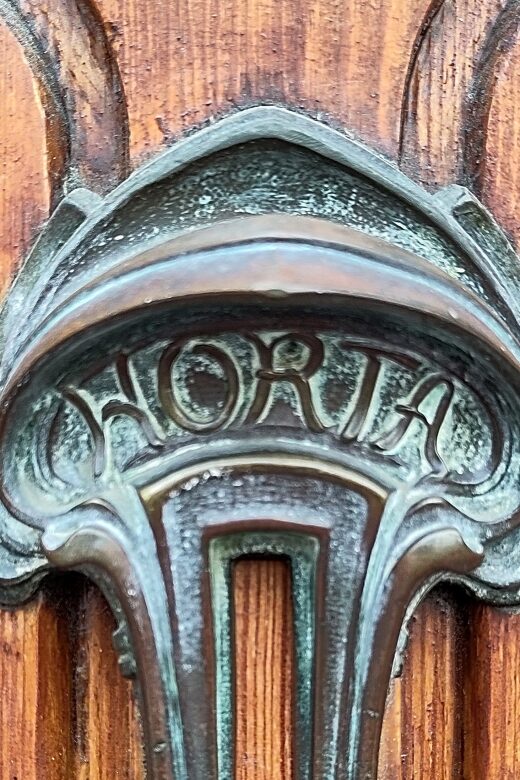
You’ll meet right by the Horta Metro station (lines 3 and 4), on the Chaussée de Waterlo near number 187. Your guide will wear a Curiositas Mundus badge, so spotting them is usually straightforward. This is a good setup if you’re using transit, because you can roll in, get oriented, and then start walking without wasting time.
From the first minutes, the tour is designed to help you see the style instead of just recognize the name. Art Nouveau can feel like “swirly stuff” until you learn the practical building ideas behind it. The guide uses audiovisual support at points, which helps you connect what you’re hearing to what you’re looking at on the streets.
One small but smart tip: if you’re coming from another part of Brussels, don’t over-plan. This walk works best when you arrive ready to slow down and look up.
You can also read our reviews of more guided tours in Brussels
Saint-Gilles and Ixelles: the streets where the style stays legible
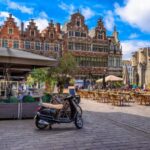
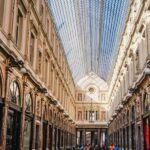
The Brussels region has 19 communes (town halls), and this tour zeroes in on two: Saint-Gilles and Ixelles. That matters, because the area has some of the more stable Art Nouveau houses from the late nineteenth century. Translation: you’re not trudging past random hints of the style. You’re walking through streets where the architecture still makes sense at street level.
As you move along the route, the guide’s job is to show you how Art Nouveau functions as more than decoration. You’ll get context on the most used techniques of the movement and why they became popular. You’ll also hear what makes these buildings stand out compared with the surrounding architecture.
What I like about covering two communes is simple: the tour doesn’t feel like a one-street poster session. It gives you repetition with variety. You see motifs, materials, and façade logic that you can compare as the walk continues.
The techniques lesson you’ll actually remember: sgraffito vs fresco
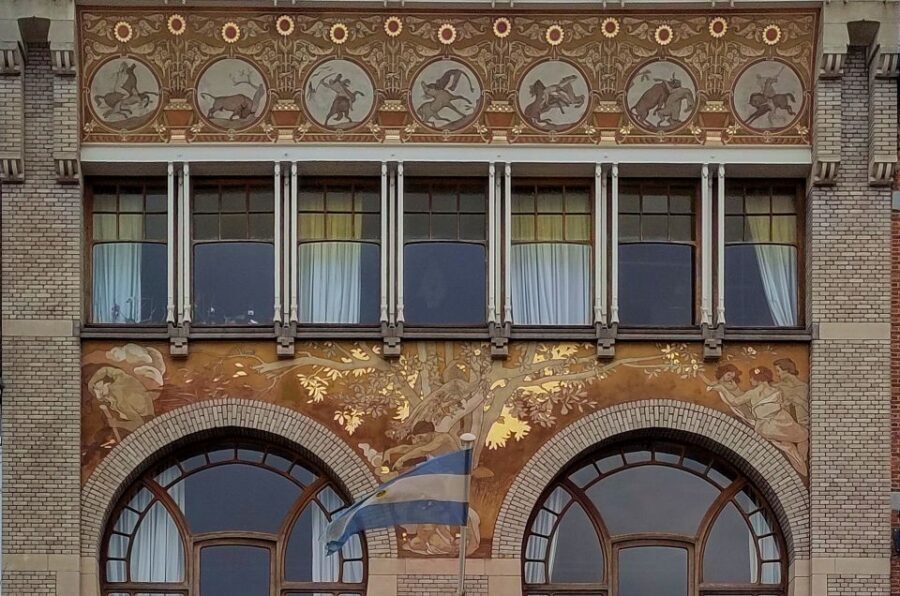
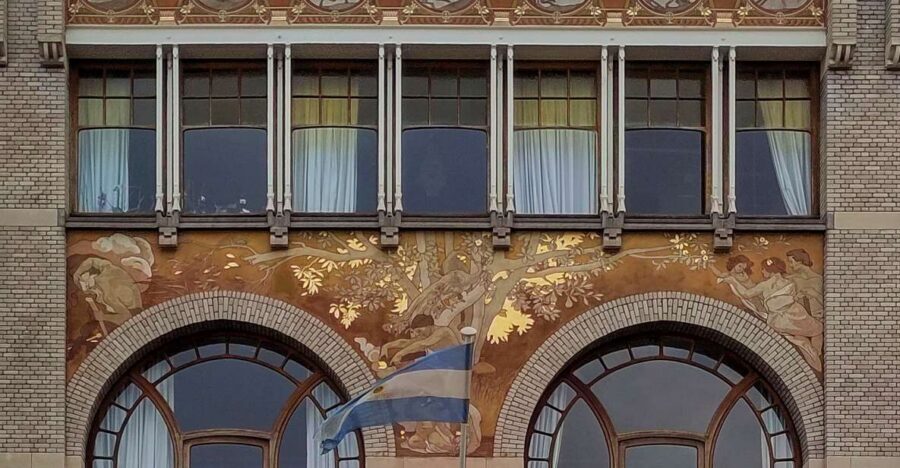
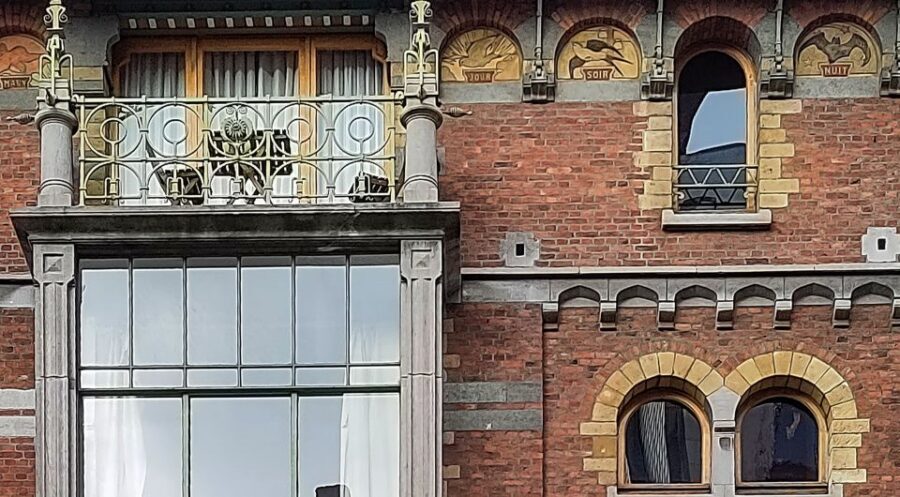
One of the most useful parts is the focus on sgraffito. You’re not just told the name. You learn the concept and how it differs from frescoes—two techniques that can sound similar at first if you only know them from reading captions.
Here’s the practical value for you: once you understand the difference, you stop guessing when you’re standing in front of a wall. Fresco typically relates to painting done on plaster in a specific way, while sgraffito is about scratching through a surface layer to reveal a contrasting layer underneath. When the guide shows these ideas alongside façades, you start recognizing the logic instead of just the look.
This is also where audiovisual moments can help. Watching the idea laid out makes it easier to spot what you’re looking for in real time—especially when the pattern is subtle or weathered.
If you take one takeaway from the entire tour, make it this: you’ll leave with a mental checklist for how Art Nouveau textures and surfaces get made.
Spotting the “how” behind Art Nouveau houses
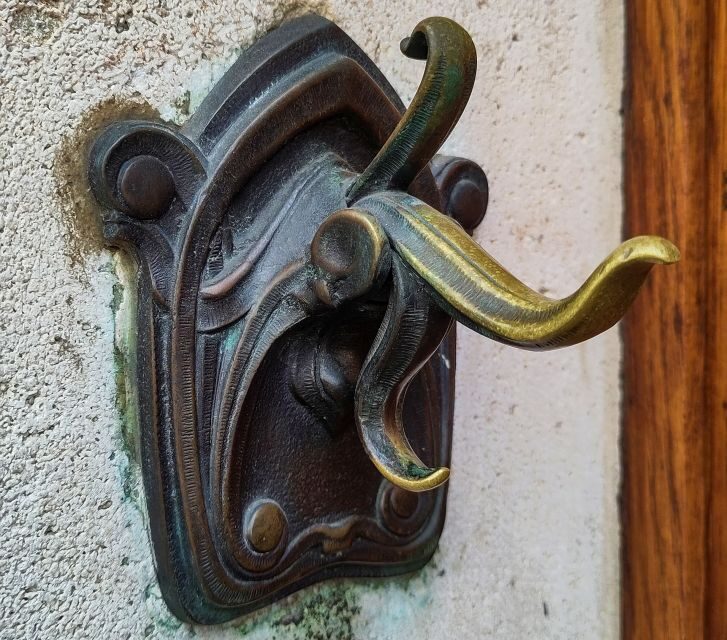
Art Nouveau shows up in Brussels through a lot of small decisions: materials, surface texture, and façade treatment. This tour leans into that. It aims to explain the most used techniques of the style, so when you see a façade later (on your own, after the tour), you have a framework.
A big part of the fun is that the guide ties the technique back to what you can see right now on the street. You might not catch every detail from the curb, but you’ll learn what’s worth focusing on. And if you’re the type who likes asking questions, the tone here is set up for it. One review calls out Samuel for explaining things very clearly and answering doubts without hesitation.
That’s an underrated quality in guided tours. Even if you only ask one question—about a surface, a pattern, or a term—you’ll start paying attention differently for the rest of your day.
Victor Horta’s Maison du Peuple remains: why this stop hits harder than it sounds
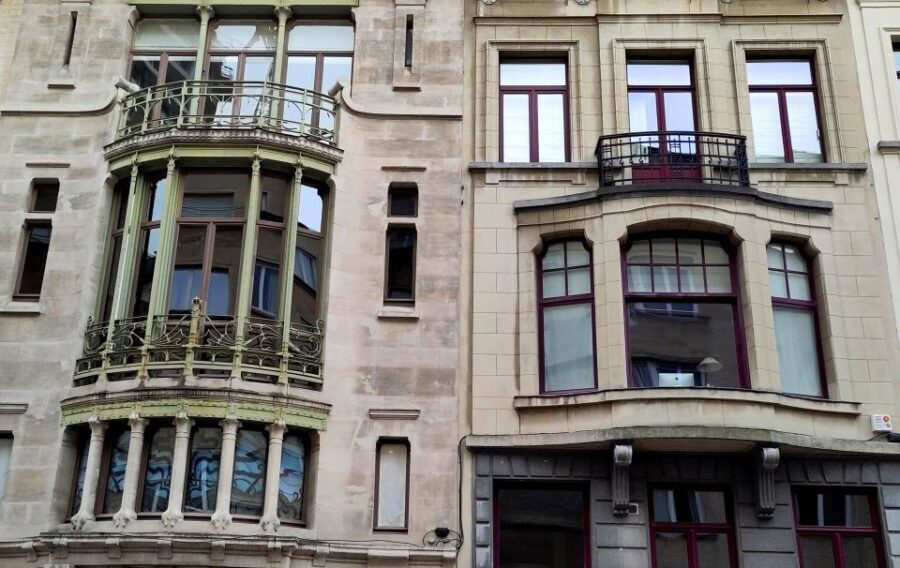
The tour includes a historical anchor: the remains of Victor Horta’s Maison du Peuple. Even without turning this into a lecture, it’s a powerful moment because Horta is one of the names people associate with the style, and this site connects you to that creative world in a tangible way.
Why it matters for you: Art Nouveau is easier to respect when you can connect it to specific architects and specific places. You’re not learning the movement as a vague style. You’re seeing it as something built by people with ideas, and shaped by Brussels itself.
In this part of the walk, you get context about what the Maison du Peuple represents and how it connects to Art Nouveau’s spread and development. The remains also remind you that city history is layered. Styles don’t just appear; they get altered, preserved, or partially erased by time. Standing near what’s left gives you a different sense of scale and impact than seeing a single restored building.





Walking the outskirts loop: pacing, distance, and how to dress
This is a 150-minute guided walking tour on a route of about 3 kilometers. That’s not a long hike, but it is steady. You’ll want shoes you can stand in for a while, especially if you like to pause for close looks.
The tour also gives a clear weather warning: bring an umbrella and rain gear. Sidewalks can get slick fast, and the “look up and read façades” part is harder when rain is bouncing into your face. If the sky looks questionable, go prepared. A poncho that covers your bag can save you from cutting the tour short.
One more practical note: the guide is Spanish. If you’re comfortable following conversation in Spanish, you’re set. If not, you’ll still enjoy the visuals and façade-focused explanations, but you might miss some of the finer technique talk.
Value for $17: what you’re really paying for
At $17 per person, the price is mostly paying for three things:
- A guide who translates Art Nouveau techniques into street-level understanding
- Access to a short, organized route through Saint-Gilles and Ixelles
- Extra support like audiovisual information to make the technique lesson stick
For less money, you can wander on your own. But you’d be guessing between sgraffito and frescoes, and you’d likely walk past details you never learn to notice. This tour gives you a structured way to look at buildings and then reinforces it with the Horta-related stop.
So for me, the value isn’t just the walk. It’s the change in how you see Brussels afterward.
Who should book this Art Nouveau walk
This tour fits best if you want:
- A focused introduction to Art Nouveau architecture that includes the how, not just the wow
- A route you can manage in one sitting (150 minutes, about 3 km)
- Clear explanations, with Samuel specifically highlighted for making things understandable and answering questions
It’s also a good choice if you’re visiting Brussels for a limited time and want something more specific than a general city stroll.
Should you book the Brussels Fall and Rise of Art-Nouveau tour?
If you like architecture but get impatient with vague descriptions, yes—book it. You’ll get a technique lesson you can use instantly (sgraffito vs frescoes), a solid historical anchor (Victor Horta’s Maison du Peuple remains), and a short walk through neighborhoods where the style is still readable on real streets.
If you’re only interested in entering famous interiors, this might feel more street-and-facade focused than you want. And if you hate walking in any weather, plan to dress for it.
FAQ
How long is the Brussels Art Nouveau guided tour?
The tour lasts 150 minutes.
Where is the meeting point?
Meet next to the Horta Metro station (lines 3 and 4), on the Chaussée de Waterlo at the height of number 187.
What language is the live guide?
The tour is guided in Spanish.
How much walking is involved?
The route includes approximately three kilometers of travel.
Is the tour wheelchair accessible?
Yes, the tour is listed as wheelchair accessible.
What should I bring for the weather?
Bring an umbrella and rain gear. If it rains, having a raincoat or poncho is also recommended.
Is free cancellation available?
Yes. You can cancel up to 24 hours in advance for a full refund.