REVIEW · BRUSSELS
Brussels 3-Hour Guided Art Nouveau Tour
Book on GetYourGuide →Operated by Bravo Discovery · Bookable on GetYourGuide
Art Nouveau in Brussels hits different once you start noticing details. This 3-hour guided route pairs famous names like Victor Horta with a street-level lesson on how iron, glass, wood, and stone get mixed into wild-looking façades. Two things I really like about the experience: you learn the style’s story from a local guide, and you’re shown how to spot what matters on the outside even though you’re not touring interiors. One thing to keep in mind: it ends in front of the Victor Horta Museum and museum admission isn’t included, so you’ll want separate tickets if you want to go inside.
You’ll meet at the Grand-Place at 10:00, grab a tram to the Bailli district, and walk through a cluster of major Art Nouveau houses built by architects who shaped Brussels’ look. The price is $35 per person for a guided 3-hour format, and you’re essentially paying for expert interpretation plus a curated set of stops across one of the city’s densest Art Nouveau areas.
Bring comfortable shoes. Expect a fair amount of walking, and if your departure is bilingual (guide repeats the talk), the pace can feel a bit slower than the schedule promise.
In This Review
- Quick Hits: Why This Art Nouveau Tour Works
- Brussels Art Nouveau: The Style You Start Seeing After 3 Hours
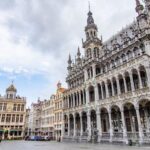
- Starting at the Grand-Place: Finding Your Guide and Getting Oriented
- Tram to Bailli: The Neighborhood That Teaches Street-Level Comparison
- Old England House (Music Instrument Museum): Culture Meets Design
- Hotel Tassel (Victor Horta, 1893–1894): The Baseline for How to Spot Art Nouveau
- Van Rysselberghe House (Octave Van Rysselberghe, 1912): Same Era, Different Voice
- Hotel Otlet (Octave Van Rysselberghe and Henry van de Velde, 1894–1898): Collaboration on the Façade
- Hotel Goblet d’Alviella (1882): Older Roots, Strong Influence
- Hotel Ciamberlani (Paul Hankar, 1897): A Mid-Route Lesson in Form
- House of Painter René Janssens (1898): Art Nouveau for People Who Make Art
- Architect Armand Van Waesberghe: When Architecture Becomes the Point
- Beukman House (Albert Roosenboom, 1900) and Paul Hankar’s Private Home: The Movement at Home
- Ending in Front of Victor Horta Museum: Easy Next Step, Separate Ticket for Entry
- The Guide Experience: What You Can Count On
- How Much Is $35 Worth for 3 Hours?
- Who Should Book This Tour (and Who Might Skip It)
- Should You Book This Art Nouveau Tour?
- FAQ
- Where does the tour start?
- What time does the tour begin?
- How long is the tour?
- What is the price per person?
- What languages is the guide available in?
- What’s included in the price?
- Is Victor Horta Museum entry included?
- Is transportation included?
- What should I bring?
Quick Hits: Why This Art Nouveau Tour Works
- Grand-Place start at 10:00, with a clear meet-up spot (guide holding a white umbrella)
- Tram ride into Bailli, the neighborhood known for packing in Art Nouveau
- Real design instruction, built around materials like iron, glass, wood, and stone
- Big-name houses on one route, including Hotel Tassel and Hotel Otlet
- Photo-assisted viewing of interiors, because you’ll mostly see façades from the street
- Ends at Victor Horta Museum, handy for continuing on if you book entry separately
Brussels Art Nouveau: The Style You Start Seeing After 3 Hours
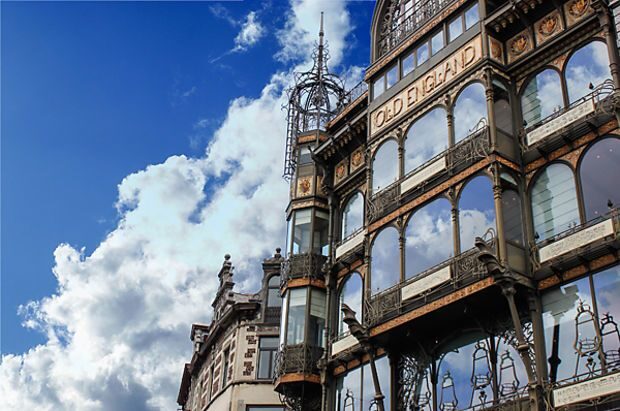
If you’ve ever looked at an old building and wondered why it feels different, Art Nouveau in Brussels gives you a fast answer. The style isn’t just fancy decoration. It’s a system. Architects used materials like iron and glass with curves, asymmetry, and a careful sense of craft so the whole building reads like one idea.
This tour is smart because it teaches you how to watch. You don’t just stand and stare at pretty fronts. You learn what to look for: the way structure and ornament talk to each other, and why certain buildings became templates for others. It also helps that the route focuses on a tight geography. You’re comparing works side by side, not jumping across town.
You can also read our reviews of more guided tours in Brussels
Starting at the Grand-Place: Finding Your Guide and Getting Oriented
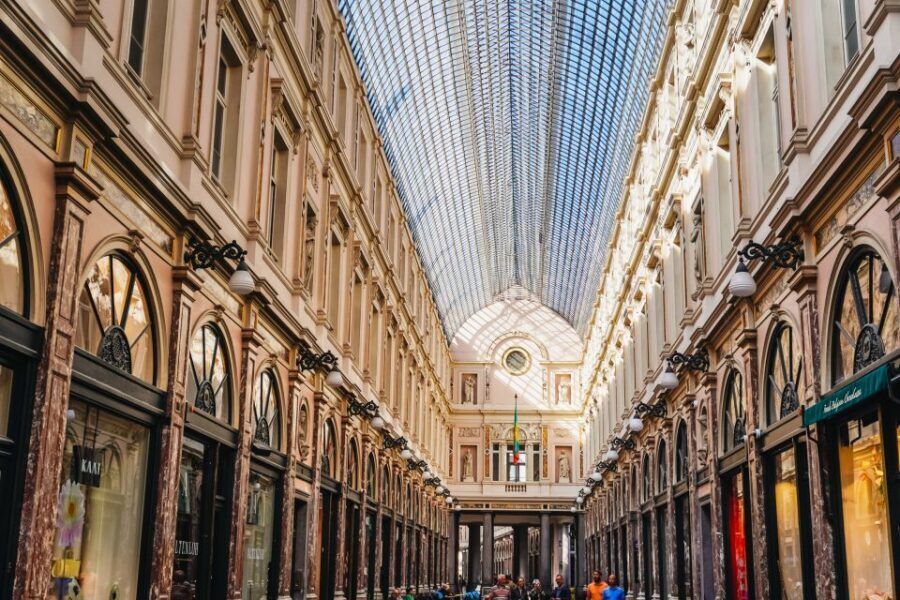
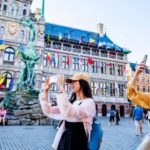
The meeting point is the Grand-Place in Brussels. You’ll find the guide holding a white umbrella. It’s worth arriving a few minutes early, because the whole start feels like a reset for first-time Art Nouveau spotting.
At 10:00, the day kicks off with context and expectations: you’re walking through the architecture of Art Nouveau and specifically the influence of Victor Horta. Even before you leave the center, you’ll understand what makes Horta’s approach distinct and why other architects in Brussels could both share ideas and still build their own variations.
Practical tip: the Grand-Place area can be crowded, so look for the umbrella first, not your phone screen. Once you’re in the group, you’ll be guided into the real work—learning how to see.
Tram to Bailli: The Neighborhood That Teaches Street-Level Comparison
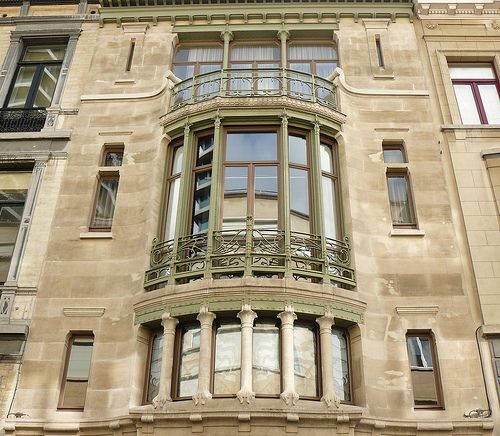
After the initial start, you take a tram to the Bailli district. This is one of those Brussels areas that feels built for Art Nouveau fans. The tour is designed so you move through a concentration of works without it turning into a full-day transit grind.
What matters here is pacing. The tram ride gets you out of the central chaos and into the zone where the style is common enough that you can compare quickly. One façade becomes a reference point for the next. That’s how the lesson sticks.
A heads-up from real-world experience with this kind of route: there can be a lot of walking, and some departures include an uphill element at the start of the day. Comfortable shoes are not optional—they’re how you stay focused on details instead of foot pain.
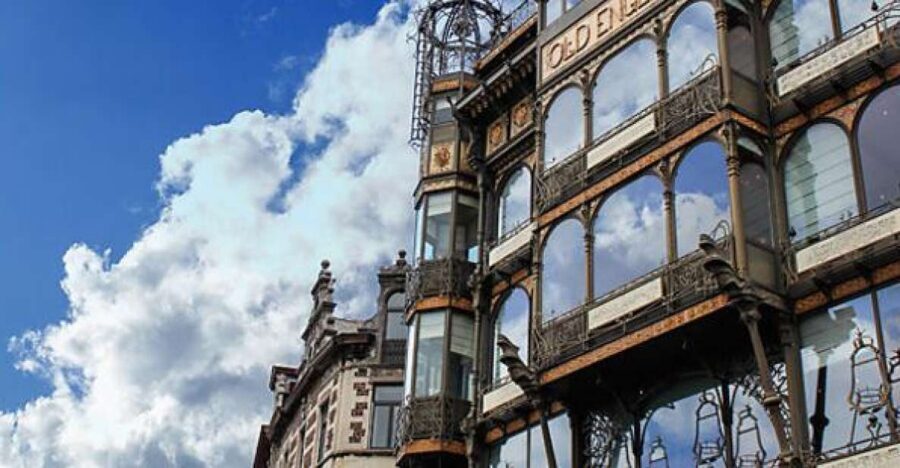
Old England House (Music Instrument Museum): Culture Meets Design
One of the first listed stops is the Old England House, known today as the Music Instrument Museum. Even if you’re not going inside on this tour, it’s a useful way to connect architecture with daily life and public culture.
This stop also sets a tone. Art Nouveau wasn’t only for private wealth. You can see how design language shows up in buildings tied to music, public identity, and the kind of Brussels that wanted to look modern.
When you pass it with your guide, you’ll get the framing: the style isn’t random. It’s part of a moment when technology and taste were colliding in the same place.
Hotel Tassel (Victor Horta, 1893–1894): The Baseline for How to Spot Art Nouveau
Hotel Tassel is one of the big names on the itinerary, built by Victor Horta in 1893–1894. If you only remember one building after the tour, it should probably be this one. It’s a reference point for the style’s signature logic.
On the street, what you’re learning is pattern recognition. Your guide will point out the kinds of details that help you separate Art Nouveau from other eras. The material idea matters too. Art Nouveau’s look comes from more than surface lines. Your guide connects the visual flow to how ironwork, glass choices, and other materials work together.
Because you’re not doing interior access on this tour, the guide’s teaching approach becomes extra important. You’ll rely on explanations plus photos to understand how the outside design connects to the building’s layout and mood.
A few more Brussels tours and experiences worth a look

Van Rysselberghe House (Octave Van Rysselberghe, 1912): Same Era, Different Voice
Next is the Van Rysselberghe House, built in 1912 by Octave Van Rysselberghe. This stop is useful because it shows that Art Nouveau wasn’t just one man’s style.
You’re watching for adaptation. When multiple architects work within the same broad movement, their choices often reveal personality and priorities: what they emphasize, what they simplify, and what they treat as essential. This is where the tour helps you stop thinking of Art Nouveau as a single look and start seeing it as a design language with variations.
Hotel Otlet (Octave Van Rysselberghe and Henry van de Velde, 1894–1898): Collaboration on the Façade
Hotel Otlet, from 1894 to 1898, is credited to Octave Van Rysselberghe and Henry van de Velde. It’s a chance to see how collaboration can shape the result even when you’re only observing the exterior.
Your guide connects the dots between authorship and design choices. This is also where the tour’s explanation of materials really earns its keep. Art Nouveau tends to look complex, but the guide helps you turn that complexity into a set of clues you can read.
Hotel Goblet d’Alviella (1882): Older Roots, Strong Influence
Hotel Goblet d’Alviella dates to 1882, which puts it earlier than some of the other famous names on the route. That timing matters because it helps explain why Brussels became fertile ground for Art Nouveau.
This stop gives you historical contrast without turning the tour into a lecture hall. Instead, you use your eyes. You’ll compare how earlier work points toward later evolution in Brussels.
For me, this is one of the best parts of a guided architecture tour: you’re not just collecting photos. You’re learning how style changes through time.
Hotel Ciamberlani (Paul Hankar, 1897): A Mid-Route Lesson in Form
Hotel Ciamberlani, built by Paul Hankar in 1897, keeps the itinerary moving through a major Art Nouveau voice. Hankar’s work is a key piece of the Brussels story, and your guide will help you connect his approach to what you’ve already spotted.
On a practical level, this stop helps you refine your visual checklist. If you’ve been staring at façades for a while, you can start feeling that everything is just decoration. This is where the guide’s structure helps: you learn to notice what is doing the work, not just what is pretty.
House of Painter René Janssens (1898): Art Nouveau for People Who Make Art
Then you’ll see the house of painter René Janssens, built in 1898. This stop matters because it links Art Nouveau with the lives of artists, not only with architects.
Even from outside, you can feel the intention behind the design when you know the building belonged to someone in the art world. Your guide uses these human connections to explain why the movement caught on: it didn’t sit far away from creativity. It lived close to it.
Architect Armand Van Waesberghe: When Architecture Becomes the Point
The itinerary includes a stop linked to architect Armand Van Waesberghe. This is another way the tour stays grounded in authorship. It’s not only about the style. It’s about who used the style and why.
Your guide will likely emphasize how architects in Brussels treated buildings as statements—technical statements, aesthetic statements, and sometimes social statements too. Some guides bring extra context based on their own research, including connections between Art Nouveau and politics and the social mood of the time.
That kind of angle doesn’t replace the architecture lesson. It makes the lesson stick.
Beukman House (Albert Roosenboom, 1900) and Paul Hankar’s Private Home: The Movement at Home
The Beukman house, built by Albert Roosenboom in 1900, and the private home of architect Paul Hankar are near the end of the housing sequence. These stops are valuable because they shift Art Nouveau from “look at this impressive building” to “this is how people lived.”
You’ll still be viewing from the street. But when the guide explains how materials and form create atmosphere, the exterior starts to read differently. It becomes less like a costume and more like a lived-in environment designed on purpose.
One small reality check: because interior visits aren’t part of the tour, you’ll depend on the guide’s photos and explanations to understand what’s behind the façade.
Ending in Front of Victor Horta Museum: Easy Next Step, Separate Ticket for Entry
The tour ends in front of the Victor Horta Museum. This is a smart finish because you’re already trained to see. Even before you go in, your brain is ready for comparisons between what you learned outdoors and what the museum represents.
Important: museum admission isn’t included. If you want to actually enter and see the interiors connected to Horta, plan tickets separately. One useful tactic is to book entry for right after the tour, because timing is tight once you finish walking.
The Guide Experience: What You Can Count On
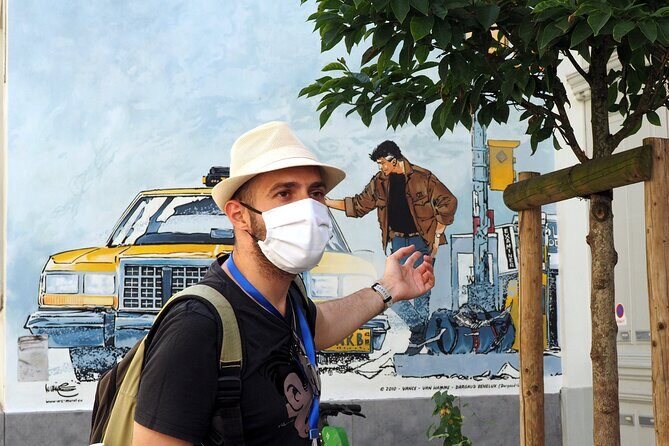
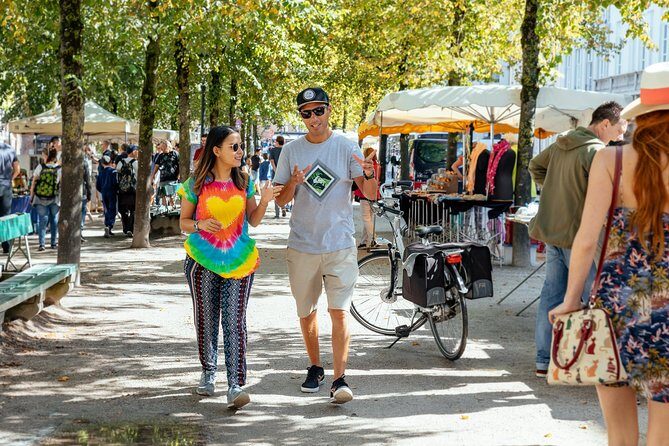
This tour is led by a local Brussels guide. Languages offered are Spanish, English, and French. A guide holding a white umbrella at the Grand-Place keeps things simple and prevents the classic meet-up chaos.
From past experiences shared for this exact itinerary, guides tend to be enthusiastic and well prepared. Some guides also bring extra interpretation beyond the buildings themselves. For example, one guide named Maria has been noted for connecting Art Nouveau with political and social context, and for offering photo postcards or interior images to support what you cannot see in person.
That interior-photo support is a big deal on a street-only architecture tour. Without it, you spend a lot of time guessing. With it, you start noticing patterns that help you understand the overall design concept.
One consideration: if your group is large or the tour runs bilingual, the commentary may be repeated and the tour can feel longer. It’s not a deal-breaker, but it’s good to expect a slower pace if translation happens back and forth.
How Much Is $35 Worth for 3 Hours?
At $35 per person for a 3-hour guided tour, the value comes from three things.
First, you get expert interpretation. You’re not paying for a “walk and point” tour. You’re paying for a guide who teaches how the style works, including why the movement relies on a mix of iron, glass, wood, and stone.
Second, you get a curated set of major sites in one tight loop. The stops are packed with recognizable names: Hotel Tassel, Hotel Otlet, and multiple Hankar and Van Rysselberghe-related works. That’s hard to replicate if you’re DIY planning without spending extra time figuring out where the best cluster is.
Third, the ending location is useful. Finishing in front of the Victor Horta Museum puts you in the right mood and the right part of the day for continuing.
If your main goal is to walk fast between a few iconic exteriors, you might not need a guide. But if you want to leave with the ability to spot Art Nouveau features on your own, the $35 format usually makes sense.
Who Should Book This Tour (and Who Might Skip It)
You should book if:
- You’re in Brussels for a short time and want a high-yield architecture overview in one morning.
- You care about design details and want a method to spot Art Nouveau features.
- You like learning how materials and social context shape what you see on the street.
You might skip or adjust expectations if:
- You strongly want to see interiors of the houses. This tour is mostly about exterior viewing, with photos used to explain what’s inside.
- You prefer museum-style entry included in the price. Here, the finish is by the Victor Horta Museum, but admission is not included.
Should You Book This Art Nouveau Tour?
I’d book it if you want your first Art Nouveau experience to be more than sightseeing. The route is structured, the stops are meaningful, and the guide-focused format helps you leave with real recognition skills, not just a memory of pretty façades. Just plan for the fact that you’ll mostly be looking from the outside, and if you want the Horta Museum interior experience, grab museum tickets separately for after the tour ends.
FAQ
Where does the tour start?
The tour starts at the Grand-Place in Brussels. You’ll find the guide holding a white umbrella.
What time does the tour begin?
The tour starts at 10:00.
How long is the tour?
The duration is 3 hours.
What is the price per person?
The price is $35 per person.
What languages is the guide available in?
The guide offers live commentary in Spanish, English, and French.
What’s included in the price?
The guided tour is included.
Is Victor Horta Museum entry included?
No. Museum admission is not included, and the tour ends in front of the Victor Horta Museum.
Is transportation included?
Transportation by train is not included. The itinerary includes a tram ride as part of the tour route.
What should I bring?
Wear comfortable shoes, since you’ll be walking as part of the experience.