REVIEW · BRUSSELS
Brussels Politics Tour: Private & Personalized with a Local Guide
Book on Viator →Operated by City Unscripted · Bookable on Viator
Politics can feel far away. Not in Brussels.
This private 3-hour walk connects the EU machine to real street life, from how the Parliament works to how neighborhoods shape identity. I like that it is private and personalized, so you can steer the conversation, ask tough questions, and get answers in plain language. I also like the mix of stops: EU institutions, calm green space, and Matongé’s everyday culture, not just the same central sights everyone grabs photos of.
One heads-up: it is primarily on foot, so if you want long rides between far-apart places, you may need to add public transport and budget for a bit of transit time. Also, food, drinks, and attraction tickets are not included, so plan to snack on your own if you work up an appetite while you’re walking and talking.
City Unscripted seems to run the tour with guides who can handle both big-picture politics and human details. In the firsthand experiences shared by guests, guides like Laurence, Andrea, and Michael stood out for taking questions seriously and keeping the tone thoughtful, even when topics got technical like EU policy structures and energy issues.
In This Review
- Quick hits before you book
- Politics in Brussels: why this tour feels different
- Price and logistics: what you really pay for at $137.24
- Where you meet in Brussels and how the tour starts
- Stop 1: Brussels through the lens of EU power
- Stop 2: The European Parliament explained in plain terms
- Stop 3: A peaceful park between EU buildings
- Stop 4: A 19th-century park with arches and gardens
- Stop 5: Matongé—Congolese life, murals, and modern Brussels
- Stop 6: Atomium and Mini-Europe as a Europe-made-visible story
- How the guide style shapes the whole experience
- What to expect from the pace and time (and what might slow you down)
- What’s included, and what you’ll handle yourself
- Who should book this Brussels politics tour
- Should you book it?
- FAQ
- How long is the Brussels Politics Tour?
- Is this tour private?
- What language is the tour offered in?
- Where does the tour start and end?
- Is pickup included?
- Is there a vehicle for the tour?
- What stops are included in the tour?
- What’s included in the price?
- What is not included?
- Is there a cancellation option?
Quick hits before you book
- Private, not crowded: It’s only your group, with real time for questions
- EU explained like a human process: how the Parliament works, who it represents, and what it changes
- Parks with political context: quiet spaces placed between EU buildings, plus a 19th-century park story
- Matongé in the real world: shops, murals, cafés, and the layered history behind the neighborhood
- Atomium + Mini-Europe: a compact visit that frames Europe’s past and future ideas
- Personal tailoring: a pre-tour questionnaire and direct messages to match your interests
Politics in Brussels: why this tour feels different
Brussels has two faces that you can actually feel as you walk. One is the day-to-day city of people, streets, and local neighborhoods. The other is Europe at full scale—buildings, institutions, procedures, and the constant background hum of decision-making.
What makes this tour worth your time is that it treats politics as something you can see and ask about, not just something you read about later. Your local host guides you through layers of meaning: how EU presence can shape where people live, how neighborhoods evolve, and how national pride and European unity show up in public spaces.
You also get the big advantage of a private format. You are not stuck with a script that covers 12 topics and moves on. If you care about EU energy policy, administrative structures, or how representation works, the conversation has room to get specific. That kind of back-and-forth is where the tour starts to feel like a useful class with good street-level examples.
And yes, you still see iconic Brussels. Atomium is on the list. But the tour earns its keep by connecting that symbol of progress to what Brussels looks like when politics becomes normal life.
You can also read our reviews of more guided tours in Brussels
Price and logistics: what you really pay for at $137.24
At $137.24 per person for about 3 hours, you are paying mainly for three things:
1) A private local guide who adjusts the route to your interests through a questionnaire.
2) Time for questions—not just a lecture.
3) A curated walking route that links EU themes to neighborhoods and public spaces you might miss on your own.
Because it is a walking experience, you are also not paying for a private vehicle. There may be short transfers using public transport or local taxis if distances require it, but any transport cost is something you handle on the day.
A realistic way to think about value: if you would otherwise pay for a guide because you want context (not just photos), this fits that bill. If you are the type who enjoys wandering without structure, you might feel the time window is tight. Three hours goes fast when you stop often to talk.
So the best match is clear: you want Brussels to make sense. You want the EU explained with real local examples. And you want a guide who will talk to you like an adult and answer questions you actually care about.
Where you meet in Brussels and how the tour starts
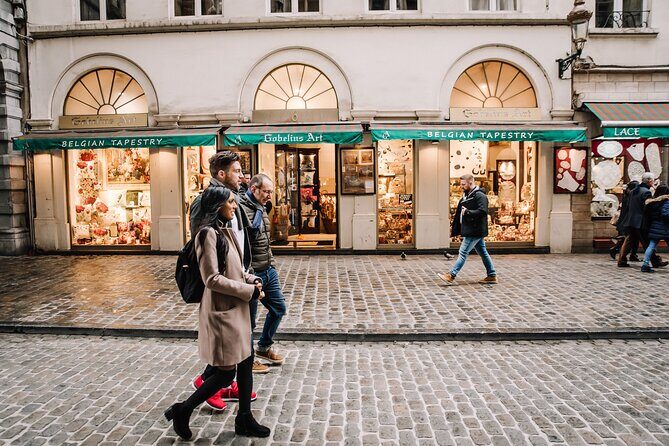
The default meeting point is Starbucks Grand Place 4, 1000 Bruxelles, Belgium. The tour ends back at the same meeting point.
You may also have a pickup option tied to your selected hotel. Since it’s a walking tour, pickup matters for comfort and ease rather than speed. If you choose a central landmark meeting point instead, you get an easier rendezvous at the heart of things.
Either way, you should expect a meet-up, then a steady walk with multiple stops. You will be near public transportation, which helps if your guide suggests a short transit hop.
Practical tip: wear shoes you trust. The tour is built around walking plus conversation stops, so you want your feet to stay happy while your brain gets the political version of Brussels.
Stop 1: Brussels through the lens of EU power
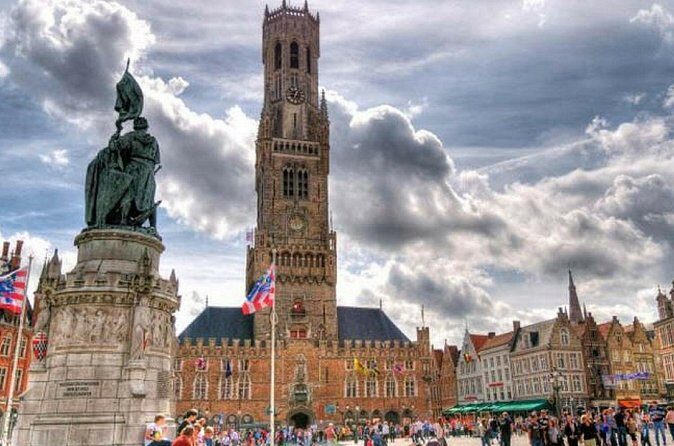
The opening part of the tour is about political and cultural layers—the core idea that Brussels is where European power and local identity intersect daily.
This is where you start learning how the EU presence can affect neighborhoods, architecture, and everyday life. You’ll get a sense of how institutional gravity changes a city, not by turning it into a museum, but by reshaping where you see investment, where people work, and how the city’s story gets told.
Why this stop matters: it gives you a framework. After this, the later sites are easier to understand because you know what questions to look for. Instead of seeing buildings and thinking, Okay, that’s government, you begin asking, Who uses these spaces? What does it mean to live next to them? How does local culture push back, adapt, or blend?
If you like context that helps you understand what you’re seeing now, you’ll appreciate how this section sets up the rest of the walk.
Stop 2: The European Parliament explained in plain terms
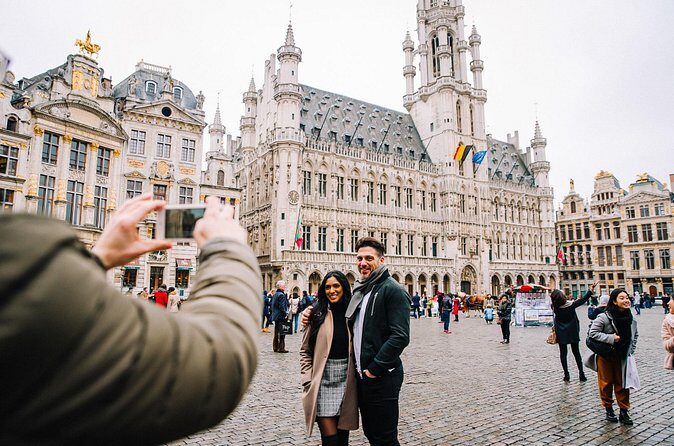
Then you step into the heart of European politics—your host explains how the Parliament functions, who it represents, and why it shapes EU policy and also the lives of Brussels residents.
This is not about memorizing acronyms for later trivia night. The value here is the human process behind decision-making: how representation is described, how policy influence works, and what it means when systems are larger than any one country.
Also, this is a strong stop for question time. Guests who wanted in-depth discussion—like EU administrative structures and policy topics tied to current events—found plenty of room to ask directly. That is a big deal if you are the type who hates surface-level answers.
Possible drawback: if you hoped for a fully scripted political “tour bus in walking form,” keep expectations realistic. This is still a walking experience, so you get explanations and context at key points, not a long, step-by-step access program inside every institution.
You can also read our reviews of more private tours in Brussels

Stop 3: A peaceful park between EU buildings
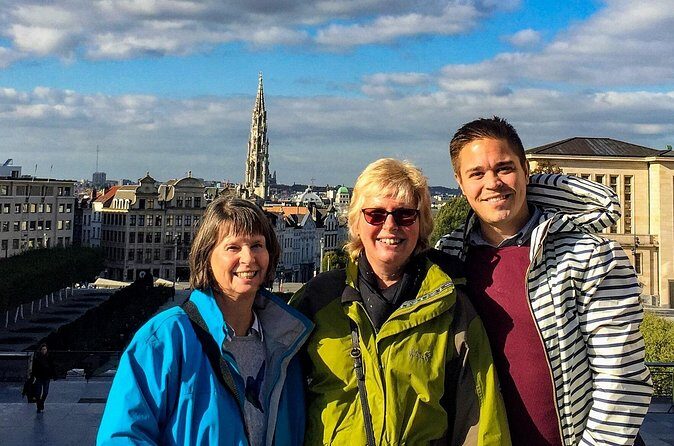
At some point in the middle, you leave the loudest political energy and hit a peaceful urban park tucked between EU buildings.
The point is practical and emotional: you see how Brussels holds calm space right next to high-stakes institutions. Your guide uses this contrast to show a local reality—people living close to the world’s most influential administrative centers, while still needing greenery, rest, and everyday routines.
This stop is also useful if you get mentally overloaded by politics. A park break resets your attention. You walk, you talk, you look around. Then your guide ties it back to the city’s living balance, not just its official face.
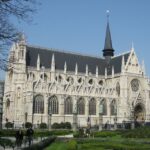
Stop 4: A 19th-century park with arches and gardens
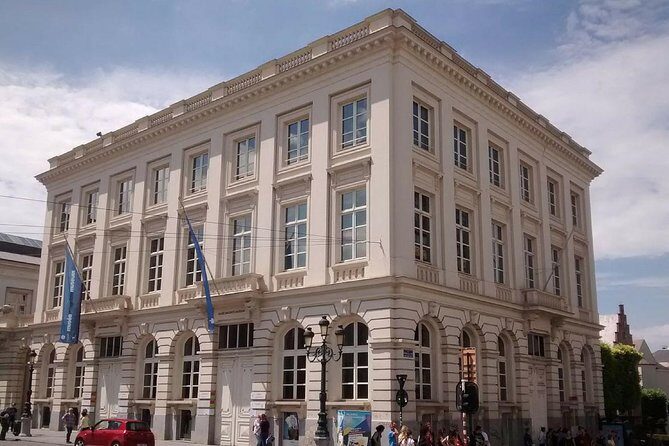
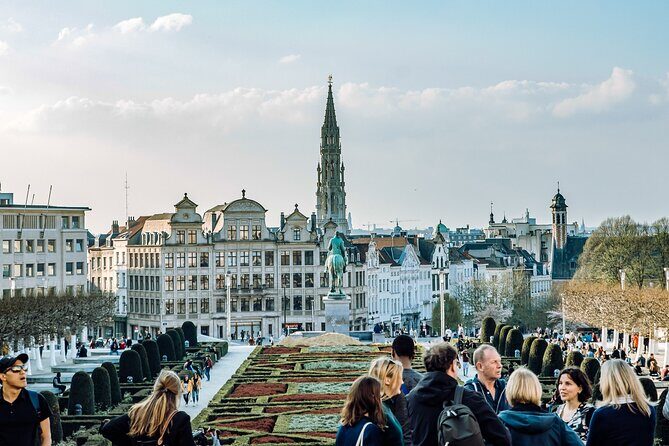
Next comes a 19th-century park with majestic arches and manicured gardens. Your host connects its history to national pride and to ideals of European unity and integration that show up in Brussels today.
This is the “history you can see” part of the tour. You do not need to read a wall plaque to understand why it’s included. When you connect the older symbolism to what Brussels became, it becomes easier to spot continuity—how ideas of identity shift from national frames to European ones, without completely erasing local roots.
If you enjoy architecture and public space stories, you’ll likely find this stop satisfying. If your preference is mostly policy talk, you can still use it as a palate cleanser before you head into neighborhoods with sharper cultural edges.
Stop 5: Matongé—Congolese life, murals, and modern Brussels
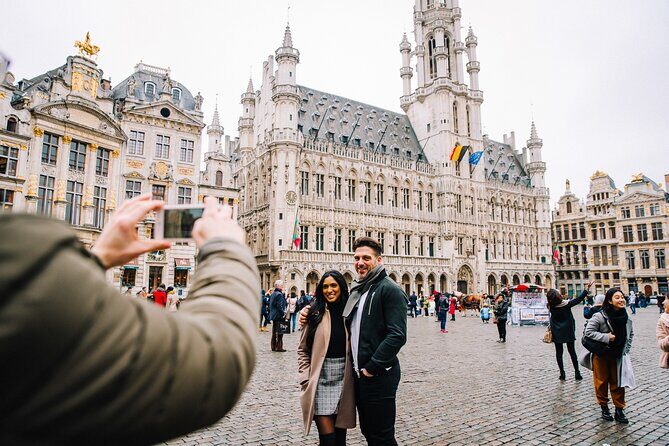
Then you shift into a Congolese neighborhood called Matongé, known for color, energy, and history.
This part of the tour matters because it anchors the political story in real community life. Your host shows you local shops, murals, and cafés, and explains how Matongé reflects both the colonial legacy and the multicultural reality of modern Brussels.
Why I think this stop is one of the best reasons to choose this tour: it challenges the common travel mistake of treating politics as only EU buildings and policy meetings. Here, you see how history, power, and migration shape street-level culture—businesses, artwork, and daily social life.
You also get an easy way to explore without feeling lost. A neighborhood visit with a local guide can help you notice details that a quick walk-by would miss.
A consideration: this stop can be emotionally heavier than a purely sightseeing route, because it includes colonial legacy context. If you want neutral, light content the whole time, you might find this portion more serious than expected. If you’re open to understanding how politics shows up in culture, it’s exactly the point.
Stop 6: Atomium and Mini-Europe as a Europe-made-visible story
To close, you see Atomium, Brussels’ most iconic structure, and you also visit Mini-Europe nearby.
This is where Brussels becomes a storyteller for the continent. Your guide explains how these attractions reflect Europe’s past, its unity, and the vision of progress that continues to shape the continent.
Even if you have seen Atomium photos before, this stop works better when you’ve had the earlier political framing. You can spot the theme: Europe as a project, Europe as an image, Europe as something people build and argue over.
One practical note: tickets and entry costs are not included, so if you want to spend time inside Mini-Europe or want a full visit at Atomium, you’ll need to pay those separately.
How the guide style shapes the whole experience
The biggest ingredient here is the guide’s ability to translate complex topics into conversation you can actually follow while walking.
In the examples shared by past guests, guides like Laurence, Andrea, and Michael were praised for breadth and flexibility—especially in how they handled in-depth questions. One guest highlighted the ability to sit and ask deep policy questions, even touching energy issues tied to the war with Russia–Ukraine. Another described the guide as articulate and personable, combining city, country, and contemporary issues while moving through town. There was also praise for flexibility and engaging, thoughtful perspectives across a wide range of topics.
That matters because EU politics can be a maze. A good host doesn’t just recite facts. They help you understand what to ask next.
What to expect from the pace and time (and what might slow you down)
This is a 3-hour walking tour, private for your party. That duration is long enough to cover several distinct themes, but short enough that you will feel the rhythm is designed, not random.
Here’s what can slow things down in a good way:
- your guide taking time for questions
- stop-and-look moments for architecture and neighborhood details
- transitions between sites, especially if your guide suggests a public transport hop
If you are used to “see it, snap it, move on” travel, you may need to adjust expectations. This tour is designed for thinking, not rushing.
What’s included, and what you’ll handle yourself
Included:
- Private and personalized walking experience with insider tips
- Flexible start times (you choose your preferred time when booking)
- Pre-tour questionnaire to tailor the experience
- Direct communication with your host for itinerary planning and local recommendations
- Mobile ticket
Not included:
- Food and drinks
- Attraction tickets
- Transportation (though public transport or taxis may be used for longer distances, with costs discussed for the day)
- Gratuities (optional)
Simple planning advice: bring water, and budget for at least a snack break. If you want to enter Mini-Europe or spend time inside Atomium-related areas, plan for ticket purchases separately.
Who should book this Brussels politics tour
This is a strong match if:
- you want a private guide and real time to ask questions
- you care about how the EU works and how it affects life in Brussels
- you like understanding neighborhoods beyond “what to photograph”
- you want a walk that blends institutions, parks, and Matongé culture
- you want a first-time Brussels tour that gives you a framework for later exploring
It might not be your best fit if:
- you hate walking and want long vehicle time between stops
- you mainly want classic attractions with minimal discussion
- you are not interested in politics, policy, or cultural context
Should you book it?
I’d book this tour if Brussels feels like a blur of EU symbolism and you want it translated into something human. The private Q&A style is the standout value, and the route connects EU decision-making to parks, public space, and Matongé’s cultural reality.
Just go in with two practical expectations: it’s mostly walking, and the biggest attractions may require tickets you pay separately. If you can handle that, you’ll leave with a clearer sense of how European power sits inside real neighborhoods—and why that matters.
If you want Brussels with context, and not just sightseeing, this is one of the most useful ways to spend a focused half day.
FAQ
How long is the Brussels Politics Tour?
It runs for about 3 hours.
Is this tour private?
Yes. It’s a private tour/activity, and only your group participates.
What language is the tour offered in?
The tour is offered in English.
Where does the tour start and end?
It starts at Starbucks Grand Place 4, 1000 Bruxelles, Belgium, and ends back at the meeting point.
Is pickup included?
Pickup is offered. If you select the option for hotel pickup, your host will meet you at your selected hotel, then the tour begins on foot. If your hotel isn’t on the list, you can choose the central landmark meeting point option.
Is there a vehicle for the tour?
No. This is primarily a walking experience, and no private vehicle is included. Public transport may be used for longer distances at an additional cost.
What stops are included in the tour?
You visit sites tied to Brussels’ political culture and the EU, including the European Parliament area, a peaceful urban park, a 19th-century park with arches and gardens, Matongé, and you also see Atomium and Mini-Europe.
What’s included in the price?
The tour includes a private, personalized walking experience with insider tips, flexible start times, a pre-tour questionnaire, and direct communication with your host. A mobile ticket is also provided.
What is not included?
Food, drinks, attraction tickets, transportation, and gratuities are not included.
Is there a cancellation option?
Yes. Free cancellation is available up to 24 hours in advance for a full refund.