REVIEW · BRUSSELS
Brussels: Private Historical Highlights Walking Tour
Book on GetYourGuide →Operated by Legends Experiences · Bookable on GetYourGuide
Brussels can feel overwhelming fast. This private historical highlights walk makes it manageable and fun. In about 150 minutes, you move between the city’s big-name sights and a few quieter corners, guided by someone who connects the buildings to the people and the drama behind them.
I especially love the Grand Place stop: the facades are jaw-dropping up close, and the guide helps you see patterns instead of just admiring pretty stone. I also like how the tour uses Manneken Pis as a story engine, turning a tiny statue into a way to understand Brussels humor, tradition, and identity. The guide’s delivery matters too, and past groups have highlighted guides like Dan, Daniel, and Sebastien for explaining the architecture clearly and keeping things entertaining even when the weather turns.
One thing to plan for: it’s rain or shine, and food or drinks aren’t included. If you’re the type who needs a snack break, bring your own plans and comfortable shoes so you don’t get cranky halfway through.
In This Review
- Key highlights you’ll feel right away
- Starting at Grand Place: the square that sets the tone
- Manneken Pis: a small statue with a big backstory
- Saint Nicholas Church and the change of pace into daily life
- La Monnaie De Munt: opera grandeur, city energy, and context
- Saint-Hubert Royal Galleries: architecture you can walk through
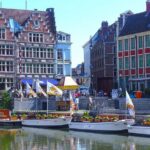
- Saint-Géry Island: where Brussels gets more human
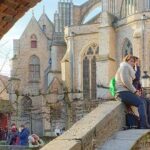
- Cathedral of St. Michael and St. Gudula: Brussels with a spine
- Brussels Park and Royal Square: where the route breathes
- Ending at Mont des Arts: the finish line with a view
- Pricing: $206 for up to 2, when it’s good value
- How to make the most of 150 minutes
- Who this tour suits best
- Should you book this Brussels historical highlights walking tour?
- FAQ
- FAQ
- How long is the Brussels private historical highlights walking tour?
- Where does the tour start?
- Where does the tour end?
- How much does the tour cost?
- Is this a private tour?
- What languages are the guides available in?
- Is the tour wheelchair accessible?
- Does the tour run in rain?
- Is food or drinks included?
- What should I bring?
- Is there free cancellation?
Key highlights you’ll feel right away
- Private and customizable route so your guide can shape the pacing and focus
- Grand Place from the city hall side for the kind of views you remember
- Manneken Pis explained through tradition, not just a quick photo stop
- Royal Galleries and La Monnaie for the shift between glamour and everyday city life
- Cathedral and Brussels Park to balance ornate detail with breathing room
- Finish at Mont des Arts so the tour ends with a strong visual payoff
Starting at Grand Place: the square that sets the tone
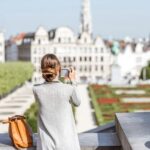
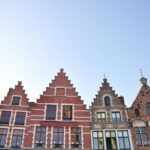
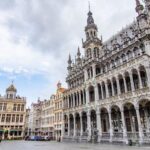
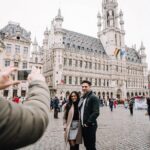
Your tour begins at Grand Place 8, right in front of the city hall on the main square. Look for the red umbrella—it’s an easy landmark and keeps the start simple. This is one of those locations where even if you’ve seen pictures, being there in person still hits. The buildings feel “designed to be stared at,” and the guide’s job is to show you what to notice.
Grand Place is more than a pretty backdrop. It’s a stage—politics, wealth, religion, guild pride, and civic power all show up in the stonework. The stop is about 15 minutes, which is just long enough to get oriented and learn how the facades tell their story.
Practical tip: if you want the best angles for photos, pay attention to where you stand during the guide’s explanation. Moving even a few steps can change how the details line up.
You can also read our reviews of more walking tours in Brussels

Manneken Pis: a small statue with a big backstory
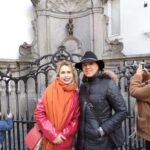
Next comes Manneken Pis for about 10 minutes. Yes, it’s small. That’s kind of the point. The guide uses it as a keyhole into Brussels culture—why this little figure became famous, how tradition works here, and why locals treat it with more affection than you’d expect.
What makes this stop worth your time is not the statue itself. It’s what the guide builds around it: the idea that Brussels likes to wink at seriousness. You’ll probably catch yourself laughing at the way the story is framed, even if you’ve never cared about street statuary before.
One caution: it’s a short stop, so don’t let the first crowd you see decide your whole experience. If the area is busy, wait a few minutes for a better moment to look without constantly shifting around.
Saint Nicholas Church and the change of pace into daily life
From there, you’ll spend about 10 minutes at Saint Nicholas Church. Churches in a place like Brussels aren’t just religious buildings; they’re community anchors. They also act like time capsules for art, craftsmanship, and local history—especially when a guide points out why certain features exist and what they signaled when they were built.
This is a good palate cleanser after the drama of Grand Place. The scale shifts. You start noticing different kinds of detail: not just the grand facades, but the cues that help the neighborhood function across generations.
La Monnaie De Munt: opera grandeur, city energy, and context
The tour then moves to La Monnaie De Munt for roughly 15 minutes. Even if you don’t know opera from pop music, this stop can still work because the guide frames it as a landmark tied to the city’s identity.
La Monnaie is where Brussels shows its more formal side. And it’s also a reminder that big institutions shape street life around them—people move toward them, gather near them, and build routines that last long after the first performance. With a guide, you’ll start seeing the building as part of the city’s rhythm, not an isolated monument.
Saint-Hubert Royal Galleries: architecture you can walk through
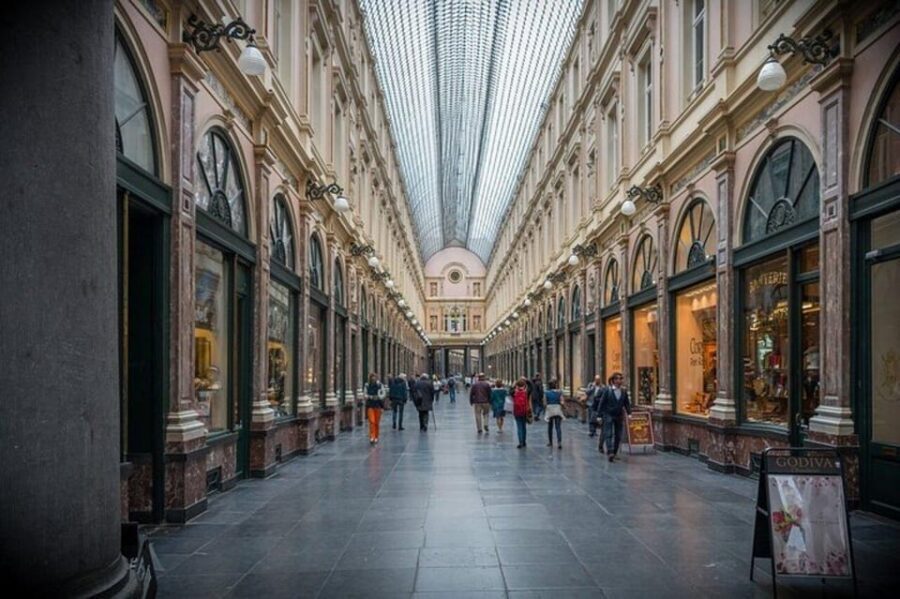
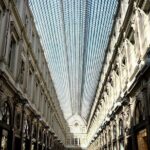
About 10 minutes are set aside for the Saint-Hubert Royal Galleries. This stop is a favorite for a reason: it’s architecture that invites you to slow down. You’re not just standing in front of a building. You’re moving inside the atmosphere—an old-school shopping and social passage with a very particular feel.
The guide’s storytelling here tends to make a difference. If you’ve only ever seen places like this from outside, the interior details can be surprising. You’ll likely understand why the galleries matter to Brussels style—how they connect the city’s wealth and taste to everyday browsing and strolling.
Quick practical note: this is a natural place to catch your breath for a minute, especially if you’re walking in cooler weather.
You can also read our reviews of more private tours in Brussels

Saint-Géry Island: where Brussels gets more human
Next you’ll head to Saint-Géry Island for about 10 minutes. This is where the tour leans into “real city life” instead of only top-tier monuments. The island setting gives it a sense of shape and intimacy—smaller scale, more texture, and a feeling of neighborhoods layered over time.
You’re not meant to turn this into a long detour. You’re meant to notice. The guide helps you connect what you see on the street to how Brussels grew, how people gathered, and why these spots became focal points.
If you like walking tours that don’t treat the city like a museum, this stop tends to be a highlight.
Cathedral of St. Michael and St. Gudula: Brussels with a spine
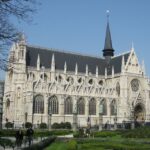
The Cathedral of St. Michael and St. Gudula is next, with about 15 minutes on it. This is a major visual anchor and a strong moment of “wow” for most people. The cathedral’s importance isn’t only in its size—it’s in how it represents continuity.
A good guide will help you see the cathedral as a living marker of time: religion, power, art, and city identity, all packed into one place. Even if you only catch the broad strokes, the difference between this stop and the earlier civic squares is clear. Brussels feels bigger here.
Also, 15 minutes is enough to absorb the exterior and still keep momentum for the rest of the walk.
Brussels Park and Royal Square: where the route breathes
You’ll spend about 15 minutes at Brussels Park, then another 15 minutes at Royal Square. This is a smart design for a 150-minute tour. After the dense set-piece stops, you get space—more walking air, more room for your brain to reset.
In Brussels Park, the guide can point out the way open areas work inside a city that’s famous for compact, detailed architecture. The park gives your eyes a place to rest between ornate stops. It also helps you understand that Brussels isn’t only buildings; it’s people moving between public spaces.
Royal Square is where Brussels again signals its grand civic identity. The guide’s narration here matters because it prevents you from treating the area like a quick photo checkpoint. You’ll connect the setting to what the city valued at different moments in time.
Ending at Mont des Arts: the finish line with a view
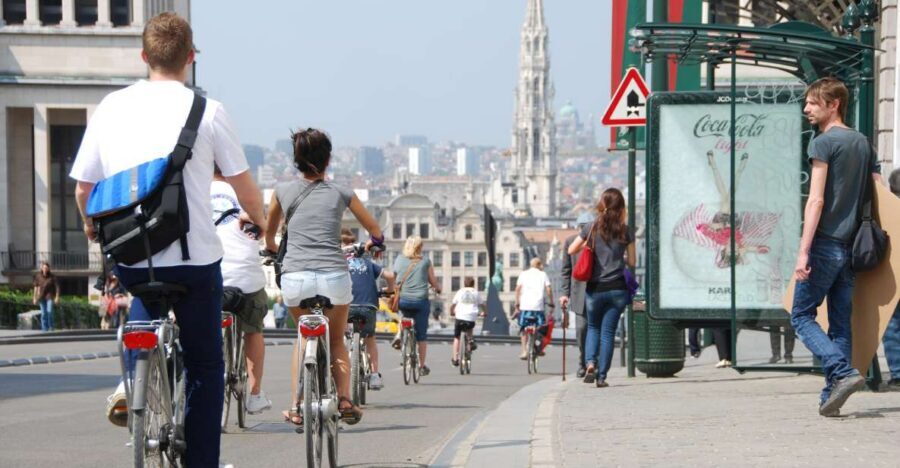
The tour finishes at Mont des Arts. This is a strong ending point because it gives you a natural conclusion after a sequence of landmarks. It’s also one of those areas where the city reveals itself in layers—streets, rooftops, architecture and sightlines all at once.
If you time it right, you can use the end to take a bit longer than planned. Even if your tour wraps up, you’ll likely want to keep looking for a few minutes because you’ll have the context from the guide’s route.
Pricing: $206 for up to 2, when it’s good value
At $206 per group up to 2, this tour is priced for people who want private access without splitting costs with a crowd. That price can be good value if you care about interpretation—especially in a city where architectural detail rewards a trained eye.
Here’s how to think about it:
- If you’re traveling as a duo, you’re paying roughly for two people, not per-person in a large group.
- You’re getting a local private guide and a route that’s private and customizable, which matters because you can ask questions and set your own pace.
- The total time is 150 minutes, which is long enough to cover a full arc of highlights without feeling like a marathon.
Is it worth it if you hate walking? Maybe not. But if you’re the type who likes stories that connect monuments to everyday life, the private format is the point.
How to make the most of 150 minutes
This tour is built around walking between major sights with guided time at each. The itinerary is compact on purpose. You’ll move fairly steadily, and the guide will keep you from getting lost in “photo mode” by steering your attention to what matters.
A few smart ways to get more from it:
- Bring comfortable shoes. Cobblestones and uneven streets aren’t theoretical in Brussels.
- Ask your guide to explain one thing you see, even if you think it’s obvious. You’ll be surprised how much more it means after context.
- If you’re fluent in English, you’re covered. Guides work in English, French, and Dutch, depending on availability.
- Expect weather to be part of the experience. It runs rain or shine, so dress for wet streets and bring a rain layer.
Wheelchair accessible is listed, which is encouraging. Still, you should know this is a walking tour format. If mobility is limited, plan to discuss pacing with the guide before you set off.
Who this tour suits best
This one fits especially well if you:
- Want historical context without turning your day into a lecture
- Like architecture and city layout, but don’t want to do all the research yourself
- Prefer a private guide where questions are easy and the timing can feel flexible
It’s also a solid choice for first-time Brussels visits because you cover a recognizable arc: Grand Place, Manneken Pis, key landmarks, and an ending at Mont des Arts.
If you only want a quick checklist of famous spots, you might find the guide-driven format too structured. But if you want “meaning with your photos,” it’s a strong fit.
Should you book this Brussels historical highlights walking tour?
I’d book it if you want Brussels to make sense fast. The route hits the big names, but what you’re really paying for is the guided way of seeing them—especially the way the guide ties Grand Place and Manneken Pis to stories you can carry around the city afterward. The private format is the best part if you’re traveling as two or you just don’t want to share attention with a group.
Hold off if you’re very sensitive to weather or you hate walking without guaranteed breaks. Food and drinks aren’t included, so plan a snack before or after. Also, keep your expectations realistic: it’s 150 minutes, so it’s a highlights arc, not every street in Brussels.
FAQ
FAQ
How long is the Brussels private historical highlights walking tour?
It lasts 150 minutes.
Where does the tour start?
The meeting point is in front of the city hall on Grand Place, Brussels (Grand Place 8). Look out for the red umbrella.
Where does the tour end?
It finishes at Mont des Arts.
How much does the tour cost?
The price is $206 per group for up to 2 people.
Is this a private tour?
Yes. It’s a private group walking tour.
What languages are the guides available in?
The live tour guide offers English, French, and Dutch.
Is the tour wheelchair accessible?
Yes, the tour is listed as wheelchair accessible.
Does the tour run in rain?
Yes, the tour takes place rain or shine.
Is food or drinks included?
No. Food and drinks are not included.
What should I bring?
Bring comfortable shoes for walking.
Is there free cancellation?
Yes. You can cancel up to 24 hours in advance for a full refund.