REVIEW · BRUSSELS
Brussels: Walking Tour from Central Station to Manneken Pis
Book on GetYourGuide →Operated by Guide-A-Ride · Bookable on GetYourGuide
Brussels can feel like a mix-and-match playlist, and this short walking tour pulls the best tracks together fast. You get the Atomium and the instantly recognizable Manneken Pis in the same outing, plus expert context for what you’re actually looking at. It’s a smart way to build a mental map of the city without spending a full day commuting between sights.
I particularly like how the tour frames landmarks with story, not just photos: the Atomium’s Expo 58 meaning, Manneken Pis as a long-running symbol, and the way the medieval and modern parts of Brussels talk to each other. I also love the focus on the Grand Place and the view points around the Palace of Justice, because those stops help you understand why Brussels looks the way it does.
One thing to consider: the price is $388 per group up to 20, so your per-person value depends on group size. Also, entrance fees aren’t included, so if you plan to go inside any buildings you’ll want to budget a little extra.
In This Review
- Key things to watch for on this Brussels route
- Starting at Brussels Central Station: the easiest first step
- Atomium and Expo 58: how modern Brussels got its icon
- Manneken Pis at 55 centimeters: why the small one matters
- Grand Place: Gothic drama and gold-leaf craft
- Palace of Justice and European Parliament buildings: Brussels as a power city
- The 150-minute timeline: what you’ll actually fit in
- Price and group size: is $388 a fair deal?
- What’s included: guide talk plus real food and drink leads
- Entrance fees: plan your add-ons (or skip them)
- Who this Brussels walking tour is best for
- Should you book this tour?
- FAQ
- Where is the meeting point for the tour?
- How long is the tour?
- Is this tour private?
- What is the price?
- What languages is the guide available in?
- What’s included in the tour price?
- Are entrance fees included?
- What sights will I see?
- Is there free cancellation?
- Can I reserve without paying right away?
Key things to watch for on this Brussels route
- Atomium’s Expo 58 purpose: you’ll learn why this modern icon was built in the first place
- Manneken Pis at just 55 centimeters: small statue, big cultural impact
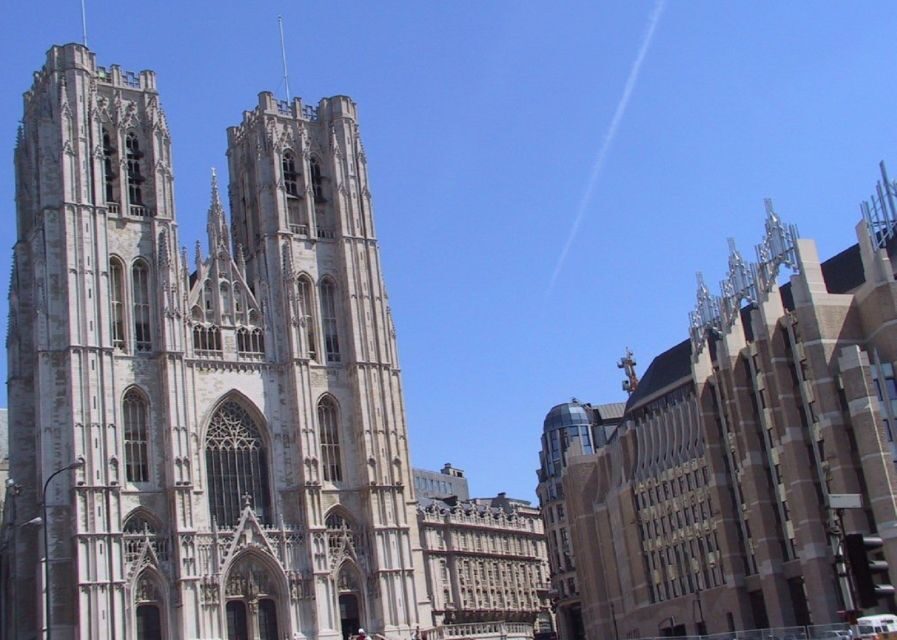
- Grand Place details: Gothic Town Hall and gold-leaf guild-house facades
- Palace of Justice from the outside: a proud, city-overlooking landmark
- European Parliament buildings: Commission and Council-area architecture and roles
- Question time with a live guide: the standout praise here is how thoroughly guides answer
Starting at Brussels Central Station: the easiest first step
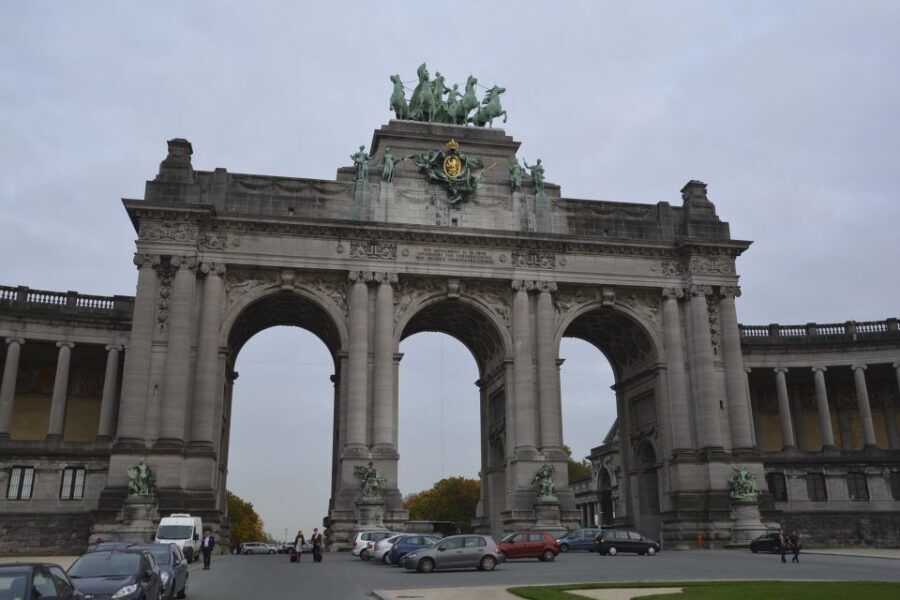
You meet at Brussels Central Station, at Carrefour de l’Europe, in front of the Hilton Hotel entrance. That’s a practical spot for first-timers: you’re starting at the city’s main hub, with lots of people around and clear signage.
This matters more than it sounds. In a place like Brussels, where neighborhoods can feel like different cities, a good starting point helps you stop guessing. You’ll also get your bearing early, which makes the rest of the walk feel less like a checklist and more like a route you can repeat on your own later.
You can also read our reviews of more walking tours in Brussels

Atomium and Expo 58: how modern Brussels got its icon
The Atomium is one of those structures you can spot from across a neighborhood in your mind, even if you’ve never been there. It’s famous, but what makes it more than a photo stop is the story behind it: it was built for the Universal Exhibition, Expo 58, as a symbol of modernity.
So when you see the Atomium on this tour, you’re not just looking at a futuristic sculpture. You’re seeing a deliberate “we’re future-ready” statement from the mid-20th century. That context helps you notice a theme in Brussels: old-world shapes and modern political shapes share the same streets. It’s why the city can feel both historic and very current.
Manneken Pis at 55 centimeters: why the small one matters
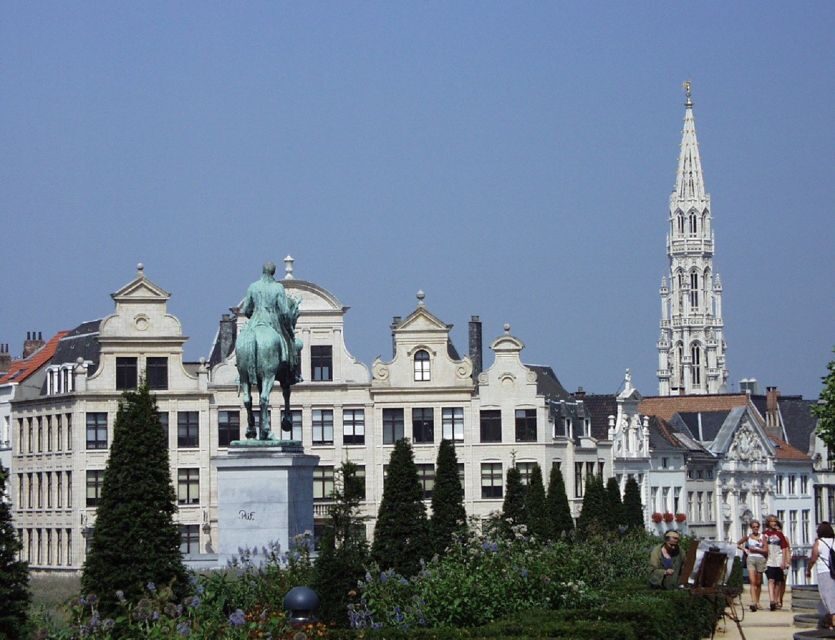
Next comes Manneken Pis, only 55 centimeters tall—but absolutely treated like a historical figure in local culture. The scale is part of the joke, sure. But the size also explains the magic: you don’t need a huge detour or a whole museum day to feel the city’s personality.
When a guide gives you context here, the statue becomes more than a landmark you pass. You start to understand why people react the way they do when they find it, and why it’s still woven into Brussels identity. It’s one of those stops that’s short in time but long in meaning.
I also like that the tour includes this in a walking-friendly route. It keeps your momentum. You don’t end up staring at a single monument for too long, and you still get to the city’s bigger “wow” moments soon after.
Grand Place: Gothic drama and gold-leaf craft
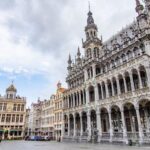
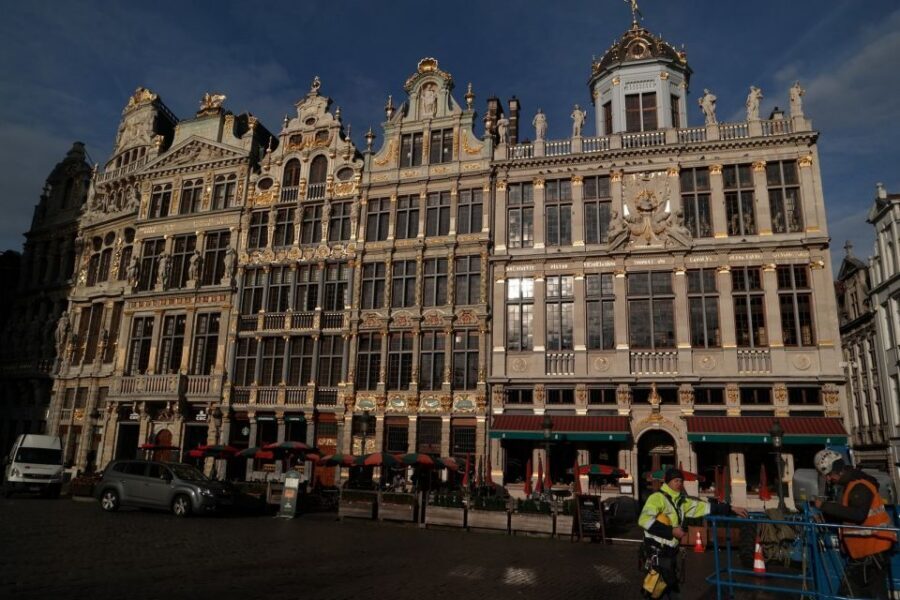
If you want one place in Brussels that looks like it was designed for a postcard, it’s the Grand Place. The tour highlights it as Belgium’s most beautiful square, and the reasons are right there in the details: the Gothic Town Hall and guild-house facades decorated with gold leaf.
Here’s what I’d focus on during your time there: step back and look at the whole composition first, then move closer to see how ornament works across the buildings. Guild architecture is often about status, competition, and pride. In other cities, you might read that story in a museum. At Grand Place, you can read it with your eyes.
This is also the stop where the tour’s “guided context” payoff is easiest. Without a bit of explanation, you’ll still enjoy the square. With a guide, you notice why the building shapes and decoration choices matter.
Palace of Justice and European Parliament buildings: Brussels as a power city
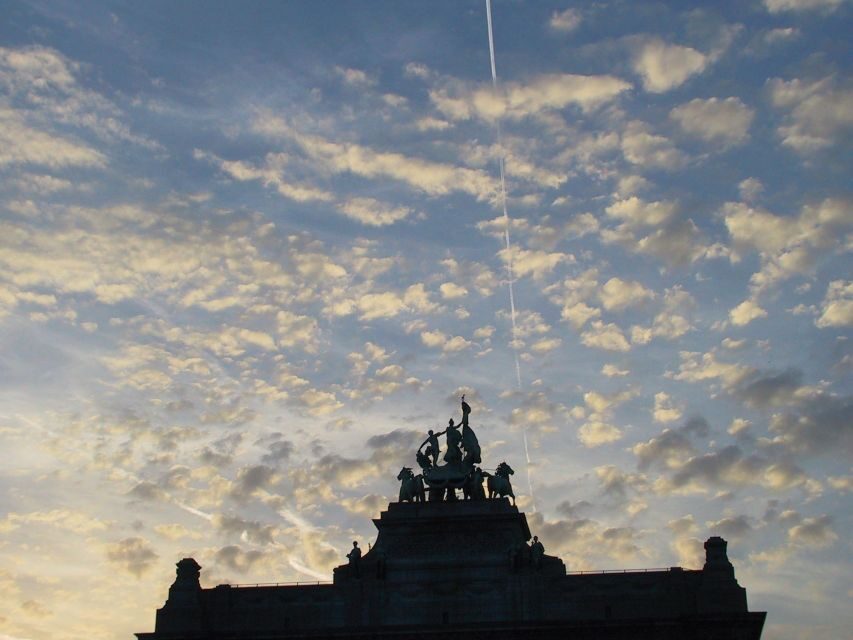
After the medieval centerpiece, the tour shifts into Brussels’ modern identity—the Palace of Justice and the buildings tied to European Parliament activities, including the Commission and Council areas.
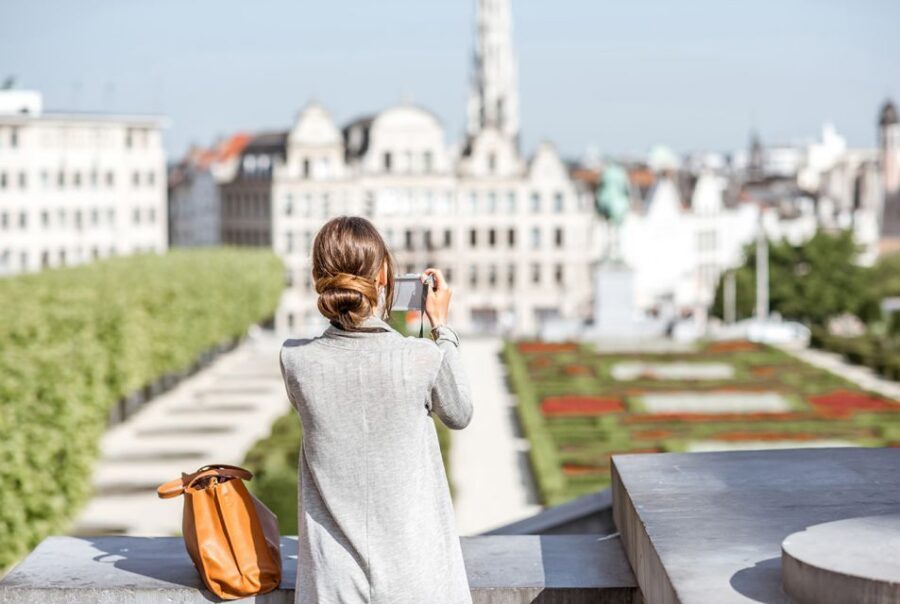
From the outside, the Palace of Justice is all about presence. It overlooks the city with a serious kind of pride. That exterior perspective is useful, because it shows you how Brussels arranges authority into the urban view: government and law aren’t tucked away. They’re part of the skyline conversation.
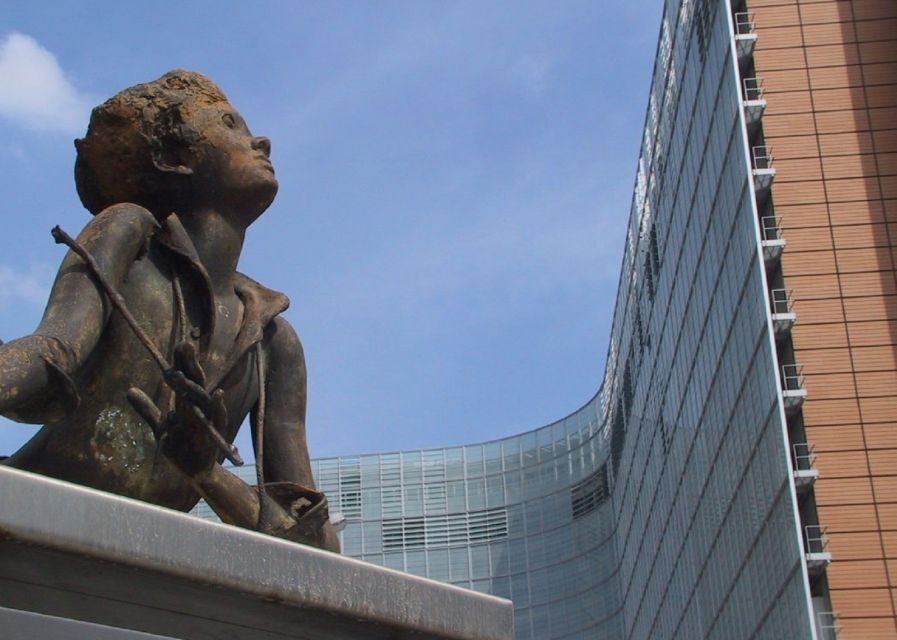
Then come the European institutions. You’ll learn about the buildings of the European Parliament—Commission and Council. Even if you’re not there for politics, this helps you understand why Brussels feels like it’s simultaneously local and international. The architecture isn’t just backdrop; it’s part of the city’s function and identity.




The 150-minute timeline: what you’ll actually fit in
This tour runs about 150 minutes. That’s long enough to move beyond “quick photo stops,” but short enough to keep the day flexible.
Here’s how to think about it: you’re doing a first-pass walk through big anchors—Atomium, Manneken Pis, Grand Place, and the Parliament/justice-area sights—so you can later decide what deserves a second visit. If you try to cover these landmarks independently on your own, you’d likely waste time figuring out routes and meanings. A guide compresses both: the practical direction and the story thread.
Also, because it’s a private group, you’re less likely to feel rushed through moments that need a little extra attention. In particular, past groups gave strong praise for guides who take time and answer questions thoroughly.
Price and group size: is $388 a fair deal?
The price is $388 per group (up to 20) for a 150-minute guided outing. That pricing model changes the math depending on who’s in your group.
- If you can fill a group with friends or a small club, it can work out well because you’re paying for the guide experience rather than per person.
- If you’re just two people, it’s likely pricier than a standard per-person city tour, because the cost doesn’t scale down automatically.
So my practical advice is simple: treat this as “private experience value,” not “budget walking tour value.” If you like the idea of a live guide, a tighter route, and food-and-drink pointers tailored to your interests, it can be a good fit.
What’s included: guide talk plus real food and drink leads
You get a guided tour, plus lots of recommendations—chocolate, waffles, beer, restaurants, bars, and museums. That matters because Brussels is stuffed with choices. A guide’s suggestions can save you from the classic problem: walking around hungry, staring at menus, and picking the wrong place just because it’s easiest.
I’d use the recommendations actively. Ask your guide what to try first, what to skip if you’re short on time, and where you’d go for a relaxed bite versus a sit-down meal. One reason this tour is getting good marks is that the guide experience isn’t treated like a script. People describe guides as engaged and willing to go deep on questions.
One past group even noted being met by Roger, who brought an art-focused angle. That kind of detail is a good sign: you’re more likely to get explanations that match how you see the city.
Entrance fees: plan your add-ons (or skip them)
Entrance fees aren’t included. That’s pretty normal for walking tours, but it’s worth planning for.
If you intend to go inside any sights along the route, you’ll need to pay those costs separately. If your priority is viewing and understanding from the outside—especially at Grand Place, the Palace of Justice area, and the Parliament buildings—you can keep spending controlled and still get the main experience.
Who this Brussels walking tour is best for
This one makes the most sense if you:
- want a time-efficient Brussels overview with big landmarks grouped together
- like cities explained through themes (modernity vs. medieval core, local icons vs. institutions)
- prefer a live guide who answers questions and takes time with your group
- travel with up to 20 people and want a private format
It’s also a decent choice if you’re planning a short trip and still want the “wow” stops—Atomium and Grand Place—plus a cultural signature like Manneken Pis.
If you’re the type who loves wandering for hours with no structure at all, you might find the schedule too focused. But if you’d rather build a strong foundation and then explore on your own afterward, this route does that job.
Should you book this tour?
I’d book it if you want a guided, landmark-heavy walk that gives you context you can actually use as you keep exploring Brussels. The strongest reasons are the pairing of major sights—Atomium, Manneken Pis, Grand Place, Palace of Justice, and European Parliament-area buildings—plus the guide style that previous groups praised for engagement and patience with questions.
But I’d think twice if cost is your main driver and you’re traveling as a tiny group. Because it’s per group up to 20, the best value depends on filling the group or sharing with friends.
If your goal is to leave Brussels with a clear mental map and enough local food ideas to make your next meal easy, this tour is a solid way to start.
FAQ
Where is the meeting point for the tour?
You meet at Brussels Central Station, Carrefour de l’Europe, in front of the Hilton Hotel entrance.
How long is the tour?
The duration is 150 minutes.
Is this tour private?
Yes. It’s a private group.
What is the price?
It costs $388 per group, up to 20 people.
What languages is the guide available in?
The tour is offered in Dutch, English, French, and German.
What’s included in the tour price?
You get a guided tour and lots of recommendations for chocolate, waffles, beer, restaurants, bars, and museums.
Are entrance fees included?
No. Entrance fees are not included.
What sights will I see?
You’ll see the Atomium, Manneken Pis, Grand Place, the Palace of Justice, and buildings of the European Parliament (Commission and Council).
Is there free cancellation?
Yes. You can cancel up to 24 hours in advance for a full refund.
Can I reserve without paying right away?
Yes. You can reserve now and pay later.