REVIEW · GHENT
Ghent Running and Sightseeing Tour
Book on GetYourGuide →Operated by Tours of Ghent · Bookable on GetYourGuide
Morning in Ghent feels like a secret. This 45-minute running sightseeing tour lets you see Ghent wake up while you move at an easy jog, not a race, with regular story stops that make the city click fast.
I especially like the adjustable pace that fits the group, so you can keep it comfortable even if you’re not a runner. I also love how it mixes famous landmarks with photo opportunities, so you get real angles, not just the same postcard views.
One consideration: this isn’t a walk-for-everyone style tour. It’s not suitable if you have back issues, mobility limits, are pregnant, or have pre-existing medical conditions.
In This Review
- Key points I’d bank on
- Kouter to Ghent Opera: the best kind of early start
- Running sightseeing without the race pressure
- The landmark trio: St. Bavo Cathedral, Ghent Belfry, St. Nicholas Church
- St. Bavo Cathedral
- The Ghent Belfry
- St. Nicholas Church
- Korenlei and Graslei: medieval trade you can almost feel
- World Expo at Kouter: the city’s older and newer layers
- Graffiti Street and photo stops that help you remember the route
- How far you’ll go in 45 minutes (and why it feels doable)
- Price and value: is $53 for 45 minutes worth it?
- Who should book (and who should skip)
- Practical tips to get the best experience
- Should you book the Ghent Running and Sightseeing Tour?
- FAQ
- Where does the Ghent Running and Sightseeing Tour start?
- How long is the tour?
- How much does it cost?
- Is this a race or a competitive run?
- What language is the tour guide?
- What landmarks do you stop at?
- What should I bring?
- Is water provided?
- What is not allowed during the tour?
- Is it suitable for kids?
Key points I’d bank on
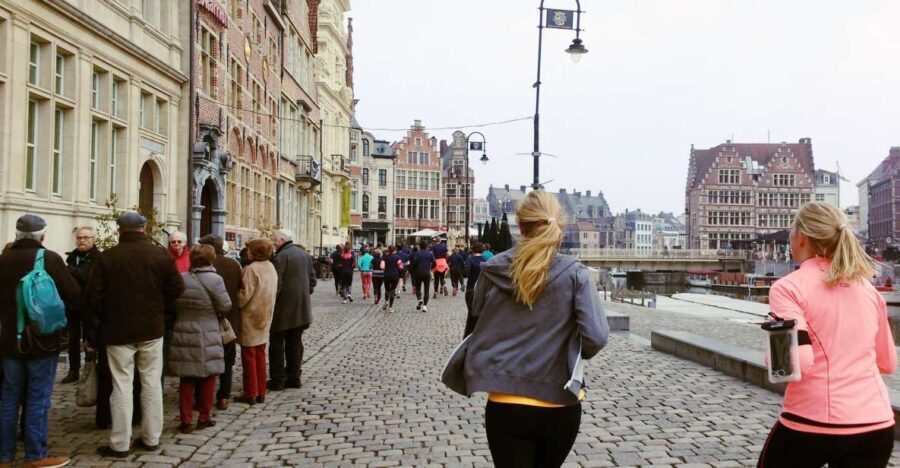
- Start at Ghent Opera near Kouter: a smart place to begin, right as the city gets going.
- Leisurely run, guided pacing: you don’t need to be fit; the guide adjusts tempo.
- Landmark trio plus more: St. Bavo Cathedral, the Ghent Belfry, and St. Nicholas Church.
- Big-city history in small stops: World Expo links at Kouter, plus medieval trade and port history.
- Non-touristy streets and quick photo breaks: including Graffiti Street.
- Local guide in English: you get context as you pass places.
Kouter to Ghent Opera: the best kind of early start
Your day begins outside the main entrance of the Ghent Opera, near Kouter, one of the larger squares in the city. The timing matters. Ghent is the kind of place where streets look different at 8 a.m. than they do later, and you feel that shift as you go—shutters open, locals appear, and the city becomes easier to read.
The tour starts with a brief warm-up, which is useful because you’re about to combine light exercise with steady listening. You’ll want sports shoes and sportswear that you can move in. The pace is explicitly a leisurely run/jog, so you’re meant to cover more ground than a strict walking tour without turning it into a competition.
From the start, the vibe is also practical. The guide doesn’t just point at buildings; they explain what you’re looking at and why it mattered. That matters in a city with layers—because Ghent isn’t only pretty. It’s smart, commercial, and intensely historical.
You can also read our reviews of more tours and experiences in Ghent.
Running sightseeing without the race pressure
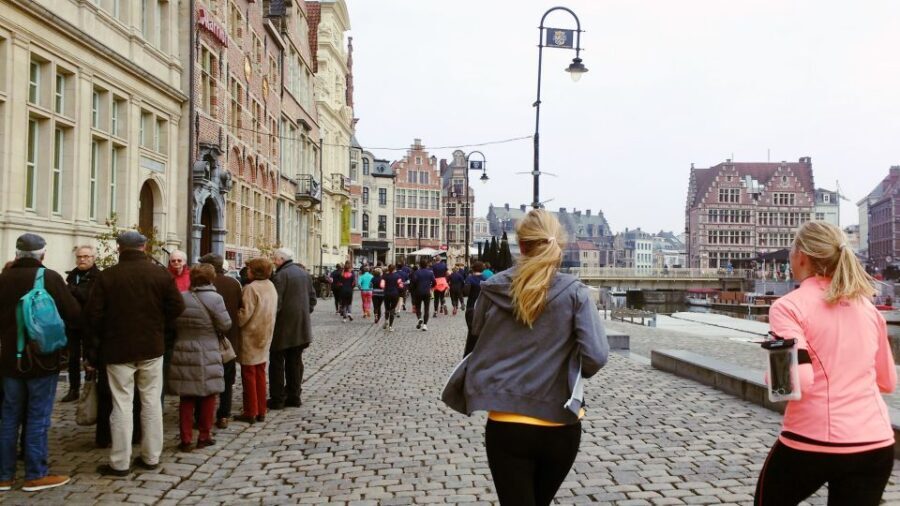
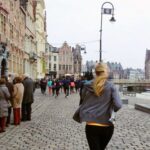
This isn’t a “keep up or get lost” setup. The whole format is built for a group that may include different fitness levels. You’ll run or jog at an easy speed, and you’ll make regular stops at landmarks to hear the story.
That pacing approach changes the whole experience. If you’ve done strict walking tours before, you know how fast your legs get tired while your brain is still waiting for the next interesting fact. Here, the guide balances movement with breaks, so you get time to reset, take a photo, and still feel like you’re progressing.
You’ll also be guided on the route beyond the typical city-centre loop. That’s one of the reasons the tour feels more like exploring than ticking boxes. Instead of only seeing the most obvious sights, you’ll go further into quarters that most people only skim past.
Small but important note: you won’t have to deal with ID-checking by the operator. Belgium requires you to carry ID in general, and you’ll want to bring your passport or ID card anyway, as the tour info stresses.
The landmark trio: St. Bavo Cathedral, Ghent Belfry, St. Nicholas Church
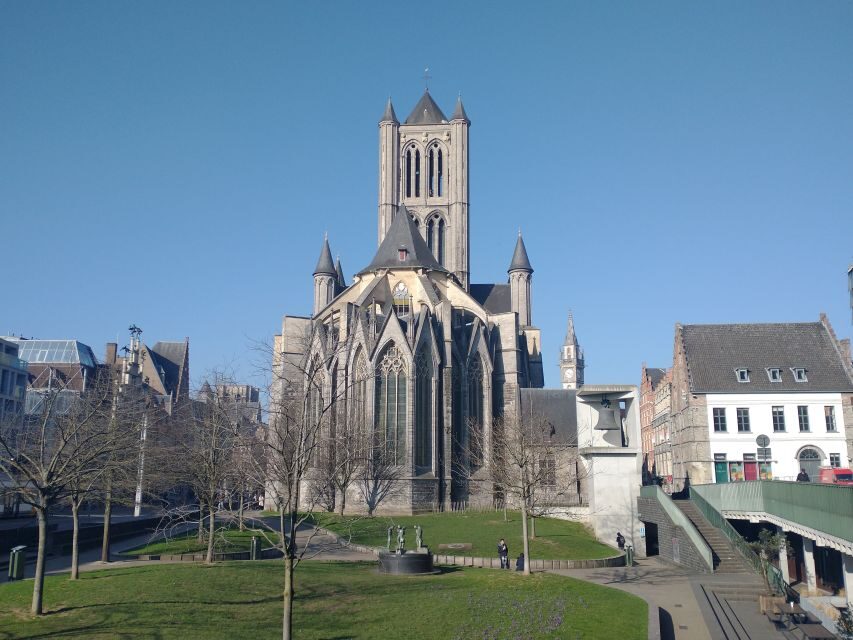
A big part of the appeal here is that the tour lands at Ghent’s most famous towers. You don’t just see them from one angle. You get context as you stop, which makes the structures feel earned instead of random.
St. Bavo Cathedral
St. Bavo Cathedral is one of those places where the building signals importance immediately. On this tour, you’re not just walking past stone; you’re stopping long enough to understand how it fits into Ghent’s identity. If you’re the kind of traveler who likes knowing what you’re looking at before you start taking photos, this stop will work well.
The Ghent Belfry
The Ghent Belfry is a signature sight. A tower like this is never only about views—it’s about power, pride, and civic life. The guide’s history stops help you connect the belfry to what made Ghent function as a city, not just a backdrop for pictures.




St. Nicholas Church
St. Nicholas Church rounds out the set. By the time you reach it, you’ve already learned enough to notice details rather than treating the stop like another photo stop. It’s a good “wraparound” moment because the tour moves you through different parts of the old city’s story, not just one street.
In short: these three stops are the tour’s anchor. If you want Ghent’s classic silhouettes, they deliver quickly—without requiring you to plan, map, and coordinate on your own.
Korenlei and Graslei: medieval trade you can almost feel
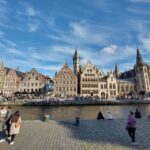
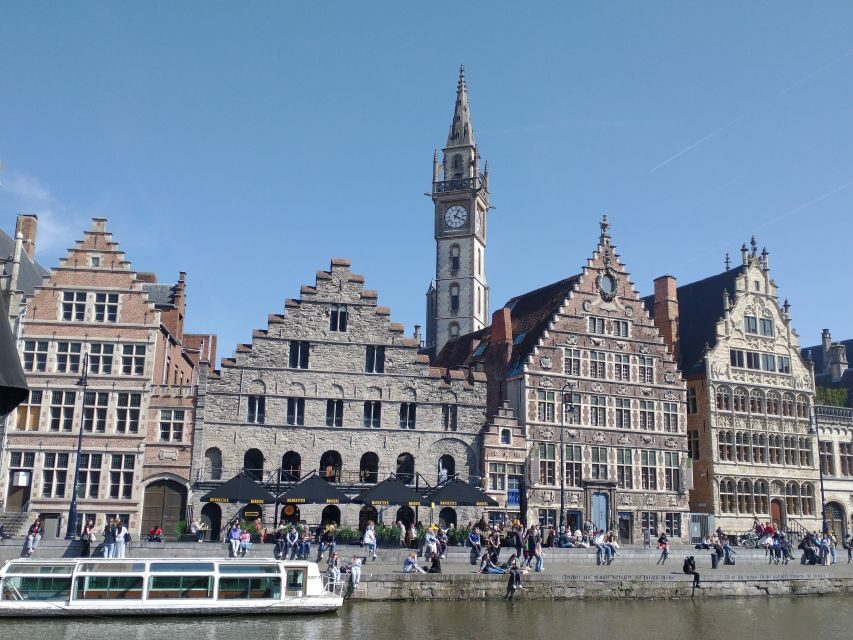
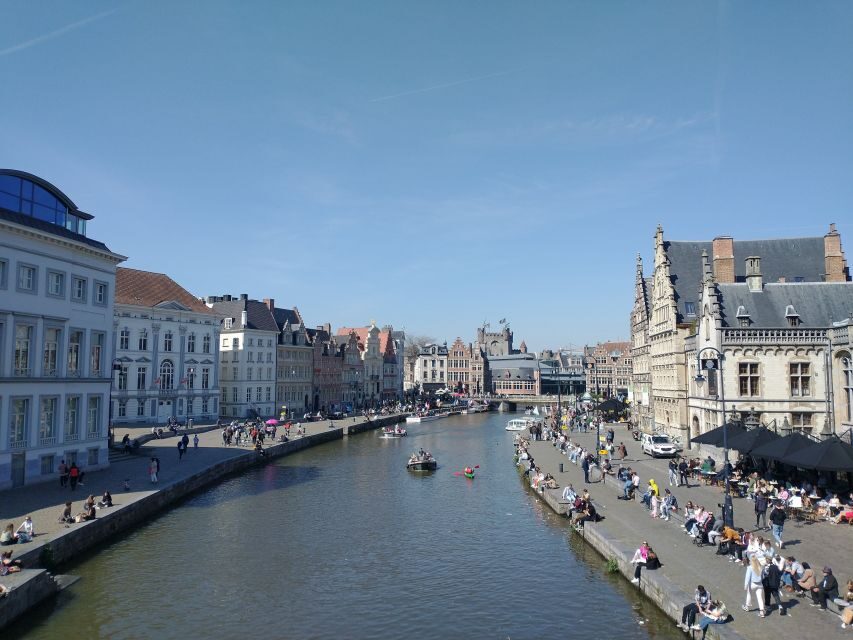
After the early start, the tour turns to Ghent’s waterfront history. You’ll learn about the trade at Korenlei and Graslei during the Middle Ages. This is where Ghent stops being just pretty architecture and becomes a working story of money, shipping, and city growth.
These stops matter because Ghent’s layout makes history visible. When you’re told what the waterfront did, the buildings and embankments stop being scenery. You start to read them like infrastructure.
The guide also connects this to the port story around Portus Ganda and how it relates to the birth of Ghent. You don’t need a history degree for this. The value is that it turns locations into cause-and-effect—why Ghent grew where it did, and how trade shaped the city’s focus.
If you’re visiting for the first time, this kind of explanation is the fastest way to understand why Ghent feels different from, say, smaller Belgian towns. The city’s power came from commerce, and the tour helps you see the logic behind the streets.
World Expo at Kouter: the city’s older and newer layers
One of the tour’s smartest tricks is using everyday places to talk about time periods. You’ll make a stop at Kouter and learn how it relates to the World Expo.
Even if you didn’t come to Ghent for modern history, this stop helps you notice something: cities don’t freeze in one era. They keep changing. Ghent isn’t only medieval romance. It also has modern development chapters, and the tour gives you at least one clear bridge between those worlds.
That’s also one reason starting at Kouter works. It sets up a theme: you’re about to watch Ghent become visible across eras, not just across streets.
Graffiti Street and photo stops that help you remember the route
Between the major landmarks and the historical explanations, the tour includes more relaxed moments—like running through popular Graffiti Street and making stops for cool pictures.
These are more useful than they look. If you only stop at big monuments, the city can blur together later. Photo breaks at the right spots help you create mental anchors. You’ll remember that this street had a different character, that the light hit a certain angle, and that the vibe shifted again as you moved.
Also, because the tour is short—45 minutes total—you don’t have time to wander randomly. These built-in stops keep the experience balanced: movement plus meaning plus a few visual rewards.
If you’re traveling with someone who likes history but hates being stuck standing still forever, this format is a good compromise. You keep moving, but you still get the story.
How far you’ll go in 45 minutes (and why it feels doable)
The tour is designed to be a “feel-good” start: exercise with guided context, not exhaustion. You should think of it as a light morning jog with walking pauses, guided stops, and photo moments.
Your distance can vary because the guide adjusts pace to the group and makes regular landmark stops. One recent experience logged about 6 km, but your personal distance may come out differently depending on group speed and how long the guide spends at each point.
The real win is that you don’t have to make a fitness plan. You just show up with sports shoes, sportswear, and the willingness to follow instructions. If you’re comfortable jogging lightly for short bursts, you’re likely a good match.
Price and value: is $53 for 45 minutes worth it?
At $53 per person for 45 minutes, the cost might sound steep if you’re thinking of self-guided roaming. But this is not only about seeing places. You’re paying for a local guide who explains what you’re looking at while you cover ground more efficiently than a slow walking tour.
Here’s what you get for the money, based on the tour info:
- A personal, local guide
- Sightseeing of major landmarks and non-touristy spots
- Ghent history with stop-by-stop context
- Photo opportunities during the route
When you add those pieces up, the value becomes clearer. You’re not paying for transportation or snacks. So you’ll bring your own water and small comfort items. But the guide work is the core product, and that’s what you’d otherwise spend time figuring out on your own.
If you’re short on time in Ghent and you want the fastest path to understanding the city’s structure, this tour is a practical spend.
Who should book (and who should skip)
This tour suits people who:
- Want to see Ghent early, when it feels quieter and calmer
- Prefer short, guided stops with history, rather than long lectures
- Enjoy an easy jog and can handle brief runs between landmarks
- Like getting photo moments without planning the route
It’s not suitable if:
- You’re pregnant
- You have back problems
- You have mobility impairments
- You’re a child under 18
- You have pre-existing medical conditions
That “not suitable” list is important because the format includes running, even if it’s leisurely. If you’re unsure, I’d treat it as a safety decision first, fun decision second.
Practical tips to get the best experience
Keep it simple and you’ll have a smoother tour.
- Bring sports shoes and sportswear you’re comfortable jogging in.
- Carry your passport or ID card. Belgium requires ID be with you at all times.
- Don’t plan on audio recording. It’s listed as not allowed.
- Skip smoking on the route. It’s not allowed.
- Bring water, since it’s recommended but not included.
One more small tip: because you’ll hear a lot while moving, keep your phone away until a photo stop. You’ll enjoy the stories more, and you won’t miss the guide’s points.
Should you book the Ghent Running and Sightseeing Tour?
If your ideal Ghent day is quick, active, and story-based, I’d say yes. For $53 and 45 minutes, you get a guided tour that hits key towers, connects Ghent’s medieval trade and port origins, and still includes lighter, memorable moments like Graffiti Street and picture stops. The pace is designed to be adjustable, which is a big deal if you’re not a runner-gym type.
If you hate anything resembling running, or if you fall into one of the listed health and mobility limits, choose a walking tour instead. This one is built around movement.
My bottom line: book it when you want to understand Ghent fast and start the day with a feel-good rhythm.
FAQ
Where does the Ghent Running and Sightseeing Tour start?
The meeting point is outside the main entrance of the Ghent Opera.
How long is the tour?
It runs for 45 minutes.
How much does it cost?
The price is $53 per person.
Is this a race or a competitive run?
No. It’s described as a leisurely run/jog, not a competition, and the guide adjusts the pace to the group.
What language is the tour guide?
The tour guide gives the experience in English.
What landmarks do you stop at?
You’ll stop at St. Bavo Cathedral, the Ghent Belfry, and St. Nicholas Church.
What should I bring?
Bring sports shoes and sportswear, plus your passport or ID card.
Is water provided?
No. Water is recommended, but it is not included.
What is not allowed during the tour?
Smoking and audio recording are not allowed.
Is it suitable for kids?
No. It’s not suitable for children under 18, and it’s also not suitable for people with certain medical or mobility needs listed by the tour.