REVIEW · GHENT
Ghent: Walking Tour from Friday Market to the Cathedral
Book on GetYourGuide →Operated by Guide-A-Ride · Bookable on GetYourGuide
Ghent rewards slow looking, and this tour is built for it. You’ll get classic Ghent landmarks like the Belfry and Town Hall, plus the big wow of St-Bavo’s Cathedral with Jan Van Eyck’s Mystic Lamb. I also like the way the route strings together markets, canals, and views so it feels like you’re learning the city, not just ticking sights.
One thing to consider: the full experience runs 150 minutes and includes both a coach ride and walking, so you’ll want comfortable shoes and a bit of stamina. If you’re hoping for long inside time at every stop, plan to treat some moments as photo-and-context stops rather than deep museum sessions.
You start at Sint-Jakobskerk and end up with a clear mental map of Ghent’s past and present—right down to how the city looks when you’re standing near the water, with the three towers lined up.
In This Review
- Key things worth knowing before you go
- Why Ghent starts with towers, markets, and a canal-city vibe
- From Sint-Jacobskerk to old Ghent: how the 150 minutes work
- The coach intro: Millionaires’ Quarter, stations, and style in the city
- Gerard de Duivelsteen and the walk into the old town center
- St-Bavo’s Cathedral and the Mystic Lamb by Jan Van Eyck
- Belfry and Town Hall: Ghent’s power in plain sight
- Friday Market, Patershol, and the old Fish Market
- The old harbor and the three towers skyline
- How the European Parliament shows up in Ghent
- Chocolate, waffles, beer, and smart eating suggestions
- Price and value: $388 per group up to 20 for a private tour
- Who this tour is best for
- Should you book this Ghent walking tour?
- FAQ
- Where does the tour meet?
- How long is the tour?
- Is this a private tour?
- What languages is the live guide available in?
- What’s included in the price?
- Are entrance fees included?
- What is the cancellation policy?
Key things worth knowing before you go
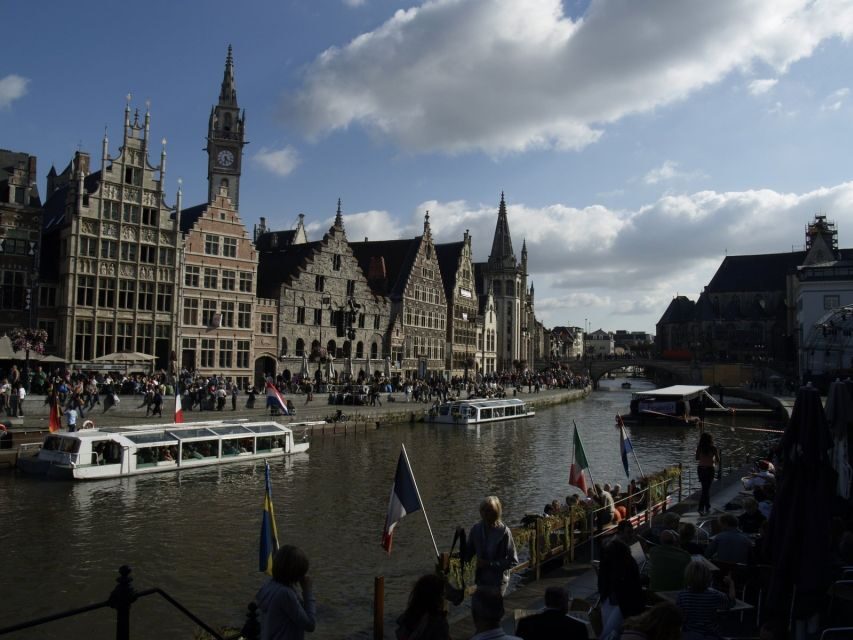
- Three-tower harbor views from the old harbor area, with St. Michael’s church in the frame
- St-Bavo’s Cathedral focus on Jan Van Eyck’s Mystic Lamb and the cathedral’s role in Ghent
- Market-to-old-streets flow covering Friday Market, the old Fish Market, and Patershol
- A bus intro that sets the scene including the Millionaires’ Quarter, stations, and Art Nouveau/Art Déco exteriors
- European Parliament learning moments tied into Ghent’s modern civic buildings
- Private-group attention for up to 20 people, with a live guide in several languages
Why Ghent starts with towers, markets, and a canal-city vibe
Ghent is a city of sightlines. Even if you don’t know its terms—belfry, town hall, harbor—you’ll feel the geography fast: canals, two rivers (Scheldt and Leie), and neighborhoods that turn corners into viewpoints.
This tour leans into the best Ghent pattern: start with what people use and trade (markets), then connect it to what people ruled (Town Hall and the Belfry), and finally land at the religious and artistic anchor (St-Bavo’s). You’ll also get the famous Ghent skyline built around its towers, especially that three-tower view near the harbor area.
You can also read our reviews of more walking tours in Ghent



From Sint-Jacobskerk to old Ghent: how the 150 minutes work
Your meeting point is Sint-Jakobskerk (Saint-Jacobskchurch), where the coach drops you off. From there, the experience is timed around a mix of coach stops and a walking route in the old town center.
The total duration is 150 minutes, which is a helpful size for visitors who want structure without losing the day to logistics. You’ll walk enough to enjoy the streets and canal areas, but you won’t spend hours trudging between far-flung neighborhoods.
If you’re the type who likes to stop for a few photos and keep moving, this length fits well. If you hate walking and prefer one long sit-down attraction, you may find the pace a bit tight.
The coach intro: Millionaires’ Quarter, stations, and style in the city
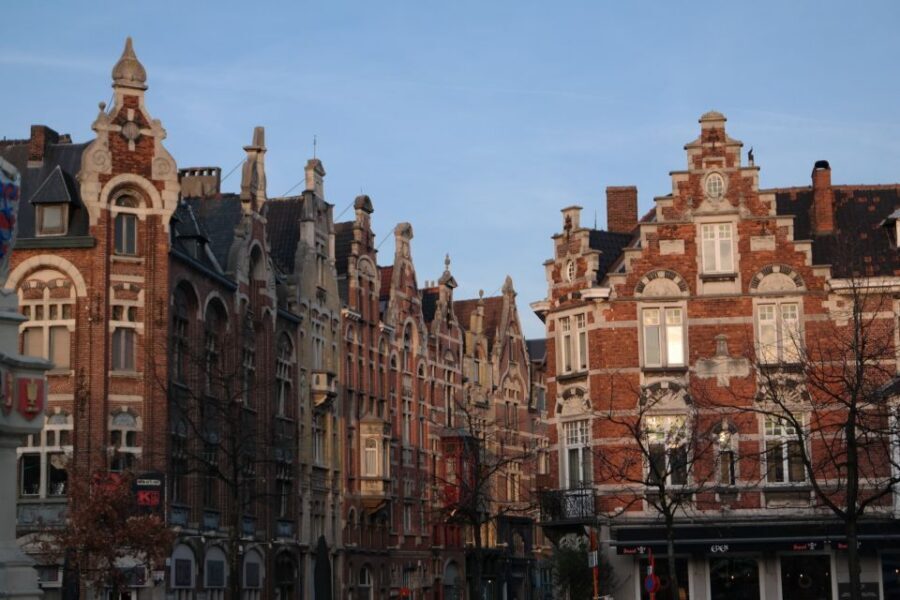
Before you hit the historic core, you get context from the Millionaires’ Quarter and other city-area stops. That matters more than it sounds. Ghent isn’t only medieval brick and belfries; it also has a modern city layout and architectural styles you’d miss if you went straight to the old center.
You’ll also pass places tied to daily life and city rhythm, like St. Peter’s station and nearby avenues with Art Nouveau and Art Déco exteriors. These aren’t random look-at-buildings moments. They help you understand how Ghent grew beyond the medieval center and how design signals different eras of wealth and civic identity.
There’s also a stop at St. Peter’s Square, including St. Peter’s church and Vooruit, plus the building of the socialist trade union. If you like your sightseeing to include social history, this is one of those “wait, that’s part of the story” moments.
Gerard de Duivelsteen and the walk into the old town center
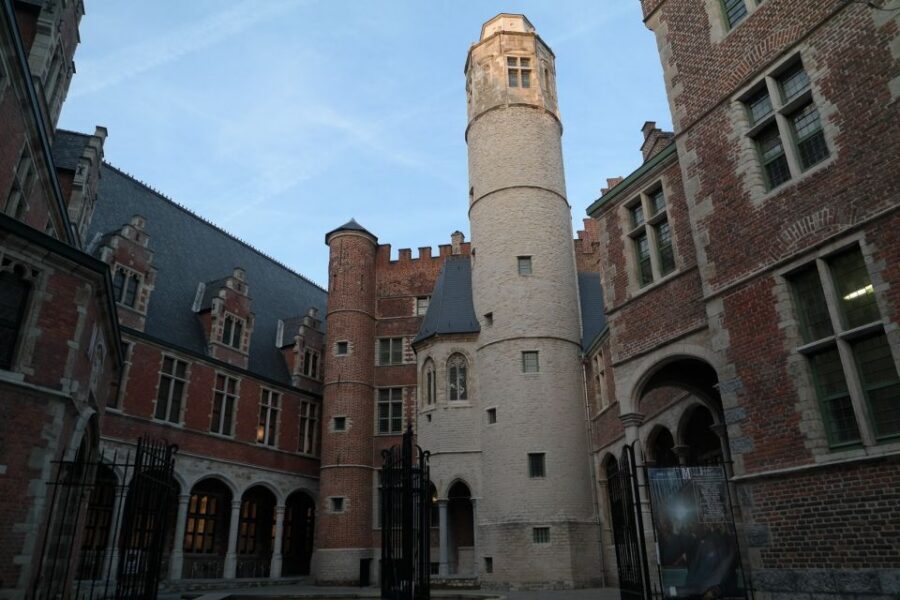
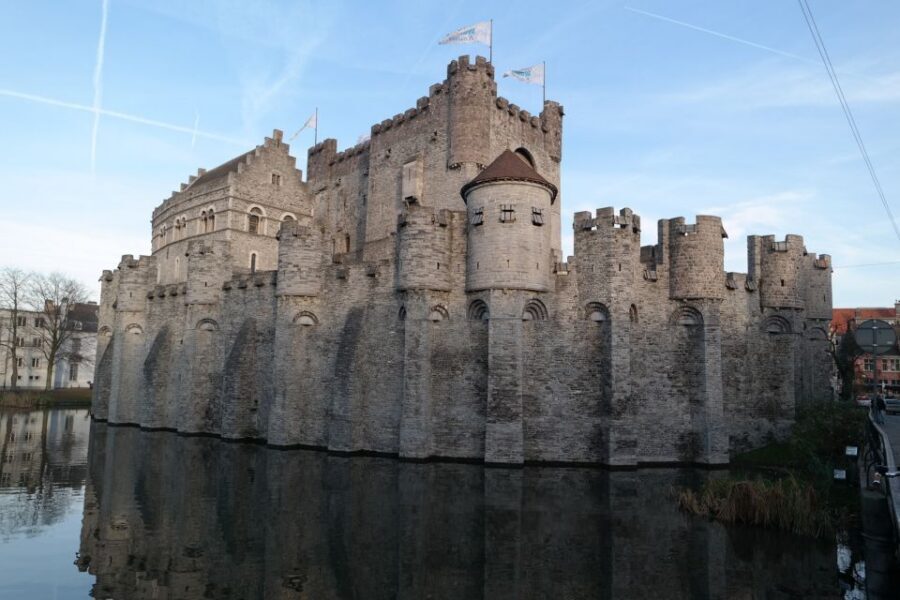
Once the walk begins, you start at Woodrow Wilson Square and work into older parts of Ghent. A key stop early on is fortress Gerard de Duivelsteen, which gives you a sense of Ghent as a defensive city—not just a pretty one.
Then you move onward toward the cathedral area. The guide’s job here is to make the streets legible: why the city is arranged the way it is, how the canal-and-river setting shapes movement, and how different parts of the city connect.
If you’ve ever visited a place where everything looks historic but nothing feels connected, you’ll appreciate this format. It helps you understand the layout as you go, so you’re not guessing what you’re seeing.
St-Bavo’s Cathedral and the Mystic Lamb by Jan Van Eyck
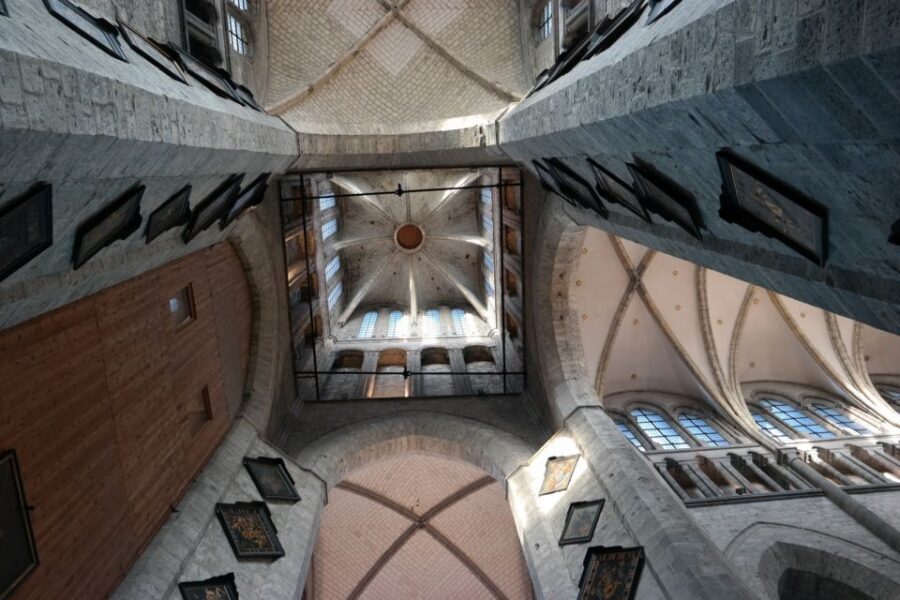
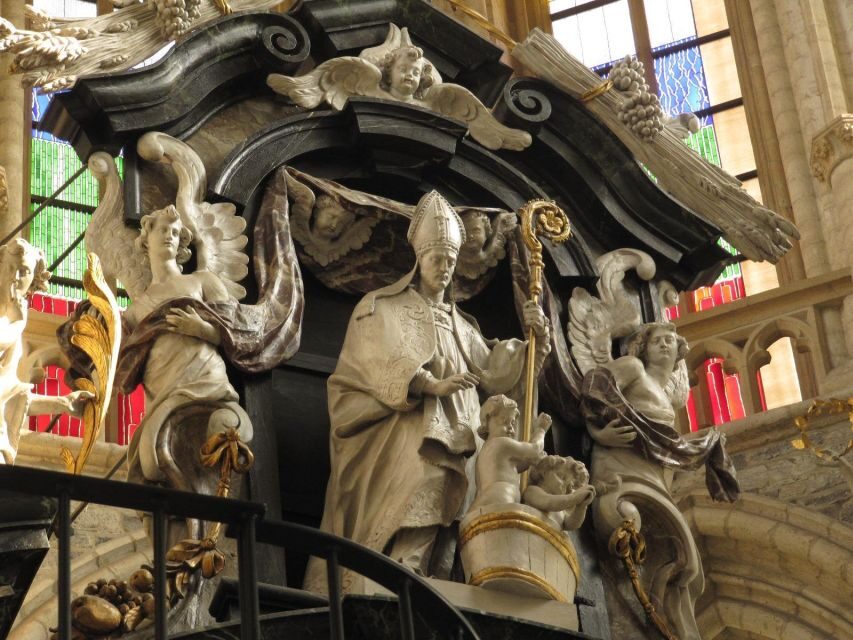
St-Bavo’s Cathedral is the anchor stop. This is where the tour gives you the big art moment: paintings by Jan Van Eyck and Peter Paul Rubens inside the cathedral, including Van Eyck’s Mystic Lamb.
Even if you’re not an art expert, you’ll get more out of this stop because you’re not viewing it in isolation. The guide context ties the cathedral to why Ghent mattered—spiritually, artistically, and politically—so the artwork feels placed in a real story rather than hanging on a wall.
Also, St-Bavo’s is a strong pause point. Use it to slow down. Let your eyes adjust. And if your attention tends to drift, focus on what the tour highlights rather than trying to see everything at once.




Belfry and Town Hall: Ghent’s power in plain sight
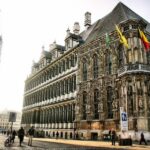
After the cathedral, the route points you toward Ghent’s civil pride: the Belfry and the Town Hall. These are not just architectural backdrops. They represent how Ghent organized itself and how power was shown on the street.
The Belfry is part of the city’s iconic silhouette, and you’ll see it again later as part of the three-tower lineup. This helps you build a visual map in your head, which makes the harbor view near the end hit harder.
Town Hall fits into the same theme: a place where governance and civic identity lived. If you like understanding how cities functioned, this is one of the most satisfying stretches of the walk.
Friday Market, Patershol, and the old Fish Market
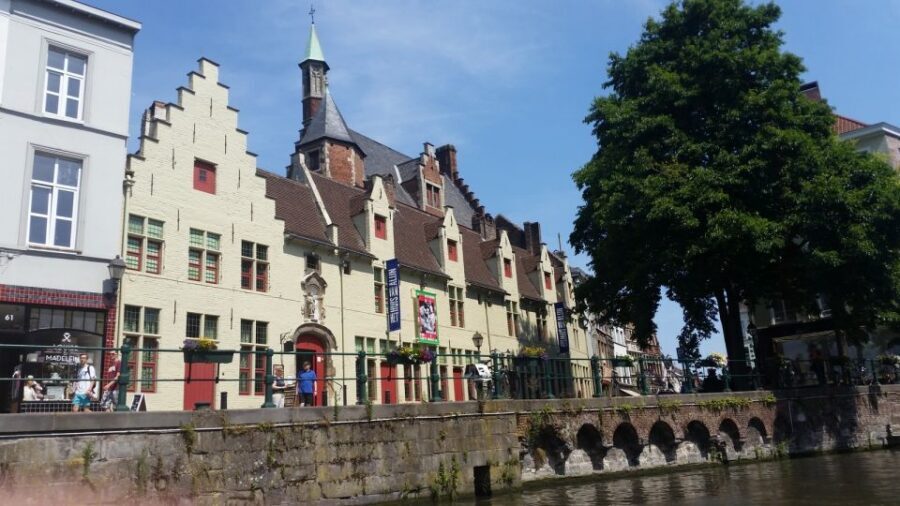
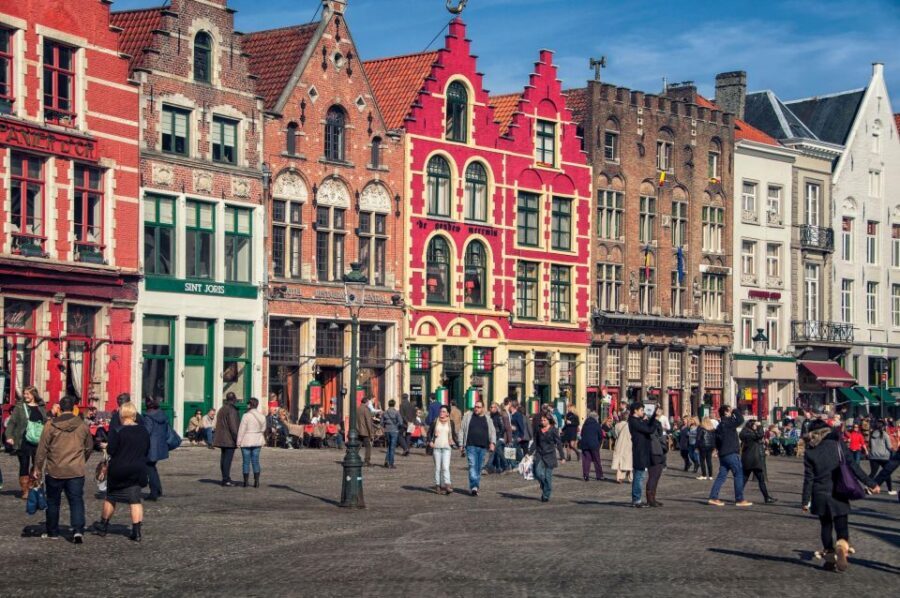
Now you get into the living part of Ghent. The tour includes the Friday market, the Patershol neighborhood, and the old Fish Market area. That combination is smart because it shows how commerce and community shaped the city’s center.
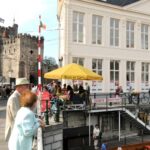
Friday Market gives you the sense of everyday tradition—Ghent doing its normal business, even as tourists flow through. Patershol is where you get a more atmospheric side: older streets that feel like they were made for wandering, not rushing.
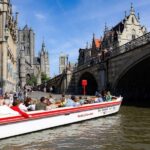
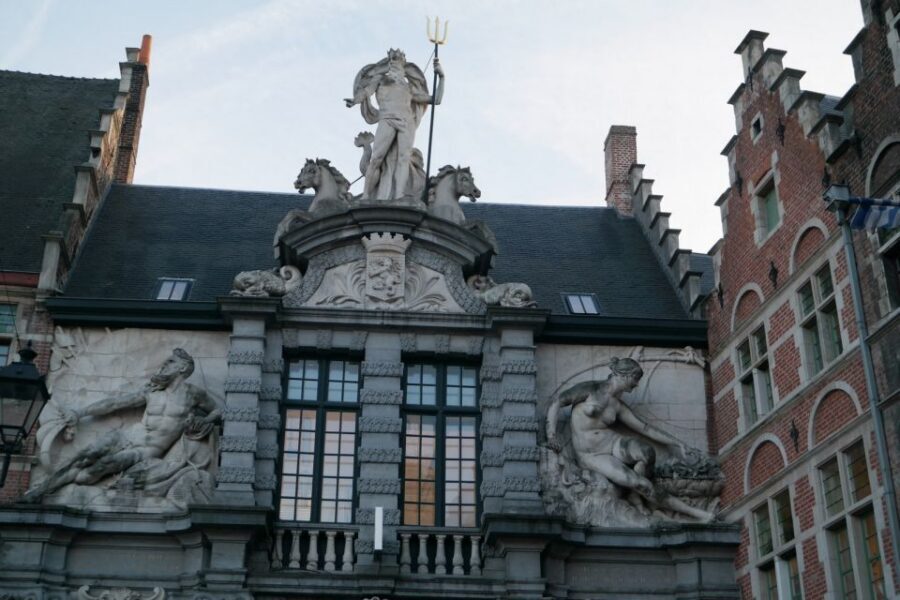
The old Fish Market helps you connect to Ghent’s waterfront identity. It’s a reminder that the city’s canals weren’t just scenery; they were work routes and trade corridors. When you later look toward the harbor for the views of St. Michael’s church, those previous market stops suddenly make geographic sense.
The old harbor and the three towers skyline
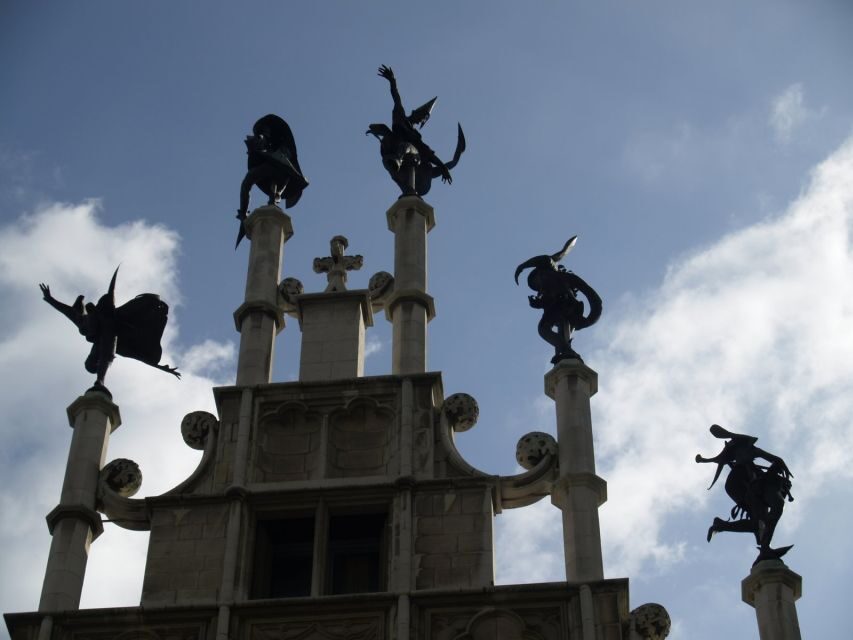
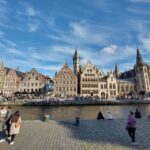
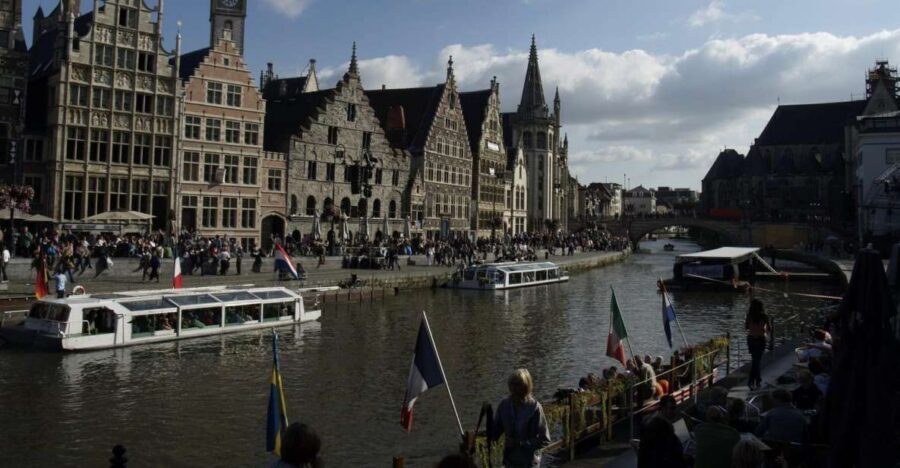
This is the payoff: the old harbor area, where you get the finest views of St. Michael’s church and Ghent’s famous three towers. The towers included in that viewpoint are the tower of St. Nicholas’ church, the Belfry, and the tower of St. Bavo’s Cathedral.
This is one of those photo spots where it’s worth taking a few minutes even if you’re not a photographer. The guide context helps you line up what you’re seeing and understand why these towers became the recognizable skyline.
Practical tip: once you spot the three-tower alignment, take your widest shot first, then zoom in mentally for the details. You’ll remember the scene better than if you just keep moving.
How the European Parliament shows up in Ghent
One of the more interesting “modern Ghent” pieces is the lesson about buildings of the European Parliament – Commission and Council. Including this on a walking-and-coach tour changes the tone.
It’s a way of showing Ghent as a city that still matters on a European stage. If you’re used to thinking of Belgian cities as purely medieval, this part adjusts that view. You’ll go back through the old center afterward with a different sense of scale.
Chocolate, waffles, beer, and smart eating suggestions
What’s included isn’t just sightseeing. The tour comes with lots of recommendations for chocolate, waffles, beer, restaurants, bars, and museums. That’s genuinely useful because Ghent has plenty of places to eat, but not everyone wants to spend the afternoon guessing.
The best way to use these suggestions is simple: pick one thing you can confirm you want now (for example, waffles or a Belgian beer style you like), then use the rest as optional stops depending on time. That keeps your day flexible, especially since entrance fees and tastings aren’t included.
If you plan to eat after the tour, this built-in list can save you from the common problem: having great sights but ending up in a mediocre location because you were hungry and impulsive.
Price and value: $388 per group up to 20 for a private tour
The price is $388 per group (up to 20 people), for a total of 150 minutes. That can sound like a lot until you think about what you’re getting: private group format, a live multi-language guide, a structured mix of coach viewpoints and a walking route through major Ghent landmarks.
Value gets better if you’re traveling with others who want the same sights in the same order. If you’re a solo traveler or a couple, it may feel pricey compared with shared-group tours. But the private group format matters if you like asking questions, moving at a calm pace, or keeping your group together.
Also factor in what’s not included. Entrance fees and tastings/lunch aren’t part of the package, so you’ll want a small buffer if you plan to go inside ticketed spaces or add food experiences on top.
Who this tour is best for
This works especially well if you:
- Want a guided connection between markets, towers, and St-Bavo’s Cathedral
- Like understanding how medieval Ghent and modern civic Europe fit together
- Prefer structured time in a city without going “museum mode” all day
It’s also a good fit for families in the sense that it’s not a multi-hour marathon, but you’ll still want kids comfortable with walking and the pace of a guided route. If you hate stops and speeches, you might find the learning moments a bit much.
Should you book this Ghent walking tour?
I’d book it if you want a well-timed orientation to Ghent that hits the big highlights—Belfry, Town Hall, Friday Market, Patershol, St-Bavo’s Cathedral, and the three-tower harbor view—with context for what you’re seeing. The strong rating (4.8 out of 5) and the clear emphasis on guide quality make it the kind of tour where you’ll feel informed, not just led around.
Skip it only if you’re mainly chasing ticketed museum time, long tastings, or you don’t want any coach time between viewpoints. This tour is built for walking, looking, and learning in a compact format.
FAQ
Where does the tour meet?
The meeting point is Sint-Jakobskerk (Saint-Jacobskchurch). This is where guests can leave the coach.
How long is the tour?
The tour lasts 150 minutes.
Is this a private tour?
Yes. It’s listed as a private group tour with a group size of up to 20.
What languages is the live guide available in?
The guide is available in Dutch, English, French, and German.
What’s included in the price?
The tour includes lots of recommendations for chocolate, waffles, beer, restaurants, bars, and museums, plus a live guide. Entrance fees, tastings, and lunch are not included.
Are entrance fees included?
No. Entrance fees are not included.
What is the cancellation policy?
You can cancel up to 24 hours in advance for a full refund.