REVIEW · GHENT
Historical Walking Tour: Legends of Gent
Book on Viator →Operated by Gent Free Walking Tour · Bookable on Viator
Ghent has legends worth hearing on foot. This 2-hour walk in English links the city’s medieval trading power to the buildings you see today, with a local guide filling in the stories. Expect a lively route from canal-side landmarks to the people’s tower.
I love how the tour mixes big sights with small details you’d miss on your own, especially around the trading waterfront and the castle core. The pay-what-you-think style also feels honest: you’re not locked into a fixed “tour fee” mindset.
One thing to plan for: a few major stops have admission not included, so you may want extra cash or time if you choose to enter. Also, bring a printed or mobile ticket screenshot, and expect to confirm how payment is handled at the meeting point.
In This Review
- Key highlights before you step outside
- Why this Ghent legends walk is a smart first move
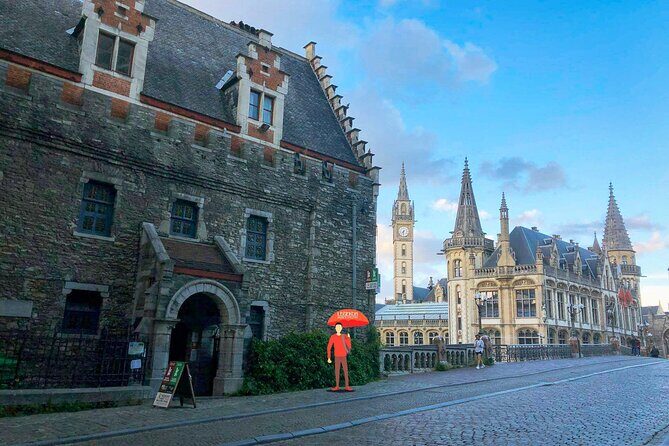
- St. Michael’s Bridge: the skyline lesson that starts the whole story
- Graslei and Korenlei: walking the medieval port without the museum fatigue
- The Design Museum stop: a quick culture detour (and optional extra ticket)
- Het Groot Vleeshuis: the story gets darker at the medieval butchers’ hall
- Gravensteen and St. Veerleplein: Ghent’s castle inside the city core
- Huis van Alijn and Vrijdagmarkt: compassion, merchants, and civic theatre
- Werregarenstraat and Stadhuis: public art, civic conflict, and why Ghent looks how it does
- St. Bavo’s Cathedral: the Van Eyck centerpiece you can’t ignore
- Het Belfort van Gent and Esglesia de Sant Nicolau: finish with power and a patron saint
- Price and value: what $3.62 really means here
- Pacing, comfort, and how to get the most from the two hours
- Who should book this Legends of Gent tour
- Should you book Legends of Gent?
- FAQ
- How long is the Legends of Gent historical walking tour?
- What language is the tour offered in?
- What’s included with the tour ticket?
- Do I need admission tickets for stops during the tour?
- Where does the tour start and end?
- Is the tour a pay-what-you-think format?
- Is there free cancellation?
Key highlights before you step outside
- A tight 2-hour loop that hits Ghent’s essentials without turning into a half-day hike
- St. Michael’s Bridge viewpoints plus an explanation of the Ghent skyline’s classic three-tower look
- Graslei and Korenlei explained as the beating heart of the medieval port
- Story-led stops like the Great Butchers’ Hall and the square known as the square of death and life
- Good end point energy at the Belfry, with a finish that helps you keep exploring after the tour
- English mobile ticket and a group size capped at 35, so it stays manageable
Why this Ghent legends walk is a smart first move
If you’re trying to understand Ghent fast, this kind of guided “legends and landmarks” tour is exactly the right format. In about two hours, you’ll get an outline of how the city worked when it was a major trading hub, then see how that history is still baked into the street plan and architecture.
The pay-what-you-think model is part of the appeal. You can treat the listed price as a booking step, then decide at the end what the experience was worth to you based on the stories, pacing, and local tips you actually used.
You’ll also hear a lot of practical guidance for your next hours: where to eat, drink, and explore around the route. Guides often bring humor and active Q&A energy too, with names like Tatiana, Kasia, Kenny, Sophia, and Ksenia showing up among the strongest guide impressions.
You can also read our reviews of more walking tours in Ghent



St. Michael’s Bridge: the skyline lesson that starts the whole story
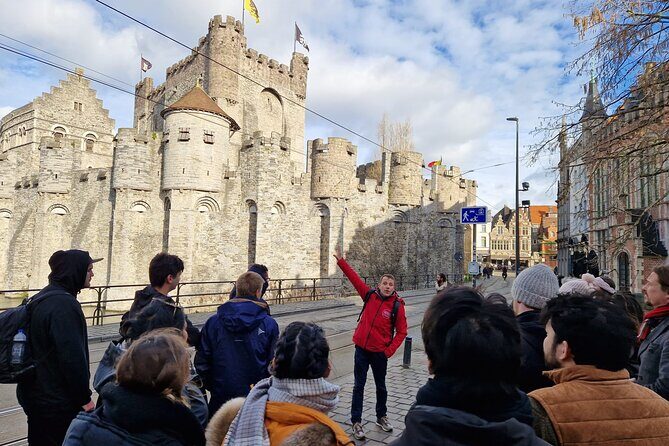
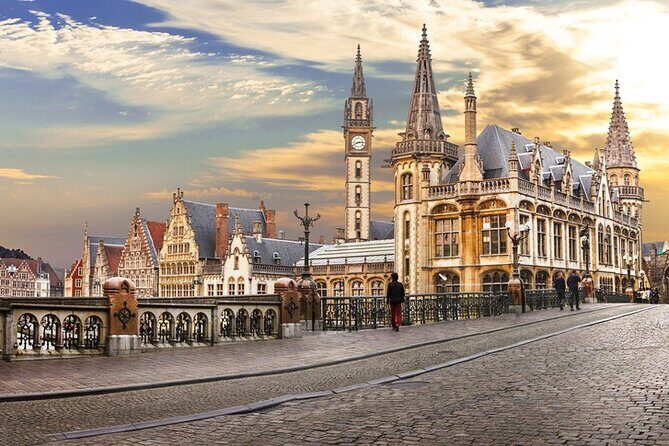
The walk begins at Hostel Uppelink on Sint-Michielsplein, then moves to St Michael’s Bridge. Right away, the guide frames Ghent’s role in medieval trade, and that context matters because every stop later has a “why” behind it.
From here you also get a clean view of the three-tower skyline. It sounds simple, but once you know what you’re looking for, Ghent’s rooflines and bell towers become a sort of visual map.
Practical note: this is a good spot to slow down for photos, then listen closely. The best guides use this first stop to set the pace for the rest of the route, so you can follow the bigger themes without getting lost in details.
Graslei and Korenlei: walking the medieval port without the museum fatigue
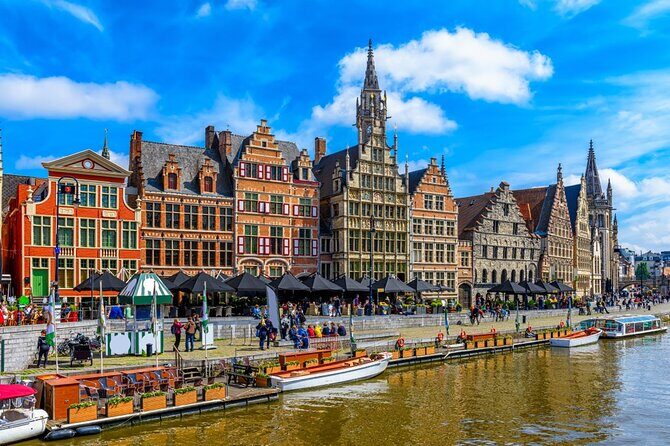
Next comes Graslei and Korenlei, the waterfront area that feels like Ghent’s old heart. This is where your guide connects the buildings along the water to the trading activity that once drove the city.
This stop works well because you’re standing in the actual setting where the wealth moved—by boat, by cargo, by contracts, by power. Instead of just naming landmarks, you’re shown how the waterfront functioned, which makes the whole city feel less like “old buildings” and more like a machine that once ran.
Time here is short, so treat it like orientation. If you love photos, aim to get your shots early, then let your guide explain which façades link to trade, shipping, and civic life.
The Design Museum stop: a quick culture detour (and optional extra ticket)
At Design Museum Gent, the tour pauses just long enough to explain why a certain design-related aspect symbolizes the stubborn, rebellious mindset of the Gentenaars. This is more about the attitude behind the city than about a deep museum visit.
Admission for this stop is not included, so you’ll need to decide on the spot whether you want to enter. Even if you skip the museum, the framing helps you notice how Ghent often values creative identity and local character.
If you do want to go in, plan for a small time tradeoff: it can slow your pace and change how relaxed the rest of the tour feels.
Het Groot Vleeshuis: the story gets darker at the medieval butchers’ hall
Then you cross into Het Groot Vleeshuis, the medieval covered Great Butchers’ Hall. Seeing the building with your guide’s explanation adds weight, because it stops being “just a pretty old structure” and becomes a window into commerce and control.
There’s also a darker angle here. Your guide points out facts about how the hall worked and why it mattered, with a view across the water that helps you keep visualizing the medieval city’s layout.
If you’re the type who likes history to have stakes—people, money, consequences—this is one of the stops that usually lands hardest.
You can also read our reviews of more historical tours in Ghent






Gravensteen and St. Veerleplein: Ghent’s castle inside the city core
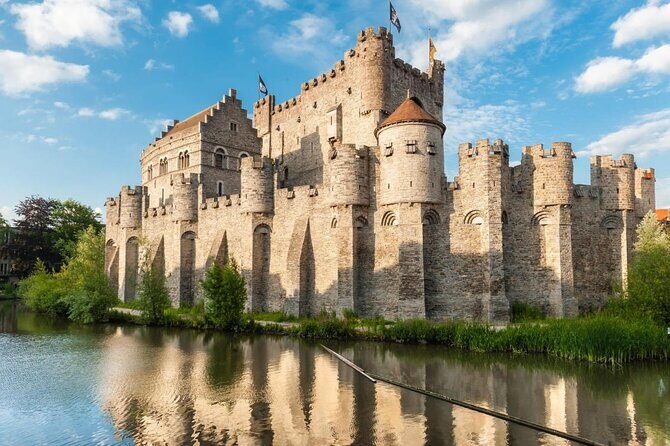
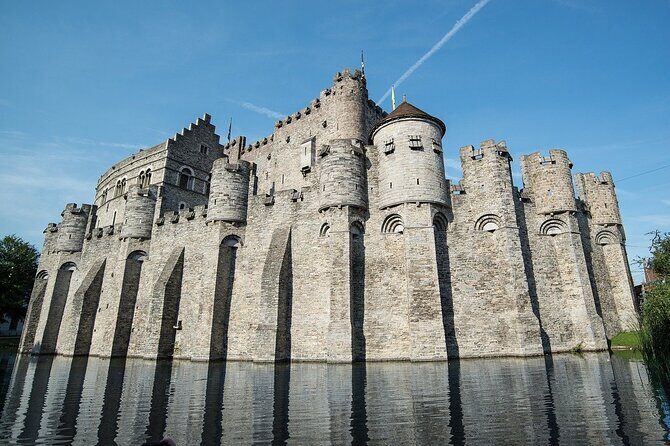
A major highlight is Gravensteen, the Castle of the Counts. Unlike many castles that feel removed from daily life, this one sits right in the middle of Ghent and remains very well preserved.
Admission for this stop is not included, so again, you choose whether to go inside. Even if you don’t, you’ll learn the castle’s past and why it’s such a strong symbol of power in a city that loved independence.
From there you step into St. Veerleplein, the square in front of the castle—known as both the square of death and the square of life. That contrast is exactly the kind of local storytelling that turns architecture into meaning. In plain terms: you’re learning how public spaces reflected serious consequences and public survival in the same place.
Huis van Alijn and Vrijdagmarkt: compassion, merchants, and civic theatre
Next up is Huis van Alijn, which the guide explains as the only remaining ‘god house’ in Ghent. You’ll hear how it began as a hospital, and the story isn’t sugar-coated—it’s the kind of history that reminds you cities were built for real human needs, not just art and postcards.
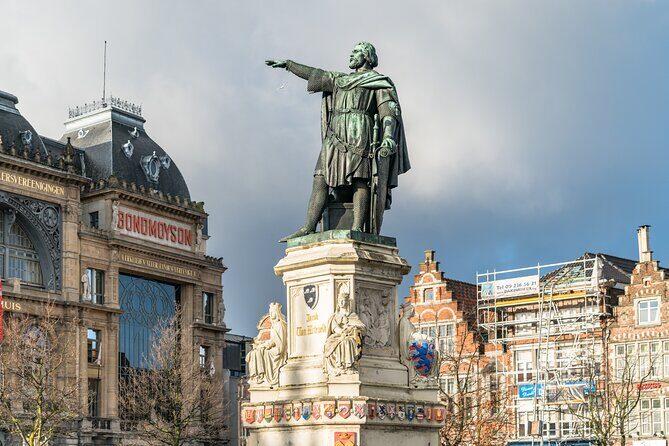
Then the tour heads to Vrijdagmarkt. This square matters because it’s tied to the city’s history and also features a statue that the guide connects to the story of Ghent.
These two stops together work nicely: one is about care and survival, the other about civic identity and public space. You end up with a more rounded sense of daily life, not just political power.
Werregarenstraat and Stadhuis: public art, civic conflict, and why Ghent looks how it does
At Werregarenstraat, your guide explains the city’s approach to street artists—specifically, a designated area where they can go wild. You’ll walk through it while learning why this matters for protecting monumental buildings.
Then comes Ghent Town Hall (Stadhuis). Admission is not included, but your guide gives you the key conflict in Ghent’s history that helps explain why the building’s look feels a bit “confused.” That explanation helps you stop judging the façades as random and start reading them as outcomes of struggle.
If you’re worried this will turn into a strict facts-only stop, don’t be. The best guides here connect the conflict to how the city functioned and to the sense of independence Ghent is known for.
St. Bavo’s Cathedral: the Van Eyck centerpiece you can’t ignore
The tour then moves to St. Bavo’s Cathedral, a landmark with serious art pull. The guide explains its background and points out the famous Ghent Altarpiece by the brothers Van Eyck as the big attraction.
Admission for this stop is free in the context of the tour. That’s useful because it means you can enjoy the cathedral area without added friction, as long as you stay realistic about your time.
Even if you’ve seen photos of the altarpiece online, hearing the cathedral story makes the space feel more like a purposeful container rather than a standout building.
Het Belfort van Gent and Esglesia de Sant Nicolau: finish with power and a patron saint
The final stretch gives you two closing chapters.
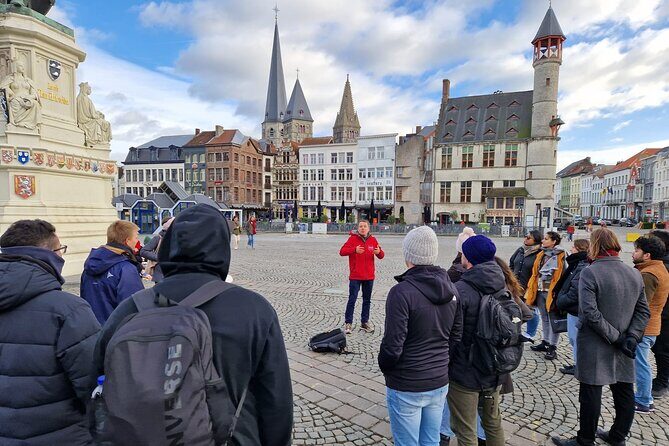
First is Het Belfort van Gent, the Belfry. This is the people’s tower, and your guide frames it as a symbol of stubbornness, power, and independence. It also doubles as a former prison, and your guide shares a bizarre legend tied to the façade—part warning, part civic storytelling.
Admission for this stop is not included, so treat it as a learning stop from outside or decide if you want to go in. Either way, it’s one of the most memorable “why this city is different” moments on the route.
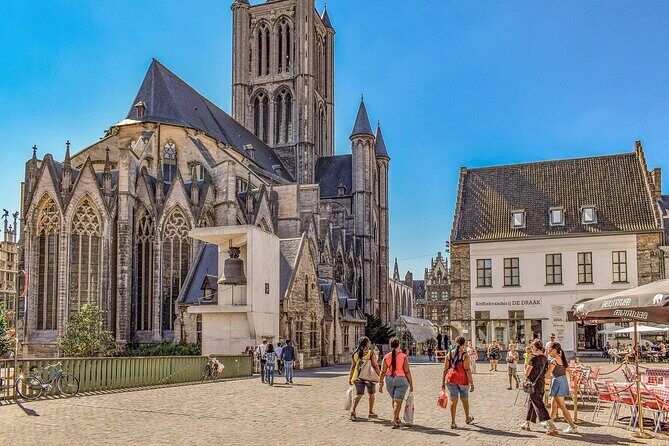
Finally, the tour wraps at Esglesia de Sant Nicolau, an early 12th-century church overlooking Korenmarkt. St. Nicholas is the patron saint of merchants and sailors, and the guide ends by linking the façade’s legend to what the saint represents.
This is a strong way to end: you leave with a clear cultural anchor—trade, protection, and the role of faith in commerce—then you’re finished right where you can keep wandering.
Price and value: what $3.62 really means here
The listed price is low—$3.62 per person—and that matches the overall feel of a pay-what-you-think tour. You’re not paying for a pile of museum admissions; you’re paying for the guide’s work, the route planning, and the stories that connect the dots across Ghent.
So here’s how I’d think about value when deciding:
- If you want a guided orientation and insider suggestions fast, this is strong value for money.
- If you plan to enter multiple optional sites (like Gravensteen or the Belfry), budget a bit extra, since not all admissions are included.
- If you prefer to do everything at your own pace, you may find some stops brief—but that’s also how you see the most key places in two hours.
One practical caution: there’s no point in guessing how payment will work at the meeting point. Before you start, show your mobile ticket and keep any confirmation or receipt info handy. That reduces stress and helps you avoid day-of surprises.
Pacing, comfort, and how to get the most from the two hours
This is an on-your-feet for about 2 hours kind of walk. That means you should come ready for steady walking between tight historic stops, not long museum wandering.
Wear comfortable shoes. Ghent’s center often includes uneven paving and short distances that add up quickly, even when the route feels compact. Bring a small water bottle if you’re visiting in warm weather, since the walk is outdoors for most of it.
To get the most out of the guide’s storytelling, do one simple thing: ask questions early. The best tours turn into a conversation about what you’re seeing—why the city built a certain thing, what changed, and how the legend ties to the real world outside the church walls.
Who should book this Legends of Gent tour
This works especially well if you:
- are visiting Ghent for the first time and want a fast, meaningful orientation
- like history when it’s explained through real places, not through long lectures
- want a guide to point you toward where to eat, drink, and explore after the tour
- enjoy story-driven walks, including the darker edges (and the legends that explain them)
It’s also a good choice for couples and solo travelers who want structure without locking themselves into a strict schedule all day.
If you’re the type who only wants major museum entrances, you might feel the tour stops are too brief. But if you want context, explanations, and the “why” behind Ghent’s landmarks, this is a strong match.
Should you book Legends of Gent?
Yes—if you want an efficient, story-led way to understand Ghent and get oriented for the rest of your trip, this is one of the best ways to spend two hours. The combination of major sights like St. Bavo’s Cathedral and Gravensteen, plus the local legends that connect them, is a good trade.
Book it with a simple mindset: treat the tour as your guided framework, then decide on extra admissions later if you want them. If you do that, you’ll leave with the kind of mental map that makes your solo exploring afterward much easier—and more fun.
FAQ
How long is the Legends of Gent historical walking tour?
It lasts about 2 hours.
What language is the tour offered in?
The tour is offered in English.
What’s included with the tour ticket?
The tour includes all fees and taxes, and you receive a mobile ticket.
Do I need admission tickets for stops during the tour?
Some stops are listed as free for the tour context, while others are marked as not included. For example, Design Museum Gent, Gravensteen, Ghent Town Hall, and Het Belfort van Gent are marked as not included.
Where does the tour start and end?
It starts at Hostel Uppelink, Sint-Michielsplein 21, 9000 Gent, Belgium, and ends at the Belfry of Ghent (Het Belfort van Gent), Sint-Baafsplein, 9000 Gent, Belgium.
Is the tour a pay-what-you-think format?
Yes. The tour includes the option to pay what you want at the end based on your experience.
Is there free cancellation?
Yes. You can cancel for a full refund up to 24 hours in advance. The experience requires good weather and may be offered on a different date or refunded if poor weather affects it.