REVIEW · BRUSSELS
Evening Tour: The Dark Side of Brussels
Book on Viator →Operated by Legends of Bruges Free & Private Tours · Bookable on Viator
Brussels turns darker after dusk. This 2-hour evening tour strings together landmark squares and churches with real-world stories, and it’s run in English with a mobile ticket. I especially like the way the guide blends buildings with backstory, so you don’t just see Brussels—you understand what shaped it.
Two standouts for me: first, the route takes you from polished Sablon streets down into the Marolles vibe by way of the Palace of Justice and the Kapellekerk area. Second, you’ll hear a mix of odd, political, and punishment-era history that feels made for night walking (not lecture hall stuff). The only drawback: the title can sound more intense than the experience. It’s more like a night history walk with some darker notes, not nonstop horror.
In This Review
- Key highlights worth aiming for
- Brussels at night: what the Dark Side Tour gets right
- Price and logistics: cheap entry, real guide value
- Starting at Grand Place: your easiest win before the walk
- Stop-by-stop route: from Sablon charm to Marolles grit
- Stop 1: Place du Grand Sablon
- Stop 2: Place Saint-Jean
- Stop 3: Tour Anneessens
- Stop 4: Rue de Rollebeek
- Stop 5: Église Notre-Dame du Sablon (Notre Dame du Sablon)
- Stop 6: Palace of Justice
- Stop 7: Square du Petit Sablon
- Stop 8: Place du Jeu de Balle (the flea market energy)
- Stop 9: Église Notre-Dame de la Chapelle / Kapellekerk ending
- The guide’s storytelling: what makes it more than a sightseeing loop
- Walking pace and comfort: what to plan for
- Who should book this evening walk
- Should you book this Dark Side of Brussels tour?
- FAQ
- Where does the tour start?
- Where does the tour end?
- How long is the tour?
- How much does it cost?
- Is the tour offered in English?
- Do I get a mobile ticket?
- What’s the maximum group size?
- What if the tour doesn’t meet the minimum number of travelers?
- Is free cancellation available?
Key highlights worth aiming for
- Small booking fee per group (up to 6), making this a great-value guided evening
- English narration throughout with a professional guide
- Sablon classics like Notre-Dame du Sablon and the Petit Sablon garden square
- A major visual stop at the Palace of Justice with big-neoclassical drama
- Marolles atmosphere at Place du Jeu de Balle and its flea-market energy
- A mellow-but-meaningful ending at Kapellekerk in the vernacular Marolles neighborhood
Brussels at night: what the Dark Side Tour gets right
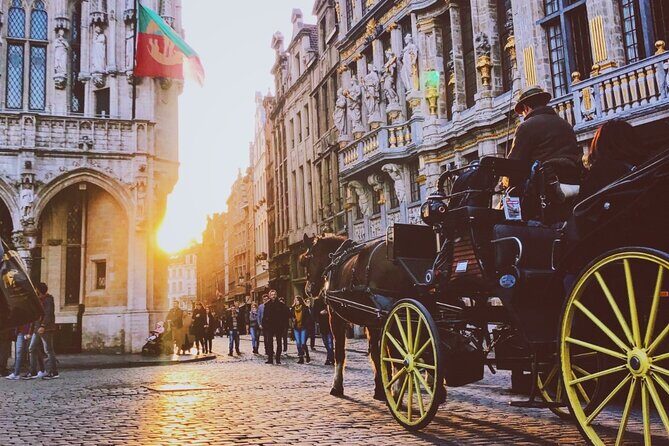
This tour works because it’s built for evening. Daytime Brussels can blur into “pretty streets plus another church.” Here, the pacing changes. You move after dark through different neighborhoods and the stories land better against the nighttime mood—less background noise, more focus.
I also like that the “dark side” label is basically honest once you’re on the walk. You’ll get lesser-known and sometimes unflattering history. But it usually isn’t wall-to-wall grimness. One guide can lean more into how Brussels worked—politics, institutions, punishment—while another may lean more into strange local legends and building-linked stories. Either way, the goal is to give you a different lens on familiar sights.
You should also know the tour has a walking component that some people find more strenuous than they expected. It’s manageable for most, but you are on your feet. If you hate long evening strolls or your legs tend to protest after a couple hours, plan for slower pace stops and comfy shoes.
You can also read our reviews of more evening experiences in Brussels
Price and logistics: cheap entry, real guide value
The price is low: $3.62 per group (up to 6), and it runs about 2 hours. That’s why this feels like the kind of tour where you’re paying a small booking fee and the guide’s time is the real value. If you like the storytelling, tipping is part of the deal. Several people specifically call out that you should carry euros for a tip, since guides rely on it.
Here’s what to expect in the logistics that matter:
- You get a mobile ticket, so you likely won’t need to print anything.
- It’s offered in English.
- The group cap is up to 35 travelers, so it’s not tiny, but it’s also not a big bus crowd.
- Confirmation is received at booking time, and the tour is near public transportation.
- Service animals are allowed.
One more practical note: the itinerary is described as a clear sequence, but some people report that the exact stops can shift depending on guide and group flow. So treat it as a guided route with flexibility, not a clockwork script where every minute is identical every night.
Starting at Grand Place: your easiest win before the walk
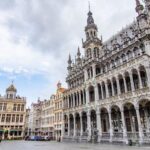
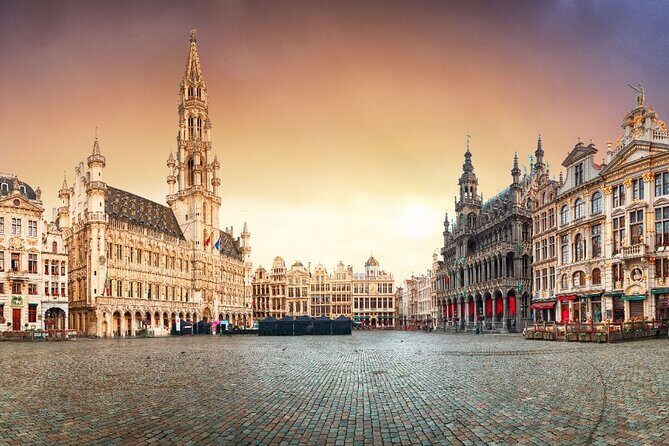
The meeting point is Grand Place / Grote Markt (1000 Brussels). The ending point is Kapellekerk (Brux.-Chap/Brus.-Kap, Rue des Ursulines, 1000 Bruxelles), so you’re effectively doing a shaped loop rather than ending exactly where you started.
If you arrive early, good. The square can get crowded, and finding the guide can be tricky if you’re late or if you’re trying to spot a person from a distance. One helpful strategy: watch for the guide near the front of City Hall area on the main square. Arrive a few minutes ahead so you can line up quickly and start calm.
Also, set yourself up for night walking success:
- Wear shoes you trust.
- Bring a light layer if Brussels feels cool to you after dark.
- Decide in advance if you want to move fast or stop often to read details and photos.
Stop-by-stop route: from Sablon charm to Marolles grit
This tour’s route is smart because it doesn’t stay in one “pretty bubble.” It starts in the Sablon area and gradually shifts toward the Marolles neighborhood feel. You’ll see small squares, gothic churches, and major civic architecture—then you end in an area with a very local rhythm.
Stop 1: Place du Grand Sablon
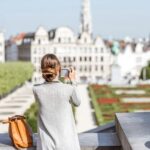
You begin at Place du Grand Sablon, linked with the Grand Marché concept—think fresh produce and artisanal finds mixed with everyday bustle. This is a good first stop because it gives you the “Brussels is a working city, not just a museum” vibe right away.
What to do here: look around for details that explain the neighborhood’s character. Even if you don’t buy anything, it helps you understand why this part of town feels different from the more monumental zones.

Stop 2: Place Saint-Jean
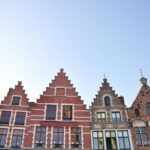
Next is Place Saint-Jean, described as a historic, charming square with old-world architecture and nearby cafes. The big anchor is St. John the Baptist Church, which dominates the feel of the place.
This stop is mostly about atmosphere. At night it’s a quieter pause where you can people-watch, reset your footing, and then get ready for the more dramatic story beats coming up.
Stop 3: Tour Anneessens
Then you move to Tour Anneessens, a district area that’s described as having a vibrant mix of architectural styles and local character. The tour frames it as a look at the city’s history and culture, but also how modern life shows up in those older spaces.
If you like “how neighborhoods evolved,” this stop tends to make sense. You’re connecting what you saw at Sablon with what’s coming in the Marolles direction—less polish, more lived-in history.
Stop 4: Rue de Rollebeek
Rue de Rollebeek is a shorter stretch by design: cobblestones, small cafes, and boutique-style storefronts. It’s the kind of street stop that helps you “zoom in” on Brussels after dark—texture, lighting, and how the street layout shapes movement.
Practical tip: this is a good place to slow down for photos, but keep moving. The tour is paced for walking, not for lingering for long.
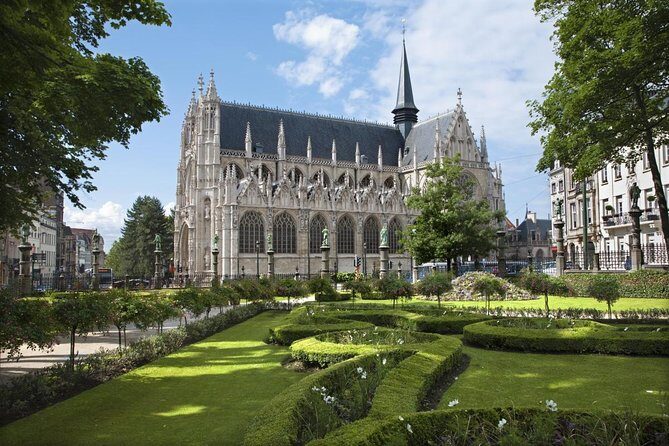
Stop 5: Église Notre-Dame du Sablon (Notre Dame du Sablon)
Now you hit the gothic centerpiece: Notre-Dame du Sablon. The highlight here is the church’s stained glass windows and intricate detailing, framed as a key marker of Brussels’ cultural heritage.
This is where I’d expect many guides to slow slightly and add the kind of architecture-linked storytelling that makes the tour feel worth your time. If you’re the type who usually skips churches, this stop may still win you over because the tour context gives you a reason to look closely.
Stop 6: Palace of Justice
After the church, you jump to the heavyweight: the Palais de Justice. It’s described as one of the largest courthouses in the world, with grand neoclassical architecture, and it sits atop a hill with sweeping views.
This is one of the stops that matches the tour title best. When a story is about rules, punishment, and institutions, this building gives you the right visual weight.
If you’re sensitive to long stair climbs or hills, this is the place to pace yourself. It’s not a museum stamp-and-go moment—you’re reading the scale while walking and listening.
Stop 7: Square du Petit Sablon
Then you reach Petit Sablon, a garden square with a more refined feel. The standout detail is the 48 small bronze statues representing medieval guilds.
This stop is ideal if you love symbols and small details. Even if you don’t memorize every statue, the guide’s explanations can help you connect art, power, and daily work life in medieval Brussels.
Stop 8: Place du Jeu de Balle (the flea market energy)
Next is where the tour tone shifts toward everyday locals. Place du Jeu de Balle is strongly associated with the Marolles flea market, described as a daily event where you can find trinkets, old photographs, vintage furniture, and second-hand clothing.
At night, the mood is different than a daytime market, but you still get the feeling of a neighborhood scene. This is one of the stops that often makes the tour feel more authentic, less postcard, because it’s tied to actual street-level commerce and recycling.
Stop 9: Église Notre-Dame de la Chapelle / Kapellekerk ending
Finally, the tour ends at Kapellekerk, a gothic church in the vernacular Marolles neighborhood. The name links back to a chapel founded here in 1134.
This ending feels right. It’s a calm wrap with history folded into the neighborhood texture. Even if you wanted more shock-factor stories, many guides land the finale with a sense of place rather than just a pile of grim facts.
The guide’s storytelling: what makes it more than a sightseeing loop
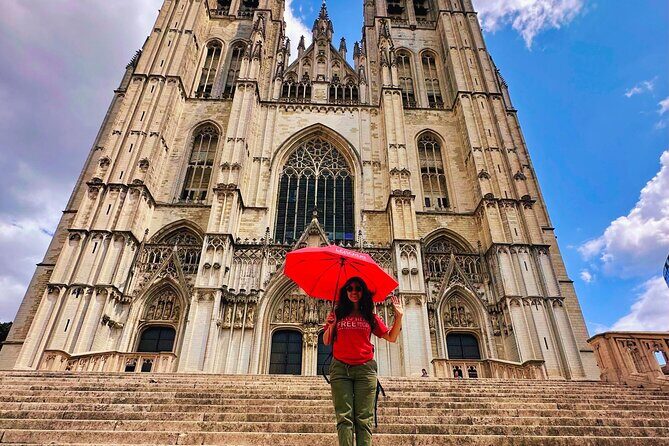
The biggest praise across guides is about presentation and how the stories connect to what you’re seeing. Names that come up in past runs include Sebastian, Rahim (also seen as Rahiem), Gunny, David, Ann Marie, Ian, and Den. Common thread: people mention the guides as attentive and good communicators, with storytelling that feels personal and organized.
You should also understand what “dark side” tends to mean on this particular tour:
- Some guides highlight torture, murder, suicide, and punishment themes.
- Others emphasize the political environment and structures that shaped Brussels.
- One key idea: it often isn’t all scary stuff. It’s frequently about how power was enforced and how people lived with the consequences.
And yes, there’s humor sometimes. Even on serious topics, guides frequently keep it moving so the evening stays fun. That’s why some people say it’s not too grizzly—more “weird facts and uncomfortable history” than constant gore.
One caution: if you need strict, stop-for-stop conformity, keep your expectations flexible. There are hints that the sequence can depend on guide choices and the number of participants. That doesn’t automatically mean it’s bad, but it can make the experience feel less predictable.
Walking pace and comfort: what to plan for
This is a walking tour, and it can feel more active than some people expect. Shoes matter. Also, night walking means lighting varies block to block, and some guides keep their voice steady but a bit soft—so if you’re hard of hearing, stand where you can see faces and track gestures.
If you’re traveling solo, it can still work well. The group size is set to allow a manageable experience, and guides usually make an effort to keep everyone included. I’d still suggest you position yourself near the guide when possible, so you get clear sound without craning your neck.
Who should book this evening walk
You’ll probably enjoy this tour if you want:
- An evening change of pace from daytime sights
- A guided route that links buildings to backstory
- Stories that include politics, punishment-era themes, and lesser-known angles
- A walk that mixes major landmarks (like the Palace of Justice) with neighborhood texture (like Place du Jeu de Balle)
You might skip it if:
- You’re expecting nonstop horror or a strictly “seedy” focus.
- You strongly dislike walking or hills, since the route includes a hilltop courthouse area.
- You need every detail to match a fixed script at an exact time each stop.
Should you book this Dark Side of Brussels tour?
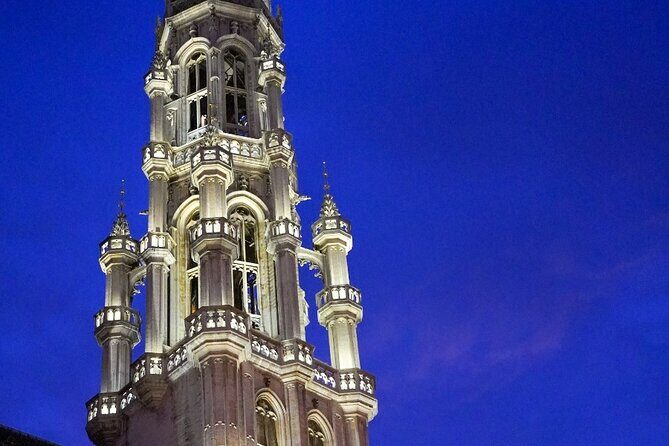
I think this is a strong book for the right mood. If you like history but you’re tired of the same morning-lecture format, this is a good fit. The route naturally takes you through different Brussels zones, and the guide-led storytelling is what turns the evening into something memorable.
Also, take it as a tour where the low price is part of the welcome, not the whole story. Bring euros for a tip if you enjoy the guide. And arrive early enough at Grand Place to find the meeting point without stress.
If your travel style is flexible and you’re up for a real evening walk, this one is worth it.
FAQ
Where does the tour start?
The tour starts at Grand Place / Grote Markt, 1000 Brussel, Belgium.
Where does the tour end?
The tour ends at Kapellekerk in the Marolles area, listed as Brux.-Chap/Brus.-Kap, Rue des Ursulines, 1000 Bruxelles.
How long is the tour?
It lasts about 2 hours.
How much does it cost?
The price is $3.62 per group, with a group size of up to 6.
Is the tour offered in English?
Yes, the tour is offered in English.
Do I get a mobile ticket?
Yes, it includes a mobile ticket.
What’s the maximum group size?
The tour has a maximum of 35 travelers.
What if the tour doesn’t meet the minimum number of travelers?
If it’s canceled because the minimum isn’t met, you’ll be offered a different date/experience or a full refund.
Is free cancellation available?
Yes. You can cancel up to 24 hours in advance for a full refund.