REVIEW · BRUGES
Flanders Fields Remembrance Tour from Bruges
Book on Viator →Operated by Brussels City Tours - Keolis Travel · Bookable on Viator
WWI feels different when you visit the sites. This Bruges-based Flanders Fields Remembrance Tour strings together trenches, cemeteries, and museums, ending with the Last Post at Menin Gate.
I love how the guide-led pacing gives you real moments at each memorial, plus time to ask questions instead of rushing past everything. I also love the way the day connects art and writing to place, from Käthe Kollwitz’s Grieving Parents to Hill 60’s wartime tunnels.
Still, it’s a long, packed day, and if the group is bigger than expected you may have trouble catching every detail from the bus.
In This Review
- Key points to know before you go
- The Bruges start: getting set for a long day
- Price and what you actually get for about $95
- From Bruges to Vladslo: Germany Military Cemetery and Käthe Kollwitz
- Diksmuide’s Trench of Death: where the Western Front feels close
- Ypres, Flanders Field Museum, and Hill 60 tunnels
- Passchendaele and Tyne Cot: the scale hits fast
- Essex Farm Cemetery: seeing where McCrae wrote the poem
- The Last Post at Menin Gate: a daily ritual for the missing
- How to handle a day that feels heavy (without shutting down)
- Who this tour fits best—and who might want a different day
- Should you book the Flanders Fields Remembrance Tour from Bruges?
- FAQ
- How long is the tour?
- Where is the meeting point in Bruges?
- What time does the tour start?
- Is hotel pickup included?
- What language is the tour offered in?
- Is lunch included?
- Do I need admission tickets for the main stops?
- Is the transportation air-conditioned?
- What fitness level do I need?
- What group size should I expect?
Key points to know before you go
- Last Post at Menin Gate: a simple daily ritual for Commonwealth soldiers missing after battle
- A strong guide factor: names like Diederiek Naeyaert and Stephan/Stefan show up in standout experiences
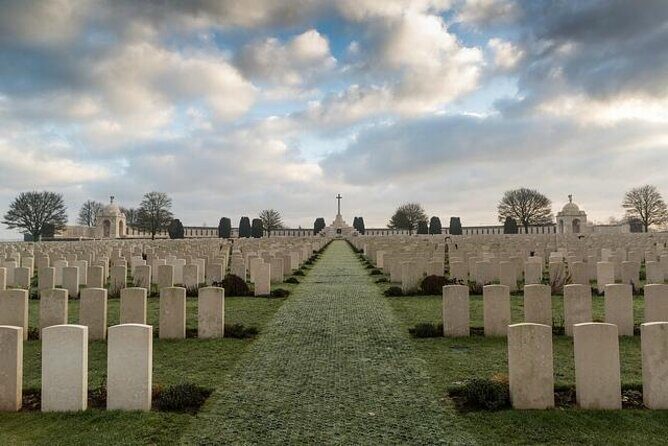
- Tyne Cot’s scale: world’s largest Commonwealth cemetery, with tens of thousands of headstones
- Trench of Death at Diksmuide: a harsh stretch of the Western Front and a Canadian memorial tied to early gas attacks
- McCrae’s connection at Essex Farm: you see the dressing-station setting for In Flanders Fields
- Hill 60 tunnels: the war’s underground side, explained right where you’re standing
The Bruges start: getting set for a long day
You meet at Bargeplein, Bargeweg in central Bruges. The start time is 11:00 am, and the tour ends back at the same meeting point, so you don’t have to solve transport in the late evening.
This is a day for people who can handle quiet, emotional places and a full schedule. The pace is active enough that the tour asks for a moderate fitness level, mostly because cemeteries and battlefield sites involve walking on uneven ground and standing outdoors for parts of the day.
You can also read our reviews of more tours and experiences in Bruges.
Price and what you actually get for about $95
At $95.34 per person for roughly 10 hours 30 minutes, this isn’t priced like a casual sightseeing loop. You’re paying for a guided circuit that hits multiple World War I sites in one day, including guided commentary, time at major memorials, and the big closing ceremony.
One smart value clue: several of the most “anchor” stops are listed as free admission (like Passchendaele New British Cemetery, Essex Farm Cemetery, and the Last Post ceremony). Lunch is not listed as included, even though the day includes a planned meal time in Ypres, so you’ll want to budget for it or confirm what your departure includes.
From Bruges to Vladslo: Germany Military Cemetery and Käthe Kollwitz

The day kicks off with a drive from Bruges toward Vladslo, where you visit the Germany Military Cemetery. This is one of the best places to start because it widens the frame beyond one side of the war. You’re not only looking at battlefield history; you’re meeting the human reality of it.
What makes Vladslo especially memorable is the poignant sculpture of Grieving Parents by Käthe Kollwitz. It’s the kind of artwork that changes how you read the headstones—less like a record, more like a response. Starting here also keeps the tone respectful. You’re not “touring” death; you’re learning how deeply families were affected.
Practical note: cemeteries ask for silence in your body even if you’re talking to your guide. I found it helps to slow down and let the group settle before you move to the next cluster of graves.
Diksmuide’s Trench of Death: where the Western Front feels close
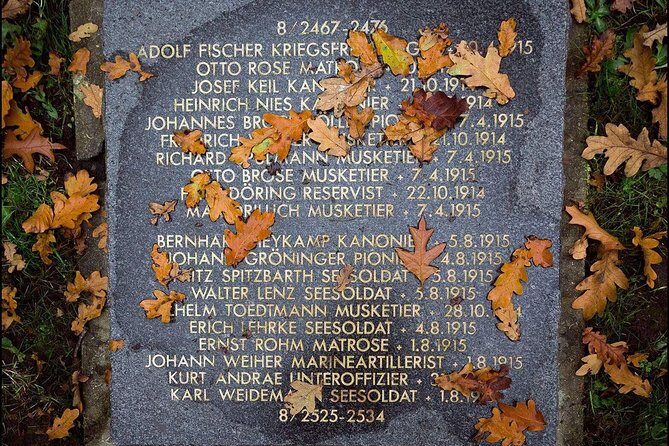
Next comes Diksmuide, with a stop at the Trench of Death. This area sits on the Western Front, and the name alone tells you the mood: this wasn’t a dramatic, distant battlefront. It was a place where many soldiers met their end.
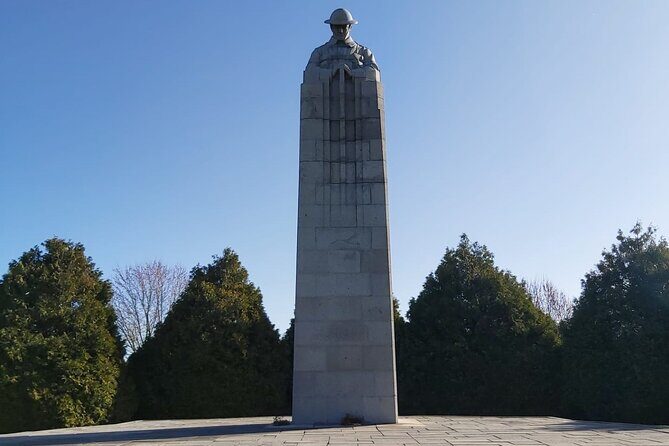
Nearby, you’ll also see the statue of the Brooding Soldier, which commemorates the sacrifice of 2,000 Canadian soldiers during the first German gas attack. That memorial connection matters because it anchors the war’s most notorious weapon in a specific human cost.
Why this stop works on a guided day: your guide can connect what you’re seeing to the broader “how and why” of gas warfare and trench fighting. You’ll walk away with more than dates—you’ll understand how fear and endurance shaped daily life at the front.
Ypres, Flanders Field Museum, and Hill 60 tunnels
Ypres is where the day starts to feel like a full-on war story, not just a sequence of locations. You’ll have a meal stop in Ypres—on this tour it’s described as a hearty plowman-style lunch—then you head to the Flanders Field Museum.
Inside, the museum uses varied exhibitions to explain battlefield history, and you’ll also get an audio-guided way to hear the war’s story before you move on. This “watch and listen” combo helps because it prevents the day from becoming only outdoor looking.
After the museum, you ascend Hill 60 and see tunnels that played a pivotal role in the war. Hill 60 is one of those places where the battlefield isn’t just “where people stood”—it’s where people went underground, built, moved, and survived. It also gives you a different angle on the trench system, because you can visualize operations beyond the surface trenches.
One caution for timing and expectations: on some visits, the museum has been reported closed and parts of the Menin Gate area have shown refurbishment. The ceremony still goes on, but if your trip is fixed for a specific date, keep flexibility in your mindset about what’s open.


Passchendaele and Tyne Cot: the scale hits fast
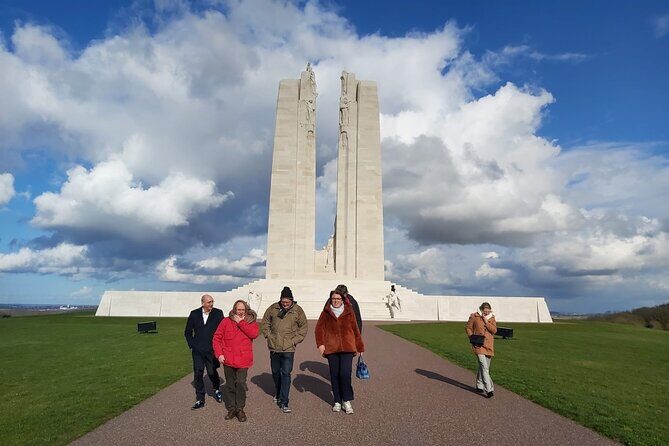
After Ypres, the tour aims for the Passchendaele area, a battlefield that became a quiet town. The route also ties in the broader context of early gas attacks. You’ll stop at Passchendaele New British Cemetery, listed for around 30 minutes with free admission.
This is a good place to pause. A cemetery stop isn’t a “photo stop,” and a good guide will help you read what you’re seeing—how the burial patterns and memorial language reflect the war’s chaos.
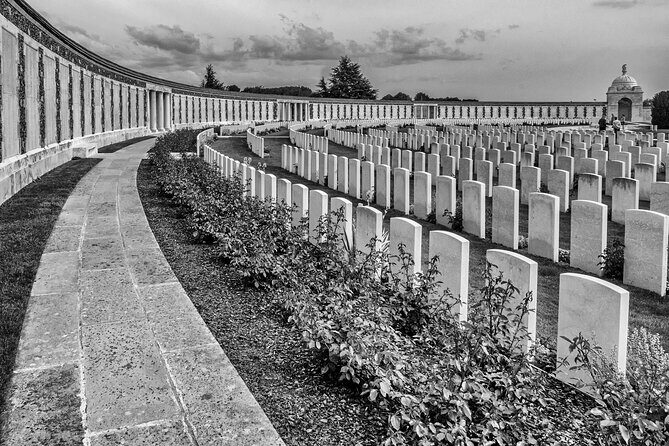
Then comes the big draw: Tyne Cot. This tour calls it the world’s largest Commonwealth cemetery, and you’ll feel that truth in your legs as well as your eyes. Rows after rows of headstones create a mental number problem: it’s too big to truly process at once. The tour also notes the scale in terms of the tens of thousands of headstones, which is exactly what makes it so powerful.
Along the way you’ll also pass Hill 60 and areas tied to the Zwarteleen region in Zillebeke. Even when you’re not stopping for a long walk, the repetition of the same key sites keeps the story coherent: this isn’t random driving; it’s a linked chain.
Essex Farm Cemetery: seeing where McCrae wrote the poem
The stop at Essex Farm Cemetery is short—about 15 minutes—but it’s one of the most literary moments of the day. Admission is listed as free, and the setting is the dressing station where Dr. John McCrae wrote In Flanders Fields.
If you’ve read the poem before, seeing the place behind it can feel almost unfairly real. You’re no longer reading a work about sacrifice; you’re standing where medical support and battlefield conditions collided. Even if you’re not a poetry person, you can still sense why those words mattered, and why they stuck.
Tip: don’t rush the cemetery portion here. Give yourself a minute to look and then a minute to listen. The contrast between what McCrae wrote and what’s visible now lands best when you slow your brain down.
The Last Post at Menin Gate: a daily ritual for the missing
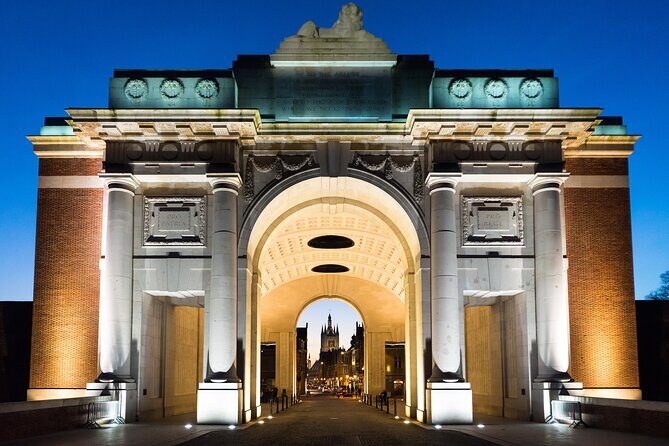
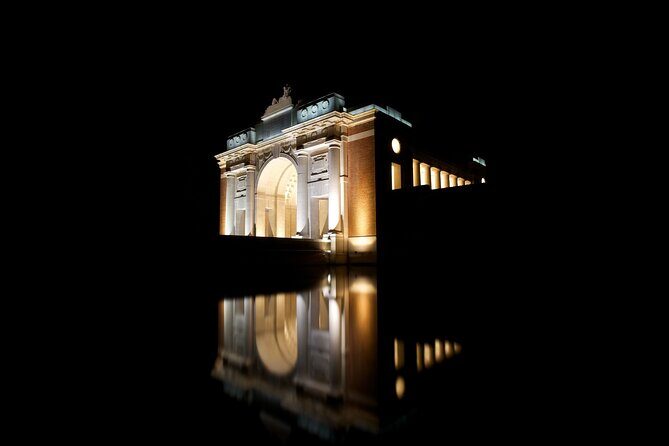
The day’s emotional climax is the Last Post Ceremony at Ypres Menin Gate. The tour frames it as a daily tribute to all Commonwealth soldiers and officers who were missing after battle, and you’ll spend about 30 minutes there.
What makes the ceremony hit hard is not theatrical staging. It’s simple. A plain, repeated ritual that keeps returning to the same core idea: people never came back, and memory needs an address.
You’ll likely notice how the crowd behaves—quiet, patient, and present. On some departures, the ceremony may run longer than expected, which only adds to the feeling that this is a living tradition rather than a one-time show.
If you’re going on a date when the Menin Gate area is under construction, you still get the same core experience. Just be ready for scaffolding or vehicles to create a slightly industrial frame around something that is meant to feel timeless.
How to handle a day that feels heavy (without shutting down)
This is a tour where your brain will keep counting headstones long after the bus pulls away. That’s normal. The sites are arranged to communicate scale and loss, and the guide’s job is to help you understand what you’re seeing without turning it into numb facts.
A few practical moves help:
- Wear comfortable shoes. Cemeteries and memorial grounds are not smooth museum floors.
- Bring layers. You’re outdoors in open spaces, and the air can shift fast.
- Ask questions early. When the bus is rolling, you’ll hear enough; when you’re at a stop, you can ask the real stuff.
Also, if you’re sensitive to emotion, plan for it. You don’t need to push through with a stoic face. Let the day move at the pace it sets.
Who this tour fits best—and who might want a different day
This tour is a strong match if you:
- want a structured, guided way to understand major WWI locations in Flanders
- feel drawn to Commonwealth remembrance sites (Canada, the UK, Australia, and others appear throughout the memorial connections)
- appreciate art and writing tied to wartime places, like Käthe Kollwitz and John McCrae
It may be less ideal if you:
- hate very long days with multiple stops and short walking segments
- need lots of downtime between sites
- are easily overwhelmed by crowded spaces or sound (the narration is bus-and-stop dependent, and larger group sizes can affect how clearly you catch every detail)
Should you book the Flanders Fields Remembrance Tour from Bruges?
If you’re the type of person who wants WWI history to mean something more than a textbook, I’d book it. The combination of preserved trench sites, major cemeteries, and the Last Post ceremony at Menin Gate turns the day into a focused act of remembrance, not just sightseeing.
The main reason to pause is the “packed long day” reality. You’re trading comfort time for impact time. If that trade-off sounds right to you, this is one of the most meaningful ways to experience the Flanders battlefield region from Bruges.
FAQ
How long is the tour?
The tour duration is approximately 10 hours 30 minutes.
Where is the meeting point in Bruges?
The tour starts at Bargeplein, Bargeweg, 8000 Brugge, Belgium.
What time does the tour start?
The start time is 11:00 am.
Is hotel pickup included?
No. Hotel pickup and drop-off are not included.
What language is the tour offered in?
The tour is offered in English.
Is lunch included?
Lunch is not listed as included. The day includes a stop for a plowman’s lunch in Ypres, so you should plan around that.
Do I need admission tickets for the main stops?
The tour information lists free admission for Passchendaele New British Cemetery, Essex Farm Cemetery, and the Last Post Ceremony.
Is the transportation air-conditioned?
Yes. The tour includes an air-conditioned vehicle.
What fitness level do I need?
A moderate physical fitness level is recommended.
What group size should I expect?
The tour lists a maximum group size of 200 people.