REVIEW · BRUSSELS
From Brussels: The Battle of the Bulge Remembrance Tour
Book on GetYourGuide →Operated by BRUSSELS CITY TOURS · Bookable on GetYourGuide
Steel and silence in the Ardennes. This Battle of the Bulge remembrance day connects you to WWII through two heavy-hitters: the Ardennes American Cemetery with its thousands of white crosses, and a walk at the foxholes in Foy where American soldiers dug in under pressure. I like that the guide brings the story to life in plain English, and I like that you get more than monuments—you also get context as you move from place to place. You’ll come away with a clearer sense of why Bastogne mattered.
One thing to plan for: it’s a long day on a coach, and a lot of the time is spent standing, walking, and getting in and out at stops. It’s not recommended for people with limited mobility, including wheelchair users, and lunch and beverages are on your own.
In This Review
- Key highlights you’ll feel immediately
- From Brussels to the Ardennes: what the 11-hour day actually feels like
- Neuville-en-Condroz American Cemetery: the scale that hits hardest
- McAuliffe Square in Bastogne: a town built around stubborn memory
- The Mardasson Memorial and Bastogne War Museum: where the story becomes clearer
- A German cemetery stop: keeping the focus honest
- Foy foxholes and cavities: seeing protection the hard way
- Lunch and breaks in Bastogne: don’t assume it’s handled
- Price and value: how $97 stacks up for a full WWII day
- Who this tour is best for (and who should skip it)
- Should you book the Battle of the Bulge Remembrance Tour?
- FAQ
- How long is the tour?
- Where does the tour meet in Brussels?
- What stops are included in the day?
- Is the Bastogne War Museum entrance included?
- Is lunch included?
- What language is the tour guide?
- Is transportation included, and where do you end?
- Do I need to buy museum tickets separately?
- Is this tour suitable for wheelchair users or limited mobility?
Key highlights you’ll feel immediately
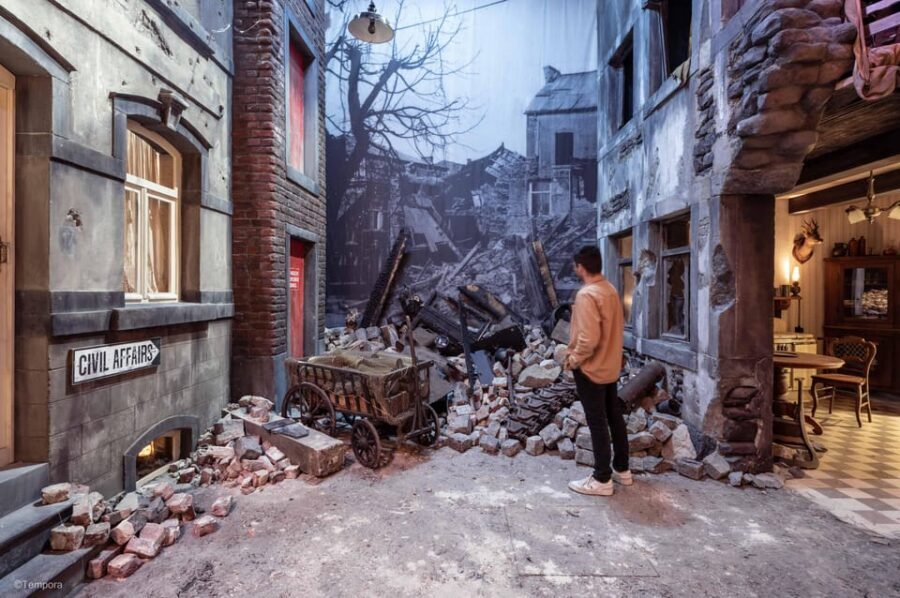
- Ardennes American Cemetery: rows of white crosses that put real human scale on the battle
- McAuliffe Square in Bastogne: central Bastogne atmosphere plus time to grab food or browse nearby shops
- Mardasson Memorial: a star-shaped tribute that makes the loss hard to ignore
- Bastogne War Museum (included entry): 3D exhibits plus guided explanations that help you connect the dots
- Foy foxholes: cavities and trenches tied to the 101st Airborne Division, including Easy Company stories
From Brussels to the Ardennes: what the 11-hour day actually feels like
This is a true day trip. Expect roughly 2 hours on the coach to get from Brussels to the Bastogne area, then multiple stops where you’ll walk and take short stretches on your feet. The total duration is 11 hours, and that matters because you won’t be able to “rest” the way you might on a shorter tour with lots of time staying seated.
The departure point is outside the National Bank of Belgium. Look for the tour staff and the Keolis coach. If you choose a private option, you may also have hotel pickup and drop-off. Either way, you’re traveling with transportation provided by bus/coach, and the transport quality is a strong selling point.
What I like about the pacing is that the stops are sequenced so you build understanding as you go. You start with remembrance and scale, then you move to the fight’s specific geography around Bastogne, and finally you get hands-on with what “dug in” meant at Foy.
You can also read our reviews of more tours and experiences in Brussels.



Neuville-en-Condroz American Cemetery: the scale that hits hardest
Your day begins at the Neuville-en-Condroz American Cemetery. This is the kind of place that doesn’t need dramatics. You’ll see rows of white crosses marking the sacrifices of thousands of U.S. soldiers. Even if you’ve read about WWII, the sheer repetition of names and markers forces your brain to shift from dates and strategy to people.
I like cemeteries like this because they give you a quiet framework for the rest of the tour. After you’ve stood there, later stops stop feeling like “sights” and start feeling like locations tied to lives.
Practical tip: wear comfortable shoes and expect to stand more than you think. This is also one of the moments where your phone camera is useful, but try to give yourself a little time without it, so the place lands properly.
McAuliffe Square in Bastogne: a town built around stubborn memory
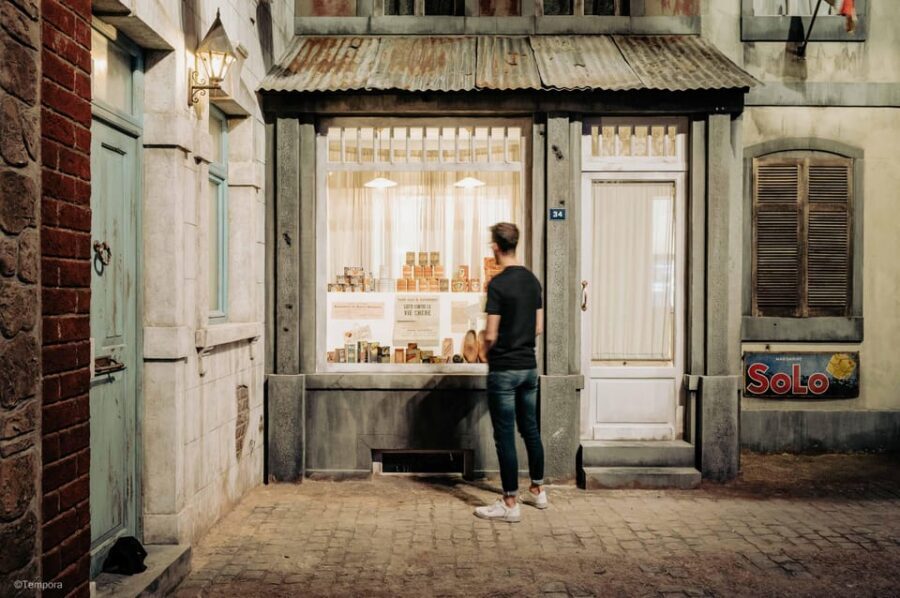
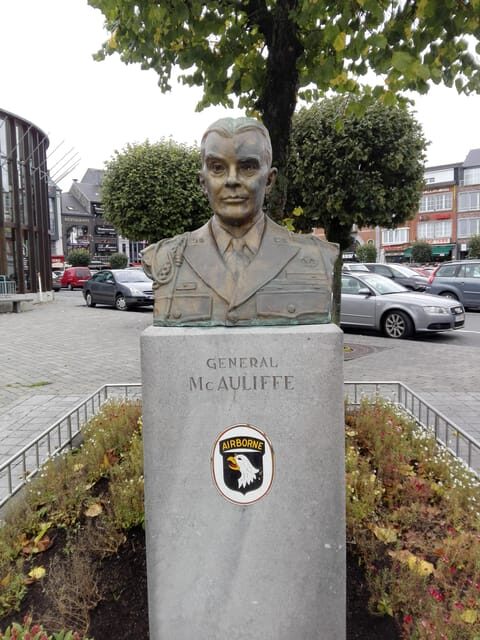
Next you head into Bastogne, one of the key strongholds during the Battle of the Bulge. You’ll spend time around McAuliffe Square—enough time to get your bearings, walk the area, and soak up the town’s WWII identity without feeling trapped on a sidewalk.
This is also where you’ll see the M3 Sherman Tank, a large, visible symbol of Allied resilience. It’s hard to miss, and that’s the point. The tank helps you connect the story you’re hearing to something physical you can point at.
McAuliffe Square is also a convenient lunch-and-snack staging point, depending on what you want to do on the day. The tour setup includes time for nearby dining and shopping in the Bastogne area. If you’re the type who likes a quick coffee and a pastry break before you head into the heavier memorials, this is where it fits.
A small consideration: some stops are short photo windows. If you want lingering time for pictures or reading signs, keep your expectations realistic.
The Mardasson Memorial and Bastogne War Museum: where the story becomes clearer
Then the focus shifts to Mardasson Memorial. It’s star-shaped and built as a tribute to American soldiers killed in the battle. The design matters. It turns remembrance into a structure you can read with your eyes, and it feels like the monument is angled toward significance rather than decoration.
Right nearby is Bastogne War Museum with included entrance. The museum is a major part of why this tour is worth the price. You get 3D displays and powerful storytelling, and the guided approach helps you understand what you’re seeing instead of just moving through exhibits.
From what I’ve seen people take away, the museum usually pays off most when you let the guide’s explanations do their job. The benefit of having a live English guide is that you can ask questions in real time and get the big picture without guesswork. One practical note: you may feel a little rushed toward the end if you tend to read every sign. If you’re a slow reader, go in with a strategy: hit the main sections first, then circle back if time allows.
A German cemetery stop: keeping the focus honest
This tour also includes a stop at the German cemetery. It’s a sobering pivot that matters. The Battle of the Bulge is often told through Allied viewpoints, but graves like these make the cost visible on both sides.
I appreciate this inclusion because it discourages a one-note story. You can honor the U.S. soldiers at the American sites and still keep space for the reality that the battle swept up more than one nation’s sons.
If you’re sensitive to emotional places, give yourself a little breathing room at this stop. Don’t try to “power through” for the sake of the schedule. A few slow minutes here are worth more than extra photos.


Foy foxholes and cavities: seeing protection the hard way
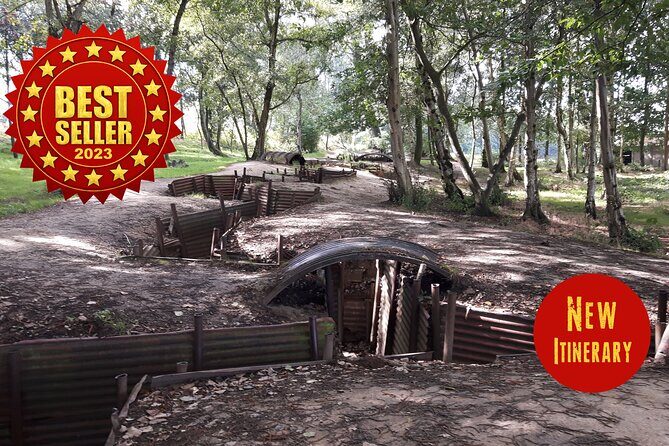
The final act is the foxholes in Foy, once occupied by the 101st Airborne Division. This is where the day stops being abstract.
You’ll explore the foxholes and cavities dug by American soldiers for protection. These aren’t just “historic reenactment spots.” They help you imagine what survival looked like when your cover is earth, your light is limited, and your body needs rest before the next move.
Some guides and explanations on this route also connect the foxholes to Easy Company, which makes the experience feel more personal and specific. Even if you don’t know those details yet, the physical layout does the teaching for you: it shows why digging mattered and how the terrain shaped tactics.
Practical tip: this is not the part to wear the wrong shoes. Comfortable footwear is the whole point. If the ground is uneven (and in places like this it often is), good tread and supportive soles are what keep the experience from turning into a trudge.
Lunch and breaks in Bastogne: don’t assume it’s handled
Lunch is not included, and neither are beverages. The tour builds in time for a local restaurant break, but that means you’ll need to plan what you want to eat and whether you prefer a sit-down meal or a quick stop.
McAuliffe Square is useful here, because it’s central and geared toward visitors. If you want to shop and browse, this is your moment. If you’re aiming for something simple and fast, pick a place close to where you’re most likely to regroup for the next segment.
My practical advice: carry a little cash or have a card ready, and don’t wait until the last second to get food. When you’re on a schedule with multiple guided stops, hunger makes everything harder.
Price and value: how $97 stacks up for a full WWII day
At about $97 per person, this tour prices itself as an all-in history day with transportation, a professional guide, and included museum entrance. The value comes from the combination:
- You’re not just visiting one site. You’re seeing multiple WWII locations tied to the Battle of the Bulge.
- You get guided interpretation in English. That turns your time in memorials and exhibits into something you can actually process.
- Museum entry is included. That’s usually the kind of cost you’d pay separately on a DIY day.
- Transportation is part of the deal. You’re starting in Brussels and ending at Central Station without having to coordinate vehicles or driving in rural Belgium.
Is it expensive compared with doing it on your own? If you were traveling with a car and already know exactly where you want to go, maybe. But the hassle savings are real. Plus, the guide’s job is to connect the geography to the human experience, and you don’t get that automatically when you drive yourself.
Who this tour is best for (and who should skip it)
This is a strong fit if you:
- want a structured WWII day trip from Brussels
- like memorials and museums with guided explanations
- care about understanding how terrain and digging affected real soldiers
It may be a poor fit if you:
- have mobility limitations. This tour is not recommended for people with limited mobility and isn’t suitable for wheelchair users.
- struggle with long standing/walking days. Even short photo stops can add up when you’re on a tight timeline.
Should you book the Battle of the Bulge Remembrance Tour?
If you want one day that covers the emotional core and the on-the-ground reality of the Battle of the Bulge, I’d book it. The tour’s power comes from pairing remembrance sites with Bastogne’s key landmarks and then ending with the foxholes in Foy—so you don’t just learn about the battle. You understand what it meant to survive it.
Book it especially if you’re excited by guides who bring stories into focus. Many groups are led by guides like Martin King, Stefan, or Jan, and the common thread is energy and strong explanations that help the day make sense.
Skip it if you need a low-walking day, or if you rely on wheelchair access. For most people with average mobility, comfortable shoes and a steady pace will get you through.
FAQ
How long is the tour?
The tour duration is 11 hours.
Where does the tour meet in Brussels?
You’ll meet outside the National Bank of Belgium and look for staff and the Keolis coach.
What stops are included in the day?
You visit the Ardennes American Cemetery area, Bastogne (including McAuliffe Square and an M3 Sherman Tank photo stop), the Mardasson Memorial, Bastogne War Museum, a German cemetery, and the foxholes in Foy.
Is the Bastogne War Museum entrance included?
Yes. Entrance at the War Museum is included.
Is lunch included?
No. Lunch and beverages are not included.
What language is the tour guide?
The live tour guide provides English commentary.
Is transportation included, and where do you end?
Transportation by bus/coach is included, and the tour finishes at Central Station.
Do I need to buy museum tickets separately?
No. The tour notes that you skip the ticket line, and museum entrance is included.
Is this tour suitable for wheelchair users or limited mobility?
No. It is not recommended for people with limited mobility, and it is not suitable for wheelchair users.