REVIEW · YPRES
In Flanders Fields and Passchendaele Grand Tour
Book on Viator →Operated by Ypres Battlefield Tours · Bookable on Viator
Trenches have a way of sticking with you. This Ypres Salient and Passchendaele day is a tight, small-group route (max eight) that walks the line between memorials, preserved bunkers, and the stories behind them, guided by Roger. I especially like how the pace feels personal, so you’re not just hopping between sites—you’re getting the why behind each one.
One big plus for me is the practical value baked in: Sanctuary Wood Museum time (and the tour’s focus on a preserved British trench system) paired with a included light sandwich lunch and a soft drink. You’ll also have bottled water along the way, which matters when the day runs long.
The main consideration is the subject matter. This is World War I—cemeteries, mass graves, and war underground—so it’s an emotionally heavy day. It also means you’ll want to go in ready to slow down, not just tick boxes.
In This Review
- Key highlights you’ll feel the most
- Why Ypres and Passchendaele hit differently than other WWI stops
- Your day runs like a WWI timeline, not a scattershot sightseeing list
- Sanctuary Wood Museum: the trench system you can actually understand
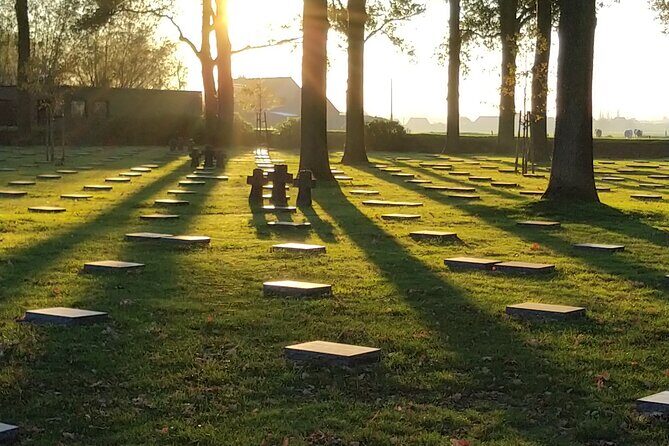
- Tyne Cot Cemetery after Passchendaele: the scale hits fast
- Langemark Cemetery: German loss, mass graves, and uncomfortable context
- Essex Farm Cemetery and Lt Col John McCrae’s In Flanders Fields
- German command posts and the war of positions
- Caterpillar Mine Crater (Hill 60 B): the war underground
- Hill 60: preserved bunkers, mine craters, and terrible fighting
- Bayernwald: the only preserved German trenches in the Salient
- Price and logistics: what $344 buys you in the real world
- Getting there and making the day smoother
- Who should book this WWI grand tour (and who might skip it)
- Should you book In Flanders Fields and Passchendaele Grand Tour?
- FAQ
- How long is the tour?
- How big is the group?
- Where do we meet, and what time does it start?
- What’s included for food and drinks?
- Is Sanctuary Wood Museum admission included?
- What’s the cancellation policy?
Key highlights you’ll feel the most
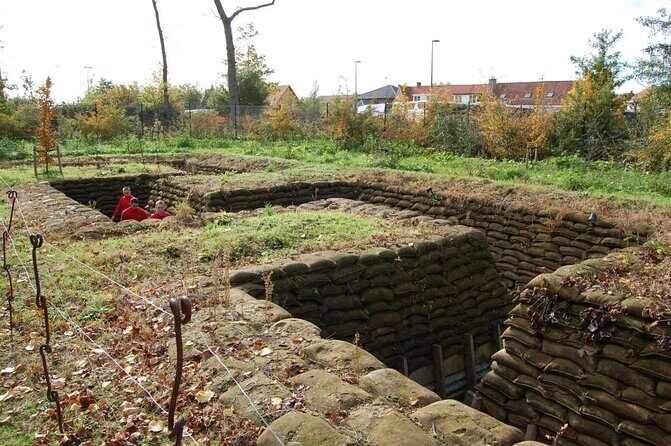
- Sanctuary Wood Museum: a standout collection paired with a preserved British trench system
- Tyne Cot Cemetery: the world’s largest British and Commonwealth war grave cemetery
- Langemark Cemetery: a German mass-grave cemetery with links to Nazi history
- Essex Farm Cemetery: dressing-station bunkers plus the memorial and context tied to Lt Col John McCrae’s In Flanders Fields
- Hill 60 and the underground war: preserved battlefield features and mine-crater stories around Caterpillar Mine Crater (Hill 60 B)
- Bayernwald: the only preserved German trenches in the Ypres Salient
Why Ypres and Passchendaele hit differently than other WWI stops
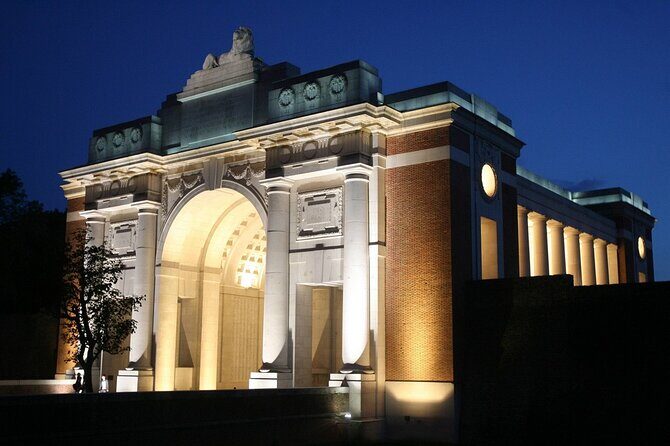
Ypres is famous, but what you feel here is how concentrated the impact is. This part of Belgium wasn’t just a front line on a map—it was a repeating pattern of shelling, collapse, rebuilding, and loss, over and over again. On this tour, you move through that story in a way that’s easy to follow because you’re guided between specific sites tied to specific phases of fighting.
I like that the route doesn’t focus only on one side. You’ll see Allied cemeteries and memorials, but you’ll also stand inside preserved German command and trench positions. That balance doesn’t dilute the tragedy—it helps you understand the full shape of the war in the Ypres Salient.
Also, you’re not doing this as a lonely self-guided walk. With a max group of eight, it’s realistic to ask questions and get clear explanations—especially the kind that connect dates, locations, and what soldiers actually faced in the mud and fire.
You can also read our reviews of more tours and experiences in Ypres.


Your day runs like a WWI timeline, not a scattershot sightseeing list
You start at Station Ieper (Colaertplein 35, 8900 Ieper) at 10:00am, and you’re back at the same meeting point when the tour ends. The whole experience is listed at about 7 to 8 hours, which makes sense for a route that includes multiple cemeteries, multiple preserved trench and bunker areas, plus a museum stop.
The small-group size is more than a comfort perk. It changes how the day feels. You can hear your guide without shouting, and you’re more likely to notice details at each stop—names on headstones, bunker layouts, why certain sites were preserved. That’s also where Roger’s style matters. The guide is described as using humor carefully while still treating the subject with the seriousness it deserves. You’ll also benefit if you like asking follow-ups—Roger is known for answering questions and has written books on the area.
Practical tip: plan for a long day. Even with short on-site times (often around 15–45 minutes per stop), there’s travel between places. Comfortable shoes and layers help you stay focused.
Sanctuary Wood Museum: the trench system you can actually understand
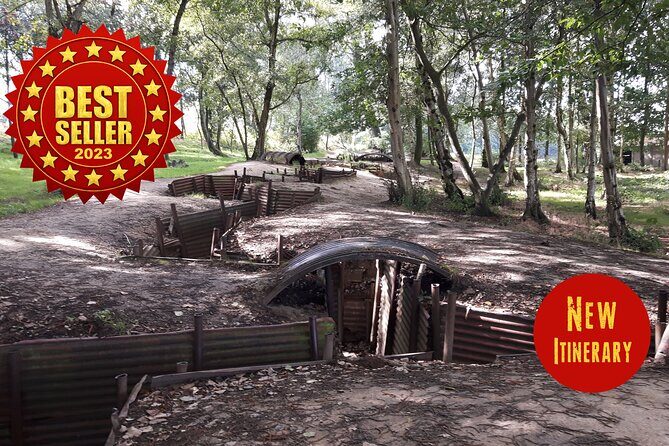
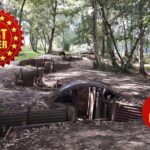
The day begins at Sanctuary Wood Museum, and this is one of the best places to start because it gives you the physical context. You get time inside a museum with an impressive set of artifacts, and then you see a preserved British trench system. That combination matters: the objects give you detail, and the preserved trench layout gives you scale and structure.
The time allocated here is about 40 minutes. That’s enough to get oriented without rushing so hard you miss the story.
One practical note: the tour overview says admission to Sanctuary Wood Museum is included, but the stop detail also states an admission ticket note as not included. I’d confirm this at booking so you’re not caught off-guard. Either way, you’re going to get real value from the trench system portion, because it helps you recognize what you’re later looking at outdoors—bunkers, dugouts, and the logic of positions.
If you’re someone who needs a frame before you wander through memorials, this start is exactly the right move.
Tyne Cot Cemetery after Passchendaele: the scale hits fast
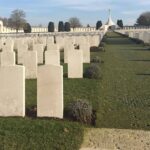
Next you’re driven through the battlefields connected with Passchendaele, then you arrive at Tyne Cot Cemetery. This is a powerful site because it’s both beautiful and enormous. The cemetery is described as the largest British and Commonwealth war grave cemetery in the world, and when you’re standing there, you understand what that means in a very immediate way.
You get about 20 minutes on-site. That’s a short window for a place of this size, so your approach matters. Look for the layout and the headstone patterns first—then, if you want, slow down for a moment at the densest sections. With only limited time, you’ll get more out of the visit by choosing one or two paths rather than trying to see everything.
Admission here is noted as free, which is nice. The real value is the emotional “reset” after museum context. You go from trench detail to human cost, and the contrast makes the history feel less abstract.
Langemark Cemetery: German loss, mass graves, and uncomfortable context

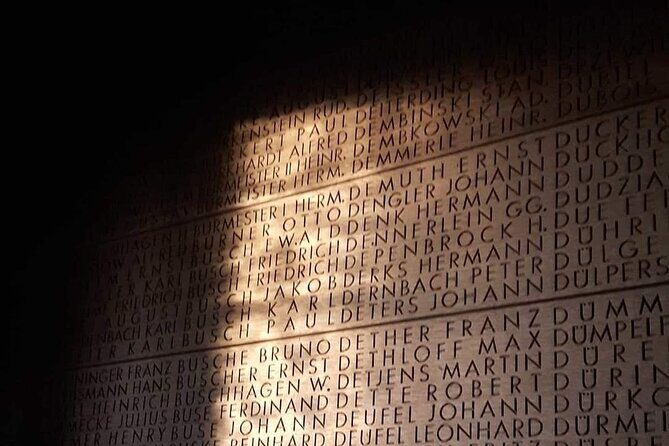
At Langemark Cemetery, you step into the German side of remembrance. It’s known for a mass grave and for connections that include links to the Nazis. That combination can feel jarring, and it’s worth going in prepared to see how later political narratives have tried to shape memory.
You’ll have about 40 minutes here. Again, that’s enough time to take in the cemetery’s layout and absorb the meaning, without turning the site into a checklist.
The practical value of this stop is understanding that WWI commemoration didn’t stop with the war itself. Sites were later interpreted, used, and framed. Seeing Langemark as part of the same broader Ypres Salient route helps you grasp the long tail of conflict and ideology.
Keep your tone in check. This is not the kind of place where casual wandering works well. Give it a little structure: read what you can, and then take a quiet moment.

Essex Farm Cemetery and Lt Col John McCrae’s In Flanders Fields

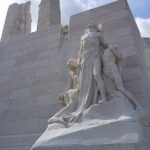
Essex Farm Cemetery is built around preserved features and a memorial connected to Lt Col John McCrae. This is one of the stops that connects battlefield geography to language and lasting memory.
You’ll visit preserved dressing station bunkers—places meant to support the wounded—plus a memorial tied to the story behind the poem In Flanders Fields. The tour gives you around 40 minutes here, and that’s important. McCrae’s work is widely known, but hearing the context alongside the physical site helps the words land differently.
A useful way to experience this stop: don’t treat the poem as separate from the landscape. Instead, think about what a dressing station means—people, triage, urgency, and the limits of what medicine could do under constant threat.
Admission is listed as free for this stop, which is good value for a site that packs in both physical remains and story.
German command posts and the war of positions
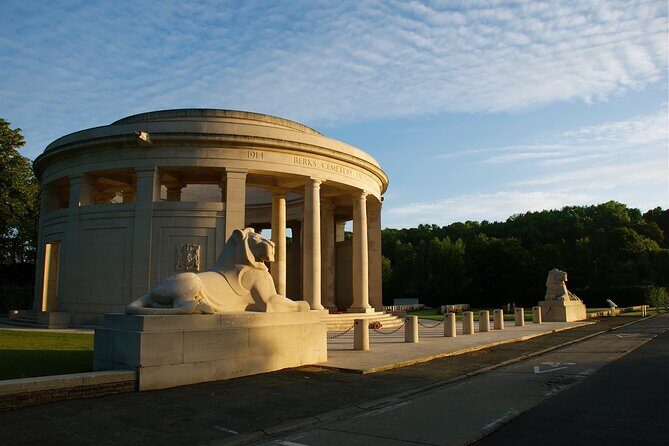
Then you move into preserved German defenses, starting with the German Command Post. This is described as the largest preserved German command bunker in the Ypres Salient. It’s a short visit (about 15 minutes), but it’s also one of the most “readable” places if you pay attention.
Why? Command posts are built to control information and movement—so even if you don’t know every detail, you can feel the purpose behind the layout. The short time also helps keep the stop focused. You’re not stuck for hours in a dark structure; you’re guided to key points and then move on.
This stop is also a reminder that war isn’t only trenches in the mud. It’s planning, routing messages, and trying to stay one step ahead inside a system that keeps getting smashed.
Caterpillar Mine Crater (Hill 60 B): the war underground
After the command post, you visit Caterpillar Mine Crater (Hill 60 B). This stop focuses on the story of the battle around Messines Ridge, plus the idea of war underground at this awe-inspiring crater site. Time here is about 30 minutes.
This is the section where the Ypres Salient becomes even harder to simplify. Mines, craters, and subterranean fighting turn the battlefield into something more like an engineered system. Instead of only imagining soldiers in trenches, you start imagining the ground itself as part of the weapon.
The practical payoff for you is perspective. When you later see preserved battlefield features and bunkers, you’ll understand why the ground mattered so much. It wasn’t only shelter—it was strategy.
Hill 60: preserved bunkers, mine craters, and terrible fighting
Your next stop is Hill 60, with about 30 minutes on-site. Here you’re looking at preserved battlefield areas, bunkers, and mine craters, plus the story of the terrible fighting connected with this zone.
Hill 60 ties together themes from earlier: trench living, positional defense, and the use of underground warfare. It also fits the emotional arc of the day. By now, you’ve seen remembrance and preserved infrastructure; now you’re looking at the kind of terrain that made survival depend on small, brutal advantages.
Admission is listed as free for these stops, so the value is in what your guide helps you interpret. Spend your time focusing on how positions relate to one another. Even without technical knowledge, the logic starts to click when you’re standing where the fight happened.
Bayernwald: the only preserved German trenches in the Salient
To close out the route, you visit Bayernwald, described as the only preserved German trenches in the Ypres Salient. This is given about 45 minutes, which is a generous chunk compared with several other stops.
This is one of those places where “only” is the whole point. It lets you see German trench layout in a way that’s harder to replicate elsewhere. If you’ve been paying attention to how Allied and German sides are represented differently across cemeteries and memorial structures, Bayernwald helps unify the story by giving you a rare preserved view from the German trenches perspective.
Admission is noted as included for Bayernwald, and that’s a nice extra if you’re watching the cost-to-value ratio across stops.
Before you leave, take a moment to notice how trench lines change your sense of space. You’re not looking at history behind glass. You’re seeing it in real terrain.
Price and logistics: what $344 buys you in the real world
At $344, you’re paying for more than transportation. You’re paying for a structured day with a guide (Roger), a small group capped at eight, and built-in stops across memorials, cemeteries, and preserved war features. That combination can be hard to stitch together on your own in a single day without losing context.
You also get practical inclusions: bottled water, a light sandwich lunch, and a soft drink. The tour explicitly notes that alcoholic beverages aren’t included, which keeps the day focused.
Admission coverage looks mixed depending on the stop. Bayernwald is listed as included, while one note says Sanctuary Wood Museum admission is not included even though the overview says it is. Because of that inconsistency, I recommend confirming in advance which admissions you’ll be asked to pay at the counter. Still, the free admissions for several other stops help keep the overall value steady.
If you’re comparing options, the key value isn’t just cost—it’s time and coherence. You’re spending the day understanding one battlefield system rather than bouncing between unrelated WWI sites.
Getting there and making the day smoother
This tour uses a mobile ticket, and the meeting point is Station Ieper, Colaertplein 35, 8900 Ieper. Start time is 10:00am, and it ends back at the meeting point.
The operator states that it’s near public transportation, service animals are allowed, and most travelers can participate. That’s a helpful baseline if you’re planning with accessibility in mind.
My best advice for a day like this is simple: bring what keeps you steady. Layers for changing weather, water in hand, and a calm mindset for heavy memorials. Also, keep your phone handy for notes—not for constant photos. You’ll get more out of the sites if you pause and read what’s in front of you.
Who should book this WWI grand tour (and who might skip it)
This tour suits you if you want a guided WWI battlefield day from Ypres that connects multiple kinds of sites: museums, preserved bunkers, cemeteries, and trench remains. It’s also a good fit if you prefer small-group interaction where you can ask questions and get clear explanations without crowd noise.
You might choose a different option if you’re looking for a light, relaxed day. The route includes cemeteries, mass graves, and themes tied to later extremist history. It’s also a long day even with short stop times, so it’s not ideal if you’re short on stamina.
Should you book In Flanders Fields and Passchendaele Grand Tour?
If you’re planning a WWI-focused day in Belgium, I think this is an easy yes. The combo of Roger’s guidance, the small group size, and the mix of sites—Sanctuary Wood, Tyne Cot, Langemark, Essex Farm, preserved German positions, and Bayernwald—gives you a fuller picture than many single-stop tours.
Double-check Sanctuary Wood Museum admission at booking because the notes conflict, and then go in ready to take the day slowly where you can. If you do that, you’ll leave with a clearer sense of what the Ypres Salient looked like, how it was fought, and why these places still matter.
FAQ
How long is the tour?
It runs about 7 to 8 hours.
How big is the group?
The tour has a maximum of eight travelers.
Where do we meet, and what time does it start?
You meet at Station Ieper, Colaertplein 35, 8900 Ieper, Belgium. Start time is 10:00am.
What’s included for food and drinks?
The tour includes bottled water and a light sandwich lunch with a soft drink.
Is Sanctuary Wood Museum admission included?
The tour overview says admission to Sanctuary Wood Museum is included, but the stop details list an admission ticket not included. Confirm during booking to be sure.
What’s the cancellation policy?
Free cancellation is available up to 24 hours in advance for a full refund. Within 24 hours, the amount paid is not refunded.