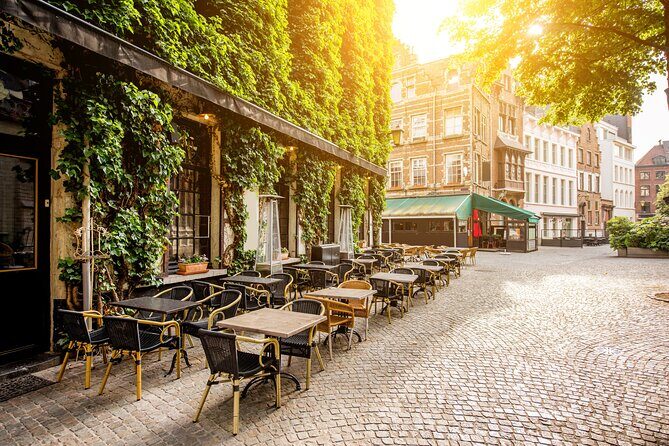
Bruges looks postcard-perfect, but the stories make it click. This Spanish-language guided tour helps you connect the dots across the canals, squares, and old buildings, and I especially like how it ends with artisan Belgian chocolate tasting at a certified shop. You also get practical local tips on where to eat and what to buy, not just a checklist of monuments.
One thing to consider: Bruges has tourist rules that sometimes mean the guide uses radios/headphones, and you may need to borrow or buy headphones if you don’t have your own.
In This Review
- Key things to know before you go
- Entering medieval Bruges from Bargeplein to Markt
- Minnewater lake and the Beguinage Ten Wijngaarde (plus an easy photo stop)
- Walplein and Stoofstraat: Bruges beer history and medieval house clues
- Gruuthuse and Saint John’s Hospital: power families and medieval health
- Onze-Lieve-Vrouwekerk outside look and Michelangelo inside detail
- Huidenvettersplein, tanners’ guild roots, and the St Bonifacius Bridge legend
- Rozenhoedkaai (Quai du Rosaire): the fairy-tale canal moment
- Burg Square: Bruges political center and 1000+ years of architecture styles
- Chocolalino at the end: certified artisan chocolate and a useful tasting guide
- Price and value: why $22.51 can make sense in Bruges
- Weather, timing, and group comfort (the stuff that actually affects your day)
- Should you book this Bruges guided tour?
- FAQ
- Is the tour in Spanish?
- How long is the Bruges guided tour?
- Where does the tour start and end?
- What’s included in the price?
- Is chocolate tasting included?
- Do I need to pay admission for the stops?
- What about food during the tour?
- Will I need headphones?
- What happens if the weather is poor?
- How many people are in the group?
Key things to know before you go
- Spanish local guide: you’ll hear the history and legends in Spanish, with built-in tips for food and shopping
- Easy rhythm: short stops (often 5–10 minutes) keep things moving without feeling rushed
- Photo-friendly bridges and canals: you get time for pictures at the small bridge near the beguinage and again at St Bonifacius Bridge and Rozenhoedkaai
- Chocolate tasting lesson: you learn what makes Bruges chocolate and how to spot handmade versus industrial
- Small-group size: capped at 24 travelers, with radio use sometimes needed due to local regulations
Entering medieval Bruges from Bargeplein to Markt
The tour starts at Bargeplein (Katelijnparking), a handy pick if you’re arriving by tram or walking in from the nearby center. From the get-go, you’re not just dropped into a maze of cobblestones—you’re guided city block by city block, with explanations timed to what you can actually see around you.
The total time is about 2 hours (and it may run closer to 2.5 depending on the group). The good part is pacing: most stops are quick, so you keep momentum, but you still get meaningful context when the landmark matters.
You’ll end at Markt 20 in the center. That’s a smart way to finish, because after the last chocolate bite you’re steps from plenty of places to grab dinner and a final Belgian beer—no long transit required.
You can also read our reviews of more guided tours in Bruges
Minnewater lake and the Beguinage Ten Wijngaarde (plus an easy photo stop)
Stop one is Minnewater, the lake area tied to Bruges’s old port life. What I like about this start is that it sets the theme: Bruges wasn’t only churches and merchants—it was water, trade, and daily routines. The guide explains the Dutch meaning of Minnewater: minne can point to common/community waters, and water literally means water. Even if the wordplay sounds a bit nerdy, it gives you a real mental picture for why the place mattered.
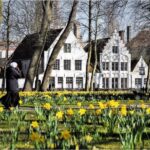
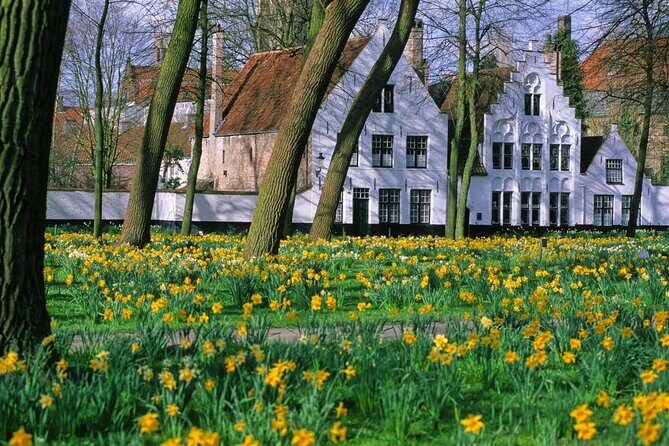
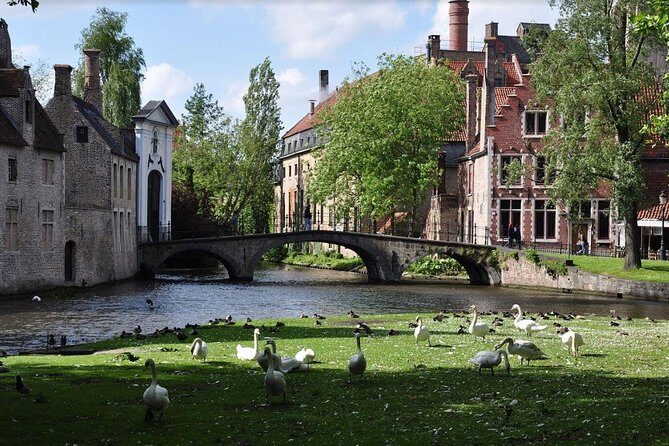
Next comes the Princely Beguinage Ten Wijngaarde. This is one of Bruges’s best-known beguinage complexes, and it’s also listed as a UNESCO World Heritage Site. The tour treats it like a mood shift: instead of street noise and tourist crowds, you get a calmer, old-world feel. You also get time to take photos from a small bridge nearby, which is one of those moments where the scene looks good without you needing fancy equipment.
Practical tip: if you’re visiting in bright weather, this is a great early slot to capture reflections and soften shadows before the afternoon sun gets too harsh around the canal bends.
Walplein and Stoofstraat: Bruges beer history and medieval house clues
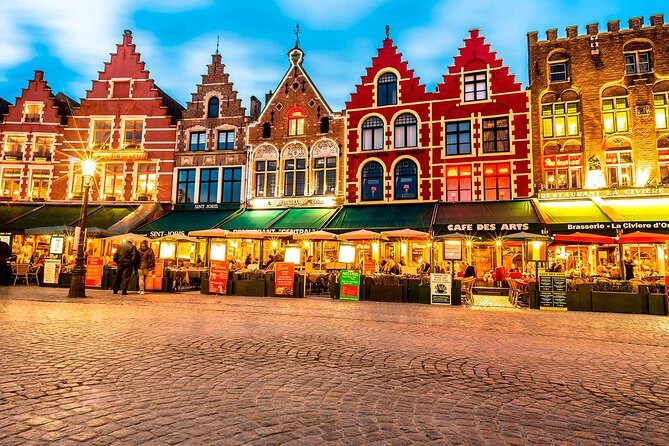
Then you move into Walplein, a square where the guide shares the history of Bruges beer. This stop is short, but it’s a clever add-on because beer is part of everyday Bruges culture, not just a souvenir. If you’re the type who likes connecting food and history, this is exactly the sort of detail a walking tour should deliver.
After that, Stoofstraat focuses on how to identify original medieval houses. This is useful because so much of Bruges looks old. Without guidance, you’d just see pretty façades and canals. With the explanation, you start noticing features that help you read the buildings like clues—materials, shapes, and the way older structures differ from later repairs and rework.
Why this matters: once you learn what to look for, the rest of your day is richer. You won’t just be sightseeing; you’ll be decoding.
Gruuthuse and Saint John’s Hospital: power families and medieval health
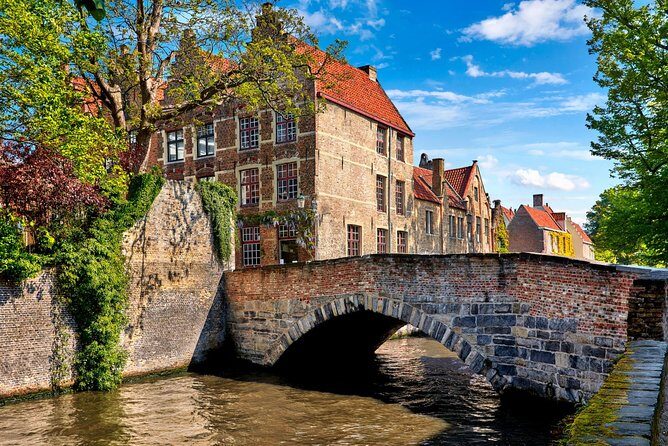
At Gruuthuse, you meet the subject in front of the Gruuthusemuseum: the most famous and powerful family in Bruges between the 17th and 18th centuries. Even though the stop is brief, it gives you the key context behind why certain buildings and estates got attention. It’s also a good moment to ask yourself the big question: who had the money, and how did they shape the city?
Saint John’s Hospital follows, where the guide explains how the health system in medieval Bruges worked. This stop tends to land well because it humanizes the city’s history. You’re not only looking at stone—you’re getting a sense of how people lived, aged, fell ill, and relied on local institutions.
These two stops also make a useful pairing. Power and care aren’t usually linked in a quick city walk, but they often were in old European towns—wealth, influence, and public needs moved together.
Onze-Lieve-Vrouwekerk outside look and Michelangelo inside detail
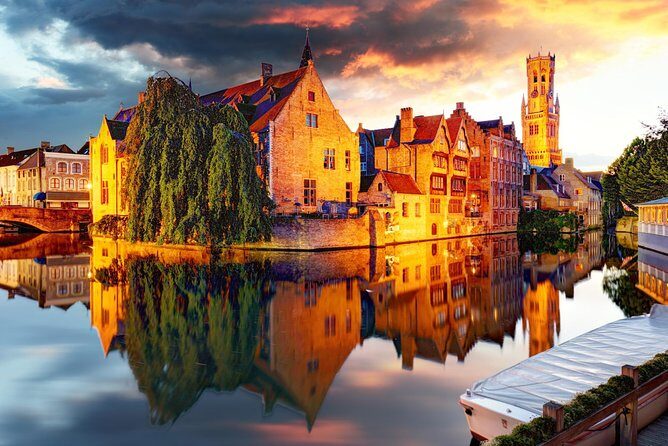
Next is Onze-Lieve-Vrouwekerk, the Church of Our Lady. You’ll be positioned outside, with the guide explaining curiosities tied to the white marble sculpture of the Virgin and Child created by Michelangelo, which is inside the church.
Even without going in during this particular stop, you still get the payoff: you know what to look for later, or what to care about if you choose to return on your own. It’s also a smart way to keep the tour moving while still pointing you toward a major attraction.
If you want extra time at this kind of sight, plan a follow-up visit after the tour. That way you can spend longer inside without feeling rushed.
Huidenvettersplein, tanners’ guild roots, and the St Bonifacius Bridge legend
Huidenvettersplein is the Tanners’ Square, connected to the medieval trade guilds. The short time here is enough to get the gist: Bruges was organized by crafts and trades, and streets and squares carried that identity. When you stand in the right place, you start to understand why a city grew the way it did.
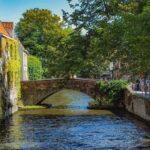
Then there’s St Bonifacius Bridge, one of Bruges’s charming spots where the guide shares the bridge legend and gives you time for photos. Bridges here aren’t just crossings—they’re story points, framed by canal views that look great whether you’re there for morning light or late afternoon.
If you care about photos: hold off on the final click until you’re standing exactly where the guide indicates. These bridges can look similar until you get the right angle.
Rozenhoedkaai (Quai du Rosaire): the fairy-tale canal moment
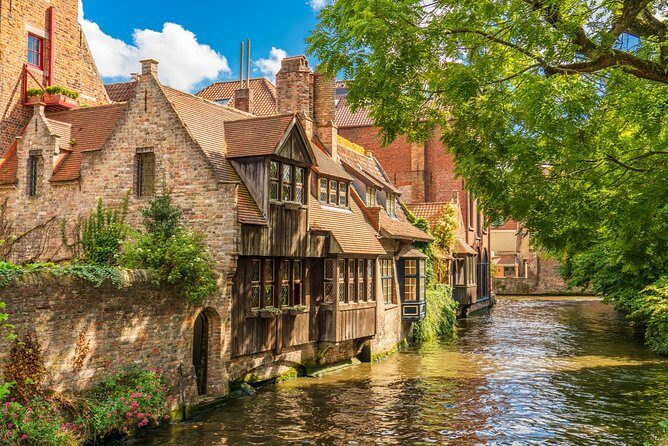
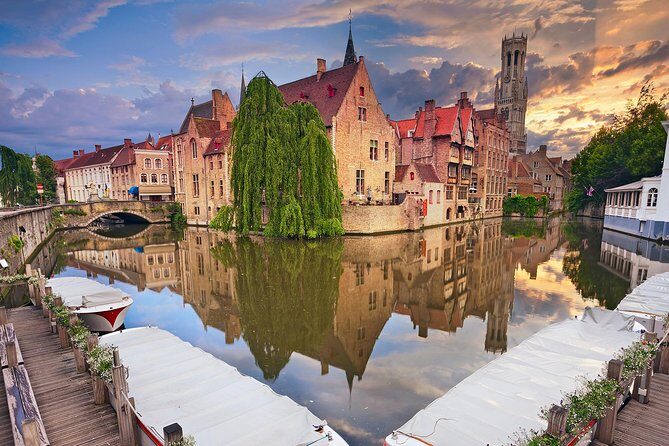
At Quai du Rosaire / Rozenhoedkaai, you get one of Bruges’s most iconic canal views. The tour guidance is practical: this is a spot where the city feels almost like a set. It also helps that the tour suggests timing, leaning toward late afternoon or after dinner for best memories.
You’ll hear that you can be tempted to take a boat ride through the channels, and honestly, this is the kind of view that makes you understand why. Even if you don’t book a canal cruise, the water-and-stone scene is worth the stop on its own.
Burg Square: Bruges political center and 1000+ years of architecture styles
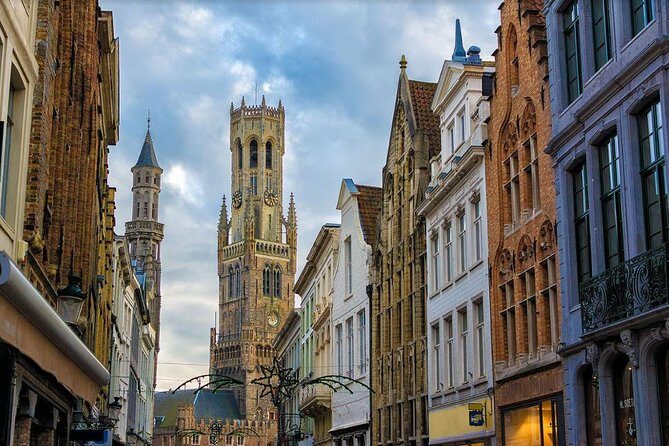
Burg Square is the political center of Bruges, and the guide points out why it’s so interesting for architecture lovers: buildings show different styles across more than a thousand years of history.
This is a good stop to slow down a little, because it’s where Bruges stops feeling like a collection of prettiness and starts feeling like a real city with roles, power, and long-term growth. The square is also a natural place for you to recalibrate your bearings before the finish.
Chocolalino at the end: certified artisan chocolate and a useful tasting guide
The tour finishes at Chocolalino, one of the few certified artisan chocolate shops for the tasting. This is where the tour earns its price value in a very concrete way. You’re not just paying for walking and talking—you get a small lesson in what you’re tasting and how to shop smart later.
The guide talks about famous Bruges chocolate and gives tips to help you distinguish handmade from industrial chocolate. That’s genuinely useful, because it helps you avoid buying “pretty packaging” that doesn’t taste special. If you’re trying to bring chocolate home, this is the moment to learn the rules of the game before you wander into a random store.
I also like that the tour ends at a chocolate shop near the city center, so you can keep exploring after the tour without feeling like your day is split in half.
Price and value: why $22.51 can make sense in Bruges
At $22.51 per person, this tour sits in a value sweet spot for Bruges, where self-guided wandering is easy but history without context can feel like guesswork. You’re paying for a Spanish local professional guide plus city and Belgium recommendations, and the tasting at the certified shop adds a real, tangible benefit.
Is it perfect value? It depends on how you travel.
- If you love understanding what you’re seeing, the guide time is worth it.
- If you only want photos and a short walk, it may feel like more talking than you want.
- If you’re already fluent in the city’s history, you may not use every stop as deeply.
But for most people—especially Spanish-speaking visitors—this is a practical way to get a structured overview fast, then break off to explore on your own.
Weather, timing, and group comfort (the stuff that actually affects your day)
This experience requires good weather. If it’s canceled due to poor weather, you’ll be offered a different date or a full refund.
Group size is capped at 24 travelers, which helps keep things manageable. Still, Bruges tourist regulation can mean service uses radios with headphones. If you don’t have them, the tour offers headphones for €1 from the guide. If you bring your own headphones, you can use them right away.
One more helpful detail: the schedule may vary depending on what the guide thinks is best for the group. That’s not a drawback on its own; it’s often how tours stay comfortable and responsive when streets are crowded or weather shifts.
Should you book this Bruges guided tour?
If you’re visiting Bruges for the first time and you want a Spanish guide to help you connect canals, beguinage history, medieval trade clues, and the city’s big civic squares, I think this is a strong booking choice. The chocolate finish is a smart add-on, and the pacing makes it easy to fit into a day without killing your legs.
Book it if:
- you want Spanish commentary rather than reading everything yourself
- you like learning how to spot details on medieval buildings
- you want a chocolate tasting with tips you can use right after
Skip it or rethink if:
- you’re only interested in quick photo stops and don’t want guided explanations
- you’re sensitive to radio/headphone logistics (check what you’re comfortable using)
- you have a tight schedule and can’t afford a tour that may run closer to 2.5 hours
FAQ
Is the tour in Spanish?
Yes. The tour includes a Spanish local professional guide.
How long is the Bruges guided tour?
It lasts about 2 hours, though your tour may vary and can be closer to 2.5 hours depending on the guide and group.
Where does the tour start and end?
It starts at Bargeplein (Katelijnparking) on Bargeweg, 8000 Brugge, and ends at Markt 20, 8000 Brugge.
What’s included in the price?
The price includes the Spanish local professional guide, city and Belgium recommendations, and the guided tour of Bruges.
Is chocolate tasting included?
Yes. The tour finishes at Chocolalino for an artisan Belgian chocolate tasting, and the guide also shares tips about what to buy.
Do I need to pay admission for the stops?
The itinerary lists each stop with free admission, including places like Minnewater, the beguinage, and the other landmarks.
What about food during the tour?
Food and drink are not included. The guide can point you to good places to eat and drink.
Will I need headphones?
It can be required due to Bruges tourist regulation, since the service sometimes uses radios. If you don’t have headphones, you can buy them for €1 from the guides.
What happens if the weather is poor?
The experience requires good weather. If it’s canceled due to poor weather, you’ll be offered a different date or a full refund.
How many people are in the group?
The tour has a maximum of 24 travelers, and most travelers can participate.