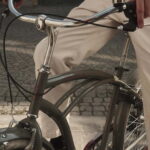
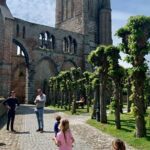
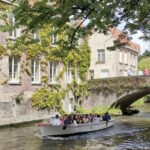
Bruges changes when you pedal through it. This retro bike tour turns the city’s big-name sights into a walkable-feeling ride, with stories that link UNESCO-era landmarks to places locals actually notice. I especially like starting in the 15th-century Hof Bladelin secret garden, then rolling out on a vintage bike with a basket and guide right beside you.
My other favorite part is the mix: you’ll hit must-sees like the Belfry and Market Square, but you also get genuinely off-the-beaten-path moments such as the Stairway To Heaven, plus canal-side views around Minnewater (Lake of Love). One consideration: Bruges is famously cobbled, so you’ll want basic comfort riding on uneven streets, and it’s not set up for wheelchair users or visitors with visual impairments.
In This Review
- Key things I’d prioritize on this Bruges bike tour
- Why a retro bike tour fits Bruges so well
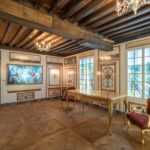
- Hof Bladelin: meeting in a 15th-century courtyard
- Basilica of the Holy Blood to the Belfry: fast landmarks with real context
- Church of Our Lady and the Beguinage Ten Wijngaerde
- Dijver and the Sint-Anna Quarter: scenic riding, not just stopping
- Jerusalem Chapel (Jeruzalemkerk) and Bruges City Hall
- Rozenhoedkaai, Gruuthusemuseum, and the Market Square finale
- Minnewater (Lake of Love), windmills, canals, and bridges
- Hidden moments: Chocolate Line, Stairway to Heaven, and Mary of Burgundy
- Riding tips for cobblestones and crowded paths
- End in the secret garden: beer or limonade and stay-strong tips
- Price and value: is $52 a good deal?
- Who should book this bike tour (and who might skip)
- Should you book this Bruges retro bike tour?
- FAQ
- How long is the Bruges retro bike tour?
- Where do I meet the tour?
- What’s included in the price?
- Is food included?
- What languages are the guides?
- Does the tour run in bad weather?
- Is the tour suitable for everyone?
Key things I’d prioritize on this Bruges bike tour
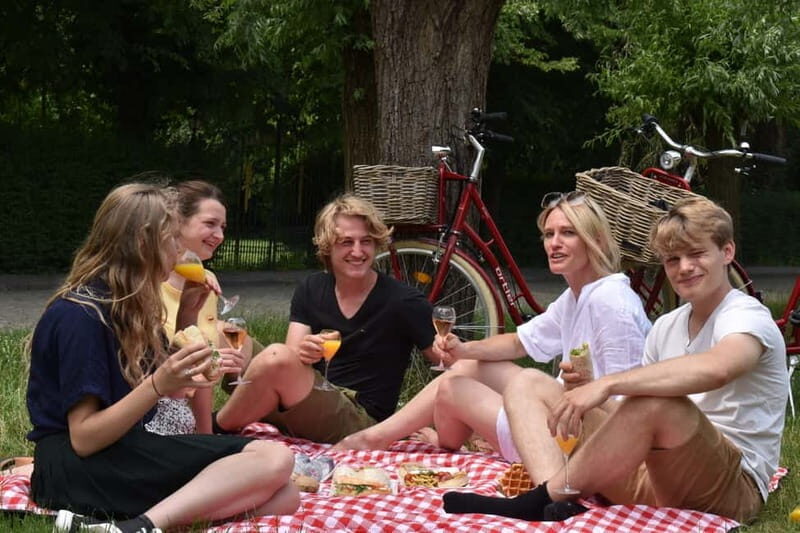
- Hof Bladelin secret garden start: a calm, historic setting before you move into the busy center
- Retro bikes with baskets: practical for carrying water, camera gear, and a few small purchases
- Belfry + Market Square rhythm: quick photo stops, then context from your guide
- Beguinage Ten Wijngaerde + quiet quarters: the “slower Bruges” side of the city
- Canals, bridges, and Minnewater: classic scenery, but you reach it with less hassle than walking
Why a retro bike tour fits Bruges so well
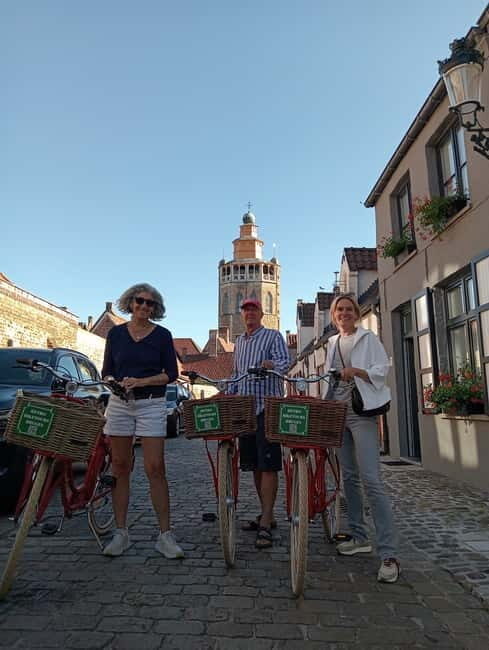
Bruges rewards slow attention. But if you’re on a short trip, pure walking can feel like a sprint between photo points. This tour solves that problem by letting you cover ground on a bike while still stopping often enough to absorb what you’re seeing.
What makes it work is the pacing: you’re not just rolling past landmarks. You get short guided moments at big stops, plus real time to look around at canals, bridges, and walled neighborhoods. And because Bruges is mostly flat, the ride stays friendly for most people who can handle city riding.
The “retro” part is more than a gimmick. The bikes are stable, and the simple setup (bike, basket, helmet) keeps you focused on the city instead of fussing with logistics.
You can also read our reviews of more cycling tours in Bruges
Hof Bladelin: meeting in a 15th-century courtyard
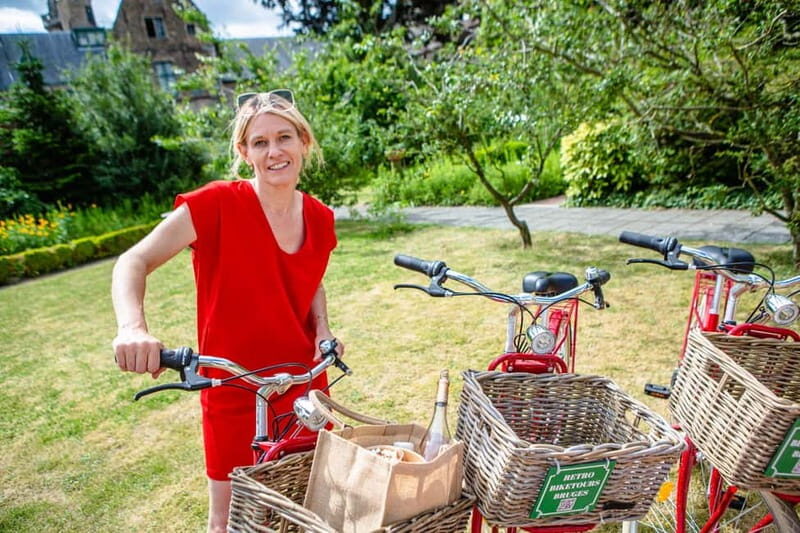
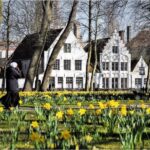
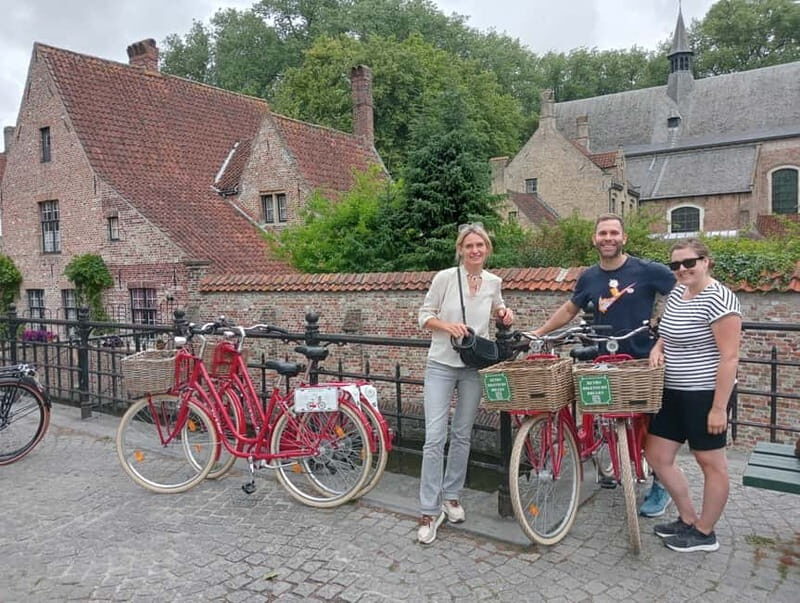
Your tour begins at Grauwwerkersstraat 29, at the Retro Biketours Bruges office. Look for the green gate with a bike next door, then go through the gate into the secret garden behind it. It’s a great way to start, because it’s quieter than the main streets and gives you a moment to get oriented.
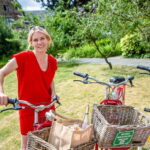
You’ll meet your local guide and the small group, then pick up your vintage bike. A basket is included, so you can actually carry things—no awkward “where do I put this bag?” problem. Helmets are provided; the experience info notes helmet use as optional, but it’s still smart to wear one in a city with pedestrians and bikes sharing space.
This start matters because it sets the tone. You’re not launching from a loud sidewalk. You’re launching from a historic place, and the guide’s stories land better once you’re already in a medieval mindset.
Basilica of the Holy Blood to the Belfry: fast landmarks with real context
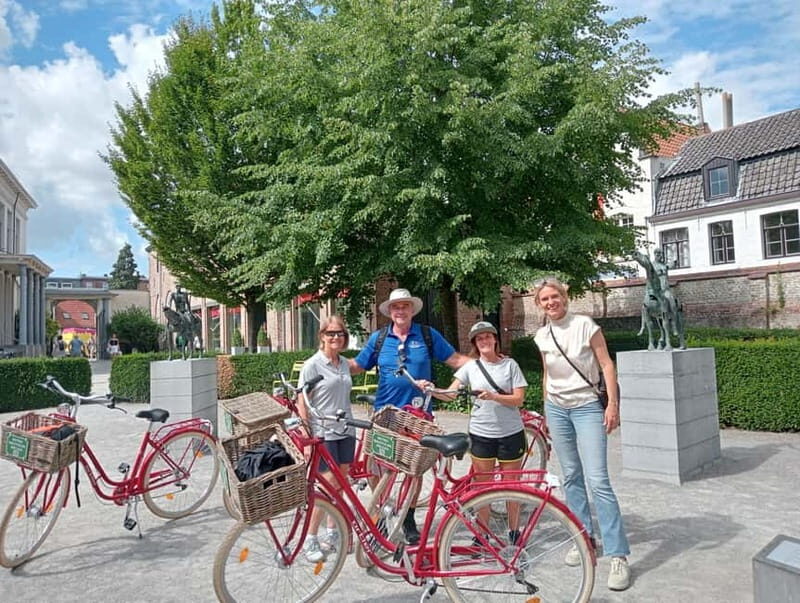
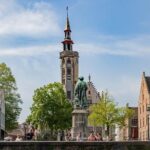
The tour’s early rhythm is simple: photo stops, a little guided explanation, then move on. You start with the Basilica of the Holy Blood for a short photo stop and guided viewing (about 10 minutes), then you head toward the Belfry of Bruges and the Market Square area.
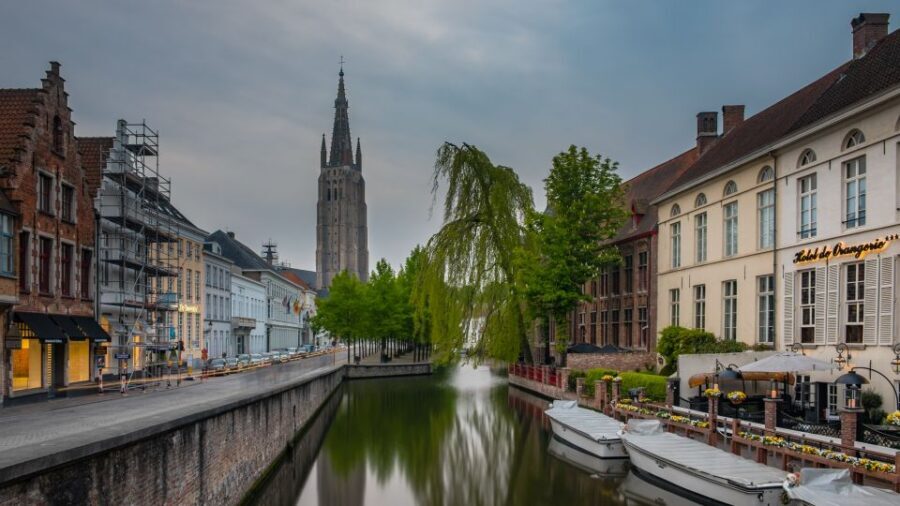
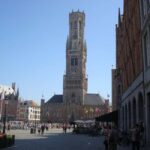
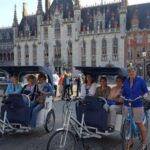
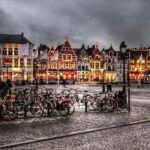
The Belfry is one of those sights that’s instantly recognizable, but it’s also one of those sights where a guide helps you see more than the postcard. Here you cycle through the historic Market Square and get the chance to pause in the right spot to take it in.
Practical tip: treat these early stops like “orientation anchors.” If you’re doing Bruges for the first time, getting the Belfry and the main square story early helps the rest of the city make sense as you ride into quieter neighborhoods.
Church of Our Lady and the Beguinage Ten Wijngaerde
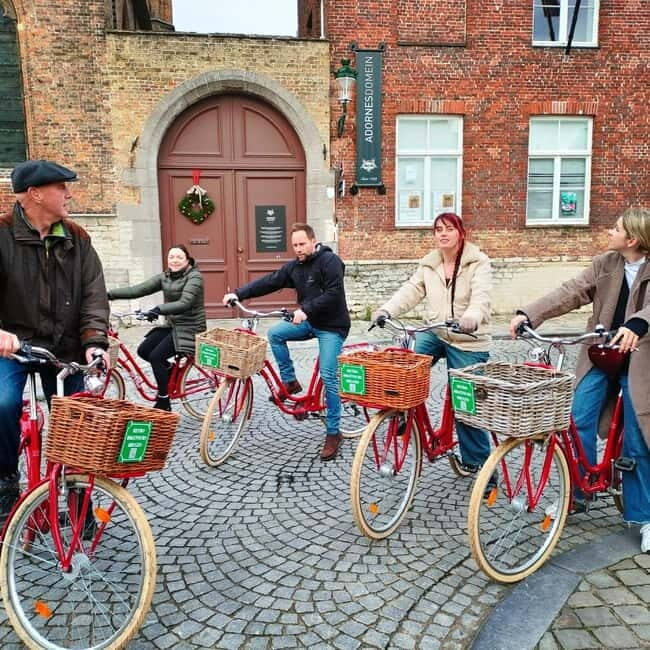
After the Market Square area, you’ll ride toward the Church of Our Lady for another photo stop and guided moment. This is a good time to slow your gaze down. Your guide’s job here is to connect the building’s place in Bruges with the city’s wider identity—so you’re not just taking pictures, you’re understanding why the landmark matters.
Then comes one of the emotional highlights: the Beguinage Ten Wijngaerde. The experience includes a photo stop, then a visit and guided tour (about 15 minutes). This walled community is often where Bruges feels most human—quiet streets, a sense of enclosure, and that lived-in atmosphere you don’t get in the busiest center.
One thing I like about building the tour this way is balance. You get big public landmarks (Basilica, church, Belfry), then you shift into a calmer, enclosed part of town. If you’re the type who wants both “wow” and “why,” this section is doing the heavy lifting.
Dijver and the Sint-Anna Quarter: scenic riding, not just stopping
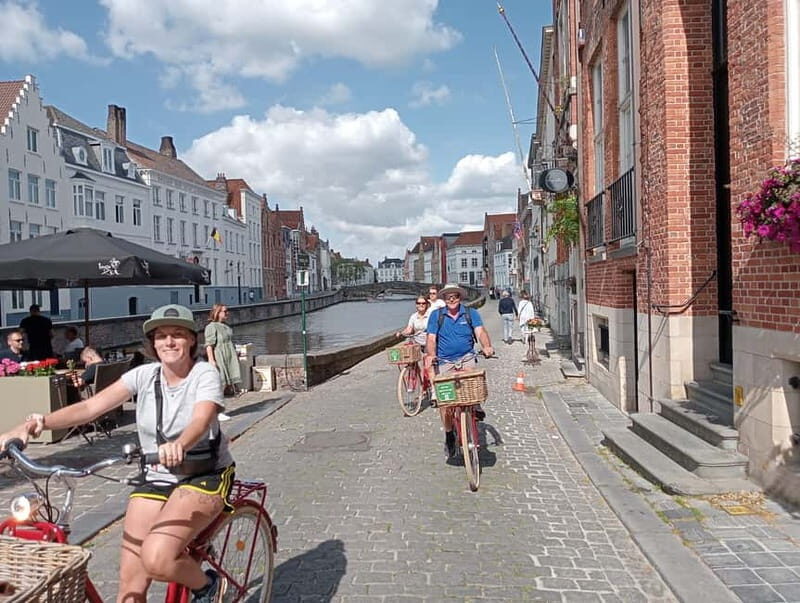
Between major sights, you get segments that are more about the ride itself. The tour includes cycling past Dijver with scenic views (around 10 minutes), then stops in the Sint-Anna Quarter for photo and guided sightseeing.
This is the portion of the tour where you really start reading Bruges like a local. The canals and bridges begin to feel like connectors, not just backdrops. You also get a sense of how different neighborhoods “sit” next to the medieval core.
Why it’s valuable: Bruges can look like one big museum if you only do the headline stops. These riding-and-looking sections show you the city’s layout and make it easier to navigate on your own afterward.
You can also read our reviews of more guided tours in Bruges
Jerusalem Chapel (Jeruzalemkerk) and Bruges City Hall
Next up is Jeruzalemkerk (also known as the Jerusalem Chapel in the experience highlights) for a photo stop and guided sightseeing (again with scenic viewing while cycling between stops).
This is one of those Bruges corners where the details reward attention. A guide’s stories help you catch what you might otherwise miss—especially if the building’s significance isn’t obvious at first glance.
Then you move to Bruges City Hall, with another photo stop, guided context, and cycling views around the surrounding area. City Hall and the Markt area are part of the same public-world story: power, civic life, and the medieval machinery of the city.
If you like history that sounds like a person telling it—legends, anecdotes, and practical background—this is where you’ll feel the tour click.
Rozenhoedkaai, Gruuthusemuseum, and the Market Square finale
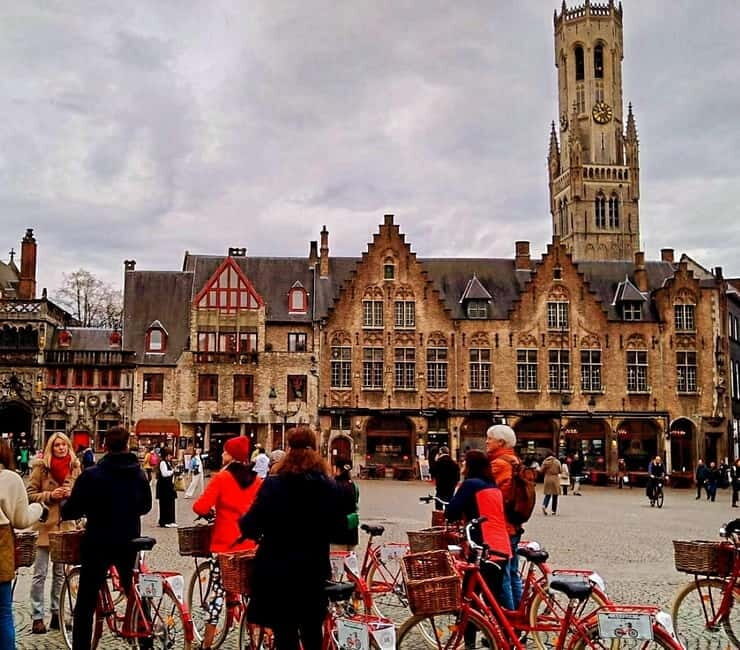
Toward the back half, the stops get more scenic and photo-friendly. You’ll ride to Rozenhoedkaai for photo moments and guided sightseeing. This canal-side viewpoint is the kind of place where a bike tour has an advantage: you can arrive from the right angle without fighting crowds all at once.
After that, there’s Gruuthusemuseum for a photo stop and guided viewing. You don’t need to be a museum person to appreciate what you get here. The goal is context—helping you understand what kind of place Bruges has been, and why certain families and cultural details show up again and again as you move around.
You wrap with the Markt (Market Square) area for another photo stop and guided sightseeing. By now, you’ve got enough stories in your head to turn the square from a picture into a map.
Minnewater (Lake of Love), windmills, canals, and bridges
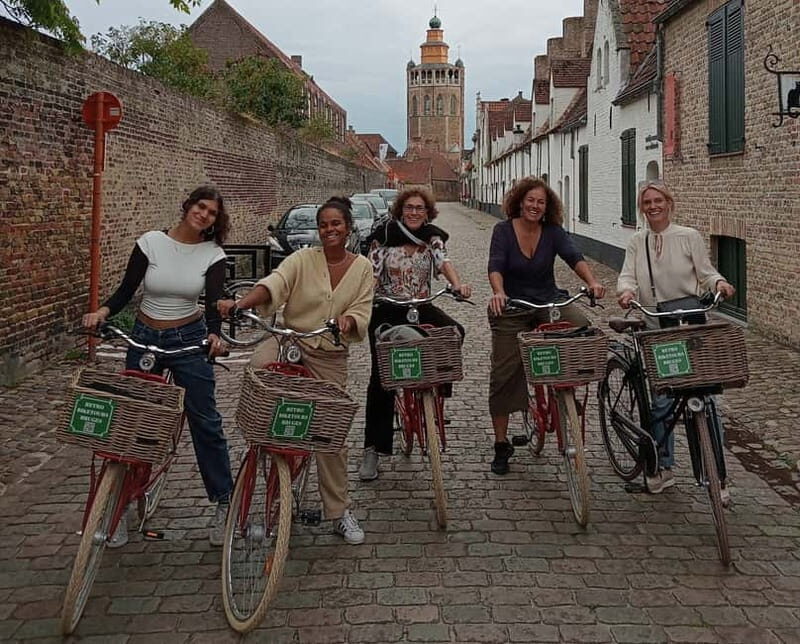
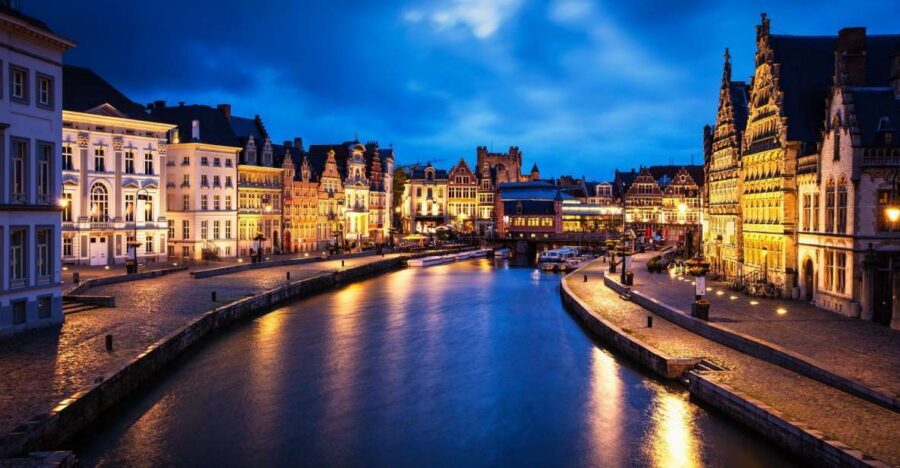
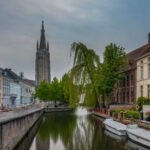
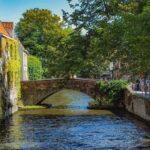
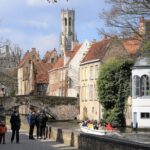
One reason this tour tends to earn top ratings is that it doesn’t stop at the “big three” buildings. The experience also builds in Bruges’ signature scenery: canals and medieval bridges, windmills, and Minnewater (Lake of Love).
The highlights also mention Dukes Palace and the Alms Houses, which are the kind of stops that make Bruges feel more complete. You’re seeing the city’s public identity and its everyday rhythms—religious sites, civic power, and community structures all mixed together.
If you’re planning your own walking route afterward, this is the part that helps most. You’ll remember where the canals bend, where the bridge angles look best, and where the view opens up near Minnewater.
Hidden moments: Chocolate Line, Stairway to Heaven, and Mary of Burgundy
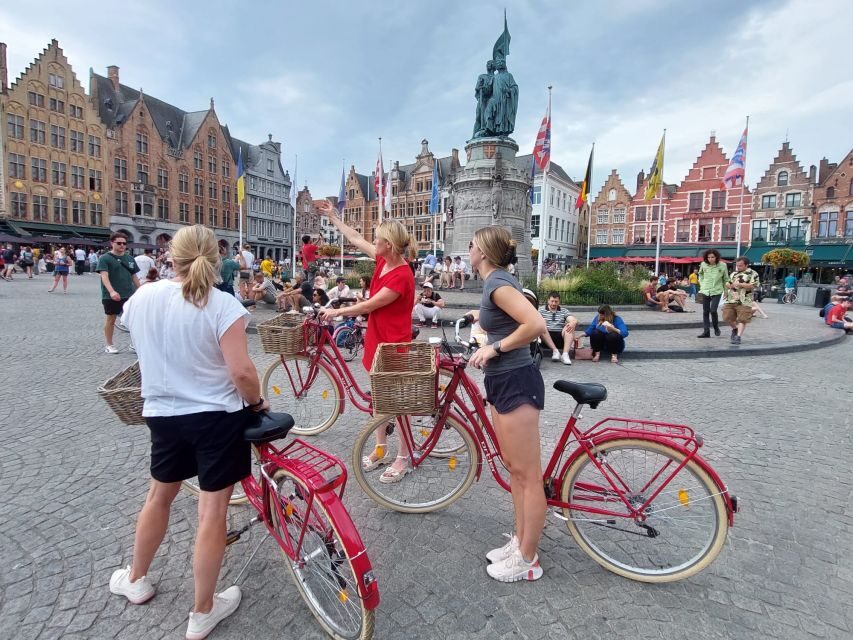
This is the section that feels most like the value-add. The tour includes small, local-feeling stops such as the Chocolate Line and Stairway To Heaven. These aren’t just “walk over there for a photo.” Your guide’s job is to explain the story behind the spot, so you understand why it has that nickname or reputation.
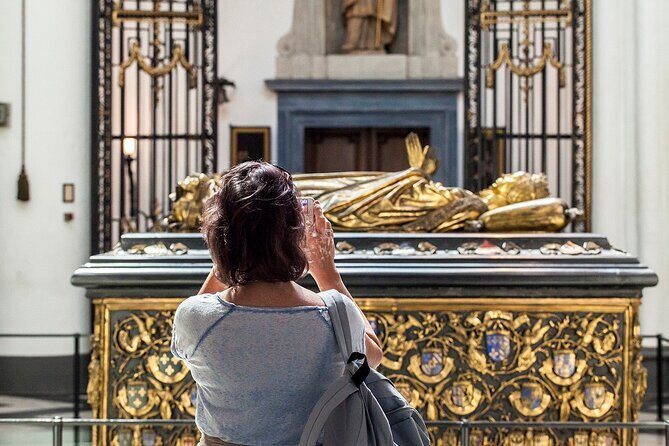
The experience also mentions Mary of Burgundy’s artwork and related local legends. That kind of detail turns Bruges from architecture into character.
One more hidden-spot element: Jerusalem Chapel is listed among the stops, and the overall route emphasizes these legend-heavy, story-rich moments “only a real native” would point out. Even if you’ve read a little about Bruges, a guide helps you connect dots on the street.
Riding tips for cobblestones and crowded paths
This tour is designed to be manageable, but it’s still Bruges. Cobblestone streets are part of the charm—and they’re also part of the “use the bike, not your ego” reality.
Here’s what you should plan for:
- Take it slow at corners and where pedestrians cross.
- If you haven’t biked in a while, give yourself a few minutes to find your balance. The ride is generally manageable, and Bruges is mostly flat, but cobbles can still be tricky.
- Keep your attention up. You’ll be cycling through historic areas with people walking and other cyclists sharing space.
In the experience info, the tour runs rain or shine. So if the weather turns, ride even more gently and avoid sudden braking.
End in the secret garden: beer or limonade and stay-strong tips
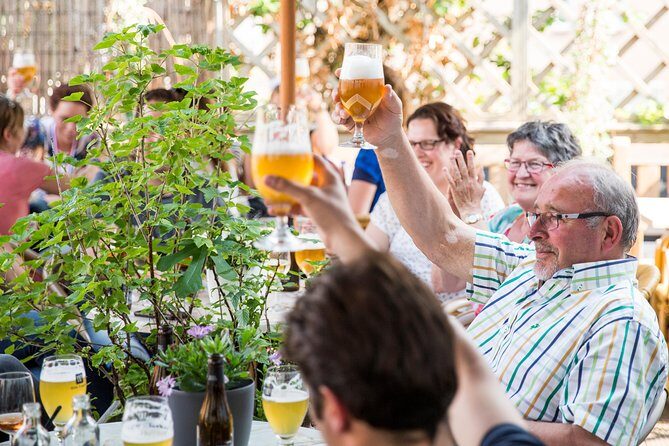
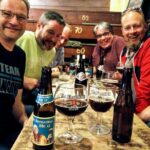
You finish back at the same secret-garden setting. The tour includes a complimentary drink—either a local beer or limonade—and time to relax and chat after the ride.
This matters more than it sounds. Bruges is easy to over-plan. A good local guide can steer you toward the right kind of next stop: what’s worth your time, what to skip if you’re short on hours, and what to see if you have extra energy.
The best part is that you leave with insider tips for the rest of your stay, not just a list of monuments. When you’ve been on the bike route, those suggestions feel practical because you already understand how the neighborhoods connect.
Price and value: is $52 a good deal?
At $52 per person for about 150 minutes (roughly 2.5 hours), you’re paying for four things: guided storytelling, a real bike (not a rental you have to manage yourself), and a drink at the end.
Here’s the value math:
- Bike + basket + helmet means you’re not spending time or mental energy figuring out transport.
- A local guide turns “I saw buildings” into “I understand the city.”
- The included beer or limonade is a small cost saver, but it also makes the finish feel like an experience, not a dismount and goodbye.
- You’re not getting food included, so you’ll still handle meals on your own. That said, the tour length is short enough that you likely won’t feel like your day got eaten.
For most people visiting Bruges for the first time, this is a strong value because it covers a lot of core geography in one afternoon while still giving time to stop and look.
Who should book this bike tour (and who might skip)
This tour is ideal if you:
- Want a guided, story-first way to see Bruges quickly
- Plan to eat and explore afterward, and want local tips to guide the rest of your day
- Feel comfortable riding a bike on city surfaces, including cobblestones
It may not be ideal if you:
- Need wheelchair access (the experience info says it’s not suitable)
- Have visual impairments (also listed as not suitable)
- Expect a fully paved, smooth ride with zero uneven surfaces
If you’re traveling with kids, it can work too—some families in the booking history highlight that the guide helped keep everyone together and moving at a comfortable pace.
Should you book this Bruges retro bike tour?
If your goal is to get your bearings fast—and to learn Bruges in the process—this is an easy yes. The biggest strength is the balance: big landmarks like the Belfry, calmer spaces like Beguinage Ten Wijngaerde, and scenic canal-and-lake views like Minnewater all show up in one coherent ride.
Book it early in your stay if you can. That way, the insider tips at the end help you plan the rest of your days with less guesswork.
FAQ
How long is the Bruges retro bike tour?
The tour lasts about 2 hours to 150 minutes (listed as a guided tour of about 2.5 hours).
Where do I meet the tour?
Meet at Grauwwerkersstraat 29 at the Retro Biketours Bruges office. There’s a green gate with a bike next door, and behind the gate is the secret garden.
What’s included in the price?
You get a retro bike with a basket, a helmet, a local guide, a taste of a local beer or limonade, and insider tips for your stay.
Is food included?
No food is included, aside from the complimentary drink at the end.
What languages are the guides?
The live guide is available in English, Dutch, and French.
Does the tour run in bad weather?
Yes. The tour takes place rain or shine.
Is the tour suitable for everyone?
The experience is not suitable for wheelchair users or visually impaired people.