REVIEW · BRUSSELS
Historic Ypres WWI Sites – Tour from Brussels
Book on Viator →Operated by History Wolf Tours · Bookable on Viator
One day in Ypres beats a dozen history lessons. This tour strings together the major WWI sites around Ieper (Ypres) with a historian guide, and you also get time for the city’s everyday life—souvenir stops and a proper lunch break. I especially like the way you’re taken beyond museum rooms into the places where the war still shows up in the ground and trees, and you get built-in time for reflection at the Menin Gate.
Two things I really valued: admission tickets are included for nearly every stop, and the guide has room to answer your questions and shape the day around what you care about. I also liked that lunch and snacks come with the tour, so you’re not scrambling between sites.
One consideration: this is a full, long day (about 7 to 10 hours) with multiple museums and walks. If you’re not up for steady pacing and comfortable hiking shoes, plan on taking it slower—because the schedule doesn’t really do slow-and-sweet.
In This Review
- Key Highlights You’ll Feel in Your Day
- From Brussels to Ieper: What This Day Trip Really Delivers
- The Full Itinerary, Stop by Stop (and What to Watch For)
- Stop 1: Hooge Crater Museum and the “life-size” approach
- Stop 2: Hill 62 and Sanctuary Wood Canadian Memorial
- Stop 3: Menin Gate Memorial and the Last Post at 8:00 pm
- Stop 4: Ypres (Ieper) for strolling and lunch
- Stop 5: In Flanders Fields Museum in the rebuilt Cloth Hall
- Stop 6: Passchendaele Museum and the trenches from the inside
- Stop 7: Tyne Cot Cemetery, Commonwealth names on a vast scale
- Guide Quality: When the Day Turns Into a Conversation
- Price and Value: What You’re Really Paying For
- Practical Tips So You Don’t Feel Rushed
- Who This Tour Suits Best
- Should You Book This Historic Ypres WWI Sites Tour from Brussels?
Key Highlights You’ll Feel in Your Day
- Historian-guided context at each stop, with time for questions instead of a lecture-and-run style.
- Museum access built in, including Hooge Crater, Hill 62/Sanctuary Wood, In Flanders Fields, Passchendaele, and Tyne Cot.
- The 8:00 pm Last Post at Menin Gate, a powerful moment with everyone going quiet.
- Trenches and dugouts you can see, not just read about—especially at Sanctuary Wood and Passchendaele.
- Lunch plus snacks provided, so you can focus on the sites rather than planning meals all day.
- A local-culture pause in Ypres (Ieper) for a bit of strolling and shopping.
From Brussels to Ieper: What This Day Trip Really Delivers
This tour is built for one goal: making WWI around Ypres feel real, not abstract. The itinerary keeps moving, but it’s not random. Each stop adds a different layer—battlefield remnants, preserved trench systems, missing-person memorials, and museums housed in meaningful buildings.
The other big win is the guide. When a historian is at the front, you’re not just collecting facts—you’re learning how different pieces connect: why certain locations mattered, what the war did to the people living there, and how political and economic realities shaped what happened on the ground. In particular, I liked hearing discussions that went beyond the battlefield story and into the broader forces behind it.
And because the tour includes lunch and snacks, you’re less stressed. You can bring your camera, wear comfortable hiking shoes, and just stay in the flow.
You can also read our reviews of more historical tours in Brussels

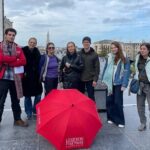
The Full Itinerary, Stop by Stop (and What to Watch For)
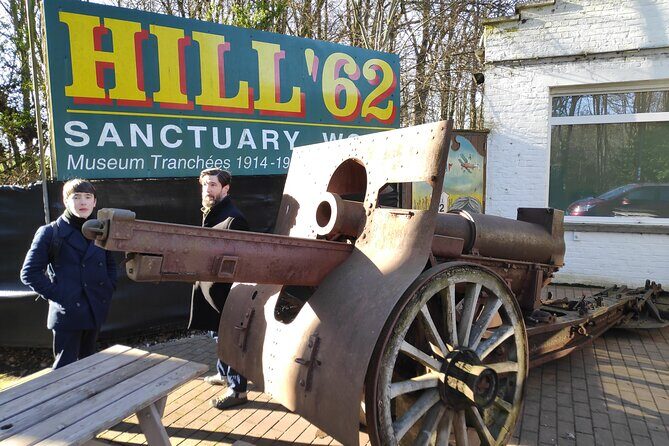
Stop 1: Hooge Crater Museum and the “life-size” approach
Hooge Crater Museum is often the first stop that snaps the day into focus. It’s known for its life-size reconstructions of WWI battle scenes, plus a strong collection of weapons, equipment, and photographs. That combo matters: you’re not just looking at objects; you’re seeing how they fit into an on-the-ground situation.
You’ll also get a guided explanation as you move through the scenes. This is where questions are especially useful. If you wonder how soldiers lived, what certain gear was for, or how specific engagements unfolded, this is a smart moment to ask—because the museum format is built for it.
Small drawback: it can feel intense. If you’re sensitive to war imagery, take brief breaks when you need them and let your brain reset before the next location.
Stop 2: Hill 62 and Sanctuary Wood Canadian Memorial
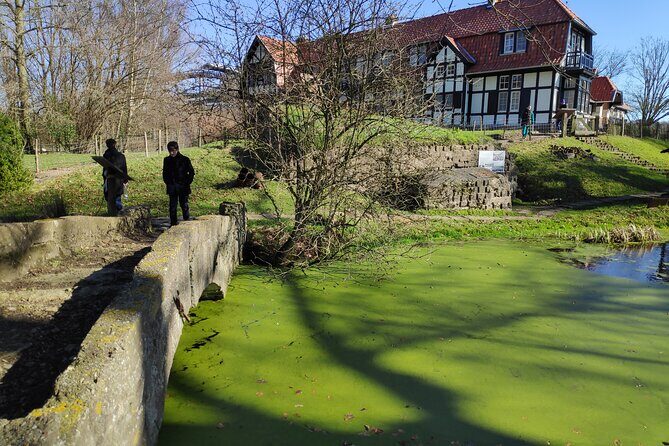
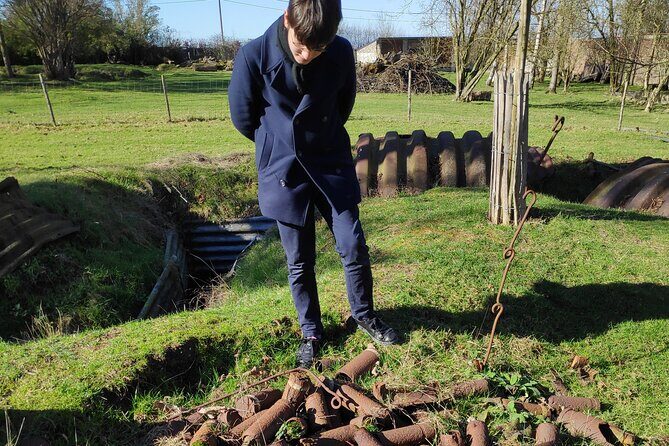
Sanctuary Wood (connected with Hill 62) is one of the most haunting ideas of this whole region: a place where trench lines and dugouts were enclosed and preserved. The story goes back to October 1914, when the wood was used as a sanctuary area for stragglers waiting to rejoin their units. The landowners recognized that people would want to come back to see and understand what happened there.
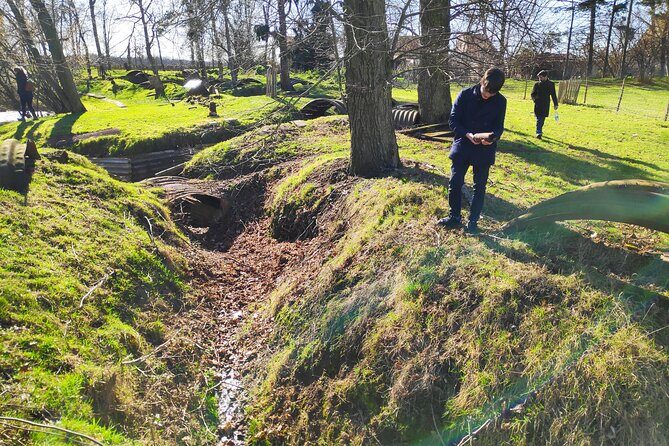
Today, Sanctuary Wood is often regarded for having some of the best-preserved trenches on the Western Front. That means your eyes do the learning work. Instead of only reading about trench warfare, you’re walking in an environment shaped by it.
There’s also a museum element: the interior includes 3D stereoscopic photographs of highly graphic wartime scenes. If you’re bringing a camera, keep it ready—but also remember that some moments are best experienced without the lens.
Tip: treat this stop as partly physical and partly reflective. Wear shoes that support your footing and expect uneven ground.
Stop 3: Menin Gate Memorial and the Last Post at 8:00 pm
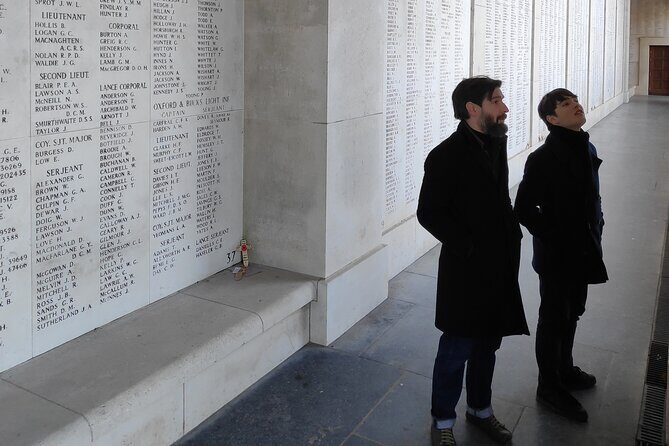
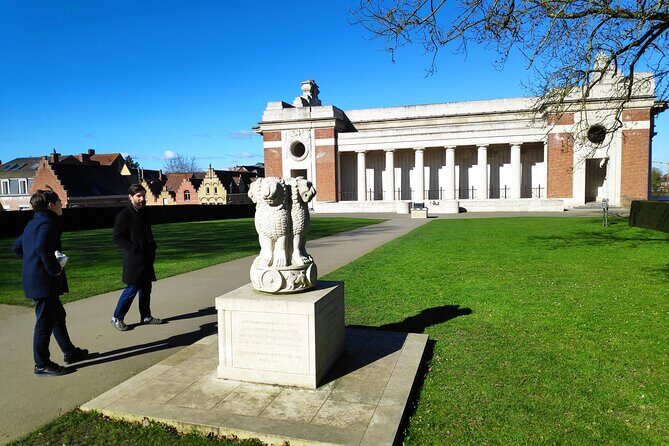
Menin Gate is the single most recognizable symbol of WWI in this part of Belgium. It’s a memorial to missing soldiers, and inside you’ll find the names of some 55,000 Commonwealth soldiers who were reported missing before Aug. 15, 1917.
What really makes this stop different is timing. The day includes time at Menin Gate so you can take part in the daily moment at 8:00 p.m., when the Last Post resounds under the gate and daily activities pause for a beat of remembrance.
This is the kind of event that changes the tone of the day. Even if you’ve visited memorials before, this one tends to land because it’s tied to a consistent ritual and a clear sense of shared memory.
Consideration: if you’re planning photos, keep expectations realistic. This is a solemn setting, and you’ll want to be respectful with your camera use.






Stop 4: Ypres (Ieper) for strolling and lunch
After Menin Gate, you get a gentler interlude in Ieper (Ypres). This is where you’ll pick up souvenirs and have lunch, plus you’ll get a chance to see the city as it is now—shops, streets, and everyday life moving along.
The value here is balance. Without this break, a day like this can become one long line of heavy scenes. With it, you return to the present and remind yourself that the war’s aftermath is part of how communities rebuilt and continued.
Practical note: use the shopping time for small, easy items—cards, books, local souvenirs—because the day keeps going.
Stop 5: In Flanders Fields Museum in the rebuilt Cloth Hall
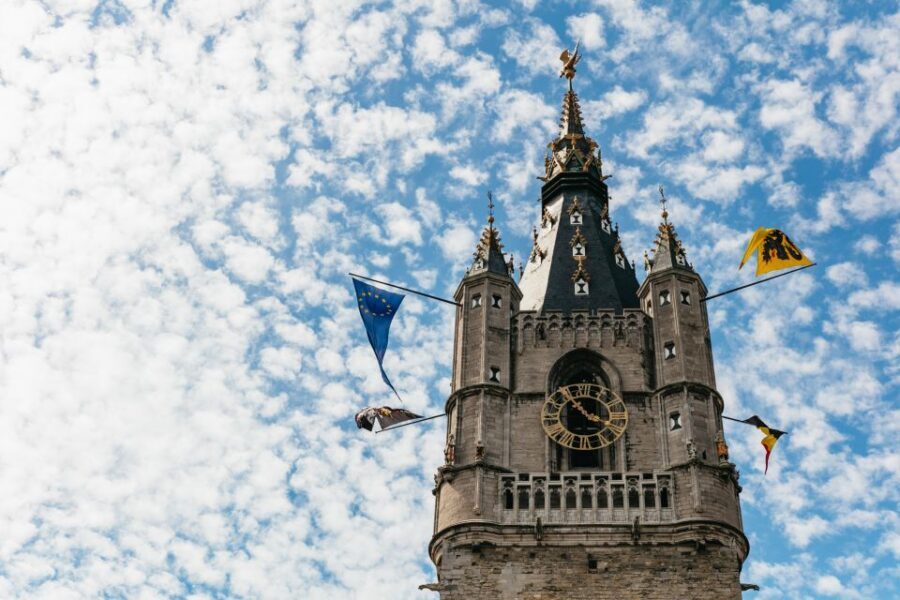
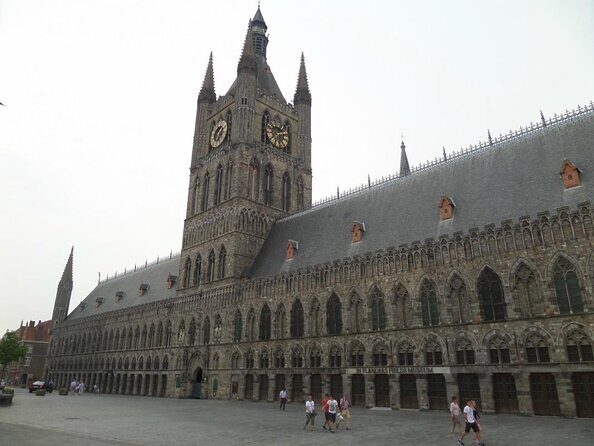
In Flanders Fields Museum sits in the rebuilt Cloth Hall of Ypres, which gives the museum extra meaning. That building is tied to wartime hardship and later recovery, so the walls themselves carry the story of loss and rebuilding.
Inside, you’ll follow the First World War story in West Flanders and the region of the Western Front. The museum also pays attention to the present-day landscape as one of the last tangible witnesses of the war history. After that, you can climb the restored Belfry tower for views over the city and surrounding battlefields.
This stop is a good place to make sense of what you’ve already seen. When you look out from the belfry, the day stops being just a sequence of locations and starts becoming a map of how the fighting spread and why certain areas mattered.
Watch for: tower stairs. If you’re tired after earlier stops, pace yourself and rest before the climb.
Stop 6: Passchendaele Museum and the trenches from the inside
Passchendaele Museum focuses on the life of military personnel during WWI, using a setting of dugouts and trenches. You’ll experience a guided journey through the Battle of Passchendaele using unique objects that bring the environment closer to lived reality than a standard exhibit.
This one tends to work best for people who want the war story with texture—how spaces felt, how movement worked, and what conditions did to daily life.
Consideration: this is another indoor/outdoor mix. Plan for cool or damp conditions if the weather shifts, and keep your camera protected if you’re going into darker or enclosed areas.
Stop 7: Tyne Cot Cemetery, Commonwealth names on a vast scale
Tyne Cot Cemetery is the largest Commonwealth war cemetery in the world in terms of burials. The numbers are staggering: 11,961 Commonwealth servicemen are buried or commemorated here. There’s also the Tyne Cot Memorial, which forms the north-eastern boundary and commemorates nearly 35,000 servicemen from the United Kingdom and New Zealand who died in the Ypres Salient.
This stop is where the tour becomes quiet again, but in a different way. Earlier memorials focus on names of the missing; Tyne Cot brings you into a physical field of memory. The scale is hard to process until you’re standing there.
Tip: don’t rush. Take a slow walk and let yourself absorb how the markers repeat. It’s part of how the site communicates the loss.
Guide Quality: When the Day Turns Into a Conversation
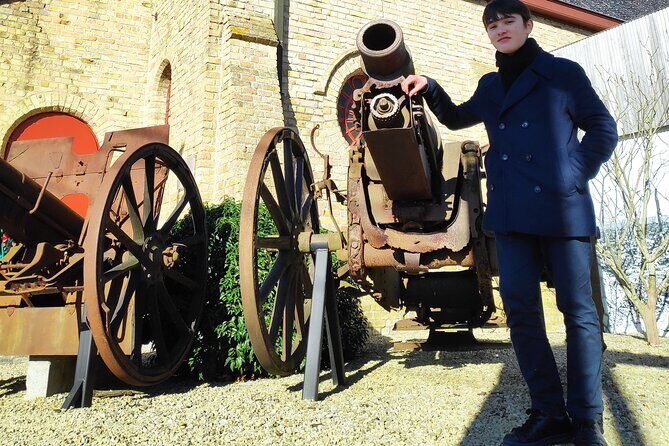
The most praised part of this experience is how personal it feels. People have specifically highlighted István as a guide who listens, asks what you want to focus on, and tailors the day so you actually see what interests you. That matters because WWI can be approached from many angles: battles, politics, economics, daily life, technology, or memorial culture.
If you care about political and economic context, you’ll likely appreciate the way the guide connects those dots during the drive and around the sites. If you prefer the museum objects and battlefield details, the guide can steer you there too.
And the guide is not just handing you a script. One reason the day lands so well is that there’s room for real discussion—questions, follow-ups, and a sense that the day is being managed around your interests rather than ticking boxes with no flexibility.
Price and Value: What You’re Really Paying For
At $701.35 per person, this tour sits in the premium bracket for a day trip. The upside is that you’re not paying separately for the key pieces of the day.
Here’s what supports the price:
- Admission tickets included for the major museums and memorial-related stops on the schedule.
- Lunch and snacks included, plus soda/pop.
- Air-conditioned vehicle and pickup offered.
- A historian guide with time built into the day for explanations and questions.
So you’re paying for organization and expert guidance—not just transport. If you add up the cost of multiple museum entries, plus a guided day plan across several locations, the total starts to make more sense.
One place where value can feel different is if you don’t care about guided interpretation and mostly want to “go see sites.” In that case, a self-guided approach might look cheaper. But if you want the war stories explained in a way you can actually use, this format is the point.
Practical Tips So You Don’t Feel Rushed
- Bring comfortable hiking shoes. The day includes trenches/museums and the kind of ground where footing matters.
- Bring your camera. You’ll want it for scenes, memorial settings, and the views from the restored Belfry tower.
- Wear layers. A WWI day often includes indoor museum time and outdoor memorial time, and weather can shift.
- Set expectations for the pacing. You’re moving through seven major stops in one day, so take quick rests when you can rather than trying to slow everything down.
Also, if you like staying connected with what you learn, the tour operator has been associated with sharing historic videos under @WatchThePastComeAlive. It’s the kind of extra that can help you keep the story going after the day ends.
Who This Tour Suits Best
This tour fits you well if you:
- want guided context from a historian, not just signs and brochures
- like museums but also want battlefield locations tied to what you’re seeing
- appreciate memorial culture and the meaning of rituals like the Last Post
- don’t mind a full day with steady movement and museum time
It may feel like a lot if you’re looking for a casual, slow sightseeing day with lots of downtime. It’s also limited to a minimum age of 16, so it’s geared toward teens and adults.
Should You Book This Historic Ypres WWI Sites Tour from Brussels?
Yes—if you want a day that combines serious WWI sites, museum context, and a real guide-led conversation. The itinerary is strong because it covers different kinds of memory: reconstructed battle scenes, preserved trench systems, the names of the missing at Menin Gate, the city’s rebuilt identity, and the scale of Tyne Cot Cemetery.
Skip it (or choose differently) if you hate long days, don’t want to walk and stand around museums and memorials, or you only want a quick photo tour. This isn’t that. This is a structured experience where the pacing and interpretation are the whole deal.
If your goal is to leave Ypres with the war story in your head—and not just on your camera roll—this one is a solid choice.