REVIEW · BRUSSELS
Private Tour: The Dark Side of Brussels
Book on Viator →Operated by Legends of Bruges Free & Private Tours · Bookable on Viator
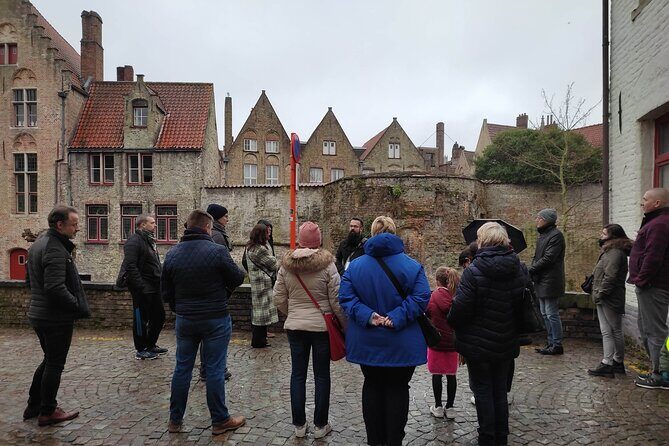
Brussels hides grim stories in plain sight. This private, English guided walk stitches together gothic churches, the massive courthouse scene, and the Marolles market streets, so the city feels like a story instead of a checklist. I especially like how the route zooms in on Palais de Justice and then comes right back down to street-level neighborhoods.
Two things I’d choose this for: the guide’s knack for turning landmarks into human stories (including the darker stuff like punishments), and the fast pacing that keeps you moving without feeling rushed. The only catch is that each stop is brief, roughly 5–10 minutes, so if you want to linger inside churches, plan to add extra time later.
You’ll start at Grand Place (Grote Markt) and end near Kapellekerk in Rue des Ursulines. Guides like Sebastian or Dan (when assigned) are known for being friendly and story-driven, which matters on a topic as dramatic as Brussels’ dark side.
In This Review
- Key things to know before you go
- Entering Brussels’ dark side with a guide, not a script
- Grand Place meets the first Sablon tastes
- Place Saint-Jean: old stone, calm pauses, sharp stories
- Tour Anneessens and Rue de Rollebeek: neighborhoods with texture
- Notre Dame du Sablon: gothic beauty with a darker framing
- Petit Sablon: the garden square that smells like order
- Palais de Justice: the courthouse that turns drama into architecture
- Place du Jeu de Balle: Marolles flea market energy
- Ending at Kapellekerk: a chapel with roots in 1134
- Timing: how the 2 hours will actually feel on your feet
- Price and value for a private Brussels walking tour
- What kind of traveler should book this
- Quick practical advice so you enjoy it more
- Should you book the Dark Side of Brussels private tour?
- FAQ
- Where does the private tour start?
- Where does the tour end?
- How long is the tour?
- What language is the tour offered in?
- Is this a private tour?
- How much does it cost?
- What is included?
- Do I need to buy tickets for the stops?
- Do I get a mobile ticket?
- Can I cancel for free?
- Is the tour okay if I’m traveling with a service animal?
Key things to know before you go
- Private group, your pace: Only your group joins, so you can ask questions without blending into a crowd.
- Two hours, nine stops: Expect short visits at each landmark, with walking time between them.
- English guide plus mobile ticket: You get a professional guide and a phone-friendly ticket for check-in.
- Justice-themed route: The tour uses courthouse and church stops to frame stories about crime and punishment.
- Sablon to Marolles: You’ll move from postcard streets to the day-to-day energy of the flea market area.
- Churches and sights along the way: Several stops are quick exterior-and-story moments, so you’re not stuck buying entry tickets.
Entering Brussels’ dark side with a guide, not a script
If you think Brussels is all art nouveau curves and chocolate boxes, this tour nudges you into the other side of the ledger. The title Dark Side of Brussels isn’t just marketing. The route threads through places tied to authority, judgment, and punishment—then it balances that with calm squares, church details, and finally the rougher, everyday Marolles scene.
I like that it’s private. You can steer the conversation toward what you actually care about: architecture, street history, or those darker stories connected to law and order. And because the group stays small, you can get context instead of hearing one-size-fits-all facts.
Also, the pacing is smart for a first visit. With about two hours on the clock, you get a guided tour of the city’s center without spending your whole day in transit.
You can also read our reviews of more private tours in Brussels
Grand Place meets the first Sablon tastes

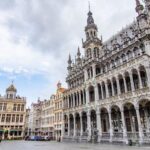
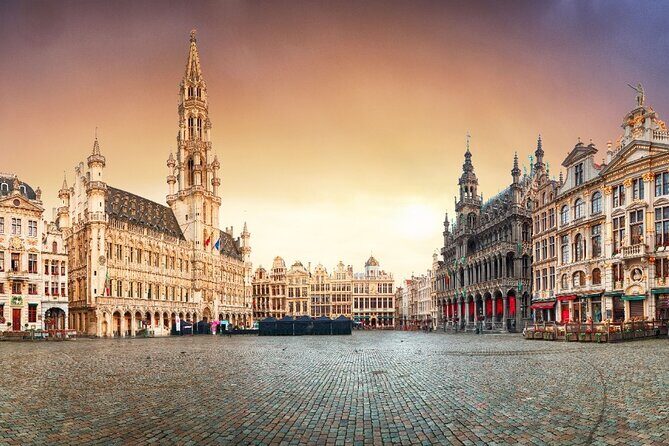
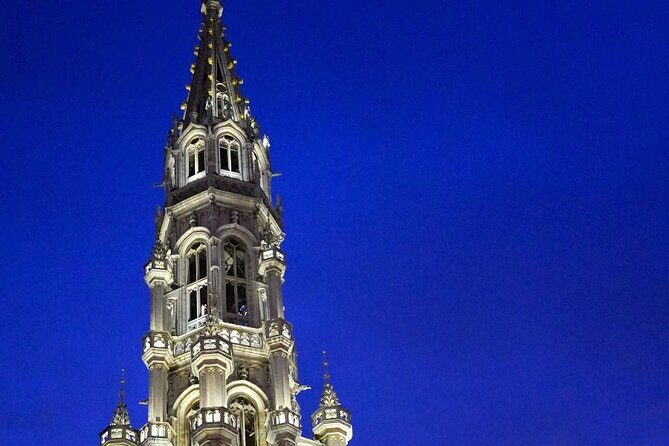
You begin at Grand Place (Grote Markt), Brussels’ public living room. Even if you’ve only seen photos, being there in person gives you scale: the buildings feel intentional, and you can sense why this is the place where visitors naturally start.
From there, you head toward Place du Grand Sablon. This is where the market vibe matters. Instead of jumping straight to monuments, the tour starts with a sensory stop: fresh produce, artisanal treats, and local culture in motion. Even if you don’t buy anything, it’s a good reset. Markets also help your brain shift from sightseeing mode into neighborhood mode.
The best use of this first segment: look for contrasts. You’re moving from the showpiece square into a smaller, more practical Brussels. That sets up the tour’s theme—official power later, ordinary life now.
Place Saint-Jean: old stone, calm pauses, sharp stories
Stop two is Place Saint-Jean, a historic square that feels designed for lingering. Cafes line the edges, and the St. John the Baptist Church acts like a visual anchor.
This kind of stop is more than pretty scenery. Squares are where stories “land.” It’s also an ideal moment for a guide to explain how Brussels’ spiritual architecture and civic life often shared the same stage. You’re still in central Brussels, but the atmosphere turns quieter.
If you like people-watching, do it here. It’s one of the easiest spots on the route to slow your breathing and absorb the neighborhood feel without fighting traffic.
Tour Anneessens and Rue de Rollebeek: neighborhoods with texture
Next comes Tour Anneessens and then Rue de Rollebeek—both are the kind of streetscapes that make you realize Brussels isn’t one uniform look. These areas bring in a mix of architectural styles and everyday energy. Even though the time at each stop is brief, you’ll get a sense of how different parts of the city developed side-by-side.
Rue de Rollebeek, in particular, is the kind of street that rewards a slow glance at the details: cobblestones underfoot, boutique storefronts, and the sense that you’re walking through a living neighborhood rather than an exhibit.
A small practical tip: take a quick look at building facades and street layouts. The guide’s story context will help you connect what you’re seeing to why the city looks the way it does.
Notre Dame du Sablon: gothic beauty with a darker framing
Now you hit one of the big artistic moments of the route: Notre Dame du Sablon. This is a gothic church with striking interior color cues you’ll notice even from quick visits—especially through the reputation of the stained glass and the church’s intricate detailing.
Here’s why I think this stop works in a tour titled Dark Side of Brussels. Churches can seem purely spiritual on the surface, but they were also part of the social system. Authority and belief weren’t separate topics. A guide can connect those dots while you’re standing in front of the stonework.
If you’re the type who enjoys architecture, this is the stop where you’ll want to focus the camera and slow down for 30 seconds. Even with short time allotments, you can still catch the shapes and light that make the Sablon churches special.


Petit Sablon: the garden square that smells like order
Square du Petit Sablon is your breather, and it’s also a clever “quiet power” stop. You get manicured gardens and a ring of 48 small bronze statues representing medieval guilds.
Even if you don’t know anything about guilds, the idea is easy to grasp when you see it: the city’s identity isn’t just rulers and churches. Trade groups, craftsmen, and organized communities shaped Brussels too. That’s a useful contrast right before the tour pivots toward the courthouse.
I like this square because it lets you reset your eyes. After gothic stone and later the massive scale of the courthouse, a garden square with sculpted history feels like a pause button.
Palais de Justice: the courthouse that turns drama into architecture
This is the anchor of the tour’s theme. The Palais de Justice is one of those monuments you can’t fully appreciate from a distance. It’s imposing, built for dominance, and it sits high enough to give you broad views over Brussels.
What makes it especially fitting for the dark side concept is how justice shows up in real life. In the stories tied to this stop, you’ll hear about law and punishment—so the building turns into a character, not just a photo stop. One of the standout elements from guides on this route is their ability to connect the place to human consequences, including stories about beheadings and the harsh ends that once came with certain crimes.
Even if you’re not a legal-history nerd, stand here and read the mood. Think of it as a stage where decisions were made. Then notice the architecture—large, strict lines and a sense of order that contrasts with the chaos people experienced inside that system.
Place du Jeu de Balle: Marolles flea market energy
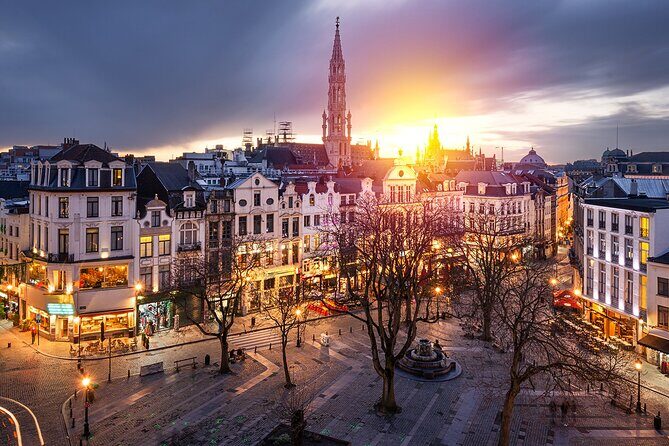
After the courthouse scale, you drop into the Marolles area with Place du Jeu de Balle. This is where the tour turns human again, and where the vibe changes fast.
This square is famous for its flea market, held daily. The scene includes second-hand clothing, vintage finds, old photographs, and all kinds of quirky objects people can’t resist hunting for. Even with a short stop, you’ll get the welcoming feel of a neighborhood market rather than a curated souvenir zone.
This is also a useful moment to ask your guide about Brussels’ social layers. The courthouse represents official power; the market represents everyday life. The contrast is the point, and it helps the dark stories feel less abstract.
Ending at Kapellekerk: a chapel with roots in 1134
The tour ends at the Church of Our Lady of the Chapel, known as Kapellekerk. It’s in the vernacular Marolles neighborhood, and it refers to a chapel founded here in 1134.
Finishing here gives you a real “circle closes” feeling. You started in the civic center near Grand Place. You moved through a market zone and then down to the street-level religious landmark that’s been part of the neighborhood’s identity for centuries.
If you’re the kind of traveler who likes to end on a quieter note, this is a strong finish. It’s not about grandscale spectacle anymore; it’s about place, continuity, and local roots.
Timing: how the 2 hours will actually feel on your feet
The whole tour is about 2 hours. Each major stop is around 5–10 minutes, with walking time between them. That means you’ll experience a lot of Brussels fast, not slowly.
This structure is ideal if:
- you want a first-pass overview of central neighborhoods
- you like guided story context more than long museum time
- you’re mixing this with other plans the same day
It’s less ideal if you’re hoping for long interior visits. The tour is designed as a guided walk with brief viewing windows. If a church detail grabs you, you’ll likely want to come back later.
Price and value for a private Brussels walking tour
At $105.02 per person, the price is what you’d expect for a private guided experience in a walkable central area. The value angle comes from three things you can control:
1) You’re not sharing your guide with strangers. That usually means better Q&A and more targeted explanations.
2) You hit multiple distinct neighborhoods—Sablon and Marolles—without arranging separate outings.
3) Stops are timed for story value, so you don’t lose the day to transit.
There are also group discounts and a mobile ticket. If you’re traveling with a partner or friends, that can make the per-person math feel more reasonable.
Booking about a month ahead is common. If your dates are firm, I’d follow that pattern, especially for English slots.
What kind of traveler should book this
This tour is a great match if you:
- enjoy street-level storytelling tied to real landmarks
- want history with drama, not just dates
- like architecture, churches, and big civic buildings
- want a route that covers both “pretty” Brussels and the tougher human stories behind it
It may not be the best fit if you need lots of sitting time or you want to spend long periods inside churches and markets. It’s built for a brisk guided walk with short stops.
Quick practical advice so you enjoy it more
- Wear comfortable shoes. The route is walking-heavy by nature, with cobblestones in spots.
- Bring a charged phone or camera. You’ll want photos at the courthouse, Sablon churches, and the market area.
- If you care about a specific angle—architecture or darker justice stories—tell your guide early. A good guide will shape the emphasis.
Should you book the Dark Side of Brussels private tour?
I’d book it if you want a guided storyline through central Brussels that includes both Sablon elegance and Marolles street reality, with the courthouse as the emotional center. The strongest part of this experience is the way the guide connects landmarks to real consequences and dramatic chapters, without turning it into a grim lecture.
Skip it if you want a slow-paced tour with long interior time or you’re looking for only upbeat city highlights. For that, you’d get more from a lighter first-day walk.
If you’re balancing a packed itinerary, this is a smart way to get context fast. You’ll walk away with a clearer mental map of Brussels—and a better understanding of what happened here when justice wasn’t always gentle.
FAQ
Where does the private tour start?
It starts at Grand Place (Grote Markt), 1000 Brussel, Belgium.
Where does the tour end?
It ends near Kapellekerk on Rue des Ursulines, 1000 Bruxelles, Belgium.
How long is the tour?
The tour is listed as about 2 hours.
What language is the tour offered in?
The tour is offered in English.
Is this a private tour?
Yes. It’s private, and only your group participates.
How much does it cost?
The price is listed as $105.02 per person.
What is included?
A professional guide is included.
Do I need to buy tickets for the stops?
The itinerary information lists admission ticket free for the listed stops.
Do I get a mobile ticket?
Yes, the tour includes a mobile ticket.
Can I cancel for free?
Yes. You can cancel up to 24 hours in advance for a full refund.
Is the tour okay if I’m traveling with a service animal?
Service animals are allowed.