REVIEW · YPRES
From Ypres, The Christmas Truce to Passchendaele Ypres Based WW1 private tour
Book on Viator →Operated by A Foreign Field WW1 Tours · Bookable on Viator
WWI sites can blur without a guide. This private Ypres route turns names, places, and dates into a clear story, from the Christmas Truce at Messines Ridge to the Passchendaele fighting line. I especially like the private, customizable format, because you can steer the day toward what matters to your group. I also like the practical touches, like free bottled water that help you stay focused for an 8-hour day. One consideration: there’s no lunch included, so plan your food around a full morning-to-late-afternoon schedule.
With a 4.9 rating and 97% of travelers recommending it, this is the kind of tour that earns repeat bookings. It runs in English, starts at 9:00am, and uses a mobile ticket. If you want the ground level detail—what you’re looking at and why it mattered—this is built for you.
In This Review
- Key highlights to expect on this Ypres to Passchendaele WW1 tour
- Entering the WWI “map”: why this private day feels different
- Messines Ridge: from Battle of Messines to the Christmas Truce scene
- Hooge Crater Cemetery and the Menin Road line of attack
- The Black Watch site: Australian HQ in September 1917
- Polygon Wood: walk the woods, see bunkers, then connect to a monument
- Hill 60 and the 3:10am mine blast: tunnelling history in a crater
- Broodseinde and Zonnebeke: driving sections that still matter
- Tyne Cot Cemetery: scale, names, and two Victoria Cross stories
- John McCrae’s site and In Flanders Fields
- Menin Gate Memorial: 55,000 missing names and the story behind it
- Sanctuary Wood Museum: original trench scenes and a small WW1 museum
- Price and value: what $420.49 gets you on an 8-hour private route
- Who this Ypres WW1 private tour fits best (and who should reconsider)
- Should you book this Ypres to Passchendaele route?
- FAQ
- How long is the tour?
- Is this a private tour?
- Does the price include anything besides the guide?
- Is lunch included?
- What language is the tour in?
- Are pickup options available, and where?
Key highlights to expect on this Ypres to Passchendaele WW1 tour
- Christmas Truce in context, told alongside the Battle of Messines and nearby mine-crater scenes
- Menin Road and gun pits connection, including what’s linked to the assault on Passchendaele
- Concrete bunkers and an Australian 5th Division monument during a walk through Polygon Wood
- Hill 60 mine crater story, tied to Captain Woodward and the 1st Australian Tunnelling Coy
- Tyne Cot scale and detail, including how many are buried there and how many have names
- Sanctuary Wood Museum trenches, with original trenches plus a small WW1 museum included
Entering the WWI “map”: why this private day feels different
This is a private, fully customizable tour for your group, not a one-size-fits-everyone bus loop. That matters in the Ypres Salient, where the countryside can look similar even though the events were wildly different. I like how the day is built like a guided read-through of the battlefield itself—less guesswork, more clarity.
You’ll spend about 8 hours on the route with a professional guide in English. Pickup is offered from select hotels in Ieper (and the tour notes an Ieper-based pickup), and there’s a minimum of 2 guests. Free bottled water keeps the day comfortable, especially when you’re standing outside at memorials and cemeteries.
The biggest difference versus driving yourself is that you don’t just see sights—you understand how each place fits into the broader fight. In the reviews, the guide Søren stands out for adjusting the pace and tailoring the story to what you care about, even looking into family connections when you share names.
You can also read our reviews of more private tours in Ypres

Messines Ridge: from Battle of Messines to the Christmas Truce scene
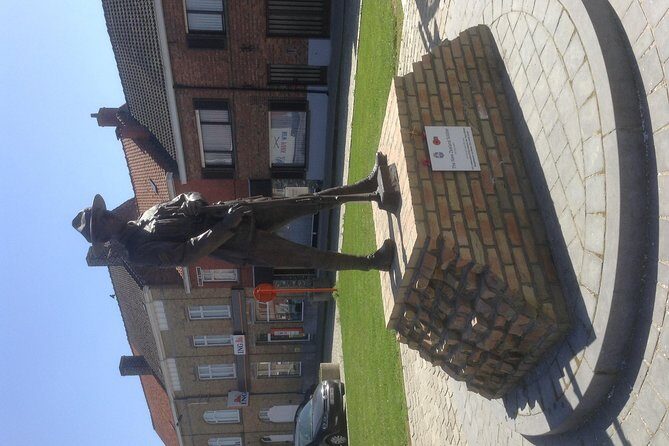
The day starts at Messines Ridge, and it’s a strong opener because it mixes operational history with one of the most human moments of the war. Here you’ll hear the story of the Battle of Messines, visit mine craters, and then move into the Christmas Truce location area.
This stop is special because it shows how the same ground held both industrial-scale fighting and sudden, fragile humanity. The mine-crater scenes help you grasp how the war changed the land itself, so later memorials and cemeteries don’t feel abstract. If you’re the type who likes to understand cause and effect, this is where the day gets its “why.”
You’ll also visit a crypt described on the tour as the place where Adolf Hitler was treated for his wounds. That’s a heavy historical detour, but it’s exactly the kind of context a guide can place into the local timeline.
Practical tip: this is often the moment when people realize the day will be emotional. If you’re sensitive to war stories, this is a good time to ask your guide how they frame each topic.
Hooge Crater Cemetery and the Menin Road line of attack
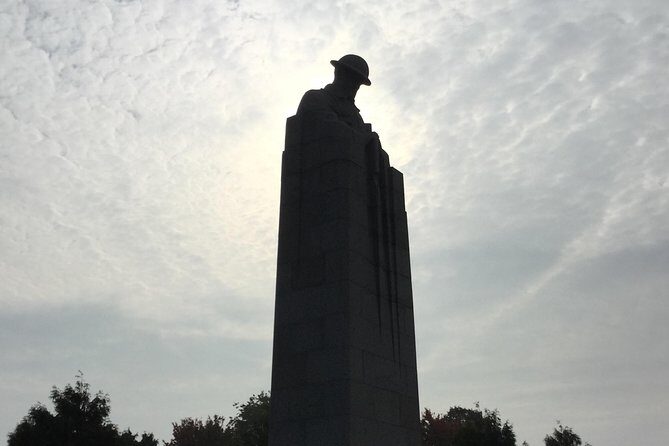
Next up: Hooge Crater Cemetery, a short stop that packs real meaning into limited time. You’ll visit Pat Bugden VC, noted here as the 20-year-old recipient of the Victoria Cross. It’s also a moment focused on geography—because you’ll be standing on the Menin Road directly alongside where the Australian gun pits were for the assault on Passchendaele.
This is the stop where you really benefit from being with someone who can point out what you’d miss on your own. Standing by the road while the guide connects it to the attack helps you picture the soldiers’ views and movements, not just the end result.
A possible drawback: with only about 15 minutes here, you’ll want to come ready with questions. If you have a specific unit, family name, or date you’re curious about, jot it down early—Søren’s approach is to tailor the day, and you’ll get more from your limited time by asking right away.
The Black Watch site: Australian HQ in September 1917
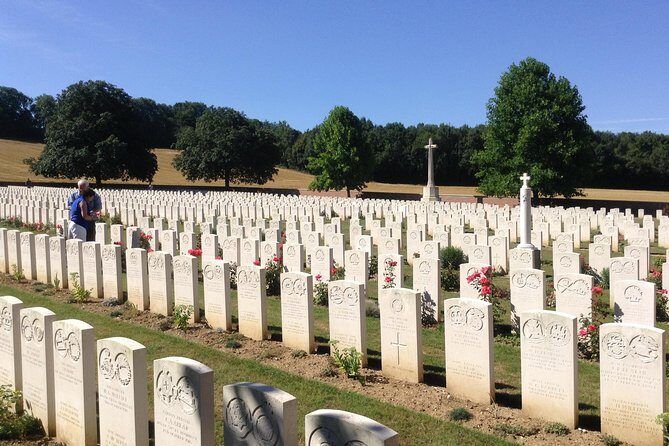
At The Black Watch site, you’ll learn about the Australian HQ in September 1917. The tour also includes earlier actions tied to the same ground from November 1914, which helps you see how the war kept returning to the same corridors.
This kind of stop can be easy to undervalue if you expect only “big battlefield” sights. But HQ locations are where you get the war’s rhythm—planning, orders, movements, and the grind between major offensives. It’s also a useful reset point: after cemeteries and a roadline view of gun pits, shifting back to command and earlier action helps your brain organize the story again.
Because it’s a shorter stop focused on context, it’s best when you’re ready to listen. If you’re hoping to do lots of walking or photo-hunting here, temper expectations.
Polygon Wood: walk the woods, see bunkers, then connect to a monument
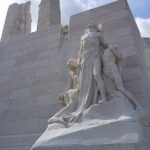
Polygon Wood is a hands-on stop. You’ll walk through the woods, visit concrete bunkers that were present when Australian soldiers captured during the battle, and then head to the cemetery and the Australian 5th Division monument.
What makes this one click is the combo of three different layers:
- what the soldiers built (bunkers),
- what they left behind (cemetery),
- and how the Australian forces are remembered (5th Division monument).
This is one of the best “learning” stops on the route because the setting matches the story. Even if the wood looks very different today, the guide helps you read the terrain like a battlefield map.
Time is listed at about 30 minutes. That’s enough for a short walk and key points, but not enough for wandering on your own. If you want extra time for photos or questions, tell your guide—private means you can usually stretch where it matters most.
A few more Ypres tours and experiences worth a look

Hill 60 and the 3:10am mine blast: tunnelling history in a crater
Hill 60 is where the tour gets technical in a way that still feels grounded. You’ll hear the story of Captain Woodward and the 1st Australian Tunnelling Coy, including a mine blown at 3.10am on 7 June 1917. You’ll then see the crater.
Tunnelling sites can be hard to understand if you only read about them. Seeing a crater and hearing the timing gives you the “click” moment: the war wasn’t only about lines and trenches; it was also about engineered underground effects that changed what could happen at ground level.
A practical note: this is a good stop to wear shoes with solid grip. Even when surfaces look manageable, cemeteries and battlefield ground can be uneven.
Broodseinde and Zonnebeke: driving sections that still matter
Between major walking stops, the tour includes driving through Broodseinde and later Zonnebeke, described as sitting in the line of the Australian advance. These sections aren’t as hands-on as the cemetery and woods, but they still serve a real purpose.
This is where you get the “shape” of the campaign—how positions related to one another across days and phases. It’s also helpful when you’re trying to picture what the soldiers saw from where they stood.
If you tend to feel impatient during drives, this is where having a guide makes a difference. Ask for the specific direction references and the “what would you have seen then” details, because those are the pieces that turn driving time into understanding.
Tyne Cot Cemetery: scale, names, and two Victoria Cross stories
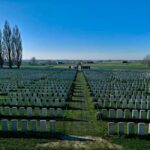
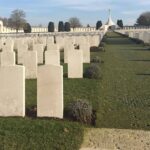
Tyne Cot is one of the emotional anchors of the day. You’ll visit the world’s largest Commonwealth War Graves Commission cemetery, with 12,000 soldiers buried there, and the tour notes that only 3,000 have names. You’ll also learn about two Australian Victoria Cross recipients buried here.
Why Tyne Cot hits so hard is the combination of size and uncertainty. When so many graves are unnamed, the cemetery turns into a visual record of loss, not just remembrance. With a guide, that doesn’t feel like a generic stop—you’re given the numbers, the significance, and the right framing so it lands.
Time is about 45 minutes, which is generous enough to slow down and read what you’re seeing. If you want to find a particular name, this is the time to lean into the guide’s help and ask how to navigate the cemetery efficiently.
John McCrae’s site and In Flanders Fields
Next is the John McCrae site, described as the hospital site where Lt Col John McCrae composed In Flanders Fields. This stop works because it connects battlefield experience to language—the way war becomes literature and memory.
It also adds variety to the day. After craters, bunkers, and cemeteries, a place tied to a poem helps you process what you’ve just seen through a different lens. It’s a short stop (about 30 minutes), so focus on the context your guide provides rather than rushing your photos.
Menin Gate Memorial: 55,000 missing names and the story behind it
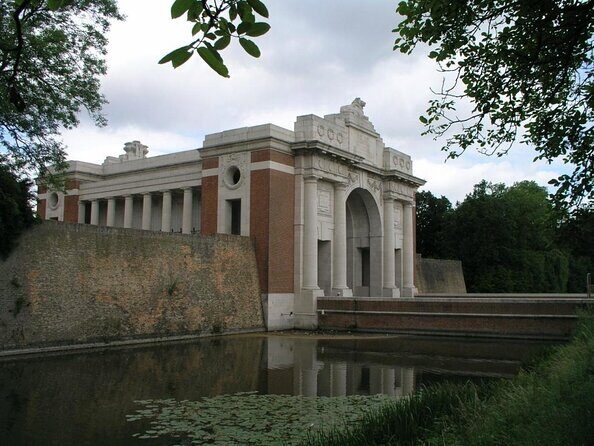
At Menin Gate Memorial, you’ll hear the story of the Menin Gate and the reasons behind its creation, plus details tied to the 55,000 names listed as missing here. This stop is about remembrance at scale.
Menin Gate can feel like a wall of names even when you try to read carefully. A guide helps you understand why those names were gathered there, and how the memorial functions for families and for history.
Time is about 20 minutes. That’s enough for the memorial focus, but if this is a must-see for you, it’s worth asking the guide for tips on how to approach reading the names efficiently.
Sanctuary Wood Museum: original trench scenes and a small WW1 museum
The final stop is Sanctuary Wood Museum, with about 40 minutes allocated. This part is included, and it’s a good closer because it brings you back from monuments into something physical and close to lived conditions.
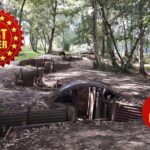
You’ll see poignant original WW1 trenches plus a quaint WW1 museum. The trench scenes are the payoff for the whole day’s theme: the fighting wasn’t only on paper and in commemorations. It happened in spaces people actually occupied, including the cramped, engineered reality of trench warfare.
If you still have energy after Tyne Cot and Menin Gate, you’ll likely enjoy Sanctuary Wood most here—because it turns the story into something you can physically stand near and understand.
Price and value: what $420.49 gets you on an 8-hour private route
At $420.49 per person, this isn’t a budget activity. But it can feel fair when you break down what’s being provided and how the day is structured.
Here’s what you get that adds value:
- A professional guide handling the storytelling and battlefield context across multiple sites
- Free bottled water to keep you comfortable for a full day
- Pickup from select hotels in Ieper is included
- A private format that’s customizable to your group
- Entry to the trench museum at Sanctuary Wood Museum is included
- The itinerary states admission tickets are free for the listed stops, which reduces surprise costs
What’s not included is lunch. That’s the main planning gap. If you book this, you’ll want to think about when you’ll eat so you’re not hungry during the later cemeteries.
Also, the tour lists that it’s offered in English and uses a mobile ticket. If you prefer fewer hassles on the day, that’s a plus.
One more “value” point: this route is dense. You’re not just hitting one famous cemetery. You’re traveling between ridges, mine sites, cemeteries, memorials, and trench settings that connect to Passchendaele and the broader Ypres Salient story.
Who this Ypres WW1 private tour fits best (and who should reconsider)
This tour is a great match if you:
- want more than famous names and want the local map explained,
- care about Australian involvement (the day repeatedly ties into Australian lines and markers),
- like structured, guided pacing across many sites,
- or want help connecting the day to family names—Søren’s reviews include time spent on researching and then following up with links to books, movies, and podcasts afterward.
You might reconsider if:
- you need long free time to roam independently (the day includes several short stops),
- you’re very sensitive to war topics and want a lighter emotional load,
- or you dislike day tours that run close to 8 hours with multiple walking moments.
If you’re traveling as a couple or a small group and you like the idea of steering the day toward what you care about, this format tends to work well. The minimum of 2 guests also makes it more realistic than some solo-friendly options.
Should you book this Ypres to Passchendaele route?
Yes, if your goal is understanding. This is one of those WWI days where the difference between driving yourself and being guided is huge—because the land looks familiar even when the stories aren’t. The route moves from the Christmas Truce context at Messines Ridge to the Passchendaele assault area around Menin Road, then closes with Tyne Cot and trench scenes at Sanctuary Wood.
Book it especially if you want the guide to tailor the day, or if you have family connections you want incorporated. Just do two things before you go: plan your lunch, and bring shoes you can trust for cemetery paths and uneven ground.
FAQ
How long is the tour?
It runs for about 8 hours.
Is this a private tour?
Yes. It’s private, so only your group participates.
Does the price include anything besides the guide?
You get bottled water, and the Sanctuary Wood Museum is included. Admission tickets for the listed stops are shown as free.
Is lunch included?
No, lunch is not included.
What language is the tour in?
The tour is offered in English.
Are pickup options available, and where?
Pickup is available from select hotels, and the notes say it’s Ieper based pickup only. A minimum of 2 guests is required. If you want to start from Lille, Arras, or Bruges, you’d need to look at other listings.