REVIEW · BRUGES
Private Vimy and Belgium Canadian Battlefield Tour from Bruges
Book on Viator →Operated by Ploegsteert Sector Battlefield Experience · Bookable on Viator
A day in WWI Flanders hits fast. This private tour from Bruges guides you through Canadian battlefield sites like Vimy Ridge tunnels and the Menin Gate ceremony, step by step. You’ll also get a real sense of how these places are remembered through memorials, trench walks, and major CWGC cemeteries.
I especially like how the day is built around the Canadian perspective, with stops that connect the front line to the people who came through it. Another big plus is the mix of dramatic sites and calm pauses: preserved trenches at Vimy, memorials on quieter hills, and then time to breathe in Ypres before the evening ceremony.
One drawback to consider: the drive time between sites can feel long, so if you want a running commentary from start to finish, it helps to ask questions early. Even a great guide can’t turn a road trip into a museum tour every minute.
In This Review
- Key things to know before you go
- Why a private Canadian WWI tour from Bruges makes sense
- Vimy Ridge and the Grange Tunnels: where the plan meets the ground
- Hill 62 (Sanctuary Wood) and Frezenberg: Canadian names tied to specific places
- Tyne Cot, Saint Julien, and Essex Farm: cemeteries and the writing of memory
- Langemark’s German cemetery and Ploegsteert’s missing: seeing contrasts without losing respect
- Ypres Cloth Hall free time, lunch, and the rhythm of the day
- The Last Post at Menin Gate: what to expect and how to prepare
- Price, time, and who this tour is best for
- Should you book this Private Vimy and Belgium Canadian Battlefield Tour?
- FAQ
- What time does the tour start, and how long does it take?
- Is lunch included?
- Is this a private tour or will I be grouped with strangers?
- What transportation is included?
- Are admission tickets included for the stops?
- Which WWI sites and memorials does the tour include?
- Is alcohol included during the lunch break?
- Can I cancel for a full refund?
- Are service animals allowed?
Key things to know before you go
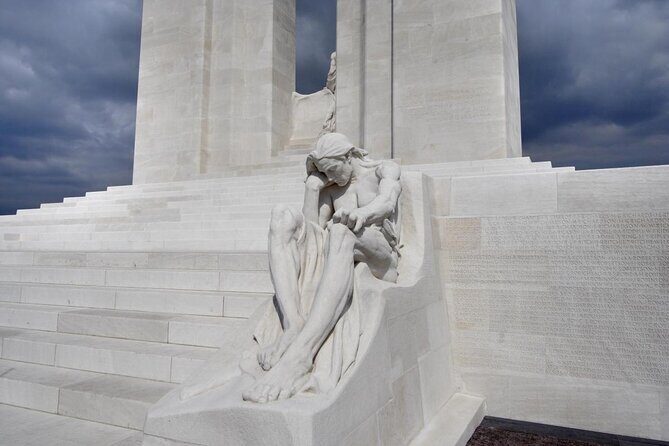
- Vimy Ridge trenches and Grange Tunnel: walk preserved lines and go underground where Canadians waited before the assault
- Multiple Canadian memorials: Hill 62 (Sanctuary Wood), Princess Patricia’s Light Infantry at Frezenberg, and more
- CWGC scale at Tyne Cot: 12,000 burials and a memorial listing 35,000 names of those with no known grave
- Church-and-town break in Ypres: lunch plus free time around the Cloth Hall and cathedral area
- Menin Gate Last Post: the ceremony under the gate, followed by the ride back to Bruges
Why a private Canadian WWI tour from Bruges makes sense
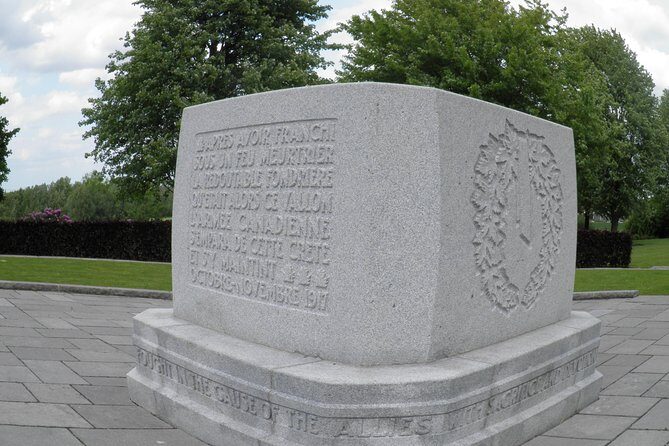
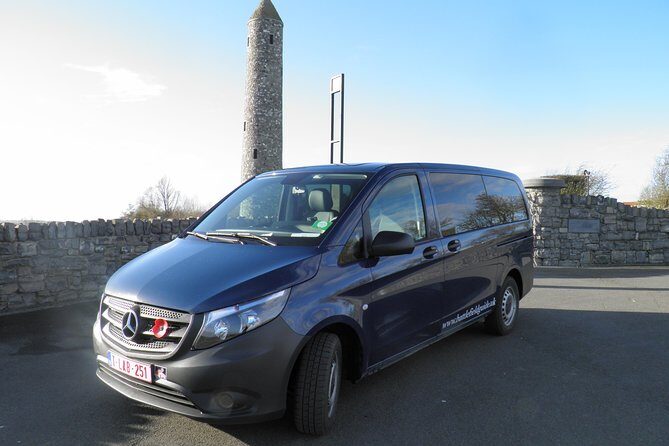
Bruges is a charming base, but it’s also a long way from some of the most important WWI sites. This is why a private tour is such good value for your time. You get picked up and dropped off at your hotel, and you’re carried between sites in an air-conditioned minivan instead of piecing together trains, buses, and schedules.
The second big reason I like this format: you’re not stuck in a crowd. It’s only your group, and you can set the pace. When the day includes emotional stops—tunnels, cemeteries, names on stone—that calmer rhythm matters.
The tour is listed at about 10 hours, starting at 8:30am, so plan it as your full-day “main event” in Belgium. Lunch is included, and alcoholic drinks are not, so if you want beer or wine, you’ll have to plan to buy it yourself.
You can also read our reviews of more private tours in Bruges

Vimy Ridge and the Grange Tunnels: where the plan meets the ground
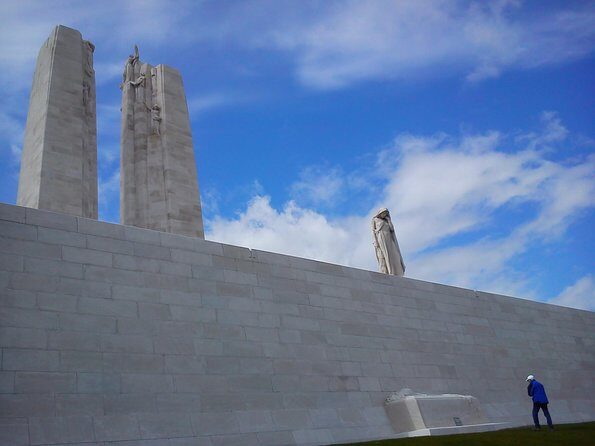
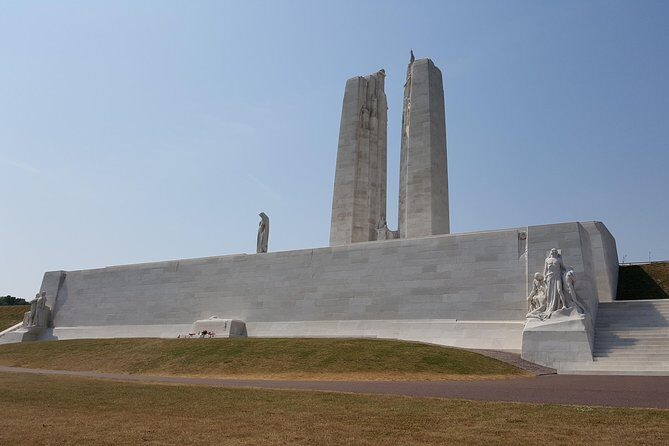
Vimy Ridge is the headline, and the tour treats it that way. You drive toward Vimy Ridge with a view over the Douai plain, then you stand near the Canadian National Vimy Memorial to take in the scale of the area. This is one of those places where the terrain explains a lot even before you hear the story.
What really makes this stop worth your time is that it’s not just looking from above. You walk in preserved trenches from both sides—Canadian and German lines—so you get a physical feel for how close these forces were. Then you go down into the Grange Tunnel, where Canadian troops were positioned hours before the battle.
A newly built visitor centre is also part of the time at Vimy, which helps you connect what you see above ground to what happened underground. The tour time here is generous—about 3 hours—so it doesn’t feel rushed.
Practical thought: the memorial area and underground spaces can be very different in feel. Bring comfortable walking shoes and expect changes in lighting when you go underground. If you’re the type who likes context, ask your guide what to watch for in the trench sections—guides can often point out details you’d miss if you’re just sightseeing.
Hill 62 (Sanctuary Wood) and Frezenberg: Canadian names tied to specific places
After Vimy, the day keeps moving through key moments that shaped Canadian fighting in WWI. Hill 62 is next, and it’s closely tied to spring 1916. You stand on Hill 62—also known as Sanctuary Wood—to get your bearings where Canadian soldiers fought.
This stop is shorter than Vimy, around 30 minutes, but the value is in the clarity. Hills like this weren’t abstract. They were objectives, observation points, and hard ground to hold. Standing where you can look out over the area gives the memorials more meaning than reading names alone.
Then you shift to the Princess Patricia’s Canadian Light Infantry Memorial at Frezenberg. The stop here is about 15 minutes, but it lands on a specific story: the regiment was nearly wiped out in May 1915. That kind of detail matters. It turns a memorial plaque into a reminder that a unit’s survival could be measured in days.
A good tip for this part of the day: don’t treat each memorial as a separate stop. Try to connect them mentally—Vimy as the big set piece, then other places that show how Canadian units were tested before and after. The tour’s pacing helps you build that timeline.
Tyne Cot, Saint Julien, and Essex Farm: cemeteries and the writing of memory
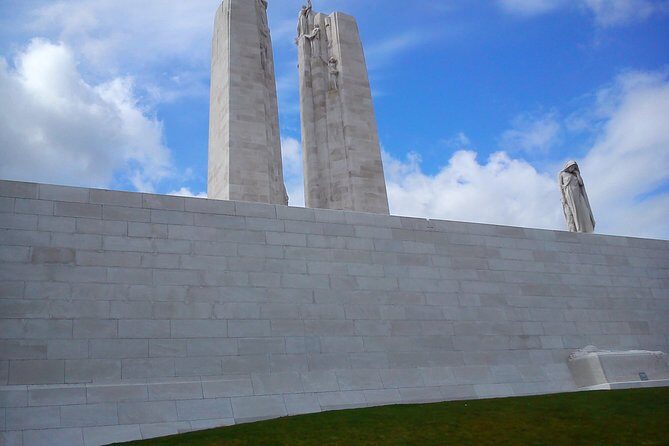
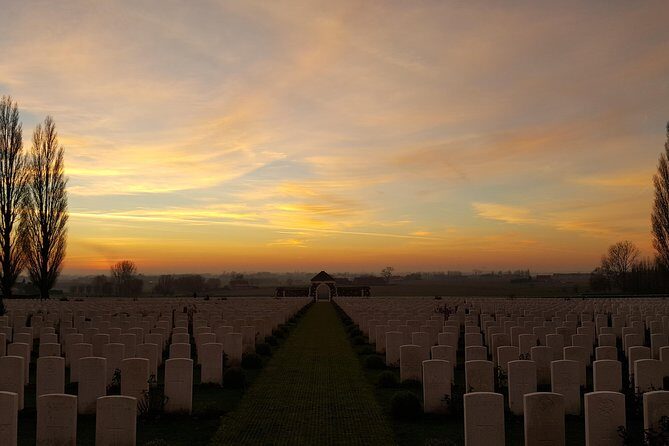
Tyne Cot is the cemetery stop you can feel in your chest. It’s described as the largest CWGC cemetery in Europe, with 12,000 burials. What makes it especially powerful is the memorial wall bearing the names of 35,000 soldiers who have no known grave.
Your time here is about 30 minutes, which is just long enough to see the rows and then focus on what those names mean. You won’t remember every stone, but you will remember the scale—the sheer number of people who can’t come home in any physical way.
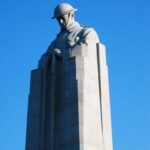
From there, the tour continues to Saint Julien Memorial. You’ll see the Brooding Soldier, linked to the first gas attack at spring 1915. It’s a different kind of lesson than trenches and cemeteries. Gas wasn’t just another tactic—it changed the fear and uncertainty of the battlefield. This stop helps the story feel complete, not only focused on one kind of fighting.
Next is Essex Farm Cemetery, about 15 minutes. This stop adds a rare kind of connection: it’s where John McRae wrote In Flanders Fields. A cemetery that also anchors a poem gives you a bridge between history and culture. Even if you’ve read the poem before, seeing the cemetery context makes it hit differently.
One consideration: cemeteries can feel repetitive if you rush. Let yourself slow down. If your group has several stops in a row like this, ask the guide to point out a couple of specific details—then you’ll get meaning without feeling like you’re ticking boxes.
Langemark’s German cemetery and Ploegsteert’s missing: seeing contrasts without losing respect
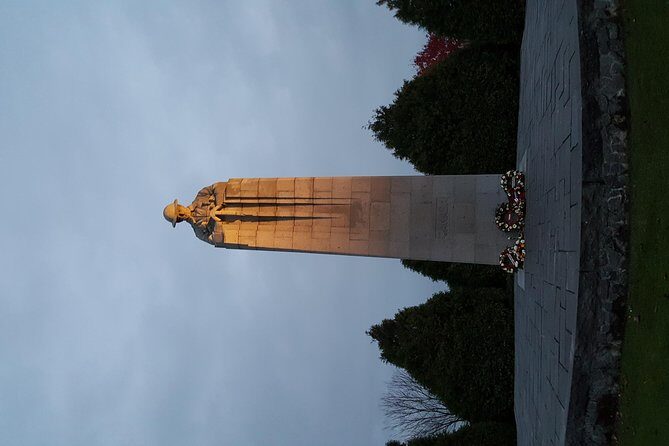
Not every WWI memorial site is the same kind of space, and this tour includes contrasts that help you understand how remembrance is shaped by both sides.
Ploegsteert is included to see the Ploegsteert Memorial to the missing. The emphasis here is on those whose names remain without a known burial. Even before you reach Tyne Cot, this helps set up the day’s theme: the human cost is often recorded when bodies can’t be recovered.
Then comes Langemark Cemetery, about 30 minutes. Here you’ll see a German cemetery and you’ll be able to feel the difference compared to Allied cemeteries. The tour doesn’t ask you to judge. It’s more about perspective—how different nations marked the dead, and how the same war can be remembered with different symbols and layouts.
This is the kind of stop you should handle with care. It’s not about comparing suffering as if it’s a contest. It’s about noticing how memorial design and language can reflect a country’s way of facing loss.
If you’re sensitive to heavy sites, build in moments of quiet during these transitions. The guide can keep you moving, but you’ll appreciate having space to absorb what you’re seeing.

Ypres Cloth Hall free time, lunch, and the rhythm of the day
After the long sequence of battle and cemetery stops, you get a real break in Ypres. Lunch is included, which is a smart design choice for a day like this. Food keeps the day sustainable, and it also prevents the “hangry” problem that can make solemn stops feel even tougher.
You’ll also have free time in Ypres, and the tour gives you a concrete focal point: the Ypres Cloth Hall around the main square. You’ll be able to see the Cloth Hall and the cathedral area, plus other buildings nearby, then wander at your own pace. This is one of the best parts for people who want both remembrance and a sense of normal street life again.
The time here is about 1 hour. That sounds short, but it’s enough to grab a coffee, walk the main area, and reset your brain before the evening ceremony.
If you want to make the most of this break, set a small goal: pick one nearby thing to look at closely rather than trying to cover the whole town. When your day is heavy, small goals keep it satisfying.
The Last Post at Menin Gate: what to expect and how to prepare
The emotional peak comes at the end. You’ll attend the Last Post ceremony under the Menin Gate. The tour time allocated here is about 1 hour, and afterward you’ll be brought back to your hotel.
This ceremony is moving because it’s both formal and personal. You’re standing in a place that has become a symbol for those who didn’t return. The moment pulls the story together: trenches, hills, tunnels, cemeteries, and then one shared ritual of remembrance.
Practical advice: arrive with comfortable shoes and a plan for standing for a while. If you’re with someone who gets cold easily, layer up. Also, mentally decide what you want to focus on during the ceremony—many people go in thinking they’ll “feel everything.” Instead, focus on one part: the gate itself, the gathered crowd, or the name-and-memory theme.
If you’ve spent the whole day on memorial sites, don’t treat the ceremony like just another stop. Let it be the finish line.
Price, time, and who this tour is best for

At about $535.86 per person for a private full-day tour, the real question is value: are you saving time, stress, and decision-making compared to doing it on your own? For me, the answer is yes, mainly because you’re getting hotel pickup and drop-off, transport in an air-conditioned minivan, a professional guide, and lunch.
The private part is also important. WWI sites are meaningful, and it helps when your guide can tailor pacing to your group’s needs. The tour is designed around about 10 hours total, and the included lunch keeps the timing realistic instead of turning the day into constant “find food” errands.
This tour is a great fit if you:
- want the Canadian WWI perspective without planning multiple ticketed stops
- appreciate guided context at major sites like Vimy, Tyne Cot, and Menin Gate
- prefer a private pace rather than managing a group schedule
- are staying in Bruges and want a one-day plan that actually works
It may not be the best fit if you dislike long drives or you prefer total control over every stop. Also, since there can be stretches of travel between sites, you should be comfortable asking questions if you want more commentary during the ride.
If your goal is to see the key Canadian memorials and leave with a clearer sense of how they connect, this is the kind of day that rewards attention.
Should you book this Private Vimy and Belgium Canadian Battlefield Tour?
I’d book it if you want a single, well-shaped day that connects the Canadian story from trenches at Vimy to the scale of CWGC remembrance at Tyne Cot, with the Last Post ceremony giving the finish you can’t easily recreate on your own. The included lunch, pickup, and guide help you focus on the sites instead of logistics.
I’d think twice if you’re expecting a constant stream of history during every minute of driving. For a private tour, you can fix that by setting expectations early—ask your guide what you should watch for and what questions to keep in mind as the day moves forward.
If you’re going from Bruges and you want your WWI day to feel intentional rather than rushed, this one is a strong choice.
FAQ
What time does the tour start, and how long does it take?
The tour starts at 8:30am and runs for about 10 hours.
Is lunch included?
Yes. Lunch is included in the tour price.
Is this a private tour or will I be grouped with strangers?
This is a private tour. Only your group participates.
What transportation is included?
You’ll travel by air-conditioned minivan, with hotel pickup and hotel drop-off included.
Are admission tickets included for the stops?
The tour lists admission ticket as free for the stops included in the schedule.
Which WWI sites and memorials does the tour include?
You’ll visit Canadian sites including Vimy Ridge, Hill 62 (Sanctuary Wood), Princess Patricia’s memorial at Frezenberg, plus Tyne Cot, Saint Julien, Langemark, Essex Farm, Ypres Cloth Hall, and the Menin Gate Last Post ceremony. Ploegsteert Memorial to the missing is also included.
Is alcohol included during the lunch break?
No. Alcoholic drinks are available to purchase, but they are not included.
Can I cancel for a full refund?
Yes. Free cancellation is available up to 24 hours in advance for a full refund.
Are service animals allowed?
Yes. Service animals are allowed.