REVIEW · GHENT
Private Tour: The Dark Side of Gent
Book on Viator →Operated by Gent Free Walking Tour · Bookable on Viator
Ghent gets dark in the best way. This private evening walk mixes famous sights with the grim stories attached to them, so you see the city as more than postcards. You’ll walk at your own pace and finish in a neighborhood made for a celebratory meal.
I especially like the private format: no rushing, more chances to ask questions, and fewer awkward moments when you’re trying to keep up. I also like that the tour ends in Patershol, right where it’s easy to pivot from legends to local beer and Belgian food. One consideration: several stops are mainly about what you can see from the street, and entry isn’t included for places like St. Bavo’s Cathedral, the Prince’s Court area, and Augustijnenklooster.
The best part is how the stories stay tied to real corners of Ghent—bridges, towers, and fortifications—so even if you only have a short evening, you leave with clearer bearings and smarter context.
In This Review
- Key things to know
- Why Ghent After Dark Feels Different on This Walk
- Price and Value: What You Pay For in a Private 1h45 Tour
- The Private Format: Easy Questions, No Crowd Pressure
- Stop-by-Stop: The Dark Legends Trail Through Ghent
- Stop 1: St Michael’s Bridge
- Stop 2: St. Bavo’s Cathedral (Devil’s Tower)
- Stop 3: Graslei and Korenlei
- Stop 4: Appelbrugparkje and the Butchers’ Hall legend
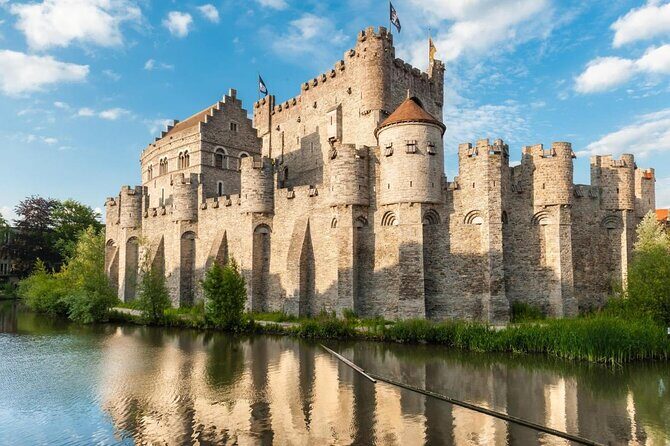
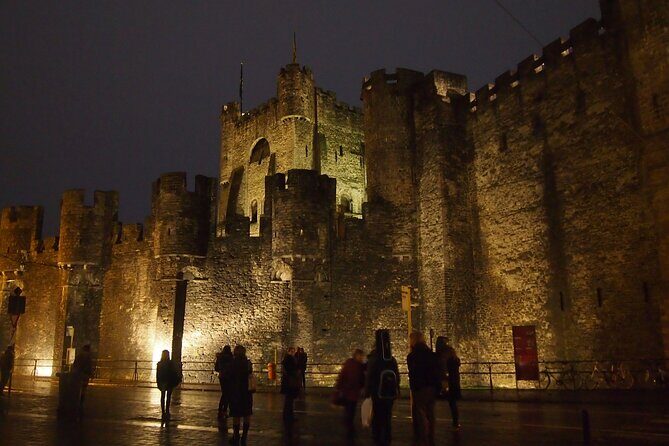
- Stop 5: Gravensteen
- Stop 6: Prinsenhof (Prince’s Court area)
- Stop 7: Rabot Sluice
- Stop 8: Keizer Karel V and the Bridge of Imperial Delights
- Stop 9: Augustijnenklooster (Religious Wars)
- Stop 10: Patershol (finish point)
- The Guides: Why the Stories Feel Like More Than Facts
- Ending in Patershol: Turn the Night Into Dinner Plans
- Who This Tour Fits Best (and Who Might Want Something Else)
- Should You Book the Dark Side of Ghent Private Tour?
- FAQ
- How long is the Private Tour: The Dark Side of Gent?
- Where does the tour start and end?
- Is this tour private?
- Is the tour offered in English?
- Are admission tickets included for major stops?
- Is free cancellation available?
Key things to know
- Evening timing helps you enjoy the streets with less crowd pressure.
- Private pace means you can slow down for photos or ask extra questions.
- Story-led route connects Ghent’s medieval trade power to darker legends.
- Exterior-focused stops mean you’ll look in from the outside at some major sights.
- Finish in Patershol makes dinner plans easy right after the last stop.
Why Ghent After Dark Feels Different on This Walk
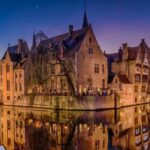
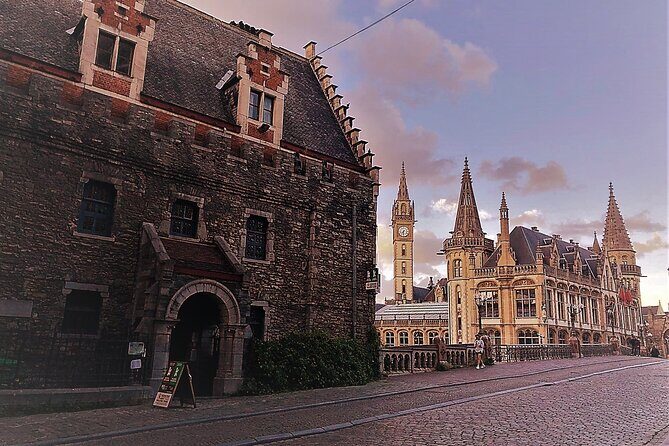
Ghent at night has a gentler rhythm. The streets are typically less packed, and the buildings look more dramatic when light hits stone and water from different angles. That mood matters here, because the tour leans into the darker side of the city: legends, executions, religious conflict, and the kind of history that sounds unbelievable until you place it on a specific bridge or facade.
This isn’t a jump-scare horror show. It’s more like a guided conversation in the open air—stories anchored to the places you’re standing in, with enough context to make it click. If you enjoy creepy facts, medieval power struggles, and the way one event can reshape a neighborhood, you’ll have a great time.
You can also read our reviews of more private tours in Ghent


Price and Value: What You Pay For in a Private 1h45 Tour
At $105.59 per person for a private experience, the value comes from three things: time, guide attention, and route efficiency. In about 1 hour 45 minutes, you cover a spread of central sights without needing to bounce between transit lines or reorganize your evening.
You’re also paying for focus. A private guide can tailor pace to your group, and that matters on a story-heavy walk. If you’ve ever done a group tour where you spend half the time jogging to catch up, you’ll appreciate the slower, more comfortable tempo here.
One more value point: the tour includes a mobile ticket and is offered in English, which reduces hassle once you arrive. And this is popular—it’s commonly booked around 49 days ahead—so if you’re traveling during a busy season, booking earlier is a smart move.
The Private Format: Easy Questions, No Crowd Pressure
This is a private tour/activity, meaning only your group participates. That changes the experience in small but meaningful ways.
First, you can ask “silly” questions without the guide having to find the next moment for the whole crowd. Second, you can linger at the viewpoints you care about. Third, if your group has different walking speeds, the pacing can flex.
I like tours that help you actually connect dots. A private setup makes it easier to follow the thread—trade power to conflict, fortifications to legends, and then the way industrial change helped revive Ghent’s economy.
Stop-by-Stop: The Dark Legends Trail Through Ghent
The walk moves through classic Ghent landmarks, but the stories give them a sharper edge. Below is what to expect at each stop, plus what to keep in mind.
Stop 1: St Michael’s Bridge
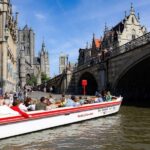
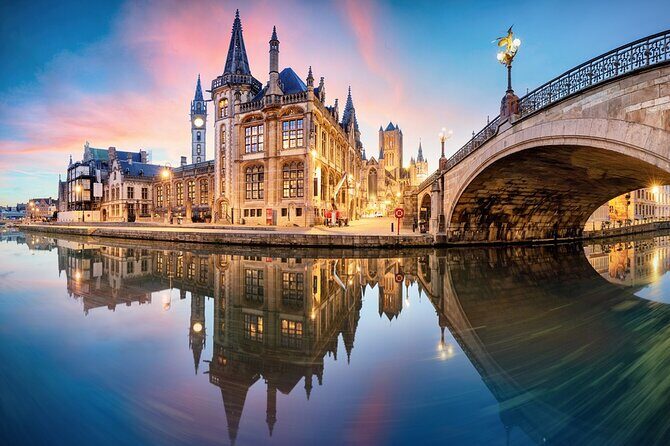
You start with context: Ghent’s role as a medieval trading hub and why its skyline is so iconic. From this bridge, you get an orientation toward the city’s three towers, which you’ll keep noticing as the tour builds.
What I like here is the “map in your head” effect. Once you understand what to look for, the rest of the walk feels more organized.





Stop 2: St. Bavo’s Cathedral (Devil’s Tower)
Next comes a darker nickname: St. Bavo’s Cathedral is tied to the story of the Devil’s Tower. You learn the gruesome version, but entering isn’t part of the tour.
Practical note: if you want to go inside later, you’ll need to plan that separately. The exterior-focused approach still works well if you care more about the legend than the interior artworks.
Stop 3: Graslei and Korenlei
Now you shift to the heart of the medieval harbor area. These spots connect to Ghent’s old economic strength—where trade made the city influential and powerful.
This stop is a good reminder that “dark history” isn’t only executions and wars. It’s also about power, money, and who benefited from the city’s rise.
Stop 4: Appelbrugparkje and the Butchers’ Hall legend
You cross and look over the area near the huge Butchers’ Hall. Here the guide tells a legend about the execution of a father and son and an event that reportedly saved them.
This is the kind of story that makes you look twice at familiar architecture. Even if you don’t know Ghent well, you’ll start seeing the place as part of a much bigger narrative.
Stop 5: Gravensteen
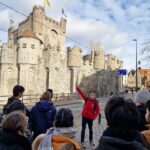
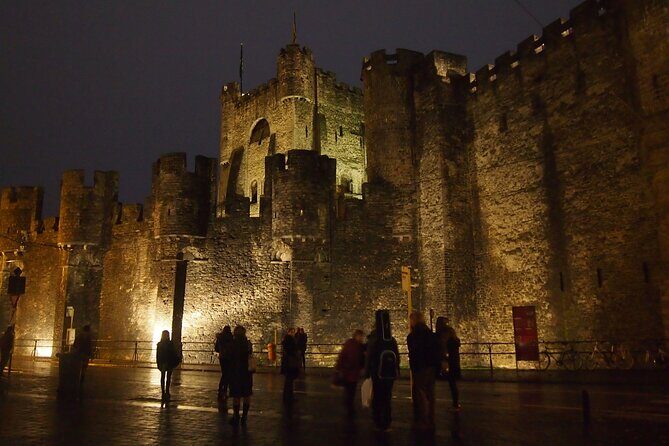
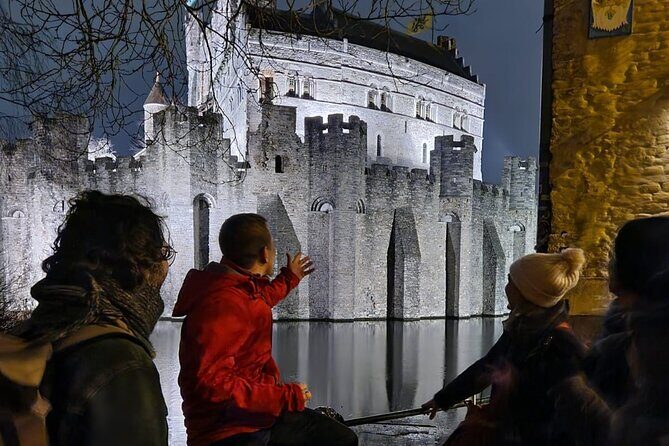
Gravensteen is your fortification moment. You learn it was built by Count Baldwin as protection against Viking raids, and you see how the city developed around that defensive core.
If you like turning points—when fear forces a city to build—this is a strong stop. It explains why Ghent’s center grew the way it did.
Stop 6: Prinsenhof (Prince’s Court area)
You head to the Prince’s Court setting—once a gigantic palace. Today, you’ll need some imagination to picture its scale, and the guide helps you do exactly that. Entering isn’t part of the tour.
This stop can be great for photo lovers, since the story gives shape to what you’re seeing. If you’re expecting a full museum visit, temper that expectation and save any inside time for later.
Stop 7: Rabot Sluice
Now it’s water and defense: you’ll see what’s left of a defense tower connected to a 14 km long medieval wall around Ghent. It’s a “systems” stop—how cities protected themselves as they expanded.
This is also a good one for families, because it’s concrete and visual. You can point at the structure and the logic behind it.
Stop 8: Keizer Karel V and the Bridge of Imperial Delights
You reach the Bridge of Imperial Delights, framed by sculptures depicting legendary scenes from the life of Charles V. The guide explains what you’re looking at, so it doesn’t feel like random stone art.
This is where the tour’s tone balances out: not only grim events, but also the way rulers and power left permanent marks in public spaces.
Stop 9: Augustijnenklooster (Religious Wars)
This stop brings the Religious Wars into the story, including how Calvinist rule affected Ghent’s history. You won’t be entering the site, but you’ll connect the political conflict to what shaped the city.
If your group likes cause-and-effect history, this section usually lands well. It gives teeth to why later neighborhoods and institutions changed.
Stop 10: Patershol (finish point)
You end in Patershol, the medieval quarter nicknamed Monk’s hole. The guide connects the Industrial Revolution to shifts in social life and the way the city’s economy revived.
This finishing stop isn’t only about closure. It also sets you up for your next move: bars and restaurants are nearby, so you can keep the night rolling without hauling yourself across town.
The Guides: Why the Stories Feel Like More Than Facts
The reviews show one clear pattern: guides make the stories feel personal and fun, not like a lecture. You’ll see names pop up—Jerke, Kenny, Hamraz, Isabelle, Sébastien, Deborah, and Debra—and the common thread is style: lively storytelling, patience with questions, and a friendly way of mixing humor with serious topics.
That matters because the topic is intense. Even when the legends are dark, the tone tends to stay light enough to enjoy the walk with kids or with friends who don’t usually do history tours.
If your group includes children, there’s a nice bonus: the pace and story format can keep them engaged. One account mentioned the guide doing a great job with both kids and adults, which tells me this tour can handle mixed attention spans.
Ending in Patershol: Turn the Night Into Dinner Plans
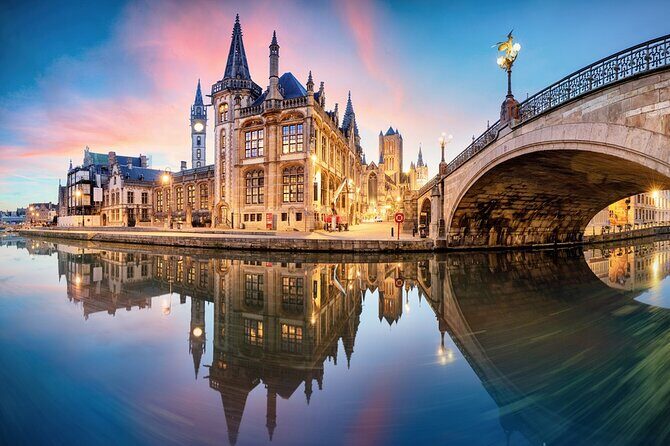
Patershol is a smart ending choice. Since the tour concludes there, you avoid the usual problem: you finish in some random corner and then scramble to find somewhere to eat.
Instead, you can immediately follow your cravings—Belgian beer, casual wine bars, or a proper meal—without planning extra transit. If you like your travel days efficient, this ending gives you that.
Tip: if you’re hungry, decide early what style of dinner you want. Patershol is lively, and you’ll get a better selection if you don’t delay too long after the final stop.
Who This Tour Fits Best (and Who Might Want Something Else)
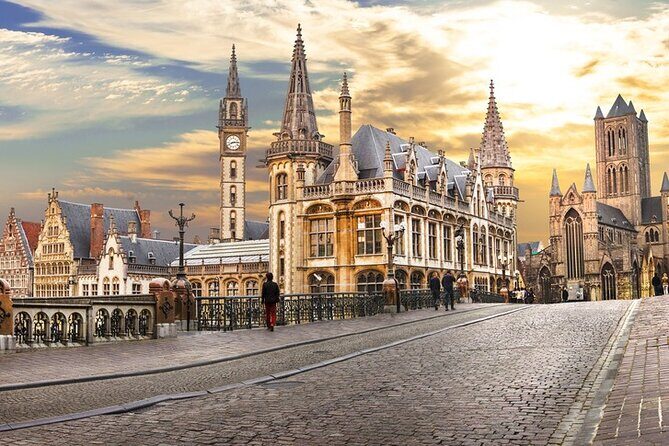
This walk fits you if you like:
- A private evening stroll with a guide who can answer questions.
- Stories that connect to specific places, not just general history.
- Ghent’s medieval era, especially trade power, fortifications, and religious conflict.
- A smooth transition into dinner in a central neighborhood.
You might want to reconsider if you expected something more extreme. One critical comment said it felt like a school presentation and that it wasn’t really the darker side so much as the same history told at night. That’s a fair warning: the “dark” part here is storytelling and context, not a theatrical scare experience.
Should You Book the Dark Side of Ghent Private Tour?
I’d book it if you want a smart, story-focused evening in Ghent that doesn’t waste time. The private format, the manageable 1 hour 45 minutes length, and the route ending in Patershol are the big wins. At $105.59 per person, the price makes sense when you compare it to what you’d pay for individual entry tickets and the value of having a guide string everything together while you walk.
If your group loves legends, executions, religious tension, and the way medieval power shaped the city, this is a great match. If you want something fully inside with lots of museum entry, it’s less suited, because parts of the route are exterior-focused and entrances to certain stops aren’t included.
Bottom line: book this when you want Ghent after dark to feel intentional, not random—and when you’d like your night to end with dinner already solved.
FAQ
How long is the Private Tour: The Dark Side of Gent?
It’s listed as about 1 hour 45 minutes.
Where does the tour start and end?
It starts at Hostel Uppelink, Sint-Michielsplein 21, 9000 Gent, Belgium and ends in the Patershol area in Ghent’s city center.
Is this tour private?
Yes. It’s a private tour/activity, so only your group participates.
Is the tour offered in English?
Yes, it’s offered in English.
Are admission tickets included for major stops?
Not always. Entering is not part of the tour for St. Bavo’s Cathedral, Prinsenhof, and Augustijnenklooster, so you’d need separate plans if you want to go inside.
Is free cancellation available?
Yes. You can cancel for a full refund if you cancel at least 24 hours before the experience starts.