REVIEW · BRUSSELS
A Self-Guided Tour of Brussels: From Medieval to Modern Times
Book on Viator →Bookable on Viator
Brussels turns history into a walkable story. This self-guided route ties royal legends, UNESCO architecture, and top viewpoints together with VoiceMap audio in English by Isaac. I like two things a lot: the offline access (audio, maps, geodata) and the way the walk lands you at major sights without needing tickets. One catch: parts of the route are uphill and stair-heavy, so plan for breaks and bring good shoes.
You’ll typically spend about 1.5 to 2 hours following on-screen directions that start at Pl. des Palais 1 and finish at Lookout des Marolles. The tour is designed for you and your group only, and once you book you get a unique code to download it. You also get unlimited use before your booking date and after it, plus a virtual tour option if you want to preview at home.
This is a smart value if you’re good with walking and you don’t mind seeing museums mostly from the outside. Tickets aren’t included, and you’ll need your own smartphone and headphones—so factor that into your day.
In This Review
- Key things I’d highlight before you go
- Getting Your Bearings: What This Brussels Loop Really Covers
- Price and Time: Is $9.99 a Good Deal for 2 Hours?
- VoiceMap in the Streets: How the App Guides You
- Royal Palace to Royal Square: Royals, Coudenberg, and Godfrey
- Grand Place and Its Surrounding Palaces: UNESCO in Footsteps
- Palais du Justice Steps: The Panoramic Payoff
- Musical Instruments Museum Area: Music as a Time Machine
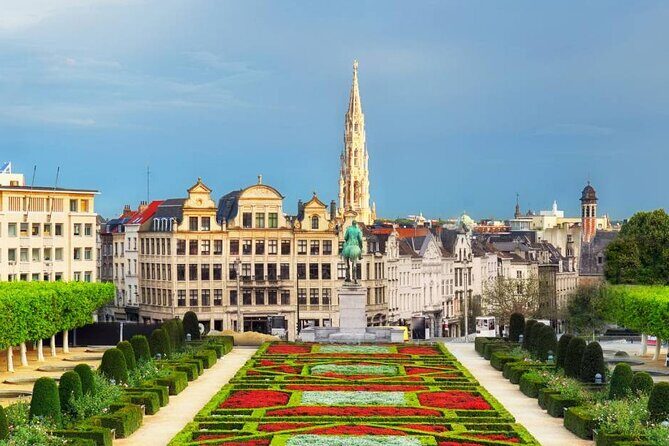
- Mont des Arts, Kunstberg Bells, and Quiet Garden Time
- Mary Magdalene Chapel and the Medieval Trace Around Grasmarkt
- Galerie de la Reine, Toone Puppet Theater, and Tiny-Statue Comedy
- La Monnaie, De Brouckèreplein, and the Black Tower Contrast
- Churches and Clochers: Saint Catherine and What’s Left Behind
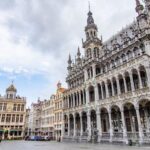
- Stock Exchange, City Museum, and Town Hall Grandeur
- Sablon Area: Anneessenstoren and Our Lady of Victories at the Sablon
- Grande Roue Bruxelles and the Final Views by Marolles
- Practical Tips So You Don’t Hate the Walk
- Should You Book This Self-Guided Brussels Tour?
- FAQ
- How much does the Brussels self-guided tour cost?
- How long does the tour take?
- Where does the tour start and end?
- What do I get with the booking?
- What is not included?
- Can I use the tour after I book it?
- Is this tour available only during certain hours?
Key things I’d highlight before you go
- VoiceMap offline audio and maps mean you’re not stuck with spotty signal.
- A tight route with big Brussels hits like UNESCO Grand Place, Manneken Pis, and Palais du Justice.
- English narration by Isaac keeps the story clear as you move through neighborhoods.
- Bell-and-garden moments at Mont des Arts and the Kunstberg carillon setup break up the street walking.
- Lots of elevation: you’ll feel it, especially if you’re not used to cobblestones.
- You’ll pass more than you enter since museum admission isn’t part of the price.
Getting Your Bearings: What This Brussels Loop Really Covers
This tour is built as a walk from the Royal area down toward the Marolles, with history threaded through the places you pass. You’re not just ticking off postcards. You’re moving through layers of Brussels: medieval edges, grand civic spaces, royal power, and the city’s more modern rhythm.
As you walk, Isaac’s narration connects dots you’d otherwise miss. You’ll go from royal lineage and historic palace ground to town square architecture, then into the quirky side of Brussels with comic murals and the little fountains that put a smile on your face.
The route is also intentionally “stop-and-look” friendly. Many of the stops are outside, so you can keep moving even if you don’t want to wait in lines or deal with timed entry.
You can also read our reviews of more guided tours in Brussels
Price and Time: Is $9.99 a Good Deal for 2 Hours?
At $9.99 per person, this is priced like a small add-on to your Brussels day, not a full guided-operator tour. The value comes from two practical strengths:
1) You get lifetime access in English, so you can reuse it later on a different trip day.
2) The route covers multiple major landmarks in roughly 1 hour 30 minutes to 2 hours, which is the perfect length for a first visit or a second-day “fill in the gaps” stroll.
If you’re paying for museum entrances and long guided time, this won’t replace that. But if you want a smart walking plan with narration and offline maps, it’s a solid spend.
VoiceMap in the Streets: How the App Guides You
After booking, you download the tour using your unique code. Once installed, the app shows directions to the starting point. When you’re in the right location, you tap start, and the audio cues match where you are.
That matters, because the city is easy to misread when you’re just wandering. Here, the audio gives you a reason to slow down at each stop—royal symbols, town-square design, and the meaning behind the architecture.
It’s also designed for off-grid use: your audio, maps, and geodata are available offline. So even if your phone decides to be dramatic, you can keep going.
One more practical note: one unhappy experience described narration that kept repeating due to a technical issue. If your phone starts acting up, fix it fast (restart the app, check volume, and make sure the audio is downloaded). If it’s a real app problem, there’s support via VoiceMap email or telephone.
Royal Palace to Royal Square: Royals, Coudenberg, and Godfrey
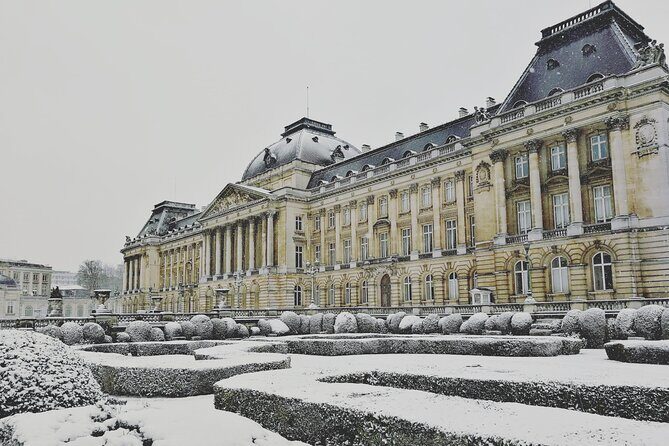
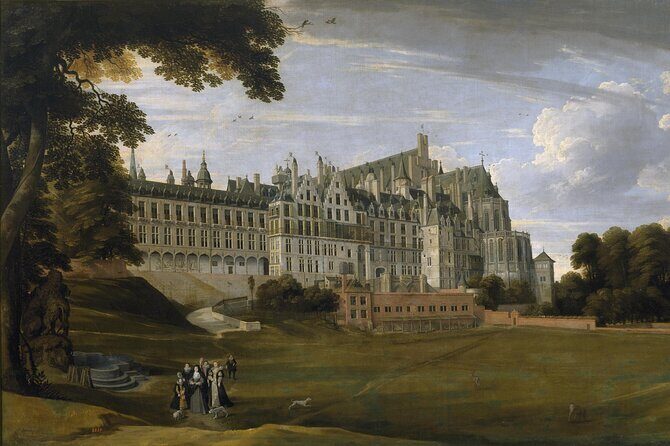
Your walk starts in the Royal district. Approaching the Royal Palace of Brussels, the narration sets you up with the story of the Belgian royal family and their lineage. This is also where the tour points to the historical significance of Coudenberg Palace—the palace ground tied to earlier power in this area.
A short way into your stroll, you move through Royal Square, where the statue of Godfrey of Bouillon appears. He’s a big name in medieval-era Europe, and seeing the statue in its setting helps make the history feel less like a textbook page and more like something placed in public space for a reason.
Here’s what I like about this early stretch: it gives you a framework. After this, the rest of the city makes more sense as you keep seeing who built what, and why.
Grand Place and Its Surrounding Palaces: UNESCO in Footsteps
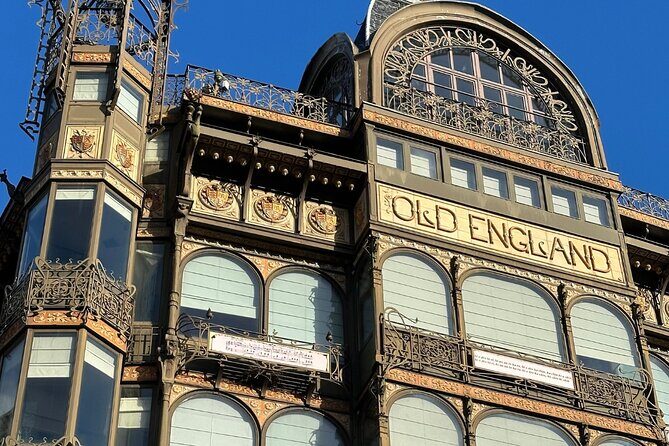
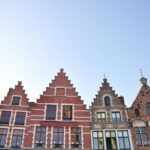
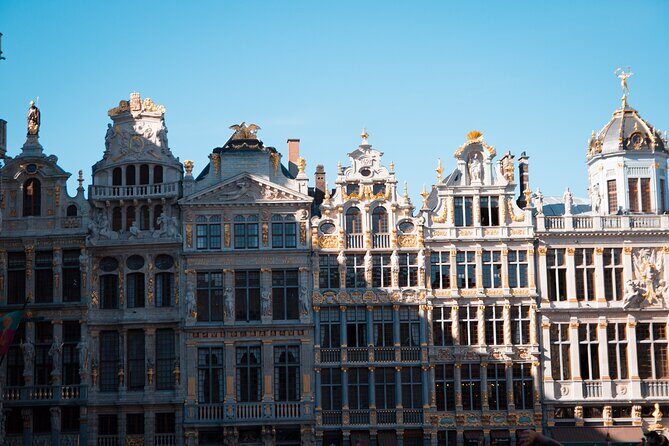
Next, you hit UNESCO-listed Grand Place. This is one of the few city squares where the buildings don’t just frame the view—they compete with it. You’ll notice ornate guild houses and palaces ringing the square, each with its own style and message.
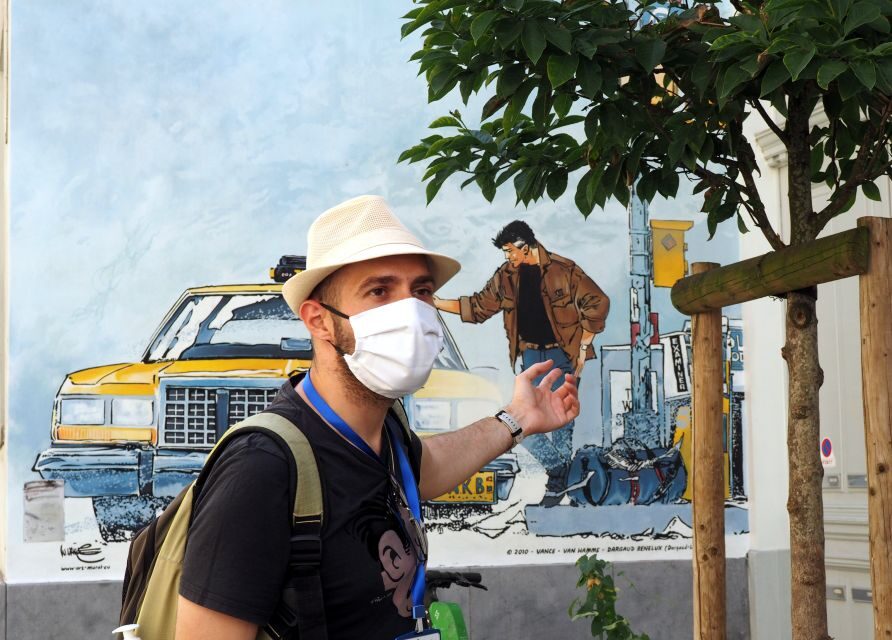
A quick bonus stop adds a modern Belgian twist: the Tintin comic mural. You get street art flavor without abandoning the historic setting, and it works as a reminder that Belgian culture isn’t locked in the past.
Practical tip: at Grand Place, slow down. You’ll get more out of the tour if you take a full minute at a time looking up at facades and then down at the street-level details. The audio pushes you to do that.
A few more Brussels tours and experiences worth a look

Palais du Justice Steps: The Panoramic Payoff
You’ll ascend to Palais de Justice for one of the strongest viewpoints in the loop. The tour leans on this stop as a kind of checkpoint: after walking through medieval streets and landmark squares, you climb for a wide city view and a reset moment.
This is also where you’ll feel the route’s elevation. If you’re someone who hates stairs, bring patience here. Take your time. Catch your breath. Then keep going.
Musical Instruments Museum Area: Music as a Time Machine
From there, you’ll reach the Musical Instruments Museum area. Even if you don’t buy tickets, the narration helps you see why this museum matters: it’s positioned as a story of how music changed over time.
If you’re curious, you can decide on the spot whether you want to stop inside. The tour price doesn’t include entrance fees, but the audio at least gives you context so a museum visit feels less random.
Mont des Arts, Kunstberg Bells, and Quiet Garden Time
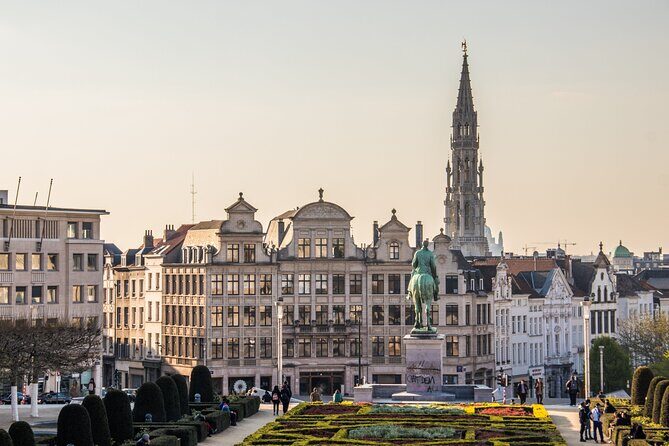
The route then shifts into a calmer pocket at Mont des Arts Garden. This part is a welcome breathing space because you’re not constantly looking at traffic and storefronts. The garden setting gives your legs a small break and lets you enjoy the city’s structure from a more composed angle.
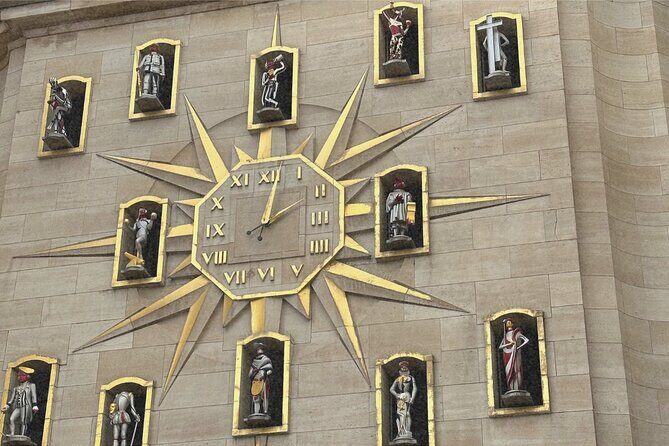
Right nearby, you’ll pass Klokkenspel van de Kunstberg, with bells you can hear and link to the Mont des Arts carillon atmosphere. Even from street level, the idea is clear: Brussels layers daily life with sound and design, not just stone and statues.
Mary Magdalene Chapel and the Medieval Trace Around Grasmarkt
As the walk continues, you’ll encounter Mary Magdalene Chapel, where the narration offers religious heritage and architectural significance. It’s not the kind of stop you’d always choose if you were only chasing major headlines, but that’s exactly why it works in a self-guided format.
Then you reach Agoraplein – Grasmarkt, a spot where the tour connects you to older Brussels geography: traces of former harbor space and remnants of medieval city walls. This is one of those stops where a little imagination helps. The square can look ordinary until you understand what was happening here before the modern city took over.
Galerie de la Reine, Toone Puppet Theater, and Tiny-Statue Comedy
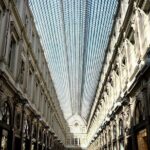
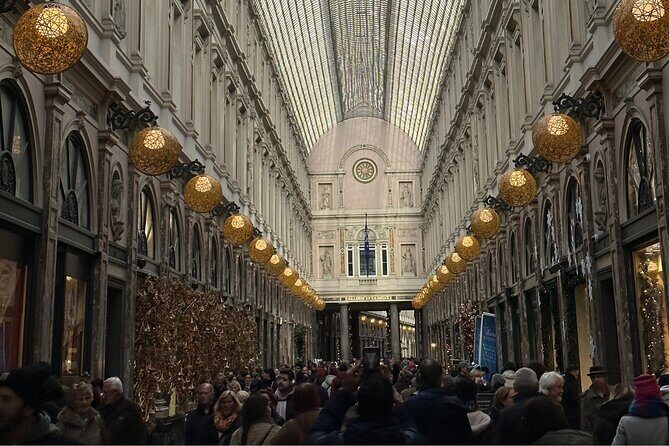
Next comes a shift toward character and culture. You’ll walk through Galerie de la Reine, a historic shopping arcade where the narration emphasizes elegance and architectural detail. This is a good pause point: you can look, duck in if you want, and keep your pace steady.
A fun cultural stop follows at Toone, a puppet theater with tradition in Brussels folklore. Even if you don’t watch a performance, the stop tells you this city has a long-standing playful side—one that isn’t separate from the history.
And then you get the tour’s humor beat. You’ll encounter Jeanneke-Pis and later the famous Manneken Pis. These aren’t just cute photo stops. In Brussels, they’re part of the city’s identity: a wink at authority, a reminder not to take yourself too seriously while you’re touring palaces and courthouses.
La Monnaie, De Brouckèreplein, and the Black Tower Contrast
You’ll pass La Monnaie De Munt, linked to Brussels’ opera and cultural life. The tour treats it as more than a landmark facade—it’s there to show how performance arts fit into the city’s bigger story.
Then the walk moves into De Brouckèreplein, where you feel the city’s current energy. And nearby you’ll spot the Black Tower—an older structure surrounded by newer development. This old-versus-new contrast is one of Brussels’ most interesting patterns, and the narration helps you notice it instead of just passing it by.
Churches and Clochers: Saint Catherine and What’s Left Behind
Religion shows up in two forms here: full churches and remnants of older structures.
You’ll visit the Church of Saint Catherine, with narration that frames it as part of Brussels’ spiritual and architectural heritage. Next you’ll encounter the Ancien Clocher Sainte Catherine, a reminder of medieval Brussels architecture that’s not fully intact but still visible enough to matter.
If you like cities where history is still scattered on the sidewalks, this section is for you. If you’re only here for grand palaces, it might feel slower—so I’d keep expectations flexible and let the audio guide you on why these buildings matter.
Stock Exchange, City Museum, and Town Hall Grandeur
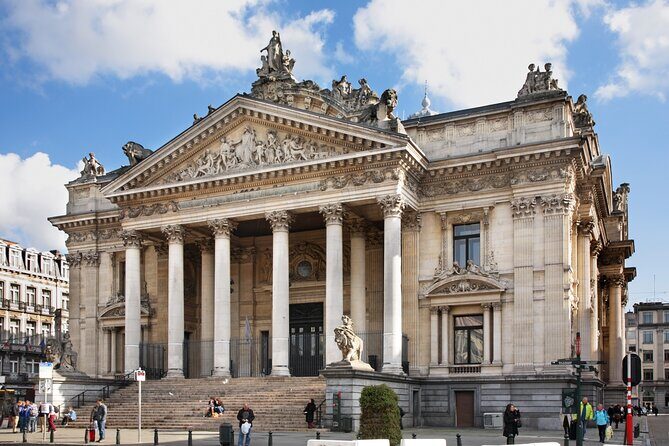
Later you’ll pass the Brussels Stock Exchange, giving you a look at financial history and the role Brussels plays in the economic landscape.
Then you’ll reach Brussels City Museum, where you can get a deeper understanding of Brussels through historical artifacts. Again, the tour doesn’t include entry fees, so you decide if it’s worth adding time inside.
Finally, you’ll arrive at the Brussels Town Hall, one of the most striking administrative buildings in the city. The tour’s tone here shifts: you’re no longer just learning about culture and royalty—you’re seeing how government power took shape in stone and design.
This is where the walking plan feels most rewarding: you’re not just seeing beauty. You’re understanding function.
Sablon Area: Anneessenstoren and Our Lady of Victories at the Sablon
After the Town Hall area, the tour keeps rolling with more iconic stops. You’ll meet the Anneessenstoren, a historical tower that offers scenic city views and an easy landmark to remember later.
Then you’ll reach Church of Our Lady of Victories at the Sablon. The narration emphasizes religious heritage and architectural beauty, with the Sablon area often giving you a quieter, slower-feeling break compared to the busiest squares.
If you like mixing sacred spaces with street-life, this section balances both.
Grande Roue Bruxelles and the Final Views by Marolles
As the tour continues, you’ll ascend to The View Grande Roue Bruxelles for a panoramic skyline experience. This is a unique way to see Brussels from above without needing a full day of separate sightseeing.
The last segment brings you to the viewpoint at the end of the route: Lookout des Marolles on Rue des Minimes. This ending feels like a satisfying close. You’ve walked royal squares, historic streets, and landmark areas—then you finish with a perspective that shows the shape of the city.
Practical Tips So You Don’t Hate the Walk
Here’s how I’d make this experience smooth:
- Wear solid shoes. Cobblestones and steps are part of the deal, and there’s a noticeable uphill feel.
- Plan for short pauses. You’ll climb to Palais de Justice and spend time at major squares where looking up takes time.
- Bring your own headphones and keep your phone charged. The tour needs a smartphone.
- Don’t count on museum entrances being included. If you care about the inside of a specific stop like the Musical Instruments Museum or any other venue, you’ll need tickets and extra time.
If you’re traveling with kids or anyone who hates walking, this might not be the best “power stroll” pace. But for most adults who can handle an hour and a half to two hours of walking, it’s a manageable loop.
Should You Book This Self-Guided Brussels Tour?
I’d book it if you want a low-cost way to get oriented fast and enjoy Brussels through narration, not through random wandering. $9.99 is a fair price for a route that touches major landmarks, includes offline support, and gives you lifetime access to the English audio.
I wouldn’t book it if you need a lot of museum time included, hate stairs, or expect constant expert interaction like a live guide. And if you’re prone to phone glitches, test your app and audio before you head out.
If you’re a first-timer to Brussels or you want a second-visit refresher that still feels structured, this is one of the better self-guided options I’ve seen. You’ll spend your time where the story actually happens—and you’ll end with views that make the walking feel worth it.
FAQ
How much does the Brussels self-guided tour cost?
It costs $9.99 per person.
How long does the tour take?
Plan for about 1 hour 30 minutes to 2 hours.
Where does the tour start and end?
It starts at Pl. des Palais 1, 1000 Bruxelles, Belgium and ends at Lookout des Marolles, Rue des Minimes 66, 1000 Bruxelles, Belgium.
What do I get with the booking?
You get lifetime access to the tour in English, plus the VoiceMap app for Android and iOS with offline access to audio, maps, and geodata.
What is not included?
Tickets or entrance fees to attractions en route are not included. You also need to bring your own smartphone and headphones, and transportation, food, and drink are not included.
Can I use the tour after I book it?
Yes. You can use the tour unlimited times before your booking date and after it.
Is this tour available only during certain hours?
The opening hours are listed as 12:00 AM to 11:59 PM, Monday through Sunday, for the period 01/10/2024 to 06/18/2026.