REVIEW · BRUGES
Bruges Walking Tour with Audioguide on Your Smartphone
Book on Viator →Operated by TouringBee · Bookable on Viator
Bruges is best on foot, at your pace. This smartphone audioguide turns a simple city walk into a guided route through the places you actually want to see. I especially like the offline map and GPS route, since it helps you stay confident while you wander the center.
You also get 21 audio recordings built around Bruges sights, history, and traditions, so you’re not stuck guessing what you’re looking at. The one real catch: you’ll need to bring your own headphones, and a small number of people reported occasional playback hiccups.
In This Review
- Key things that make this Bruges walk work
- A 1-hour Bruges loop you can walk at your own time
- Price and logistics: what you really pay for with $8.41
- Start at Poertoren: tower views and an easy first landmark
- Poertoren Tower to Minnewater Lake: the switch from city stone to calm water
- Ten Wijngaarde beguinage: UNESCO quiet with whitewashed streets
- St. John’s Hospital: Memling, pharmacy, and a very human kind of history
- Church of Our Lady: Michelangelo’s Madonna and the Gothic mood
- St. Salvator’s Cathedral: climb for views and take in the quiet
- Boniface Bridge and Burg Square: canal views plus Bruges civic drama
- Basilica of the Holy Blood: Gothic stairs and a venerated relic
- Belfort (Belfry) in Markt Square: 366 steps worth it
- If the audio cuts out, you’re still fine
- Who this Bruges walk suits best
- Should you book this Bruges smartphone walking tour?
- FAQ
- How long is the Bruges walking tour with audioguide?
- Where does the tour start and where does it end?
- Is there a human guide on this tour?
- Do I need headphones?
- Does it work with offline navigation?
- Is the audioguide available in English?
Key things that make this Bruges walk work

- Offline navigation that keeps you moving: route map on your phone helps you follow the path without a human guide.
- 21 short recordings: focused audio chunks for each stop instead of one long lecture.
- Great solo option: you control the pace, so you can slow down for photos or speed up between landmarks.
- Icon-based recognition help: illustrations help you spot where you are along the way.
- Budget-friendly for top sights: a low per-person price that doesn’t depend on museum entrances.
A 1-hour Bruges loop you can walk at your own time
This is built as a practical, center-city walk that’s about 1 hour on paper, starting and ending at the same spot at Poertoren (Gunpowder Tower). The big win is that you’re not locked into a group schedule. In Bruges, that matters. Streets are pretty, but they also tempt you into detours. A self-guided format lets you follow your curiosity without asking permission every five minutes.
The route is laid out around major sights that cover multiple “faces” of Bruges: medieval defense and tower views, quiet nature by Minnewater, the UNESCO beguinage, Gothic churches, and the civic heart around Burg Square and the Belfry. You get enough variety that even if you’ve seen Bruges photos before, you’ll still feel like you’re getting guided context instead of just collecting postcard pictures.
One more reality check: 1 hour is a baseline. If you take time at each stop, and especially if you add time to enter or look around inside buildings, you may stretch it to a longer visit. That’s not a problem. It’s often the best way to do Bruges—start with the route, then stay longer where you feel drawn in.
You can also read our reviews of more walking tours in Bruges

Price and logistics: what you really pay for with $8.41
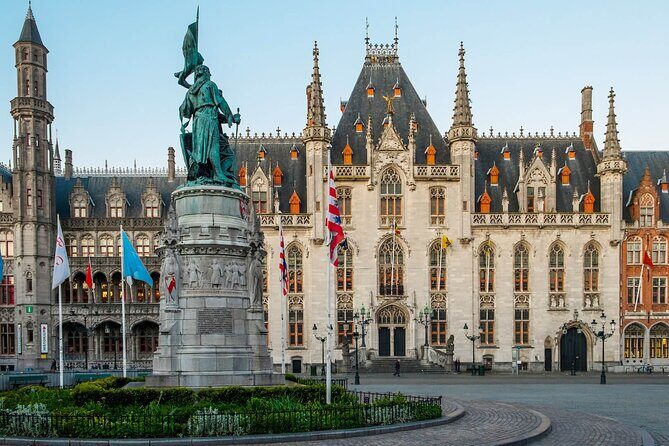
At about $8.41 per person, you’re paying for a smartphone audioguide experience—not transport, not a live guide, and not entry tickets. That’s why the price can be so low. The value comes from what’s included: the app, the audio, the offline map route, and the ability to replay later during your 1-year access period (in your selected language setup).
Here’s what you should expect to handle yourself:
- You’ll use the TouringBee app for the audioguide.
- You’ll download the app, activate your purchase, then follow the route using the map on your phone.
- You must bring your own headphones. They’re not included, so plan ahead.
Also note the tour format: it’s self-guided, and you won’t have a human guide waiting at each stop. The good news is that the app setup is designed to be straightforward, and multiple people highlight how easy it felt to download and get moving. The slightly less-good news is that if your phone battery is low or your audio connection acts up, you’re the support team.
Finally, there’s no need to stress about crowds like you might with a classic group tour. The maximum group size is 20, but since you’re walking on your own, you feel less “managed” and more free.
Start at Poertoren: tower views and an easy first landmark
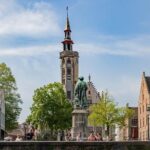
You begin at Gunpowder Tower (Poertoren) on Begijnenvest 1. This is smart as a start point. It gives you a clear anchor in the city center, and it’s also one of those sights that quickly tells you Bruges is not just flat scenery. Towers, brickwork, and viewpoints are part of the story.
At Poertoren Tower, the stop is about 10 minutes, and the listing says admission ticket is free for this stop. Even if you don’t spend the whole time staring at stone details, this is the ideal place to get oriented. If the rest of the walk feels a bit like a puzzle, this start helps you put the pieces together.
Practical tip: if you want the tower views, consider timing so you’re not rushing when you reach the stairs. One classic mistake in Bruges is treating every stop as a quick photo, then realizing the best photo angle is the one you skipped because you hurried.
Poertoren Tower to Minnewater Lake: the switch from city stone to calm water
From the tower, you head toward Minnewater Lake, also called the Lake of Love. Expect about 10 minutes here, with free admission noted.
This stop is different on purpose. Minnewater gives you a breather after medieval streets and buildings. The route includes the experience of strolling along tree-lined paths, crossing a romantic bridge, and watching swans glide on the water. It’s quiet, scenic, and a perfect place to lower your pace.
Why this works in an audioguide route: when the audio explains a site while you’re standing where the story happened, the place feels less like a “spot” and more like a setting. Minnewater is one of those Bruges moments where the legends and the mood line up. If you’re traveling solo, this is also where you’ll enjoy not having to keep pace with anyone else.
If you’re thinking about timing, aim for good light if possible. Even if it’s cloudy, the lake area still feels calming, but you’ll get the best photos when the water reflects soft sky tones.
Ten Wijngaarde beguinage: UNESCO quiet with whitewashed streets
Next is The Princely Beguinage Ten Wijngaarde, also roughly 10 minutes with free admission noted. This is where Bruges slows down even more.
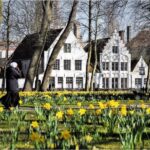
The setting is described as a serene haven frozen in time—whitewashed houses, a tranquil garden, and the peaceful mood tied to the Minnewater area. The beguinage was historically home to beguines, and today it operates as a place where you can walk at a human pace and see how medieval religious life shaped everyday spaces.
Why you’ll likely like it: this isn’t a stop where you need to “power through” facts. It’s a place for walking, looking up, noticing corners, and letting the quiet do its job. The audio here helps you connect the physical layout to the idea of communal simplicity and medieval life.
One consideration: because the stop is short on paper, you may feel tempted to rush. If that happens, simply extend your time here and shorten elsewhere. Ten Wijngaarde is the kind of place where extra minutes are usually worth it.
A few more Bruges tours and experiences worth a look

St. John’s Hospital: Memling, pharmacy, and a very human kind of history
Your walk continues to St. John’s Hospital in Bruges, another highlight stop built around the site’s medieval character. The listing includes a 10-minute segment with free admission noted.
This is one of the stops where audio can pay off in a big way, because it explains how the hospital isn’t only about health care—it’s also tied to art and collections. You’ll get directed attention to Memling’s artworks, the pharmacy, and the tranquil courtyard.
This matters because Bruges can easily turn into “pretty buildings, pretty canals” if you only skim. St. John’s Hospital brings you back to a deeper angle: this is where daily life, care, and cultural achievement intersected.
If you’re the type who likes to look longer at art, plan extra time here. The main route time keeps you moving, but the kind of galleries people usually want to see at a site like this can stretch your visit.
Church of Our Lady: Michelangelo’s Madonna and the Gothic mood
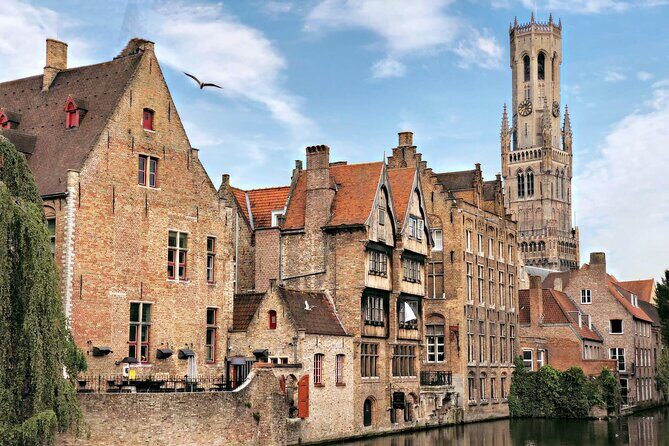
Then you’ll reach The Church of Our Lady in Bruges. This is another 10-minute stop with free admission noted, and it’s built around one of the city’s big art moments: Michelangelo’s Madonna and Child.
The church is described as a Gothic marvel, with a towering spire and serene interiors. Even if you’re not a hardcore art historian, this is the kind of place where the scale and atmosphere do half the work. The audio helps you frame what you’re seeing so you don’t just stare at one point and move on.
If you care about religious art, you’ll likely appreciate that the narration connects the spiritual side with the artistic presence inside the church. If you don’t, it still works because the Guggenheim of Bruges this isn’t; it’s calmer and more personal.
Small heads-up: if the church is busy, your time may feel tighter. The plan expects about 10 minutes, so if you want a slower look, just spend it here and shorten another stop.
St. Salvator’s Cathedral: climb for views and take in the quiet
After Our Lady, the route goes to St. Salvator’s Cathedral. This is listed as another 10-minute stop with free admission noted.
Here the big feature is the chance to enjoy the architecture and then climb the tower for panoramic views. You’ll also be able to look at historic artworks and enjoy the tranquil atmosphere described for the cathedral.
This is a good place to check your personal travel style. If you like viewpoints, the tower climb is the payoff. If you prefer interior detail, you can spend the time focusing on what’s around you instead of pushing for the highest angle.
Also, a self-guided route means you don’t have to decide quickly. You can start walking into the cathedral, see how it feels, then spend your time accordingly.
Boniface Bridge and Burg Square: canal views plus Bruges civic drama
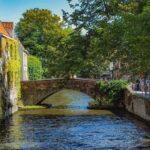
Next comes Boniface Bridge, another 10-minute stop with free admission noted. Expect charming canal views, historic buildings, and that calm “pause” feeling that bridges give you in Bruges.
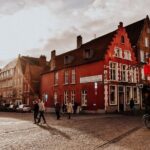
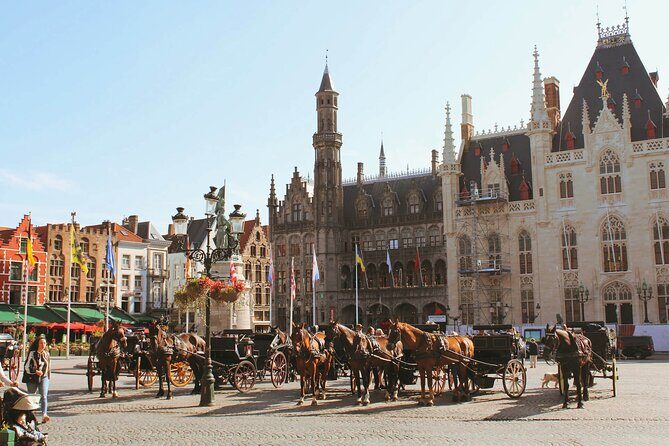
Then you reach Burg Square, a core Bruges moment with 10 minutes on the plan and free admission noted. Burg Square is where you’ll see a cluster of big civic and religious structures: Basilica of the Holy Blood, City Hall, and the Belfry area. It’s cobbled, framed, and visually confident—exactly the kind of space that helps you understand why Bruges became so powerful.
What’s nice here is the pacing: you go from water views (Boniface Bridge) into the hard political center (Burg Square). The audio route helps stitch these areas together so the city doesn’t feel like separate photo stops.
Basilica of the Holy Blood: Gothic stairs and a venerated relic
At Burg Square, your route includes a dedicated stop at The Basilica of the Holy Blood. The plan again gives you about 10 minutes, with free admission noted.
The key experience is the spiritual one: you’ll ascend Gothic stairways to see the venerated phial. This is not just “look at a building and move on.” The narration focuses your attention on the religious meaning and the ornate design elements that support it.
Why this works with a smartphone audioguide: the audio can explain what makes the relic significant while you’re physically climbing and arriving. You’re not hearing facts after the moment. You’re getting the meaning as you go.
One practical consideration: if you’re visiting during busy hours, you may spend extra time waiting or shifting positions. Keep your expectations flexible and treat the time as “time on site” rather than “time to the clock.”
Belfort (Belfry) in Markt Square: 366 steps worth it
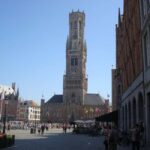
The last major sight is Belfort in Markt Square, about 10 minutes with free admission noted. This is Bruges at full volume: the famous belfry, the carillon melodies, and the medieval clockwork vibe.
The big highlight is the climb: you’ll go up 366 steps for panoramic views. That’s a concrete payoff you can feel immediately. Even if you don’t climb to the top, the belfry area is visually striking, and the audio makes sure you understand what you’re looking at.
If you climb, pace yourself. 366 steps can feel longer when you stop for photos or when the stairs are busy. But the payoff is exactly why so many people like finishing here: you end the route with a view that makes the whole city feel connected.
If the audio cuts out, you’re still fine
A few people noted occasional audio playback issues. That’s not the norm, but it’s worth planning for. Here’s how to reduce the odds of a frustrating moment:
- Charge your phone fully before you start.
- Keep your volume ready with your own headphones.
- If something glitches, restart the app and re-check the route map.
Also, one reviewer said the voice felt distracting and mentioned AI. The provider’s response says they do not use AI voices and that the narration is done by professional voice actors. If you’re sensitive to voice styles, consider trying a short segment before you commit to the full walk time.
Either way, even if audio isn’t perfect, the route itself is the point. You’ll still hit Poertoren, Minnewater, the beguinage, major churches, Burg Square, and the Belfry.
Who this Bruges walk suits best
This works best if you:
- want a solo-friendly way to explore without a live guide schedule
- like history explained in short, usable chunks
- enjoy city walking and views more than deep museum time
- want a low-cost experience built around major landmarks
It may be less ideal if you:
- expect a human guide to answer questions on the spot
- want more emphasis on more recent history than what’s offered in the recordings
- don’t want to use a smartphone for navigation
Should you book this Bruges smartphone walking tour?
Yes—if you want an affordable, self-guided route that hits the major Bruges highlights with offline navigation and short audio stops, this is a smart choice. At $8.41, you’re basically paying for guidance and structure. It’s especially good for first-timers who want confidence walking the center without feeling lost.
Book it if you’re the kind of traveler who likes setting your own pace, grabbing photos when the light is right, and spending extra time where you feel something. Skip it if you strongly prefer a live guide, or if the idea of bringing headphones and relying on phone audio sounds like too much hassle.
If you’re ready for a walk that feels organized but still flexible, this is a very reasonable way to do Bruges.
FAQ
How long is the Bruges walking tour with audioguide?
It’s about 1 hour (approx.).
Where does the tour start and where does it end?
The tour starts at Gunpowder Tower (Poertoren), Begijnenvest 1, 8000 Brugge, and it ends back at the same meeting point.
Is there a human guide on this tour?
No. It’s self-guided using a mobile app, with no human guide.
Do I need headphones?
Yes. Smartphone and headphones are not included, so you’ll need to bring your own headphones.
Does it work with offline navigation?
Yes. It includes an offline map with the route for easy GPS navigation in the app.
Is the audioguide available in English?
Yes. The tour is offered in English, and you get 1 year access to the tour in your preferred language setup through the app.