REVIEW · GHENT
Discover authentic Ghent with historian & taste the best chocolate
Book on Viator →Operated by Guide in Ghent · Bookable on Viator
That white statue in Sint-Baafsplein sets the tone fast. This 2-hour Ghent walk mixes street-level storytelling with a real chocolate break, not just a quick photo stop. You get a clear, human sense of how this city grew—economy, politics, religion, and culture—while moving through the spots that still shape the streets today.
I especially loved the way historian Wim connects each landmark to daily life, not big abstract dates. And the chocolate component feels like a reward at the right moment, not an afterthought. One thing to consider: this is a walk-and-talk tour, so if you want a long, slow chocolate experience, you may wish the tasting time were longer.
In This Review
- Key highlights you’ll notice right away
- Getting oriented in Sint-Baafsplein: where Ghent explains itself
- St. Bavo’s Cathedral: more than a pretty exterior
- Maaseikplein and the Van Eyck connection
- Geeraard de Duivelsteen: villains, Vikings, and the Scheldt myths
- Hoogpoort, Korenmarkt, and the 13th-century street feel
- Ghent’s power play: the town hall and the Charles V story
- Het Groot Vleeshuis: meat, butchers, and quality without refrigerators
- Gravensteen and St. Veerleplein: power and sea-creature clues
- Graslei and Korenlei: the harbor highlight that sticks
- Chocolate breaks: where the tasting fits (and what to expect)
- Price and value: what $42.05 buys you in real terms
- Meeting point, pace, and what to do if you’re running late
- Should you book this Ghent with chocolate tour?
- FAQ
- How long is the tour?
- Where do I meet the guide?
- Where does the tour end?
- Is the tour in English?
- How big is the group?
- Is there an admission ticket required for the stops?
- Do I get a mobile ticket?
- Can I bring a service animal?
- Is the tour near public transportation?
- What if I need to cancel?
- What happens if the minimum number of travelers isn’t met?
Key highlights you’ll notice right away
- Historian-led guidance focused on how Ghent worked, argued, and believed
- Major sights in central Ghent you can actually orient around in 2 hours
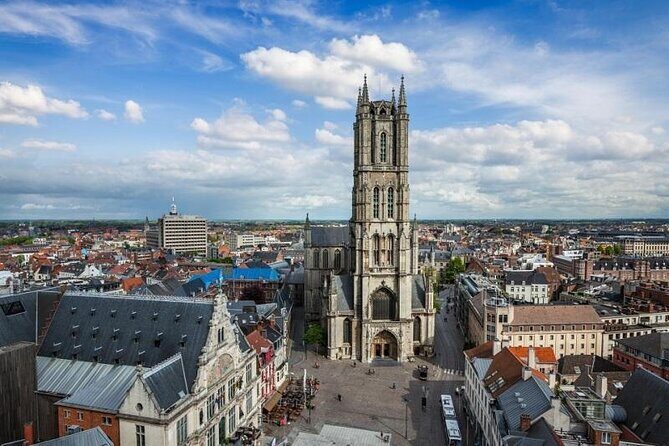
- St. Bavo’s Cathedral stop built around the building’s story and standout art
- Medieval symbolism everywhere (including Charles V and Ghent’s famous nickname)
- Chocolate tasting included as a mid-tour morale boost
- Small groups up to 15 people for a more personal pace
Getting oriented in Sint-Baafsplein: where Ghent explains itself
Ghent starts talking before you even move. You meet in front of the white statue in the middle of Sint-Baafsplein, and the guide uses that square like a giant map. Instead of rattling off facts, you get a simple framing: Ghent wasn’t only pretty. It was powerful, busy in trade, and constantly negotiating its identity—economically, politically, culturally, and religiously.
This is one of the smartest ways to start. Once you understand how the city’s forces relate, the next stops make more sense. You’ll find yourself looking at buildings and thinking, Who had money here? Who had authority? What did people fear or fight about?
At Sint-Baafsplein, the tour also gives you a quick sense of pacing. You’re not stuck in one spot for long; you get just enough context to enjoy the buildings as you move.
Practical tip: stand where you can see the guide’s view across the square, not only the statue. You’ll get more from the “look and learn” explanations.
A few more Ghent tours and experiences worth a look



St. Bavo’s Cathedral: more than a pretty exterior
Next comes St. Bavo’s Cathedral. The tour focuses on the building’s story and its big art treasure, and you walk around in a way that encourages you to notice details instead of just admiring the facade.
Even if you’re not an art-history buff, this stop works because it’s explained. You’re guided to see how a church like this reflects the city’s values—what mattered enough to build on, protect, and display. It also helps you understand why Ghent takes its religious landmarks seriously. This isn’t “old stone for old stone’s sake.” It’s a statement of identity.
The time is brief, so treat it like a launchpad. You’ll leave wanting to look closer on your own—especially if you’re the type who enjoys spotting how architecture and power intersect.
Maaseikplein and the Van Eyck connection
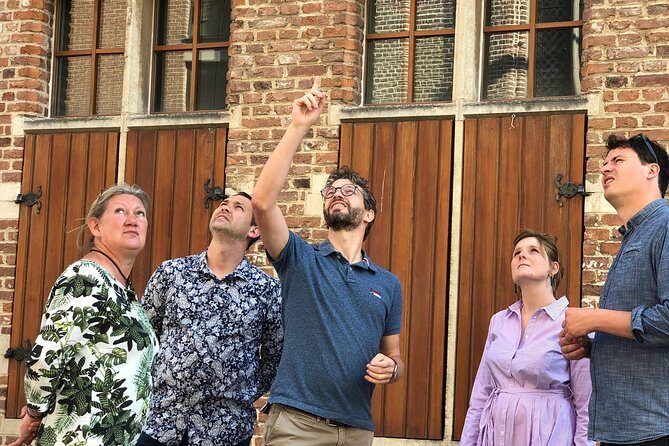
At Maaseikplein, the guide gives you a quick prompt: look for the image and see if it resembles the Van Eyck brothers. It’s a short stop, but it’s a useful one because it turns you from a passive walker into an active observer.
This is the kind of moment that can easily be missed on your own. With a guide pointing you to what to look for, you’ll start noticing the way Ghent places artistic references into everyday streetscape—not hidden behind museums only.
If you’re into art and Flemish painters, this short segment is a nice thread that ties creativity back to the city’s larger story.
Geeraard de Duivelsteen: villains, Vikings, and the Scheldt myths
Then you hit Geeraard de Duivelsteen—the Castle of Gerald the Devil. The tour sets the tone with legends and characters tied to the river and the city’s mythology. You’re essentially watching how Ghent keeps its dramatic stories alive in architecture.
You also get a sense of geography. Being near the Scheldt matters here. Rivers weren’t just scenery; they shaped movement, trade, and conflict. When you hear the story tied to this spot, the river stops being a background feature and becomes part of the plot.
This is one of those stops that’s fun even if you don’t usually care about medieval folklore. The guide’s framing makes it feel like living culture, not a dusty bedtime story.
Hoogpoort, Korenmarkt, and the 13th-century street feel
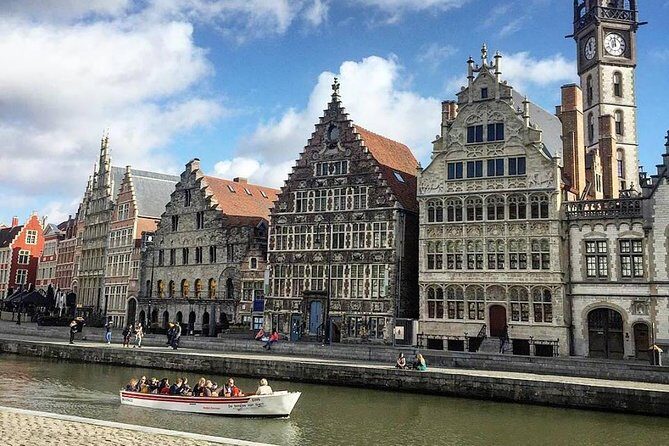
As you move through Hoogpoort and then to Korenmarkt, the tour leans into the texture of old Ghent. You’re looking at buildings that date back centuries, with particular attention to the feel of medieval urban life.
Hoogpoort is treated as more than a street name. You’re nudged to reflect on the ancient buildings that still line it, dating back to the 13th century. That matters because Ghent’s “look” isn’t only about one landmark. It’s about how long the city kept rebuilding in place, reusing space, and growing without hitting a reset button.
At Korenmarkt, the focus shifts to the houses and the mysterious inscriptions. That’s a great travel skill to pick up on a tour like this: notice the small clues. On your own later, those inscriptions become scavenger-hunt moments.
Practical tip: if you like street photography, Korenmarkt is a smart place to slow down after the guide finishes the explanation.




Ghent’s power play: the town hall and the Charles V story
When you reach Ghent Town Hall (Stadhuis), the guide ties the building to conflict and civic identity. The town hall is presented as something built over centuries, and the tour brings in Charles V—plus the revolt by Ghent’s citizens and the famous nickname people associate with them.
This is where the tour really earns its keep for me. A lot of walking tours point at monuments and stop there. Here, you’re told what the city fought about and what it decided to name itself after. That makes the town hall feel less like a tourist stop and more like a record of civic memory.
Then you continue to Stadshal, described as the most contested building in Ghent and answered with a nickname idea you can think about as you look at it. Even if you don’t catch every word, you’ll finish this section with a better instinct for why these buildings are surrounded by arguments and identity.
Het Groot Vleeshuis: meat, butchers, and quality without refrigerators
At Het Groot Vleeshuis, you get a very practical historical question: how do you ensure meat quality in a time without refrigeration? The answer is built into the idea of having butchers work together in one building.
That moment is surprisingly satisfying because it connects history to something real: food safety and trust. You’re not just learning that medieval people did stuff differently. You’re seeing how they solved problems using the tools they had—regulated spaces, shared standards, and centralized work.
This is also a good “breather” stop. By now you’ve walked through heavy political and religious themes, and this one brings you back to everyday life. It’s the kind of stop you can talk about later because it feels logical and human.
Gravensteen and St. Veerleplein: power and sea-creature clues
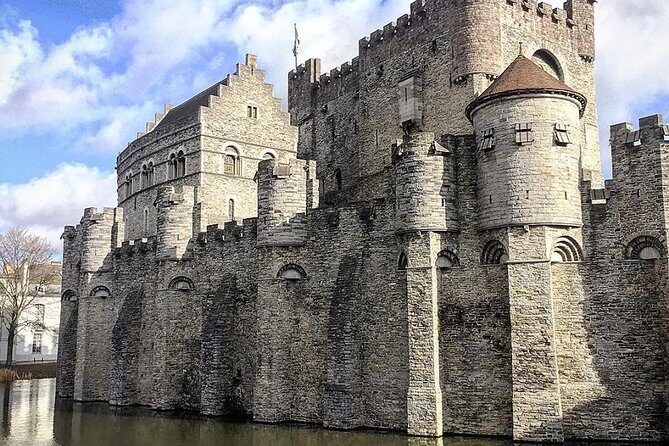
Gravensteen comes next, tied to the count of Flanders who wanted to show force to the inhabitants of Ghent and built a small castle. The tour frames it as a physical statement. You can almost read it like a warning sign.
After that, you reach St. Veerleplein, where the guide guides you to search for Neptune, seahorses, and strange dolphin-like figures. This is a fun contrast: the tour moves from medieval power to playful symbolism.
It’s also smart that the tour keeps shifting gears. Ghent can feel dense when you visit alone. With a guide, you keep getting variety—story, architecture, symbolism, then back to city logic.
Graslei and Korenlei: the harbor highlight that sticks
Many people treat Graslei and Korenlei as the peak moment, and that makes sense. The tour highlights the harbor here and what the place meant for skippers over centuries—working life by the water, plus entertainment and human rhythm.
This part works because you see Ghent as a trading city. The buildings along the quay aren’t just scenery; they’re a stage for how people earned a living and spent downtime. When you stand here after learning a bit about the city’s economy and civic power, it all clicks.
If you’re short on time in Ghent, this is the moment that gives you the best “I get it now” feeling.
Practical tip: take a few minutes here after the guide finishes. Let the river light do its thing and look back at the buildings you just learned to read.
Chocolate breaks: where the tasting fits (and what to expect)
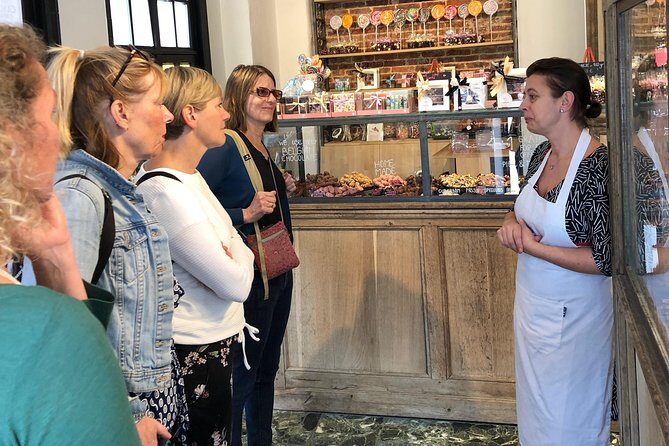
The tour is advertised around discovering authentic Ghent with historian and enjoying the best chocolate, and the experience doesn’t forget the sweet part. The chocolate segment is a true stop during the walk, not a vague mention at the end.
That said, the chocolate time is best described as a refresher. Some people leave wishing they had a bit more time with it, which tells you the tasting is likely short and well-timed rather than a long sit-down dessert lesson. If your main goal is an extended chocolate workshop, you’ll probably want something else on top.
But if you want a balanced 2-hour tour—history first, sugar as a mid-course reward—this works well. And it’s a good way to make the tour feel like a “Gent in motion” experience rather than a checklist.
Price and value: what $42.05 buys you in real terms
At about $42.05 per person for roughly 2 hours, the value depends on what you want out of Ghent.
You’re paying for:
- A guided walk across key central landmarks
- Context that helps you interpret what you’re seeing
- A chocolate tasting component
- A small group size (maximum 15)
- Free admission tickets listed for the tour’s stops
Many self-guided visits don’t give you the “why.” They give you the “what.” This tour fills in the why, with a guide who explains the connections between power, religion, culture, and day-to-day life.
Who it’s best for: first-timers to Ghent, history lovers who like stories tied to places, and anyone who appreciates a walk where you learn to look.
Who might hesitate: people who want long indoor time at museums, or people who want a full-on dessert experience instead of a small tasting.
Meeting point, pace, and what to do if you’re running late
This is a straightforward meeting-point tour. You start at Sint-Baafsplein in front of the white statue. You finish at or near Saint Michael’s Bridge on Sint-Michielshelling.
Expect a steady walking pace and short stops designed to keep momentum. The route is built for seeing a lot without turning it into an all-day marathon. The small group size also helps; it’s easier for the guide to adjust to the group when everyone stays close.
If you’re the type who runs late, plan to arrive a little early. With a specific meeting spot, you don’t want to waste time hunting.
Should you book this Ghent with chocolate tour?
I’d book it if you want a smart introduction to Ghent that’s more than sightseeing. The best part isn’t any single building—it’s the way the guide stitches Ghent’s big themes to the exact places you’re standing in front of. You’ll walk away with stories you can retell and an easier mental map for the rest of your day.
Skip it if you’re after long museum time or if chocolate is your main event. This is history plus a chocolate break, not a chocolate-only outing.
For most visitors—especially first-timers—this is a strong way to spend a couple of hours in the center of Ghent.
FAQ
How long is the tour?
The tour runs for about 2 hours.
Where do I meet the guide?
You meet at Sint-Baafsplein, 9000 Gent, Belgium, in front of the white statue in the middle of the square.
Where does the tour end?
The tour ends at Saint Michael’s Bridge, Sint-Michielshelling, 9000 Gent, Belgium.
Is the tour in English?
Yes, the tour is offered in English.
How big is the group?
The tour has a maximum of 15 travelers.
Is there an admission ticket required for the stops?
The stops listed in the tour are marked as free admission ticket.
Do I get a mobile ticket?
Yes, it includes a mobile ticket.
Can I bring a service animal?
Service animals are allowed.
Is the tour near public transportation?
Yes, it is near public transportation.
What if I need to cancel?
You can cancel for a full refund if you cancel up to 24 hours in advance of the start time.
What happens if the minimum number of travelers isn’t met?
If the tour is canceled because the minimum isn’t met, you’ll be offered a different date/experience or a full refund.