REVIEW · BRUSSELS
e-Scavenger hunt Leuven: Explore the city at your own pace
Book on Viator →Operated by Qula · Bookable on Viator
Leuven works best when you can wander. This self-guided e-Scavenger hunt turns the city into an interactive game with an app you follow on your schedule. You’ll bounce between famous landmarks and quieter corners, with built-in facts that help you notice what you’d normally miss.
I especially like the flexible pacing. You choose your own start time and you can pause for a drink, then jump back in without feeling rushed. I also like that the content is “just enough” history—short, answer-focused, and tied to specific spots you’ll walk by, from the Leuven Town Hall to old religious streets.
One thing to consider: this isn’t a classic guided walking tour with a live guide telling stories. It’s a game-first format, and you’ll need to bring your own smartphone (and data), since those aren’t included.
In This Review
- Quick takeaways before you start
- Where the hunt starts: Monseigneur Ladeuzeplein 17
- How the game works without a live guide
- Town Hall and the Grand Place: Leuven’s Gothic showpiece
- Beguinages, courtyards, and old women’s streets
- Herb garden Leuven: the Hortus Botanicus Lovaniensis
- Oude Markt: the longest-bar feeling in one square
- The university heart: Ladeuzeplein and a library worth lingering on
- Stella Artois brewery: beer roots in the home city
- St. Peter’s Church: Romanesque and old enough to feel unreal
- St. James tower and the ornate bell: one of the seven wonders
- Sint-Geertrui and the church construction beginning around 1440
- Romanesque gate and what remains: Sint-Elisabethgasthuis
- Klein Begijnhof and the small streets that change the mood
- Janseniuspark: towers and the medieval water gate idea
- How much time should you plan for a 2–4 hour hunt?
- Price and value for up to 6 people
- Who this self-guided Leuven game fits best
- Should you book the Leuven e-Scavenger hunt?
- FAQ
- How long does the e-Scavenger hunt in Leuven take?
- What’s the group size limit?
- Is it available in English?
- Do I need a smartphone or data?
- Where do we meet and where does it end?
- Can we start at any time?
- Is this activity friendly for accessibility needs?
- Can I cancel for a full refund?
Quick takeaways before you start

- 2 to 4 hours is a realistic target, even though the app offers about 2.5 hours of content to complete at a comfortable pace.
- The route mixes big hits and smaller details like the beguinage and older church areas, not just the postcard stops.
- It’s built for up to 6 people in a private group, so you can spread out and still stay together.
- You’ll get a mobile ticket and play in English, with instructions suited to hearing-impaired travelers.
- Outdoor walking rules apply: plan for weather, then use the game breaks to stop for snacks or a terrace stop.
Where the hunt starts: Monseigneur Ladeuzeplein 17
You kick things off at Monseigneur Ladeuzeplein 17, 3000 Leuven. That’s a handy launch point because it puts you near the university atmosphere—so even your warm-up minutes feel connected to the city’s identity.
The format is simple: you start here, you follow the app’s prompts, and the activity ends back at the same meeting point. There’s no need to figure out a second pickup spot at the end of your game run.
This is also scheduled like a “play whenever” experience. The available window runs Monday through Sunday from 12:00 AM to 11:59 PM, and the start/stop timing is flexible. In practice, that means you can time it for daylight, post-lunch energy, or a slower evening stroll if you prefer.
You can also read our reviews of more city tours in Brussels



How the game works without a live guide
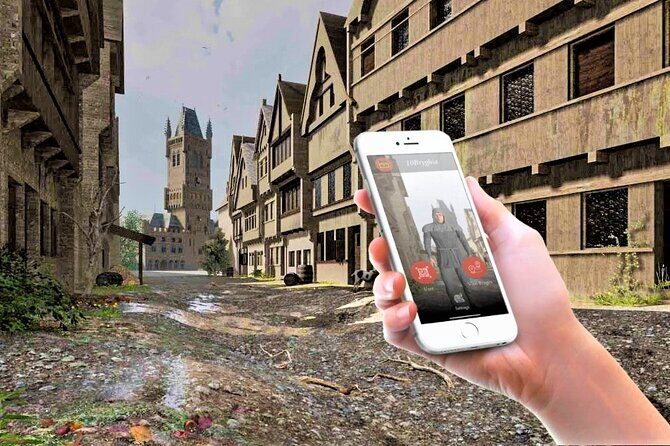
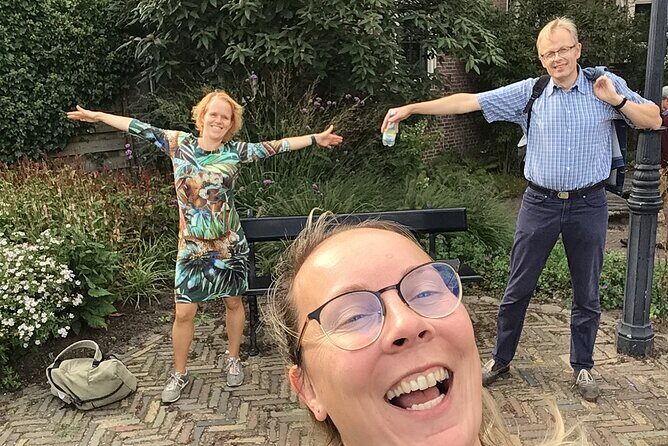
This is an interactive city trail delivered through a mobile app and a mobile ticket. Your job is to follow directions, answer questions, and move from stop to stop until you finish the route.
Because it’s self-guided, you won’t be waiting for anyone else’s pace. I like this setup when I’m traveling with people who want different things—someone can push ahead, then you regroup when you hit a café you all like.
A key practical note: smartphone and data are not included. So before you leave, make sure your phone battery is healthy and you have a workable data plan or offline map method. If your phone runs out, the game becomes a very expensive scavenger hunt for nothing.
The experience is listed as user-friendly for hearing impaired and allows service animals. If you’re looking for a low-stress way to explore without relying on complex audio narration, this format generally fits the bill.
Town Hall and the Grand Place: Leuven’s Gothic showpiece

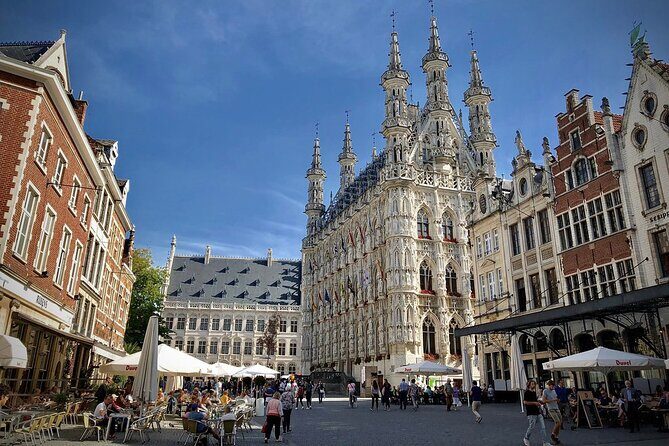
Your first “wow” moment is the Leuven Town Hall, famous for its Gothic style. It sits right on the Grand Place, which is the kind of square that makes you look up automatically—because the architecture is basically built to be noticed at walking speed.
In a guided tour, you’d often hear a long explanation before you ever stand in the square. In this game, the approach flips: you arrive first, you look around, then you use the prompts to connect what you’re seeing to the story behind it.
What I like here is that the game makes the landmark feel personal. You’re not just staring at famous stone—you’re hunting for answers tied to the place, so the building becomes more than scenery.
Beguinages, courtyards, and old women’s streets
One of the most memorable stops is the beguinage area, tied to the 13th century origin. The heyday came in the 17th century, when around 360 beguines lived there.
This is the kind of place where the atmosphere does half the explaining. Even if you’re not a “history person,” you’ll feel the scale and calm of a community built around daily routines rather than grand events.
You also pass through related beguinage streets and districts, including the Klein Begijnhof, first mentioned in 1272. The layout described for the district includes a street plus two cul-de-sacs, shaped by the lives of women connected to the nearby Sint-Geertruiabdij.
If you’re the type who likes quiet photo corners and side streets that don’t look like they’re trying too hard, this part of the game usually delivers.
Herb garden Leuven: the Hortus Botanicus Lovaniensis
Next up is the herb garden Leuven, officially called the Hortus Botanicus Lovaniensis. It’s described as the oldest botanic garden in Belgium, which gives the stop a little extra weight beyond a pleasant walk-through.
In a typical sightseeing day, gardens can get treated as a pause button. In this game, the garden reads more like a “clue location”—a spot where you stop, observe, and then answer a question that points you back to what you’re seeing.
Even if you don’t care about plants on principle, it’s worth slowing down here. A garden like this is one of those places where your pace naturally changes, and the game helps you make that pause purposeful rather than random.






Oude Markt: the longest-bar feeling in one square

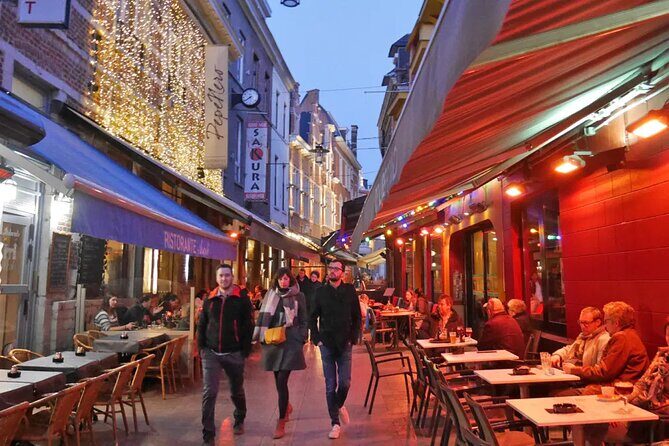
Then you hit Oude Markt, a square known for its food and drink concentration. The comparison used here is practical and funny: it’s like pulling up a chair at the longest bar in Europe.
This is where the game format shines for non-planners. If you want to stop for a snack, a beer, or a quick coffee, you can do it without breaking the flow. The route keeps you moving, but you’re not forced into a tight “tour schedule” rhythm.
Also, Oude Markt is the type of location where you’ll see Leuven in layers: students, locals, late lunch energy, and the everyday life that makes a city feel real. Game questions keep you anchored, even when the atmosphere tempts you to just… stay.
The university heart: Ladeuzeplein and a library worth lingering on
Leuven’s identity as a university city shows up strong, and you’ll encounter that in the route around Ladeuzeplein. One stop points you to the University Library on Ladeuzeplein, described as a beautiful heritage piece.
It’s a smart pairing: students and scholars can sound abstract until you see a place designed for reading and learning. When the game ties the landmark to the city’s long-running university role, the architecture starts to make sense.
You’ll also learn that Leuven has served as the seat of three successive universities almost continuously since 1425. That kind of continuity is exactly why the city doesn’t feel like a one-season novelty. The focus shifts from passing tourism to a real sense of time and learning.
Stella Artois brewery: beer roots in the home city
Another stop zooms in on the brewery of Stella Artois, firmly rooted in Leuven. The provided details also note it’s part of the AB InBev group, which helps you place the brand in the bigger modern world.
If you’re not a beer-tour person, you may still enjoy this stop because it connects city pride to industry. It’s less about tasting and more about understanding how a global product can still stay local in its origin city.
The game format keeps it from turning into a sales stop. Instead, it positions the brewery as a clue in Leuven’s bigger story—how the city’s history links to business and identity.
St. Peter’s Church: Romanesque and old enough to feel unreal
In the heart of Leuven, you’ll reach St. Peter’s Church, built in 986 and listed here as the oldest church in the city. It’s Romanesque in style, so don’t expect the ornate feel of later Gothic buildings. Instead, it gives you something sturdier and earlier in time.
This is a good moment for the “slow down” mindset. When you see something from the 900s, your brain keeps trying to match it to the modern street life around it—and that contrast is part of the fun.
In a guided tour, the “oldest” claims can feel like trivia. In the game, you’re usually standing right where the fact matters, so it sticks better.
St. James tower and the ornate bell: one of the seven wonders
The route includes the Romanesque Church of St. James from the beginning of the 13th century, where only the tower remains. The tower cover is said to show an ornate bell from 1478, described as one of the seven wonders of Leuven.
This stop is a great example of what the game does well: it points you toward a detail you might not notice if you only looked at the big “remaining building” shape. A bell like that isn’t just decorative—it’s a clue about craftsmanship and local symbolism.
If you like photo hunts, this is the kind of location where you can find a specific angle and feel like you earned it.
Sint-Geertrui and the church construction beginning around 1440
The game also brings you to the former abbey church Sint-Geertrui, one of the five medieval parish churches in Leuven. It’s noted as being located outside the first city wall, between the Dijle and the Mechelsestraat.
Construction is described as starting around 1440. The architectural description includes protruding transepts, a choir, and a heptagonal absis (as stated), which is the type of detail that makes the stop more than a name on a map.
When a self-guided experience gives you these specific elements, you get a new kind of appreciation. Instead of just walking past walls, you learn what to look for in the shapes.
Romanesque gate and what remains: Sint-Elisabethgasthuis
Another clue-driven stop focuses on the Romanesque gate from 1218–1222, described as the only remnant of the Sint-Elisabethgasthuis. The gasthuis is said to have been founded around 1080–1090 under Henry III, Count of Leuven.
This is one of those “small but important” places. A single gate can feel underwhelming from a distance, but the game makes it worth noticing because it’s tied to a larger institution that’s mostly gone.
If you enjoy “time capsules” in cities—things that survive when most everything else doesn’t—this will be a satisfying payoff.
Klein Begijnhof and the small streets that change the mood
The route doesn’t just name historical districts; it helps you experience them. With Klein Begijnhof, you’re guided to a setting described as a street plus two cul-de-sacs, linked to women serving in the nearby Sint-Geertruiabdij.
This is where Leuven’s character turns from public landmark energy to human-scale streets. You’ll likely find yourself slowing down, even if you started with a “speed through it” mindset.
Janseniuspark: towers and the medieval water gate idea
Finally, the game ends with more of that Leuven “infrastructure story.” In Janseniuspark, you’ll see the Jansenius and Justus Lipsius towers, described as flanking the water gate in the Middle Ages—where ships entered Leuven.
This is a clever finish because it gives the city a working-world context. You’re not only seeing where people prayed or studied. You’re seeing where goods and ships moved—how the city functioned day to day.
If you’re wrapping up the hunt after a couple hours of walking, this stop also gives you something visually satisfying without requiring more wandering. It’s a strong closing image.
How much time should you plan for a 2–4 hour hunt?
Even though the app includes about 2.5 hours’ worth of content, the experience itself is listed as 2 to 4 hours. That spread is normal for game-based walking because you’ll control the pace.
Here’s how I’d plan it:
- If you want photos and slower reads: aim closer to 3–4 hours.
- If you’re moving fast and just hitting answers: 2 hours can work.
- If you plan a terrace pause, keep a little buffer. The route is flexible enough to support it, but you’ll feel it in your finish time.
This is also why the game format is great for mixed groups. One person might want to linger in the botanic garden vibe; another might prefer pushing ahead to the churches. The game keeps both happy.
Price and value for up to 6 people
The price is listed as $37.21 per group (up to 6). That’s the big value point: you’re paying for the group experience, not per person.
If you have 4–6 people, your per-person cost drops quickly, and the private setup means you’re not squeezed into a crowded “follow the leader” line. For families or friends traveling together, this can be a smart way to turn sightseeing into a shared activity without hiring a bigger guided group.
If you’re traveling solo or as a couple, it can still be good value if you enjoy interactive games and you’re ready to spend a half-day actively exploring. If you want pure relaxation with zero phone-based thinking, a guided tour might feel smoother.
Who this self-guided Leuven game fits best
This e-scavenger hunt is a strong match for:
- People who like self-paced exploration and flexible stop-and-go sightseeing.
- Families with older kids who enjoy puzzles and answering questions.
- Travelers who want famous Leuven sights like the Town Hall but also appreciate side streets and smaller landmarks.
- Groups of up to 6 who’d rather play together than listen to one narrative for hours.
If you hate smartphone instructions, or you prefer a live guide with deeper storytelling, you may find the game format a mismatch. The upside is that the structure keeps you moving through the city with a purpose, so you’re not just wandering without direction.
Should you book the Leuven e-Scavenger hunt?
I’d book it if you want Leuven in a half-day that feels active but not stressful. The biggest win is the combination of flexibility and a route that covers serious highlights—Town Hall, beguinage areas, St. Peter’s Church, Oude Markt, and the university library—without turning the day into a long lecture.
Skip it if you’re chasing a traditional guided experience with a person delivering a full narrative. This is a game, and the reward is in the discovery and the answering, not in a scripted walking tour.
FAQ
How long does the e-Scavenger hunt in Leuven take?
It’s listed as 2 to 4 hours approximately. The app content is about 2.5 hours worth, but your actual time will depend on how you pace yourself and how often you stop.
What’s the group size limit?
It’s for a team of maximum 6 people. It’s also a private activity, meaning only your group participates.
Is it available in English?
Yes, it’s offered in English.
Do I need a smartphone or data?
Smartphone and data are not included. You’ll need your own phone to access the mobile ticket and use the app.
Where do we meet and where does it end?
You start at Monseigneur Ladeuzeplein 17, 3000 Leuven, Belgium. The activity ends back at the same meeting point.
Can we start at any time?
The experience is listed with opening hours daily from 12:00 AM to 11:59 PM, and it’s described as having flexible start and stop times.
Is this activity friendly for accessibility needs?
It states that service animals are allowed, it’s near public transportation, it’s user-friendly for hearing impaired, and most travelers can participate.
Can I cancel for a full refund?
Yes—there is free cancellation. You can cancel up to 24 hours in advance of the experience for a full refund. If you cancel less than 24 hours before the start time, the amount paid is not refunded.