REVIEW · GHENT
Bicycle tour in historic Ghent
Book on Viator →Operated by CityCycling.Gent · Bookable on Viator
Ghent clicks into focus when you ride. This 2.5-hour small-group bicycle tour led by Tim threads you through medieval landmarks, university modernism, and the riverside corners where the city grew rich. I like how the stops are tight and efficient, and I like that it’s guided in English.
You start in a calm inner garden, then you roll out to places most people walk past: the Tower of Books, culture at the Bijloke, and quiet beguinages close to the center. Short pauses keep you moving, but you still get a real sense of neighborhoods, not just postcards.
One consideration: the ride keeps a steady momentum, so if you want lots of time for photos or extra-deep storytelling at every stop, the timing can feel a bit tight.
In This Review
- Key highlights you’ll actually feel during the ride
- Why cycle historic Ghent instead of just walking it
- Getting started at Voetweg 46: simple, low-stress logistics
- The ride plan: what each stop is really doing for you
- Stop 1: Sint-Pieters-abdij inner garden to set the tone
- Stop 2: De Boekentoren, the Tower of Books, for a modern Ghent moment
- Stop 3: Bijloke Music Centre and the Stam museum link
- Stop 4: Groot Begijnhof Sint-Elisabeth for quiet history close by
- Stop 5: Prinsenhof and Emperor Charles V’s birthplace
- Stop 6: Dok Brewing Company break for real-life fuel
- Stop 7: Portus Ganda Marina, where Leie meets Scheldt
- Stop 8: St Bavo’s Abbey at the confluence
- Stop 9: Our-Lady Ter Hooyen, a UNESCO beguinage
- Stop 10: Muinkpark and the Art Deco-to-Burgundian style edge
- Timing, pace, and the trade-off behind the quick stops
- Price and value: what $54.31 gets you in real terms
- Who this tour suits best (and who might want a different style)
- After the tour: how to use your new map of Ghent
- Should you book this Bicycle tour in historic Ghent?
- FAQ
- How long is the bicycle tour in historic Ghent?
- How much does the tour cost per person?
- What’s included in the tour price?
- Is there anything you have to pay for during the tour?
- Where do I meet the guide?
- What language is the tour offered in?
- What group size should I expect?
- Do I need to buy tickets for the stops?
- Can most travelers participate?
- FAQ
- How do cancellation refunds work?
- What if the tour doesn’t meet the minimum number of travelers?
Key highlights you’ll actually feel during the ride
- Tim guides the loop in a way that connects buildings to the way Ghent works and grew
- A mix of old and 20th-century modernism, including De Boekentoren, not just medieval center sights
- Beguinage calm near major landmarks, including two standout beguinages with UNESCO status for one
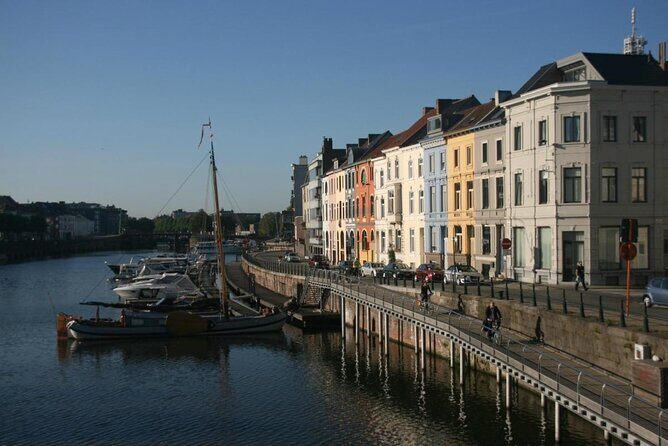
- Riverside Ghent logic at the confluences, where Leie meets Scheldt and the city’s wealth makes sense
- A brewery break at Dok Brewing Company, where you can refuel without breaking the flow
- Short stop time designed for coverage, with quick entry-free viewing at each stop
Why cycle historic Ghent instead of just walking it
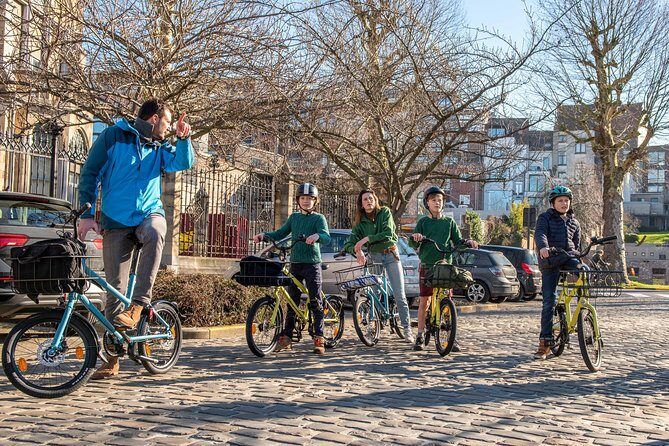
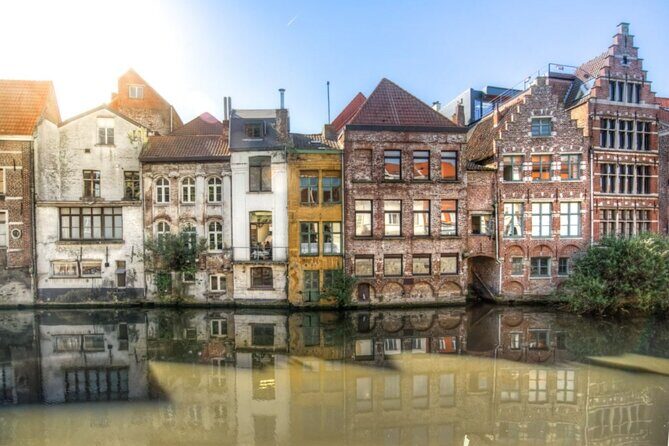
Ghent is the kind of city where the best views are spread out. Walking can work in bursts, but it’s slow when you want to see both the medieval core and the areas beyond it. By bike, you get a faster scan of the city’s personality.
What I really like about this tour style is the balance: you’re not stuck only in the busiest sights, and you’re not sent on a random commute either. You ride through historic streets, then you hit cultural and university landmarks that explain how Ghent evolved. That’s what turns the day from seeing to understanding.
The route also has a practical rhythm. The stops are usually around 10 minutes, with one longer break at the brewery. That structure is great if you’re short on time and want a guided overview that doesn’t drag.
You can also read our reviews of more historical tours in Ghent
Getting started at Voetweg 46: simple, low-stress logistics
Meet at Voetweg 46, 9000 Gent. The activity ends back at the same meeting point, so you don’t have to think about public transport or a new pickup location.
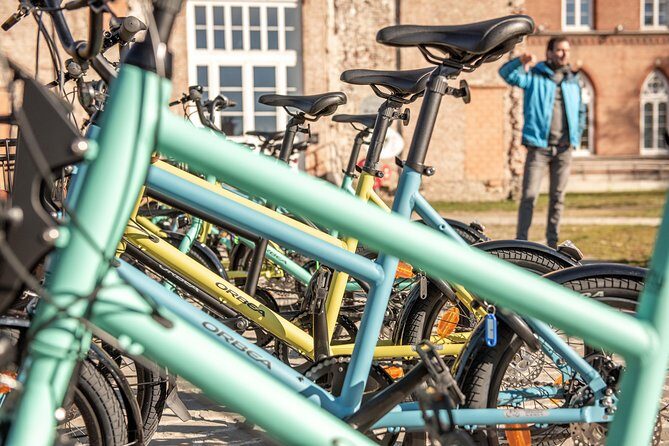
You’ll use the provided bicycle and helmet, which takes one “what am I supposed to do?” item off your list. Since a mobile ticket is used, you can keep everything digital and stay light.
Group size is capped at 16 travelers. That matters in real life: smaller groups tend to move more smoothly at intersections and in tight areas, and you’re less likely to get lost behind a crowd.
And yes, it’s near public transportation, so if you’re also doing other things in Gent that day, linking plans is easier.
The ride plan: what each stop is really doing for you
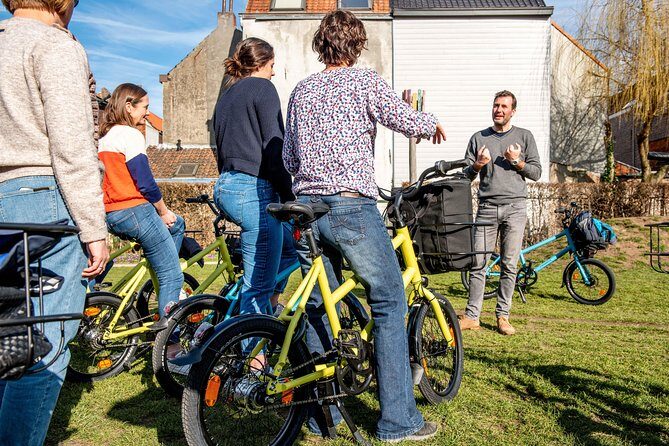
This tour is built like a guided route map. Each stop is short, but the sequence connects themes: faith and power, education and culture, then rivers, trade, and everyday life.
Stop 1: Sint-Pieters-abdij inner garden to set the tone
You begin in the inner garden of St. Peter’s Abbey (Sint-Pieters-abdij). Even though the stop is brief, it’s a strong opener. Abbey gardens give you a calm “before you hit the city” moment, and they also set the scale for what follows: Ghent’s medieval identity starts early.
Admission is listed as free, so you can focus on looking rather than paperwork.
Stop 2: De Boekentoren, the Tower of Books, for a modern Ghent moment
Then you cycle to De Boekentoren (The Tower of Books), the university library landmark. This is 20th-century modernism, and that’s a big part of why this tour feels different from the usual medieval-only routes.
If you only associate Gent with old stone, this stop corrects that. Ghent didn’t stop evolving. It built, designed, and changed. Seeing the tower in person helps you understand why the city feels both historic and contemporary.




Stop 3: Bijloke Music Centre and the Stam museum link
Next is the Bijloke Music Centre, a place for music, visual arts, and culture. The Stam (city museum) is also found here, which gives the stop an extra layer if you like museums but don’t want a full museum day.
This is one of those stops where the goal is orientation. You learn where the city’s creative side lives, and you start spotting cultural “clusters” that you might otherwise miss.
Stop 4: Groot Begijnhof Sint-Elisabeth for quiet history close by
At Groot Begijnhof Sint-Elisabeth, you get a pocket of calm. Beguinages in Belgium have a distinct feel—quiet, human-scale, and set up for daily life rather than grand ceremonies.
This stop is a good reset between busier sights. It also helps if you want your Ghent day to feel varied, not just a straight line of monuments.
Stop 5: Prinsenhof and Emperor Charles V’s birthplace
At Prinsenhof, you hear about power. Emperor Charles V was born here in the 16th century, which ties the site to the larger European story of rulers, influence, and politics.
Even if you don’t memorize dates, the takeaway is useful: Ghent wasn’t just a background. It was part of the machinery of Europe.
Stop 6: Dok Brewing Company break for real-life fuel
Then comes the pause at Dok Brewing Company on an old industrial site in northern Ghent. This stop is why the tour doesn’t feel like a lecture marathon.
You get 15 minutes to take a break. In practice, this is where people often grab something like a pastry and a beer if they want one. It’s an easy way to refresh without losing the flow of the route.
One note: soda/pop isn’t included. If you’re trying to keep the day budget tight, plan to purchase drinks and snacks here.
Stop 7: Portus Ganda Marina, where Leie meets Scheldt
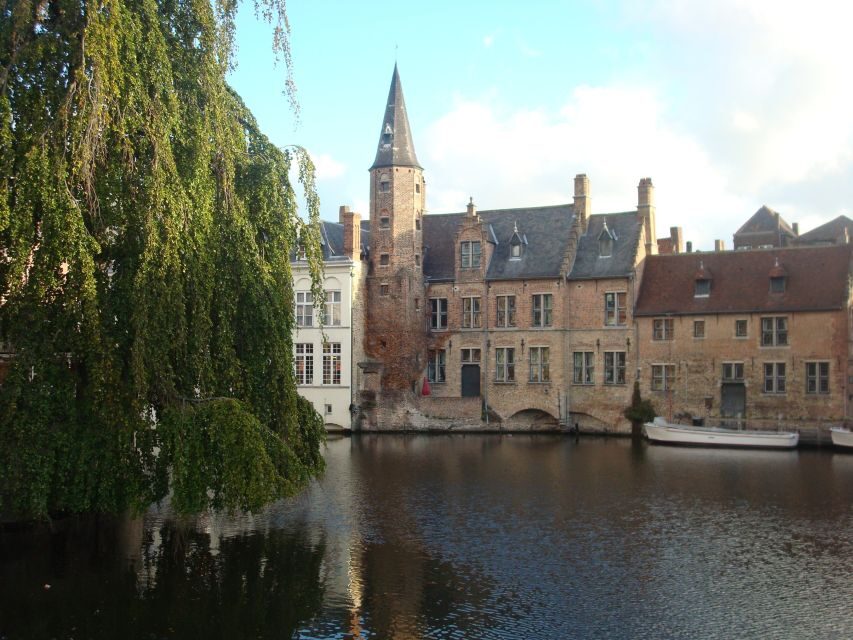
At Portus Ganda Marina, you get the riverside “aha.” This is the place where the Leie and the Scheldt meet, and Ghent’s wealth and history come from that setup.
This is a key moment for understanding the city. Once you see how the rivers connect, a lot of Ghent’s layout and architecture starts making sense in your head.
Stop 8: St Bavo’s Abbey at the confluence
Then you cycle to St Bavo’s Abbey, another major medieval site at the confluence area. This is described as the oldest building in the city and one of the most important medieval landmarks in Flanders.
It’s also a strong counterpoint to the marina stop. Same “location logic,” different layer: faith and power rather than trade and water.
If you like when a guide turns geography into story, this pair of stops does that well.
Stop 9: Our-Lady Ter Hooyen, a UNESCO beguinage
Next is Our-Lady Ter Hooyen, a beguinage that’s preserved and listed as a UNESCO World Heritage Site. UNESCO can sound abstract, but here it’s basically the city’s “this matters” stamp on a living-feeling place.
Because the stop is short, you won’t do a slow wandering day. Still, you’ll see enough to understand why people treat beguinages like their own category of attraction.
Stop 10: Muinkpark and the Art Deco-to-Burgundian style edge
Finally, you reach Muinkpark, which used to be part of the Ghent Zoo. The homes around the park include Art Deco, Modernism, and Burgundian-style architecture.
This last stop is a nice close because it shows Ghent after the medieval era, but without pretending the city changed overnight. It’s a reminder that urban design layers on top of older routes and neighborhoods.
Timing, pace, and the trade-off behind the quick stops
The tour is about 2 hours 30 minutes. That kind of duration is perfect for a day when you want a lot of coverage without eating your entire schedule.
The downside is also built in: the tour moves. Stops are short, and at busy moments you stay in motion. One caution to keep in mind is that steady momentum can limit slow photo sessions. If your travel style is “linger and read everything,” you may feel the clock.
Also, the storytelling approach seems built for an overview, not a deep academic seminar. The information you get is meant to help you look better, not to fill a notebook. For many people, that’s a plus. For others, it’s why the experience might feel a little too surface-level.
Price and value: what $54.31 gets you in real terms
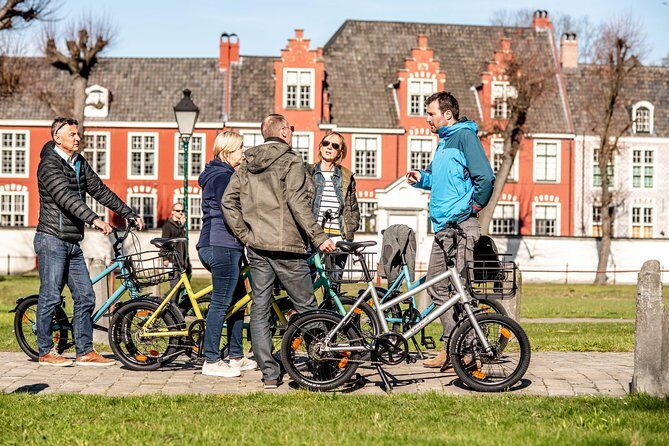
At $54.31 per person, this isn’t a budget-rental situation and it isn’t a luxury private tour either. It sits in that sweet spot where you’re paying mostly for guidance and a structured route.
Here’s what’s included:
- Bicycle
- Bicycle helmet
Also, each listed stop is shown with free admission during the time you’re there, which reduces extra costs. English guidance and a small-group format are also part of the value equation.
What’s not included:
- Soda/pop (so you’ll want to bring water or plan to buy at the break)
When I’m trying to judge value, I think about how many “separate things” the price would cost on your own: bike rental plus planning plus figuring out what to see where. This tour bundles all of that into one guided loop, and that’s the main reason the price usually feels fair.
Who this tour suits best (and who might want a different style)
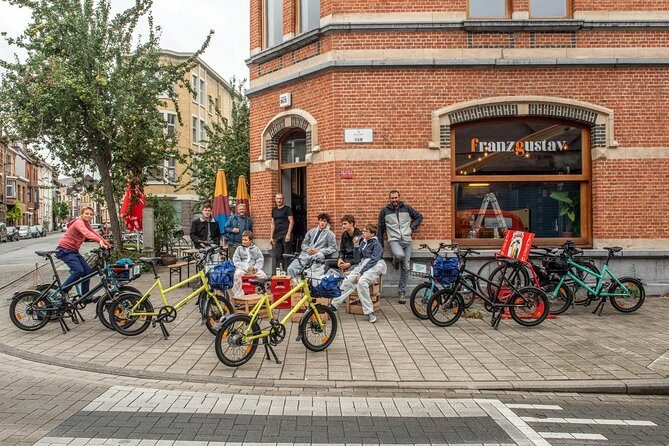
This tour fits you well if:
- You want a guided overview that connects monuments to neighborhoods
- You like a mix of medieval sites and 20th-century landmarks
- You prefer a structured route when time is tight
It may feel less ideal if:
- You want lots of photo time and frequent slow breaks
- You’re looking for extremely detailed, deep history at every stop
- You’re very sensitive to a fast group flow at intersections
After the tour: how to use your new map of Ghent
By the time you roll back to Voetweg, you’ll have a mental map of Ghent’s “why.” You’ll know where the big medieval anchors are, but you’ll also remember the cultural and university zones. That makes your later explorations easier.
If you’re staying another day, use what you learned to guide your wandering. Pick one area you liked most—abbey, beguinage calm, riverside logic, or the cultural side—and spend more time there on your own. That’s the best way to turn a short guided loop into a longer trip.
Should you book this Bicycle tour in historic Ghent?
Book it if you want a small-group bike ride that shows more than the obvious center and gives you quick context at each stop. The combination of medieval landmarks, De Boekentoren modernism, UNESCO beguinage atmosphere, and a brewery break makes it feel like a real day in Ghent rather than a checklist.
Skip it or consider a different format if you need long photo pauses and deeper, slower explanations. The route is designed for movement, not for lingering at every corner.
If your main goal is getting your bearings fast and seeing a lot of meaningful parts of Ghent in a single afternoon, this one makes sense.
FAQ
How long is the bicycle tour in historic Ghent?
It’s about 2 hours 30 minutes.
How much does the tour cost per person?
The price is $54.31 per person.
What’s included in the tour price?
The tour includes use of a bicycle and a bicycle helmet.
Is there anything you have to pay for during the tour?
Soda/pop is not included.
Where do I meet the guide?
The meeting point is Voetweg 46, 9000 Gent, Belgium.
What language is the tour offered in?
The tour is offered in English.
What group size should I expect?
The tour has a maximum of 16 travelers.
Do I need to buy tickets for the stops?
Admission is listed as free for the stops in the itinerary.
Can most travelers participate?
The tour notes that most travelers can participate.
FAQ
How do cancellation refunds work?
There is free cancellation available, with a full refund if you cancel up to 24 hours in advance. If you cancel less than 24 hours before the start time, the amount paid isn’t refunded.
What if the tour doesn’t meet the minimum number of travelers?
If it’s canceled because the minimum isn’t met, you’ll be offered a different date/experience or a full refund.