REVIEW · BRUSSELS
From Brussels: Bruges and Ghent Full-Day Trip by Train
Book on GetYourGuide →Operated by Bravo Discovery · Bookable on GetYourGuide
Most days in Belgium don’t pack two medieval cities. This one hits Bruges canals and Ghent’s old port with a guide and train both ways.
I love how the day is built for walking: you get a structured 2.5-hour Bruges stroll in the historic core and still have time to wander on your own. I also love the mix of sights that goes beyond postcard squares, from the Beguinage and De Halve Maan brewery in Bruges to Ghent’s Saint Bavo Cathedral and the medieval castle of Gravensteen. One catch: it’s a long, tiring 10-hour day with a lot of uneven walking, and you won’t have time for every optional museum or boat stop.
In This Review
- Key things that make this trip worth your time
- Brussels to Bruges and Ghent by Train: why this route works
- Meeting Point Timing and How the Day Flows (8:30 to 6 PM)
- Bruges on Foot: canals, Beguinage, and the Tower of Our Lady
- Lake of Love and the canal system
- Beguinage: a rare medieval community preserved
- De Halve Maan brewery
- Old St. John’s Hospital and optional Hans Memling
- Our Lady of Bruges and its brickwork tower
- Old squares: VisMarkt, Tanners’ Square, Burg Square, Markt Square
- Bruges free time and the €8 canal boat choice
- Ghent’s Saint Bavo Cathedral and City Hall: art meets power
- Inside Saint Bavo: choir, chapels, and Rubens connections
- Optional Van Eyck altarpiece: The Adoration of the Mystic Lamb
- City Hall: Gothic meets Renaissance meets Baroque
- Market Hall and the Belfort tower
- Graslei, Gravensteen, and Patershol: the medieval vibe that sticks
- Churches that mark medieval memory
- Graslei: old port views and guildhalls
- Gravensteen: a real fortress stop
- Patershol: brick façades and Flemish food energy
- Great Butchers’ Hall: one of Europe’s oldest meat markets
- Price and what you’re paying for (US$82)
- Guide style, pace, and the one big thing to prepare for
- Should you book this Bruges and Ghent day trip?
- FAQ
- Is the Bruges and Ghent trip from Brussels available on any day?
- Where do I meet the guide in Brussels?
- How long is the trip?
- What languages are the guided tours offered in?
- Are the train tickets included?
- Is the canal boat ride included?
- Do I have to pay extra for The Adoration of the Mystic Lamb?
- How much free time do I get in Bruges?
- What should I bring?
- Is the tour wheelchair accessible?
Key things that make this trip worth your time
- Two cities, one rail loop: Bruges and Ghent in a single day, starting from Brussels by train.
- UNESCO-style canal charm in Bruges: canals, squares, and the waterside atmosphere of the historic center.
- Ghent’s big-ticket art without a full detour: you’ll see where the story of Flemish painting lives, with an optional Van Eyck stop.
- Medieval settings with real variety: port views at Graslei, the fortress vibe of Gravensteen, and the café streets of Patershol.
- You get both guided focus and free time: a planned Bruges walk plus a couple hours to eat, shop, and choose extras.
- A guide can make or break the day: many bookings praise guides like Louisa/Louise for pacing, humor, and clear explanations.
Brussels to Bruges and Ghent by Train: why this route works
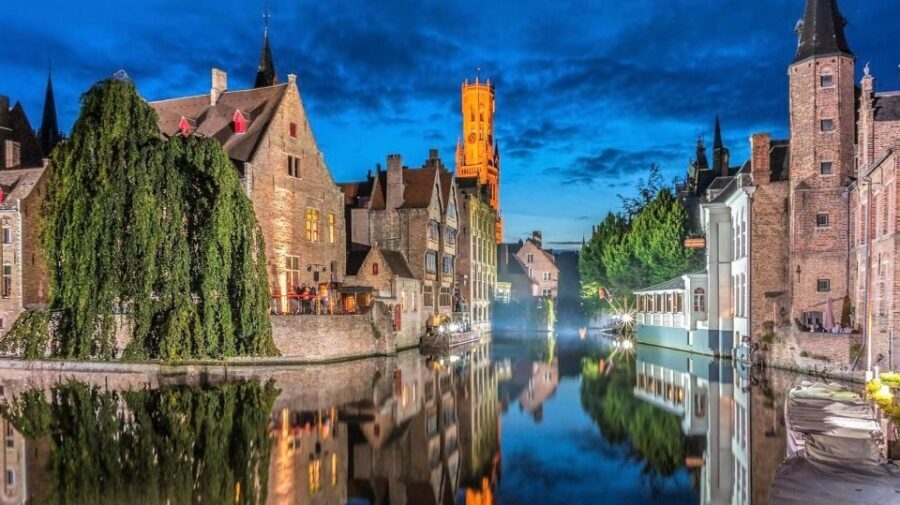
This is the kind of day trip that makes sense when you want major Flemish hits without turning your vacation into a logistics project. You start in Brussels and return to Brussels the same evening, so you’re not hunting for parking, juggling transfers, or losing half a day to getting out of town.
The real win is that Bruges and Ghent feel very different while still sharing that medieval, brick-and-steeples character. Bruges gives you canals, guild squares, and “how did they build all this” architecture. Ghent gives you a bigger-feeling city center, cathedral drama, and a port-and-fortress mix that’s visually memorable.
You’re also tasting Belgian life along the way. Between the free time for food in Bruges and the Ghent district where you’ll find classic Flemish plates, you can realistically fit in Belgian chocolates, moules-frites, and a beer without turning it into a scavenger hunt.
A few more Brussels tours and experiences worth a look
Meeting Point Timing and How the Day Flows (8:30 to 6 PM)
Plan your day around a clean, early start. You meet at 8:30 AM at the Grand Place in Brussels, in front of the Tourist Information Office, and your guide carries a white umbrella. The day departure happens at 9:30 AM only on Sundays, so if you’re traveling on another day, this specific tour timing won’t match.
The timing is built to keep momentum:
- You travel to Bruges Central Station, then start with a 2.5-hour guided walking tour.
- You get 2 hours of free time in Bruges for eating, souvenirs, and an optional boat ride.
- You head on to Ghent for a guided sequence of major sights, ending with time in the medieval core areas like Graslei and Gravensteen.
- The scheduled return to Brussels is 17:00, with arrival around 6 PM with your guide.
If your group is small, there’s an added flexibility option: you may be able to choose between returning at the scheduled time or spending more time in the cities and coming back later on your own.
Bottom line: it’s a full day that moves. If you like to linger for hours in one place, you’ll need to use that Bruges free time well.
Bruges on Foot: canals, Beguinage, and the Tower of Our Lady
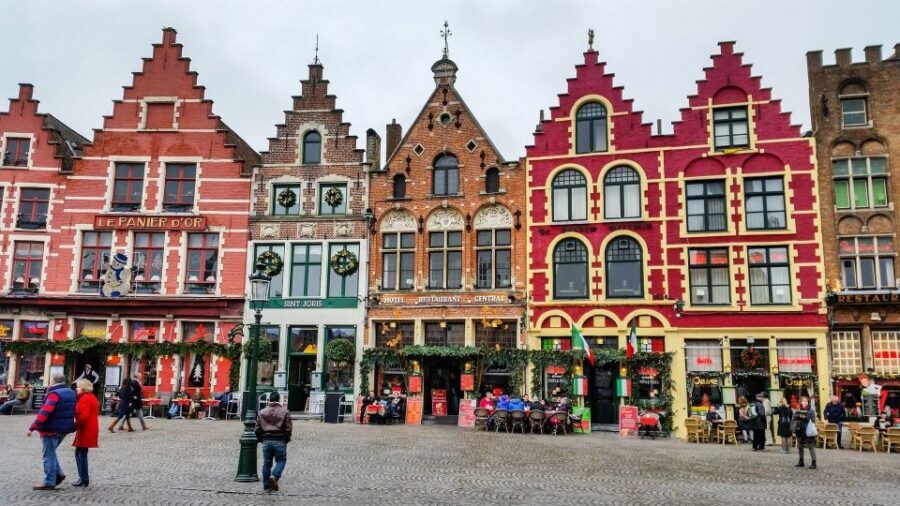
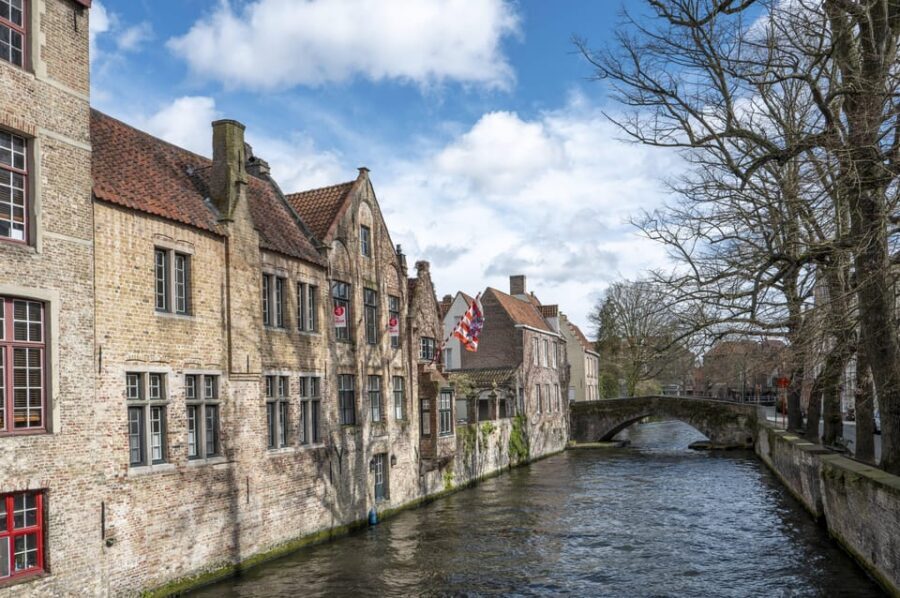
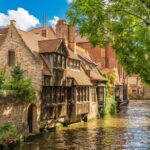
Bruges is the easier city to love at first glance. Even before you hit the big squares, you’re walking through a historic fabric where the canals and bridges give you that slow, watery rhythm. The trip leans into that in a very practical way: it guides you through the main medieval areas without making you feel like you’re being rushed in a straight line.
Here’s what you’ll cover in Bruges, and why it matters:
Lake of Love and the canal system
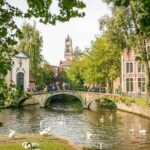
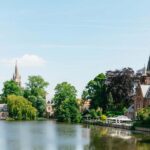
You’ll visit the ancient city wall park and the Lake of Love, which nourishes Bruges’ canal system. It’s a small fact, but it connects the city’s beauty to how it actually worked. When you later look at the canals, it feels less decorative and more functional—like the city had a plan.
Beguinage: a rare medieval community preserved
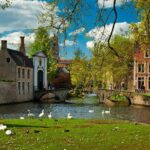
The Beguinage is one of the best-preserved examples of medieval gated communities, and it was a women-only place to live. This is one of those stops that can add depth fast, because you’re not just looking at pretty buildings—you’re seeing how a specific community structure shaped everyday life.
A few more Brussels tours and experiences worth a look
De Halve Maan brewery
Seeing Brewery De Halve Maan is a good reality check. Bruges doesn’t just preserve the past; it keeps making beer. The fact that it still operates in the city center gives you a different kind of satisfaction than another photo spot.
Old St. John’s Hospital and optional Hans Memling
Old St. John’s Hospital is known for its long European architectural lifespan—around 800 years—and it includes the museum of Hans Memling as an optional add-on. If you like art and you’re okay paying extra time and money, this is a strong option. If you’re running on limited energy, you can treat it as a “nice to see, not mandatory” moment.
Our Lady of Bruges and its brickwork tower
You’ll visit Our Lady of Bruges, one of the oldest churches in the city, with a tower that’s still among the tallest brickwork towers in the world. Brick towers in Belgium have a way of grabbing you from far away, and up close you really understand why the skyline matters here.
There’s also an optional art stop inside, including Michelangelo’s Madonna with the Child. It’s worth considering if you’re the type who can’t resist major names in small rooms.
Old squares: VisMarkt, Tanners’ Square, Burg Square, Markt Square
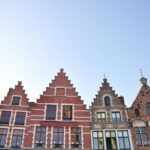
The trip then moves through the historic squares—VisMarkt (fish market) and Tanners’ Square—where you’ll find old guildhalls and classic café energy. After that come Burg Square and Markt Square, the economic heart of Bruges, plus the Groeninge Museum area.
Even if you don’t go in, the value is in orientation. You get a guided sense of where money, trade, and public life clustered—so when you wander later, you know what you’re looking at.
Bruges free time and the €8 canal boat choice
After the guided walking portion, you’ll get about 2 hours of free time. This is your window to recharge and eat like you mean it—Belgian chocolates for a snack, and a real sit-down meal if you can.
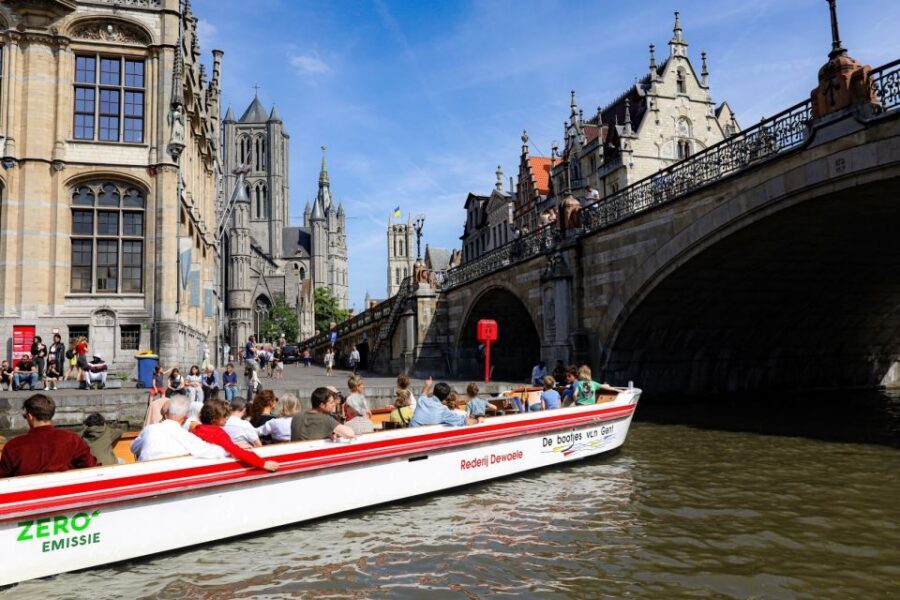
This is also where the optional canal boat tour (€8 per person) fits. It’s not included, and you pay while embarking, so plan that extra spend if you want it. The boat is especially good if you found the streets charming but a little tiring. From the water, Bruges looks smoother and more unified—like all those bridges and facades belong to one big picture.
Practical advice: use your free time to do one “food thing” plus one “shop thing.” If you try to do everything, you’ll end up doing nothing well.
Ghent’s Saint Bavo Cathedral and City Hall: art meets power
Ghent feels more layered than Bruges. The cathedral alone sets the tone: Saint Bavo Cathedral has that impressive Gothic base with Baroque ornamentation, so you see more than one design mood in a single stop. You also start with the sense that Ghent built its importance over centuries, not decades.
Here’s what stands out in the guided sequence:
Inside Saint Bavo: choir, chapels, and Rubens connections
You’ll see the marble choir and private chapels, plus artwork connections like the painting Saint Bavo Enters the Convent at Ghent by Rubens. The Rococo pulpit and the frescoes of the Romanesque crypt add variety in styles, so it doesn’t feel like a single long hallway of the same thing.
Optional Van Eyck altarpiece: The Adoration of the Mystic Lamb
There’s a small extra fee to visit The Adoration of the Mystic Lamb by the Van Eyck brothers. If you’re an art person, this is the Ghent equivalent of seeing the reason people make the trip. If you’re not, you can skip the inside art and still get a strong architectural and city overview.
City Hall: Gothic meets Renaissance meets Baroque
Next comes City Hall, where you’ll see an extraordinary mix of Gothic, Renaissance, and Baroque architecture. This is a good stop for understanding civic power. Churches are about belief; city halls are about who ran the place and how they wanted to look while doing it.
Market Hall and the Belfort tower
You’ll also head to Market Hall for views related to the Belfort tower and the covered market area. These are the spaces where commerce and daily life happened—less about big drama, more about the steady work of a trading city.
Graslei, Gravensteen, and Patershol: the medieval vibe that sticks
After the cathedral-and-civic stops, Ghent goes visual and cinematic fast.
Churches that mark medieval memory
You’ll pass by churches of Saint Nicholas, Saint James, and Saint Michael. The point here isn’t just the architecture—it’s the way these buildings remind you the medieval city wasn’t one big square. It was a network of neighborhoods and institutions.
Graslei: old port views and guildhalls
Then you hit Graslei, the old port area where the river Leie runs through the city. The views here are strong, and the old guildhalls along the river help you understand why ports matter. This is where you can pause, look both directions, and feel the city’s commercial engine.
Gravensteen: a real fortress stop
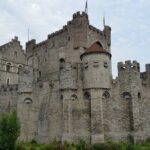
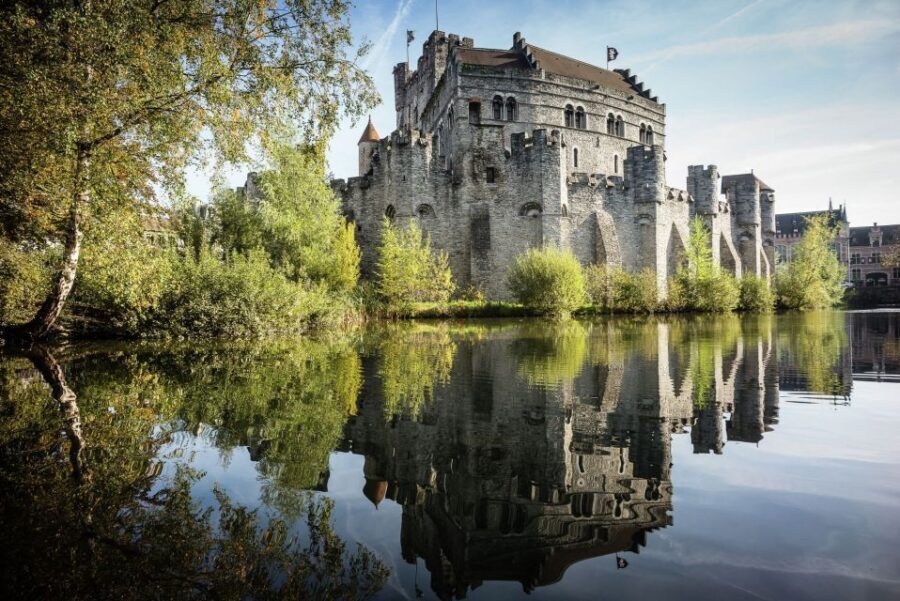
Next is Gravensteen, the medieval castle where the counts of Flanders used to live. Even if you don’t go inside every room (the day is packed), the fortress framing gives you context. You’re seeing power made physical.
Patershol: brick façades and Flemish food energy
Finally, you’ll reach Patershol, known for charming brick facades where restaurants and cafés serve some of the best Flemish cuisine. This is where the tour’s food promise starts to feel real—not just snacks, but a proper, local meal option in an atmospheric neighborhood.
Great Butchers’ Hall: one of Europe’s oldest meat markets
To cap it off, you’ll visit the Great Butchers’ Hall, a 15th-century site tied to one of Europe’s oldest meat markets. It’s a surprising end, in the best way. Trade goods, markets, and the daily supply chain are part of the story too.
Price and what you’re paying for (US$82)
At about US$82 per person for a full-day trip, the value comes from three things you don’t want to DIY:
- Round-trip train from Brussels
- A guided route across both Bruges and Ghent
- Transportation coordination that keeps the day moving
You’re paying for time and smoothness, not just ticket cost. Two cities in one day is always a trade-off. You’re not getting “everything, slowly,” but you are getting a guided overview that helps you decide what you’d want to return to later.
Also, the tour is honest about what costs extra. The optional boat is €8, and the Van Eyck altarpiece visit is €4. That’s good: you can choose based on your interests and energy. If you skip both, the price still gets you the bulk of the sights.
Guide style, pace, and the one big thing to prepare for
Pace is the main reality check. This trip runs about 10 hours, and a lot of the time is on foot, including uneven surfaces. The reviews strongly underline that point, and the practical takeaway is simple: wear shoes you trust.
The other repeated theme is guide quality. Names like Louisa/Louise pop up more than once, with people praising clear explanations and a sense of humor that makes the day feel lighter. One booking also notes an accommodation for kids with shorter legs, with plenty of photo stops—so the guides aren’t just reading a script.
That said, there can be slower moments. When the guide switches among languages (Spanish/English/French are offered), the pace can feel a bit compressed, especially if you’re eager to sprint between stops. If you’re the type who gets irritated by waiting, bring patience and think of it as part of the culture-learning process.
Should you book this Bruges and Ghent day trip?
Book it if:
- You want major medieval highlights in one day, without arranging separate trips.
- You like a guided route that gives you context fast—canals, cathedrals, port views, and castle energy.
- You’re okay with a tiring schedule and you’ll use the Bruges free time wisely for food and a couple of personal choices (like the boat).
Skip it or consider a longer stay if:
- You want museum time that feels unhurried. The tour includes optional museum/art entries, but it’s not designed for deep stays.
- You hate walking. This day is built around seeing the cities on foot.
If you’re visiting Brussels and want to see what makes Flanders famous, this trip is a solid use of time. Just come prepared for a big day—and you’ll get two of Belgium’s best stories in one train ride.
FAQ
Is the Bruges and Ghent trip from Brussels available on any day?
It departs from the Grand Place at 9:30 AM only on Sundays.
Where do I meet the guide in Brussels?
Meet at the Grand Place Brussels in front of the Tourist Information Office at 8:30 AM. Your guide holds a white umbrella.
How long is the trip?
It lasts about 10 hours, with scheduled return to Brussels at 17:00 and arrival around 6 PM with your guide.
What languages are the guided tours offered in?
The live guide is available in Spanish, English, and French.
Are the train tickets included?
Yes. Transportation from and to Brussels is included.
Is the canal boat ride included?
No. The boat trip costs €8 per person and you pay while embarking.
Do I have to pay extra for The Adoration of the Mystic Lamb?
Yes. Entrance to The Adoration of the Mystic Lamb by the Van Eyck brothers costs €4 extra.
How much free time do I get in Bruges?
You have about 2 hours of free time in Bruges for eating, souvenirs, and a boat trip option.
What should I bring?
Wear comfortable shoes, since there will be a lot of walking on uneven surfaces.
Is the tour wheelchair accessible?
Yes, it’s listed as wheelchair accessible.